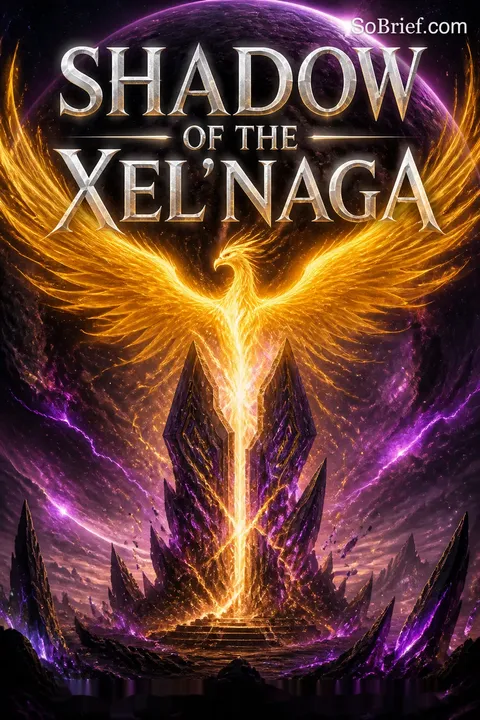


Plot Summary
The Mountain Opens
On Bhekar Ro, where violent storms and poor harvests have shaped every generation, siblings Octavia and Lars Bren have built a life by working their farm and taking risks beyond Free Haven. Their parents died years earlier in a fungal plague, leaving Octavia cautious and Lars hungry for discovery. After a storm and earthquake damage their remote mining equipment, Lars spots a strange glow beyond the ridge.
An avalanche has uncovered a vast, pulsing structure surrounded by enormous crystals. Inside, Lars grips a jewel-like growth and is consumed by the structure's light. Octavia escapes as the crystals flare and the alien object sends a powerful signal into space. Her brother is gone, and the colony has no idea what heard the call.
The discovery grows directly from the siblings' opposing instincts. Lars treats danger as the price of making a larger life; Octavia reads the same landscape as a series of risks that must be managed. The artifact converts his curiosity into catastrophe before either sibling can understand what they found. His disappearance also ruptures the practical partnership on which Octavia's emotional survival depends. The signal turns private grief into public danger: an event on the edge of one small farm now has consequences beyond the colony's knowledge or control.
The Signal Calls Empires
Octavia tells Free Haven that Lars died at an alien structure and that it broadcast a signal. The settlers vote to contact the government, learning from Mayor Jacob Nikolai that the Confederacy has fallen and Emperor Arcturus Mengsk now rules the Terran Dominion.
Mengsk dispatches General Edmund Duke's bored Alpha Squadron, partly to investigate and partly to keep Duke away from the capital. Far across space, the signal reaches Sarah Kerrigan, the Zerg Queen of Blades, whose swarms react violently before she sends Kukulkan Brood to seize its source.
Executor Koronis's Protoss expedition also recognizes a Xel'Naga message and changes course. The Dark Templar scholar Xerana deciphers the signal and races toward Bhekar Ro with a warning, while the colony waits for help.
The signal exposes how differently power interprets the unknown. Mengsk sees a possible asset, Kerrigan sees territory and a resource, and Koronis sees a chance to redeem a mission that has failed to aid his people. Xerana alone approaches the message as knowledge that imposes responsibility. Free Haven's decision to seek outside help is understandable, but it returns the colony to the political world its founders fled. The same transmission therefore carries several incompatible expectations toward one place, making conflict almost inevitable before any fleet arrives.
The Turret Sees
A cloaked Protoss Observer reaches Bhekar Ro first and surveys both the alien structure and Free Haven. The settlement's neglected Missile Turret detects the scout, fires, and brings it down in a field.
The wreck confirms that Octavia's discovery has attracted nonhuman visitors, so she and Mayor Nikolai organize the colonists to prepare weapons, explosives, and farm machines for defense. Yet the object still occupies Octavia's thoughts. She drives back to the ridge and fires her robo-harvester's boulder blaster at it, hoping to damage whatever killed Lars.
The blast only clears dirt from the structure. Its answering energy strike destroys the harvester's electrical systems but leaves Octavia alive. Forced to walk home, she has learned that the relic can defend itself and does not respond to attack as a human machine would.
The turret's unexpected shot gives the colonists their first proof that old equipment can still matter, but it also announces their presence to forces they cannot identify. Octavia's return to the artifact is not simple recklessness. Her grief needs an action, and the harvester's weapon lets her turn helplessness into an experiment. The result sharpens her understanding without giving her control: the object can punish an attack while sparing her. The distinction unsettles her more than a simple weapon would, because it suggests intention or judgment beyond the categories she knows.
Old Blue Turns
Walking back from the ruined harvester, Octavia reaches Rastin's isolated refinery and finds its grounds coated in spreading alien biomass. Old Blue, Rastin's huge blue dog, has been transformed by the Zerg into a clawed, spined predator.
Octavia burns it with superheated Vespene gas, escapes in Rastin's field crawler, and sees the infested prospector emerge from his shack. When Old Blue's body explodes, the blast buys her room to escape; more Zerg rise from the ground and pepper the vehicle with spines.
Octavia reaches Free Haven after midnight and shows the mayor the damage. She raises the storm siren, sends runners to wake settlers, and organizes defenses. Thirteen farm families remain unreachable, a silence that soon becomes evidence of how far the infestation has spread.
The familiar dog makes the Zerg threat intimate before it becomes an army. Octavia must defend herself against a companion she once trusted, then flee without knowing whether Rastin can still be saved. Her practical skills, from opening a refinery valve to starting an old vehicle, become forms of courage rather than mere maintenance. When she returns to town, she does not wait for officials to turn fear into a plan. The missing families make the danger communal, pressing her into leadership even as she is still grieving Lars.
Free Haven Fights Back
At dawn, the Zerg advance on Free Haven, including infested settlers whose bodies have become weapons. Octavia directs the colonists behind their fence, but Zerglings break through and the settlers' ammunition runs low.
She climbs the old Missile Turret and manually fires its last two rockets, killing hundreds without stopping the attack. When infested neighbors approach and explode, their toxic blasts tear open the defenses and kill colonists. Octavia commandeers a robo-harvester, crushes Hydralisks, and uses its flamethrower against the swarm.
She then ignites the Vespene tanks, destroying much of the attacking force in a chain of explosions. The remaining Zerg pull back, but a far larger wave approaches. The colonists have won time, not safety, and their improvised defense cannot hold indefinitely.
Free Haven's defense is a test of collective action under conditions designed to make people scatter. Octavia repeatedly turns neglected or ordinary tools into weapons, but individual ingenuity cannot erase the scale of the invasion. The settlers' hesitation to attack infested neighbors shows that the Zerg are not merely killing bodies; they are making recognition itself dangerous. The fuel depot's destruction is both victory and cost. Octavia saves the town from the first wave by spending a resource the colony will need later, a choice that makes survival feel provisional rather than triumphant.
Rescue Becomes Occupation
Duke's fleet arrives while Protoss and Zerg forces battle in orbit. Alpha Squadron joins the fight, then breaks away to bombard the Zerg attacking Free Haven. The colonists survive the assault, but Duke's soldiers damage buildings, seize supplies, and establish a military base.
When Octavia demands medical help, Duke provides it only after she presses him, then questions her about the artifact as a possible weapon. He considers the settlers subjects of Mengsk's Dominion, despite their insistence that they are independent.
While Marines fortify the town and Mayor Nikolai protests, Octavia slips beyond their perimeter and follows the psychic pull she has felt since the signal. She meets Xerana, a Dark Templar scholar, who explains that the artifact is dangerous to Protoss and Zerg, not deliberately hostile to humans, and asks Octavia to help prevent further interference.
Duke's arrival replaces one immediate danger with another kind of coercion. He does save the settlement from the Zerg, but he treats rescue as permission to occupy, requisition, and command. Octavia's clash with him repeats the colony's founding conflict with centralized authority in a new form. Xerana offers a different model of intervention: she brings knowledge and asks for cooperation rather than demanding obedience. Octavia's willingness to listen marks a shift from defending her own community by force to acting as a mediator among species with far more power than she has.
Inside the Living Maze
Duke sends Lieutenant Scott and a commando team into the exposed structure to map it and gather intelligence. They fight through twisting corridors against Protoss warriors and Zerg creatures, losing soldiers as they push deeper.
Octavia, meanwhile, evades the Terran perimeter and meets Xerana, who has decoded the signal and warns that the structure is more than a valuable relic. She cannot persuade Octavia's military to stand down, but the two agree to help protect their people.
In the artifact's inner passages, Scott's dwindling team encounters more Zerg and Protoss, then reaches a vast chamber filled with cold, living light. The rival troops that arrive there stop fighting, transfixed by the core. Scott's team has found the center, but has no means to understand what it is or what its awakening will do.
The maze turns competing claims into a literal race toward a center no participant understands. Scott's training rewards momentum and mission completion, while Xerana's scholarship urges restraint; both are trapped by institutions that value possession over comprehension. Octavia's alliance with Xerana provides a fragile counterweight to those institutions, though it cannot reach the armed forces in time. The moment of shared awe in the chamber briefly suspends combat, but wonder is not the same as understanding. The characters pause before the core precisely when their accumulated actions have made it most dangerous.
The Ghost Paints Ground Zero
Duke's full assault on the valley collapses under Protoss psionic storms, Zerg attacks, and the creatures bred from Old Blue's DNA. His forces are nearly destroyed, and he orders Ghost MacGregor Golding to mark the artifact for a nuclear strike rather than let either alien power claim it.
Xerana confronts Executor Koronis and Judicator Amdor with evidence that the structure is a dangerous Xel'Naga creation, but Amdor rejects her warning and has her seized. She escapes by cutting nearby Protoss off from the Khala, then flees.
Amdor enters the artifact himself, convinced it will deliver the legacy he seeks, and the core consumes him. Golding reaches the battlefield, disables Protoss defenses, and paints the target. Octavia learns that the warheads are coming and races to find Xerana.
Each leader mistakes certainty for understanding. Duke answers defeat with escalation, Amdor treats disagreement as heresy, and Golding obeys an order whose consequences he cannot evaluate. Xerana's warning fails not because it lacks evidence, but because the people who might act on it have tied their identities to possession and supremacy. Her temporary severing of the Khala exposes how much Protoss order depends on shared consciousness, yet it cannot compel wiser choices. Octavia's attempt to stop the strike is an effort to protect others from decisions made far above them.
A Chrysalis Takes Flight
Octavia finds Xerana beyond the battlefield, but both know that neither their human nor Protoss leaders have listened. Three tactical warheads strike the artifact. Instead of destroying it, the awakened core absorbs the nuclear force and breaks free of the mountain as a radiant, winged being.
It sweeps the battlefield, absorbing the Zerg, Protoss, and nearby Terran fighters, then consumes the battlecruisers that fire on it in orbit. The creature departs into space, leaving Octavia and Xerana unharmed on the ridge.
Its passage releases a wave of life energy across the valley. The ancient structure was not a weapon or a storehouse, but a dormant Xel'Naga organism that used the genetic material of the Protoss and Zerg to complete its growth. Human life was not part of its design.
The climax overturns the military logic that has governed the conflict. The nuclear strike, intended to deny the artifact to every rival, supplies exactly the energy it needs to awaken. Its emergence reveals a scale of agency that renders the factions' claims to ownership absurd, while its consumption of their armies makes that absurdity lethal. The creature's indifference to humans is not benevolence; it simply has no need for them. Octavia and Xerana survive by being outside the battle, not by winning it, a distinction that keeps the ending's wonder shadowed by loss.
A Hoe for the General
The valley is covered in fresh growth, and Octavia finds Lars alive among the flowers. The creature had absorbed him by mistake when he touched the artifact, then returned him when its transformation was complete. Scott and other Terran commandos also return through the released life energy.
Back in Free Haven, the colony's long-range communications are ruined, Duke's fleet is gone, and the general is stranded with the settlers he once called simple farmers. Lars reunites with Cyn McCarthy and proposes to her.
Octavia leads the survivors toward the newly fertile valley, where they can finally grow crops in abundance. She hands Duke a hoe and expects him to help. After storms, invasion, and grief, Free Haven's future rests not on military rescue but on the labor of people willing to rebuild together.
The resolution answers the story's opening scarcity with a landscape capable of sustaining the colony, but it does not restore the old world unchanged. Lars's return gives Octavia back her brother while confirming that his death came from an alien process without human malice or understanding. Duke's enforced dependence reverses the hierarchy he imposed on Free Haven: his survival now requires the very agricultural labor he dismissed. The community's renewal is therefore practical, not abstract. Fertile soil matters because people remain to plant it, and hope becomes credible through shared work.
Analysis
Shadow of the Xel'Naga sets its largest cosmic conflict against the intimate scale of a farming settlement. Free Haven's people measure time in storms, broken machines, and the next harvest; the Protoss and Zerg arrive with histories and ambitions that dwarf them. That contrast does not make the colonists irrelevant. Octavia's mechanical skill and judgment repeatedly matter because she understands the immediate world the grander powers overlook.
The novel's central irony is that every faction calls its pursuit of the artifact necessary. The Protoss want a legacy that will redeem their failures, Kerrigan wants to strengthen the Zerg, and Duke wants to deny the object to the enemy. Their competing claims all treat the unknown as property. Xerana's warning offers a different ethic: investigate before acting, and accept that knowledge can obligate restraint. The factions cannot adopt that ethic because their institutions reward certainty, obedience, and possession.
Octavia's arc develops through action rather than authority. She begins as the sensible sibling who keeps Lars's ambitions functional, then becomes the person who organizes Free Haven when its leaders hesitate. Her grief never disappears, but she learns to act without waiting for grief to resolve. Her eventual reunion with Lars complicates the cost of the catastrophe without erasing it: the creature's return of him is a consequence of its own biology, not a moral correction or a reward for the survivors.
The ending restores fertility to a damaged world, but its hope is deliberately practical. The colony has lost people, infrastructure, and its independence has been threatened by the military it summoned. Duke's forced turn toward farm labor reverses the hierarchy he imposed, while the settlers' work gives the new landscape meaning. The story's final measure of renewal is not victory over the universe. It is whether the people left behind can feed one another and begin again.
Review Summary
Shadow of the Xel'Naga receives mixed reviews with an overall 3.4/5 rating. Critics frequently cite poor writing quality, repetitive descriptions, excessive unit name-dropping, and shallow characters. Many find the pacing problematic with overly short chapters and constant POV switches. Reviewers note the story feels like watching a game rather than reading immersive fiction. The plot—colonists discovering an alien artifact that draws three warring factions—is considered underdeveloped. However, StarCraft fans appreciate the universe references and action sequences, finding it entertaining despite flaws. Non-fans are strongly advised to skip it.
People Also Read

Characters
Octavia Bren
The colony's clear-eyed defenderA seventeen-year-old farmer and mechanic on Bhekar Ro, Octavia is Lars's younger sister and the more cautious half of their partnership. She fixes the equipment that keeps their farm alive, notices dangers others overlook, and sometimes experiences premonitions she cannot explain. Her practicality is not a lack of feeling: after losing her parents, she has learned to keep grief from disabling the work survival requires. Lars's appetite for discovery often frustrates her, but she also understands what his ambition offers their stagnant colony. Under pressure, she converts observation into action and gradually becomes someone other people rely on, even when older leaders dismiss her.
Lars Bren
The restless frontier dreamerOctavia's older brother, Lars is energetic, optimistic, and drawn to whatever lies beyond the next ridge. He pushes the siblings to expand their farm and mining claims because he believes discovery can lift Free Haven beyond bare survival. His confidence sometimes outruns his caution, and Octavia often has to repair the machinery or manage the consequences. Yet his ambition is not merely greed: he imagines better equipment, more workers, and a future in which the colony can grow. His playful bond with Octavia and his interest in Cyn McCarthy show the affectionate, human life beneath his pioneer drive.
Xerana
The exiled Xel'Naga scholarA Dark Templar scholar and warrior, Xerana has spent a long life searching for evidence about the Xel'Naga, the ancient beings who created both Protoss and Zerg. Her exile from Protoss society has not extinguished her loyalty to her people; instead, it has sharpened her skepticism toward institutions that confuse obedience with wisdom. She studies artifacts carefully, interprets the signal that draws the factions to Bhekar Ro, and risks confronting those who would rather claim than understand. Xerana is solitary by temperament, but her pursuit of knowledge is ultimately tied to responsibility for others.
Sarah Kerrigan
The Zerg's calculating queenOnce a human Ghost named Sarah Kerrigan, she has been transformed into the Queen of Blades and now commands the Zerg through immense psionic power. She regards the swarm as a species worth rebuilding, not merely as a weapon, and exerts fierce control when the signal threatens to send its creatures into chaos. Human memories remain, especially the betrayal that led to her transformation, but she treats sentiment as subordinate to conquest and survival. Her plans combine strategic patience with personal vengeance, making her a ruler who can value her minions as a collective while accepting their individual destruction.
General Edmund Duke
The domineering Terran commanderDuke leads Alpha Squadron with confidence born of long military service and a deep hatred of both Protoss and Zerg. He is impatient with routine, hungry for action, and comfortable treating political orders as the basis for his decisions. His loyalty to the Terran Dominion is practical rather than affectionate: Mengsk gives him authority and a command to exercise. Duke sees civilians chiefly as people to protect, direct, or move aside, and he prefers decisive force to uncertain inquiry. Octavia's knowledge repeatedly challenges his assumptions, though he has little instinct for listening to someone without rank.
Executor Koronis
The burdened Protoss commanderKoronis commands the Protoss expedition aboard the Carrier Qel'Ha. His mission has kept him away from the devastation of Aiur, leaving him burdened by the belief that his fleet failed its people. He values duty and the Khala, the psychic bond connecting Protoss, but is less rigid than Judicator Amdor and willing to consider evidence from unwelcome sources. The signal offers him a possible way to return home with success, a temptation that complicates his otherwise measured judgment. His leadership is shaped by the tension between military necessity, cultural loyalty, and the wish to redeem past absence.
Judicator Amdor
The rigid Khala loyalistAmdor is a powerful Protoss political and religious authority who accompanies Koronis's expedition. He interprets the Khala as the foundation of Protoss unity and regards the Dark Templar's refusal to join it as a threat to the entire race. His public certainty masks a strong personal hunger for status and vindication. The Xel'Naga discovery seems to promise a triumph that could restore Protoss prestige, so he presses for possession rather than careful study. Amdor's faith is sincere, but its fusion with political ambition makes him resistant to warnings that challenge his authority.
General Mengsk
The calculating new emperorArcturus Mengsk has overthrown the Confederacy and established the Terran Dominion, presenting himself as the unifying protector of humanity. His polished public image contrasts with the ruthless opportunism behind his rise. He considers Bhekar Ro politically insignificant until its report suggests a potentially valuable alien discovery. Sending Duke allows Mengsk to investigate the relic while keeping a powerful, politically uncertain general away from the capital. His governing instinct is to weigh people and worlds according to their usefulness to the new regime.
Jacob Nikolai
Free Haven's uneasy mayorKnown to the settlers as Mayor Nik, Nikolai is a young administrator who tries to hold Free Haven together without the charisma or decisiveness its emergencies demand. He is willing to contact the outside government when Octavia argues that the colony cannot face the threat alone. In a crisis, he can be more concerned with making a call or preserving his authority than standing beside the defenders. Still, his position gives the settlers a necessary point of coordination, and his public protests against Duke reflect genuine concern for their independence.
Cyn McCarthy
The generous young widowCyn is a copper-haired settler whose optimism and readiness to help make her a familiar presence around Free Haven. She has lost her husband, Wyl, to the spore blight, yet continues to offer practical support to neighbors and to take part in community preparations. Her kindness does not make her perfectly reliable; she sometimes promises more than she remembers to do. Her affection for Lars adds a personal thread to the colony's harsh daily life, while her willingness to work alongside Octavia shows how care can become a form of communal strength.
Lieutenant Scott
Duke's disciplined field officerScott serves as Duke's weapons officer and later leads a dangerous reconnaissance team into the alien structure. He is direct enough to question his commander when orders seem unwise, but disciplined enough to carry them out once given. Years of military training have taught him to value momentum and mission completion, even when casualties make the cost painfully visible. His professionalism contrasts with Duke's appetite for spectacle and victory. Scott's conduct under fire reveals a leader shaped by responsibility to the soldiers beside him, not only by the objective ahead.
MacGregor Golding
The conditioned Terran GhostGolding is a Terran Ghost trained to use psionic ability, concealment, and specialized weapons for military operations. His unusually large eyes and weary manner suggest a young man whose life has been narrowed by government conditioning and combat preparation. He understands his role as a weapon and is accustomed to following orders without needing their larger purpose explained. That obedience makes him effective, but also leaves him vulnerable when commanders mistake obedience for moral clarity. His assignment places the Terran military's most extreme response in the hands of a person trained not to question it.
Rastin
The reclusive old prospectorOne of Bhekar Ro's original settlers, Rastin lives alone beside the Vespene refinery he built. He prizes solitude, grumbles at visitors, and prefers repairing his own equipment to joining Free Haven's meetings. His independence reflects the colony's founding desire to escape outside authority, but it also leaves him isolated when danger reaches his homestead.
Old Blue
Rastin's giant blue dogOld Blue is Rastin's enormous, blue-furred dog, originally kept as a possible beast of burden and ultimately cherished as a companion. He is affectionate with Octavia and generally more lovable than intimidating, despite his size. His presence makes Rastin's lonely homestead feel like a home, and his unusual physical traits become significant in the story's exploration of Zerg adaptation.
Plot Devices
The Xel'Naga Seed
A dormant life-form mistaken for treasureBuried beneath a mountainside, the enormous organic structure appears to the settlers and alien forces as an artifact worth studying or claiming. Its crystals and internal passages draw Protoss, Zerg, and Terran soldiers into competition, while its signal awakens the genetic memories of the first two species. In truth, it is a dormant Xel'Naga organism that needs energy and genetic material to complete its development. The object turns the factions' urge to possess the unknown into the mechanism that revives it.
The Awakening Signal
A beacon that summons rival powersWhen Lars's death is followed by the artifact's burst of light and sound, the signal travels far beyond Bhekar Ro. It reaches Kerrigan's Zerg, the Protoss expedition, and Xerana, while Free Haven's report draws the Terran Dominion into the same system. Each group interprets the transmission according to its own needs: conquest, recovery, research, or survival. The beacon links the colony's local crisis to a wider interstellar conflict and ensures that its settlers cannot quietly ignore the discovery.
Khaydarin Crystals
Power sources and psychic amplifiersThe large crystals surrounding the buried structure are associated with the Xel'Naga and carry immense energy. They interest the Protoss as a resource and help focus Koronis's psionic abilities during the ground battle. Their presence also signals that the artifact is more powerful than a simple alien ruin. The crystals connect the physical battlefield to the characters' psychic abilities, while their destruction during the awakening marks the release of energy that has been gathering around the dormant organism.
Free Haven's Farm Machines
Ordinary tools become defensesThe colonists' robo-harvesters, mining machines, fuel stores, and old Missile Turret were built to keep crops growing and equipment running on a hostile planet. When the Zerg attack, Octavia and her neighbors repurpose them as weapons and fortifications. This makes the defense specific to the community's experience: the settlers survive not through a professional army, but through intimate knowledge of machinery they already maintain. The equipment's limits remain important, since every improvised victory spends fuel, damages property, or buys only temporary safety.
The Khala and the Void
Competing paths to Protoss powerThe Khala joins most Protoss in a shared psychic network, reinforcing both their solidarity and the authority of the Judicators. The Dark Templar reject that bond to preserve individual identity and develop powers through the Void. This divide drives Xerana's exile and Amdor's hostility, but it also shapes how Protoss characters communicate and fight. The competing psychic traditions make cultural conflict tangible: the issue is not simply which faction commands the race, but whether unity requires surrendering forms of independent thought.
Download PDF
Download EPUB
.epub digital book format is ideal for reading ebooks on phones, tablets, and e-readers.








