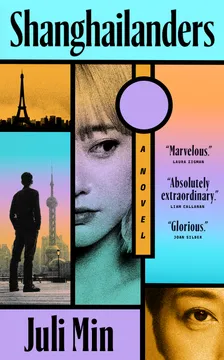


Plot Summary
A Wedding Between Worlds
In 2014, Leo marries Eko in Shanghai, carrying into the ceremony the absence of parents killed when he was eight. Raised by relatives and institutions, Leo made his own path through mathematics, engineering, and early property investments; the growing fortune gives him the security his childhood lacked.
Eko, Japanese-born and raised in Paris, is drawn to his attention and certainty, though her mother doubts the match and Eko herself feels the weight of leaving Europe. Their vows join people with different ideas of home: Leo sees Shanghai as a place to build and belong, while Eko follows him there despite her unease. They begin married life with love, ambition, and an imbalance neither fully understands.
The wedding makes marriage both a refuge and a wager. Leo’s achievement is shaped by an early loss he cannot repair, so he treats planning and material security as ways to make the future answerable. Eko’s choice is less settled: she loves Leo, but also enters his city and his life on terms that leave her dependent on his decisions. Their contrasting histories establish the novel’s central tension between belonging and self-erasure. Neither partner begins as a simple victim or villain. Their affection is real, yet their definitions of a safe life are already diverging.
Windows Across the Lane
In 2018, newly settled in Shanghai, Eko struggles with the language, the lane's crowded life, and the pressure Leo puts on her to manage their home. A neighbor, Neo, first brings her an egg when she runs short, then becomes her companion in the kitchen; their wordless cooking gives Eko a freedom she does not feel with her husband.
She tells Neo about her past, including an earlier abortion, and the two begin an affair. When she sees Neo with his wife and young son, she realizes she cannot imagine taking his place.
Soon after, Eko discovers she is pregnant. Unsure whether the father is Leo or Neo, she chooses to tell Leo, never tells Neo, and later learns the pregnancy began as twins. One twin is lost, and Eko gives birth to Yumi, then plans to stay with Leo.
The affair grows out of a particular deprivation: Eko wants company without correction, and cooking lets her participate without having to defend her choices in language. Neo's blue eggs become a small, recurring permission to accept help. Yet the pregnancy forces Eko to choose a future without resolving its paternity. Her decision to tell Leo and conceal the affair is not a clean moral reckoning; it is an attempt to preserve a family she still wants. The lost twin makes the child she raises carry an absence from the beginning.
Ayi's Long Goodbye
In 2020, Ayi learns that the Portuguese family she works for is leaving Shanghai with baby Teia because of the virus. With twenty days to find work, she grieves privately, negotiates her pay, and secures a new live-in position with the Yang family. She grows close to Leo and Eko's daughters, especially Yoko, while sending money to support her son, Xiling, back home.
Years later, the Yangs bring Ayi to Lisbon, where she sees Teia again. The child no longer speaks Chinese and barely recognizes her; after Teia hits Yumi, her mother rebukes Ayi for intervening. Ayi understands that the bond she preserved in memory is not shared by the grown child. She retires, carrying an embroidered blanket Eko made of Ayi and the three girls.
Ayi's chapters expose care as intimate labor without guaranteed ownership. She has raised children through routines so close they become part of her body, but Teia's language and memory have moved on without her. The reunion makes that loss concrete rather than sentimental: Ayi cannot discipline a child who no longer recognizes her authority. Her later retirement does not erase her attachment, but the embroidered blanket gives that care a form the children can keep, even if they cannot remember its daily cost.
Cherry Blossoms, Broken Hearts
In February 2028, Eko's mother, Daphne, tells the girls how she escaped an abusive marriage in Japan and took Eko to Paris, leaving before the cherry blossoms had finished blooming. Eko tries to manage her mother's dramatic account, but the story gives Yumi and Yoko a glimpse of the fear behind their grandmother's reinvention.
That June, Kiko's princess day shows a different family strain: Ayi is gone, Eko asks Kiko to dress herself, and Kiko cries because she misses the help she once took for granted. Eko helps her finish dressing, crowns her, and makes the celebration work. Leo objects to the extravagance, so the family gives Kiko promises of time and attention instead of presents.
The two childhood scenes place women's self-making beside the small ceremonies that sustain children. Daphne turns flight into a story she can control; Eko, who once depended on that escape, now tries to manage her mother's version of it. Kiko's birthday dramatizes a more ordinary separation: the caregiver who dressed her is gone, and her mother must learn when to step in and when to let her try. The girls inherit both practical resourcefulness and unresolved family scripts, often without being told which is which.
The Cellar Behind Stone
In 2032, Leo pitches a fortress-like renovation for a historic Shanghai mansion once occupied by his mother's family. He believes the project can honor his roots while making the building safer and more enduring.
During a site visit, a resident describes the hardship of living there, complicating Leo's romantic picture of the past. He notices an uneven stair and takes a sledgehammer to the wall, revealing a sealed staircase and a hidden cellar filled with jade, gold, hair ornaments, and papers.
Leo pockets a gold bar and a jade charm before calling officials to secure the discovery. The objects belong to an earlier family, not his own. As he waits among the trunks, he recognizes that his mother's connection to the house does not make its history his inheritance.
Leo's discovery turns architecture into a test of what preservation means. He initially treats the building as a structure he can repair and his family history as a claim he can recover. The resident's testimony and the cellar undermine both assumptions: the house was not simply a lost home, and the treasure does not complete Leo's lineage. His theft of a small piece makes the contradiction personal. He wants to honor the past, yet instinctively converts its material remains into something he can possess.
The Girls Leave the Farm
In 2034, after another fight between Eko and Leo at their survivalist farm, Yumi packs a pistol and rides away with Yoko. Kiko secretly follows on Lucy, and the sisters push beyond the property line toward a house on the mountain.
Their uneasy escape becomes a fight: Yumi taunts Yoko about her social differences, and Yoko raises the pistol to stop her. Yoko fires, accidentally killing Lucy. When Leo arrives, Yumi takes the gun and threatens him; Yoko collapses into a scream as she imagines the family bonds unraveling.
Eko reaches the clearing, and Leo backs away rather than force the girls home. They never return to the farm or accept replacement ponies. The property's survival drills end with the family unwilling to keep playing at catastrophe.
The farm is Leo's attempt to make love practical: if danger comes, his family will be prepared. But the crisis that actually erupts is domestic, made from years of control, resentment, and sibling injury. Yoko's shot is accidental, yet it converts the sisters' verbal violence into an irreversible loss. Leo's retreat matters because his usual authority cannot restore safety. The girls refuse the farm afterward, rejecting both its rituals and the premise that a prepared household can prevent emotional harm.
A Heart Against Traffic
In 2035, the unnamed driver who ferries the Yang family is pulled back toward Shanghai's corporate-sponsored night races when Yumi's boyfriend, Sven, plans to enter one. The driver learned at sixteen in a nearly demolished neighborhood, then built a life around taxis, deliveries, and knowing the city's streets.
He races again, partly for the money and speed, partly because he feels protective of Yumi. During the course, he sees a girl who resembles her on a bridge, loses focus, then hears Sven's Mustang malfunction.
He turns back to help, only for Sven to accelerate past him. By 2037, after fainting during a delivery, the driver learns he has a congenital heart-valve defect. He quits racing and delivery work, then takes a private driving job, though speed still calls to him.
The driver experiences Shanghai from behind the wheel, close enough to hear the Yangs' private lives but never invited into them. Racing converts that marginal position into temporary agency: he can read the city better than the wealthy men who treat it as a playground. His body, however, refuses the fantasy of control. The damaged valve makes the car's speed a literal bodily risk, while his concern for Yumi blurs the boundary between professional observation and personal attachment.
The Piccolo Pays Rent
In 2038, Yumi calls her younger sister Yoko from a boy's room after her Harvard roommates find stolen clothes, books, toiletries, and other belongings under her bed. Rather than tell their parents, Yumi asks Yoko for money to rent a place off campus. Yoko challenges her to seek help for the stealing, but Yumi pleads until her sister transfers most of her savings.
In return, Yoko demands the piccolo that disappeared from home; Yumi admits privately that she took it and hid it in a suitcase. With her boyfriend Jay, Yumi tours apartments, dismisses a safe option partly because Jay disapproves, and imagines a shared life in the last one. When the landlord arrives, Yumi tries to delay opening the door, but Jay moves to answer it.
Yumi's theft is not framed as a single lapse but as a pattern she recognizes and still evades. Her request for money turns sibling intimacy into leverage: she knows Yoko's loyalty can be summoned even after years of cruelty. Yoko's insistence on the piccolo is a rare boundary, though she still pays. The instrument matters because it represents a piece of Yoko's past that Yumi has taken without permission, making the sisters' financial exchange another version of their older struggle over whose needs count.
Marilyn's Price
In 2039, sixteen-year-old Kiko's long relationship with Peter breaks when he discovers her secret account of suggestive photographs and demands that she delete it. Kiko chooses the account over him, then approaches Lily Sun, an escort manager introduced by schoolmate Takako.
Lily arranges a two-hundred-thousand payment for Kiko's supposed virginity, though Kiko has already had sex with Peter. Kiko treats the arrangement as an acting role and imagines the buyer, Winston Yamashita, as a future film producer.
In his hotel room, he asks her to shave; she agrees only after he lets her shave him first. During sex she silently cries and thinks of Peter, discovering that the glamorous future she pictured has become an uncomfortable performance she cannot make meaningful.
Kiko's ambition is shaped by a narrow equation: to become a star, she believes she must make herself visible and accept the costs visibility demands. Marilyn Monroe gives her a model of fame, but Kiko absorbs the image more readily than the exploitation behind it. Her encounter with Yamashita exposes the gap between performance and control. She can rehearse a persona, choose clothing, and imagine a career, yet the buyer's demand determines what happens in the room.
Red Lipstick, Paris
At the airport in January 2040, Yoko tells Eko she is pregnant and begs her not to tell Leo or her sisters. Eko hides the news, takes Yoko first to Boston to leave Yumi at Harvard, then flies with her to Paris. At the clinic, Yoko initially insists on going in alone; Eko joins her when she realizes her daughter needs help deciding between medication and a procedure.
Eko admits she once had an abortion herself, and Yoko chooses vacuum aspiration. Back in Paris, Eko learns that Daphne's short-term memory trouble followed a treatable infection and fever, not necessarily Alzheimer's. Her visit to Daphne brings mother, daughter, and granddaughter together around the lipstick Yumi bought, as Eko lets her mother apply it to her lips.
Eko's response to Yoko's pregnancy is an act of protection, but it also reveals what she has never offered her daughters: candid knowledge of her own past. Her confession does not erase the age and power difference between mother and child; Yoko still chooses to enter the procedure alone. The lipstick supplies a quieter counterpoint to the clinic, passing among generations without requiring explanation. Eko's reunion with Daphne also confronts her with the limits of memory, while the visit allows care to take a physical, immediate form.
The Maglev's Eight Minutes
After arguing with Eko about accompanying their daughters, Leo rides the maglev home alone, imagining that his wife wants to escape him. Nearby, attendant Shana returns to train work after her husband Nelson's death and their son Michael's move to his grandparents; the stalled train forces her to calm passengers while a system inspection begins.
Mary, a first-time visitor from Anhui traveling to meet a man she knows online, watches Shanghai rush past and imagines the life she has come to claim. Leo notices her and briefly pictures abandoning his family for a fresh start on his farm.
Then he sees Mary's efforts to alter her eyelids and recognizes the cost of pursuing an invented life. He admits to himself that he still loves Eko and their daughters. The train moves again, carrying them toward separate destinations.
The maglev gathers three strangers whose private hopes are shaped by unequal access to mobility. Leo can buy farms and imagine escape, while Mary has crossed a great distance for the chance to remake herself; Shana returns to a job after a life has narrowed around loss. The stoppage briefly makes the train a suspended social space rather than a machine for efficient transit. Leo's fantasy falters when he sees Mary's self-fashioning, and the moment redirects him toward the family he already has.
Analysis
Shanghailanders treats family less as a settled unit than as a sequence of negotiations over who gets to leave, who must stay, and who is expected to provide care. Leo builds structures against collapse, from real estate to the farm's escape tunnel, because early bereavement taught him that safety can vanish without warning. Eko adapts to his plans and to her daughters' needs, but her adaptability has a cost: the more expertly she performs the roles of wife and mother, the harder it becomes for her family to recognize her separate desires.
The daughters inherit different responses to that household. Yumi tests love through possession and provocation; Yoko seeks order and exact definitions; Kiko turns longing into performance. Their differences are not fixed types so much as strategies for claiming room inside a wealthy, closely managed family. Ayi's perspective complicates the family's self-image by showing that intimacy is also labor, often performed by someone who has no lasting claim to the children she raises.
The novel's reverse chronology asks readers to revise their judgments as causes arrive late. An adult's silence may trace back to an unspoken pregnancy, a childhood loss, or years of being corrected. In a city remade by development and threatened by rising water, buildings, bodies, and identities all prove less permanent than their owners hope. The book does not argue that love solves this instability. It shows love as attention and responsibility, sometimes tender, sometimes coercive, and always vulnerable to the stories family members choose not to tell.
Review Summary
Shanghailanders receives mixed reviews, averaging 3.44/5. Praised for its ambitious reverse-chronological structure spanning 2040 to 2014, strong prose, and complex character portrayals, many readers appreciate its vignette-style storytelling and family drama. However, critics note the near-future setting feels insufficiently distinct from the present, the backward narrative sometimes frustrates rather than rewards, and the wealthy Yang family can feel unsympathetic or inaccessible. Secondary characters, particularly the nanny and driver, are frequently highlighted as the most compelling figures.
People Also Read







Characters
Eko
The adaptive motherJapanese-born and raised in Paris, Eko builds a life in Shanghai with her engineer husband, Leo, and their three daughters. She is observant, artistic, and adept at adjusting to other people's needs, but that flexibility can leave her own desires difficult to name. Embroidery gives her a private language of attention, while her memories of Daphne connect her to a history of female escape and reinvention. Eko's warmth is genuine, though she sometimes mistakes keeping the peace for protecting her family. Her most revealing relationships are with her daughters, who need not only her care but a more honest account of the person beneath the role of mother.
Leo
The anxious builderA Shanghai-born structural engineer and property investor, Leo was orphaned as a child and raised by extended family and institutions. He is brilliant with systems, numbers, and physical structures, and he seeks security by planning for threats others consider remote. His wealth gives his family unusual freedom, but his need to instruct and control can make closeness feel like a project with rules. Leo loves Eko and their daughters intensely; he also struggles to hear them when their needs contradict his picture of what will keep them safe.
Yumi
The beautiful eldestThe eldest Yang daughter resembles Eko and knows how easily beauty can open doors, but she is also sharp, demanding, and often cruel to her younger sisters. Yumi wants freedom from her parents' oversight and from the burden of being expected to lead. Her attachments are intense, yet she can treat other people's belongings and feelings as if they are available for her use. Beneath her confidence are loneliness and an unstable sense of what she deserves. Her relationship with Yoko is especially charged: she can wound her sister and still turn to her when she has nowhere else to go.
Yoko
The mathematical observerThe middle daughter is intellectually gifted, quiet, and unusually precise about language and logic. She shares Leo's interest in mathematics, but her careful ordering of objects and routines also helps her manage social situations that can overwhelm her. Yoko often sees contradictions that her family would rather smooth over, especially in Yumi's behavior and in the adults' definition of love. Her reserve can look like coldness, though it coexists with a deep wish to be understood. She trusts few people fully, and her mother is one of the rare people with whom she can speak at length.
Kiko
The aspiring performerThe youngest Yang daughter is theatrical, affectionate, and accustomed to being indulged as the family's baby. She loves dance and acting, wants fame, and studies Marilyn Monroe as a guide to the cost of becoming an image people desire. Kiko is more perceptive than her childish manner suggests, but she can also follow her sisters' lead and struggle to distinguish attention from affection. Her imaginative play, elaborate costumes, and bold ambitions help her create a self beyond her family's expectations, even as she remains hungry for approval.
Ayi
The devoted caregiverAyi is a live-in nanny from Dongbei who raises Yumi, Yoko, and Kiko while sending money to her son, Xiling. Practical and hardworking, she has learned to make attachment part of her job without expecting the children to remember her as she remembers them. She is especially close to Yoko, whose needs require patience and careful attention. Ayi's perspective makes visible the labor and grief that affluent families can overlook, while her own return to family life brings a different set of obligations.
Daphne
The self-invented grandmotherEko's Japanese mother left an abusive marriage and rebuilt her life in Paris. Stylish, humorous, and prone to embellishing a story, Daphne sees herself as the heroine of her own escape and wants her granddaughters to hear what that freedom cost. Her relationship with Eko is affectionate but not uncomplicated; the daughter often edits her mother's dramatic memories even while inheriting their force. Daphne's apartment and personal history give Eko a place to revisit the person she was before marriage and motherhood.
The driver
The streetwise observerThe unnamed driver works for the Yang family after years as a taxi driver, delivery rider, and underground racer. He knows Shanghai through its roads, shortcuts, and changing neighborhoods, and hears the family speak as if he were not present. His attachment to Yumi complicates the professional distance he tries to maintain. A congenital heart condition makes his appetite for speed dangerous, while his working-class background gives him a view of the city's luxury that the family rarely shares.
Shana
The returning attendantA maglev attendant who once worked on more prestigious routes, Shana returns to the job after personal loss and the separation from her son, Michael. She remembers being admired for her beauty, but now measures herself against younger colleagues and the life she thought marriage would provide. Her steadiness with passengers comes from experience rather than confidence: she knows the training, even when she is afraid. Shana's story adds a working woman's perspective to the novel's portraits of family, ambition, and interrupted lives.
Peter Ozzy
Kiko's first lovePeter, the son of a Shanghai Disney executive, becomes Kiko's boyfriend when they are thirteen. He is affectionate and familiar, sharing years of school, games, and first experiences with her. His devotion can shade into jealousy, however, especially when Kiko pursues interests that do not center on him. Peter represents the comfort of a long-known relationship, but he also expects the version of Kiko he has always understood to remain unchanged.
Lily Sun
The escort managerKnown by the girls as Madame Sun, Lily manages escorts and introduces Kiko to a world where appearance, role-play, and money are negotiated explicitly. She is composed and practical about vetting clients, and she treats the work as a business rather than a moral lesson. Her attention to Kiko's acting ability gives the teenager a sense of being seen, though Lily's proposals also reveal how quickly Kiko's ambition can be turned into a transaction.
Takako Takahashi
Kiko's uneasy guideA Japanese classmate at Kiko's international school, Takako is the first to speak openly about seeing an older man for gifts and money. She is frank about choosing the arrangement rather than presenting herself as a victim, which unsettles Kiko and draws her closer. Takako gives Kiko Lily Sun's contact information, opening a door Kiko had only been curious about. Her confidence conceals a more troubling indifference to what might happen to her.
Mary
The hopeful newcomerA young woman from Anhui, Mary has left her parents and their farming village to meet a man she knows online. She has built an imagined Shanghai through government simulations and carefully practiced beauty routines. Her excitement is mixed with practical disappointment and anxiety, but she has committed to seeing what life beyond home might offer.
David
Eko's old almost-loveDavid dated Eko briefly before she met Leo. Years later, they reconnect through an alumni group, and the prospect of seeing him revives Eko's curiosity about the life she might have chosen. He functions less as a rival than as a reminder that the past can be polished into an appealing alternative.
Nelson
Shana's restless husbandA French-raised former child prodigy, Nelson meets Shana while she is working on a train and rapidly persuades her to leave her job and build a life with him. His charm and ambition help shape her hopes, though his own difficulties prevent their marriage from matching the future they imagined.
Plot Devices
Reverse chronology
Reassemble a familyThe chapters move backward from 2040 toward earlier years, revealing the Yang family's history out of sequence. A chronological summary reverses that design to show how marriage, migration, parenting, and repeated departures accumulate into the tensions visible at the end. The structure also makes later knowledge revise earlier scenes: small gestures acquire the weight of histories the characters have not shared.
Shanghai's changing landscape
Make place unstableFlooding, redevelopment, surveillance, autonomous vehicles, and new transport systems shape everyday choices across the decades. The city is not scenery: Leo builds wealth from its transformation, the driver navigates its blind spots, Mary imagines it through simulations, and Eko struggles to feel at home in it. Shanghai's constant rebuilding places pressure on the characters' attempts to preserve a stable identity or family history.
Family survival systems
Turn fear into routineLeo's farm, bunker, escape tunnel, stored supplies, and training exercises make his fear of catastrophe tangible. The family practices emergencies as a shared project, but the system cannot prevent a crisis born from sibling hostility and marital conflict. The survival equipment therefore serves both as literal preparation and as a measure of Leo's need to make uncertain life manageable through planning.
Embroidery and keepsakes
Hold care in objectsEko's embroidery and the family's smaller possessions carry relationships across time. Ayi's blanket, Kiko's princess ring, Yoko's piccolo, and the shared lipstick each gather meaning through use, loss, or inheritance. These objects do not repair the family, but they preserve evidence of attention that speech often fails to convey. Their changing ownership also exposes the difference between a gift, a keepsake, and something taken without consent.
Download PDF
Download EPUB
.epub digital book format is ideal for reading ebooks on phones, tablets, and e-readers.








