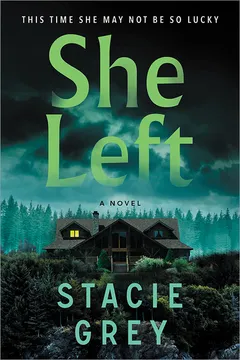


Plot Summary
Prologue
At seventeen, Amy Brewer storms away from a Memorial Day party after Jenna and Chloe humiliate her, leaving her stranded in a dark park without a working phone or a sober ride. She reaches home by bus, carrying a small bottle in her pocket and trying to imagine how she will face school again.
Her elderly neighbor rushes in, embraces her, and reveals that the friends Amy left behind have all been killed. The night she thought would ruin her senior year instead becomes a crime that follows her for two decades.
The opening makes Amy’s departure both an act of self-protection and the source of the suspicion that will define her adult life. Her small, private humiliation sits beside a mass killing she could not have anticipated, creating a painful imbalance between what she knows and what the public will later assume. The bottle in her pocket quietly signals that she has kept something from the party, but the scene does not yet explain its significance. Her neighbor’s news abruptly turns an ordinary adolescent exit into a permanent boundary between the life Amy expected and the life she must construct.
The Girl Who Returned
Twenty years later, Amy uses her middle name, Therese, and works as an FBI agent. She accepts what appears to be an invitation from journalist Angela Scott to discuss the unsolved Memorial Day Massacre, then drives to a remote lodge in the Sierras. There she finds enormous copies of photographs taken at the original party, including one made minutes before the bomb exploded.
The house belongs to Jenna’s half brother, Adam Reynolds, who says he knew nothing about the gathering. Therese recognizes him, but the elaborate lodge and its ominous display make the weekend feel less like journalism than a staged return to the scene of her worst memories.
Therese’s changed name is a practical defense against internet notoriety, but it also shows how thoroughly public suspicion has shaped her identity. The lodge turns memory into décor: the victims’ images greet guests as if the past were an exhibit anyone could curate. Therese comes hoping to influence the story told about her, yet the staged photographs suggest that someone else has already arranged the terms of remembrance. Her decision to attend is therefore neither simple courage nor curiosity. It is an attempt to reclaim some authorship over a life repeatedly narrated by strangers.
Ten Guests, No Journalist
In the modern lounge, Therese meets people tied to the victims and investigation: Sean Fletcher’s mother, Sonia; former detective Art Moll; prison guard Mike Swift; Oliver’s former boyfriend Joseph Boden; Chloe’s friend Wendy Zhao; Josh’s friend Victor Aguilar; Chris’s cousin Gil Morley; and the witness Lorelei Hughes. Adam is the remaining family connection.
None has met the supposed journalist, and her note says only that she has been called away. The guests debate leaving, but a holiday weekend and their curiosity keep them inside. Their different ties to the dead make the gathering feel less like a reunion than a roomful of competing memories, each person carrying a reason to distrust the others.
The guest list makes the case social before it becomes physical: every person arrives with a partial relationship to the crime, and no one has enough knowledge to control the whole story. Their suspicion also exposes how quickly people rank one another’s credibility. A former addict, a grieving mother, a disgraced detective, and an FBI agent do not enter the room on equal terms. The absent journalist gives the group a convenient target for unease, while the shared history quietly redirects their attention toward one another.
Sean's Mother Takes Control
The next morning, Therese and Wendy discover that their phones and car keys are missing, and the guests realize they slept unusually heavily. Sonia arrives with a briefcase and admits that she impersonated the journalist. She has spent months collecting medication and drugged the group so she could search their rooms and take their belongings.
Sonia insists her son Sean, who confessed to building the bomb before dying in prison, was manipulated by another person and silenced. She accuses Mike of delivering the rope used in Sean’s death, then displays a large, distinctive knife she believes connects the guests to the massacre. She will return their possessions only after they answer her questions.
Sonia’s grief has hardened into a theory that must be made public, and she treats coercion as proof that the truth deserves to be heard. Her method repeats the original investigation’s central ethical failure: people become instruments in someone else’s account of events. Yet Sonia is not merely irrational. She points toward unresolved details, including the unexplained rope and Sean’s incomplete confession. The knife gives her theory a material object, but its dramatic presentation also makes the guests less likely to trust her evidence or her judgment.
The Knife Goes Missing
While the guests search Sonia’s room for their phones, Therese hears a scream and finds Sonia below the lodge’s deck, badly injured. Therese and Gil climb down to reach her, but Sonia dies before they can bring her back. Her last words seem to point toward a picture on a wall. Therese then notices that the knife has vanished, turning Sonia’s fall into a suspected crime.
In the basement, the searchers uncover a taped pressure cooker resembling the bomb used twenty years earlier. Gil carries it outside and throws it down the slope; it explodes, scattering fragments of phones and confirming that Sonia destroyed their means of communication. A worsening storm closes off the easy way out.
The failed rescue changes Therese’s role from survivor defending her past to investigator responsible for the living. Sonia’s final clue matters precisely because it is fragmentary: unlike the knife, it cannot be displayed and interpreted at once. The explosion destroys the guests’ phones, but it also turns the missing devices into evidence of deliberate confinement. Gil’s impulsive intervention is understandable and dangerous at the same time, echoing the book’s recurring problem of action taken before uncertainty has been examined.
A Witness Remembers
With the storm trapping them, Therese takes charge of practical decisions and speaks privately with Lorelei, who describes waking to the explosion and seeing a figure move uphill toward the cabin. She cannot identify the person or confirm what happened afterward, and admits that years of addiction and police questioning cloud her memory.
Therese also tells the group why she left: Jenna and Chloe tried to force her to vomit after mocking her body, and Therese fought free and walked out. The others question whether such a small-seeming cause explains her timing. Meanwhile, Victor reveals how Josh once humiliated him in a secretly filmed swimming prank, showing that the cruelty surrounding the group reached beyond Therese.
The competing memories complicate the convenient division between innocent victim and guilty bully. Therese’s account is truthful but incomplete as an explanation of the whole night; Lorelei’s recollection is imperfect without being worthless. Victor’s story adds another victim of the group’s social cruelty, but it does not transform humiliation into a sufficient explanation for murder. The section asks readers to hold two judgments together: the teenagers could harm others, and none of that harm makes their deaths deserved. Memory here is evidence, but never a transparent recording.
The Guard's Locked Room
After dinner, the group speculates that Sean may have been tricked into building a bomb without knowing its purpose, then persuaded to confess and die before he could expose anyone. The next morning, they find Mike hanging in his room, with the connecting door from Victor’s room providing a possible route in.
Therese sees signs that the scene was staged, but the group cannot identify the killer. Joseph, a psychiatrist and Oliver’s former boyfriend, refuses to stay and sets out through the storm. Lorelei joins him, arguing that a pair has a better chance of reaching help. Therese gives Lorelei her FBI badge, hoping it will make authorities take their account seriously when they reach the road.
Mike’s death makes the original case immediate rather than historical: someone is still managing what can be said about Sean, and the guests are now potential witnesses or obstacles. The apparent suicide tempts the group to accept a familiar explanation, but Therese’s refusal to trust convenient deaths reflects hard-won investigative caution. Joseph and Lorelei’s departure marks a second kind of choice. They value survival over solving the mystery, while Therese stays because responsibility and her fear of being remembered as someone who runs have become difficult to separate.
A Radio in the Basement
As the rain intensifies, a landslide strikes the hillside, making an overland escape more dangerous. Therese remembers that the lodge once had a two-way radio, and she and Gil find its receiver, transmitter, and tubes in the crowded basement. The group works to reconnect the old equipment with improvised materials.
Art, meanwhile, reveals that Sonia recruited him by promising evidence, though he claims she withheld her plans. He admits he surrendered his phone and keys, then produces a concealed handgun and warns the others not to surprise him. His story makes him both a possible source of information and a new danger. The radio offers a route to help, but the house and its occupants are becoming less secure by the hour.
The radio reverses the guests’ dependence on contemporary technology: the devices Sonia destroyed cannot be replaced, so the group must recover an older, less convenient form of connection. Their cooperation is real but fragile, because each practical task is entangled with questions of authority and trust. Art’s confession sharpens that tension. He invokes duty to justify helping Sonia, yet his weapon and secrecy reveal how easily institutional status can become personal power when oversight disappears.
The Detective's Last Notes
Before the jury-rigged radio can secure help, Therese and the others find Art shot in her rental car. The gun lies beside him, positioned to suggest suicide, but the bullet’s path and the glass on the wrong side of the car show that someone killed him. In Art’s room, the guests find his notebook: Sonia had given him a suspect list and planned signals, and he had been told not to eat most of the food.
His final notes mention a man named Lenny and urgently call attention to a shirt. Glass fragments on Gil’s shoe make him a possible suspect, though everyone had been near the car. When Therese searches Sonia’s room, someone pushes Gil down the stairs and the ammunition disappears.
Art’s notebook does not make him a reliable investigator; its prejudiced guesses expose why the old inquiry may have narrowed too quickly. Still, his last notes preserve details he understood mattered, especially the shirt and Lenny. The glass on Gil’s shoe demonstrates the danger of evidence without context: it is specific, but not exclusive. The theft of the ammunition and the attack on Gil suggest that someone is exploiting the group’s mistrust, keeping them too busy accusing one another to compare what they know.
Jenna's Wall Picture
A second landslide tears through the lodge’s library, destroying the radio and part of the structure. In the front hall, Therese finally understands Sonia’s clue: one of the enlarged cabin photographs shows the knife’s decorated handle hidden behind a wall ornament.
Therese had never been inside the cabin, which places the weapon with someone who knew it. Adam accuses her of bringing stolen oxycodone to the party, but she explains that she secretly replaced Jenna’s pills with allergy medicine to prevent anyone taking them.
Therese argues Adam killed Jenna to inherit their dying father’s estate, recruited Sean to plant the bomb, and used the knife to kill survivors. Adam raises the gun, but it jams because Therese has secretly bent its magazine. Gil tackles him, and Wendy strikes him with a mounted deer head.
The photograph turns the house’s memorial display into forensic evidence, showing how an image can preserve what its subjects and viewers failed to notice. Therese’s pill confession also complicates her self-image: she acted to prevent harm, but secretly substituted medication instead of asking for help. Her theory about Adam draws together motive, access, and the weapon’s location, while the failed gunshot converts her private preparation into a narrow chance for collective action. Wendy’s intervention matters because loyalty shifts when Adam’s charm stops serving her.
Help Through the Rain
Therese, Gil, Victor, and Wendy keep Adam tied up outside as the storm eases. Joseph returns with an injured arm, accompanied by Lorelei and her roommates, Ruth and Patti. The roommates had traced Sonia’s false email to a subtle impersonation of the magazine’s address, then drove up when Lorelei stopped responding. Police, FBI agents, and fire crews arrive soon after.
Therese gives investigators the account of the deaths and the attempted escape; Adam is taken away, while the damaged lodge and the other bodies are examined. The group’s survival depends not on Therese solving everything alone, but on the people who left, those who stayed, and outsiders who noticed the deception and came looking.
Rescue arrives through a chain of ordinary acts: Joseph and Lorelei keep walking, their companions scrutinize an email address, and authorities respond once they receive credible information. That sequence counters the fantasy of the lone detective who can solve and escape without help. Therese’s badge, previously lent to Lorelei, and the roommates’ skepticism both become practical forms of connection. Yet the rescue does not settle every question. The lodge is damaged, the evidence is incomplete, and a capture is only the beginning of a legal process.
Epilogue
Several days later, Therese visits the memorial for the five teenagers. Gil joins her and shares the investigators’ new leads: a cousin of Sonia’s found a bloodstained man’s shirt and knife hidden in Sean’s old room, while Mike had kept evidence of the payment for delivering Sean’s package.
The shirt may connect Adam to the killings, though his wealth and the age of the case could complicate prosecution. Therese leaves flowers for Jenna and eucalyptus for the dead, then walks away with Gil, no longer trying to erase the girl who left or pretending the past can be neatly closed.
The cemetery scene offers neither a verdict nor a clean restoration. Adam has been arrested, but Therese understands that suspicion and evidence are not the same thing, especially when wealth can prolong uncertainty. Her visit is less about absolution than about a more honest relationship to memory: she can mourn Jenna without forgetting the harm Jenna caused, and acknowledge her own complicity without accepting blame for the massacre. Eucalyptus links the memorial to the park where Amy walked away, but now the scent belongs to flowers she chose herself. The past remains, while her way of carrying it changes.
Analysis
She Left treats memory as something people actively shape, not a clean record waiting to be recovered. Therese’s departure from the cabin becomes the public’s easiest explanation for her survival, while her own recollection centers on a humiliating confrontation and the shame of having once enjoyed the privileges of Jenna’s group. Lorelei remembers a figure but cannot confidently name one; Sonia turns fragments into certainty; Art’s notes reveal that official investigation can be distorted by prejudice as readily as private grief. The novel does not excuse the teenagers’ cruelty, but it refuses to make cruelty a moral explanation for mass murder. Their victims and their perpetrators are not interchangeable categories, and a person’s flaws do not prove a crime. The lodge intensifies this problem by forcing people to interpret evidence without the usual safeguards: phones are destroyed, weather blocks escape, and every death invites a new theory. Therese’s growth lies less in becoming a flawless detective than in recognizing the limits of her own perspective. She admits that she secretly handled Jenna’s pills and that her past account left out the group’s broader behavior. Her final movement is from defensive silence toward a more complicated honesty. The title’s act of leaving is neither cowardice nor perfect liberation; it is a choice made under pressure, later burdened by other people’s stories. By returning to the memorial, Therese can acknowledge what happened without allowing the role of survivor to become her entire identity.
Review Summary
She Left receives mixed reviews, averaging 3.17/5. Many readers praise its engaging locked-room mystery premise, atmospheric setting, and fast pace, drawing frequent comparisons to Agatha Christie's And Then There Were None. The audiobook narration by Linda Jones receives particular acclaim. Common criticisms include underdeveloped characters, a slow middle section, and a predictable reveal. Readers appreciate the isolated cliffside setting and storm elements but note the large cast makes character tracking difficult. Most agree it's an enjoyable, light thriller despite lacking originality.
Characters
Therese Brewer
The returning survivorBorn Amy Brewer, Therese takes her middle name after the massacre makes her past searchable and public. She becomes an FBI agent, though much of her work is analytical rather than action-oriented. At the lodge, she is observant, disciplined, and alert to how quickly people confuse confidence with truth. Her old shame about leaving the party is tangled with a deeper discomfort: she once benefited from Jenna’s social circle and did not always challenge its cruelty. Therese wants to control the story told about her, but she also knows her own memory is partial. Her effort to investigate without turning every suspicion into a conviction is both professional practice and a hard personal lesson.
Adam Reynolds
The polished host's brotherJenna’s older half brother owns the mountain lodge and presents himself as a relaxed, capable mediator. He moves easily among wealthy social circles and has built a career arranging high-end fundraising events. His charm makes him comfortable in a room full of old grievances, while his family history leaves him in Jenna’s shadow. Adam knows the lodge and its family history better than the other guests, giving him an unusual position in the gathering.
Sonia Fletcher
A grieving motherSonia is Sean Fletcher’s mother, a guarded woman whose life has been shaped by the belief that her son was made a convenient culprit. She carries old anger toward the people who investigated the massacre and resents the public’s certainty about Sean. Her formal manner contrasts with the desperation beneath it. Sonia wants more than sympathy: she wants others to confront the evidence and unanswered questions she has gathered. Grief gives her persistence, but it also narrows her ability to judge how her plan will affect the people she has summoned.
Gil Morley
The loyal younger cousinGil is Chris’s cousin, once a talkative child who followed his older relative to soccer games and admired him deeply. As an adult, he is tall, generous, and inclined to ease tension with food or humor. His juvenile record gives others a reason to mistrust him, though he has built a steady life in construction and learned practical skills along the way. Gil’s memories of Chris are affectionate and idealized; the lodge forces him to consider that admiration may have concealed flaws without making his love for his cousin false.
Lorelei Hughes
The unsettled witnessLorelei was living in the park near the cabin when the massacre occurred. At the time, addiction and unstable housing made police and reporters quick to dismiss her account. Years later she has rebuilt a modest life in Fresno, working at a produce market and sharing a home with friends. She is candid about the limits of her memory and does not confuse uncertainty with proof. Her experience outdoors gives her a practical steadiness that the more comfortable guests lack.
Wendy Zhao
Chloe's watchful friendWendy grew up close to Chloe through their families and carries a long memory of the unequal friendship between them. She is meticulous, polished, and drawn to true-crime research, keeping files on people connected to the massacre. Her attention can uncover useful details, but old resentment also shapes what she notices and whom she trusts. Wendy wants recognition and security, and her pursuit of both makes her vulnerable to flattering attention.
Joseph Boden
Oliver's former boyfriendJoseph dated Oliver as a teenager and remembers the relationship with tenderness as well as frustration. He is now a psychiatrist, a husband, and a father of young twins. His professional training helps him recognize how stress and grief distort behavior, but it does not make him immune to anger about the way Oliver was treated. When the lodge becomes dangerous, Joseph values getting back to his family more than staying to solve the old case.
Victor Aguilar
Josh's former targetVictor knew Josh from childhood and experienced his cruelty firsthand. A humiliating swimming prank followed him online and made high school harder, leaving him defensive about being seen as weak. As an adult he works in property management and often uses sarcasm to protect his pride. His history gives him a plausible grievance, but his account also reveals the lasting cost of a joke that its audience treated as harmless.
Art Moll
The disgraced detectiveArt is a retired detective who once worked on the massacre investigation. He is defensive about his record and believes loyalty to fellow officers is a virtue, even when that loyalty has harmed others. His assumptions about suspects reveal a narrow, biased style of thinking. Art still wants to be regarded as an authority, but his years away from the force have not softened his belief that he knows best.
Mike Swift
The former prison guardMike guarded Sean in prison and became linked to the unexplained package delivered before Sean’s death. He is crude, defensive, and openly contemptuous of people he considers weaker than himself. He prefers to keep potentially damaging information private and treats past decisions as problems only when they threaten his comfort. His connection to the case makes him a source of unease among the guests.
Jenna Reynolds
The commanding friendJenna is Adam’s younger half sister and the social center of the teenage group. Beautiful, wealthy, and accustomed to getting her way, she can make attention feel like a gift while deciding who belongs. Her humor often crosses into cruelty, especially when she senses another person’s insecurity. Therese remembers both Jenna’s magnetic confidence and the harm she inflicted, making her difficult to reduce to either a beloved friend or a simple villain.
Sean Fletcher
The accused sonSean is Sonia’s son and the person who confessed to building the bomb used in the massacre. As a boy, he was quiet, imaginative, and often mocked for ambitions other children found ridiculous. The case against him appeared strong, but gaps in his account and the circumstances surrounding his prison death left people questioning whether he acted alone. His story sits at the center of the gathering’s competing claims.
Chris
The admired cousinChris is Gil’s older cousin and one of Therese’s teenage friends. He is athletic, handsome, and genuinely attentive to people who speak with him, qualities that make others eager for his approval. Gil remembers him as a generous older relative, while Therese recalls that he could also enjoy being near the center of a cruel joke without stopping it. Those memories leave his character affectionate but not uncomplicated.
Chloe
Jenna's close companionChloe is Jenna’s wealthy, stylish friend and a close companion in the teenage group. Her family’s comfort gives her social ease, and she often reinforces Jenna’s judgments rather than questioning them. Therese remembers her as both charming and capable of turning another person’s vulnerability into entertainment. Wendy’s account reveals a more painful history beneath their childhood friendship.
Oliver
The photographed friendOliver is a witty, openly gay teenager who organizes a school Pride event and enjoys being noticed. Joseph remembers him as his first boyfriend, while Therese recalls his sharp humor and willingness to participate in the group’s pranks. His experiences show how affection and social access can coexist with humiliation, especially when a young person wants to belong.
Josh
The casual bullyJosh is Jenna’s follower and Victor’s childhood friend turned tormentor. He seeks attention through dares and pranks, often using other people’s embarrassment as entertainment. Therese remembers him as cruel and eager to remain inside the group’s favor.
Ruth
Lorelei's alert roommateRuth shares a Fresno home with Lorelei and Patti. When Lorelei stops responding, Ruth treats the silence as a warning rather than an inconvenience and helps organize a search.
Patti
The sharp-eyed roommatePatti is Lorelei’s roommate and a practical problem-solver. She notices the subtle flaw in Sonia’s imitation email address, giving Ruth and Lorelei a reason to distrust the invitation and investigate.
Plot Devices
The false invitation
The trap's front doorSonia impersonates a respected journalist to assemble people connected to the massacre at Adam’s remote lodge. The invitation gives each guest a plausible reason to attend, while its false identity keeps them from discovering who selected them or why. After Lorelei stops responding, Patti notices a tiny difference in the email address, allowing her roommates to trace the deception and help bring rescuers to the lodge.
The cabin photographs
Memory becomes evidenceOversized copies of photographs from the night of the massacre decorate the lodge’s entrance. At first they appear to be sensational display, turning the dead teenagers into a public spectacle. Later, one image preserves a detail that Therese missed at the time: the distinctive knife handle concealed behind a wall ornament in the cabin. The photographs therefore serve both as a reminder of the case’s media afterlife and as evidence that can challenge the guests’ assumptions.
The hidden knife
A weapon kept in plain sightSonia brings a large knife she believes connects Sean to the massacre, but it disappears after her fall. Therese later recognizes its handle in one of the old photographs, where it had been hidden among the cabin’s decorations. The knife links the present gathering to the crime scene and helps identify who had access to the cabin. Its importance depends not on dramatic size alone, but on the overlooked image that records where it came from.
The obsolete radio
A fragile line outwardWhen Sonia destroys the guests’ phones and the storm makes leaving dangerous, Therese remembers that Adam’s lodge once used a two-way radio. She and Gil find the old receiver, transmitter, and tubes in the basement, then attempt repairs with inadequate tools. The radio gives the group a shared practical goal and briefly offers a way to reach help, but its improvised wiring cannot withstand the conditions. Its destruction raises the stakes just before the lodge itself is struck by a second slide.
Download PDF
Download EPUB
.epub digital book format is ideal for reading ebooks on phones, tablets, and e-readers.








