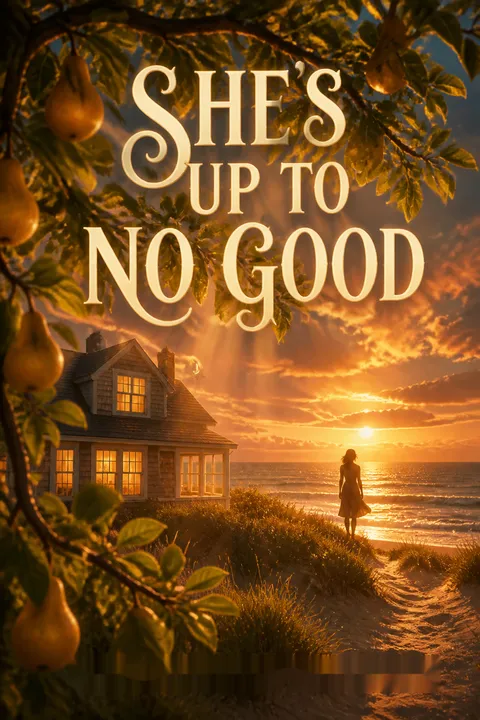


Plot Summary
The Ring on the Table
Jenna Greenberg is scrolling through house listings when her husband, Brad, tells her he has fallen for someone else and is leaving. Their marriage had been stalled for years: he kept postponing the house and baby they planned, while both of them had stopped tending to the relationship.
Brad offers her half the proceeds when he sells the condo, but Jenna still feels abandoned at thirty-four, with no home of her own and the future she imagined suddenly erased. She calls her mother and asks to come home. Six months later, she remains in her childhood bedroom, delaying the divorce and watching Brad build a new life while she avoids rebuilding hers.
Jenna’s crisis is not simply that Brad chose another woman. His departure exposes how much of her life had been organized around a promised future that never arrived, including a house, a child, and a marriage she believed was secure. The condo’s ownership and Brad’s control of the sale make her dependence concrete, while her insistence on delaying the divorce gives her pain a task: she can still make him wait. That retaliation preserves a sense of agency, but it also keeps her identity attached to the man who has already withdrawn from the marriage.
The Unlicensed Road Trip
Jenna’s mother finally tells her to stop hiding at home, but the person who gets her moving is her eighty-eight-year-old grandmother, Evelyn Gold. Evelyn announces that she must return to Hereford, Massachusetts, for private business, then insists on driving despite having lost her license after a mini-stroke.
Jenna takes over the wheel and agrees to accompany her, partly to escape her parents’ house and partly because she has nowhere better to be. On the long drive north, Evelyn begins telling her about the town and her first love, Tony Delgado. Her stories turn the road trip into a family excavation, though she keeps the reason for her return to herself.
Evelyn’s comic defiance is also a way of managing vulnerability. She hides fatigue, refuses help, and disguises serious intentions as errands, while Jenna mistakes that resistance for mere eccentricity. Their road trip reverses their expected roles: the younger woman must protect her grandmother, yet the grandmother supplies the emotional direction Jenna lacks. By linking the journey to Hereford before explaining its purpose, the book makes place an active inheritance. Jenna is not just being taken away from home; she is being returned to a history that may help her imagine home differently.
Evelyn Chooses Tony
In 1950, seventeen-year-old Evelyn Bergman spots Tony Delgado outside a drugstore and boldly claims a date with him. She has already noticed his character: when his younger brother steals candy from her father Joseph’s shop, Tony makes the boy return it and offers to pay.
Evelyn’s Jewish immigrant father forbids her to date a non-Jewish boy, but eventually permits carefully limited dates with Jewish boys while Evelyn secretly continues seeing Tony. That summer, their families gather at Joseph’s beach cottages, giving the couple cover to meet.
Tony plans to leave the fishing business and become a police officer. When Evelyn learns his family doubts her commitment, she changes colleges from Pembroke to Simmons, choosing a school closer to him.
Evelyn’s attraction begins with moral recognition as much as physical desire. Tony’s insistence that his brother make restitution offers a counterweight to Evelyn’s talent for charming her way out of rules. She wants someone who sees past her performance and calls her toward responsibility. Yet her confidence can also become a form of control: she assumes that love, cleverness, and time will eventually move her father. Their romance therefore carries a real conflict between personal choice and communal identity, especially for Joseph, whose Jewishness is inseparable from the losses that shaped his life.
Two Rings, Two Futures
At college, Evelyn meets Fred Gold, a witty Harvard student who is engaged to someone else and becomes her platonic companion. She still belongs emotionally to Tony, who trains for the Hereford police force and gives her a small engagement ring to wear on a chain. Their relationship deepens, but Tony refuses to sleep with her until they are married.
When he finally asks Joseph for permission, Joseph rejects him, and Miriam warns Evelyn that leaving for Tony would cost her family. Tony will not elope and force that choice. Evelyn goes to his house, but he tells her to return home. After grieving, she turns to Fred, who has ended his engagement, and accepts his love. In 1952, Fred asks Joseph for her hand, and Joseph agrees.
The two romances offer different kinds of safety. Tony asks Evelyn to risk family belonging only if she can accept the cost; Fred’s love fits the future Joseph can bless. Evelyn’s choice is not a simple exchange of one man for another. She loves Tony, but she also recognizes that his refusal to make her choose is itself an act of care, while Fred offers a relationship she can openly inhabit. The hidden ring preserves the part of her that cannot be neatly transferred. Her decision creates a life, but the story leaves emotional residue rather than pretending that a socially workable choice erases the first love.
Vivie’s Last Summer
In 1955, Evelyn’s younger sister Genevieve, known as Vivie, falls deeply for George Eller, a Columbia student who has called her his friend but never secured their future. Their parents refuse to let her travel to meet him, and Evelyn helps Vivie attempt an early-morning escape. Their brothers intercept the sisters at the station and carry Vivie home.
George later sends a brief letter, then marries another woman. Evelyn drives back to Hereford after learning of the wedding and finds Vivie missing in the rain. A note suggests Vivie intended to die; Joseph burns it, and Tony, now a police lieutenant, helps make the death look accidental. At Vivie’s funeral, Tony appears. Evelyn weeps in his arms, then returns to Fred, whom she also loves.
Vivie’s tragedy is shaped by the family’s attempt to manage risk through control. Her parents intend to protect her, but their refusal to hear what she wants leaves her with few ways to test whether George is worthy of her devotion. The novel does not make her death a simple consequence of one rejected romance. Instead, it exposes how isolation, idealization, and unspoken distress can converge beyond a family’s ability to recognize them. Evelyn and Joseph’s concealment protects Miriam from a devastating truth, but it also leaves grief without a shared account. Tony’s help binds him to Evelyn through a mercy that is both intimate and morally compromised.
The Island Rescue
By 1968, Evelyn is married to Fred and raising their children, while Tony has become Hereford’s police chief. When Evelyn’s daughter Anna and Tony’s niece Sofia miss the tide on the offshore island, Evelyn commandeers a motorboat to reach them. Tony joins her and takes the helm, then helps rescue the girls from the castle ruins.
Anna is afraid to jump from the ledge, so Evelyn climbs up and jumps with her, showing her that fear need not decide for her. Tony dives into the water when Evelyn appears to be missing, then discovers she has reached the boat ladder. Their old intimacy resurfaces in the crisis, but they part without undoing their separate lives.
This rescue transforms the island from a romantic meeting place into a test of what Evelyn has passed on to her daughter. She does not protect Anna by removing every danger; she accompanies her through a chosen risk. That distinction matters because Evelyn’s own life has been governed by choices others tried to make on her behalf. Tony’s instinctive dive shows that their bond remains active even after marriage and decades apart, yet the scene’s focus stays on the next generation. Their affection is real, but it no longer requires possession or a rewritten past.
The Letters Under the Hat
When Miriam dies in 1978, Evelyn and her sisters sort through their mother’s belongings and find a bundle of unopened birthday letters from Frank Corrigan, an Irish longshoreman. Frank explains that he and Miriam had loved each other as teenagers, but Miriam’s father sent him away while her mother was ill. Miriam married Joseph after her mother died and kept Frank’s letters without reading or discarding them.
Evelyn understands that her mother’s opposition to Tony came from a fear of her daughter repeating a painful, precarious choice. She also sees Miriam’s treatment of Vivie in a new light. Rather than reduce her mother to a villain, Evelyn returns to the cemetery and tells her she understands and forgives her.
The letters revise Evelyn’s understanding of the person who most often opposed her. Miriam’s strictness was not simply inherited conservatism; it carried the memory of a love she had been forced to abandon and a life she believed she had survived by choosing security. The unopened letters embody an unresolved attachment that neither marriage nor silence erased. Evelyn’s forgiveness does not mean Miriam’s decisions were harmless, especially where Vivie was concerned. It means Evelyn can hold intention and consequence together, refusing the easier family story in which one person is wholly right and another wholly wrong.
The Cottage Disappears
At Helen’s funeral in 1991, Evelyn learns that Sam’s widow, Louise, has sold the family’s smaller beach cottage without consulting her. Evelyn demands that her siblings buy it back, but Bernie and Margaret explain that they chose not to: the family no longer gathers there as it once did, and Louise needs the money.
Evelyn accepts the loss, recognizing that preserving the past cannot mean compelling everyone else to maintain it. Tony, now an older man, arrives to pay his respects, and the two exchange a quiet recognition. Years later, after the cottage’s new owner offers it for sale, Evelyn and Fred buy it as an investment. Evelyn keeps that secret until she can give Jenna a place to begin again.
The cottage dispute turns inheritance into a question of consent. Evelyn’s anger is justified by the depth of her attachment, but her siblings challenge the assumption that a shared past gives her permanent authority over a shared place. Her decision to relent marks a quieter maturity than her youthful defiance: she can grieve without forcing others to preserve her version of family life. The later purchase does not reverse that loss so much as make a new use of the place possible. The cottage’s eventual transfer to Jenna transforms memory from an obligation into an offered resource.
A Photographer Named Joe
In Hereford, Jenna discovers that the rented cottage once belonged to Evelyn’s family. Its property manager, Joe Fonseca, is Tony’s great-nephew, a photographer whose mother, Sofia, owns a Portuguese restaurant. Evelyn sends Joe to show Jenna around while she visits old friends, and Jenna assumes the arrangement is a setup.
Joe takes her to eat fried clams, walks her through Main Street, and shows her the memorial park named for Jenna’s great-grandfather. At an antiques shop, Jenna finds a photograph of young Evelyn, which Joe’s great-aunt Lina says was taken by Tony’s brother Felipe. Joe’s attention and camera begin to draw Jenna out of hiding, while his family’s history makes the town feel less like a vacation stop.
Joe’s connection to the family makes the present romance more than a convenient vacation encounter, but it does not make them destined for each other. His photographs challenge Jenna’s reliance on curated images by offering a different kind of seeing: one that notices her without requiring her to perform happiness. The old photograph of Evelyn also gives Jenna a visible model of self-possession, though resemblance alone cannot supply confidence. Meanwhile, the memorial park and Joe’s family history reveal how relationships can survive through acts of repair, not merely through romantic pairing. Hereford becomes a place where personal history is legible in public spaces.
The Castle Jump
Joe takes Jenna on a hike through the woods to Rockland, a ruined settlement blamed on supposed witches, then photographs her in a shaft of sunlight. On another outing, he leads her across the exposed sandbar to an island where a castle ruin remains from a silent film.
To return, Jenna agrees to jump from a high ledge into the ocean with Joe, accomplishing a leap she had avoided all her life. The exhilaration restores a sense of choice she had lost in her marriage. Later, Joe kisses her at his gallery, but when intimacy becomes possible at his home, Jenna panics and leaves. She insists she cannot turn a vacation flirtation into a way of escaping Brad.
The physical jump gives Jenna a concrete experience of acting before fear has finished making its case. It does not cure her grief or guarantee a new relationship; her retreat from Joe shows that bravery is uneven and context-dependent. The island’s ruins also echo the stories of women condemned as witches, but Joe presents the history with curiosity rather than certainty, allowing Jenna to encounter the past without reducing it to a neat legend. Her refusal at Joe’s home is not a failure of growth. It marks the boundary between feeling attraction and being ready to trust someone with the consequences.
The Story Behind Vivie
After another day with Joe, Jenna’s grandmother drives to Salem, then asks Jenna to fetch her when she feels unwell. Back at the cottage, Evelyn finally explains why she came to Hereford: she met George, Vivie’s former boyfriend, and learned he had wanted Vivie to meet his future wife, not to marry him.
The truth sharpens the tragedy Evelyn has carried for decades, though no one can know whether it would have changed Vivie’s fate. Jenna sees how fear and silence have shaped both women, then goes to Joe and admits she was frightened of trying. Joe brings her inside, and they begin a relationship on terms neither has to disguise. The next morning, Jenna returns to find Evelyn sharing breakfast with Tony.
George’s confession cannot restore Vivie or prove what she would have done with the truth. Its importance is that it punctures the romantic certainty that had governed her hope and her family’s guilt. Jenna hears the revelation while facing a smaller but structurally similar choice: retreat from uncertainty or risk being known. Her decision to seek Joe is not presented as a cure supplied by a man. She names her fear and chooses action herself. Evelyn’s reunion with Tony, glimpsed rather than explained, suggests that the older generation has also begun to act on truths it once kept at a distance.
The Cottage Is Jenna’s
Evelyn and Tony reconnect during the Hereford visit, while Jenna and Joe build a relationship that continues after the trip. Before leaving, Jenna visits the family cemetery and learns that Vivie’s name was Genevieve, the name she herself was given before her mother chose Jenna. Evelyn also reveals that she and Fred secretly bought the cottage years earlier after its new owner put it up for sale.
Back in Maryland, Jenna signs the settlement agreement, returns Brad’s key and engagement ring, and tells him that his betrayal should not be repeated with his new partner. She starts looking for an apartment and makes plans with neglected friends. Evelyn then gives Jenna the cottage deed, adding that she owns the neighboring cottage too.
Jenna’s resolution is deliberately practical. Signing the papers, returning the ring, and beginning an apartment search convert emotional readiness into actions that alter her circumstances. Her family history does not dictate that she repeat Evelyn’s choices or inherit Vivie’s despair; learning Vivie’s full name makes legacy more intimate, but Jenna still chooses what to do with it. The cottage is both a generous gift and a material alternative to dependence on her parents. Evelyn does not ask Jenna to stay trapped in the past. She gives her a place from which to make a new life, with connection available rather than compulsory.
Epilogue
Jenna wakes in the Hereford cottage to salt air and pine, now living there with Joe. A familiar creak and Evelyn’s laughter from the next room tell them that Evelyn and Tony are together, though the couple’s privacy is not exactly soundproof.
Joe and Jenna try to return to sleep, only to discover that Jax has taken the space between them. This time Jenna is content where she is: in a home that joins chosen love to inherited history without asking her to pretend either is perfect.
The closing scene makes domestic intimacy deliberately untidy. The old lovers’ renewed happiness leaks through the cottage walls, while Jax’s interruption punctures any polished romantic tableau. Jenna’s contentment does not depend on a perfect household or an audience to certify it; it comes from inhabiting a life she has chosen. The cottages now shelter two generations of love, but not as a repetition of the same story. What passes between them is permission to begin again, not a demand to recreate the past.
Analysis
The novel treats romantic history as inheritance, but not as destiny. Jenna and Evelyn resemble each other in temperament and in their attraction to vivid, unconventional lives, yet their circumstances and choices remain distinct. Evelyn’s story reveals that family authority is never merely abstract: Joseph’s refusal is shaped by Jewish survival, Miriam’s caution by a love she lost, and the daughters’ obedience or defiance by the practical costs of leaving home. Those motives explain behavior without absolving its consequences. Vivie’s story is the sharpest warning against confusing protection with understanding. Her family tries to manage her future while failing to discover how little they know about the relationship on which she has staked it.
The two timelines also scrutinize the stories people tell to survive. Jenna curates images that make her marriage appear happier than it is; Evelyn turns painful memories into funny anecdotes until she is ready to disclose their cost. Miriam keeps letters she cannot bear to read. These are different forms of concealment, not equivalent moral failures, but all leave relationships vulnerable to mistaken assumptions. Joe’s photography offers a counterpoint: he does not claim that an image contains the whole truth, only that attentive looking can reveal something a person has stopped seeing in herself.
Hereford’s repeated physical challenges make emotional choice bodily. The sandbar opens and closes with the tide; the cliff demands a leap; the old cottages remain valuable even as family structures change. Jenna’s recovery becomes credible because it is expressed through acts with consequences. She signs the divorce agreement, reconnects with friends, searches for an apartment, and accepts a home that gives her options rather than sheltering her indefinitely. The book’s hope is not that love repairs every wound or that family history supplies a perfect map. It is that people can inherit both damage and generosity, understand more than their parents could, and still choose a life of their own.
Review Summary
She's Up to No Good is a heartwarming and humorous novel about a grandmother-granddaughter road trip. Readers loved the dual timeline narrative, exploring Evelyn's past and Jenna's present. Evelyn's character, described as feisty and lovable, was a highlight for many. The book tackles themes of love, family, and second chances, with strong Jewish representation. While most reviews were overwhelmingly positive, praising the witty dialogue and emotional depth, a few found the contemporary timeline less engaging. Overall, it's widely recommended as an enjoyable, feel-good read.
People Also Read





Characters
Jenna Greenberg
The stalled teacherJenna is a middle-school history teacher whose carefully planned adult life collapses when her husband leaves. She retreats to her parents’ home and clings to the divorce delay because it gives her hurt a target, even as she knows she no longer wants the marriage. Jenna is observant and funny, but she often uses self-deprecation and social-media polish to avoid showing need. Her journey depends less on finding a new partner than on recovering the ability to choose: to travel, take physical risks, accept affection, and make decisions that change her actual circumstances. She is also drawn to family history because it gives her a way to understand her own habits without treating them as destiny.
Evelyn Gold
The rule-breaking matriarchEvelyn is Jenna’s grandmother, an irrepressible storyteller who treats rules as negotiable and embarrassment as a small price for living fully. Her humor and bravado often conceal the gravity of what she has survived, including family conflict and enduring romantic loss. She loves her daughters and granddaughter fiercely, but her instinct to manage other people’s choices can make her both generous and intrusive. Evelyn understands how a person can tell herself a convenient story in order to keep moving, and she is willing to challenge Jenna’s retreat. Her deepest gift is not matchmaking; it is the example of someone who continues to make choices even when the past remains unresolved.
Joe Fonseca
The attentive photographerJoe is a local photographer and the great-nephew of Tony Delgado. He is comfortable in Hereford’s coastal world, from its tides and trails to its family businesses, but his creative attention makes him more than a guide to the town. Joe notices what a posed image can conceal and treats Jenna as a person rather than a project. He carries private grief and approaches intimacy carefully, with a steadiness that contrasts with Jenna’s fear of being left. His attraction to her grows through shared experiences, humor, and honest moments rather than a grand rescue. Joe’s work also gives the novel a visual language for the difference between looking happy and feeling seen.
Tony Delgado
The steadfast first loveTony is a Portuguese-American fisherman who becomes a police officer and later leads Hereford’s police department. His defining trait is a strong moral compass: he expects accountability from himself as well as from others, and he resists using love as permission to disregard another person’s needs. He shares a deep bond with Evelyn, whose daring nature both attracts and challenges him. Tony’s restraint can frustrate her, but it also reflects his belief that commitment must include consequences, family, and consent. His life remains closely tied to Hereford, where his work and relationships create bridges between communities that once kept one another at a distance.
Fred Gold
The candid companionFred is a Harvard student who meets Evelyn while both are away at college. Witty, talkative, and perceptive, he can challenge her without trying to diminish her. He recognizes her capacity for mischief and sees the sadness beneath it, offering companionship without demanding that she become someone else. Fred represents a different kind of partnership from Evelyn’s first love: more openly available and compatible with the family life she wants to build. His humor helps him approach serious feelings, but he is also capable of directness when another person needs to know where he stands.
Brad Shapiro
The departing husbandBrad is Jenna’s lawyer husband, whose departure for another woman ends their six-year marriage. He is ambitious and increasingly dissatisfied with a relationship he considers difficult, while Jenna experiences his decision as a sudden betrayal. Their plans for a house and child reveal how long they have postponed confronting the marriage’s problems. Brad’s preference for orderly resolution contrasts with Jenna’s wish to make him feel some of the pain he caused.
Vivie Bergman
Evelyn’s cherished sisterVivie is Evelyn’s younger sister, more sensitive and less flamboyant than the sibling who often dominates a room. She loves Evelyn deeply and becomes her confidante, protecting her secrets even when family pressure makes that difficult. Vivie is thoughtful, bookish, and capable of seeing through Evelyn’s bravado. Her longing for love and independence reflects the constraints faced by young women in her family, while her bond with Evelyn gives both sisters a rare place to speak honestly.
Joseph Bergman
The immigrant shopkeeperJoseph is Evelyn’s father, a Jewish immigrant from Russia who builds a respected life in Hereford through thrift, fairness, and hard work. He cherishes his family and invests in his children’s education, yet holds firm boundaries around religion and marriage. His protective instincts are shaped by persecution and the loss of relatives, not simply by a wish to control his daughters. Joseph’s tenderness toward Evelyn can soften his rules, but his fear of losing family belonging makes him difficult to persuade when love crosses communal lines.
Miriam Bergman
The guarded motherMiriam is Evelyn’s mother, a capable household manager who has spent much of her life caring for a large family. She is more suspicious of Evelyn’s charm than Joseph is and often becomes the parent who enforces limits. Miriam’s caution grows from a past she rarely discusses and from her desire to protect her daughters from painful choices. She can be loving and perceptive while also causing harm through silence and control. Her character asks whether good intentions excuse decisions that deny another person the chance to choose.
Anna Greenberg
Jenna’s protective motherAnna is Jenna’s mother and Evelyn’s daughter. She worries about Evelyn’s health and Jenna’s prolonged retreat, and she is willing to press her daughter to reenter life even when the pressure stings. Her own childhood connection to Hereford makes the town a bridge between generations. Anna represents practical care, but she does not fully control what her mother or daughter will do.
Sofia Fonseca
The family restaurateurSofia is Joe’s mother, a warm restaurateur whose menu draws on family recipes. As a child, she knew Evelyn’s family and benefited from Joseph’s kindness and support. Her affection for both families helps Jenna understand that the past contains acts of generosity as well as conflict. Sofia is direct about her hopes for Joe, but her welcome comes from genuine care rather than mere matchmaking.
George Eller
Vivie’s distant belovedGeorge is a Columbia student who becomes the focus of Vivie’s romantic hopes. He is confident and self-directed, with a manner that can appear impressive to someone eager for his attention. His relationship with Vivie is filtered through her devotion and the family’s judgments, leaving important gaps in what she knows about his intentions. George embodies the danger of building a future around untested assumptions.
Frank Corrigan
Miriam’s first loveFrank is an Irish longshoreman who loved Miriam as a young woman. He is separated from her by the expectations of her family and by the narrow choices available to them. His letters preserve a private history that Miriam cannot quite erase. Frank’s recollections help Evelyn see her mother as a person shaped by thwarted desire, rather than only as the parent who enforced rules.
Emily
Joe’s late wifeEmily was Joe’s wife, a nurse whose life and loss remain part of the emotional landscape he brings to a new relationship. Though she never appears directly, her memory explains why Joe approaches intimacy with care and why Jenna’s questions about commitment carry particular weight.
Jax
The exuberant dogJax is Joe’s affectionate black dog, who loves to greet visitors with energetic, poorly timed enthusiasm. Her interruptions puncture romantic tension and make Joe’s home feel lived in rather than staged.
Plot Devices
The Hereford road trip
A journey into family historyEvelyn’s return to Hereford gives Jenna a reason to leave her parents’ house and enter a place where family memories remain embedded in streets, cottages, and relatives. The drive provides the framing structure for Evelyn’s stories about Tony, Miriam, and Vivie. Its practical inconveniences, especially Evelyn’s insistence on driving and Jenna’s need to take over, also establish their comic but reversed caretaker dynamic. Hereford gradually becomes more than the setting of a vacation: it gives Jenna an alternative to treating her failed marriage as the only story that explains her.
The paired love stories
Past choices illuminate present onesEvelyn’s early romance with Tony unfolds beside Jenna’s tentative connection with Joe. The parallels are not exact: the older couple confronts religious and family barriers, while the younger pair must work through grief, distance, and Jenna’s fear of trust. Their stories illuminate how love can require restraint as well as courage. The structure also resists the idea that one romantic choice proves another wrong. Evelyn’s past remains emotionally meaningful even as she builds a life with Fred, and Jenna’s future does not need to replicate her grandmother’s.
The family cottages
A home that changes handsThe two Hereford cottages begin as Joseph’s gift to Miriam and a gathering place for their growing family. Over decades, the cottages become sites of courtship, childhood freedom, grief, conflict, and changing family needs. Their ownership shifts as relatives die, financial responsibilities accumulate, and later generations stop spending entire summers there. Evelyn and Fred’s eventual purchase turns the cottage into an inheritance Jenna can use, while the neighboring property expands the gift. The cottages make the novel’s question of home tangible: a place can carry memory without requiring every generation to live the same life.
The tide and island
A test of chosen courageThe tidal sandbar connects the beach to an island holding the ruins of a castle built for a lost film. Jenna and Joe cross it for an adventure, and Jenna must choose whether to jump into the ocean to return. Earlier, Evelyn and Tony use the same dangerous geography to rescue stranded children, making the island part of the family’s shared history. The changing tide creates real consequences rather than decorative atmosphere. Crossing, climbing, and jumping give both generations physical moments in which courage means acting alongside fear, not pretending fear is absent.
Miriam’s unopened letters
A hidden history reframes judgmentA bundle of birthday letters from Frank Corrigan, preserved but unopened among Miriam’s belongings, reveals an earlier love that the family never knew about. The letters complicate Evelyn’s understanding of her mother’s opposition to Tony and expose the cost of decisions made under pressure from family and social expectations. They do not prove Miriam was right to restrict her daughters, nor erase the harm that followed. Instead, the letters turn silence into evidence: Miriam’s apparent certainty concealed a private grief she never resolved aloud.
About the Author



Download PDF
Download EPUB
.epub digital book format is ideal for reading ebooks on phones, tablets, and e-readers.








