

Key Takeaways
Treat emotions as useful signals, not enemies or commands.
Feelings carry information. Emotion is a coordinated response to something that matters, involving bodily changes, interpretations, and outward behavior. Feelings are the part of that response a person consciously experiences. In a study tracking people’s daily emotions, participants reported feeling something more than 90 percent of the time, and they experienced positive and negative emotions together about a third of the time. Emotional life is less a set of tidy switches than overlapping signals.
Learn to play the instrument. Navy SEAL Matt Maasdam felt fear, frustration, and attraction during punishing survival training. His advantage was not emotional numbness: he treated fear as a cue to focus and joy as a reason to reconnect. The book’s central aim, emotion regulation, means changing the intensity or course of an emotional response, not erasing it. Anxiety can prepare for danger; sadness can prompt reflection and draw support. Trouble begins when a useful signal overwhelms its purpose.
This view avoids the familiar trap of dividing feelings into good ones to keep and bad ones to suppress. It also makes emotional skill practical: the question becomes what a feeling is signaling, and whether its volume still fits the situation. That distinction matters because fear can be protective in a genuine emergency, while persistent fear can narrow a person’s life. A signal still requires interpretation, however. Emotions convey information, not infallible verdicts, so their message deserves attention without automatically dictating action.
You cannot choose the first feeling, but you can steer its trajectory.
Separate trigger from response. A trigger is an event that sparks an automatic emotional reaction. Luisa’s daughter had a severe allergic reaction to peanuts on a plane; afterward, images of her child dying appeared during ordinary routines. Luisa could not prevent the first surge of fear, but repeatedly researching disasters and replaying imagined scenes kept the fear alive. Redirecting her attention interrupted that cycle.
Control is a capacity. Cognitive control is the ability to pause or redirect automatic thoughts and actions in service of a goal. It helps people resist an itch, and it can also help reshape an emotional response. Psychologist Albert Bandura’s gradual coaching of people terrified of snakes showed that small, supported steps could build self-efficacy, the belief that one can manage a challenge. The book’s point is not that everyone can control every feeling, but that repeated experiences of effective action can make intervention more thinkable.
The trigger-versus-trajectory distinction offers a more credible kind of agency than the demand to calm down on command. It locates choice in the next available action, such as turning attention toward a task or seeking support, rather than blaming someone for an involuntary reaction. This resembles the difference between an initial reflex and a learned response in skill training. Still, the available choices shrink under severe stress, trauma, or illness. Agency is real, but it should not be mistaken for unlimited control or a reason to fault people who need clinical help.
Build a sensory playlist before stress makes thinking difficult.
Use fast pathways. Sensory shifters are sights, sounds, tastes, smells, and touches that change emotional states. When Ethan Kross’s daughter Dani was gloomy before soccer, a Journey song on the car radio lifted her mood more effectively than her father’s pep talks. Music is common as a mood tool: one study found that 96 percent of participants used it to express feelings or manage mood. Yet in Kross’s studies, only 10 to 30 percent named music when asked how they regulated difficult emotions.
Choose deliberately. A familiar song, a comforting scent, petting a dog, or hands-on bread baking can work with little effort, which is useful when stress makes concentration harder. Sensations can also pull mood in the wrong direction. The emotional congruency effect describes the tendency to choose experiences that match one’s current mood, such as sad songs when heartbroken. Make a short list of low-cost sensory options before a difficult moment arrives.
Sensory strategies are useful partly because they ask less of a person than analysis does. A song or familiar smell can become a cue for a practiced change in state, much like a warm-up routine before performance. The most effective option is personal, not universal, and convenience matters: a calming activity that is hard to access may be useless in a crisis. Sensory comfort can also become avoidance or overconsumption if relied on exclusively. The practical test is whether it helps someone return to life, not merely escape it.
Choose when to face a feeling and when to give it space.
Avoidance is a tool, not a diagnosis. Edna Foa and Michael Kozak’s model of fear emphasizes approaching a feared experience so new information can revise the mind’s threat prediction. But the claim that every difficult emotion must be confronted immediately is too simple. The author’s grandmother Dora survived the Holocaust and rarely discussed the war with her young grandson, yet she sometimes shared memories with people who had lived through it. Dennis Rodman also stepped away from basketball’s pressures before returning to perform.
Watch what happens next. In a study following 101 New York students after September 11, those best able to express emotion and suppress it when appropriate showed better adjustment. The psychological immune system is the mind’s capacity to recover over time as emotional intensity fades. A pause can help. But repeated intrusive thoughts, compulsive distraction, or constant reassurance-seeking suggest that avoidance is not resolving the distress. Switch strategies when one stops helping.
The argument for flexibility improves on moralized advice that equates disclosure with health and silence with denial. A pause can protect a person from being flooded, while deliberate approach can support learning when fear is maintaining itself. The useful distinction is not simply whether someone confronts a feeling, but whether their strategy allows functioning, recovery, or understanding. A personal story cannot establish that the same approach works for everyone, especially after trauma. The section’s strength is its refusal to turn either expression or restraint into a universal rule.
Step back from distress before asking yourself to reinterpret it.
Reframing takes mental room. The ABC model links an adverse event to a belief about it and then to an emotional consequence. A diagnosis, for instance, may prompt the belief that life is over, intensifying despair; another interpretation may leave room for uncertainty and treatment. But forced optimism can backfire, especially when a problem is controllable and calls for action. Under stress, the brain often narrows its focus, making it harder to generate a useful alternative.
Create distance first. Distanced self-talk means addressing oneself as another person, by name or as you, rather than only as I. It can make self-coaching easier. Other options include thinking in a second language or asking how the current problem may look in a week or a year. Astronaut Jerry Linenger used self-coaching while fighting a dangerous fire aboard the Mir space station. Perspective shifts do not erase loss; they can make clear thinking possible alongside it.
The important refinement is that reframing is not the same as manufacturing a silver lining. A sound reappraisal can be sober: it may acknowledge danger while distinguishing what is known from what is feared. Distance helps because it reduces the sense that the problem and the self are identical. Yet distance can also become detachment if it is used to evade responsibility or grief. Its value depends on what it enables next: clearer action, a more balanced interpretation, or renewed contact with what matters.
Change the room when your mind cannot change the mood.
Spaces shape emotional options. Laurie Santos, a Yale professor known for teaching happiness, became so overwhelmed by work that advice she understood was impossible to use. A sabbatical and move to Cambridge gave her a setting tied to earlier, happier parts of her life; there she could see choices that had seemed invisible at Yale. Sean, an Army commander facing divorce after deployment, found temporary safety and rest at his childhood home. Place attachment is the emotional meaning and comfort a person connects to a location.
Edit the immediate setting. Situation modification means changing the environment to influence feelings or behavior. Kross removed leftover pizza so it would not repeatedly tempt him, while a photo of a loved one can provide emotional comfort. Remove cues that pull toward unwanted reactions, and add cues that support the state or action being sought. A personal refuge need not be far away: a quiet corner, nearby park, or familiar café may provide a useful reset.
This section shifts emotion regulation from private effort to environmental design. That is a meaningful correction to advice that treats distress as solely a problem of attitude: people’s options depend partly on what their surroundings repeatedly invite or obstruct. A small change can prevent many rounds of temptation or restore a sense of perspective. Not every person can leave a stressful workplace or reach a restorative place, and changing space cannot repair every underlying problem. Its power lies in widening options, not pretending circumstances are easily escaped.
Shape your emotional climate by choosing how you engage with people.
Feelings travel socially. Emotional contagion is the spread of emotion between people, often through subtle mimicry of expressions, posture, and tone. In Kross’s workshop exercise, supportive group leaders helped teams collaborate, while stern, dismissive leaders quickly silenced theirs. Social contact can regulate emotion, but support works best when listening and empathy are followed, when welcome, by a broader perspective. Repeatedly rehashing distress together is co-rumination, which can intensify a problem instead of helping resolve it.
Use the full social toolkit. Comparing oneself with someone doing better can fuel envy or inspiration; thinking of someone facing worse conditions can bring fear or gratitude. Helping others can lift mood too: in a study, people given money to spend on others became happier than those told to spend it on themselves. These are options, not obligations. Pay attention to whether a conversation, comparison, or act of care leaves a person more able to cope or more trapped in distress.
The social view helps explain why emotional management is not a solitary achievement. Other people can offer attention, perspective, practical help, or simply a calmer emotional tone. It also suggests that support is a skill: validation without endless escalation, and advice without premature dismissal. Social comparison is especially context-dependent, since the same comparison can inspire or diminish. Prosocial behavior is not a cure for serious distress, and care should not be treated as a transaction. These practices work best as sources of connection, not substitutes for needed support.
Build group norms that make emotional support easier to practice.
Culture is emotional infrastructure. Culture consists of shared ideas and practices passed through groups, from families and workplaces to religious communities. The book organizes it around beliefs and values, norms, and practices. Alcoholics Anonymous helped Hollis remain sober after losing her job through shared language, meetings, sponsors, and a practiced habit of calling other members. These routines made it easier to ask for help while overwhelmed.
Change the system, not just the person. A group can make emotional safety easier by turning its values into everyday rules and repeatable actions. England’s football program, for example, used small-group conversations and shared play to strengthen trust and resilience. A workplace that praises balance but rewards constant overwork sends conflicting signals. To improve a group, identify what it claims to value, what behavior it actually rewards, and what practices could bring the two into closer alignment. Sometimes the healthiest choice is to leave a damaging culture.
The cultural lens adds scale to an otherwise individual account of emotional skill. A person’s habits are reinforced, or undermined, by the groups that define what can be said, what gets rewarded, and who is available in a crisis. The beliefs-norms-practices structure makes an abstract culture easier to inspect and change. But cultures are not neutral machines: a group may support insiders while excluding others, or call conformity care. Evaluating emotional effects therefore requires asking not only whether a culture creates belonging, but whose needs and values it serves.
Install emotional habits with WOOP before the hard moment arrives.
Turn intentions into plans. WOOP stands for Wish, Outcome, Obstacle, and Plan. First identify a realistic goal and why it matters, then name the internal obstacle most likely to interfere. Finally, make an if-then plan that links a recognizable situation to a specific response. A parent who wants to stay calm during sibling fights might plan to pause and remind themself that the children are still learning before speaking.
Rehearse before pressure. Psychologist Gabriele Oettingen’s mental contrasting joins an attractive future with an honest look at the obstacle blocking it. Peter Gollwitzer’s implementation intentions connect that obstacle to a prepared action. Together, they form WOOP, which is designed to make follow-through less dependent on improvisation. Studies described in the book report benefits for schoolwork, health behavior, emotional coping, and relationships. Plans cannot anticipate every surprise, but practice can make a useful response easier to reach when stress narrows attention.
WOOP addresses a familiar gap: understanding a useful strategy does not guarantee that it will come to mind during a difficult moment. Naming a specific obstacle makes a plan more realistic than relying on general resolve, while an if-then link reduces the need to decide from scratch. This is a form of advance rehearsal, not a promise of perfect control. The plan should stay adjustable: if the cue is vague, the action impractical, or the emotional problem too severe for self-management, the person needs a different plan or additional support.
Analysis
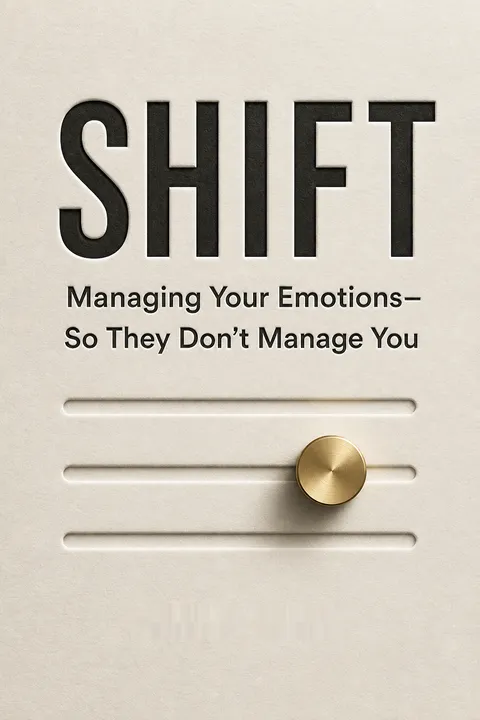
Shift’s central contribution is an ecological account of emotion regulation. Rather than treating emotional control as a contest between reason and feeling, it presents a set of interacting levers: sensation, attention, perspective, physical space, relationships, and culture. The levels matter. A song can alter a mood quickly; a friend can change the frame of a problem; a group’s norms can determine whether support is available at all. WOOP then converts selected tools into prepared responses. The book’s stories give this broad architecture human scale, from Dora’s selective engagement with trauma to Luisa’s escalating fears and Hollis’s reliance on an established recovery community.
The model is most persuasive when it distinguishes involuntary emotional onset from the ways an emotional episode is sustained or altered. That distinction supports agency without claiming that people can simply choose their feelings. Its emphasis on flexibility is also a useful antidote to one-size-fits-all prescriptions. Distraction, disclosure, reframing, and environmental change are not virtues in isolation; their value depends on what they do in a particular situation.
The same breadth creates a risk. Readers may interpret shifting as a duty to manage every painful reaction efficiently, or use regulation techniques to accommodate harmful circumstances that require practical change. The book partially resists that reading by including situation modification, cultural change, leaving toxic settings, and professional treatment. Those options deserve equal emphasis: individual skill should not become a substitute for safe environments, material support, or clinical care.
The strongest test of a strategy is therefore not whether it produces immediate pleasantness. It is whether it helps a person respond proportionately, preserve relationships, learn from emotional information, and return to valued activity. This standard keeps the book’s toolkit from becoming a happiness checklist. It also clarifies why the same tactic can help one person and hinder another: regulation is not emotional deletion, but context-sensitive steering.
Review Summary
Shift by Ethan Kross receives mostly positive reviews, with readers praising its insights on emotional regulation. Many find the book's practical tools and scientific approach helpful for managing emotions. Some reviewers appreciate the anecdotes and storytelling, while others find them less useful. The book is commended for its accessibility and research-based content. However, a few critics argue that some concepts are not groundbreaking or overly simplified. Overall, readers recommend it for those interested in understanding and improving their emotional intelligence.
Glossary
Emotion regulation
Shaping emotional responsesThe process of changing the course, intensity, or duration of an emotional response. It does not mean preventing every feeling or eliminating negative emotion. Regulation can amplify useful feelings as well as reduce distress, and it can involve internal strategies such as shifting attention or external ones such as changing a setting.
Cognitive control
Guiding automatic responsesA set of mental capacities that helps people direct attention, inhibit an immediate response, hold goals in mind, and consider alternatives. It supports actions such as resisting an impulse, redirecting attention from an intrusive thought, and changing how a situation is interpreted. Stress can make these capacities harder to use.
Self-efficacy
Belief in personal capabilityA person’s belief that they can take actions needed to reach a particular goal. In emotion regulation, this belief can affect whether someone tries a strategy at all. Experiences of supported success, such as gradually approaching a feared situation, can strengthen confidence in the ability to manage future challenges.
Sensory shifters
Senses that alter emotionSensory experiences that influence emotional states through sight, sound, touch, taste, or smell. Music, a familiar scent, nature, and comforting touch are examples. Their emotional effects can be rapid and relatively effortless, but vary between people and can have costs when they become unhealthy or compulsive habits.
Emotional congruency effect
Mood-matching sensory choicesThe tendency to gravitate toward sensory experiences that match one’s current emotional state. Someone feeling heartbroken might select melancholy music rather than something uplifting. Matching mood can sometimes help a person engage with feelings, but it can also prolong an unwanted state when the person is trying to shift out of it.
Psychological immune system
Natural recovery over timeThe mind’s capacity to respond to psychological distress and, in many cases, recover as time passes and emotional intensity diminishes. Distraction can provide room for this recovery process. It is not guaranteed to resolve every problem, and persistent intrusive thoughts, compulsions, or impairment may signal that another approach or professional support is needed.
Distanced self-talk
Self-coaching from a distanceA way of speaking silently to oneself using one’s name, you, or another non-first-person form. This linguistic shift can make a person consider a problem with some of the perspective and compassion they might offer someone else. Research described in the book links it with reduced negative emotion and wiser reflection.
Place attachment
Emotional bond with placeThe personal connection that makes a location feel meaningful, safe, restorative, or otherwise emotionally powerful. A place need not have universally calming features; its significance depends on a person’s memories and associations. Returning to a positively meaningful place can support rest, perspective, and a sense of continuity.
Emotional contagion
Emotion spreading between peopleThe process through which one person’s emotional state influences another’s, often through subtle mimicry of facial expression, posture, or tone. It can occur in face-to-face interactions and through digital communication. Emotional contagion can spread distress or support, affecting cooperation, relationships, and how groups handle pressure.
Co-rumination
Repeated shared problem-talkA pattern in which people repeatedly revisit and discuss distressing problems together without moving toward resolution or a broader perspective. The discussion may feel validating and strengthen closeness in the moment, but it can also intensify negative emotion and keep attention fixed on the problem.
WOOP
Goal-to-action planning methodA four-part method for turning a goal into a plan: Wish, Outcome, Obstacle, and Plan. A person identifies a meaningful, feasible wish, imagines its best outcome, names a likely internal obstacle, and forms an if-then response. The method combines mental contrasting with implementation intentions.
Mental contrasting
Desired future versus obstacleA goal-setting approach that pairs imagining a desired future with identifying a real obstacle that could prevent it. Positive fantasy alone may create a premature sense of satisfaction, while focusing only on barriers can discourage effort. Comparing the desired outcome with the obstacle can help focus motivation on what must change.
Implementation intentions
Specific if-then plansPlans that connect a recognizable situation to a specific action, using an if-then structure. By deciding in advance what to do when an obstacle or cue appears, a person reduces the need to improvise under pressure. In WOOP, implementation intentions link the identified obstacle to a chosen response.
FAQ
What's Shift: Managing Your Emotions—So They Don't Manage You about?
- Emotional Management Focus: The book delves into managing emotions effectively, preventing them from controlling you. It combines scientific insights with practical strategies for emotional regulation.
- Concept of Shifters: Introduces "shifters," tools to change emotional states, including sensory, attention, and perspective shifters.
- Real-Life Applications: Uses personal anecdotes and scientific research to demonstrate how these strategies can improve emotional well-being in everyday life.
Why should I read Shift: Managing Your Emotions—So They Don't Manage You?
- Practical Strategies: Offers actionable advice for managing emotions, enhancing emotional intelligence.
- Scientific Insights: Combines personal stories with research, providing a comprehensive understanding of emotions and their impact.
- Universal Relevance: Useful for dealing with stress, anxiety, or conflicts, offering tools to navigate emotional challenges.
What are the key takeaways of Shift: Managing Your Emotions—So They Don't Manage You?
- Understanding Emotions: Emotions are tools for navigating life, not inherently good or bad. Recognizing their role is crucial for management.
- Flexibility in Approach: Emphasizes the importance of flexibility in handling emotions, leading to better outcomes and resilience.
- Utilizing Shifters: Outlines internal and external shifters like sensory experiences and perspective changes to manage emotions.
What are the best quotes from Shift: Managing Your Emotions—So They Don't Manage You and what do they mean?
- “Emotions are not infrequent experiences...”: Highlights the constant presence of emotions, stressing the need for management strategies.
- “The ability to control your emotions...”: Emphasizes that regulation enriches positive experiences, not just suppresses negatives.
- “You can’t always change the adverse events...”: Reflects the principle of reframing, showing thoughts' influence on emotional responses.
What are the internal shifters mentioned in Shift: Managing Your Emotions—So They Don't Manage You?
- Sensory Shifters: Use sensory experiences like music or scents to alter emotional states, such as uplifting your mood with a favorite song.
- Attention Shifters: Direct focus away from negative thoughts, consciously choosing what to pay attention to for better emotional responses.
- Perspective Shifters: Change how you view situations to impact emotional experiences, like reframing negatives positively.
How does Ethan Kross define emotional regulation in Shift: Managing Your Emotions—So They Don't Manage You?
- Dynamic Process: Emotional regulation involves managing the intensity and duration of responses, not suppressing emotions.
- Use of Shifters: Emphasizes internal and external shifters to facilitate regulation, shifting emotional states constructively.
- Flexibility is Key: Flexibly switching strategies is crucial for effective management, leading to better mental health outcomes.
What role do external factors play in emotional management according to Shift: Managing Your Emotions—So They Don't Manage You?
- Influence of Environment: Spaces we inhabit affect emotional states; cluttered environments can heighten stress.
- Social Relationships: People around us impact emotions; positive relationships enhance well-being, toxic ones cause distress.
- Cultural Context: Cultural norms shape emotional experiences; understanding these helps navigate emotional lives effectively.
How can I apply the concepts from Shift: Managing Your Emotions—So They Don't Manage You in my daily life?
- Identify Your Shifters: Recognize which internal and external shifters work best, experimenting with sensory experiences and perspective shifts.
- Practice Flexibility: Be open to switching strategies based on context, enhancing resilience and emotional well-being.
- Create Supportive Environments: Modify physical and social environments to support emotional health, like decluttering or seeking positive influences.
What is the significance of the "psychological immune system" in Shift: Managing Your Emotions—So They Don't Manage You?
- Natural Recovery: Helps recover from emotional distress, gaining distance from negatives for healing.
- Role of Distraction: Healthy distraction gives the immune system time to work, preventing overwhelming emotions.
- Balance of Approach and Avoidance: Knowing when to approach or avoid emotions leverages the immune system for better outcomes.
How does Ethan Kross address the myth of universal approach in emotional regulation in Shift: Managing Your Emotions—So They Don't Manage You?
- Avoidance vs. Approach: Challenges the notion that avoidance is harmful, advocating flexibility in using both strategies.
- Case Studies: Provides examples, like his grandmother's experiences, showing selective avoidance can be adaptive.
- Encouraging Flexibility: Advocates for a flexible approach, allowing individuals to choose the best strategy for their circumstances.
What is the WOOP method in Shift: Managing Your Emotions—So They Don't Manage You?
- Structured Framework: WOOP stands for Wish, Outcome, Obstacle, and Plan, helping clarify goals and challenges.
- Visualization Technique: Encourages visualizing desired outcomes and obstacles, energizing action toward goals.
- Implementation Intentions: Involves creating if-then plans for obstacles, promoting effective emotion regulation.
How does Shift: Managing Your Emotions—So They Don't Manage You address emotional contagion?
- Emotional Spread: Emotions can be contagious, influencing feelings and behaviors in social settings.
- Real-World Examples: Provides examples of contagion in contexts like workplaces and social media.
- Strategies for Management: Offers strategies to mitigate negative contagion, like seeking positive interactions.

Download PDF
Download EPUB
.epub digital book format is ideal for reading ebooks on phones, tablets, and e-readers.








