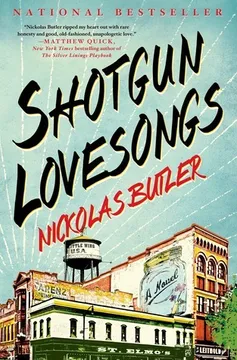


Plot Summary
The Mill Calls Them Home
Kip Cunningham returns from Chicago and buys Little Wing's abandoned feed mill, restoring it as a shop and gathering place before his wedding. His old friends see ambition in the project, but also the distance between Kip's fast, polished world and their lives on farms.
Lee Sutton, now a famous musician, comes home from touring; Henry Brown tends his dairy farm with Beth and their children; Ronny Taylor, once a rodeo star, lives with the effects of a brain injury.
When Ronny's accident left him without work or family support, Lee quietly paid his medical bills and living expenses. The friends' affection is real, but each has begun to measure success differently. Kip's wedding gives them a reason to stand together again, and a chance to discover how much has changed.
The mill and the wedding make private histories public. Kip tries to rebuild a place the town had nearly written off, while Lee's fame turns the same place into an audience for his return. Ronny's dependence on friends exposes the group's care as practical, not merely nostalgic: Lee pays bills, and the others visit and include him. Yet the circle is not equal in power. Money, mobility, marriage, and disability have altered each man's standing, so reunion arrives already under pressure.
Ronny's Empty Golf Cart
Kip's bachelor party begins with a stretch limousine, matching golf shirts, and a day at a private course, but Ronny has received no invitation. Lee recognizes the deliberate slight and makes Kip arrange a ride for his friend. On the way, Kip distributes shirts to nearly everyone, leaving Ronny without one; Lee gives him his own, exposing the insult to the whole group.
At the course, Ronny is left off the pairings until Henry's friend Hank takes him as a partner and removes the cooler of beer from their cart. Ronny watches the others drink, then finds pleasure in the game and in being treated as a man with real interests. Lee and Kip, meanwhile, play thirty-six hostile holes and leave the course openly angry with each other.
The shirt and the missing name on the golf list are small acts with large social consequences. Kip's party treats belonging as a perk he can distribute, while Lee refuses to let Ronny's impairment make exclusion seem harmless. Hank's partnership gives Ronny ordinary companionship rather than protective supervision. Lee's anger also reveals the cost of his celebrity: he can command a limousine and force access, but cannot make Kip respect the person he is defending.
A Wedding Under Cameras
At Kip's barn wedding, photographers rush Lee and his movie-star girlfriend, Chloe, as soon as they arrive. Lee realizes the crowd is not a happy accident: Kip has invited the press to draw attention to the mill and earn a fee.
He confronts Kip, then keeps his promise to sing, leading the guests in a familiar song without the guitar he forgot. For a moment the town sings as one, with Ronny holding hands beside Hank. The intrusion returns at the reception when a helicopter shines a spotlight on Chloe and Lee.
Ronny climbs onto a table to defend his friend, and Lee retreats with Chloe to the pasture. Soon afterward, Lee moves to New York, choosing a life where Chloe's career can flourish, though he still longs for the privacy and friendship he found at home.
The wedding stages two versions of fame. Kip treats celebrity as an asset that can attract customers; Lee experiences it as a force that takes control of his home and relationships. His improvised sing-along briefly redirects attention from the cameras to shared participation. Ronny's protest makes the town's loyalty visible, but it cannot protect Lee from the machinery around Chloe. His move to New York is therefore neither simple ambition nor simple abandonment. It is a concession to the life the couple can build together.
The Chicken Coop Record
Years earlier, after his band breaks up and his music career stalls, Lee returns to Wisconsin ashamed and uncertain. He rents a room in Bea Cather's farmhouse and turns an abandoned chicken coop into a cold, makeshift studio. A letter brings Beth, then separated from Henry, to visit.
Lee admits he is frightened of failing at the only work he knows; they kiss and spend the night together, an encounter neither later tells Henry. Beth leaves before dawn. That same day Lee shuts himself in the coop and finishes the songs that become his debut album, Shotgun Lovesongs.
The record succeeds far beyond his expectations and carries him from obscurity to international fame. Beth eventually returns to Henry, while Lee's private memory of her remains lodged inside the music that makes him famous.
Lee's artistic breakthrough grows from a moment that is emotionally complicated rather than cleanly inspirational. The coop is both refuge and workshop, and the affair offers closeness at the precise moment he feels abandoned by his career. Turning private longing into songs gives Lee a public voice, but fame cannot resolve the secret that helped shape it. Beth's departure and return to Henry create a boundary Lee accepts without truly escaping its emotional pull.
Vows Above Manhattan
After Lee and Chloe build their relationship in New York, he flies Hank, Beth, Ronny, and Ronny's date, Lucy, east for their wedding. Beth and Felicia, Kip's wife, have begun repairing their friendship after Felicia admitted that the town's coldness hurt her and that Kip's mill was costing them more than they could afford.
In the city, Beth and Henry wander together, visit the Metropolitan Museum, and discover that Henry once loved painting. At the elaborate ceremony, Lee and Chloe exchange vows before actors and musicians, while their Wisconsin guests feel both dazzled and out of place.
Kip sends a framed historical photograph of the mill as a wedding gift. Lee accepts it, but Chloe's reserve and the couple's separate priorities leave Beth uneasy about how well their marriage will hold.
The trip places the friends inside the world Lee has entered, but it does not make them interchangeable with its inhabitants. Beth's attention keeps returning to ordinary intimacy: Henry walking beside her, their shared history, and his forgotten interest in art. Felicia's gradual welcome into the town complicates the idea that loyalty must exclude newcomers. Kip's photograph offers Lee a portable image of home, yet his choice to keep it in New York shows that affection for a place does not settle the question of where a life belongs.
The Confession Splits Home
Lee's marriage to Chloe collapses after only a few months, and he drives a moving truck back to Little Wing. When Henry meets him, Lee reveals that he once slept with Beth and admits he has carried feelings for her. Henry feels betrayed by both friends and ends their closeness. Beth later tells Henry the truth herself, accepts that keeping it secret harmed him, and insists that her life and love are with her husband.
Henry does not recover quickly: he sleeps apart, withdraws into work, and takes the children on outings without Beth. They eventually speak honestly, and their physical reconciliation follows, though the wound remains. Lee is left grieving not only his failed marriage but also the friendship he has put at risk.
The confession converts an old private event into a present-tense injury. Henry's pain is not simply jealousy; Lee was admitted into the family home as a trusted friend, so the revelation changes the meaning of years of shared meals and child care. Beth's apology matters because it accepts responsibility without presenting the affair as a claim on Lee. Their marriage survives through renewed choice, not by pretending the secret was inconsequential.
The Mill's Hidden Debt
Kip's return to Little Wing is driven by more than business: he wants the town to recognize what he has achieved in Chicago and to welcome him as one of its own. He spends heavily restoring the mill, but the costs outrun its income. Felicia reveals to Beth that Kip also arranged the paparazzi presence at his wedding for a referral fee, money he fed back into the project.
Their marriage strains over the mill's debt and his refusal to have children, although Felicia has long wanted a family. Kip's earlier encounter with Harvey and Edith Bunyan, a farming couple who see their lost son in his resemblance to him, also exposes his difficulty sustaining intimacy. When Harvey later dies, Kip regrets having treated their connection as temporary.
Kip can read markets and buildings more readily than emotional needs. His restoration project makes visible the town he hopes to serve, but the hidden press deal and growing debt show how easily public improvement becomes a way to purchase belonging. The Bunyans offer him an unearned form of familial affection, yet he keeps their relationship at arm's length. His regret over Harvey gives the mill's failure a human echo: material investments can be repaired or sold, while missed chances for closeness cannot be recovered so neatly.
Ronny Chooses a Future
After his brain injury ends his rodeo career, Ronny is often treated as someone to manage rather than a man who can make choices. He grows bored in his apartment and sometimes sets off on foot, hoping to leave town; Eddy once finds him far down a country road and brings him back, promising to look for work he can do.
Ronny meets Lucy, a dancer from Kip's bachelor party, and their relationship gives him affection without erasing his need for independence. When Lucy becomes pregnant, Ronny asks Lee to be his best man. He and Lucy plan to move to Chicago, where she has a job prospect and he can help care for the baby. The wedding becomes more than a ceremony: it marks the first future Ronny has chosen with someone beside him.
Ronny's vulnerability makes the line between care and control especially important. His friends protect his sobriety, but their kindness can also reduce him to a patient whose life belongs to others. Lucy's relationship gives him a role that is not organized around his injury, while the move to Chicago represents a genuine attempt to shape his own circumstances. The pregnancy raises the stakes without turning fatherhood into a cure; what matters is Ronny's willingness to make commitments and participate in a shared plan.
The Blizzard Bachelor Party
On the eve of Ronny and Lucy's wedding, Lee drives Ronny around town before the storm and hears him ask why Lee and Henry no longer speak. Ronny urges Lee to apologize, making reconciliation his only requested wedding gift. That night, friends fill the VFW with a surprise party, noisemakers, music, and congratulations for the couple's baby.
Ronny has avoided alcohol for years, but amid the crowd a rodeo friend hands him tequila. He drinks several shots before anyone realizes what is happening. The storm intensifies, and Ronny wanders away, unable to remember leaving or find his way back. Lucy discovers he is missing and calls for help. The celebration that was meant to honor his new life becomes a frantic search through a blizzard.
The party gives Ronny the recognition he has wanted, but its loose conviviality also removes the safeguards his friends have built around his sobriety. His relapse is not framed as a moral failure. It emerges from a social setting where an old rodeo identity briefly overrides the fragile routines of his present life. His plea to Lee beforehand sharpens the crisis: Ronny has made reconciliation part of his own future, and now the people who love him must act before that future can begin.
Names Called Through Snow
Lucy calls Lee in the night, and he drives through deep snow to the mill, where Kip organizes volunteers with ropes, flashlights, and flares from the store. Lee and Eddy search together, tied to each other so the storm cannot separate them. As the wind erases tracks and the drifts rise past their waists, Eddy urges Lee to return for help, but Lee keeps calling Ronny's name.
Near the school playground, they finally hear a faint song and find Ronny lying in the snow, cold and disoriented. He remembers that Lee wrote the song he was singing. Lee and Eddy lift him between them, then the Giroux twins carry him toward the ambulance. The search ends with Ronny alive, though his hands and feet are badly frostbitten.
The rescue makes the town's communal identity concrete. Kip supplies equipment, Eddy keeps Lee tethered, and the Giroux twins provide the strength to carry Ronny. No single friend can save him alone. Lee's persistence is partly guilt over having once dismissed Ronny's wedding news while distracted by his own marriage, but the song also turns his work into a literal signal of connection. The community does not erase Ronny's injury; it brings him back within reach of care.
A Wedding in the Mill
Despite frostbite and a night in the hospital, Ronny insists on leaving by noon so he can marry Lucy as planned. At the mill, transformed from a derelict warehouse into a warm reception space, the town fills every chair and gathers at the windows.
Lee stands beside Ronny with the rings as Lucy arrives; the couple exchange vows and kiss beneath the restored building's rafters. Their celebration draws the whole town onto the dance floor, including Henry and Beth. Kip and Felicia dance together too, though their marriage remains unsettled.
Lee apologizes to Kip for their estrangement, and Kip admits he is overwhelmed by the mill's costs. The event honors Ronny and Lucy while showing Kip's restoration finally serving the town through a gathering no commercial plan could manufacture.
The mill's reopening gains meaning through use rather than ownership. Its grand scale matters less than the fact that people crowd into it for Ronny and Lucy, including friends who have been divided by money, resentment, and secrecy. Kip's work briefly succeeds as a social space, even while the debt remains. Lee's apology to Kip begins a repair that does not depend on pretending the wedding-day betrayal was harmless. Celebration here is a practice the town makes together, not a spectacle sold to outsiders.
The Pickled Egg Heist
After the wedding, Henry and Lee meet at the VFW, where their old ease has been replaced by years of anger. Lee proposes stealing the enormous jar of pickled eggs behind the bar, hoping a ridiculous shared act might loosen the silence between them. Henry first refuses, then helps when Lee distracts the patrons with a song. Outside, they throw eggs at passing cars and sit on a railroad bridge.
Lee tells Henry he has bought the mill from Kip and intends to make it a music venue and studio. Their talk turns back to Beth: Lee admits his feelings were stronger than he first claimed, while Henry cannot yet trust him around his family. When Lee throws an egg at a speeding car, the young driver stops and shoots him in the leg before fleeing.
The theft is childish by design. Lee reaches for a shared prank because apology alone cannot restore the easy rituals of friendship, while Henry's participation signals willingness without granting full forgiveness. Their exchange forces Lee to correct his own account of the affair, replacing a convenient minimization with a harder truth. The sudden shooting interrupts their attempt at repair with bodily danger. The egg, a joke that seemed safely local, becomes the cause of a wound neither man can talk his way around.
A Bullet Kept Safe
Henry drives the bleeding Lee to his schoolhouse instead of the hospital, helping him into a hot bath while Lee insists the police attention would damage his reputation. In the bathroom, Henry notices one of his own landscape paintings hanging in Lee's house, a canvas he had donated anonymously.
As Lee explains the old night with Beth and apologizes, Henry tells him he forgives him, even though the years of lost trust cannot simply be undone. The next morning they boil pliers, eat breakfast, and remove the bullet together in the pasture.
The story later finds Ronny and Lucy raising their daughter in Chicago, Kip and Felicia starting a family there, and Lee keeping the mill alive as a music venue. The VFW displays Lee's bullet in a small jar.
Forgiveness arrives as work rather than absolution. Henry stays through Lee's pain, and their improvised surgery asks both men to risk injury while relying on each other. The painting quietly reverses their roles: Henry has hidden his artistic self, while Lee has kept a piece of it in public view. The bullet in the bar preserves the cost of their reckless night, but it also turns a private wound into a story the town can hold. The ending allows intimacy to return without claiming that trust becomes untouched.
Analysis
Shotgun Lovesongs treats friendship not as a permanent possession but as a form of work that must be renewed when people change. The four men share a childhood and a geography, yet they do not share the same access to money, mobility, or public recognition. Lee can pay Ronny's bills and make Kip's party include him, but those gestures do not spare him from the limits of fame or the consequences of his own betrayal. Henry's farm offers stability, though its economic pressure and his concealed artistic life complicate any easy equation between staying and being fulfilled.
The novel's overlapping narrators make home less a single truth than a set of competing attachments. Lee hears music in the landscape; Kip sees a redevelopment project; Beth recognizes the people and rituals that make a place livable; Ronny experiences it as both refuge and cage. Their differences do not cancel their shared history, but history alone cannot guarantee trust. The affair between Lee and Beth proves that a secret can alter the past retroactively, turning ordinary visits into evidence Henry must reinterpret.
The book resists both romanticizing small towns and dismissing them. Little Wing can be provincial, financially strained, and cruel to outsiders, yet its residents organize a search in dangerous weather and fill a restored mill for a wedding. Community is shown as a concrete capacity to notice, gather, feed, transport, forgive, and sometimes fail. Its warmth is earned through action, not innocence.
The final image of Lee's bullet preserved at the VFW refuses a spotless reconciliation. The injury remains part of the town's shared account, as do the consequences of the egg theft and the old betrayals. Yet Henry stays, helps remove the bullet, and allows Lee back into a more limited, more honest friendship. The novel's hope lies not in returning to childhood, but in building adult loyalties that can survive knowledge, regret, and imperfect repair.
Review Summary
Shotgun Lovesongs receives mixed but generally positive reviews, averaging 3.78/5. Many readers praise Butler's evocative portrayal of small-town Wisconsin, authentic characters, and poetic prose. The story of four childhood friends reuniting in Little Wing resonates deeply with Midwestern readers. Common criticisms include undifferentiated narrative voices, predictable plotting, and slow pacing. The connection to Bon Iver's Justin Vernon intrigues some readers while feeling incidental to others. Despite its quiet, uneventful plot, many find the emotional depth and sense of place profoundly satisfying.
Characters
Lee Sutton
The hometown songwriterA musician from Little Wing who performs under the name Corvus, Lee becomes internationally famous while remaining emotionally tied to the people and landscape he left behind. Music gives him a way to translate loneliness into something other people can share, but fame makes ordinary friendship harder to distinguish from appetite for access. He is generous, especially toward Ronny, and deeply loyal to his hometown, yet his desire for intimacy can make him careless with other people's boundaries. Lee's central tension is between the freedom his career offers and the settled, accountable life he envies in Henry.
Henry Brown
The rooted farmerHenry runs his family's dairy farm, builds a home with Beth, and measures life through work, seasons, and the care of people who depend on him. His steadiness is not a lack of imagination: a high-school art teacher once encouraged his painting, which he later keeps private. Henry is protective without being showy, and his loyalty makes betrayal especially difficult for him to absorb. He wants to preserve his family and friendships, but fears that trust leaves him exposed. His quiet competence gives the group a center without making him immune to grief or anger.
Beth Brown
The perceptive homekeeperBeth is Henry's wife and the narrator whose attention often catches what the men leave unsaid. She loves the tactile life of Little Wing, from family meals to familiar landmarks, yet she is curious about other possibilities and resists being reduced to a farmer's wife. Her friendship with Felicia grows from an ability to recognize loneliness beneath polish and confidence. Beth is practical, candid when she chooses to be, and willing to admit when she has caused harm. She values the life she has built with Henry while remaining aware that affection, desire, and loyalty do not always align neatly.
Ronny Taylor
The restless rodeo riderRonny was a gifted rodeo competitor whose life changed after a drunken fall caused a serious brain injury. His speech and memory are slower now, but his warmth, humor, physical pride, and need for independence remain vivid. The town's support keeps him safe, yet he resents being handled as if he were incapable of deciding what he wants. Horses and the rodeo preserve a sense of the capable man he remembers being. Ronny's straightforward affection makes him a moral force among his friends: he notices who is left out and asks people to repair what they have broken.
Kip Cunningham
The ambitious hometown returnerKip leaves Little Wing for a successful career trading commodities in Chicago, then returns with money, plans, and a need to prove that he still belongs. He understands markets and logistics, but often moves too quickly to notice how his choices affect the people around him. Restoring the feed mill is both a business venture and an attempt to give the town a future he can point to. Kip's confidence masks a fear of being peripheral among friends whose shared history he can never fully reproduce. He wants to be admired, but also wants to contribute something lasting.
Felicia Cunningham
The polished outsiderFelicia comes from Chicago and brings professional drive, social ease, and a directness Little Wing's residents often mistake for distance. Her marriage to Kip ties her to the mill's fortunes, but her hopes are not limited to his plans: she wants a family and a life that feels chosen rather than postponed. Beth's friendship allows Felicia to speak honestly about being treated as temporary. She is intelligent and generous, though her composure can conceal how deeply she feels excluded.
Lucy Barnes
Ronny's candid partnerLucy meets Ronny while working as a dancer and approaches him without treating his injury as his whole identity. She is lively, frank about her own insecurities, and more vulnerable than the confident performance she presents in public. Traveling with the Little Wing group forces her to confront how others may judge her background, while her bond with Ronny gives her a reason to imagine a different future. Lucy wants affection and a family, but also wants to be seen as a person with choices.
Chloe
The famous actressChloe is a celebrated screen and stage actress who becomes Lee's partner. She is warm in private and capable of making newcomers feel welcome, but her career is built around travel, public attention, and the opportunities concentrated in New York. She does not share Lee's attachment to small-town life, and she is accustomed to managing the attention that fame brings. Chloe is not merely a symbol of celebrity: she has her own professional ambitions and her own sense of where a viable life can be made.
Eddy Moffitt
The town's steady helperEddy is an insurance agent and former farmer whose own financial hardship has made him attentive to other people's precariousness. He is perceptive, generous, and willing to help without turning assistance into a performance. Eddy looks after Ronny and joins the search when Ronny disappears in the storm. His practical kindness helps hold the group together, especially when more charismatic friends are caught up in their own conflicts.
Harvey Bunyan
The grieving farmerHarvey is an Illinois farmer Kip meets during a solitary drive. He is plainspoken and attached to the land and routines he knows, yet he reaches toward Kip because the younger man reminds him of someone beloved. His brief connection with Kip reveals how grief can make a stranger feel like kin, and how easily a busy person can mistake that offer for an inconvenience.
Edith Bunyan
The practical companionEdith is Harvey's wife, direct and observant where her husband is hesitant. She helps explain the emotional weight behind his wish to meet Kip and asks for a small act of kindness rather than a grand gesture. Edith's plainspoken presence challenges Kip's habit of treating human obligations as matters that can always be rescheduled.
Roger Killebrew
The art teacherKillebrew teaches art in Little Wing and gives students a glimpse of the intellectual and creative life beyond town. He defends modern painting against the boys' mockery and encourages Henry to take his artistic interest seriously. Though he appears mostly through memory, his influence helps reveal a quieter part of Henry that farm work and family duty have not erased.
Plot Devices
The feed mill
A town's contested futureThe abandoned mill first stands for Little Wing's economic decline and the friends' shared childhood. Kip restores it as a general store and gathering place, hoping that visible investment will renew the town and secure his own belonging. Its debts expose the gap between civic ambition and sustainable income. Later, its renewed space hosts Ronny and Lucy's wedding and becomes a potential venue and recording studio under Lee. The mill changes meaning according to who is using it: ruin, business project, public commons, or a monument to risk.
The chicken-coop studio
A refuge for raw musicLee converts a disused coop into a recording space with salvaged instruments, carpeting, a woodstove, and basic equipment. Its cold and makeshift character matches the uncertainty of his return after his band fails. There, he works alone and completes the songs that launch his career. The studio links creative labor to a specific place rather than to celebrity infrastructure. It also holds the memory of Beth's visit, making the album's public success inseparable from a private emotional history.
Songs and sing-alongs
Private feeling made communalLee's songs begin as solitary attempts to understand his home and his longing, then circulate among friends, families, and listeners far beyond Wisconsin. Music repeatedly gathers people who cannot easily speak to one another, from the wedding guests singing together to Ronny using a song to stay awake in the storm. It does not erase their conflicts, but it gives them a shared action when conversation fails. The music's meaning changes as Lee's fame grows, shifting between intimate expression and a public performance others can claim.
The pickled egg jar
A reckless peace offeringThe enormous jar behind the VFW bar gives Lee a ridiculous plan for approaching Henry after their estrangement. Stealing it lets them resume a familiar kind of mischief, while the eggs give their anger a physical outlet as they throw them into the night. The prank becomes dangerous when one egg strikes a passing car and its driver fires at Lee. The jar therefore binds comic repair to real consequence. Its replacement at the bar holds the bullet, making the object a local memory of friendship, foolishness, and injury.
The changing seasons
A measure of rooted timeWisconsin's weather and agricultural cycle give the novel a clock unlike the schedules of touring, trading, or acting. Planting, harvest, snow, and thaw shape when characters work, gather, and travel. The seasonal rhythm makes Henry's attachment to the farm tangible, while Lee's repeated departures and returns test whether home is a place or a relationship. The blizzard becomes an immediate physical threat, but ordinary weather also accumulates meaning through years of shared routines. Nature does not solve the characters' problems; it keeps providing a setting in which those problems must be lived.
Download PDF
Download EPUB
.epub digital book format is ideal for reading ebooks on phones, tablets, and e-readers.








