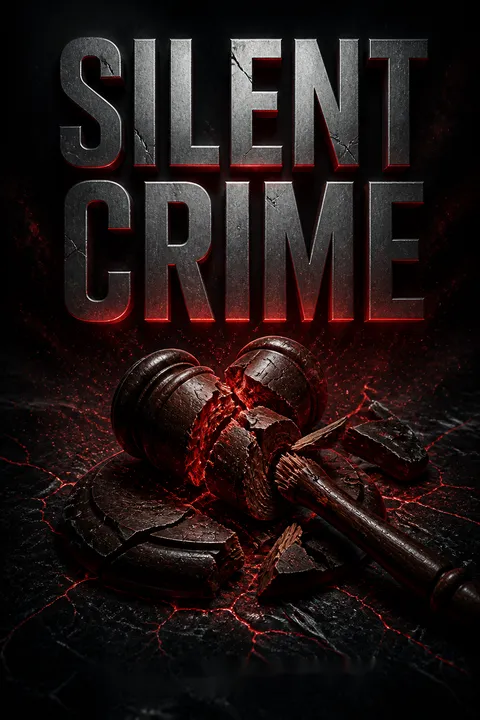


Plot Summary
The Hanging Prosecutor
Jake Thomas has earned his police pension and wants out of Spokane’s corruption and killing. A midnight call sends him to a rural house, where another county’s chief dismisses his offer to help with a suspicious death. Back in Spokane, Chief O’Connor introduces Jo Calloway, the eager young officer meant to replace him, and orders Jake to train her.
Before they can settle into the job, a local emergency summons them to a wealthy home. Assistant District Attorney Elliot Gaines hangs from a ceiling beam, his dog dead nearby and a blood drawn Hangman puzzle on the wall. Jake recognizes the prosecutor from the station. Jo recognizes the game. Their first case together is already a murder designed to be read.
Jake’s retirement is not a clean exit so much as a retreat from an institution he no longer believes can protect people. O’Connor’s decision to pair him with Jo makes the conflict generational as well as procedural: she arrives expecting meaningful work, while Jake assumes the job has exhausted its meaning. The staged puzzle turns a murder scene into an accusation, but its rules are not yet clear. Jake’s discomfort with the dead and Jo’s curiosity establish their contrasting instincts without making either one simply right.
Seventeen Letters of Blood
At the scene, Jake learns Gaines’s word has seventeen letters, leaving little chance that a frightened victim could solve it. Jo patiently explains the game while Jake focuses on the prosecutor’s work and the evidence around him.
Later, she fills the blanks as misrepresentation, a clue that points toward Gaines’s handling of cases rather than a random personal feud. The detectives search his house and find case files mixed with explicit photographs of men, suggesting Gaines kept secrets that could have been used to pressure others.
One case catches Jake’s attention because it involves a man called the Noose, now imprisoned. The evidence gives them a first direction: someone may have punished Gaines for manipulating justice, and the prisoner's account could expose what the official record conceals.
Jo’s puzzle solving is not decorative cleverness. She brings a method Jake has overlooked, then ties the answer to Gaines’s professional conduct. The photos complicate the easy image of a prosecutor as a public servant: private shame and public power may have occupied the same file cabinet. Jake, meanwhile, distrusts both the killer’s theatricality and the institution that might have enabled Gaines. The case begins to test whether evidence can distinguish a real grievance from a murderer’s self serving story.
A Prisoner Names Mathews
The detectives visit the Noose, a violent inmate whose own reputation makes his testimony difficult to trust. He says Gaines once approached him with an offer to make his legal troubles disappear for money, then claims Judge Ray Mathews ignored his complaint for lack of proof.
Jake knows the Noose may be shaping the story to make himself look wronged, but the allegation fits the broader suspicion around Gaines. Mathews’s own conduct offers a darker parallel: after accepting payment connected to Gary Forester’s case, he gives Forester probation despite a fatal hit and run.
The judge also takes money through lawyers in other cases, treating justice as a private market. The detectives leave prison with no confession, but Mathews’s name now sits beside Gaines’s in the pattern of compromised courts.
The Noose is useful precisely because he is not a neutral witness. His claim cannot settle Gaines’s guilt, yet it gives the detectives a plausible mechanism for the prosecutor’s enemies. Mathews’s conduct supplies corroborating context without proving that every accusation is true. The novel repeatedly places legal procedure beside private transactions, showing how corruption gains force when insiders can dismiss evidence as merely one person’s word against another’s. Jake’s cynicism is therefore grounded in real institutional failures, even as it threatens to make him assume the worst of everyone.
The Warehouse Takes a Cop
While Jake and Jo pursue the Gaines case, Officer Hayden Daniels uses a ride along with rookie Davey Lang to stop two young men carrying drugs. Instead of arresting them, Hayden takes the drugs for himself and hints that he sells what he seizes.
Later, a tip sends him to the abandoned youth center on Kennedy Street, where he expects another opportunity to profit. The Hangman ambushes him, strips away his badge and weapon, and forces him through a bloody version of the same guessing game.
Hayden’s wrong letters bring fresh wounds; the killer leaves him hanging with his intestines exposed. Jake and Jo find the body after it has been there for more than a day. Hayden’s death makes clear the killer is targeting more than courtroom figures, and that police misconduct belongs on his list.
Hayden’s corruption is small scale beside Mathews’s, but it is immediate and intimate: he turns a routine stop into personal income and recruits a rookie’s silence through pressure. The killing converts that abuse into a spectacle of judgment, while Hayden’s attempts to bargain for his life echo the compromises he made on the street. His gruesome death does not make the Hangman’s verdict legitimate. Instead, the scene exposes the danger of a system in which misconduct is visible to the public but rarely answered by official discipline.
The Hangman Writes Jake
At Hayden’s warehouse scene, Jo finds an envelope addressed to Jake. Forensics traces its seal to Hayden’s sweat but finds no fingerprints, so the detectives must wait before opening it. The message identifies no killer; it frames the murders as a cleansing of the city’s justice system and warns Jake to leave the force before the violence worsens.
Chief O’Connor wonders whether the writer considers Jake an ally, but Jake rejects that idea and resents having his sleeplessness and diner routine exposed. The letter shifts the investigation: the Hangman has been watching him, and the killings are not simply revenge against individual victims. Jake’s private exhaustion has become part of the case, whether he wants it there or not.
The letter makes surveillance feel more invasive than the murders alone. The Hangman knows ordinary details about Jake, collapsing the distance between a detective’s public work and private habits. Calling the killings a cleansing is an attempt to recruit Jake’s disillusionment, but the warning also threatens to turn his retirement into a choice dictated by the murderer. Jake refuses that framing, though his anger reveals how exposed he feels. The message asks whether shared opposition to corruption can ever justify violence; the plot offers no easy answer.
Scratch Knows the Streets
Jake takes Jo to Scratch, a wary neighborhood informant who trusts Jake because he once helped Scratch’s sister. Scratch makes Jake play checkers before sharing what he has heard. He confirms that Hayden was known as a dirty cop and says Hayden and Lang had taken drugs from young dealers rather than booking them.
Scratch also points to Tanner, a construction worker who has been talking about someone wanting to clean up the streets. The visit gives Jo a glimpse of how Jake’s informal network works, but Scratch refuses to meet her and makes her wait outside.
Jake’s knowledge of people and places begins to complement Jo’s research, while his planned departure threatens to leave her without the relationships that make his investigations possible.
Scratch’s checkers game converts trust into a small ritual: Jake accepts the informant’s terms rather than demanding immediate cooperation. That patience is a form of investigative skill, though it also highlights how much Jake’s work depends on personal loyalties outside official channels. Jo’s exclusion is a practical obstacle and a preview of what she must build for herself. Scratch’s account moves Hayden from suspected corruption to a recognizable pattern of theft, but it does not yet identify who killed him or why.
Extortion on the Board
O’Connor sends Jake to the department psychiatrist after the letter exposes how little he sleeps. Jake resists the assessment, then reveals that his abusive father killed his mother and hid her body; as a child, Jake believed she had abandoned him. He leaves the appointment shaken and drinks at Blue’s Pub until Jo finds him and takes him home.
The next morning, they discover a new word, extortion, written on Jake’s office board although nobody admits entering the locked room. Dust on the floor and a moved ceiling tile suggest the Hangman crawled in from a supply area. Jo’s files show Hayden’s drug arrests had mysteriously dwindled. As they work at her house, Jake falls asleep on her couch for the first time in months.
Jake’s confession reframes his detachment: his wish to leave policing is not only burnout, but a life shaped by violence and a long habit of surviving without help. Jo neither fixes him nor demands that he explain himself further; she gives him a safe place to rest and keeps investigating. The word extortion is both evidence and intrusion, arriving through a hidden route into Jake’s private office. Their growing trust develops through concrete acts of care and competence, not a sudden declaration that either has changed.
Ox Points Toward Court
Lang confirms that Hayden kept drugs from a shakedown and had a runner to sell them. Front desk worker Dannie admits she sent Hayden to check a drug tip at the Kennedy Street building, believing she was helping his career.
Meanwhile, Jake and Jo track Tanner, who first flees, then agrees to talk after Jake arranges to clear his minor warrants. Tanner recalls a large former coworker nicknamed Ox, who railed against corrupt officials and named both Gaines and Hayden before mentioning a judge or police chief.
O’Connor suspects Mathews. When the detectives reach the judge’s house, it has been searched and Mathews is gone. His estranged wife Marlo says she fought with him over an affair and his threats, then left him there. The disappearance turns a lead into a race.
The investigation now has several imperfect sources that reinforce one another: Scratch’s street knowledge, Lang’s firsthand account, Dannie’s tip, and Tanner’s remembered conversation. None identifies the killer outright, but together they show how corruption operates through a chain of favors, silence, and resale. Jake’s decision to clear Tanner’s warrants risks repeating the very bargain making he condemns, a compromise he justifies as the price of saving a life. Mathews’s disappearance makes that moral tension urgent rather than theoretical.
The Old Courtroom
Jake realizes Mathews may have been taken to the old courthouse where the judge once worked. Mathews’s latest ruling had overturned a jury’s guilty verdict, deepening public anger; at home, his marriage had collapsed and hidden money was missing.
Inside the abandoned courtroom, Jake and Jo find the Hangman forcing Mathews through another blood written puzzle. The answer, bribery, names the judge’s central offense, but solving it does not save him: the Hangman stabs him and leaves him hanging.
The killer strikes Jake with a board, knocks him down, and shoves Jo aside before escaping. Jo confirms Mathews is dead and calls for help. On the witness stand, Jake finds another letter warning that his own end has begun. He answers the threat with defiance, but the killer remains free.
The old courtroom makes the climax a return to the physical site of Mathews’s authority, now stripped of its official protection. His final word names a real offense, but the puzzle’s supposed rules are exposed as theater: knowledge brings no pardon. Jake and Jo act together under pressure, yet their competence cannot prevent the killer’s escape or Mathews’s death. The letter renews the story’s central bind. Jake can reject the Hangman’s claim to justice, but he cannot ignore the threat or the evidence that he has become the next target.
Analysis
Silent Crime builds its thriller around a distinction that its institutions repeatedly blur: punishment is not the same thing as justice. Gaines, Hayden, and Mathews are tied to different forms of misconduct, from prosecutorial manipulation to police theft and judicial bribery. The Hangman’s puzzles identify real or alleged offenses, but his method destroys any meaningful distinction between accusation, proof, and sentence. The victims are made to confess through a game whose rules are controlled by their killer. That structure does not excuse their corruption; it shows how easily public anger can be captured by someone who claims to act on behalf of the wronged.
Jake’s exhaustion gives the case its emotional pressure. His history has taught him that institutions can fail people at the most intimate level, yet his work still depends on evidence and procedure. He wants to leave because he has begun to confuse helplessness with honesty: if he cannot repair the system, he believes withdrawal is the only truthful response. Jo challenges that conclusion by treating the work as both demanding and worth doing. Her competence is not a symbolic victory over Jake; it changes the practical investigation, from interpreting the puzzle to confronting witnesses and following leads.
The story also makes corruption social rather than exceptional. Hayden recruits Lang’s silence, Dannie passes along a tip to help a lover, Mathews converts courtroom power into money, and Jake’s informants survive by trading in unofficial knowledge. Each compromise has a different scale, but each depends on someone deciding that a short term advantage is safer than a public record. The novel’s unresolved ending refuses the comfort of a captured villain. Mathews is dead, the Hangman has escaped, and Jake is threatened. The central question remains not whether the system is flawed, but who gets to decide what correction means.
Review Summary
Silent Crime receives mixed reviews, with an average rating of 3.97 out of 5. Some readers praise the suspenseful plot and intriguing characters, while others criticize the abrupt ending and portrayal of women. The book follows detectives Jake and Jo as they pursue a vigilante serial killer called The Hangman. Readers appreciate the corruption theme but note excessive vulgarity and clichéd character tropes. Many express frustration with the cliffhanger ending, forcing readers to continue the series for resolution.
Characters
Jake Thomas
A weary retiring detectiveJake is a veteran Spokane detective who has earned his pension and wants to escape the corruption and violence that have hollowed out his belief in police work. His dry manner and impatience protect a more vulnerable center: he has endured childhood abuse, the loss of his mother, and years of seeing victims whose suffering he could not undo. He values evidence and loyalty but often distrusts people before they have a chance to earn his confidence. Jo’s energy first irritates him, then challenges his assumptions about who can handle the work. He is not suddenly cured of burnout; he is forced to confront how his isolation has become part of the case.
Jo Calloway
The underestimated rookieJo is a newly appointed detective determined to be judged by her work rather than her appearance or family background. Her bright manner and nervous habits lead Jake to mistake enthusiasm for fragility, but she studies evidence closely, recognizes the logic of the Hangman game, and insists on participating when scenes become disturbing. She wants a meaningful career and has learned to push past men who assume she does not belong. Jo is warm without being passive: she confronts Jake when he talks over her and challenges a witness when the investigation demands it. Her partnership with Jake grows through shared danger, practical care, and mutual respect.
The Hangman
A vigilante serial killerThe Hangman is an unidentified killer who stages murders as a bloodied version of the children’s guessing game. He chooses victims connected to the justice system and uses the puzzle words to accuse them of particular misconduct. His method is planned, theatrical, and deliberately cruel, giving victims the impression that a correct answer might matter. He also watches Jake closely enough to know his habits and opinions. The killer’s self appointed campaign against corruption rests on the claim that institutions have failed, but his games offer no lawful process or genuine chance of escape. His identity and full history remain unknown in this book.
Ray Mathews
A compromised judgeMathews is a judge who treats his courtroom authority as a source of private leverage. He accepts payments, manipulates outcomes, and assumes that wealth and influence will protect him from consequences. His contempt for people he considers beneath him extends into his marriage, where he belittles Marlo and avoids responsibility for their son. Mathews’s confidence depends on the belief that he can control every account of his conduct, from a verdict to a secret bank stash. His position makes him a potent symbol of the justice system’s vulnerability to personal appetite.
Chief O’Connor
A chief seeking reformO’Connor leads the Spokane department and tries to keep Jake engaged while preparing Jo to take his place. He recognizes Jake’s skill and worries about the toll the job has taken on him, though his attempts to help sometimes feel like pressure. The chief wants investigations handled properly and is uneasy when the Hangman’s message seems to know Jake intimately. His reforming intentions distinguish him from the more openly compromised officials around him, but his position leaves him exposed to suspicion and to the city’s entrenched habits.
Elliot Gaines
A polished prosecutorGaines is an assistant district attorney whose public image as a successful prosecutor conceals questionable dealings. His case files and private photographs suggest he used influence and secrecy to get what he wanted. He is a father whose young son lives with his former wife, and his death makes the consequences of his private and professional choices visible to Jake. Gaines’s polished reputation complicates the investigation: the detectives must distinguish evidence of misconduct from the killer’s own accusations.
Hayden Daniels
A corrupt officerHayden is a Spokane officer who uses his position to take drugs from people he stops and sell them through an unnamed runner. He pressures rookie Davey Lang to stay quiet, treating misconduct as ordinary police business. Hayden is also a social opportunist, pursuing Dannie while keeping his own motives unclear. His conduct gives the investigation a concrete example of corruption within the department and shows how a newer officer can be drawn into complicity before understanding the cost.
Scratch
Jake’s wary street informantScratch lives in a poor Spokane neighborhood and gathers information by listening to people who assume he is too distracted to remember. A childhood accident left one eye clouded, and years of wariness have made him suspicious of police, especially unfamiliar officers. He trusts Jake because Jake helped his sister after she was attacked. Their checkers games show the terms of their relationship: Scratch expects patience and respect before he shares what he knows.
The Noose
An imprisoned violent criminalThe Noose is a maximum security inmate with a history of violence and a reputation for hanging victims. He tells Jake and Jo that Gaines offered him a corrupt deal and that Judge Mathews ignored his complaint. The detectives cannot take his account as settled fact, since he has reason to blame the justice system that imprisoned him. His testimony nevertheless gives the case an important lead and forces Jake to consider how unreliable witnesses can still point toward real misconduct.
Tanner
A construction site informantTanner is a construction worker with unpaid warrants and a strong instinct for avoiding police. He has heard a former coworker condemn corrupt officials and remembers the man naming people connected to the murders. Tanner shares that memory only after Jake offers to clear his minor warrants, making his information useful but transactional. His fear of the suspected killer shapes how much he is willing to reveal.
Davey Lang
A pressured rookie officerLang is a new officer assigned to ride with experienced partners as he learns the department. Hayden’s drug shakedown puts him in a morally dangerous position: he recognizes the conduct is wrong but fears being treated as a departmental snitch. Once detectives ask direct questions, Lang admits what he saw and heard. His uncertainty shows how institutional corruption reproduces itself through intimidation and the desire to fit in.
Sam Finch
Jake’s longtime police friendSam is Jake’s fellow officer and friend, often more sociable and openly concerned about the people around him. He helps at the crime scenes and shares information about Hayden and Dannie. His growing interest in Dannie contrasts with Jake’s habit of treating intimacy as disposable. Sam can tease Jake, but he also recognizes the detective’s isolation and worries about what will happen when Jake leaves.
Dannie
A station desk workerDannie works at the station’s front desk and becomes involved in the case through her relationship with Hayden. She admits she sent him to investigate a drug tip because he had asked her to help him improve his standing. Her attraction to attention complicates her relationships with Hayden and Sam, but she is not the killer’s accomplice. Her decision to share what she knows gives Jake and Jo a crucial link to the warehouse.
Marlo Mathews
Mathews’s estranged wifeMarlo is Ray Mathews’s wife and the mother of their son, Dax. She has lived for years with his contempt and infidelity, and when she learns more about his affair and hidden money, she stops trying to preserve their marriage. Her anger is sharpened by the imbalance between Ray’s public authority and his private treatment of his family. When detectives contact her, she makes clear that she wants distance from him and protection for her son.
Plot Devices
The Hangman game
A staged murder ritualThe killer draws a Hangman board at each murder and forces the victim to guess letters while being wounded for wrong answers. The familiar paper game becomes a method of control, turning the victim’s last moments into a performance for the killer. The number and pattern of blanks also give detectives a recurring clue, linking crimes that might otherwise look unrelated. Although the victims sometimes identify the word, correct guesses do not offer safety. The game therefore creates false hope while allowing the killer to frame each murder as a verdict.
Blood written accusations
A word reveals the chargeThe Hangman uses each victim’s blood to write a puzzle word on a wall. Misrepresentation points the detectives toward Gaines’s conduct as a prosecutor, while extortion describes Hayden’s exploitation of his badge. Later, bribery identifies Mathews’s central offense. The words connect the killer’s choices to alleged institutional wrongdoing, but they are not impartial proof. They are accusations selected by an unknown murderer, so detectives must compare them with case records, witnesses, and the victims’ actual behavior.
The letters to Jake
Warnings become surveillanceThe Hangman leaves messages addressed to Jake, first warning him to leave the force and later threatening his future. The first letter reveals that the killer knows Jake’s views on corruption and personal routines; its connection to Hayden’s sweat suggests the killer used the victim’s body to seal it. These messages pull Jake into the killer’s argument and create a new investigative question: whether someone close to the department is watching him, or whether the killer has been following him from outside it.
Jake’s informant network
Street knowledge fills gapsJake relies on informal relationships that do not appear in official case files. Scratch gathers neighborhood talk, while Tanner remembers an angry construction coworker and Lang eventually confirms Hayden’s drug theft. Each source has a reason to hesitate, and Jake must trade time, trust, or concessions to get usable information. The network helps the detectives move beyond the scenes themselves, but its leads remain incomplete and sometimes self interested. Jo’s participation also raises the question of whether she can inherit Jake’s connections along with his position.
Download PDF
Download EPUB
.epub digital book format is ideal for reading ebooks on phones, tablets, and e-readers.








