

Key Takeaways
Make dread accumulate through uncertainty, not just surprise.
Fear changes shape. Perron distinguishes ordinary survival horror, which often relies on dangerous enemies and sudden shocks, from Silent Hill’s broader mode of survival terror: a prolonged state of dread created by uncertainty, isolation, and the suspicion of unseen forces. Resident Evil tends toward action and visible threats; Silent Hill uses an ordinary person’s vulnerable journey through a town that feels wrong before its dangers are clear.
A genre takes form. Earlier games such as Alone in the Dark helped establish the cinematic adventure structure: explore a maze, find clues and tools, and survive limited resources. Silent Hill adapted that structure, but made atmosphere and psychological unease central. Its aim is not simply to make a monster appear. It makes the player wonder what is out there, what the town is doing, and whether reality can be trusted.
The distinction between a shock and sustained dread resembles the difference between a sudden alarm and ongoing vigilance. The first has a clear trigger and endpoint; the second keeps attention searching for meaning. That helps explain why fog, silence, and unexplained events can be more wearing than a parade of visible enemies. The distinction is useful, though not absolute: a well-timed jump scare can deepen an existing atmosphere, while prolonged ambiguity can become tedious if players cannot connect it to anything meaningful.
Let what players cannot see become the game's loudest threat.
Limit the view. Silent Hill’s fog and darkness began partly as solutions to the PlayStation’s limited processing power. The designers turned that technical constraint into an expressive feature: the player sees only a short distance, so the edge of visibility becomes a source of danger. In the Otherworld, familiar streets and buildings become rusted, bloodied, or apparently bottomless, making ordinary places feel hostile.
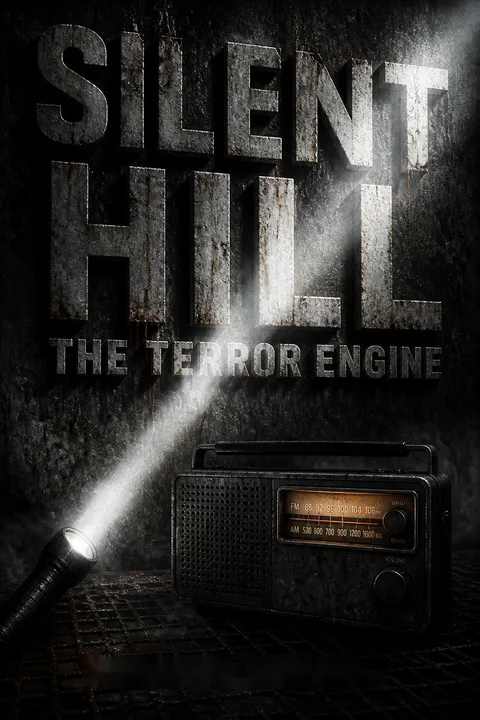
Give sound the warning. The flashlight reveals only a small area, while the pocket radio crackles when monsters are near. Static confirms danger without revealing its location or form. This combination makes the player listen, scan the dark, and imagine what the screen withholds. The result is not merely a dark image. It is a system that makes uncertainty part of the surroundings.
This design makes a powerful trade: less visual information gives the player more imaginative work. In perception, incomplete signals encourage people to infer what might be present, especially when the stakes feel high. The radio supplies evidence of threat but not enough evidence to resolve it, keeping attention active. The method also has limits. If cues are too faint or too unreliable, players may experience confusion rather than meaningful suspense, so uncertainty needs a legible structure.
Use restricted control to make survival feel personal.
Action creates emotion. Perron calls feelings produced by a player’s actions and the game world’s responses gameplay emotions. In a film, viewers watch someone in danger. In Silent Hill, players steer a vulnerable character through danger, choose whether to fight or flee, and bear responsibility for mistakes. The controller’s vibration when a character is injured makes that vulnerability physical, while the character’s heavy breathing and limited speed keep escape from feeling effortless.
Control remains incomplete. A player can choose routes and actions, but cannot freely reshape the town or eliminate every threat. Aim and movement can feel awkward, and monsters may be difficult to assess in the dark. These limits are not just defects in precision. They help make each encounter a test of the player’s coping ability, though they can also frustrate players when clumsiness feels arbitrary rather than frightening.
The design connects emotion to agency: a threat feels different when a person must choose what to do, rather than merely witness another person act. In decision theory, perceived responsibility can intensify both stress and satisfaction, because outcomes seem partly attributable to one’s own choices. Yet agency is not automatically empowering. When controls are imprecise, challenge can tip into perceived unfairness. The important design question is whether limited control communicates the character’s vulnerability or simply obstructs the player.
Turn familiar places into maps of a character's damaged mind.
The town has a psyche. Silent Hill first looks like a quiet American resort, but its abandoned streets, decaying buildings, and disturbing transformations make it feel less like a neutral setting than a force acting on its visitors. The games leave open whether the Otherworld is supernatural, psychological, or both. Their stories suggest that the town draws out people’s hidden fears and inner conflicts without providing a single definitive explanation.
Monsters carry meaning. Many creatures are distorted human forms, with malformed bodies and movements that seem vulnerable as well as threatening. The characters do not necessarily perceive them in the same way. In Silent Hill 3, a priest’s comment makes the player question whether the creatures look like monsters to everyone. This ambiguity shifts attention from simply defeating enemies toward asking what the characters may be seeing, and what their reactions reveal about them.
A setting that reflects inner life can make psychology visible without turning it into a lecture. The town’s physical distortions externalize states that would otherwise remain abstract, much as metaphor lets people reason about grief or guilt through images. Ambiguity is especially productive because it invites interpretation without requiring one fixed answer. Still, symbolic readings should not erase the player’s immediate experience: a monster can be both psychologically suggestive and a practical threat that needs to be escaped.
Pair a mystery with tasks players must physically solve.
Two kinds of attention. Silent Hill asks players to follow the story while also navigating spaces, managing danger, and solving practical problems. Perron calls the story’s interpretive investigation a play of ratiocination: the player connects clues, tests explanations, and tries to understand what has happened. The game’s puzzles give this curiosity a physical form. At the Midwich school in the first game, clues lead Harry to gather items and operate a clock tower in a particular sequence.
The route becomes the story. Maps, notes, doors, and objects help players make progress, but do not remove the need to act. A locked door is not merely a symbolic mystery; it blocks the next step until the player finds a key or solves a puzzle. Stories are also distributed across documents and short encounters, so players reconstruct events rather than receiving a continuous explanation. This joins interpretation to movement through the game world.
The combination gives curiosity consequences: a clue is not just something to understand, but something that changes where the player can go. That is a distinctive strength of interactive storytelling, where comprehension and action can reinforce one another. It also explains why puzzle difficulty matters to the emotional experience. A solvable obstacle can make discovery satisfying; an opaque one can interrupt the story and replace suspense with irritation. The best mystery preserves uncertainty about meaning while making the next action feel discoverable.
Make ordinary protagonists carry more fear than action heroes.
Vulnerability invites empathy. Travis is a trucker, Harry a writer and father, and Heather an ordinary teenager. They lack the polished competence of special agents or action heroes. Harry pants after running, struggles to aim, and reacts with visible distress. Their limitations make the town’s dangers feel closer to everyday life, while the player can empathize with their fear without literally becoming them.
Silent Hill 2 unsettles allegiance. James Sunderland arrives believing his dead wife has sent him a letter. The search gradually reveals that he killed her, and that the town’s horrors are entangled with his guilt, grief, and desire to escape responsibility. The player has been invested in a protagonist whose actions are morally troubling. Angela and Eddie, other damaged visitors, deepen the story’s exploration of violence and suffering. The game’s emotional force comes partly from making sympathy and judgment coexist.
Ordinary protagonists lower the distance between a fictional crisis and a player’s sense of what a person might do under pressure. James takes this further by complicating the usual heroic bargain: emotional investment does not guarantee moral approval. That can create a richer form of empathy, one based on understanding a person’s situation rather than endorsing their choices. The approach depends on careful characterization. If a game withholds too much context, an ethically compromised protagonist may feel like a trick instead of a human being.
Treat the first playthrough as a different work from mastery.
Discovery has a timeline. Perron uses the term experiential route for the game as it unfolds to a player who does not yet know the way. It differs from the game understood afterward as a map or system. Early in Silent Hill 2, the player may search dark rooms without knowing where the flashlight is. Knowing its location from a guide or a previous playthrough changes that search from anxious exploration into planned navigation.
Learning changes fear. Repeated play teaches routes, enemy behavior, puzzle solutions, and useful tactics. Grodal’s account of game learning describes a movement from unfamiliarity toward increasing mastery. Perron argues that this transformation matters especially in survival horror: once the player can predict encounters and manage them routinely, tension declines. The first journey is therefore not merely an inefficient version of the expert run. Its uncertainty is part of what the game is designed to make the player feel.
This distinction is valuable for criticism as well as play. Retrospective analysis can reveal structure, but it cannot fully recreate the uncertainty of first contact. Similar differences appear in mystery fiction: knowing the solution changes how clues register, even when the text stays exactly the same. A first playthrough is not automatically more authentic, however. Replay can expose design patterns and alternate endings that a newcomer misses. The experiences answer different questions, so neither should be mistaken for the whole game.
Use cinematic craft to intensify play, not disguise it as film.
Images and sound stage fear. Silent Hill borrows techniques associated with horror cinema: shifting camera angles, carefully framed spaces, moving shots, and moments that hide threats just outside the visible frame. Akira Yamaoka’s sound design extends the same strategy. Industrial noises, unexplained cries, and stretches of near silence shape the player’s sense of the world, while the radio makes sound a practical warning system.
The medium remains interactive. Perron distinguishes fiction emotions, which arise from the story and characters, from artifact emotions, which arise from noticing the game’s design and artistry. A player may fear for James while also admiring the camera composition or the use of light. These pleasures can overlap. But Silent Hill’s cinematic style does not make it a film: the player still navigates, fights, searches, and solves problems. Its craft works best when audiovisual presentation deepens those actions.
The strongest media borrowing is not imitation but translation. A film camera can control what viewers see; a game camera can also interfere with or guide a player’s practical choices. Sound similarly crosses from atmosphere into interface when the radio signals nearby enemies. This overlap explains why the same cue can be aesthetically striking and mechanically useful. The risk is that cinematic sequences can temporarily remove agency, so their emotional value depends on whether they add perspective or merely pause play to deliver exposition.
Protect a series' emotional contract when changing its mechanics.
A formula carries expectations. Silent Hill 4: The Room made major changes to the series, including a haunted apartment, invulnerable ghosts, a limited inventory, and the removal of familiar tools such as the flashlight and pocket radio. These choices created fresh possibilities, but also moved away from the exploration and atmosphere many fans associated with the earlier games. Perron describes the resulting nostalgia as a desire to return to a recognizable Silent Hill experience.
Innovation has a cost. The later games also experimented with new settings and approaches. Shattered Memories, for example, changes the familiar story and shifts its emphasis toward escape rather than fighting. The franchise’s history shows that change can be welcomed when it still feels connected to the series’ emotional identity. For Silent Hill, that identity depends on more than fog or monsters. It comes from vulnerable exploration, psychological unease, and the uneasy relationship between player, character, and town.
A franchise is a relationship with an audience, not just a collection of recurring names and images. Fans may object to a changed mechanic because it alters how they inhabit the world, not because they oppose novelty in principle. This makes emotional continuity a useful design test: does the experiment create a new route into the series’ central experience, or replace that experience with a different one? Nostalgia can preserve valuable standards, but it can also make audiences treat past conventions as the only legitimate form.
Analysis
Perron’s central achievement is to make Silent Hill legible as an emotional system rather than merely a story, a set of monsters, or a cinematic-looking game. His three-part distinction separates feeling for the fictional characters, feeling in response to artistic design, and feeling produced through the player’s own actions. These categories help explain why a person can fear for James, notice a beautifully composed shot, and simultaneously feel anxious about an unseen enemy. In play, those responses overlap instead of taking turns.
The book’s strongest claim is that interaction changes the structure of fear. The player does not simply witness a threat; the player must navigate toward, away from, or through it, often with incomplete information and unreliable control. Silent Hill’s fog, radio static, long transitions, limited visibility, and vulnerable protagonists turn perception and decision-making into parts of the horror. The distinction between horror as visible disgust and terror as anticipatory uncertainty captures this design with particular clarity.
The method also has limits. Much of the argument is grounded in the author’s close experience of specific games, which is rich evidence for describing possible feelings but cannot establish that every player responds in the same way. Skill, familiarity, accessibility needs, hardware, and personal tolerance for ambiguity can change the experience. Awkward controls may create vulnerability for one player and irritation for another. The book is most persuasive when it analyzes how design invites an emotional response, rather than implying that it guarantees one.
Its wider contribution is to game criticism. By showing how a game can make duration, navigation, sound, and restricted agency expressive, Perron resists the assumption that games become meaningful only by copying film or telling a conventional plot. Silent Hill’s story matters, but so does the act of being uncertain inside its world. The book’s lasting lesson is that mechanics are not beneath interpretation: they are among the materials through which a game makes its meaning felt.
Review Summary
Silent Hill: The Terror Engine receives mixed reviews. Many praise its academic analysis of the Silent Hill games, exploring themes, cinematography, and game design. Readers appreciate the in-depth examination of horror elements and cultural context. However, some find the writing style dense and boring, with excessive academic jargon. The book focuses mainly on the first three games, disappointing fans of later entries. Overall, it's recommended for those interested in game studies and horror analysis, but may not appeal to casual readers seeking entertainment.
Glossary
survival terror
Sustained psychological dreadPerron’s description of the distinctive emotional mode of Silent Hill. Rather than depending mainly on visible monsters and sudden attacks, survival terror builds through isolation, uncertainty, oppressive atmosphere, and the sense of an unseen threat. It retains the survival tasks of the horror game while making prolonged dread central to the experience.
fiction emotions
Feelings about story eventsEmotions rooted in the fictional world and the concerns of its characters. In Silent Hill, these include empathy, fear, grief, or anger in response to what happens to people such as Harry, Heather, and James. The player can understand and share a character’s emotional situation without literally becoming that character or endorsing every action.
artifact emotions
Feelings about designEmotions prompted by awareness of a work as a deliberately constructed artifact. In Silent Hill, a player may respond to the game’s camera placement, graphics, sound, or the design of a frightening scene, rather than only to events in the story. These responses can coexist with emotional involvement in the fictional world.
gameplay emotions
Feelings caused by playEmotions that arise from the player’s actions in the game world and the game world’s responses. Choosing to explore, flee, fight, or solve a puzzle can produce fear, relief, frustration, or confidence. Perron uses the term to emphasize the player’s personal activity, rather than treating emotion as something produced by the game alone.
game as an experiential route
The game as lived journeyA way of understanding a game as it unfolds for someone who is still discovering its spaces, dangers, and solutions. The player experiences uncertainty in sequence and cannot yet rely on complete knowledge of the game. Perron contrasts this with understanding the game retrospectively as a mapped structure or system.
game as a map and as a system
The game as known structureA retrospective or analytical view of a game’s spaces, rules, routes, and mechanics. From this perspective, a player can understand how locations connect, how puzzles work, or how supplies are allocated. It differs from encountering those features for the first time as an uncertain experiential journey.
play of ratiocination
Reasoning through cluesThe interpretive activity of connecting information, testing explanations, and trying to solve a narrative mystery. Silent Hill uses scattered documents, character encounters, environmental clues, and withheld revelations to draw the player into this process. Its practical puzzles also require reasoning, linking interpretation to actions needed for progress.
FAQ
1. What is "Silent Hill: The Terror Engine" by Bernard Perron about?
- In-depth analysis of Silent Hill: The book offers a comprehensive study of the Silent Hill video game series, focusing on its design, narrative, emotional impact, and place in video game history.
- Exploration of survival horror: Perron examines Silent Hill as a key example of the survival horror genre, comparing it to other influential games like Resident Evil and Alone in the Dark.
- Emotional and psychological experience: The book delves into how Silent Hill creates a unique emotional journey for players, emphasizing psychological terror over action-based horror.
- Interdisciplinary approach: Drawing from film studies, cognitive psychology, and game studies, Perron analyzes Silent Hill’s storytelling, aesthetics, and gameplay mechanics.
2. Why should I read "Silent Hill: The Terror Engine" by Bernard Perron?
- Authoritative genre analysis: Perron is a leading scholar in game studies, and his book is part of the Landmark Video Games series, which highlights historically significant games.
- Unique focus on emotion: The book stands out for its focus on the emotional and psychological dimensions of horror games, not just their mechanics or stories.
- Insight into game design: Readers interested in game development will find valuable discussions on how Silent Hill’s design choices evoke fear and immersion.
- Broader cultural context: The book situates Silent Hill within the evolution of horror in media, referencing literature, film, and other games.
3. What are the key takeaways from "Silent Hill: The Terror Engine"?
- Survival horror as a perfect genre: Perron argues that survival horror, exemplified by Silent Hill, is uniquely suited to video games due to its blend of narrative, atmosphere, and player agency.
- Emotional typology: The book introduces three types of emotions in gameplay—fiction emotions (rooted in the story), artifact emotions (appreciation of design and artistry), and gameplay emotions (arising from player actions).
- Psychological vs. physical horror: Silent Hill is distinguished by its focus on psychological terror, ambiguity, and atmosphere, rather than just gore or jump scares.
- Interactivity and agency: The player’s sense of control, or lack thereof, is central to the emotional impact of Silent Hill, differentiating it from horror films.
4. How does Bernard Perron define and analyze the survival horror genre in "Silent Hill: The Terror Engine"?
- Genre conventions: Survival horror is characterized by limited resources, vulnerable protagonists, labyrinthine environments, and a focus on survival over combat.
- Historical context: Perron traces the genre’s roots from early games like Haunted House and Alone in the Dark to Resident Evil and Silent Hill.
- Psychological engagement: The genre’s power lies in its ability to evoke fear, anxiety, and dread through atmosphere, uncertainty, and player vulnerability.
- Comparison with other media: Survival horror games are compared to horror films and literature, highlighting their unique interactivity and personal engagement.
5. What makes Silent Hill unique compared to other survival horror games, according to Bernard Perron?
- Psychological focus: Silent Hill emphasizes psychological terror, ambiguity, and atmosphere over action and gore, setting it apart from games like Resident Evil.
- Emotional depth: The series is praised for its ability to evoke complex emotions, including empathy, anxiety, and existential dread.
- Cinematic and artistic influences: Silent Hill draws heavily from film (e.g., David Lynch, Jacob’s Ladder) and art, resulting in a distinctive visual and narrative style.
- Player as intriguee: Perron describes the player as an “intriguee,” someone who is both the target and participant in the game’s unfolding mystery.
6. How does "Silent Hill: The Terror Engine" explain the emotional experience of playing Silent Hill?
- Fiction emotions: Players experience empathy, fear, and curiosity through the game’s narrative and characters, similar to watching a film.
- Artifact emotions: Appreciation arises from the game’s artistry, design, and technical achievements, such as its use of sound, lighting, and camera angles.
- Gameplay emotions: Direct player actions—exploring, solving puzzles, surviving encounters—generate tension, panic, relief, and satisfaction.
- Agency and control: The interplay between feeling in control and out of control is central to the emotional impact of Silent Hill.
7. What are the main concepts and definitions introduced in "Silent Hill: The Terror Engine"?
- Experiential route: The player’s journey through the game is seen as an “experiential route of fear,” emphasizing the unfolding, lived experience.
- Fiction, artifact, and gameplay emotions: Perron categorizes emotions based on their source—story, design, or player action.
- Survival terror: He proposes “survival terror” as a subgenre, highlighting Silent Hill’s focus on psychological and existential fear.
- Play of ratiocination: The process of solving mysteries and piecing together the narrative is central to the player’s engagement.
8. How does Bernard Perron analyze the narrative and characters of Silent Hill in "Silent Hill: The Terror Engine"?
- Ordinary protagonists: Silent Hill features everyday characters (not action heroes), making their vulnerability and emotional responses more relatable.
- Town as character: The town of Silent Hill is treated as a living, ambiguous entity that reflects and manipulates the characters’ psyches.
- Ambiguity and interpretation: The narrative is intentionally vague, encouraging multiple interpretations and deep player engagement.
- NPCs and relationships: Nonplayer characters are designed to evoke empathy, suspicion, or pity, enriching the emotional landscape.
9. What role do aesthetics, sound, and cinematic techniques play in Silent Hill, according to "Silent Hill: The Terror Engine"?
- Cinematic camera work: The game uses dynamic camera angles and movements inspired by film to create tension and immersion.
- Sound design: Akira Yamaoka’s industrial and ambient soundscapes are central to the game’s atmosphere, often signaling unseen threats.
- Visual artistry: The use of fog, lighting, and detailed environments enhances the sense of dread and disorientation.
- Intertextual references: The game incorporates visual and thematic elements from horror films, literature, and art, deepening its impact.
10. How does "Silent Hill: The Terror Engine" address gameplay mechanics and player agency?
- Limited resources and vulnerability: Players must manage scarce ammunition and health, heightening tension and strategic decision-making.
- Exploration and puzzles: Navigating mazelike environments and solving complex puzzles are core to the gameplay experience.
- Imperfect controls: The game’s intentionally clunky controls and camera angles contribute to player anxiety and a sense of helplessness.
- Multiple endings: Player choices and actions influence the outcome, reinforcing the importance of agency and replayability.
11. What is the significance of "fiction emotions," "artifact emotions," and "gameplay emotions" in Bernard Perron's analysis?
- Fiction emotions: These arise from the narrative, characters, and world, similar to emotions felt when watching a film or reading a novel.
- Artifact emotions: These are responses to the game’s design, artistry, and technical achievements, such as admiration for its graphics or sound.
- Gameplay emotions: These are generated by the player’s direct interaction with the game—fear, frustration, triumph, or relief during play.
- Analytical framework: Perron uses this typology to dissect how Silent Hill engages players on multiple emotional and cognitive levels.
12. What are the best quotes from "Silent Hill: The Terror Engine" and what do they mean?
- “The way is the goal.” (Theravada Buddhist proverb, Introduction): Emphasizes the importance of the player’s journey and experience, not just the game’s outcome.
- “You play a survival horror game because you want to be scared.”: Highlights the active, voluntary pursuit of fear and emotional intensity in the genre.
- “Silent Hill is not just a game, but a uniquely powerful emotional experience.”: Underlines the series’ impact beyond traditional gameplay, offering deep psychological engagement.
- “Survival horror [can] not exist without a minimum of technical capacities: sounds, graphics, processing speed. Fear, to exist, needs to be staged, and this mise-en-scène requires capabilities.”: Stresses the importance of audiovisual design in creating effective horror.
- “The most persuasive horror is the one suggested in the mind of the viewer [and the gamer], rather than that which is explicitly expressed on the screen.”: Points to the psychological subtlety and ambiguity that make Silent Hill’s horror enduring and effective.
Download PDF
Download EPUB
.epub digital book format is ideal for reading ebooks on phones, tablets, and e-readers.








