



Plot Summary
The Blood-Soaked Gentleman
Penny1 stands behind the bar of Raphael Visconti's2 mega yacht, watching him sprawl bloodied in an armchair. He has just beaten his own security man, Blake, to death for looking at her too closely. She nervously cleans his busted knuckles while perched on his thigh.
When she insists she does not belong to him, he tells her he does not want her but will take her anyway and ruin her, because she will ruin him first. He carries her to his bedroom, tosses her on the bed, and goes down on her until she begs.
He takes her from behind without a condom, muttering rough Italian between thrusts. Afterward he calls her amazing, then adds a bitter note of regret and disappears into the shower. Penny1 lies in his sheets, already sensing that letting him inside her body was easier than extracting him will ever be.
This opening establishes the paradox that drives the entire story: Raphael's violence is inseparable from his desire, and his aggression masks fear of vulnerability. He kills a man ostensibly to protect Penny, then immediately claims possession of her, yet his post-coital bitterness reveals self-loathing. He despises how much he wants her. The condomless sex, in a story where he later uses one as a barrier of coldness, signals that this first encounter, despite its roughness, carries an unwanted intimacy neither is prepared to name.
Terms of Surrender
The next morning, Raphael2 makes Penny1 her favorite breakfast and gives her his Stanford hoodie. Her neighbor Matt8 arrives with her suitcase, sent by Raphael's2 men who kicked down her apartment door. Matt8 dispenses practical advice: know what you want, communicate clearly, and never catch feelings.
Armed with this framework, Penny1 confronts Raphael2 in the library where he is angrily failing to assemble an IKEA bookshelf. She demands clarity about their arrangement. He chases her through connecting rooms, catches her bent over a sofa, and spanks her with his belt before gagging her with the leather strap and taking her roughly.
Afterward he massages cocoa butter into her bruises and explains his philosophy: if he does not put her back together after breaking her, nothing remains to break. They negotiate terms: enemies with benefits, with her conditions of phone access, privacy from coworkers, and Christmas at home.
The negotiation scene demonstrates both characters attempting to impose logic on an irrational attraction. Penny uses Matt's framework as emotional armor; Raphael counters with physical domination followed by tender aftercare, revealing his instinct for caretaking even as he performs cruelty. The IKEA bookshelf, which he fails spectacularly to build, becomes the first hint of domestic impulses he cannot reconcile with his self-image. Their label is a mutual lie, a container for something too dangerous to name aloud.
A Bookshelf Built by Hand
While Raphael2 is away, Rory,4 Wren,10 and Tayce9 arrive for a sleepover he arranged. Tayce, a tattoo artist, offers Penny1 a temporary lower back tattoo. Told to go rogue, she inks a red heart with Raphael's2 name scrawled through it. Chasing Tayce9 through the yacht, Penny1 stumbles into the library and freezes.
Raphael2 has purchased the entire For Dummies book collection and built her a splintered, crooked bookshelf to house them. Swedish instructions lie torn beside a hammer on the desk. Wren10 calls him a gentleman.
Penny's1 chest tightens: he has been listening to every rambling call she makes to the Sinners Anonymous hotline, cataloging her insecurities about being uneducated and directionless, and quietly providing remedies without ever admitting he is the one receiving her confessions. The tattoo, meant as a joke, now feels like prophecy.
The bookshelf is the novel's most important symbol before the necklace. Raphael, who insists he only wants to ruin Penny, has been studying her like a subject he intends to master, but the result is tenderness rather than manipulation. The tattoo's humor masks its truth: Penny is already branded. The sleepover, orchestrated by a man who claims emotional detachment, demonstrates that he understands her loneliness better than she does. Every gesture contradicts his stated intentions, building cognitive dissonance toward an inevitable breaking point.
Death and a Key Ring
Raphael2 returns and Penny1 sees a news report: Martin O'Hare, the man who assaulted her in an alley after she burned down his casino, has been found dead in Clam Lake. When she confronts Raphael,2 he casually admits he killed Martin and Martin's brother, both for her.
He tosses her a cheap key ring as a souvenir. Instead of gratitude, Penny1 feels suffocated and tells him she wants only the rough sex, none of the kindness. He complies coldly, using a condom for the first time, hiding her lower back tattoo with his palm, offering no intimacy at all.
The hollowness of the encounter leaves her shaken. That night, a thunderstorm terrifies her. Raphael2 finds her trembling in a corridor, rolls a die at her request, then carries her to his bed and shields her ears from the thunder with his palms until she whispers thank you into his chest.
Penny's rejection of kindness is a trauma response: every man who was nice eventually demanded something or turned violent. Raphael's willingness to perform cold detachment, even using a condom as a symbolic barrier, demonstrates a perverse form of attunement to her needs. The thunderstorm scene provides the first genuine emotional exchange between them, a moment where protection is offered and accepted without negotiation. The whispered thank you acknowledges what neither can articulate: they have already moved far beyond enemies with benefits.
Christmas Confessions
At Angelo3 and Rory's4 Christmas celebration, Tor Visconti7 returns after vanishing for a month following the port explosion. He claims he went on vacation to avoid choosing sides and now offers peace as the new capo of Devil's Cove. Raphael2 punches him but eventually accepts.
Later, in their borrowed bedroom, Penny1 gifts Raphael2 ugly green lucky socks from a dollar store. He asks about her four-leaf clover necklace, and she tells him a story she has never shared: at age ten, a drunk patron at the Visconti Grand casino dragged her into an alley after she failed to bring him luck at roulette.
A dark-haired woman in an expensive dress appeared, scared the man off, held Penny1 while she wept, and fastened the four-leaf clover pendant around her neck, insisting that luck is believing you are lucky. The man died mysteriously within a week. Raphael2 asks intensely what the woman looked like, filing away every detail.
Penny's childhood trauma explains her compulsive self-reliance and her belief that serving men's needs is her only currency. The story of the mysterious woman plants the seed for the novel's central revelation while establishing the necklace as an emotional anchor. Raphael's intense focus on the woman's description shows his mind making connections he cannot yet articulate. The ugly socks are Penny's awkward attempt to reciprocate the talismanic protection, a gesture so earnestly clumsy it reveals how deeply invested she already is.
Betrayed by Blood
Gabe5 summons Angelo3 and Raphael2 to an abandoned hotel for the monthly Sinners Anonymous game, where they hunt the worst confessor from the hotline. He has transformed the decaying building into a pitch-black maze, arming them with primitive weapons chosen by lottery. Raphael2 draws a hammer.
In the darkness, instinct warns him of danger. The target is not the minor criminal advertised: Gabe5 has secretly swapped in their cousin Dante,11 the man who orchestrated the port explosion. Dante11 ambushes Raphael2 with a glass shank, driving it deep into his stomach.
Raphael2 manages to swing the claw end of the hammer into Dante's11 skull before collapsing. Gabe,5 finding him bleeding out, mutters that he has been going out of his mind and could not take the family pressure anymore. Raphael2 survives but the wound, both physical and psychological, shakes his remaining faith in family loyalty.
Gabe's betrayal, swapping a minor target for Dante in a game meant to bond the brothers, reveals the psychological toll of being the family's designated torturer. The game has become a theater for his unraveling. For Raphael, the near-death experience strips away remaining illusions of control. He has been so fixated on Penny as his doom card that he missed the danger festering within his own bloodline. The hammer, a blunt instrument of raw force, suits his current state: a man abandoning calculation for reckless action.
The Edge of the Bow
Raphael2 returns to the yacht in the dead of night, bleeding through his bandage and reeking of violence. Penny1 pretends to sleep as he showers, punching the tiled wall. When she checks on him, he orders her to her knees, then carries her outside into a raging storm and holds her over the bow railing, suspended above the churning black Pacific with his hand gripping her throat.
He roars that he did not choose love, he chose the King of Diamonds, he did not choose her. She screams back that she is trapped too, that if he drowns she drowns with him.
As rain lashes them both, something inside him breaks open. He pulls her close and kisses her fiercely, his mouth desperate against hers for the very first time. He carries her inside, lays her on the bed, and makes love to her without ever breaking the kiss, finally surrendering.
This scene is the story's emotional apex, externalizing every internal conflict as physical action. Raphael literally holds Penny's life in his hands, acting out his fantasy of eliminating the doom card that has allegedly ruined him, but he cannot complete the act. Penny's shouted recognition that they are both trapped dismantles his narrative of victimhood. The first kiss, on the bow in the rain exactly as she once described wanting, marks the moment Raphael surrenders to love despite every superstition. Violence and tenderness are revealed as the same consuming force.
A Million-Dollar Coward
Penny1 wakes alone in blood-stained sheets. Under Raphael's2 pillow she finds a million-dollar check and a Sinners Anonymous business card with a handwritten note revealing he owns the hotline she has called since she was thirteen, closing with the words I'm sorry. The betrayal devastates her.
She trashes the cabin, smashing lamps and slashing clothes, then returns to her apartment and plans to leave Devil's Coast entirely. At the bus station, Nico6 intercepts her. She sobs uncontrollably in his car. He takes her to The Grotto, an elite underground casino, and puts her to work monitoring security feeds for cheaters, a task that uses her swindler's instincts for legitimate purpose.
For a week she oscillates between rage and despair, using Raphael's2 black Amex for absurd purchases, leaving scathing Yelp reviews on his casinos, running up charges on premium phone lines, anything to wound him from a distance.
The check and note represent Raphael's attempt to control the ending, to be the one who leaves before he can be abandoned. It is cowardice dressed as generosity. For Penny, the betrayal is compounded: not only did he leave, but the anonymous hotline she trusted with her most private thoughts was always him listening. Her destruction of the cabin is cathartic and symbolic, breaking the physical container of their relationship. Nico's intervention, offering purpose rather than pity, provides the scaffolding for her to rebuild an identity independent of Raphael.
The Necklace's True Owner
While Raphael2 has been moping at Angelo's3 house for a week, wearing sweatpants and the ugly lucky socks, Gabe5 delivers two revelations: Penny1 never left town (their apartments share a wall), and her four-leaf clover necklace belonged to their mother, Maria Visconti. Gabe5 recognized it from childhood.
The realization hits Raphael2 like a physical blow: the woman who saved Penny1 in that alley, who held her and gave her the talisman of luck, was his own mother, only weeks before she was poisoned at a carnival. Fate did not just bring Penny1 to him as a doom card. It entwined their lives years before they ever met.
Raphael2 drives to Penny's1 apartment and kicks down her door. He demands she describe the necklace's giver. When her description matches Maria precisely, down to the amethyst wedding ring, he is undone, pressing his forehead to hers and murmuring that this is fate itself.
This revelation retroactively transforms the entire story. What Raphael interpreted as a curse, his mother's necklace on the woman allegedly ruining him, is recontextualized as a blessing stretching across time. Maria Visconti, even in death, guided Penny toward her son. The necklace becomes physical proof of fate's benevolent design rather than its cruelty. For Penny, learning her childhood savior was Raphael's mother reframes her trauma: she was protected by the family she would eventually join, years before she could have known they existed.
The Long Way Round
Raphael2 declares his love and begs Penny1 to come home. She sleeps with him but kicks him out the next morning, insisting that a single apology is insufficient. Rory4 later explains he must grovel properly. Thus begins a three-week campaign: nightly dates where Raphael2 pays a hundred dollars plus tip for every kiss, a callback to their original wager.
He showers her with Birkin bags, a Cartier bracelet, and a Mercedes. None of it moves her. At a cliffside overlook, Penny1 reveals she commissioned a billboard of Raphael's2 face with an obscene cartoon and a slogan calling him a massive jerk, hoping revenge would heal her.
It did not work either. She admits the real issue: she needs to know he is not like the other men who used and discarded her, that he will not leave when things become difficult. He promises he is not going anywhere.
Penny's immunity to both bribery and revenge demonstrates genuine emotional growth. She is no longer the girl who could be placated by a lifted wallet or a petty scheme. Raphael's willingness to submit to sustained humiliation, saying please for a date, tolerating a public billboard mocking him, enduring weeks of uncertainty, provides the proof she needs. A man who only wanted control would have walked away. The billboard is a public performance of anger that fails precisely because it is performative; what Penny requires is not spectacle but sustained, unglamorous consistency over time.
Confessions in the Dark
Raphael2 takes Penny1 to the abandoned church his father once owned. He explains that as children, he and his brothers hid behind the confessional to eavesdrop on parishioners' sins. Their father, a deacon who was secretly the mafia capo, would have the boys select the worst sinner each week and eliminate them.
This childhood ritual evolved into Sinners Anonymous: a hotline collecting anonymous confessions, from which the Visconti brothers hunt and execute the worst offender each month. Raphael2 insists he never listened to Penny's1 calls for sport.
The hotline existed for hunting, but her voice became an addiction he could not quit because he loved her unfiltered self. In the dark confessional booth, with only a latticed grate between them, Penny1 reaches through and kisses him for free, no hundred dollars required, signaling that the scorecard between them is finally, permanently closed.
The church scene reframes the hotline from violation to vocation, recontextualizing Raphael's listening as the moment his two worlds fatally collided. Penny's voice invaded a space reserved for judging sinners and transformed it into something intimate. The confessional booth, a sacred site where sins are revealed and absolved, becomes the setting for their mutual unburdening. The free kiss is Penny's declaration that she has stopped keeping score, stopped measuring his debt, stopped waiting for the other shoe to drop. She is finally, terrifyingly, all in.
Penelope Price for Dummies
On Valentine's Day, Raphael2 takes Penny1 to a scenic overlook and gives her a leather-bound book titled Penelope Price1 for Dummies. Inside, he has compiled everything about her: her height measured against his shirt buttons, her favorite recipes including passion fruit martinis, her diner order, films she loves, songs she replays, her clothing style, her verbal tics.
There is a section labeled If Penny1 Goes Missing containing her fingerprint, a lock of red hair, and a tissue with her lip print saved from the first time she used his private bathroom.
Every detail came from listening, not surveillance. Penny1 weeps as she turns each page, finally understanding that his obsessive attention was never about control but devotion. She tells him she loves him for the first time, the words spilling out as tears streak her cheeks. He kisses them away.
The book is the ultimate counterargument to Raphael's lifelong belief that he chose diamonds over hearts. He has been cataloging Penny like a sacred text because, unconsciously, love was always his choice. The book mirrors the For Dummies series he bought her, but where those promised self-improvement, this one offers something rarer: being fully, unconditionally seen. The saved tissue and hair strand are objectively unsettling, yet context transforms them into evidence of reverence rather than obsession. Penny weeps because being known this completely is both terrifying and the only thing that could heal her.
The Queen's Gift
Penny1 removes her four-leaf clover necklace, places it on a new longer chain, and fastens it around Raphael's2 throat. She tells him she is lucky with or without it now because she has him, friends, and purpose. At the opening of his rebuilt cliff bar and casino, he gives her free rein to swindle wealthy marks, watching protectively as she works the room.
He wants to propose but accepts her desire to remain Penny Price1 for now, respecting that she spent so long discovering who she is that she needs to enjoy it before becoming anyone's wife. They live on the yacht but plan to move to land.
The necklace, once Maria Visconti's gift to a terrified child and now Penny's1 gift to the man she loves, rests against his chest. He pulls her into a corner and kisses her, his heart burning not with bad luck but with love for the Queen of Hearts who lit the match.
The necklace's circular journey from Maria to Penny to Raphael completes the novel's thematic architecture. Penny no longer needs the talisman because she has internalized its message: luck is believing you are lucky. By giving it to Raphael, she transfers that belief to him, curing his superstition through love rather than argument. His acceptance of her refusal to marry demonstrates genuine growth: he wants her, not possession of her. The cliff bar, rebuilt higher and stronger after the explosion, mirrors their relationship: damaged foundations replaced with something better positioned to survive whatever storms come next.
Analysis
Sinners Consumed examines the architecture of emotional self-protection and the terrifying labor of dismantling it. Both Penny1 and Raphael2 have constructed elaborate defenses against love, hers through hustling and performative luck, his through superstition and transactional intimacy. The novel argues that these defenses are not walls but traps: they imprison the builder as thoroughly as any intended target.
The story's central insight is that Raphael's2 superstition is simultaneously delusional and prophetic. Penny1 does ruin him, but what she destroys is the hollow shell of a man who chose diamonds over hearts, who mistook wealth for fulfillment and control for safety. His bad luck is actually the collapse of a life built on a false premise. The fortune teller's prophecy, reinterpreted through the lens of the four-leaf clover necklace revelation, suggests fate was never punishing Raphael2 but guiding him toward the love his mother could not live to see.
Penny's1 arc offers a complementary truth: believing you are lucky is not magical thinking but a survival strategy that can outlive its usefulness. The four-leaf clover necklace she clung to as proof of her specialness becomes unnecessary once she builds a life with genuine connection. Her gift of the necklace to Raphael2 at the end represents not sacrifice but graduation: she no longer needs a talisman because she has internalized its message.
The Sinners Anonymous hotline functions as the novel's governing metaphor for intimacy. Confession without judgment, being heard without being seen, creates a paradoxical closeness that both characters crave. Raphael's2 violation of that anonymity and his subsequent penance demonstrate that true intimacy requires risk: the possibility of betrayal is the price of being truly known. The novel earns its happy ending not through grand gestures but through sustained, unglamorous consistency, the daily proof that someone will stay even when staying costs them everything.
People Also Read




Characters
Penelope Price
Red-haired swindler with a lucky necklaceA twenty-something grifter raised in the shadow of Devil's Coast casinos. Her alcoholic parents neglected her, leaving her to survive by hustling patrons at the Visconti Grand from childhood. She wears a four-leaf clover necklace given to her at age ten by a mysterious woman who saved her from assault, and she genuinely believes she is the luckiest girl alive. Her bravado masks deep wounds: every man who was kind to her eventually turned cruel, so she has built a philosophy that love is a trap and emotional distance is survival. She calls the Sinners Anonymous hotline daily to ramble about her mundane life, unaware that Raphael2 owns it. Beneath her sharp tongue and sticky fingers lies a fierce loyalty and a desperate, well-hidden hunger to belong somewhere permanently.
Raphael Visconti
Superstitious casino king and mafia underbossThe middle Visconti brother, known for tailored suits, megawatt charm, and a reputation as the gentleman of the mafia. He built a casino empire after a fortune teller offered him a choice: the King of Diamonds (success in business) or the King of Hearts (success in love). He chose diamonds. He is pathologically superstitious after his mother's death was predicted by the same cartomancer, and he believes red-haired women are his doom. When Penny1 appears, every business venture crumbles, yet he cannot resist her. He runs the Sinners Anonymous hotline, a vigilante enterprise where he and his brothers hunt the worst confessors each month. Beneath the polished exterior, he is impulsive, possessive, and terrified that loving someone means losing everything he built.
Angelo Visconti
Rafe's older brother, capo of Devil's DipThe eldest Visconti brother and head of the Dip faction of the family. Temperamental and fiercely protective, he killed his own father to protect his wife Rory4. He pushes Raphael2 to make a plan and stop spiraling, recognizing the signs of love even when Raphael2 refuses to. His transformation from ruthless capo to devoted husband serves as a mirror for Raphael's2 own reluctant journey toward emotional surrender.
Rory Visconti
Angelo's wife, festive and fiercely loyalAngelo's3 bright, chaotic wife who decorates for every holiday with manic enthusiasm and keeps a fluffy dog named Maggie. She befriends Penny1 immediately and orchestrates the girls' sleepover. When Raphael2 breaks Penny's1 heart, she becomes Penny's1 fiercest advocate, slipping laxatives into Raphael's2 tea and demanding he grovel properly. She functions as the story's emotional compass, calling out bad behavior while believing in redemption.
Gabe Visconti
The youngest brother, family's torturerThe silent, scarred youngest Visconti who operates from a cave filled with torture implements. He speaks rarely but sees everything. His psychological unraveling manifests in increasingly reckless acts, including swapping Dante11 into a Sinners game meant for a minor criminal, nearly getting Raphael2 killed. He lives in Penny's1 apartment building and is the one who recognizes her four-leaf clover necklace as their mother's, setting the final revelation in motion.
Nico
Penny's childhood friend, underground casino operatorA Visconti cousin who befriended young Penny1 at the Grand casino, teaching her to swindle. He secretly used his college fund to buy her an apartment when she had nothing. Now he runs The Grotto, an elite underground casino in Hollow where he employs Penny1 to catch cheaters. Calm, loyal, and quietly dangerous when crossed, he is the one stable male presence in Penny's1 life who has never asked anything of her.
Tor Visconti
Rafe's cousin, new capo of Devil's CoveRaphael's2 best friend and business partner who disappeared for a month after the port explosion rather than choose sides between his brother Dante11 and the Dip Viscontis. He returns on Christmas Day claiming he needed distance, and negotiates a truce, offering forty-nine percent of Cove to Angelo3 and Raphael2. Charming, irreverent, and impossible to truly hate despite his betrayals of convenience.
Matt
Penny's neighbor, golden-retriever loyal friendPenny's1 neighbor who becomes her closest platonic friend. He dispenses practical relationship advice about fuck buddies and boundaries, then sits with her through endless Notebook re-runs after Raphael2 breaks her heart. He is terrified of Raphael2 yet refuses to abandon Penny1, proving himself braver than he looks. His punny welcome mat, which Penny1 mimics with her own, is a small symbol of their friendship.
Tayce
Tattoo artist with a dark streakA tattoo artist who inks the temporary Raphael2 heart on Penny's1 lower back as a joke. She chose tattooing over art history because she enjoys inflicting pain on men, even temporarily. Sharp, cool, and unfiltered, she becomes one of Penny's1 closest friends and fiercest defenders, promising to tattoo insults onto Raphael2 if Penny1 wants revenge.
Wren
Romantic who believes in gentlemenA pink-clad romantic who sighs over Raphael's2 gentlemanly gestures and provides ABBA-based emotional support. She is the softest of Penny's1 new friends, quick to cry in solidarity and unfailingly optimistic about love, serving as a gentle counterpoint to Penny's1 cynicism.
Dante Visconti
Enemy cousin, port explosion architectThe Cove faction Visconti who orchestrated the port explosion that killed men on both sides. Gabe5 secretly swaps him into a Sinners game, where he stabs Raphael2 before being incapacitated himself. His presence represents the family civil war that threatens to consume everyone.
Plot Devices
Fate Cards
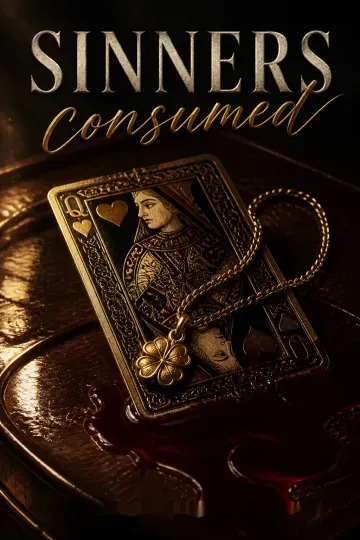
Prophecy of doom or devotionA fortune teller on Fremont Street gave young Raphael2 a choice between the King of Diamonds (success in business) and the King of Hearts (success in love), warning he could never have both. She also foretold that his doom card would be the Queen of Hearts, a red-haired woman who would bring him to his knees. Raphael2 chose diamonds and built an empire, then spent years avoiding redheads. When Penny1 appears with her copper hair and chaos in her wake, every business deal crumbles, confirming his superstition even as he falls in love with her. The prophecy structures the entire emotional conflict: Raphael2 must choose whether to believe fate is cruel or whether love is worth the cost of his carefully constructed world.
Sinners Anonymous Hotline
Anonymous confession and secret connectionA phone line Raphael2 created, evolving from a childhood ritual where he and his brothers eavesdropped on church confessions to identify sinners worth killing. Adults now call anonymously to confess anything, and the Visconti brothers select the worst offender each month to hunt and execute. Penny1 began calling at thirteen, unaware who owned the line, treating the robotic voice as her diary. Raphael2 recognized her voice and became addicted to her rambling monologues, learning everything about her: her favorite foods, her insecurities, her dreams. The hotline functions as a one-way intimacy that becomes a betrayal when she discovers he owns it, then transforms again when he proves his listening was love, not surveillance.
Four-Leaf Clover Necklace
Talisman linking two generations of fateGiven to ten-year-old Penny1 by a mysterious woman who saved her from assault in an alley outside the Visconti Grand casino. The woman told her luck is believing you are lucky, and the necklace would remind her when she forgot. Penny1 has worn it ever since, crediting it with her improbable survival and success as a grifter. The necklace is later revealed to have belonged to Maria Visconti, Raphael's2 mother, who gave it away weeks before she was poisoned at a carnival. It becomes the story's central symbol of fate: Maria's love reaching across death to protect the girl who would eventually love her son. At the novel's end, Penny1 gives the necklace to Raphael2, transferring her belief in luck to him.
For Dummies Book Collection
Hidden devotion disguised as condescensionAfter hearing Penny's1 hotline calls where she laments being uneducated and directionless, Raphael2 secretly purchases the entire For Dummies book series, from Anatomy to Weight Training to Petrology. He hand-builds her a splintered, badly-constructed bookshelf in the yacht's library to house them, leaving behind torn Swedish instructions and his hammer. Penny1 discovers the collection during the girls' sleepover and realizes Raphael2 has been absorbing every insecurity she voiced to the anonymous hotline and quietly addressing each one. The bookshelf becomes proof that his listening was attentive rather than predatory. Later, on Valentine's Day, he reciprocates with a handmade book titled Penelope Price for Dummies, cataloging every detail of her, symbolizing that she is the only subject he truly wanted to master.
Sinners Anonymous Monthly Game
Family ritual turned weapon of betrayalEach month, the Visconti brothers select the worst confession from the hotline and hunt the sinner in an elaborate game, using creative settings and weapons. The ritual began in childhood when their deacon father made them choose the worst confessor at church to eliminate. It now serves as the bond that keeps the brothers connected despite their different territories and temperaments. In this book, Gabe5 weaponizes the game by secretly swapping the designated target for Dante11, their enemy cousin, transforming a bonding ritual into a near-fatal ambush. The game's corruption mirrors the family's unraveling and tests Raphael's2 luck at its lowest point, immediately before he nearly kills Penny1 in his desperation.
Sinners Anonymous Series


Download PDF
Download EPUB
.epub digital book format is ideal for reading ebooks on phones, tablets, and e-readers.








