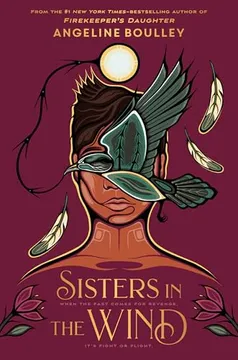


Plot Summary
The Diner's Last Cake
At the Pleasant Diner, eighteen-year-old Lucy Smith distrusts John Jameson, a well-dressed attorney who says he helps Native foster children find their families. She suspects he has been following her and rejects his invitation to reconnect with relatives, though he leaves a card asking her to come home.
Lucy has already prepared to disappear: she has cleaned her apartment, packed her few possessions, and planned to leave after work. Instead, coworker Nancy celebrates Lucy's six-month anniversary with cake.
When the diner closes, Lucy steps through the back door. An explosion throws her into the parking lot, breaks her thigh, and badly burns Nancy. As Nancy lies beside her, she recognizes Lucy's resemblance to the birth mother Lucy never knew.
Names Beneath the Bandage
Lucy wakes in the hospital to learn that Jamie is John Jameson and that the tall woman beside him is Daunis Fontaine, best friend of Lucy's half sister, Lily. Lily and Lucy share a mother, Maggie Chippeway, who is alive; DNA evidence confirms Lucy's identity. Lucy refuses to meet Maggie, while Daunis tells her how Lily was killed by her controlling boyfriend and how Jamie, then an undercover officer, had loved Daunis before leaving town.
Five years later, Jamie has returned to find Lucy and revive their connection. Lucy is furious that the blast injured Nancy, but she also sees that Daunis and Jamie are guarding her rather than holding her. Her battered body is trapped in a hospital bed, and her old escape plan must wait.
A Father's Edited World
Lucy remembers growing up with her father, Luke Smith, a devoted Catholic teacher who made pizza with her, gave her a book every birthday, and kept her world orderly. He said her absent birth mother was Italian, not Native, and Lucy believed him.
When cancer weakened Luke, his math teacher, Bridget Mapother, began caring for them; Lucy eventually agreed to her father's marriage proposal, then accepted Bridget's adoption. Luke died during surgery when Lucy was thirteen.
Bridget discarded his clothes and nearly sold his treasured watch, then stopped contributing to the college fund he had built for Lucy. After Bridget slapped her and insulted her Native mother, Lucy fled. A storage-unit key led her to Bridget's hidden designer purchases, and fireworks Lucy ignited there caused a destructive fire.
A Sister on Beaver Island
After the storage-unit fire, Lucy is charged with arson and becomes a ward of the state. Her social worker tells her to conceal her Native ancestry and identify herself as Mexican, leaving Lucy with no help tracing her family.
Foster parent Miss Lonnie Lawton instead teaches her practical skills and offers steady, uncomplicated kindness. Lucy shares the remote Beaver Island cabin with Devery, a sharp-tongued foster sister who teaches her to keep an escape plan. The girls trade movie-inspired nicknames, read together, and make matching tattoos.
Lucy settles into the island's labor and quiet, but Devery longs to leave. On Thanksgiving morning, a fire destroys Miss Lonnie's cabin. Devery risks smoke to retrieve Lucy's books, and the foster system separates the girls afterward.
The Sterling House Rules
At the Sterling home, Lucy learns to read Steven Sterling's movements so she can avoid the foster brother who stares at her and finally attacks her in his car. She drives them home after jabbing his eyes, and Mrs. Sterling makes him apologize without seeming surprised.
Lucy stays because school offers a route toward independence, and she grows close to nine-year-old Stacy by reading aloud to her. Then Stacy reveals that Steven has been abusing her and threatening her into silence.
Lucy leaves a note urging Stacy to tell a teacher, confronts the Sterling parents, and runs to report their son. The family denies her accusation and persuades her social worker that Lucy is lying. With no proof and no adult support, Lucy loses another home, but her warning remains with Stacy.
The Hoppy Farm Welcome
At Hoppy Farm, a large working farm run by Mister and Missus Hoppy, Lucy finds shared meals, paid work, a library she can build, and rules that give teenagers private space. She becomes friends with Tonya, Diego, and other residents, and briefly kisses Boyd McCarty, a charming foster teen.
The farm also houses pregnant girls, including Emily, whose sudden labor brings the group together to help her deliver a son. Lucy sees Missus Hoppy arrange adoptions and initially reads the family's care as generosity.
After Tonya leaves with plans for adulthood, Lucy learns Tonya has died of an overdose. Clues in the farm's records and Boyd's behavior make the cheerful routine feel less secure. The place that taught Lucy to belong may be exploiting the girls it shelters.
Five Thousand for a Baby
On the night before Lucy's seventeenth birthday, she and Diego share an intimate moment, but Diego disappears soon afterward. Boyd later admits that Diego had been in love with Emily and had wanted to find her. He also confesses that he killed Diego with a shovel after seeing him with Lucy, then demands Lucy's silence.
Boyd reveals that he impregnated Christina for a five-thousand-dollar payment from the Hoppys' adoption scheme. Lucy realizes that the farm may be arranging illegal deals behind its charitable appearance.
She is pregnant by Diego and knows Boyd could kill her too, so she pretends to cooperate while searching for leverage. After Boyd dies in a fire at his loft, Lucy discovers she is carrying Diego's child. She fears both the Hoppys' power and the possibility that her baby will be treated as merchandise.
The Boy Under the Maple
Lucy gives birth to a boy and names him Luke, after her father. She selects Isabella Rivera, a teacher and coach, as his adoptive mother, but keeps Luke close and breastfeeds him before placing him in Isabella's care.
While working in the Hoppy apartment, Lucy finds a hidden journal documenting illegal adoptions and evidence implicating the farm's attorney. She also finds a note from Mona Hix, a former resident who feared the Hoppys had murdered her and taken her baby. Lucy hides the journal and key beneath a tree, hoping the records will protect Luke.
Devery, now close to Bruce Hoppy, tricks Lucy into revealing her location to the Hoppys. Lucy escapes into a pond and hides underwater with a hollow reed until they leave, carrying the secret evidence but believing she has lost Devery.
Raven Air's First Assignment
In 2009, Daunis and Jamie arrange a hotel suite for Lucy's recovery, and Daunis manages her care while Lucy resents being watched. Jamie explains that his company, Raven Air, helps Native families navigate child welfare and teaches professionals about the Indian Child Welfare Act, or ICWA.
Lucy becomes his paid research assistant, reading testimony about Native children taken from their families and caseworkers who ignored the law. A photograph of a girl reunited with relatives makes Lucy confront how her own social worker concealed her Native identity.
Daunis accidentally reveals that Lucy has a brother and sister, Lucas and Lola, but Lucy still refuses contact with Maggie. As physical therapy strengthens her leg, Lucy begins to accept Daunis and Jamie as familiar companions, even while planning to leave once she can walk.
Flowers From the Bombers
A bouquet arrives at Lucy's physical therapy appointment with a message promising that someone will find her. Lucy drops the vase and has Daunis change the appointments to the casino hotel's guarded gym. Daunis also tells Lucy about the boarding school where Maggie's family suffered cultural abuse, giving Lucy a history she had been denied.
As Lucy grows stronger, she learns more about Daunis and Jamie, including their past love and the loss of Lily. At an ice arena, Lucy sees Daunis and Jamie kiss and mistakes the moment for betrayal, not knowing Daunis has ended her relationship with TJ.
The same day, a woman threatens Lucy in the restroom and sets a deadline. Jamie later admits that the diner blast was a pipe bomb. Lucy understands she was meant to be frightened, not killed, and that her pursuers remain close.
The Countdown to Saturday
As the deadline approaches, Lucy prepares to flee by rideshare, hiding cash, a burner phone, and a false ID. Jamie tells her the state investigation now treats her as a person of interest because explosive residue was found inside her backpack and apartment.
Lucy cancels physical therapy and heads for her ride, but Devery intercepts her at the hotel. Lucy loudly claims responsibility for the diner bombing to attract a tribal police officer, and she is arrested. In jail, another inmate attacks her and repeats the threat. Daunis and Jamie secure bail, but the judge orders Lucy to wear an ankle monitor.
During a private attorney meeting, Jamie explains the evidence appears planted. Lucy finally tells him about the Hoppy adoption scheme, her baby, and the fire that killed Steven, admitting that she believes her own choices have repeatedly endangered others.
The Foster Sister's Bait
Jamie prepares to contact the Sterlings, while Lucy reveals that she once saw Steven abuse Stacy and that no authority believed her. She also confesses that she left a candle burning in Boyd's loft, starting the fire that killed Steven months later.
Daunis stays beside her as the story comes out, and the two women begin to trust each other more honestly. Then Stacy calls with a coded warning to return to the library without the ankle monitor. Lucy slips off the monitor, leaves her father’s watch for Jamie, and drives to Hoppy Farm.
Devery appears to have helped arrange the meeting, but Lucy soon learns she has deceived her again. At the farmhouse, Stacy is waiting with a toddler: Luke, Lucy's son, now in the Sterlings' custody. The people who stole him have brought Lucy there as bait.
The Barn Takes Fire
Mr. and Mrs. Sterling keep Luke out of Lucy's reach and blame her for Steven's death, while Mister and Missus Hoppy are nowhere to be seen. Lucy carries the key to the hidden adoption records, but the Sterlings dismiss her offer to trade it for her son.
She realizes the Hoppys have been killed and the Sterlings brought her to the farm for revenge. Devery arrives and admits she lured Lucy there, hoping to secure a future with Bruce, though she did not know Luke and Stacy would be placed in danger. An explosion tears through the barn where the children are playing.
Devery rushes inside and brings Luke out alive; Mr. Sterling carries Stacy clear. Jamie shoots Mr. Sterling when he turns his gun on Lucy, but Jamie is gravely wounded. Lucy holds Luke and presses against Jamie's bleeding leg as he dies beside her.
Ashes Keep Their Record
After the barn burns, Lucy survives with Luke, while Daunis works to save Stacy and emergency crews arrive. The Sterlings and Hoppys are dead, and Devery's condition is critical. Lucy remembers hiding the adoption journal and key beneath a silver maple at Hoppy Farm, where Diego's crucifix marks the bundle.
That cache can expose the coercive adoptions and help explain how Isabella Rivera was deprived of Luke. The diner investigation also begins to turn: evidence gathered by Daunis links Max Roberts to the bomb package, which he placed for money without knowing what it contained.
The immediate danger has passed, but it has taken Jamie and left Lucy to face grief, legal proceedings, and motherhood. Instead of disappearing again, she chooses to stay and fight for the life she has regained.
Epilogue
By September, Lucy has petitioned to restore her parental rights, and investigators are examining the Hoppy adoption ring, missing foster teens, and the social workers who enabled it. Isabella's adoption papers were forged, so Luke is expected to become Lucy's legal son. Devery never wakes after the fire, while Stacy begins supervised visits with Lucy and Luke.
Lucy moves in with Misho Abe, and Miss Lonnie lives nearby. At Daunis's homecoming gathering on Sugar Island, Lucy meets Maggie, Granny June, and her younger siblings. She gives her father's watch to Maggie, receives her own Spirit name, and later scatters Jamie's ashes into the river. Daunis gives Lucy Jamie's watch and the research files he hoped to turn into a book.
Lucy does not receive a clean restoration of the life she lost. Her parental rights still depend on a legal process, the Hoppy investigation is unfinished, and grief remains part of her daily life. Yet the ending replaces solitary escape with chosen, practical ties: Misho Abe and Miss Lonnie share her home, Stacy visits, and Maggie meets Lucy on Lucy's terms. The watches pass between generations, carrying separate histories of care and concealment. Jamie's unfinished ICWA work becomes an inheritance Lucy can choose to continue, not an obligation imposed on her. Her homecoming therefore resolves the opening's invitation without pretending that belonging erases trauma.
Analysis
Sisters in the Wind builds its mystery around a question that Lucy initially answers with flight: how can she stay alive when every adult system around her seems capable of making her disappear? Her suspicion is not a personality flaw but a learned method. A store guard humiliates her, a social worker falsifies her identity, a foster family dismisses her warning, and adults who offer shelter turn children into leverage. The novel therefore makes trust something that must be tested through conduct, not granted because a person has authority or good intentions.
Lucy tries to make morality manageable by sorting people into good and bad, then discovers that this system resembles the religious certainty used to control her. Her father loved her deeply yet hid her Native identity and constrained her world. Daunis is generous but imperfect. Devery can be both a sister and a source of danger. Lucy herself causes harm while trying to survive. The story refuses to treat contradiction as proof that love was false. Instead, maturity means learning to see responsibility without reducing a person to their worst act.
The book's political argument is made through intimate consequences. ICWA is not an abstract legal controversy to Lucy: its absence helps explain why she was misidentified, why her relatives remained unknown, and why institutions could separate Native children from their communities. In contrast, Jamie's research records successful family placements as evidence that culturally grounded care can work. The difference is not sentimental. It is structural: children need advocates who understand their communities and laws that constrain state power.
Fire, books, and offerings give the novel distinct ways to think about memory. Flames can destroy, but also warm; books can carry both a father's love and a foster child's testimony; semaa makes gratitude an act of reciprocal relation rather than a private feeling. By the end, Lucy's strength is no longer measured only by how well she escapes. She begins to choose a home, accept help, and build kinship around Luke, while insisting that survival must include a future of her own.
Review Summary
Sisters in the Wind receives an overall strong reception, with most readers praising its emotional depth, compelling mystery, and important exploration of Ojibwe culture and the Indian Child Welfare Act. Many readers were moved to tears by Lucy's story of navigating foster care and discovering her indigenous identity. Common criticisms include pacing issues in the middle, unresolved plot threads, and some feeling the dual timeline was clunky. Several readers noted the ending felt rushed. Despite mixed opinions, most agree the book is educational, meaningful, and emotionally impactful.
Characters
Lucy Smith
Runaway turned investigatorLucy is observant, physically capable, and trained by instability to calculate risk before trusting anyone. She keeps her possessions few, her routines precise, and her feelings under control, but books, swimming, and memories of her father reveal a deep hunger for reliable care. Her sharp humor and practical intelligence make her a quick researcher and a resourceful survivor. Lucy's central struggle is not simply whether to accept help, but whether accepting it means surrendering control. Her growing interest in Native identity and child-welfare policy gives her a way to turn personal knowledge into useful work, while her loyalty to younger and more vulnerable people repeatedly tests her instinct to flee.
Daunis Fontaine
Fierce kinship advocateDaunis is a brilliant, physically imposing Ojibwe woman whose competence can feel like pressure to someone as self-protective as Lucy. She has deep ties to her family, community, and traditional medicine, and she brings those commitments into practical acts of care rather than treating culture as decoration. Daunis is both tender and direct, especially when protecting someone she loves. Her earlier losses have made her attentive to the danger of leaving people alone with pain, though she must learn that care cannot mean deciding everything for another person. Her relationship with Jamie carries history, affection, and unresolved choices, while her bond with Lucy grows through patience and earned trust.
Jamie Jameson
Foster-care reformerJamie is a former undercover officer and attorney who builds Raven Air to help Native children and families navigate child welfare. His polished clothes and steady manners conceal a childhood shaped by foster care and a lasting desire to find his origins. He is patient with Lucy, attentive to detail, and deeply committed to making legal systems serve children rather than erase them. Jamie's instinct to withhold difficult information is both protective and limiting; he wants to spare people pain, but secrecy can repeat the very powerlessness he hopes to repair. His long history with Daunis gives their present connection emotional depth, while his work with Lucy combines professional purpose with a protective, almost brotherly care.
Luke Smith
Lucy’s devoted fatherLuke raises Lucy with affection, structure, books, swimming, and a strong belief in education. A teacher who treasures routine, he tries to make a safe world by planning carefully and guarding his daughter from hardship. His love is tangible in birthday books, a daily watch, and the attention he gives Lucy's interests. Yet his protective approach also leaves her with unanswered questions about her mother and Native identity. Luke's influence remains present in Lucy's habits of research, cleanliness, self-discipline, and careful observation. He represents the genuine security she once knew, as well as the limits of a love that tries to manage risk by keeping difficult truths out of reach.
Devery
Blunt foster sisterDevery, whose given name is Elizabeth Plouff, is a small, funny, sharp-edged teenager who has learned to survive by anticipating abandonment. She and Lucy bond over a favorite movie, shared jokes, and their understanding that foster placements can change without warning. Devery speaks plainly, hoards food, and insists that every girl needs an escape plan. Her fierce independence often masks a yearning for a permanent home and a place in a family. Lucy admires her nerve and humor, though Devery's choices can be difficult to predict. Their relationship becomes a measure of how much affection can coexist with distrust, and how survival strategies can both protect and wound the people who use them.
Maggie Chippeway
Lucy’s unknown birth motherMaggie is the Native woman who gave birth to Lucy and Lily, and whose absence shapes the sisters' separate lives. Lucy knows her through fragments and other people's memories before she is ready to approach her directly. The few glimpses of Maggie suggest a young woman who carried her own questions about family, acceptance, and the responsibilities adults owe children. Her story is entangled with the histories of Native families and the harm done by institutions that separated generations. Maggie is not merely the missing answer to Lucy's identity; she is a person whose own life has been shaped by circumstances Lucy does not yet understand.
Lily Chippeway
Beloved absent sisterLily is Lucy's half sister and Daunis's closest friend, remembered as funny, loyal, hardworking, and quick to challenge anyone who underestimated her. She hoped to study psychology and help children in crisis. Although Lucy never meets her, Lily becomes a point of connection among Lucy, Daunis, and Jamie, and a reminder that a shared face does not make two people interchangeable. Stories about Lily let Lucy imagine a sisterly bond she was denied, while the community's continuing grief shows how widely one young person's life can matter.
Luke Diaz-Smith
Lucy’s young sonLuke is Lucy and Diego's son, named for Lucy's father. Before his birth, Lucy thinks of him as a responsibility she must protect; after holding him, she experiences him as a distinct child with needs, expressions, and a history he deserves to know. Her decisions about pregnancy, adoption, and family medical information revolve around his safety and future. Luke also makes abstract questions about kinship immediate. He needs more than Lucy's fierce protection: he needs a dependable network of people who can help him grow.
Miss Lonnie Lawton
Island foster parentMiss Lonnie offers foster girls a remote but stable home, teaching survival skills, household routines, and respect for the natural world. She understands that children in care are not defined by the troubles that brought them there. Her kindness is practical: food, work, books, and a warm cabin, alongside the freedom to feel anger or sadness. Lucy learns from her that safety can be built through dependable actions rather than promises.
Abe Charlevoix
Lucy’s Odawa elderAbe is an elderly Odawa man who befriends Lucy's father and later offers Lucy stories, cultural teachings, and a sense of kinship. His humor makes unfamiliar ideas approachable, while his practice of offering semaa teaches reciprocity as a daily action. He is generous without demanding that Lucy disclose more than she is ready to share. His role is both familial and cultural, a bridge to knowledge that Lucy's upbringing kept out of reach.
Bridget Smith
Lucy’s adoptive stepmotherBridget is Lucy's father's math teacher and later becomes his wife and Lucy's adoptive mother. She presents herself as strict, religious, and concerned with propriety, while Lucy struggles to understand what Bridget wants from their household. Her presence changes the intimate routines Lucy once shared with her father. Bridget's contradictions make Lucy question the difference between a respectable appearance and genuine care.
Mr. Sterling
Controlling foster fatherMr. Sterling presides over his household through quiet authority, and his family treats his decisions as final. His religious language and insistence on order make the home appear respectable, but Lucy senses that the family's rules protect appearances more than children. He is a reminder that danger can arrive in calm, socially approved forms rather than obvious chaos.
Mrs. Sterling
Complicit foster motherMrs. Sterling is a churchgoing parent who presents herself as a responsible caretaker. Lucy notices how carefully she manages family appearances and how quickly she defers to her husband's authority. Her treatment of Lucy teaches the teenager that politeness and religious language do not guarantee safety or fairness.
Stacy Sterling
Young girl Lucy protectsStacy is the Sterlings' young daughter, obedient and eager for her father's approval. Lucy recognizes something of her younger self in Stacy's sheltered life and builds a bond with her through nightly reading. Stacy's trust matters deeply to Lucy, who wants her to have the knowledge and support to speak when something is wrong.
Steven Sterling
Dangerous foster brotherSteven is a popular high school student whose polished, political manner contrasts with Lucy's growing awareness of his aggression. He is capable of charm in public and intimidation in private. His presence teaches Lucy to study small clues, plan exits, and trust her own physical instincts when adults do not recognize danger.
Mister Hoppy
Farm patriarchMister Hoppy runs a multigenerational farm that takes in foster teenagers. He values work, shared meals, and the routines that keep the household operating. To Lucy, he initially seems steady and welcoming, part of a family that offers structure without demanding religious conformity. His place in the farm's complicated system is difficult for Lucy to assess.
Missus Hoppy
Farm household organizerMissus Hoppy organizes the farm's household and its care for teenagers, especially pregnant girls. She is attentive to meals, chores, birthdays, and the practical needs of a crowded home. Her warmth makes the farm feel safe to Lucy, who is hungry for a place that keeps its promises. Missus also carries authority over the household's decisions, which Lucy gradually learns to question.
Boyd McCarty
Charming farm foster teenBoyd is a long-term foster teen at Hoppy Farm, known for his cowboy manner, easy charm, and interest in Lucy. He wants independence and sees money and a vehicle as routes out of foster care. His attention can be playful, but Lucy learns to distinguish charm from trustworthiness. Boyd's relationships with the other teens reveal how a close-knit community can still contain rivalries and secrecy.
Diego Diaz
Gentle farm foster teenDiego is a thoughtful teenager at Hoppy Farm who is devoted to Emily and shares Lucy's interest in books and sincere conversation. His Catholic faith is important to him, but he is also considerate and warm with the other foster teens. Lucy sees him as someone who expresses affection openly, in sharp contrast to the guarded relationships she has known.
Tonya Maxwell
Lucy’s candid roommateTonya is Lucy's blunt, funny roommate at Hoppy Farm, quick to mock sentimentality and quick to care for the people she claims not to like. Her humor, stories, and sharp observations make her a vivid presence in the communal household. She wants both independence and a secure future, tensions that shape her choices about family and adulthood.
Nancy
Diner's watchful waitressNancy is Lucy's older coworker at the Pleasant Diner, generous with small celebrations and attentive to what others fail to say aloud. She gives Lucy a rare experience of being noticed without being scrutinized. Her warmth helps make the diner feel like a temporary home, and her memory connects Lucy's present life to the family history she has never known.
Jennifer Hoppy
Nurturing farm daughter-in-lawJennifer is Allen Hoppy's wife and a former foster child who remains closely connected to the farm. She helps care for pregnant teens and offers Lucy a gentler, more validating presence than the household's senior adults. Her own experience of foster care informs her empathy, and her practical knowledge makes her a steady source of support.
Emily
Pregnant foster teenEmily arrives at Hoppy Farm pregnant and is cared for by the other residents. Diego is devoted to her, while Lucy watches the difficult choices surrounding pregnancy, parenting, and adoption. Emily's experience helps Lucy understand how quickly a young woman's future can be shaped by adults and institutions around her.
Max Roberts
Diner regular and husbandMax works at the tribal casino and visits the diner with his wife, Harley. The couple saves for a house and represents the ordinary, hard-won future Lucy wishes she could witness. Max is a familiar customer whose choices eventually intersect with the investigation.
Granny June
Maggie’s family elderGranny June is Lucy's maternal great-grandmother, an elder whose family history carries the consequences of boarding-school separation. She is part of the Native kinship network Lucy has long been denied and represents knowledge that survived despite generations of attempted erasure.
Plot Devices
The Indian Child Welfare Act
Protects Native family tiesICWA is the legal framework at the heart of Jamie's Raven Air work. It requires child-welfare systems to recognize tribal authority and Native children's connections to family and community. Lucy's research into its history gives her context for the social worker who concealed her ancestry and for the forced separations that shaped Maggie's family. The law also offers a practical alternative to individual rescue fantasies: children can be supported through relatives, tribal communities, and culturally informed care. The narrative uses the act both as a subject of study and as a measure of whether institutions honor the children they claim to protect.
Fire and its afterlife
Turns anger into consequenceFire recurs as a physical danger and a way to measure Lucy's relationship with anger, guilt, and survival. The early storage-unit blaze, the cabin fire, the suspicious farm fires, and the diner bombing make fire impossible for Lucy to treat as a distant metaphor. Her foster parent Miss Lonnie teaches her that fire can sustain life when respected, while Lucy's own history makes her fear that every uncontrolled flame reveals something irredeemable about her. The story complicates that fear by distinguishing intention, accident, and responsibility, then asks what a person can do after harm has occurred.
Birthday books and watches
Carry a family historyLucy's father gives her a book each birthday and lends her his Seiko watch before surgery, turning ordinary objects into durable evidence of affection. The books shape how Lucy reads people, makes a library for other foster teens, and recognizes the importance of written testimony. The watch serves as a keepsake and a link to promises Lucy made before she understood how much she would lose. Together, the objects preserve a relationship that Lucy cannot restore, while allowing its lessons to travel into her later choices about her son and other children.
Hidden notes and records
Make erased lives legibleNotes hidden in books, files kept by foster parents, and Jamie's research documents turn private suspicions into evidence. Lucy has learned that spoken accusations can be ignored, especially when made by a foster child, so she pays attention to dates, receipts, ledgers, and patterns. The written records connect individual experiences to a larger system of coercive adoption and missing teenagers. They also show the limits of documentation: records can preserve truth, but powerful adults can forge papers, hide files, or control who gets to read them.
Semaa and reciprocity
Practice gratitude and relationshipThe offering of semaa, or tobacco, gives Lucy a practice for expressing gratitude and recognizing mutual responsibility. Abe teaches her to hold the offering in her left hand, close to the heart, and to understand giving and taking as linked. Lucy returns to this practice at graves, trees, homes, and moments of transition. It offers a cultural language different from the rigid moral accounting she absorbed in childhood, where every mistake seemed to cancel a person's goodness. Reciprocity instead ties memory to action and belonging to obligations shared across generations.
Download PDF
Download EPUB
.epub digital book format is ideal for reading ebooks on phones, tablets, and e-readers.








