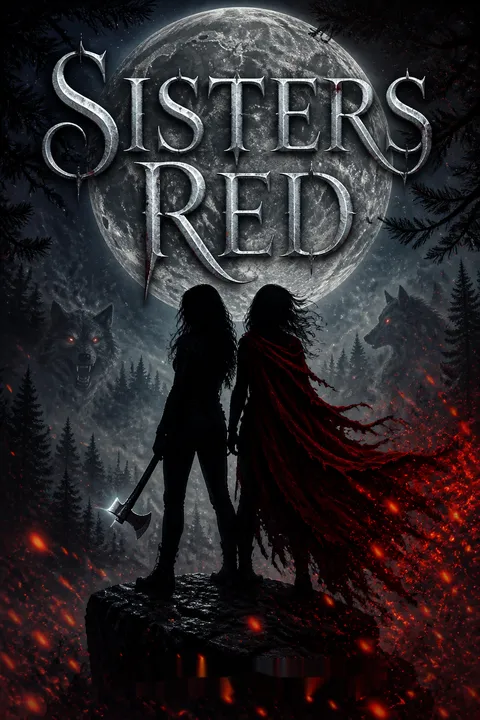


Plot Summary
Prologue
Seven years before the main story, sisters Scarlett and Rosie March meet a courteous salesman at their grandmother’s cottage. Their grandmother recognizes the black Arrow mark on his wrist and orders the girls to hide. The salesman becomes a Fenris, a monstrous werewolf, and breaks into the house.
Scarlett pushes Rosie under a bed and attacks the creature with a shard of mirror, while their grandmother is killed. Scarlett survives with terrible scars, including the loss of an eye. The attack binds the sisters to hunting the creatures and leaves Scarlett convinced that protecting Rosie is her life’s purpose.
The attack turns childhood closeness into a survival contract. Scarlett’s first decisive act is not simply fighting the Fenris, but placing Rosie beyond its reach, a choice that will shape how she understands love: protection means taking danger onto herself. Their grandmother’s recognition of the pack mark also establishes that the supernatural threat belongs to an organized world, not a single freak encounter. The sisters’ later certainty about hunting grows from trauma, but their memories of the same night differ, foreshadowing how one shared wound can produce divergent lives.
Silas Returns to Ellison
Scarlett March, now an experienced hunter of Fenris, lures a wolf through Ellison and nearly dies before her childhood friend Silas Reynolds returns and helps her kill it. Silas has spent a year away, and his return unsettles the routine Scarlett has built around hunting and protecting her younger sister, Rosie.
Rosie is angry because Scarlett secretly took a hunt she had been promised, while Scarlett insists Rosie is not ready to face wolves alone. At dinner, Silas agrees to hunt with the sisters again. Rosie, newly aware of his appeal, finds his return exciting; Scarlett sees him as the partner who once understood her best. Their reunion restores an old team while exposing the conflict over who gets to choose Rosie’s risks.
Scarlett’s protectiveness is both care and control. Because she survived by stepping between Rosie and a monster, she treats prevention as proof of love and Rosie’s independence as a danger she can manage. Rosie’s anger signals that protection has begun to cost her a self of her own. Silas’s return destabilizes this arrangement: he knows Scarlett’s competence, but also recognizes that Rosie cannot become a hunter by being kept out of the hunt. His presence is therefore not merely romantic possibility. He becomes a witness who can challenge the sisters’ inherited roles without sharing their exact history.
Rosie Hunts Alone
Rosie goes into town alone and is attacked by two Fenris. She kills the older one, but the younger escapes when a bus approaches, leaving her frightened that witnesses have seen her and that the surviving wolf will hunt again. The next day, at Ellison’s Apple Time Festival, Scarlett and Rosie lure another Fenris into the woods.
He has a human hostage and demands girls for his pack; when Rosie and Scarlett fight back, he flees, but not before they identify his Arrow mark. His reference to a coming phase prompts the sisters and Silas to infer that several packs are searching for a Potential, a rare person they can turn into a Fenris. With the threat growing, they decide to move to Atlanta.
Rosie’s first solo hunt is a genuine achievement compromised by an outcome she cannot control. She kills one attacker, yet the escape makes her measure herself by Scarlett’s harsher standard: whether every danger has been eliminated. The festival encounter widens the moral frame. Fenris are not simply isolated predators; they organize, recruit, and coerce humans into helping them. The sisters’ decision to leave Ellison follows from that scale shift. Their home once offered familiar ground, but the packs’ search makes local safety an illusion and pushes them into a city where the hunters will have less control.
A City Without Shadows
The March sisters and Silas sell possessions, pack their belongings, and move into a dilapidated Atlanta apartment that offers little comfort but puts them near the packs’ activity. Scarlett expects the city’s concentration of Fenris to give her more targets.
Instead, she finds herself competing with crowds of young women whose beauty and confidence draw the wolves more readily than her scarred face and red cloak. After several Fenris ignore her, Scarlett asks Rosie to serve as their bait, trusting her ability to attract attention and promising to protect her.
Rosie accepts because she feels responsible for the hunt, even as she hopes for a life beyond it. The move brings the three closer to the threat, but it also makes their different definitions of responsibility harder to hide.
Atlanta removes the practical advantage Scarlett enjoyed in Ellison: being the only available lure. Her failure is not a loss of skill but a blow to the identity she has built around being indispensable. The city’s many young women force her to confront the way her scars shape both her tactics and her sense of worth. Asking Rosie to become bait reverses their familiar positions. It is a tactical necessity, but it also tests whether Scarlett can entrust her sister with danger without turning trust into another form of supervision.
The Wolves Heal
Rosie draws a young Fenris into Piedmont Park while Scarlett and Silas shadow the encounter. Scarlett follows three other wolves who are discussing a Potential, but when she attacks, they prove far stronger than ordinary Fenris and recover quickly from their wounds. Rosie and Silas arrive before the pack can kill Scarlett; together they defeat two wolves, while the others escape.
Badly injured, Scarlett recognizes that the pack is unusually focused and suspects its members are strengthened by the Potential they seek. She can no longer rely on the sisters’ usual bait-and-kill method. The three agree to find the Potential before the packs do, hoping to use his presence to draw the wolves into a fight they can prepare for.
The fight makes Scarlett’s competence insufficient, a threat more destabilizing to her than physical injury. Her usual method depends on predictable opponents and control over when a fight begins. The wolves’ rapid recovery strips away that control and turns the Potential from an abstract rumor into a strategic necessity. Yet the group’s decision also reveals an ethical danger: they begin to treat a living person as bait before knowing who he is. Their defensive logic starts to resemble the instrumental thinking they condemn in the packs.
The Cost of Watching
Scarlett hunts alone near a club and follows an Arrow-marked Fenris as he approaches three young women. She hesitates to attack in public, afraid that showing them the monster will shatter their ordinary lives.
The wolf takes one girl into an alley and kills her before Scarlett can intervene; two others survive, but recoil from the scarred hunter who leads them away. Scarlett returns to the apartment furious and finds Rosie and Silas resting together.
Their calm looks to her like indifference, though they have been waiting and Rosie has been trying to live outside the hunt. Scarlett accuses them of leaving her to fight alone. Rosie’s secret community-center classes and growing closeness with Silas deepen her guilt and make their disagreement about duty personal.
Scarlett’s hesitation is not cowardice. It is a painful recognition that rescuing someone can also force her to witness a truth for which that person is unprepared. The dead girl makes the cost of inaction immediate, but the survivors’ fear shows that action has consequences beyond the fight. Scarlett interprets Rosie and Silas’s rest as moral failure because she has no model for a life not organized around vigilance. Rosie’s classes, by contrast, are an experiment in personhood, not a rejection of her sister. Their conflict arises because each mistakes the other’s coping strategy for a judgment.
The Bowling Alley Pack
Silas persuades Scarlett to bowl for one evening, giving the trio a brief reprieve from research and hunting. Scarlett notices that several young men nearby are Fenris, including one whose wrist bears an Arrow symbol layered over an older Bell mark. The pack follows Rosie outside, where its Alpha confronts them and tries to seize her.
Rosie cuts him with a knife, and Silas and Scarlett join the fight. They kill some of the wolves, but the Alpha and others escape. Scarlett realizes that the Fenris ages she has heard, including fourteen, twenty-one, and twenty-eight, are multiples of seven. The encounter gives them evidence that the Potential follows a seven-year pattern, while the Alpha learns the hunters’ faces and fighting habits.
The bowling alley briefly makes the hunters ordinary, then turns recreation into a trap. That collision matters because the three cannot keep their private war separate from public life, even when they try to claim a harmless evening. Scarlett’s numerical insight shows her talent for converting scattered observations into a pattern, but the fight carries a cost: the Alpha now knows his opponents. The revelation also begins to make the hunt intimate. The Potential is no longer a distant mechanism to exploit; the seven-year rule points toward a specific human life whose identity remains unknown.
Rosie Finds Her Own Life
After kissing Silas during a rain-soaked search for their runaway cat, Rosie attends a tango class without her knives. Her partner, a Fenris, attacks her in front of the class. Rosie throws him into a mirror and escapes serious harm, but his wealthy father pays her two thousand dollars to avoid legal trouble.
Remembering that the man described himself as the seventh son of seven boys, Rosie connects his family history to the Fenris lore and to the obituary of Joseph Woodlief, the fourteen-year-old they suspect was a Potential. Scarlett’s earlier age pattern supplies the other half: a Potential is the seventh son of a seventh son, at the right seven-year birthday. Rosie has found the clue by pursuing both her own interests and the hunt.
Rosie’s class is not a safe refuge from violence; the Fenris follows her into a space she chose for herself. Yet the episode also refuses the idea that her non-hunting life is wasted time. Her memory, attention, and independent reading of the evidence solve what Scarlett’s relentless research could not. The distinction is psychologically important: Rosie’s selfhood does not compete with her intelligence as a hunter. Her growing relationship with Silas and her curiosity outside the hunt make her more perceptive, not less committed to protecting people.
The Sister Behind the Door
Scarlett returns to the apartment and sees Rosie and Silas kissing. Feeling excluded and betrayed, she strikes Rosie aside when her sister tries to approach, then leaves rather than hear their explanation.
In Piedmont Park, Scarlett attacks Silas in anger, but he tells her he loved her first and admits that she never returned his feelings. Silas’s kiss confirms what Scarlett cannot offer: she feels no romantic pull, because the hunt is where she experiences purpose and aliveness.
She accepts that Rosie and Silas need something beyond hunting, although the realization does not erase her hurt. Scarlett refuses to return with Silas. Meanwhile, Rosie and Silas search for her, and their separation leaves the sisters vulnerable to the next move by the Arrow pack.
The scene at the apartment makes exclusion feel like a second wound layered onto Scarlett’s old scars. She reads secrecy as proof that love has displaced her, then uses anger to avoid the more frightening possibility that Rosie can belong to her and still choose a separate life. Silas’s confession clarifies the asymmetry without turning it into a romantic contest: Scarlett’s deepest attachment is not a person but the work that gives her a coherent identity. Accepting that difference is a real act of love, though it arrives before she can feel reconciled.
Rosie Becomes the Bait
While Silas searches for Scarlett, Rosie shops without her knives and is surrounded in a park by Fenris disguised as runners. The Arrow Alpha grabs her, covers her with her red cloak, and carries her to an abandoned subway tunnel packed with wolves. He locks her in a mechanical room and announces that she is not to be killed yet.
Rosie understands that the pack wants to use her to draw someone out, but she does not know why. In the tunnel, she hears the Fenris torment and kill another captive girl. When the pack leaves her alone, Rosie explores the generator, shelves, and door, searching for a way out rather than waiting for Scarlett or Silas to find her.
Rosie’s capture repeats the original family trauma in a new arrangement: she is again trapped while a predator controls the room, but this time the story gives her the space to plan. The Alpha’s order to keep her alive makes her a bargaining object, stripping her agency in the pack’s eyes. Rosie resists that definition by studying the environment and choosing action. The other captive’s death intensifies the stakes without turning Rosie into a passive witness; her fear becomes information about what will happen if she leaves the decision to her captors.
Silas Is the Potential
Scarlett visits Pa Reynolds at his care home, hoping for company after days alone. His Alzheimer’s confuses her with his dead wife, then briefly clears enough for him to reveal that Jacob was his first son, born before his marriage and raised as his brother. Silas is therefore the seventh son of a seventh son, the Potential the packs have been seeking.
His family once kept him moving during the crucial years, but the attack on the March cottage happened when they failed to leave Ellison in time. Scarlett rushes back and tells Silas what she learned. At the apartment, they find Rosie missing and discover the Alpha’s demand: Silas must come to Sutton Station at eleven that night in exchange for her.
The revelation collapses the distance between strategy and love. Scarlett had been willing to use an unknown Potential as bait; now the target is the friend whose return helped rebuild her life and the man Rosie loves. Pa Reynolds’s fragmented memory carries a family history that was hidden not from malice but from a desire to protect Silas, a protection that failed and helped leave the March sisters exposed. Scarlett must now decide whether her moral language about responsibility still holds when the person at risk is someone she knows intimately.
Rosie Walks Through Fire
Rosie remembers her grandmother’s story about children leaving a cave and learning to face the sunlight. She uses that lesson to stop imagining herself as someone awaiting rescue. In the dark mechanical room, she opens the generator’s fuel panel, siphons gasoline through a hose, and runs it beneath the door.
She blinds one eye with cloth, lights the fuel as the Alpha opens the door, then charges through the flames and the stunned pack. The fire burns her legs and cloak, but she reaches the street and runs toward the apartment. The Fenris pursue her into the abandoned lot where she and Silas first kissed. There, exhausted and injured, Rosie hears them closing in before Scarlett and Silas arrive.
The cave story changes from a lesson Scarlett uses to justify her burden into a tool Rosie can use for self-rescue. She does not reject the danger or pretend it is a shadow; she studies it, improvises, and accepts the bodily cost of leaving. Covering one eye echoes Scarlett’s injury but does not mean Rosie has become her sister. It is a tactical choice made on Rosie’s terms. Her escape proves that independence is not abandonment: she can love her family and still act without waiting for either of them to authorize her survival.
The Alpha Falls at Midnight
Scarlett and Silas find Rosie in the lot as the Arrow Alpha and a dozen wolves close around her. Scarlett gives Rosie her knives, and the sisters fight beside Silas, joined again by a shared purpose. Rosie and Scarlett kill or wound several attackers, but the Alpha pins Scarlett down and bites her shoulders. Silas rushes in and the Alpha bites his chest.
Rosie drives the creature off, then strangles it until it dissolves into shadow. Silas fears the bite will turn him into a Fenris and asks Scarlett to kill him before that happens. The church bells strike midnight. Scarlett realizes the critical moon phase ended at 11:41, nineteen minutes earlier, so Silas will not transform.
The climax makes the sisters’ different strengths cooperate rather than compete. Scarlett’s tactical command, Rosie’s improvisation, and Silas’s willingness to risk himself all matter, but Rosie’s final attack is driven by love rather than imitation of Scarlett’s vengeance. The bite appears to fulfill the danger that has governed the entire search, then the clock supplies a precise limit the story established earlier. That narrow escape does not make the cost trivial: Silas is wounded, Rosie is terrified, and Scarlett must face how close her protective plans came to losing them both.
Different Roads Home
The three survivors go to the hospital for treatment, then leave once Scarlett refuses to stay overnight. Silas tells Rosie that the seven-year rule may make his future dangerous, but he still loves her; Rosie chooses to trust him. They return to Ellison and settle again at the cottage. Scarlett heals and resumes hunting, while Rosie and Silas build a life that includes travel, music, cooking, and time together.
At dinner beneath a full moon, Rosie recognizes Scarlett’s renewed hunger for the hunt and understands it as a genuine passion, not a sickness she must share. The sisters embrace without trying to make their lives identical. Their bond remains strong because Rosie can love Scarlett while choosing a different future.
The resolution rejects the assumption that intimacy requires sameness. For most of the novel, Rosie treats her bond with Scarlett as an obligation to reproduce Scarlett’s life, while Scarlett treats shared danger as the proof that the bond still holds. Their final recognition allows attachment to survive difference. Scarlett’s hunting remains meaningful, and Rosie’s love and curiosity remain meaningful too. The return to the cottage restores a home, but not the earlier arrangement in which Scarlett’s sacrifice set the terms for both sisters. Home becomes a place they can leave and still belong to.
Epilogue
Seven months later, Rosie and Silas travel from city to city, sending Scarlett letters filled with folded paper flowers, swans, and frogs. Silas uses the money from selling his father’s house to reconnect with his siblings while he and Rosie explore a life beyond hunting.
Scarlett stays in Atlanta, where she has moved into the old apartment and prepares to patrol the streets. Rosie keeps her red cloak packed, while Scarlett wears hers again. They miss one another, but their letters affirm that separation is a choice they can live with, not a severing of their shared history.
The epilogue makes the sisters’ reconciliation durable by refusing to restore their old proximity. Rosie’s travel and Scarlett’s continued hunting are not temporary phases designed to resolve into one shared vocation. Their daily letters, filled with handmade figures, create a material form of closeness that does not demand either sister surrender her direction. The cloak’s different status in each life marks the distinction: Scarlett needs it as working equipment, while Rosie preserves it as a piece of their common past. Love becomes a practice of staying connected without claiming ownership.
Analysis
Sisters Red frames trauma as a force that can bind people together while shaping them toward different futures. Scarlett and Rosie survive the same attack, but Scarlett’s memory becomes a mandate: because she stood between her sister and the Fenris, she believes she must keep doing so. Rosie experiences the resulting protection as love and debt at once. Their conflict is therefore not a simple choice between duty and selfishness. It concerns whether care grants one person authority over another’s life.
The Fenris turn predation into a social system. They recruit, follow pack hierarchies, exploit human loyalties, and search for a Potential whose transformation will strengthen them. Their structure mirrors the hunters’ own reliance on inherited knowledge and coordinated roles, but the ethical distinction lies in how each group treats individuals. The Alpha uses people as instruments. Scarlett risks doing something similar when she imagines using an unknown Potential as bait, before learning the target is Silas.
Rosie’s classes, romance, and cooking are not distractions that she must abandon to prove courage. They expand the capacities through which she understands herself and the people she protects. Her deduction about the seventh son comes from curiosity beyond Scarlett’s preferred methods, and her escape depends on applying Leoni’s old story in a new way. Scarlett, meanwhile, does not need to be cured of hunting. The resolution respects the hunt as her chosen vocation while refusing to make it the price of belonging.
The sisters’ final closeness depends on accepting difference rather than restoring their childhood fusion. Their shared history remains real, but it no longer requires shared work every night. The book’s emotional answer is neither separation nor self-sacrifice: love can persist when the people bound by it choose distinct lives.
Review Summary
Sisters Red received mixed reviews. Many praised its unique take on Little Red Riding Hood, strong sisterly bond, and action-packed plot. However, some found issues with character development, predictability, and the age difference in the romance. Readers appreciated the dark, gritty atmosphere and Scarlett's fierce character, but some felt Rosie was less compelling. The writing style and pacing were generally well-received, though the middle section dragged for some. Overall, it was seen as an entertaining, if flawed, urban fantasy retelling.
People Also Read
Characters
Scarlett March
Scarred Fenris hunterScarlett is Rosie’s older sister, a disciplined hunter whose missing eye and many scars testify to the attack that shaped their childhood. She uses a red cloak to lure Fenris and a hatchet to kill them, approaching the work with grim focus because she believes protecting others is the only adequate response to what happened. Her protectiveness toward Rosie is genuine, but it can become control: she fears that allowing her sister to take risks means failing her. Scarlett trusts action more readily than tenderness and struggles to imagine a self beyond the hunt. Her fierce loyalty, quick tactical mind, and difficulty sharing authority define how she moves through the world.
Rosie March
Restless younger sisterRosie is Scarlett’s younger sister and fellow hunter, trained to fight with knives but less certain that hunting should define her whole life. She loves Scarlett deeply and often interprets that love as a debt, since Scarlett protected her during the childhood attack. Rosie is observant, resourceful, and more open than Scarlett to ordinary pleasures, including cooking, classes, and romance. Her desire for a life beyond the hunt does not mean she lacks courage or responsibility. She is learning to distinguish gratitude from obligation, and to understand that choosing a different path does not cancel the bond she shares with her sister.
Silas Reynolds
Woodsman and confidantSilas is a childhood friend of the March sisters and the son of a family of woodsmen. Skilled with an axe, familiar with Fenris lore, and inclined toward humor, he can work alongside Scarlett without treating her as fragile. His year away from Ellison sharpened his sense that hunting is a responsibility, not the only possible life. He encourages Rosie to explore interests outside the hunt, while remaining loyal to both sisters. Silas’s family history is complicated by conflict with his siblings and his father’s failing memory. He is patient but not passive, willing to challenge Scarlett when her devotion to the work threatens to consume the people she wants to protect.
Leoni March
Storytelling grandmotherKnown to the sisters as Oma March, Leoni raises them in her cottage and passes on fairy tales, German phrases, and philosophical stories. Her knowledge of the Fenris allows her to recognize danger before the girls understand it. She gives the sisters an imaginative vocabulary for fear, especially through a story about leaving a cave and learning to see what is real. Leoni’s lessons continue to shape both girls, though they interpret them differently. She represents the protective family world that the attack destroys and the inherited wisdom they carry into adulthood.
Charlie Reynolds
Ailing woodsman fatherCharlie, whom the sisters call Pa Reynolds, is Silas’s father and a longtime source of practical knowledge about the Fenris and the forest. He helped care for Scarlett and Rosie after their grandmother’s death and shared a warm, teasing friendship with Leoni. Alzheimer’s gradually erodes his memory, placing a strain on Silas and leaving important parts of the family’s history difficult to recover. Charlie’s intentions are protective, but the secrets he keeps in that effort have consequences for the people around him.
The Marches’ mother
Absent, unsettled motherThe sisters’ mother leaves them in Leoni’s care and later disappears from their lives, unable to remain with them after the attack. Her history is marked by instability, failed relationships, and substance abuse, while her absence forces Scarlett and Rosie to become responsible for themselves unusually young. The girls remember her differently and have little reliable information about their fathers. She is a source of grief and unanswered questions rather than a guiding presence.
Jacob Reynolds
Silas’s quiet uncleJacob is introduced as Silas’s uncle, a withdrawn man whose inheritance and home have caused resentment among Silas’s siblings. Silas spends time with him while away from Ellison and helps him as he grows older. Jacob’s place in the Reynolds family is tied to old decisions that have shaped Silas’s upbringing, though the sisters know little of that history at first.
Arrow Alpha
Pack’s commanding predatorThe Arrow Alpha leads a powerful Fenris pack searching for a rare recruit. He is controlled enough to move among humans in disguise and ruthless enough to use threats, hostages, and coordinated force to get what he wants. His authority is visible in the obedience he demands from other wolves, and his attention to the March sisters makes him a direct danger to their fragile team. He treats people as tools for the pack’s advancement, a stark contrast to the hunters’ complicated attempts to protect one another.
Robert Culler Senior
Wealthy, protective fatherRobert Culler Senior is a wealthy father who arrives after his son is injured at a community-center class. He offers Rosie money and tries to manage the consequences of his son’s behavior privately. His response reveals how far a family may go to preserve an appearance of normality, even when something is badly wrong.
Screwtape
Unruly gray catScrewtape is the March sisters’ gray cat, suspicious of change and difficult to handle. He provides the sisters with a small, ordinary responsibility amid their dangerous work. His escape in Atlanta brings Rosie and Silas together in a moment of tenderness, while his sharp claws and stubbornness make him far less manageable than the Fenris they hunt.
Plot Devices
The Red Cloak
Fenris-baiting disguiseScarlett’s crimson cloak attracts Fenris, who are drawn to the appearance and scent of vulnerable young women. It also conceals her weapons and gives her a recognizable identity as a hunter. Rosie wears a similar cloak when she joins the hunt, making the garment both practical equipment and a sign of their shared work. Its meaning changes with their circumstances: it can attract danger, hide a blade, or become a reminder of the sisters’ common history.
Fenris Pack Marks
Identifying pack allegianceBlack symbols on a Fenris’s wrist identify its pack, including Arrow, Bell, and Coin. The marks let the hunters recognize that the monsters are organized rather than solitary and connect separate encounters across Ellison and Atlanta. A faded Bell mark beneath a newer Arrow mark suggests that packs can absorb members from rivals. Scarlett’s memory of the Arrow symbol from the childhood attack makes one mark especially personal and gives her anger a concrete target.
The Seven-Year Potential
Mystery and deadlineA Potential is a person the Fenris seek to transform, and the packs become unusually focused while pursuing him. The sisters first infer a seven-year pattern from the ages of Fenris they encounter, then connect it to the family status of a seventh son born to a seventh son. The relevant moon phase creates a limited window for the search and gives the plot its deadline. The rule also turns the hunt’s abstract target into a deeply personal danger once the identity of the Potential becomes clear.
The Cave Story
A lesson about seeingLeoni’s story about people mistaking shadows for monsters and then struggling to face the sunlight gives the sisters a way to think about knowledge and fear. Scarlett uses it to explain why ordinary people cannot remain unaware of the Fenris once they have seen the truth. Rosie draws on it while imprisoned, turning the story toward self-rescue: she decides that knowing the danger obliges her to act rather than wait for help. The tale links childhood memory to the sisters’ different adult choices.
Paper Origami
A portable sign of choiceRosie learns origami at a community-center class and folds flowers, animals, and other small figures. The practice marks time she has chosen for herself, away from Scarlett’s research and the hunt. It also becomes a quiet way for Rosie and Silas to share affection, and later for the sisters to remain connected when they live apart. The paper forms cannot protect anyone from Fenris, but they make visible the ordinary life Rosie wants and the tenderness Scarlett learns not to dismiss.
FAQ
Basic Details
What is Sisters Red about?
- Sisters seek vengeance: The story follows sisters, Scarlett and Rosie, who hunt werewolves, or Fenris, after their grandmother is killed and Scarlett is scarred in a brutal attack.
- Balancing duty and desire: While Scarlett is consumed by vengeance, Rosie yearns for a normal life, creating tension between their shared duty and individual desires.
- Love and sacrifice: The sisters' bond is tested by the return of Silas, a woodsman, who becomes a love interest for Rosie and a partner in the hunt, forcing them to confront their feelings and make difficult choices.
Why should I read Sisters Red?
- Unique fairy tale twist: The novel offers a dark and compelling twist on the classic Little Red Riding Hood tale, blending elements of fantasy, horror, and romance.
- Complex characters: The characters are well-developed, with internal conflicts and motivations that make them relatable and engaging, especially the sisters' contrasting personalities.
- Action-packed and emotional: The story is filled with intense action sequences, emotional depth, and thought-provoking themes, making it a captivating read for fans of young adult fiction.
What is the background of Sisters Red?
- Fairy tale reimagining: The story is a modern retelling of Little Red Riding Hood, with werewolves replacing the traditional wolf and a focus on sisterhood and vengeance.
- Urban fantasy setting: The story is set in a contemporary world, blending elements of urban fantasy with a small-town setting, creating a unique backdrop for the supernatural conflict.
- Mythological influences: The novel draws on mythological concepts of werewolves and pack dynamics, creating a rich and complex world with its own rules and history.
What are the most memorable quotes in Sisters Red?
- "I am the only one left to fight, so now I must kill you.": This quote encapsulates Scarlett's fierce determination and her sense of responsibility to avenge her grandmother and protect others.
- "She's supposed to be my sister. You were my partner, before you up and abandoned us--": This quote highlights the complex relationship between Scarlett and Silas, revealing her feelings of betrayal and her struggle to balance her personal and hunting relationships.
- "You can't keep Rosie locked up forever.": This quote, spoken by Silas, underscores the central theme of Rosie's desire for freedom and the need for her to forge her own path, separate from her sister's shadow.
What writing style, narrative choices, and literary techniques does Jackson Pearce use?
- Alternating perspectives: The story is told from the alternating perspectives of Scarlett and Rosie, providing insight into their contrasting personalities and motivations, and creating a dynamic narrative.
- Foreshadowing and callbacks: Pearce uses subtle foreshadowing and callbacks to create a sense of unease and suspense, hinting at future events and connecting seemingly disparate elements of the plot.
- Vivid imagery and symbolism: The author employs vivid imagery and symbolism, such as the red cloak and the scars, to enhance the story's themes and create a memorable reading experience.
Hidden Details & Subtle Connections
What are some minor details that add significant meaning?
- Oma March's German phrases: Oma March's use of German phrases, like "Versteckt euch!" (Hide!), foreshadows the danger and her protective nature, adding depth to her character and the sisters' heritage.
- The black arrow mark: The black arrow mark on the salesman's wrist in the prologue is a subtle detail that foreshadows the presence of the Arrow pack and their connection to the attack on the sisters' family.
- The description of the car: The description of Silas's car, with its missing hubcaps and vegetable oil fuel, reveals his resourcefulness and unconventional nature, contrasting with the more traditional woodsman image.
What are some subtle foreshadowing and callbacks?
- The cracked mirror: The cracked mirror that Scarlett uses as a weapon in the prologue foreshadows her later use of a hatchet, highlighting her resourcefulness and violent tendencies.
- The "lost" girl trope: Scarlett's use of the "lost girl" trope to lure Fenris is a callback to the original Little Red Riding Hood story, adding a layer of irony and subversion to the narrative.
- The mention of the Apple Time Festival: The mention of the Apple Time Festival early in the story foreshadows the later confrontation with the Fenris at the festival, creating a sense of impending danger.
What are some unexpected character connections?
- Pa Reynolds and Oma March: The connection between Pa Reynolds and Oma March, hinted at through their shared history and the fact that he gave her granddaughters information about the Fenris, adds a layer of complexity to their characters and their influence on the sisters.
- Silas and Jacob: The relationship between Silas and his uncle Jacob, who is revealed to be his father's son, adds a layer of complexity to Silas's family history and his connection to the woodsman tradition.
- The drugstore girls and Rosie: The encounter between Rosie and her former schoolmates at the drugstore highlights the different paths they have taken and the sense of isolation that Rosie feels.
Who are the most significant supporting characters?
- Oma March: Though deceased, Oma March influence is felt throughout the story, as her teachings and love shape the sisters' actions and motivations.
- Pa Reynolds: Pa Reynolds serves as a mentor to the sisters, providing them with knowledge about the Fenris and the woods, and his later struggles with Alzheimer's add a layer of tragedy to the story.
- The Alpha Fenris: The Alpha Fenris is a powerful antagonist who embodies the threat of the Fenris and serves as a catalyst for the sisters' growth and determination.
Psychological, Emotional, & Relational Analysis
What are some unspoken motivations of the characters?
- Scarlett's fear of vulnerability: Scarlett's fierce protectiveness of Rosie stems from her fear of vulnerability and her desire to prevent her sister from experiencing the same trauma she did.
- Rosie's desire for independence: Rosie's yearning for normalcy is driven by her desire for independence and her need to define herself outside of her sister's shadow and the hunt.
- Silas's guilt and responsibility: Silas's actions are motivated by his guilt over leaving the sisters and his sense of responsibility to protect them, especially after learning he is the Potential.
What psychological complexities do the characters exhibit?
- Scarlett's trauma and rage: Scarlett exhibits symptoms of trauma, including flashbacks, nightmares, and a constant state of hypervigilance, which fuel her rage and her need for control.
- Rosie's internal conflict: Rosie struggles with an internal conflict between her desire for a normal life and her loyalty to her sister, leading to feelings of guilt and frustration.
- Silas's identity crisis: Silas grapples with an identity crisis after learning he is the Potential, questioning his place in the world and his ability to protect those he loves.
What are the major emotional turning points?
- The attack on Oma March: The attack on Oma March is a major emotional turning point, setting the sisters on their path of vengeance and shaping their identities as hunters.
- Rosie's capture: Rosie's capture by the Fenris forces her to confront her fears and embrace her own strength, marking a significant shift in her character development.
- Silas's revelation: The revelation that Silas is the Potential is a major emotional turning point, forcing him to confront his destiny and make difficult choices.
How do relationship dynamics evolve?
- Sisterly bond: The sisters' bond is tested by their differing desires and the presence of Silas, but ultimately their love and loyalty for each other remain strong.
- Romantic tension: The romantic tension between Rosie and Silas creates a complex dynamic, as they struggle to balance their feelings with their responsibilities and their loyalty to Scarlett.
- Partnership and trust: The partnership between Scarlett and Silas evolves from a shared history to a deep understanding and trust, as they learn to rely on each other in the face of danger.
Interpretation & Debate
Which parts of the story remain ambiguous or open-ended?
- The nature of the Potential: The exact nature of what makes a human a Potential remains ambiguous, leaving the reader to wonder if it is a genetic trait, a spiritual calling, or something else entirely.
- The future of the Fenris: The story leaves the future of the Fenris ambiguous, suggesting that the threat may not be entirely eliminated and that the sisters' fight may continue.
- The sisters' paths: The ending leaves the sisters on separate paths, with Scarlett continuing to hunt and Rosie embracing a life of exploration and love, leaving the reader to wonder if they will ever truly reconcile their differences.
What are some debatable, controversial scenes or moments in Sisters Red?
- Scarlett's treatment of Rosie: Scarlett's overprotectiveness and controlling behavior toward Rosie can be seen as both a sign of her love and a source of conflict, raising questions about the nature of sisterly bonds.
- Silas's choices: Silas's decision to leave Ellison and his subsequent return can be seen as both a sign of his personal growth and a betrayal of his responsibilities, sparking debate about his character and motivations.
- The ending: The ending, with the sisters on separate paths, can be seen as both a realistic portrayal of individual growth and a tragic separation, leaving the reader to question if their bond will ever be fully restored.
Sisters Red Ending Explained: How It Ends & What It Means
- Separate paths: The ending sees Scarlett and Rosie choosing different paths, with Scarlett continuing to hunt and Rosie embracing a life of exploration and love with Silas.
- Acceptance of differences: The ending suggests that the sisters have come to accept their differences and that their love for each other is strong enough to withstand their divergent paths.
- Bittersweet resolution: The ending is bittersweet, highlighting the complexities of love, duty, and the choices that define us, and leaving the reader with a sense of both hope and melancholy.
Fairytale Retellings Series
Download PDF
Download EPUB
.epub digital book format is ideal for reading ebooks on phones, tablets, and e-readers.








