

Key Takeaways
Teach children to notice the moment before asking them to control it
Mindfulness means friendly attention. It is the practice of noticing what is happening in the body, mind, and surroundings without immediately judging it, pushing it away, or reacting. Snel presents it as a learnable capacity, not a special talent or a demand to feel calm. The goal is to help children recognize what is happening inside them while it is happening.
Practice should stay playful. In Snel's Mindfulness Matters program, 300 children and 12 teachers at five schools took part in an eight-week pilot, with weekly sessions and daily practice. The author reports improvements noticed by students and teachers, including calmer classrooms and better concentration. These observations are encouraging, but the book does not present them as proof that every child will respond the same way. Mindfulness is not a cure or a replacement for appropriate support.
The book's most useful distinction is between awareness and control. A child who can name fear or distraction has gained information, even if the feeling remains. That makes mindfulness less like a command to behave and more like a skill for understanding experience. The approach also depends on consent and tone: an adult eager for visible calm can turn a gentle practice into another performance test. The pilot reports are promising, but they are not a controlled demonstration of effectiveness. The practical case is strongest when the exercises are treated as invitations to explore, not guaranteed fixes.
Use the breath as a child-sized anchor when thoughts run wild
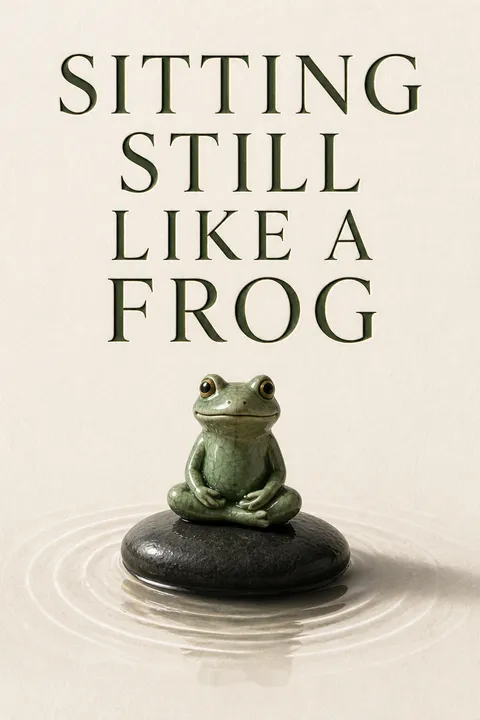
Breathing offers a steady focus. The book's frog exercise asks children to notice the belly's gentle movement as they breathe. A frog can leap, then settle and observe; children use that image to practice pausing without needing to empty their minds. When attention wanders, the task is simply to notice and return to the breath.
Small moments can matter. Snel first developed a breathing exercise with her five-year-old daughter, whose fears and thoughts kept her awake at night. Years later, the daughter still used it. In another story, ten-year-old Sara was frightened after a serious bike injury. Her mother helped her attend to her breathing while they waited for an ambulance. The exercise did not remove the injury or pain, but helped Sara avoid being overwhelmed by panic.
The breath works here as a concrete point of contact, not as a magic switch. Children can notice it without needing to explain or solve what they feel. That simplicity is a strength when language fails, as it can during fear or bedtime rumination. It also matters that the adult stays present: Sara's mother's voice and touch are part of the scene, not incidental decoration. Breath practice should not be framed as a substitute for medical care, reassurance, or practical help. Its value is in creating a little room for those responses.
Pause before reacting, especially when your child's behavior hits an old nerve
A pause interrupts autopilot. Parents often respond more sharply than they intend because a child's behavior can stir old fears, expectations, or frustrations. Snel describes Dan, a father who routinely shouted when his children interrupted him or refused to leave school with him. He knew he wanted to respond differently, but anger took over quickly.
Notice before choosing. Dan began taking a few deliberate breaths before speaking or acting. He still felt anger, but no longer treated the first impulse as an instruction. Snel calls this learning to surf: the difficult situation is still there, like a wave, but awareness can help a parent choose a response instead of being swept into one. A pause may be brief. It can still change what happens next.
This is a practical account of self-regulation within a relationship. A parent's pause does more than prevent an outburst; it changes the emotional conditions the child is responding to. The book wisely avoids promising that awareness will remove anger or make parenting smooth. The more realistic claim is that recognizing a familiar trigger can create a choice point. That choice may still involve a firm boundary. Mindfulness is not passivity, and it does not require parents to approve of every behavior. It can make firmness less reactive and more deliberate.
Train attention through ordinary senses, not just formal sitting
The senses bring attention close. Snel asks children to explore familiar things as if they had never encountered them. In one classroom exercise, 33 children aged nine and ten examined two raisins using sight, smell, touch, sound, and taste before identifying them. Their usual snack became something to investigate rather than dismiss as ordinary.
Attention grows through repetition. Another class studied a tray of 12 objects for 30 seconds, then tried to remember what they had seen. The author reports that scores and confidence rose over repeated attempts. Families can practice in everyday moments: notice details on the walk to school, listen without labeling a sound, or take one attentive bite at dinner. The point is not to get every observation right, but to see and hear more clearly.
These exercises make attention tangible. Instead of explaining concentration as a virtue children ought to possess, they give it something specific to do: inspect a raisin, recall an object, or listen for a sound. The Mars framing also makes curiosity feel like play rather than correction. There is a broader lesson in the contrast between noticing and interpreting: a quick judgment can obscure details that are actually present. Still, sensory attention is not a test of worth or intelligence. Remembering more may be satisfying, but the more durable practice is curiosity without performance pressure.
Treat body signals as information about needs, energy, and limits
The body reports experience. Tension, tiredness, hunger, pain, and a racing heart can signal what a child needs, even when the child has not yet found words for it. In a body-awareness exercise with high school students, one boy noticed stomach pain and connected it to fear of being excluded at school. The sensation opened a conversation about a real social concern.
Limits can be learned by feeling. The book's Spaghetti Test guides children to notice the difference between a tense body and a relaxed one. A stretching exercise similarly asks them to reach only as far as they can while still breathing comfortably. These practices can support discussions about limits in play, eating, and family rules. Snel recommends combining firmness with flexibility, so children have structure and some room to negotiate.
Body awareness can help children notice needs before those needs emerge as irritability, withdrawal, or conflict. The classroom story shows why bodily signals deserve attention: a sensation can be an entry point to a concern that adults have not yet seen. At the same time, bodily cues are information, not infallible instructions. Pain and illness may need medical assessment, while a child's sense of a limit may need adult guidance. The book's strongest formulation combines listening with judgment: notice the signal, then consider what response is safe and appropriate.
Let feelings be felt without letting them run the child's behavior
A feeling is not an identity. Snel encourages children to say, in effect, that sadness or anger is something they experience, not the whole of who they are. Her Personal Weather Report exercise invites a child to describe an inner mood as sunny, cloudy, or stormy. The image helps make an intense state easier to observe and reminds children that moods can change.
Acceptance is not permission for harm. Snel tells of a son who regularly woke in a foul mood. When she asked what was happening inside, he revealed that school was overwhelming him. She listened and comforted him rather than treating his anger as the entire problem. The book makes an important distinction: feelings can be welcomed and named, while behavior still has limits. A child can feel furious without being allowed to hurt someone.
The weather metaphor creates distance without denying the feeling. That can be especially useful for children who interpret anger or fear as evidence that something is wrong with them. The adult's role is not to argue a storm out of existence, but to help the child notice it and stay connected. This is not the same as leaving a child alone with overwhelming emotion. Comfort, conversation, and practical action may be needed. The distinction between accepting a feeling and setting limits on behavior protects the approach from becoming permissive or emotionally detached.
Help children watch worries pass instead of treating every thought as fact
Thoughts tell stories. The book describes the mind as a conveyor belt carrying memories, fears, plans, and opinions. Children cannot simply stop thoughts from appearing, and trying to think of nothing for 15 seconds quickly shows how difficult that is. They can, however, notice a thought without automatically believing or following it. A prediction such as failing an exam is a thought, not proof of what will happen.
Make worries visible. Snel suggests naming recurring worries, noticing when they return, and writing them down. For a child who prefers a hands-on approach, a small box can hold written worries before bedtime. This does not solve every problem. Some recurring thoughts point to a real concern that deserves attention from a trusted adult. The practice is to distinguish observing a worry from getting carried away by it.
The book offers a useful middle path between suppression and obedience to thought. Telling a child not to worry can make the thought feel forbidden, while treating every worry as accurate can intensify fear. Observing the thought makes room to ask what kind it is: a passing prediction, or a signal of a problem that needs support. The worry box is effective as a concrete ritual, but it should not become a way for adults to shut down difficult disclosures. Distance from a thought is valuable when it preserves curiosity, not when it replaces listening.
Pair kindness with boundaries so gentleness does not become helplessness
Kindness includes self-respect. Snel describes Sander, an eight-year-old bullied through covert acts and taunts. His parents helped him speak up and enrolled him in judo. He remained a friendly child, but felt less helpless when others threatened him. The book argues that returning cruelty with cruelty can escalate conflict, while kindness does not require accepting intimidation.
Practice makes care visible. In a classroom exercise, children passed a ball and named something they genuinely appreciated about a classmate. Teachers later reported more mutual encouragement and fewer cliques. At home, families can notice unkind behavior without turning the reminder into public shaming. These examples treat kindness as something children can practice: seeing others more fully, expressing appreciation, and choosing a response that does not add needless harm.
The distinction between kindness and submission is essential, particularly when a child is being bullied. A prosocial response is not a demand that the targeted child endure mistreatment graciously. Sander's story includes both inner support and concrete action from adults, including help with assertiveness. The compliment exercise offers a complementary practice by making positive attention specific and public. Together, the examples suggest that compassion is not merely a warm feeling; it can include protection, speaking clearly, and involving responsible adults when a situation exceeds a child's power to manage alone.
Use imagination to rehearse possibility, then act where change is possible
Inner images can prepare action. Snel describes children picturing themselves succeeding before a presentation or learning to ride a bike. A girl who imagined cycling found it easier to do when she received a bike; an eighth grader used mental rehearsal alongside a calming exercise before presenting to class. The images do not guarantee success, but can help a child connect with a capacity she wants to use.
A wish can reveal a need. In the Wishing Tree visualization, a child entrusts an important desire to an imagined dove, then practices patience and letting go of what cannot be controlled. Yet a child's wish may point to something adults can address. A girl wished for bullying to stop; after she told her mother, the mother contacted the school, and the bullying ended. Letting go is not giving up on action.
This is the book's most nuanced use of imagination: it can soothe grief, rehearse a skill, or help a child express a wish that has been hard to say aloud. Its value depends on keeping imagination in contact with reality. A picture of success is not a substitute for preparation, and a comforting ritual cannot alter every loss or illness. The bullying example makes the right counterweight clear: once a wish reveals a solvable problem, an adult may need to intervene. Acceptance can reduce futile struggle while preserving purposeful action.
Analysis
Sitting Still Like a Frog is best understood as a practical guide to building a child's capacity to notice, rather than a manual for producing quiet children. Its exercises move from the most accessible anchor, breathing, toward increasingly complex forms of awareness: sensory observation, body signals, emotions, thoughts, relationships, and wishes. The recurring movement is to pause, identify what is happening, and choose a response. The frog, weather, and conveyor-belt images make abstract mental processes concrete without requiring children to master adult psychological language.
The book's strongest contribution is relational. Mindfulness is not presented solely as a child sitting alone with an audio exercise. Parents practice pausing, listening, accepting difficult feelings, and noticing when their own past experiences shape their reactions. In this account, adult presence helps make a child's inner experience tolerable enough to examine. The boundary between acceptance and permission is equally important: feelings are allowed, but harmful behavior can still be limited, and real problems can call for action.
The evidence described in the text should be read with care. The school program's reported benefits come from a pilot and observations by participants, not from enough detail to establish which outcomes were caused by the exercises or how broadly they generalize. The author also says these practices do not cure developmental or learning disorders. That restraint matters because mindfulness can be oversold as a universal solution. Children differ in temperament, attention, sensory comfort, and willingness to sit still. The book's own advice to keep practice playful and avoid imposing it offers a sound safeguard.
The most useful measure of success is therefore not whether a child becomes serene on command. It is whether the child and parent gain a little more room between experience and reaction, and whether that room supports connection, clear boundaries, or practical help.
Review Summary
Reviews for Sitting Still Like a Frog are largely positive, averaging 4.17/5. Parents, teachers, and therapists praise its simple, accessible mindfulness exercises for children aged 5–12, noting improvements in focus, emotional regulation, and anxiety. The included CD of guided meditations is frequently highlighted as especially helpful. Some critics feel the anecdotes are overly optimistic, and one reviewer raised concerns about messaging around overeating. Many adults report benefiting from the exercises themselves, and several multilingual reviewers from diverse countries recommend it broadly.
People Also Read




Glossary
Mindfulness Matters
School mindfulness programThe name of Snel's mindfulness training program for children. In the book, the program is based on an eight-week adult mindfulness course and adapted for school-age students. The described pilot involved weekly classroom sessions, daily practice, and continued exercises in participating schools. It teaches attention to breathing, feelings, thoughts, and everyday experience.
The Attention of a Frog
Breath-focused stillness practiceA child-friendly exercise in which a child imagines a frog that can leap energetically and then sit quietly, alert to what is happening. The child notices the movement of breathing, often in the belly, and returns attention there when distracted. The exercise aims to develop concentration and a pause before reacting, not to eliminate thoughts.
Your Personal Weather Report
Mood-noticing exerciseA guided practice for identifying a current mood through weather imagery, such as sun, clouds, rain, or a storm. The child notices the emotional state without demanding that it change, and can later observe whether it has shifted. The metaphor helps children distinguish having a feeling from being defined by that feeling.
The Conveyor Belt of Worries
Observing recurring thoughtsA metaphor and exercise for noticing the continuous stream of thoughts, including worries, memories, judgments, and plans. Children are invited to observe thoughts without automatically believing or following them. The practice does not require stopping thought; it helps distinguish a passing mental prediction from a concern that may need understanding or practical support.
The Wishing Tree
Desire and letting-go visualizationA guided visualization in which a child imagines sharing an important wish with a dove near a special tree. The exercise supports reflection on desires, patience, and releasing the need to control what cannot be controlled. It is not presented as a way to make wishes come true; a wish may instead reveal a need that adults can help address.
The Spaghetti Test
Tension and relaxation practiceA body-awareness exercise that helps children notice the difference between stiffness and relaxation by imagining the body changing from rigid, uncooked pasta to soft, cooked spaghetti. The practice makes bodily tension and calm easier to recognize. It can help children become familiar with restlessness and relaxation without demanding that they remain still.
Download PDF
Download EPUB
.epub digital book format is ideal for reading ebooks on phones, tablets, and e-readers.








