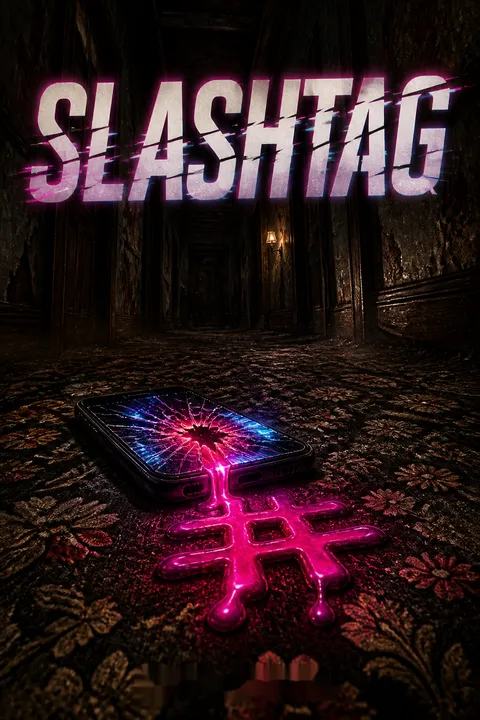


Plot Summary
Tawny’s Brand Hits Bottom
Tawny Howlett, a polished lifestyle influencer, learns that NatFit meal-replacement drinks she promoted have sickened dozens of customers. Online fury lands on her face, not on the company that made the contaminated product.
Her manager, Maggie, urges a scripted apology and proposes a televised weekend inside the supposedly haunted Propitius Hotel as a way to redirect attention. Tawny resists: the show is run by Krentler Media, and her younger sister April depends on her.
At lunch, fellow influencer Derek Sarecki, known online as D-wreck, treats the scandal as another survivable publicity storm. When a dog brushing Tawny’s leg sends her scrambling behind a chair, her fear exposes a private vulnerability beneath the image she has spent years selling.
Tawny’s crisis begins as a collision between responsibility and reputation. She did endorse a product people trusted, yet the machinery around her converts a corporate failure into a personal spectacle and offers humiliation as rehabilitation. Her panic around the dog also breaks through the brand’s carefully managed surface, hinting that her public shame is not the only history being activated. D-wreck’s casual confidence unsettles her because his social immunity is real: the same culture that punishes her for imperfection permits him to fail without losing his audience.
A Kidney Offer Changes Everything
At home, Tawny wipes away her makeup and records an unscripted apology that shows the scars she normally hides. April objects when Tawny folds their shared childhood trauma into the video, so the sisters replace it with a more careful statement and post it without Maggie’s approval.
Tawny still refuses Slashtag, despite April’s enthusiasm for the horror setting. The refusal changes when Maggie arrives with Krentler Media’s counteroffer: the company promises April a new pair of kidneys if Tawny competes.
April has waited years for a transplant and lives with failing kidneys after being attacked as a child. Tawny accepts, understanding that the offer is coercion dressed as family help. A black stuffed dog left at their door, complete with a threatening note, confirms someone from their past is watching.
The bargain makes the sisters’ bond both Tawny’s moral center and the lever used against her. April encourages Tawny to reclaim parts of herself, but the promised transplant turns that encouragement into a painful choice neither sister can freely control. Tawny’s stripped-back apology briefly challenges her role as a manufactured image; the kidney offer then pulls her back into performance under far more dangerous conditions. The stuffed dog links this corporate trap to a private terror, suggesting that the hotel’s staged horror may be built around something more intimate than ratings.
The Propitius Takes Its Guests
Tawny travels to Dire, California, with D-wreck and cosplayer Kawaii Kiki, while actor Landon Keating, former football player Shawn Eamon, reality star Britt Holley, and masked celebrity chef Costanza complete the cast.
At the Propitius Hotel, host Lucy Hodge collects their personal phones and gives each contestant a camera phone with only a few basic tools. Tawny’s device briefly displays the same warning she has received for years: silence is required. The rules promise constant surveillance, a three-day cooperative escape challenge, and a large charitable prize for anyone who gets out.
A film recounting serial killer Arthur Wilson’s history explains the goal: destroy three objects tied to his body, mind, and spirit. The locked doors make the contestants’ first shared discovery unmistakable: leaving will not be simple.
The show turns fame into confinement by removing each contestant’s ordinary channel of communication while multiplying the audience watching them. Its cooperative promise appears generous, but the rules make every action a performance and every injury potential content. Tawny’s private warning punctures the official premise before the game begins, tying her unease to a long-standing threat rather than generalized superstition. The cast’s varied public identities also matter: the producers have assembled people whose reputations already train viewers to judge, mock, or root for them.
The Lights Fail First
When the hotel loses power, the contestants split into teams to find the breaker before sunset. Tawny joins Shawn and Costanza in the basement, where narrow dirt corridors, hidden rooms, and a pile of interlocked chairs make every route feel deliberately hostile.
Costanza climbs the unstable pile to reach the electrical panel, injures his leg, then restores the lights. A steel door drops behind the team, forcing them through a chamber that smells of burned bodies and toward a chimney too narrow for Shawn.
They use a one-time broadcast to summon help. D-wreck and the others lower knotted bedsheets, and Tawny climbs out through soot while Costanza follows. Shawn remains trapped below, and a newly discovered passage reveals a grisly trophy room and a clue written by Wilson.
The first challenge transforms the contestants from celebrities into a group dependent on one another’s different capacities. Tawny’s meditation practice becomes practical aid when Costanza panics, while Shawn’s notes and the group’s improvised rope turn observation into rescue. Yet the game’s hazards are not neutral puzzles: the dangerous chair pile injures Costanza, and the team’s success immediately creates another enclosure. Cooperation offers momentary relief, but the architecture keeps converting solutions into fresh tests of trust and endurance.
Room Twelve Opens Its Mouth
The contestants use Wilson’s diary entry to infer that the number twenty-four points to guest room twelve. Inside, Tawny finds what appears to be Lucy’s dismembered body in a bloodied bathroom. Kiki searches methodically while Shawn notices a stopped clock; Tawny uses the time shown on Lucy’s watch to open a mirror passage into a study.
Costanza is cut off in the bedroom as the room seems to come alive, and a figure resembling Wilson appears with a saw. The contestants watch the apparent killing through the mirror, then find a map marking three locations for pieces of a key. They decide to rest. During the night, Tawny wakes shackled to the bed with a fresh cut on her face and a scalpel in her hand, though no one else saw her attacker.
The room teaches the cast, and the reader, to distrust the boundary between prop and person. Tawny can recognize theatrical blood and still be genuinely frightened by Wilson’s sudden appearance; her practiced skepticism cannot protect her from an experience that leaves a real wound. The clock puzzle rewards attention, but the mirror passage also makes watching itself part of the threat. Public performance and private reality no longer remain separate, even when the contestants desperately need them to.
Clarence Returns from Death
After Shawn and Britt free Tawny, the group discovers D-wreck and Landon missing. Landon’s story sends Tawny alone into a dumbwaiter, which descends to the basement instead of rising.
D-wreck finds her there, and together they meet Clarence, the one-eyed dog that attacked Tawny as a child and should have been dead for years. They escape it through a hidden wall into Wilson’s clinic, where Costanza has been mutilated and sealed at his amputated limbs with black pitch. Costanza reveals that his name is Miguel Arroyo.
Wilson appears, wounds D-wreck, and forces a blood-filled candy into Miguel’s mouth; Miguel chokes to death while Tawny cannot reach him. Tawny and D-wreck flee, and Kiki treats their injuries but insists the event remains a game.
The dog’s return converts Tawny’s concealed childhood wound into an active force that pursues her through the hotel. She cannot yet explain why Clarence is there, but D-wreck’s presence confirms that the danger is not solely a private hallucination. Miguel’s death is the decisive rupture in the contestants’ shared interpretation: one participant sees a person die, while another continues to preserve the safer fiction of a staged event. Their disagreement reveals how denial can function as emotional self-protection, not merely foolishness.
The Exit Becomes Another Set
Convinced they must leave, Tawny, D-wreck, and Shawn search for an exit and smash a large mirror, exposing a black passage that leads to a spider-themed chamber. Instead of freedom, they find another puzzle and separate rooms. A sickly sweet smell overwhelms Tawny; Wilson possesses her and makes her attack Shawn with a scalpel.
Shawn overpowers her without killing her, and she wakes with bruises, injuries, and no memory of the assault. The incident forces Tawny to admit that possession can turn a teammate into a weapon. She begins planning with Kiki, combining her knowledge of horror-film survival with Kiki’s puzzle expertise. Kiki admits that she keeps hearing a baby cry, but hides how badly it is affecting her.
The failed escape matters because it makes agency more complicated than simply refusing the game. Tawny chooses a route out, but the hotel turns that choice into an attack on Shawn and a fresh source of guilt. Her response is not to retreat into her influencer persona; instead, she offers practical knowledge and invites Kiki into shared planning. Kiki’s concealed auditory torment foreshadows the danger of treating distress as a problem to solve privately. Their alliance is useful, but it rests on disclosures that remain incomplete.
April Enters the Control Tunnels
While Tawny is trapped inside the hotel, Krentler Media sends assistant coordinator Todd Menuscha and guard Grimes to April’s home. They take her to the tunnels beneath Dire under the pretense of bringing her to the set.
April secretly keeps the battery for her powered wheelchair and uses a stun gun to incapacitate Grimes, then forces Todd to explain the production. He admits that the board uses the Amulet of Duriel to empower its leaders and make viewers’ attention to suffering feed the demon.
April learns the hotel’s puzzles have been manipulated and begins sending messages to Tawny through the show’s network. Todd, a frightened nepotism hire, helps her access the system, even as Lucy declares them traitors and orders the crew to find them.
The backstage plot widens the novel from a haunted-house survival story into an account of media power and organized violence. April’s wheelchair is not a symbol of helplessness: she preserves its power source, carries a hidden weapon, and takes control of the encounter. Todd’s weakness is morally compromised, but his familiarity with the system gives April a route into it. The contrast between the elaborate live spectacle and the cramped production tunnels exposes the labor and conspiracy beneath the audience’s seamless entertainment.
Landon Becomes the Exhibit
Tawny, Shawn, and the others reach the Dire history museum, where a miniature town must be arranged to match photographs. Behind a concealed wall, they discover Landon strapped into a chair while his dead father, the celebrated actor Great Scott Keating, forces him to repeat a hotel introduction and has Wilson torture him whenever he falters.
Tawny studies the conflicting hotel blueprints and identifies the correct order of the town buildings, stopping the punishment but not freeing Landon. As the group continues, Kiki grows increasingly distracted by sounds no one else hears and pills she keeps taking from her bag. Landon remains imprisoned, while the cast gains another key fragment and a clearer view of the cruelty controlling the game.
Landon’s ordeal turns performance into inherited violence. His father’s demands make acting less a profession than a compulsory reenactment of a childhood need for approval. Tawny solves the puzzle by attending to material evidence rather than deferring to celebrity authority, but success cannot immediately undo the harm displayed behind the glass. Kiki’s escalating distress runs alongside the spectacle, showing how a contest can reward visible competence while making private deterioration easy to overlook.
Derek’s Prank Comes Due
In the Hunter’s Hall, the contestants must recreate the deaths of a bear, a pig, and an elk. Tawny recognizes that the pig carving represents a child choking on a red candy ball, and she reaches into the child’s mouth to remove it while Shawn distracts Wilson’s animated photograph. The child vanishes, and Tawny uses the candy to complete the pig puzzle.
A broadcast then reveals that years earlier D-wreck gave his nephew Mikey a fake-blood candy for a prank. Mikey, allergic to red dye, suffered a near-fatal reaction; the family cut D-wreck off afterward. The reenacted choking had dragged that guilt into the room. At the same time, the team finds another key piece, and D-wreck’s joking façade finally cracks.
The puzzle makes spectatorship personal: D-wreck is forced to watch a reenactment of the harm caused by treating a child’s distress as entertainment. His prank was reckless rather than intentionally murderous, but the family’s rupture shows how intent cannot erase consequences. Tawny’s willingness to put her hand into the apparition’s mouth gives the scene its counter-ethic: she acts to relieve suffering instead of observing it. The moment also reframes D-wreck’s humor as a defense against responsibility.
The Skull Beneath the Bed
With the assembled key, the group enters Wilson’s apartment and finds Landon tied to a bed beside a cabinet holding the serial killer’s skull. Wilson attacks with an axe, while Shawn’s attempt to open the cabinet seals his hand in burning black pitch. Tawny finds a childhood card from her stalker that also provides the symbol needed to release the skull.
She removes it, but a trapdoor opens beneath her. Derek is stabbed and pulled into the pit as he helps her, leaving the skull only partly broken when it hits the floor. Wilson begins to reappear, until Kiki smashes the skull completely with her cleaver. The ghost dissolves, and the group escapes the apartment battered, Shawn’s hand encased and Derek apparently lost below.
The body-totem challenge concentrates the novel’s central conflict between solving a system and recognizing that the system is rigged. Tawny’s old birthday card is both a clue and an instrument of psychological control, so the very object that helps her survive also carries the stalker’s power into the present. Kiki’s final blow succeeds where the puzzle’s apparent victory fails. The scene’s cost is immediate: Derek’s disappearance turns tactical success into grief, while Shawn’s injured hand makes the survivors’ physical vulnerability impossible to ignore.
Kiki Follows the Crying
After the skull is destroyed, Kiki pushes ahead while the others recover. She finds the red glass Wrath statue in the ballroom and follows its influence to a nursery, where she believes a crying baby is trapped. Tawny and Shawn arrive too late: Kiki has stabbed herself repeatedly with the statue’s blade, and the apparent infant is only glass. She dies after the crying stops.
Her bag contains amphetamine and caffeine pills, not the painkillers she claimed to be taking, clarifying how exhaustion and drug use worsened her distress. April’s coded messages then guide Tawny and Shawn to the chapel, where they find a hidden stairway into Sutter’s Sanctum. Britt helps burn Wilson’s mind-totem book, destroying the second of the three anchors.
Kiki’s death grows from a private symptom that the group noticed but could not fully understand. Her determination to keep solving puzzles was partly a source of strength and partly a way to outrun exhaustion, fear, and the crying that followed her. The revelation about the pills explains her deterioration without reducing it to a single cause. Tawny’s grief is sharpened by hindsight: she had tried to build an alliance with Kiki, but concern did not become enough protection in a system designed to isolate and exhaust them.
Britt’s Deal Runs Out
April’s messages help Tawny identify the chapel’s hidden entrance, but the survivors still face possession and conflicting instructions sent to their phones. Envy overtakes Britt and makes her attack Kiki; Tawny finds and smashes the correct glass eye statue, ending the possession.
Britt then admits that she agreed to serve as the show’s favored heroine after Krentler threatened her family, with the promise that she would be the sole survivor.
She leads Tawny and Shawn to the barber shop and reveals a key hidden inside the barber pole, but the escape mechanism has been disabled. Before they can regroup, Landon appears under Wilson’s control, armed and grotesquely transformed. He attacks the group, killing Britt as Tawny and Shawn fight to get away.
Britt’s complicity is neither simple villainy nor a clean excuse. She accepted a bargain under threat, then continued steering the others toward the producers’ preferred story because survival seemed to depend on it. The failed barber escape strips away the protection she expected from being cast as the heroine. Her death exposes the cruelty of conditional safety: Krentler’s promise was never a moral contract, only a method of making victims help stage their own danger.
April Takes the Amulet
In the tunnels, April confronts Renshaw, the occult specialist who controls Wilson through the Amulet of Duriel. She pretends to cooperate, then rams him with her powered wheelchair and grabs the amulet. Wilson kills Renshaw before April can be subdued, and she gains control of the ghost system. In the hotel, Landon hunts Tawny and Shawn.
The siblings’ messages lead Tawny to suspect the barber passage is a trap, but the survivors have no safe exit. April eventually reaches them beneath the hotel, where Tawny sees that her sister is alive and has made Wilson answer to her. April reveals that the board of Krentler Media is gathered nearby, conducting a ritual powered by the suffering broadcast to viewers.
April’s control of the amulet reverses the novel’s central arrangement: the powerful had treated both people and spirits as instruments, and now a disabled captive takes command of the apparatus. Her wheelchair is an active tool in that reversal, not an obstacle she overcomes by becoming conventionally able-bodied. The reunion with Tawny also answers the sisters’ opening separation, but it does not restore safety. Their shared knowledge now reveals a larger target, and the choice shifts from escape alone to confronting the institution that built the trap.
The Still Blows Open
Tawny, Shawn, and Derek reunite in a basement distillery after Derek survives the fall into a lower shaft. They discover old mining tunnels behind a wooden wall and try to use a moonshine still as an explosive. When Landon attacks before the plan is ready, Derek tackles him and reaches the still with a lighter, choosing to ignite the trapped alcohol rather than let Landon kill Tawny and Shawn.
Tawny shuts the door as the explosion tears through the room. She and Shawn survive the blast and find a passage into the tunnels, but two bodies lie burned beyond recognition. Derek’s sacrifice gives them a route out while leaving them to carry the cost of his final choice.
Derek’s humor has often helped him evade the consequences of his past, but his last act is not a joke or a performance. He chooses a concrete risk that gives the others a chance to live. The explosion transforms the still, previously part of Wilson’s hidden infrastructure, into an improvised weapon against the production’s control. Tawny and Shawn’s survival is therefore inseparable from Derek’s loss, a painful counterpoint to the show’s promise that fame and spectacle can turn suffering into a prize.
The Broadcast Breaks the Spell
In the tunnels, Tawny activates her phone’s live broadcast and tells viewers that the injuries and deaths are real. Lucy and a camera crew catch up with her and Shawn, then try to recast them as unstable performers. Charlotte draws a gun, but Wilson appears and takes the bullet meant for Shawn. Instead of obeying Lucy, the ghost attacks her; Charlotte abandons the host, and Wilson kills her in the bathtub.
April arrives, having hacked the system that controlled Wilson, and reunites with Tawny and Shawn. She explains that the board members are nearby. Tawny takes the amulet and feeds it her blood, gaining the power to command the ghost. The three survivors head toward the boardroom, determined to end the broadcast’s real purpose.
Tawny’s live address is her first attempt to control her public image without polishing it for approval. The broadcast might not persuade viewers that the horror is real, but it prevents the company from having uncontested control of the story. Wilson’s refusal to follow Lucy signals that the production’s supernatural machinery is no longer fully contained by its operators. April’s arrival converts the sisters’ private alliance into a shared counterattack, while the camera remains both witness and weapon.
The Boardroom Feeds Duriel
The boardroom holds Krentler’s leaders, a goblet filled with the contestants’ blood, and the amulet’s larger purpose: viewers’ attention to pain has fed Duriel and strengthened the company’s power.
Tawny uses the amulet to unleash the dead against the directors, then feels its promise of limitless revenge pull her toward drinking from the goblet. April stops her. Tawny pours the blood away and turns to Ron Morrison Jr., the former judge who attacked the sisters when they were children and spent years threatening them into silence.
In front of the camera, she and April recount the attack and the officials who protected him. The ghosts of his victims close in. Tawny then directs Wilson toward William Krentler, though the immediate aftermath remains unseen.
The climax makes revenge psychologically tempting precisely because it offers Tawny what the systems around her denied: control, recognition, and the capacity to prevent future harm. The amulet supplies power without judgment, however, and would turn her into another person who uses suffering as fuel. April interrupts that conversion, restoring the relationship that has repeatedly kept Tawny oriented toward other people. Naming Ron publicly is not the same as healing, but it breaks the silence he enforced and makes the witnesses part of the accountability he escaped.
Epilogue
Six months later, authorities have declared Tawny, April, and the other contestants dead in a fabricated murder-suicide, while Krentler Media carries on under new leadership. Tawny disguises herself at a store book signing for the supposedly surviving Chef Costanza, then recognizes Grimes, the guard who helped abduct April.
With April and Shawn waiting in a van and Hector driving, Tawny captures him. She admits that the Amulet of Duriel survived their attempt to destroy it and uses it to extract information from Grimes through pain. The sisters have escaped the broadcast, but their campaign against Krentler Media is not over.
The epilogue refuses the comfort of a clean victory. The public story has been falsified, the company has survived, and the people who escaped remain fugitives. Tawny’s transformation is visible in her altered appearance and her willingness to act outside the influencer role, but the amulet’s continued use complicates that liberation. She now employs the same instrument of coercion that once targeted her, claiming a necessary purpose while risking its corrupting logic. Survival has become the start of a morally unstable resistance, not a return to ordinary life.
Analysis
Slashtag treats celebrity culture not as background decoration but as a system that assigns value to people through visibility. Tawny’s public disgrace opens the plot because her face makes her an efficient scapegoat, while the broadcast later turns her injuries into evidence the company can deny or reframe. The contestants arrive with ready-made roles: the prankster, the reality queen, the athlete, the actor, the puzzle expert. The hotel intensifies these identities until possession makes the metaphor literal, forcing people to act through memories and wounds they cannot control.
The novel’s strongest counterforce is relational rather than heroic. Tawny’s protective bond with April repeatedly restores her judgment, while Shawn’s quiet care and Derek’s eventual accountability offer alternatives to performance as self-defense. Yet solidarity remains imperfect. Kiki’s distress goes undisclosed, Britt’s bargain endangers others, and the group mistakes exhaustion for a problem that can simply be postponed. These failures make survival feel contingent on attention to one another, not on toughness alone.
The supernatural plot sharpens the book’s critique of spectatorship. Krentler’s board does not merely broadcast violence; it converts viewers’ attention into power. The audience’s appetite is therefore part of the machinery, even when viewers believe they are watching fiction. Tawny’s live confession resists that machine by refusing its preferred distinction between entertainment and reality. But the ending does not offer uncomplicated liberation. The amulet survives, the company persists, and Tawny begins using coercive power against its agents. Her resistance may be justified, yet it risks reproducing the logic she has fought: that pain becomes acceptable when directed toward a deserving target. The novel leaves victory unsettled, asking whether exposing a violent system is enough when its tools remain in the survivor’s hands.
Review Summary
Slashtag receives mostly positive reviews (4.26/5), with readers praising its unique blend of reality TV and horror, featuring seven celebrities trapped in a haunted hotel escape room. Fans appreciate the immersive experience including a companion website and podcasts, strong character development, and entertaining horror references. The gore, tension, and fast pacing draw comparisons to Saw, Big Brother, and H.H. Holmes's Murder Castle. Some critics note pacing issues, repetitiveness, or messy plotting, while one reviewer found it laughably terrible. Most recommend it for horror fans seeking fun, inventive slasher entertainment.
Characters
Tawny Howlett
The reluctant final girlTawny is a beauty and lifestyle influencer whose polished public identity has been shaped by brand managers, sponsors, and audience expectations. Beneath that persona, she is a horror fan, an attentive puzzle-solver, and a fiercely protective older sister to April. Her facial scars and fear of dogs connect her present-day fame to a childhood trauma she has spent years concealing. Tawny tends to manage anxiety through practiced breathing and by controlling her appearance, yet the hotel repeatedly forces her to act before she can restore either composure or image. Her central struggle is not simply whether to stay visible, but whether she can choose what visibility means instead of letting corporations and spectators decide for her.
April Howlett
The resourceful younger sisterApril is Tawny’s younger sister, a horror devotee and inventive problem-solver who uses an electric wheelchair because of severe kidney damage from a childhood attack. She is accustomed to being treated as fragile, but her humor, technical skill, and practical independence contradict that assumption. April builds accessible gaming controllers with her friend Hector and finds satisfaction in work that helps other people participate. Her bond with Tawny is intimate but not effortless: she wants to protect their shared history, even when Tawny is tempted to expose it publicly. April’s knowledge of horror stories, mechanical systems, and her sister’s habits makes her an important counterweight to Tawny’s tendency to manage crises alone.
Derek Sarecki
The prankster with a conscienceDerek, better known online as D-wreck, has spent years building an audience with pranks, gaming streams, and a deliberately immature persona. His confidence comes partly from the social protection he receives as a famous straight white man, a contrast he openly recognizes beside Tawny’s precarious reputation. He and Tawny maintain a public romance for branding purposes, though their familiarity gives them genuine ease and affection. Derek often uses jokes to deflect discomfort, including the consequences of an old prank that damaged his family relationships. Under pressure, his humor can irritate the people around him, but it also reveals a person trying to keep fear manageable.
Shawn Eamon
The gentle former linebackerShawn is a towering former professional football player whose career ended after his relationship with another player became public and drew backlash. He is thoughtful, observant, and more interested in cooking than his imposing size suggests. Shawn takes notes on the hotel’s layout, helps injured contestants, and often brings steadiness to frightened people. His history is shaped by others choosing his path for him, from his father’s expectations to the demands of football and his partner’s public decision. He comes to Slashtag under pressure, but he wants to act as himself rather than as the intimidating athlete others expect. His gentleness does not mean he lacks the capacity to defend himself or his companions.
Kawaii Kiki
The puzzle-hungry cosplayerKiki is an Australian-Japanese cosplayer whose work involves building elaborate costumes and whose channel includes escape-room challenges. She approaches the hotel as a system to decode, taking notes, gathering supplies, and often pushing the group forward when others are exhausted or frightened. Her ambition and competence are real strengths, but they also make it difficult for her to admit when she needs help. Kiki’s nervous habits, sleeplessness, and fixation on hearing a baby crying gradually strain her judgment. She can be sharp with people who question her authority, especially when she believes their hesitation puts everyone at risk. Her character shows how skill and determination can coexist with vulnerability that remains unseen.
Britt Holley
The reality-TV strategistBritt is a veteran reality television personality whose career began in childhood and has trained her to read a room, steer a conversation, and maintain a camera-ready role. She often assumes leadership among the contestants, sometimes claiming the spotlight before others can speak. Beneath her polished confidence is a perceptive woman who understands that public narratives can protect or destroy a career. Britt is skilled at turning uncertainty into performance, yet she also responds to pressure in ways that expose the limits of her control. Her relationships with the other contestants shift between alliance, rivalry, and wary cooperation as they struggle to distinguish genuine concern from behavior shaped for an audience.
Landon Keating
The haunted method actorLandon is a small, thin film and television actor who has spent his life under the shadow of his famous father, Great Scott Keating. He has studied Arthur Wilson closely for a film role and treats the hotel as a chance to demonstrate his understanding of the character. Landon’s theatrical instincts make him useful when the contestants interpret Wilson’s history, but they also blur the line between insight and performance. He is sensitive to criticism and preoccupied with how audiences receive his work. His troubled relationship with his father shapes the way he thinks about art, authority, and the cost of being watched.
Arthur Wilson
The hotel’s murderous spiritArthur Wilson was the Propitius Hotel’s owner and a physician’s son who turned his interest in medicine toward cruel experiments on vulnerable people. He designed concealed passages and rooms that enabled him to hide his crimes. Decades later, he returned under the religious identity of Reverend Sutter and drew followers into a deadly cult built around obedience. The contestants learn about him through film, diaries, clues, and encounters that challenge their assumptions about what is staged. Wilson is both a historical murderer and a supernatural presence, though the rules governing his spirit are not as simple as the show’s puzzle narrative suggests.
Ron Morrison Jr.
The protected childhood predatorRon Morrison Jr. is a former Arizona Supreme Court justice whose public image rests on authority, respectability, and institutional power. Tawny and April know him through a childhood encounter that left April gravely injured and Tawny scarred. His position makes it difficult for the girls’ family to obtain help, and his continued presence in their lives turns an old crime into an ongoing threat. Ron’s character embodies the disparity between the credibility granted to powerful adults and the vulnerability of children trying to report them. He is not a supernatural figure, but his influence helps connect the sisters’ personal trauma to the novel’s larger systems of impunity.
Lucy Hodge
The smiling showrunnerLucy is the immaculate host and director of programming for Slashtag, skilled at presenting danger as entertainment and maintaining control of the production’s public face. She welcomes contestants, explains rules, and narrates the hotel’s history with practiced television polish. Her authority extends beyond the set: she communicates with the company’s board and directs staff as the event unfolds. Lucy understands how editing, audience engagement, and carefully staged reveals shape what viewers believe. Her genial manner is part of her professional toolkit, making it difficult for contestants to tell when she is reassuring them and when she is managing them.
William Krentler
The media empire builderWilliam Krentler leads the media company that owns Social and produces Slashtag. A former arms-industry executive turned media magnate, he represents the enormous resources behind the event and the belief that audiences can be gathered, measured, and influenced at scale. He works alongside powerful board members and is personally invested in the company’s occult project. Krentler’s worldview treats public attention as a resource that can be converted into wealth and control. His reach makes even a supposedly voluntary celebrity appearance difficult to refuse, especially when the offer touches a contestant’s family.
Todd Menuscha
The nervous production insiderTodd is an assistant coordinator whose position in the production comes through family connections rather than personal authority. He rambles, avoids confrontation, and often seems more worried about office politics than the violence surrounding him. Still, his access to production systems gives him information April can use. Todd’s moral weakness is intertwined with an upbringing in which corruption and ritualized harm have been normalized by his family. He does not present as a conventional mastermind; his awkwardness and fear make him an unlikely source of help, while his years of passive cooperation leave him implicated in the machinery he later resists.
Miguel Arroyo
The masked celebrity chefMiguel Arroyo appears to the contestants as Chef Costanza, a masked cooking personality known for keeping his identity private. He is an accomplished chef with a volatile temper under stress, and the mask allows both him and the production to make his identity a source of spectacle. Miguel’s skill gives the group a moment of comfort when he cooks for them, while his injury in the basement exposes the gap between the show’s playful premise and the danger inside the hotel. His carefully maintained public mystery makes it harder for the others to know who he is when they most need to understand what has happened to him.
Maggie
Tawny’s brand managerMaggie manages Tawny’s image, schedule, and commercial partnerships. She is blunt, analytics-driven, and accustomed to treating public opinion as a crisis that can be managed through timing and exposure. Her advice often serves the business before Tawny’s emotional well-being, though Maggie sees herself as making practical decisions in a volatile industry. She pressures Tawny toward an apology and the Slashtag appearance, then delivers Krentler Media’s kidney offer. Her relationship with Tawny illustrates how professional support can become a form of control when a person’s livelihood depends on remaining visible.
Hector Palencia
April’s practical allyHector works with April at Enabled Accessories, the small business they founded to make custom controllers for gamers with disabilities. He understands the technical work and offers April both friendship and practical support. His reaction to Slashtag shifts from curiosity to alarm as he watches the live feed and recognizes that the injuries are not ordinary effects. Hector becomes an important outside witness, even though institutions and people around him are reluctant to believe his account. His grounded presence contrasts with the increasingly theatrical and supernatural world of the hotel.
Charlotte
The armed company enforcerCharlotte is a capable security operative hired from outside the Krentler family circle. She relies on intimidation, careful distance, and a firearm to control people who might threaten the production. Unlike the nervous Todd, she is confident in her authority and prepared to use violence without hesitation. Her practical instincts sometimes conflict with the company’s grand occult ambitions, making her harder to predict than the more theatrical executives.
Grimes
The guard who takes AprilGrimes is the large, quiet security guard assigned to help Todd bring April to the production site. His size and firearm make him a physical threat, while his silence contrasts with Todd’s anxious chatter. He follows orders rather than explaining the larger plan. His presence gives April a tangible obstacle to counter with preparation and technical skill.
Great Scott Keating
Landon’s demanding fatherGreat Scott Keating is a celebrated actor whose fame and authority shaped his son Landon’s understanding of performance. He appears through Landon’s trauma and the hotel’s supernatural staging as a force demanding flawless work at any cost. His image embodies the pressure of a legacy that grants status while narrowing the life of the person expected to carry it.
Plot Devices
Social’s live feeds
Turns suffering into spectacleSlashtag streams continuously through the monopolized Social platform and the KMC network. Viewers can follow the main feed, select individual contestants, and receive recaps, polls, and companion commentary. The system makes every contestant’s behavior public while preventing them from contacting loved ones through ordinary devices. It initially encourages the cast to treat the event as performance, but its audience becomes part of the supernatural threat: watching pain feeds the board’s occult project. Tawny later uses the same broadcast technology to tell viewers that the show is real and to challenge the company’s control of the story.
Wilson’s three totems
Gives the maze false structureThe contestants are told to destroy objects representing Arthur Wilson’s body, mind, and spirit. The first two are the skull in Wilson’s apartment and the book in Sutter’s Sanctum; puzzles, maps, and clues direct the cast toward them. The production presents the sequence as a route to escape, but the totems are partly invented rules that organize the show rather than guaranteeing safety. Breaking them changes Wilson’s behavior within the game, yet does not eliminate the larger supernatural force. The device gives the contestants a goal while concealing that the producers control the rules.
The Amulet of Duriel
Converts pain into powerThe jeweled amulet is associated with Arthur Wilson’s crimes and the demon Duriel. The board uses it to influence minds, control Wilson’s spirit, and draw power from people watching suffering. Its presence ties the hotel’s history to the media company’s larger ambitions. When Tawny takes it, the amulet offers her the ability to control the ghost and retaliate against those who harmed her. It also tempts her to turn revenge into unlimited domination. The artifact’s power is never morally neutral: it magnifies the user’s desires and makes another person’s pain seem like a usable resource.
The contestants’ phones
Carries clues and interferenceEach contestant receives a restricted phone with a flashlight, notes, camera, and broadcast function. The devices support mapping and puzzle-solving, but they also keep the players under surveillance and make it easy for the production to control what information appears. April later accesses the messaging system from below the hotel and sends Tawny coded warnings, while the crew floods the phones with false messages to obscure her guidance. The devices therefore serve both sides of the conflict: they are tools for connection and instruments of manipulation, shaped by whoever controls the network.
The Propitius passages
Makes architecture a weaponArthur Wilson’s hotel contains concealed rooms, mirrored doors, a dumbwaiter, chimneys, a barber-chair lift, and tunnels connected to the surrounding ghost town. The contestants repeatedly discover that familiar surfaces conceal routes or traps. These passages make the building feel like an extension of Wilson’s predatory mind, but they also provide the paths Tawny and April use to resist the production. Their changing function keeps escape uncertain: the same architecture that hides victims can offer a route toward clues, the control rooms, or the board.
Download PDF
Download EPUB
.epub digital book format is ideal for reading ebooks on phones, tablets, and e-readers.








