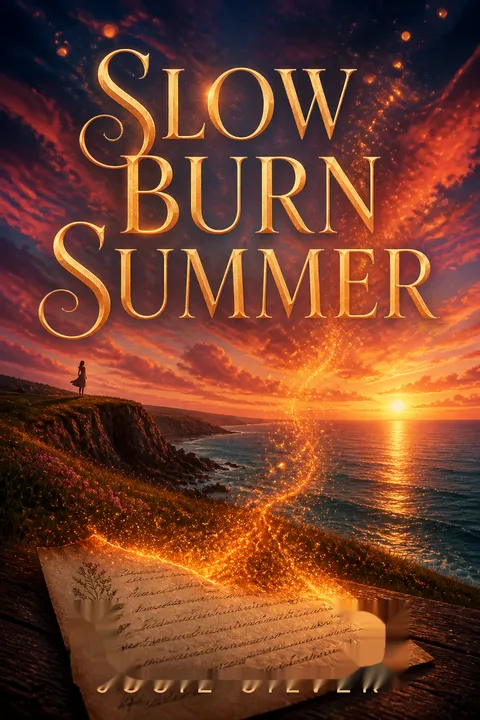


Plot Summary
Prologue
Fiona Fox, agent and longtime friend to crime novelist Hugh Hudson, arrives at his Cotswolds home to find him isolated in grief after his wife Eleanor’s death and unable to write his next thriller. While he sleeps, Fiona discovers a very different manuscript: a love story drawn from his bereavement.
Hugh refuses to publish it under his own name or face its publicity. Fiona proposes hiring an unknown actor to pose as its author, protecting Hugh’s privacy while giving him time to return to his crime series. He agrees, on the condition that his identity stays secret.
The prologue makes the novel’s publishing scheme an act of both care and control. Fiona sees the manuscript as a way for Hugh’s private grief to reach readers, while Hugh fears that public attention would turn Eleanor’s memory into a commodity. Their bargain protects him, but transfers the exposure onto an unknown actor who has no say in how large the story may become. Fiona’s confidence that she can manage every consequence foreshadows the limits of professional planning when real people, real grief, and a hungry audience enter the arrangement.
The Letter and the Tie
At thirty-nine, newly separated from Richard and newly alone as her daughter Alice starts university, Kate Elliott writes to her former agent, Jojo Francisco, asking whether she can act again. Richard’s affair and a punishing prenup have left her with little money and a life to rebuild. Jojo has died, so his son Charlie finds the letter while taking over the agency.
On the morning Kate comes for an interview, she helps a stranger with his baby and gets sick on her clothes; the stranger lends her his tie to hold back her hair. Charlie has already mistaken her lateness for a no-show, but she arrives and learns he needs an unknown actor to represent an anonymous author. He gives her the manuscript to read.
Kate’s first step back toward work is deliberately untidy: a baby, a ruined jacket, and a borrowed tie interrupt the polished performance she thinks an interview requires. The episode establishes that her instinctive care for strangers is also a kind of competence, even when it makes her look unprepared. Charlie, meanwhile, inherits not only Jojo’s office but the unfinished obligations of his father’s career. Their opportunity begins with an accidental meeting and a dead man’s letter, yet neither can simply repeat the past: Kate has changed, and Charlie must make decisions without Jojo’s certainty.
The Borrowed Love Story
Kate reads the story of playwright William and actress Leanora twice, moved by its love and loss, then decides the unusual job is worth taking. She tells her sister Liv and brother-in-law Nish that she will pretend to be the author, but will not hide the arrangement from them or Alice.
At lunch with Charlie and the formidable agent Fiona Fox, Kate’s nerves loosen into an unplanned account of her divorce and why the book matters to her. Fiona accepts the commitment, and Charlie offers a contract with a signing payment and royalties. He admits that his client list is shrinking and that he is no Jojo. Kate signs anyway, choosing to trust him. Charlie realizes he has become, like Kate, a stand-in for someone else.
The contract binds Kate to a performance, but her reasons for accepting are not merely financial. She recognizes in Leanora’s story the emotional upheaval she has struggled to name since Richard’s betrayal. Her frankness at lunch is risky, yet it gives the publishing team something a rehearsed persona could not: a credible human connection to the book. Charlie’s admission that he cannot reproduce his father’s career creates a parallel between them. Both enter the arrangement under inherited expectations, and both need to decide whether imitation can become a genuine choice.
Kate Darrowby Takes Shape
Kate chooses the pen name Kate Dalloway, but the publisher settles on Kate Darrowby and builds her public biography around a Bengal cat and a crochet hobby she does not have. The cover reveal thrills her despite the deception, and her first photo shoot lets her feel like an actor again. Meanwhile, she and Liv sneak into Richard’s house to retrieve a box of Kate’s unfinished manuscripts and an old laptop.
Kate hides prawns in Richard’s hummus during their hurried escape, a small rebellion that makes the house feel less like her former home. At the publisher’s meeting, international sales and a demanding publicity schedule raise the stakes. Charlie backs her when the plans overwhelm her, and she begins to inhabit the role.
The invented author identity offers Kate room to experiment, but it also exposes how easily an industry can mistake a marketable biography for a person. The false cat and crochet details are harmless on paper, yet they press Kate to perform a self she did not choose. Retrieving her old writing gives that performance a more complicated foundation: she has not written this novel, but she once pursued the same creative life. The prawns in Richard’s hummus are comic rather than transformative, but they mark a new willingness to act on anger instead of making herself convenient.
Release Day, Empty Shelves
As publication day approaches, Kate exchanges emails with the anonymous writer, who signs as H and explains that the book grew from a love story that ended in loss. Their correspondence steadies her, especially when H calls her the book’s guardian. On release morning, Liv brings pastries and celebrates with her, while Charlie sends flowers and champagne.
Their first attempt to find the novel in a supermarket fails; a second shop produces copies and lets Kate film them going onto the shelf. The modest ritual matters more than the campaign’s international ambitions. Kate is finally seeing the story in readers’ hands, but she has a major radio interview ahead and still worries she is borrowing an author’s life without earning it.
H’s emails give Kate a relationship to the book that the contract cannot provide. The writer does not disclose an identity, but shares enough grief to make the manuscript feel entrusted rather than merely assigned. That distinction helps Kate understand her role as stewardship, not authorship. The empty shelf at the first shop punctures the glossy fantasy of a perfect debut, while the second shop’s ordinary staff and display offer a more grounded form of recognition. The novel’s emotional truth is already reaching people, even as Kate’s public identity remains carefully assembled.
A Meet Cute Invented Live
A stalled train threatens Kate’s live interview with radio host Glynn Weston. Surrounded by football supporters drinking beer, she calls the station, then turns the disruption into a story when she discovers she went to school with the man opposite her.
To keep the interview lively, she falsely presents him as her first love and promises they may meet again. The anecdote makes the broadcast entertaining and sends sales climbing.
The next day, Kate appears on morning television and improvises more awkward personal details, including a failed attempt at romantic grooming and the fictitious crochet mice. Charlie sees the media attention gathering around her. Kate knows the train story was invented, but his reassurance and the book’s success keep her from confessing.
Kate’s acting skill serves her well under pressure, but the success of the false first-love story changes the nature of her performance. She is no longer simply protecting H’s anonymity; she is supplying the audience with a romantic narrative about herself. The lie is small enough to feel manageable and useful, which is precisely why it becomes dangerous. Publicity rewards the version of Kate that improvises, while her private self remains uneasy about being mistaken for the author. The scene makes visibility feel double-edged: attention can carry the book to readers, but it can also make every personal detail available for sale.
The Cornwall Storm
At a romance festival in Cornwall, Kate arrives alone after Liv has to stay home with her family. Liv has left her a handmade, twelve-piece crochet mouse orchestra, turning the invented hobby into a loving joke.
Readers queue for Kate’s signature, and celebrated romance novelist Sally Rose praises the book. Charlie surprises Kate by coming to help, then a storm strands them together at the pink harbor cottage arranged for her. They share food, dry clothes, and a quiet night.
Charlie admits he wrote the Hollywood scripts people have credited him with, despite rumors about his marriage. Kate believes him. Their closeness is tender rather than sexual, but the storm makes their professional arrangement feel briefly separate from the outside world.
The festival gives Kate a form of belonging that the publisher’s campaign cannot manufacture. Readers respond to the story, and other writers welcome her before she has decided whether she deserves the title of author. Liv’s crooked mouse orchestra turns a fabricated biographical detail into a real gift, an instance of family transforming performance into affection. Charlie’s confession also shifts their trust: he risks telling Kate something that contradicts the rumors she has heard. The storm suspends their roles without resolving them. They can be honest with each other for a night, but intimacy still has consequences waiting beyond the cottage.
The T-Rex Author
Alice’s Australian boyfriend, Flynn, sells a screenshot of Kate’s email explaining the ghost-author arrangement. The leak exposes Kate’s real name and fuels public anger; Flynn leaves Alice with a note and uses the money to start his surf business. As Kate comforts her daughter, Fiona arrives with H, who insists on seeing her despite the scandal.
To protect his identity, Fiona makes him enter Liv’s costume shop in a T-Rex suit. Kate learns that H is crime novelist Hugh Hudson, and Hugh is furious that the published novel’s ending was softened with a rescue dog he never wrote. Fiona says she changed it for readers. Kate argues that the book’s impact matters more than exposing Hugh, and he leaves still angry, his anonymity intact.
The leak makes the book’s concealment a family crisis rather than an abstract publishing tactic. Alice suffers the betrayal directly, while Kate must comfort her even as her own reputation collapses. Hugh’s arrival in costume is farcical, but his anger reveals the actual cost of Fiona’s careful plan: even the manuscript has been altered to fit expectations. Kate’s defense of the book is not a defense of every decision made around it. She separates the story’s value from the machinery that marketed it, and refuses to make Hugh’s identity public merely because her own has been exposed.
Henley, A Deleted Scene
With readers furious online, Charlie takes Kate to his late father’s apartment in Henley, a place Jojo kept secret and Charlie has never visited. They read the publisher’s statement, then mark Jojo’s birthday with champagne and dinner. Charlie explains that he did not cheat on his ex-wife, despite the Hollywood gossip, and Kate recognizes how much he still measures himself against his father.
They sleep together, giving their attraction a private reality neither can easily dismiss. The next morning, Charlie reveals that a studio wants a script he co-wrote with his ex-wife. Kate considers leaving London for Cornwall. Back in the city, she learns Fiona has sold the book’s U.S. rights, meaning the scrutiny around her is about to spread.
Henley functions as a refuge, but not an escape from choice. The apartment gives Charlie access to a hidden part of Jojo’s life, while the birthday dinner lets Kate offer care without reverting to her former role as a wife managing someone else’s needs. Their sexual intimacy is a genuine connection, yet they both understand it as a scene set apart from ordinary obligations. That metaphor cannot protect them from the future: Charlie’s renewed writing opportunity and Kate’s growing wish for a life beyond London arrive almost immediately. The U.S. rights deal then makes the private pause feel precarious and commercially useful to everyone but Kate.
Trifles at Dawn
The Sunday Times removes The Power of Love from its bestseller list, and columnist Muriel Blackstock ridicules Kate while renewing speculation about H. Liv faints under the combined strain of work and the scandal; at hospital, she and Nish learn she is pregnant. Kate takes over the costume shop while they go on holiday, trying to protect her sister from further stress.
Someone begins smearing trifle across the shopfront before opening. When Kate confronts the masked cyclist, he throws pudding into her face. A neighbor, Yushu, cleans the mess, giving Kate a small but vital act of support. Meanwhile, Charlie is in Los Angeles and Kate withdraws from his calls, hurt that their closeness has not prevented him from leaving.
The scandal’s costs move from reputation into the body and the neighborhood. Liv’s collapse reveals that the people protecting Kate are not inexhaustible, and her pregnancy turns the shop’s harassment into a threat to someone not involved in the publishing bargain. Kate’s instinct is to shield her sister by keeping quiet, but that same silence isolates her and allows the attacks to continue. Yushu’s practical kindness matters because it does not ask Kate to explain or perform. In contrast to online opinion, the neighbor responds to what is physically happening in front of her.
The Street Becomes a Shield
Kate returns to morning television and explains that she is Kate Elliott, not an author, and that she accepted the job to help a story she loves reach readers. She apologizes for the broken trust and asks the public to leave Liv alone, revealing the trifle attacks.
The next morning, readers from local book groups gather outside the shop, joined by the football supporters Kate met on the delayed train. Claire, the supermarket blogger whom Liv once confronted, is among them.
When the masked cyclist arrives, the crowd blocks his escape and Charlie knocks him from his bike. Kate removes his balaclava and discovers he is Ciaran, Claire’s fiancé, who resented her love of romance books. Claire tells him to leave, and Kate finally has her street back.
Kate’s television appearance is her first public act that does not depend on pretending to be an author. She accepts responsibility for the deception while refusing to let her sister become a public target. The response is not instant absolution: it is a community assembled through relationships the scandal had previously flattened into online factions. Claire’s presence is especially consequential, since their earlier conflict could have hardened into mutual hostility. Instead, the people who were hurt or angered by the story recognize Kate’s vulnerability and intervene. The crowd’s protection restores safety, but it does not erase the harm or make Kate’s earlier choices uncomplicated.
The Names Behind the Book
Charlie confronts Fiona over her plan to send Kate to the United States for an apology tour, arguing that sales cannot justify further public punishment. Fiona insists the contract gives her leverage, but Charlie refuses to let her use it.
She releases him from the agency, recognizing that he does not want Jojo’s career badly enough to keep sacrificing his own judgment. Before he leaves, she directs Kate to the morning show. There, Hugh Hudson removes the dust jacket from his crime novel to reveal The Power of Love beneath it.
He identifies himself as H, explains that the book honors his late wife Eleanor, and publicly thanks Kate for carrying it into the world. Fiona’s defense of the manuscript finally gives way to Hugh’s right to own it.
Charlie’s confrontation with Fiona marks his break from inherited authority. He stops asking whether his choices resemble Jojo’s and instead asks whether they protect a real person in front of him. Fiona’s decision to release him is both a professional concession and a quiet recognition that his own values cannot be managed into her strategy. Hugh’s public admission resolves the central concealment, but it does not simply expose a secret for spectacle. He names Eleanor and accepts the genre he once feared, reclaiming the novel as an act of love rather than a publicity asset. Kate’s role is acknowledged without pretending she wrote it.
Blank Pages, Chosen
After Hugh claims the novel, Charlie meets Kate at a hotel bar and tells her he has left the agency and signed away his rights to the Los Angeles script. He no longer wants to rebuild his life around Hollywood or Jojo’s business. Kate admits she loves him, and Charlie makes clear that he wants a life with her rather than a renewed professional arrangement.
Hugh later offers Kate a chance to write a new Kate Darrowby novel with him, this time as a genuine collaborator. Fourteen months on, Kate lives in Cornwall with Charlie, works on the book with Hugh, and has received half the royalties from The Power of Love. At Hugh’s signing, he thanks her as the guardian who helped his story find its readers.
The ending converts the book’s blank-page motif from a permission to imagine into a practical future. Charlie does not choose Kate by abandoning all creative ambition; he relinquishes one script and one inherited career so he can write on terms that belong to him. Kate’s next book is not another impersonation but a collaboration, allowing her acting and writing histories to meet without pretending they are the same. Hugh’s gratitude and shared royalties repair some of the imbalance built into the original arrangement. The Cornwall life is not an escape from the past so much as a setting Kate has chosen for herself.
Epilogue
Fourteen months later, Kate lives in Cornwall with Charlie and is writing a second Kate Darrowby novel with Hugh, exchanging chapters rather than anonymous emails. At Hugh’s book signing, she approaches him disguised as an ordinary fan, and he recognizes her. His rescue dog, Dizzy, joins them for a photograph.
Hugh has given Kate half the royalties from The Power of Love, and he writes a personal dedication thanking her for protecting the book and its author. Kate leaves with his new novel pressed to her chest, no longer pretending to be a writer but building a writing life of her own.
The epilogue offers repair through changed terms rather than erasure. Kate’s work with Hugh keeps the partnership that began in secrecy, but authorship is now shared openly between collaborators, and the royalties recognize her labor. Her anonymity in the bookstore is voluntary this time: she can stand in line as a reader without needing to perform a public persona. Dizzy, a real rescue dog, gently answers the argument over the added dog in the original novel, while Hugh’s dedication honors Kate without claiming she wrote his grief. The final image returns her to the reading community on her own terms.
Analysis
Slow Burn Summer examines what happens when a genuine emotional bond is routed through a marketable fiction. Kate does not write The Power of Love, but she reads it at a moment when its treatment of loss helps her recover a sense of possibility. Her work as its public face is therefore neither simple fraud nor straightforward authorship. The book reaches readers through her voice, her labor, and her willingness to become visible, while the contract initially gives the publisher more protection than it gives her.
The novel also treats romantic belief as something more complicated than optimism. Kate’s marriage taught her that devotion can become self-erasure when one partner’s ambitions quietly take precedence. Charlie’s grief for Jojo and his reluctance to remain an agent show a parallel danger: inherited identities can feel like loyalty even when they prevent a person from choosing a life. Their attraction matters because both must eventually distinguish care from obligation and desire from escape.
Publicity supplies the book with readers, then turns the same audience into a jury. The online backlash is not dismissed as meaningless, because readers have a legitimate sense of betrayal when the name on a cover proves not to be its writer. Yet the harassment of Kate and her family shows how quickly a demand for honesty can become a license for punishment. The local readers who protect Kate do not erase the deception; they respond to the person standing in front of them.
The ending offers repair through collaboration, not a convenient restoration of the old arrangement. Hugh acknowledges the source of his work, Kate is compensated for her role, Charlie chooses a career beyond his father’s agency, and Kate begins writing with Hugh. The novel’s most persuasive idea is that a life can be revised without pretending its earlier choices never happened. Kate’s next pages are hers because she finally has the freedom, support, and responsibility to write them.
Review Summary
Slow Burn Summer by Josie Silver receives mixed reviews averaging 3.41/5 stars. Readers praise the protagonist Kate's charming, relatable character and the unique premise of an actress posing as a ghost author. However, most reviewers found the romance underdeveloped, lacking chemistry between Kate and Charlie, with the love story feeling like an afterthought. Many suggest it reads more as women's fiction than romance, despite the slow-burn promise. Reviewers enjoyed the sister relationship, humor, and publishing world insights, but criticized choppy pacing, abrupt emotional declarations, and an unfulfilled romantic arc that disappointed those expecting a traditional romance.
Characters
Kate Elliott
The returning performerKate is a former actor and aspiring writer rebuilding her life after a painful divorce. Her daughter has left for university, her finances are precarious, and she has spent years placing her own ambitions behind marriage and motherhood. Kate is warm, funny, verbally impulsive, and unusually attentive to other people’s distress. That openness makes her a convincing public representative for a novel she did not write, but also leaves her exposed when audiences confuse performance with deception. Her relationship with Liv gives her a secure base, while her work with Charlie asks her to risk trust again. Kate’s central drive is not fame; she wants creative work, independence, and a life shaped by her own choices.
Charlie Francisco
The reluctant agentCharlie is the son of late talent agent Jojo Francisco and the uncertain successor to his father’s agency. He is controlled where Jojo was flamboyant, and his professional confidence often masks grief, a failed marriage, and uncertainty about his own career. Charlie has written screenplays, but returning to London has left him feeling defined by other people’s expectations. With Kate, he becomes more candid and protective, though his instinct to help can blur the boundary between professional duty and personal attachment. His deeper struggle is to decide what work and home mean when neither Hollywood nor Jojo’s legacy can simply supply an answer.
Liv
Kate’s fierce sisterLiv is Kate’s older sister, a costume designer and owner of the fancy-dress shop where Kate lives. After their mother died, Liv became both sibling and protector, a role she continues to take seriously even when Kate is an adult. She is imaginative, loyal, funny, and quick to anger when she sees someone mistreat her family. Liv’s home and work give Kate practical refuge after the divorce, but her protectiveness can make it hard for her to step back. Her marriage to Nish and her children reveal the warmth beneath her theatrical bravado. Liv’s creations, including the crochet mice, turn care into something tangible.
Hugh Hudson
The guarded novelistHugh is a successful crime novelist, Fiona Fox’s longtime client, and a man whose public ease conceals private grief. His work is ordinarily associated with detective fiction, while his emotional life is bound to his late wife Eleanor and the memories they shared. Hugh values privacy because the story he has written feels inseparable from his marriage, not because he lacks feeling. His discomfort with publicity contrasts with Kate’s willingness to speak openly and with Fiona’s instinct to manage every detail. A gifted writer, he is also stubborn, irritable, and capable of deep gratitude when someone handles his work with care.
Fiona Fox
The ironclad agentFiona is Jojo’s longtime business partner and a formidable literary agent who prizes control, speed, and commercial judgment. Her sharp manner intimidates Kate, and her confidence in the publishing plan makes her willing to test people under pressure. Yet Fiona’s severity is not simple cruelty. She has a long history with Hugh and Jojo, and professional loyalty is tangled with private grief and affection. She tends to express care through intervention rather than softness, which can protect clients while also overriding them. Fiona’s greatest strength, and her risk, is her belief that she can foresee and manage every consequence.
Alice Elliott
Kate’s independent daughterAlice is Kate and Richard’s nineteen-year-old daughter, beginning university life away from home. She loves her mother but worries about her after the divorce, sometimes treating Kate as someone who needs rescuing. Alice is excited by travel and romance, and her attachment to Flynn tests the independence she is only beginning to claim. Her closeness to both parents complicates how she shares difficult news, especially when she fears Kate will disapprove. Alice’s choices are not merely a subplot about youthful impulsiveness; they echo Kate’s own early decision to follow love at the expense of a career.
Nish
Liv’s steady partnerNish is Liv’s husband and the calm center of their busy family. He is patient, affectionate, and dependable, often easing tension with gentle humor rather than competing with Liv’s sharper energy. He welcomes Kate into the family home after her marriage ends and offers support without making her feel indebted. Nish’s steadiness gives the sisters a model of partnership built on everyday care, not grand romantic gestures. He is also practical when a crisis demands action, willing to insist that Liv accept help rather than continue working through exhaustion.
Jojo Francisco
The absent mentorJojo is Charlie’s late father, a charismatic talent agent who once represented Kate and helped launch her acting career. His confidence, instinct, and appetite for life remain present in the office he left behind and in the standards Charlie sets for himself. Jojo was generous with opportunities, but his forceful personality could make others feel they had to prove themselves. Kate remembers him as a mentor who recognized her talent; Charlie remembers him as a loving but unconventional father. His legacy is both a source of guidance and a burden his son must eventually reinterpret.
Richard Elliott
Kate’s polished exRichard is Kate’s former husband and Alice’s father. Orderly, financially secure, and concerned with appearances, he built a comfortable life that Kate once mistook for a shared dream. His affair ends their marriage, while the prenup leaves Kate with little support. Richard continues to have a bond with Alice, but his dealings with Kate can be cold and self-serving. He represents the danger of allowing a carefully managed domestic life to conceal an unequal arrangement, and the difficulty of separating a long shared history from the harm that eventually becomes undeniable.
Eleanor Hudson
The remembered belovedEleanor is Hugh’s wife, an actress whose warmth and appetite for life remain vivid in the memories he shares. She read scripts, painted still lifes, and filled ordinary rooms with energy. Hugh’s attachment to her shapes his understanding of love and the private meaning of his writing. Fiona remembers Eleanor as a performer who welcomed an audience, while Hugh remembers her as the person whose absence changed the sound of his home. Her presence in the story comes through memory, art, and the emotional space she left behind.
Tara
Charlie’s screenwriting partnerTara is Charlie’s former wife and a screenwriter with whom he developed projects in Los Angeles. Her family is influential in the entertainment industry, and the public story around the marriage has not necessarily reflected Charlie’s private account of its end. Tara remains connected to Charlie through their shared work, which makes renewed professional interest emotionally complicated. She is not present in Kate’s daily life, but her history with Charlie forces him to distinguish between missing a career and wanting the world in which he once pursued it.
Flynn
Alice’s new romanceFlynn is an Australian student Alice meets at university, a confident young man whose invitation to travel with him appeals to her sense of adventure. Kate views him through the fears created by her own marriage, worried that Alice may give up her education and independence for a new relationship. He becomes a test of how much Kate can guide her daughter without repeating the controlling patterns she regrets in herself.
Prue
The book’s editorPrue is the lead editor overseeing The Power of Love at the publishing house. She helps shape the launch, coordinates the team, and translates an unprecedented authorship arrangement into a commercial plan. Compared with Fiona, Prue is measured and collaborative, though she remains focused on the book’s success when the scandal breaks. She tries to steady Kate with practical information and reassurance, representing the publishing staff who care about the story while working inside a business that cannot make the human consequences disappear.
Rachel
The publicity strategistRachel works in public relations for the publisher and organizes Kate’s interviews, social media, and festival appearances. Her enthusiasm helps propel the book into the public eye, especially when Kate’s improvised radio story becomes a marketable hook. Rachel is energetic and optimistic, sometimes treating a person’s unexpected trouble as a promotional opportunity before considering its emotional cost.
Claire
The book-blogging clerkClaire works at a supermarket and runs a book blog, where she shares shelf updates and reading recommendations. She is initially wary of Kate’s claim to be an author, then helps her film the book going onto a store shelf. Claire’s enthusiasm for romance books connects her to the reader community that both challenges and later supports Kate. She can be sharp when she feels mocked or misled, but she is also capable of reconsidering her judgment when she hears Kate explain the full situation.
Ciaran
Claire’s skeptical fiancéCiaran is Claire’s fiancé, a young man who feels threatened by the romantic ideals she enjoys in fiction. He is more comfortable dismissing love stories than examining why they matter to her. His insecurity makes him a poor listener and a careless partner, especially when his frustration spills into other people’s lives.
Yushu
The kind neighborYushu runs a nearby Chinese restaurant and lives close to Liv’s costume shop. She notices what is happening to Kate and offers practical help without demanding an explanation. Her quiet kindness provides a local counterweight to the distant, judgmental voices online.
Plot Devices
The anonymous manuscript
Hides its grieving writerThe Power of Love is written by an established author who will not publish it under his own name. The publisher hires Kate to act as the book’s author and public representative, keeping the real writer separate from interviews, publicity, and the cover. The arrangement lets a deeply personal story reach readers, but gives Kate responsibility without authorship and leaves her exposed when the concealment is revealed. The novel’s central ethical tension comes from the gap between a book’s words, the name attached to them, and the labor of the person who introduces them to the world.
Kate Darrowby
A role that becomes realKate’s pen name begins as a practical disguise, supported by an invented biography and a carefully managed public image. She uses her acting experience to answer interviews and inhabit the part, but publicity gradually asks her to improvise more than she can comfortably sustain. The persona gives her a way back into creative work, while also making her feel fraudulent because she did not write the novel. As the story changes, Kate must decide what she can truthfully claim: she is not the author of the first book, but she has genuinely cared for it and helped it find readers.
The public spectacle
Turns attention into pressureInterviews, social media posts, book events, and online speculation make the novel’s launch increasingly visible. A fabricated first-love story gives the campaign a viral hook, while leaked private correspondence turns that publicity into scandal. The same channels that boost sales also invite readers to judge Kate without context and encourage harassment outside Liv’s shop. Public attention is therefore not simply a backdrop: it changes the risks faced by Kate’s family, shapes the publisher’s decisions, and determines when Kate chooses to speak for herself.
The deleted scene
Names love’s uncertain spaceThe novel within the novel includes a blank page for readers to imagine what cannot be narrated. Kate and Charlie use the idea of a deleted scene to understand their private attraction: a moment that matters to them even if it does not yet belong to their public lives. The metaphor gives them room to acknowledge desire without pretending that their professional relationship, family obligations, or uncertain futures have vanished. Later, the blankness changes meaning, becoming space for Kate and Charlie to choose what comes next rather than merely accept a role written by circumstance.
The trifle attacks
Makes online anger physicalAfter the authorship scandal and Liv’s viral confrontation with Claire, someone repeatedly smears trifle across the costume shop. The attacks turn a social media dispute into a threat in Kate’s daily life, forcing her to decide whether silence is still protective. The dessert links the harassment to Liv’s impulsive defense of Kate, but the masked attacker’s actual motive is more personal than the online debate suggests. The repeated mess also gives neighbors and readers a concrete reason to stop watching from a distance and intervene.

Download PDF
Download EPUB
.epub digital book format is ideal for reading ebooks on phones, tablets, and e-readers.








