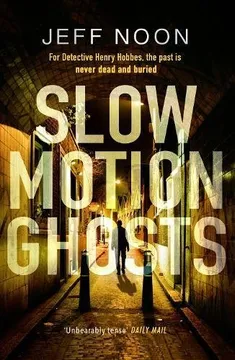


Plot Summary
Brixton's Burning Line
In April 1981, Detective Inspector Henry Hobbes leads a poorly equipped squad into the Brixton riots. When their shields fail, he runs forward to help an injured woman and is struck in the head. His partner, Charlie Jenkes, drags him to safety, but Hobbes glimpses hatred in the older detective's face.
Days later, Hobbes witnesses Jenkes and two officers savagely beat Michael Hennessey, a black man in their custody. Though frightened and initially unable to stop them, Hobbes files a report naming the officers.
Jenkes is disciplined, then found hanged in his garage. Blamed by colleagues, separated from his wife, and searching for his missing son, Hobbes is transferred to Richmond. Months later, a murder there gives him a case and a chance to prove himself.
The riot does more than furnish a violent opening. It places Hobbes between institutional belonging and moral responsibility, then makes that choice costly: reporting Jenkes means refusing the protective silence of the police brotherhood. Yet Hobbes's courage is compromised by his first paralysis in the cellar, and his guilt grows from the distance between the action he eventually takes and the action he wishes he had taken sooner. His transfer is both professional punishment and emotional exile. The case begins with a detective already unsure whether truth-telling can repair the harm it exposes.
A Bed Beneath the Lamp
At a Richmond house, Hobbes studies the rooms before approaching the body of Brendan Clarke, a young singer found dead in his bed. The record player repeats one phrase from a Lucas Bell song, held in place by blue putty bearing Clarke's fingerprint. A tarot card, the Fool, rests in his pocket.
Someone has cut an eye, extended the corners of his mouth, and marked his forehead with an X, then covered his ruined face with a sheet. The room offers stranger signs: a lipstick-marked cigarette, a phone far from the bed, and a clean circle in the dust where an object has been removed. Hobbes makes his private promise to find the killer, but leaves the room certain that its carefully arranged details conceal a second story.
The scene turns murder into a problem of authorship. The killer has not merely injured Clarke, but arranged light, music, furniture, and symbols as though directing an audience. Hobbes's refusal to rush to the corpse establishes his method: he treats the room as a sequence of decisions, not a collection of clues. Yet the covered face complicates that reading. The violence is displayed and then concealed, an act that suggests the killer wants a particular witness, or a particular interpretation, rather than indiscriminate attention. Hobbes's vow is therefore both ethical commitment and entry into someone else's performance.
Simone's Unfinished Account
Simone Paige, a music journalist who met Clarke at a concert the previous night, gives Hobbes a controlled account of finding him. Her details shift under questioning: she had entered through an open back door, turned off the television, lowered the record's volume, and lifted the sheet from Clarke's face.
She says she stayed beside him because she could not bear to leave him alone. Hobbes also learns that she and Clarke shared an intense interest in Lucas Bell, a rock star who died seven years earlier.
When she leaves, Hobbes rewinds the interview tape and hears her privately blame herself for two deaths. At home, the thought of the covered face sends him back to Clarke's bedroom, where he confirms that the bed had been moved into the streetlamp's beam.
Simone's omissions are not simple signs of guilt. Her practical interference with the room comes from grief and shock, while her guardedness reflects a history she has learned to defend against public scrutiny. Hobbes recognizes the difference only after testing her account against small physical facts. The tape gives him access to feeling she would not deliberately disclose, but it also exposes the ethical tension in his investigative style: he obtains truth by violating privacy. The moved bed reframes the murder as staged intimacy. Clarke appears to have participated in arranging his own final scene, whether through trust, coercion, or some mixture of both.
The Mask Becomes Evidence
At the case briefing, Hobbes argues that Clarke knew and trusted the person who killed him, because the bedroom shows no struggle. His colleagues, especially the abrasive Detective Constable Tommy Fairfax, resist his theories.
The young constable Jimmy Barlow brings in Lucas Bell's final album, whose inner cover shows Bell wearing a painted face: pale skin, a split red mouth, a black teardrop, and an X on the forehead. Clarke's cuts reproduce the design. Bell died by suicide in 1974, and the anniversary falls the next day.
Hobbes visits Clarke's grieving parents; they reveal their son's devotion to Bell and his former engagement to keyboard player Nikki Hauser. A neighbour recalls a young woman leaving the garden with a dark mark beneath one eye, linking the unknown visitor to the mask.
The album cover supplies a legible image, but not yet a motive. Hobbes's team must resist the seductive simplicity of treating a recognizable pattern as an explanation. Their disagreements also make the police station a second crime scene, where resentment over Jenkes's fate distorts how evidence is received. Barlow's observation earns him a place in the investigation precisely because he looks closely at the popular culture his seniors dismiss. The masked face connects a dead celebrity, a murdered musician, and an unidentified woman, turning fandom into a network of competing claims over who may represent the dead.
The Last King Lost Show
Hobbes and Fairfax question Matthew Tate, Monsoon Monsoon's drug-addled drummer, at the Pleasure Palace club. Tate remembers Clarke appearing in the King Lost mask and reenacting Bell's final concert, including a staged cutting of his own painted face.
Afterward, a teenage fan named Morgan Yorke accused Clarke of impersonating Bell and slapped him. Tate also saw Clarke and Simone nearly kiss, then learned that Clarke had been engaged to Nikki Hauser. The engagement ended after Hauser told Clarke something troubling about Bell, with whom she had once toured and been involved.
Tate says Hauser will attend the anniversary gathering at Witch Haven, the field where Bell died. His account gives Hobbes a likely destination and a suspect circle, but leaves the motive unresolved.
The concert is a reenactment that has escaped the safety of theatre. Clarke's fake blood and staged injury imitate an act the fans regard as sacred, while Morgan's slap makes the boundary between performance and insult physical. Tate's testimony also reveals how Bell's admirers attach themselves to people who knew him, treating access to the singer as a kind of spiritual authority. The competing attachments of Simone, Nikki, and Morgan complicate any neat distinction between devotion and obsession. The event sends Hobbes toward Hastings, but it also shows that the audience itself may enforce the mythology surrounding the mask.
Two Halves of a Suicide
Hobbes returns to Simone's flat with the interview tape and learns how her relationship with Lucas Bell began. She had suggested he wear a mask after he attempted suicide, and he drew the King Lost face on a restaurant napkin.
Simone kept the drawing, along with Bell's final letter, which promised a future reunion unlike the despairing suicide note reported publicly. She explains that Clarke told her he had proof Bell was murdered. A lyric sheet found in Clarke's mouth contains an erased word, Edenville, which Bell had once promised to explain.
Simone recalls a final secret: Bell said he would return for her, then disappeared for three weeks before his death. The mismatched lyrics, letter, and hidden name make Bell's suicide a question Hobbes can no longer ignore.
Simone's account dismantles the polished origin story of King Lost. What seemed to be a spontaneous artistic invention may have been drawn from Bell's concealed past, and the mask's later fame obscures its earlier purpose. The evidence remains suggestive rather than conclusive: a hopeful letter can coexist with suicidal intent, and a buried lyric can signal shame without proving murder. The novel makes memory an investigative instrument, but never a transparent one. Simone's journals, napkin, and recollections preserve what official accounts flatten, while her guilt shows how public myths can assign survivors responsibility for choices they could not control.
The Cellar Returns
That night Hobbes returns to the Soho club where Jenkes and the others beat Michael Hennessey. Chief Superintendent Lockhart lets him inspect the cleaned cellar, then admits he painted the insult on Hobbes's door to draw him there.
Lockhart now suspects Jenkes did not die by suicide and wants Hobbes to investigate discreetly. The visit forces Hobbes to relive his failure to intervene and the report that ended Jenkes's career. He sleeps badly, tethered by string to keep himself from wandering, then accepts Barlow's invitation to travel to Hastings.
Before leaving, he continues the murder inquiry while carrying a second burden: deciding whether the force that condemned him for telling the truth can tolerate another truth about one of its own.
Lockhart's provocation converts Hobbes's private guilt into an institutional assignment. The cellar is not merely a remembered site of violence; it is where the force's public account and Hobbes's private knowledge diverge. Lockhart's request is morally ambiguous, since he wants the case reopened but initially insists on secrecy. Hobbes must therefore investigate the same institution that has punished him, while questioning whether loyalty means concealment or accountability. The string around his ankle gives this conflict a bodily form: even at rest, he is afraid of what his mind may do when conscious control loosens.
A Fool in the Capri
Photographer Neville Briggs shows Hobbes and Barlow images of Clarke's final concert, including his fake stage mutilation and the hostile crowd around Morgan Yorke. Briggs then reveals photographs he took seven years earlier after finding Lucas Bell dead in an eggshell-blue Ford Capri at Witch Haven. In one image, a Fool tarot card sits on the dashboard, the same emblem later found on Clarke.
The photographs also show the scene as it was discovered, with Bell in the passenger seat and the car door open. Hobbes sees a possible pattern between the two deaths, then drives with Barlow toward Hastings for the anniversary gathering. On the journey, he admits how his silence during the assault on Hennessey still shapes his view of policing.
Briggs's photographs make the past materially present, but they also reveal the photographer's compromised role as witness. He recorded Bell's death instead of seeking help, and has kept the images private because they trouble him. The tarot card creates a concrete bridge between deaths separated by seven years, while the passenger seat and open door preserve the possibility of another person's involvement. Hobbes's conversation with Barlow mirrors the evidence: neither can erase what happened, but both can choose what to do with it. Their journey becomes an apprenticeship in moral attention, not simply a trip to collect suspects.
Pilgrims at Witch Haven
At Witch Haven, hundreds of Bell devotees gather around shrines, offerings, and the blue car kept as a memorial. Hobbes spots Nikki Hauser playing guitar beside former pop singer Johnny Valentine.
When the rain breaks over the field, Hauser tries to leave; Hobbes and Barlow confront her, and the crowd turns on them. Local officers disperse the fans, though Barlow is knocked down. In the car, Hauser admits she wanted to punish Clarke for betraying her, but denies returning to his house.
She says Bell once confided that he had belonged to a secret childhood group called Edenville, whose members shared a terrible secret. Before Valentine pulls her away, she lets slip that the group killed someone. The question of Bell's death now reaches back to his adolescence.
Witch Haven operates as a communal sanctuary and a volatile public square. The fans' mourning has become ritualized, but the crowd's devotion quickly turns punitive when Hobbes and Barlow challenge its chosen figures. Hauser's fragment about a killing reframes the case from celebrity fixation to a concealed act shared by a group. Her own anger at Clarke remains credible without proving she harmed him, a reminder that emotional motive is not evidence of action. The storm disrupts the carefully maintained pilgrimage, exposing how fragile the community's order is when outsiders or unwelcome truths arrive.
Morgan's Stolen Message
Hobbes visits Morgan Yorke at home and finds the seventeen-year-old wearing an elaborate King Lost mask, including painted marks that imitate Clarke's injuries. Morgan admits she went to Clarke's house the morning after the murder to confront him.
A note on the door directed her to the garden; she entered through the open kitchen door, found Clarke dead, covered his face, and took back a figurine she had made. She also kept an opened envelope addressed to Simone. Inside is a threatening message signed Lady Minerva, a name from Bell's mythology.
Morgan remembers Bell once describing Edenville as a hidden refuge, then insists that a vengeful ghost killed Clarke. Hobbes leaves with the letter and a new lead, while Morgan's mother watches helplessly as her daughter retreats further into the fantasy.
Morgan's confession separates her disturbing beliefs from the actual murder. She entered the house after Clarke was dead, altered the scene by covering his face, and removed the figurine, but her actions arose from fanatic attachment rather than evidence of killing. The letter shows how the murderer deliberately anticipated Simone's arrival and addressed her through a borrowed identity. Morgan's mother cannot simply reason her daughter out of her devotion; the mask gives Morgan structure, status, and a language for grievance. The scene warns that an invented world can shelter a vulnerable person while also narrowing the reality she is willing to recognize.
Fair Harbour's Attic
Hobbes finds Simone outside Lucas Bell's childhood home, Fair Harbour, where she explains that Bell grew up there and once used its attic as a private den. She has received a warning from the murderer but refuses protection.
The next morning, Simone returns to the house after its owner reveals that Bell left a box in the attic for her alone. While Simone climbs up to search, a hidden intruder attacks her and escapes. Hobbes arrives too late to save her. Among the stored lyrics, artwork, and stage clothes, he finds a sealed box marked Edenville.
Its papers contain maps, histories, passwords, and six founding names, including King Lost and Lady Minerva. The imagined refuge has become the most tangible evidence in the case, but Simone cannot see it.
The attic converts Edenville from a remembered word into an archive, a world made by hand and preserved in secret. Its physical location matters: this is the childhood den where a private refuge could be built beyond adult scrutiny. Simone reaches the evidence but is killed before she can interpret it, making the investigation's progress inseparable from Hobbes's failure to protect a witness. The box's abundance suggests that the secret is not a single concealed fact but a shared system of stories, roles, and rules. The archive promises clarity while showing how much emotional life has been organized around concealment.
The Founders of Edenville
Hobbes studies the Edenville papers and learns that the group built an elaborate fictional town as refuge from a hostile outside world. Lucas Bell's former manager, Toby Lear, introduces him to Gavin Roberts, a reclusive artist who still constructs the village in miniature.
Gavin identifies himself with Bo Dazzle and says Bell and Clarke were punished for taking the mask, but cannot name the killer. Lear supplies the crucial correction: Bell had not invented King Lost. Another Edenville member created that persona, and Bell adopted it.
Meanwhile, Hobbes visits Brendan's parents and finds the authentic suicide note in their collection, then matches its torn edge to a lyric sheet from Bell's car. The note was assembled from a song, strengthening Clarke's theory that Bell's death was staged.
Edenville's elaborate detail resists the assumption that it was childish escapism. For its founders, it offered safety and identity, but its rules could harden into a rival moral order. The stolen-mask revelation shifts the central question from who copied Bell to who first needed the persona and why. The torn lyric and fabricated note provide the investigation's strongest physical evidence, yet they do not identify the person who staged Bell's death. Lear and Gavin demonstrate two different afterlives of the fantasy: one man curates its memories, the other inhabits it so completely that ordinary evidence cannot easily reach him.
Valentine Cuts the Mask
The search for Edenville's remaining members intersects with Hobbes's separate inquiry into Jenkes. Lisa Jenkes admits her affair with teacher Lloyd Patterson and fears her husband retaliated against him before the riots. Hobbes searches Jenkes's garage and finds photographic negatives hidden inside an oil can.
They show Jenkes with Matthew Tate, evidence that Jenkes used intimate photographs to blackmail colleagues and acquaintances. Soon Hobbes sees Johnny Valentine on a magazine cover, cutting the King Lost mask into his own face.
He reaches Valentine's flat too late: Valentine has been stabbed, his face scored, while Nikki Hauser lies injured nearby. Hobbes hears the killer singing in another room, but she escapes. Valentine has become the next victim of the mask's ritual, and Hauser is the surviving witness.
The two investigations meet through the same mechanism of concealed evidence. Jenkes's reputation as a casualty of Hobbes's report gives way to a more compromised portrait, but discovering his blackmail does not excuse the original assault. Valentine's self-injury exposes the dangerous feedback loop between performance and belief: once the magazine publicizes the wound, the symbolic act becomes an invitation the killer can answer. Hobbes's arrival after the attack repeats his earlier helplessness in the cellar, but this time he pursues the assailant. The failed pursuit deepens urgency while leaving Hauser as the last person able to explain the mask's rules.
The Girl in the Photograph
Hauser tells Hobbes that Bell warned her against harming the King Lost mask and once confessed that the Edenville group had killed its original wearer. She describes a vow to protect the mask, though she does not know all the founders' real identities.
Hobbes compares photographs from the album shoot, the anniversary crowd, and Bell's childhood records. He identifies the older woman who painted Bell's first mask as a former member called Miss Caliban. Visiting Edward Keele's mother, Susan, he learns that her son created King Lost to endure his father's abuse, then drowned as a teenager.
A photograph links Edward to his protective sister, Natasha. Before Hobbes can act, Susan knocks him unconscious. He wakes bound in a cellar, painted as King Lost, with Natasha waiting to judge him.
The revelation changes the mask from a celebrity's invention into a child's survival strategy. Edward's image began as protection against domestic violence, then became an object that others could claim, copy, or police. That history makes the later vow emotionally intelligible without making its violence defensible. Hobbes's identification of Natasha depends on patient comparison rather than a dramatic confession, while Susan's attack shows how grief and complicity can coexist in a family. The cellar reverses Hobbes's position: the detective who once watched an assault is now restrained and made into the scene's intended victim.
The Brother Beneath the Mask
Natasha tells Hobbes that Edward was her younger brother and that she painted the original mask to help him feel protected. She admits the Edenville founders held Edward beneath the tide after he begged them to help him die, then swore to preserve his image.
Lucas later adopted Edward's persona, made it famous, and eventually destroyed the mask onstage. Natasha says she helped Bell die with a gun and killed Clarke and Valentine for reenacting the mask's destruction; she also killed Simone to protect the secret.
When she tries to suffocate Hobbes with a plastic bag, he fights free as Violet Yorke enters and knocks Natasha down. Violet's intervention exposes the woman behind the Mother's role and saves Hobbes from the ritual he was meant to complete.
Natasha's account reveals a chain of care corrupted into coercion. The mask once answered a child's need for safety; after Edward's death, Natasha treats its preservation as a duty more sacred than the lives of those who wear or damage it. Her story does not settle whether Edward's death was consent, murder, or both, because his vulnerability and the group's agency remain painfully entangled. Hobbes survives not by overpowering the past but by refusing its prescribed role. Violet's arrival breaks the ritual's closed circle, turning the guardian's private mythology into a crime that can be witnessed and interrupted.
The Truth at Witch Haven
After Natasha is taken into custody, Hobbes learns that Violet Yorke was Mood Indigo, one of Edenville's founders. She reveals that Morgan is Lucas Bell's daughter. On the night Bell died, she drove him to Witch Haven after he described his guilt over Edward and his inability to continue living as King Lost.
Bell hesitated with the gun against his head; Violet placed her hand over his and pulled the trigger. Natasha later staged the scene as suicide, adding the Fool card and constructing the note from torn lyrics.
Violet asks to remain with Morgan as the truth lands. Hobbes has solved the old death, but no verdict can make the history clean. His face bears Natasha's wound, and his own survival depends on other people choosing to intervene.
Violet's confession destabilizes the neat opposition between suicide and murder. Bell expressed a wish to die, yet Violet physically completed the act, while Natasha shaped the evidence and the meaning that followed. Responsibility is distributed, not dissolved: pain explains the choices without making them innocent. Morgan's parentage also turns Bell's distant legend into a family history with living consequences. The revelation answers the case's factual questions but refuses emotional closure. Hobbes, who has long equated responsibility with carrying guilt alone, now confronts a truth that was made by several people and must be held by more than one.
The Last Call at Dawn
The remaining case arrives before dawn when Barlow and Latimer take Hobbes to a boarding house in Putney. Fairfax has handcuffed Leonard Mawley to a radiator and beaten him until he confesses that he hanged Jenkes.
Mawley says Jenkes had blackmailed him with the photographs and demanded favors; he denies that the killing was justified, but does not deny doing it. Fairfax raises a tyre iron, intent on delivering his own punishment. Hobbes refuses to let the confession become another cellar assault.
Latimer appeals to Fairfax's loyalty, and he drops the weapon, collapsing into her arms. Mawley can be arrested, Fairfax can be held accountable, and Hobbes stands with colleagues rather than apart from them, though his family and missing son remain unresolved.
The final confrontation echoes the original assault on Hennessey, but changes the outcome through collective restraint. Fairfax's anger is understandable as grief for a mentor, yet Hobbes refuses to let loyalty become permission for violence. Latimer's presence matters as much as Hobbes's intervention: the group prevents a second man from turning injury into private justice. The case also complicates Hobbes's earlier self-image as the lone truth-teller. His integrity has not repaired the force by itself, but he can now work within relationships instead of treating isolation as the price of honesty. The ending offers connection, not absolution.
Analysis
The novel treats identity not as a stable interior truth but as something made between bodies, images, and audiences. Edward creates a mask to survive abuse; Bell turns it into a career; fans inherit it as a devotional object; and Natasha enforces it as law. Each transformation changes the mask's function while preserving the fantasy that the image can protect its bearer from pain. The murders arise when representation becomes more valuable than the people represented.
Edenville extends this problem from one face to an entire invented society. Its founders use shared authorship to escape exclusion, yet the roles and oaths that once created belonging later give authority to secrecy and violence. The archive matters because it makes imagination visible as work: maps, lists, and histories record a real childhood need even when their fictional geography cannot explain away real crimes. The book neither mocks fantasy nor treats it as harmless. It asks how a refuge becomes a prison when its rules cannot change.
Hobbes's parallel investigation into Jenkes tests the same moral question inside the police force. Brotherhood can sustain courage, but it can also demand silence; Hobbes's report is ethically necessary, though his initial failure to intervene leaves him with lasting guilt. Fairfax repeats the temptation to make loyalty into revenge, and the final confrontation only changes course because Latimer and Hobbes remain present with him. Across the two plots, accountability is not the same as purity. People are compromised, grief distorts judgment, and truth does not restore what has been lost. The book's hard-won hope lies in a more limited act: refusing to let pain dictate the next person's violence.
Review Summary
Slow Motion Ghosts is a crime novel set in 1981 London, following Detective Inspector Hobbes as he investigates the murder of a musician linked to a dead glam rock star. The book explores themes of fandom, music, and social issues of the era. Reviews are mixed, with praise for the atmosphere and plot complexity, but criticism for underdeveloped characters and an unsatisfying ending. Some readers found it a departure from Noon's usual style, while others appreciated the noir elements and historical setting.
Characters
Henry Hobbes
A bruised, exacting inspectorHobbes is a forty-four-year-old detective inspector transferred to Richmond after exposing violence within his own police ranks. He reads rooms through small physical disturbances, returning to a scene until its objects yield a sequence of choices. His discipline is partly professional and partly defensive: grief, guilt, insomnia, and a fractured family life threaten to overwhelm him when he stops working. He values evidence but is not emotionally detached, and his private promises to victims reveal how much responsibility he takes onto himself. Hobbes's deepest struggle is not whether truth matters, but whether he can pursue it without turning punishment into another form of violence.
Simone Paige
A journalist haunted by BellSimone is a music critic and biographer whose relationship with Lucas Bell shaped both her career and her private life. She is observant, controlled, and practiced at guarding intimate experience from people who want to turn it into a story. Her attachment to Bell is mixed with grief, guilt, and anger at fans who blame her for his choices. She is drawn to Brendan Clarke partly because he resembles the singer and shares his music obsession, yet she recognizes the danger of treating one person as a replacement for another. Her testimony gives Hobbes access to Bell's history while showing the personal cost of being made responsible for a dead man's legend.
Lucas Bell
A glam-rock enigmaBell is a celebrated rock singer whose music and theatrical persona continue to command devotion years after his death. He is remembered through contradictory accounts: a gifted outsider, a troubled performer, a lover, and a figure whose private history resists the polished mythology built around him. His songs draw on memories and hidden experiences, while his public image gives fans a face they can imitate and interpret. Bell's relationships with Simone, Nikki, and the people from his youth show how fame magnifies both intimacy and distance. He remains central to the story not as an active presence, but as a person whose past continues to organize the choices of the living.
Nikki Hauser
A keyboardist with divided loyaltiesNikki plays keyboards in Monsoon Monsoon and has a complicated history with both Brendan Clarke and Lucas Bell. She is sharp, guarded, and fiercely resistant to outsiders who mistake her knowledge for uncomplicated worship. Her connection to Bell gives her an intimate view of his private life, but she rejects the fans' idealized version of him. She is capable of anger and has imagined harming Clarke, yet her care for Johnny Valentine and her concern about the mask reveal a protective tenderness beneath her contempt. Nikki's reluctance to disclose what she knows grows from fear that the truth will destroy a community's faith, as well as from promises she believes she must keep.
Tommy Fairfax
A combative young detectiveFairfax is a confident, sharp-dressed detective constable whose impatience often comes out as mockery or aggression. He resents Hobbes because of the consequences of the Jenkes affair, and his connection to Jenkes reaches back to childhood, when the older officer was a family friend and hero. Fairfax believes in action and loyalty, but those instincts can outrun his judgment. His bravado masks a history of feeling powerless as the youngest son in a difficult household. His conflicts with Hobbes and Latimer reveal how grief can turn admiration into a demand for revenge, even in a police officer who wants to believe he serves justice.
Meg Latimer
A wary, capable sergeantLatimer is Hobbes's Richmond colleague, a perceptive detective sergeant who has struggled with alcohol and professional setbacks. She is quick to challenge Hobbes when his certainty or manner risks alienating the team, and she does not conceal her doubts about his role in Jenkes's downfall. Her skepticism is not cynicism: she continues to work the case carefully and recognizes Barlow's value before the others do. Latimer understands that police loyalty can protect colleagues at the expense of victims, but she also sees the emotional damage that comes from treating every relationship as suspect. Her directness gives the investigation a necessary counterweight to Hobbes's isolation.
Jimmy Barlow
An observant young constableBarlow is a young constable with neat hair, a notebook, and an earnest appetite for learning. Hobbes recruits him to research Lucas Bell, and Barlow's knowledge of music helps the team recognize the mask copied onto Clarke's face. His initial nervousness around senior officers gradually gives way to confidence, though he remains alert to the ways police culture can harden into prejudice. Barlow asks difficult questions without pretending to have easy answers. His willingness to listen makes him a useful partner for Hobbes, especially when the older detective is tempted to retreat into suspicion.
Brendan Clarke
Monsoon Monsoon's frontmanClarke is a young singer whose devotion to Lucas Bell shapes his music, his collection, and his attempt to revive Bell's stage persona. His wealthy parents supported his changing ambitions, but their expectations never fully matched his artistic life. Clarke is intense and imaginative, capable of turning a tribute concert into an elaborate act of identification. His engagement to Nikki Hauser and his interest in Simone Paige both reflect his attraction to people connected to Bell. The evidence suggests that he was drawn into a carefully directed encounter, but his precise understanding of the danger remains uncertain. His fanzine and collected relics reveal a young man searching for the truth beneath an admired public image.
Natasha Keele
A fiercely devoted Bell fanNatasha is closely involved in the Lucas Bell fan community and treats the King Lost image with unusual seriousness. She is reserved in public, but her presence among the devotees is marked by an intense, watchful attention to how the mask is represented. Her identity and motives are difficult for Hobbes to establish because she keeps herself at the edge of the crowd and lets others draw attention. Natasha's belief in the value of preserving Bell's image gives her a commanding inner logic, even when outsiders see only eccentricity. She embodies the danger of turning a private symbol of protection into an absolute rule for other people's lives.
Violet Yorke
A mother guarding old memoriesViolet is Morgan Yorke's mother, a quiet woman who has built a life around raising her daughter and keeping painful memories at a distance. She was once part of the young circle that gathered around Lucas Bell in Hastings, but she has not shared that history with Morgan. Her reserve is not indifference. It comes from years of carrying a secret that shaped her family and her understanding of Bell. Violet's calm demeanor can conceal fear and remorse, while her love for Morgan remains the clearest force in her life. She is an important counterpoint to the fans who turn Bell into a legend, because she remembers him as a troubled person rather than an image.
Morgan Yorke
A fiercely devoted teenagerMorgan is seventeen and deeply immersed in Lucas Bell's music, clothes, and mythology. She makes King Lost figurines and wears the mask with a conviction that separates her from casual fans. Her anger at Brendan Clarke comes from believing that his performance dishonors Bell, and her imagination offers a way to organize feelings she cannot easily express at home. Morgan's mother worries about how completely the teenager has retreated into this world, yet does not know how to reach her without dismissing what matters to her. Morgan's unusual memory and devoted attention make her useful to Hobbes, even as her beliefs complicate his understanding of the case.
Gavin Roberts
A secluded artist and makerGavin is an artist and an old friend of Lucas Bell who lives in a carefully constructed private world. He spends his days drawing, painting, and building an intricate miniature town from memories shared with others. His work is both a creative achievement and a refuge from ordinary life, though it has increasingly narrowed his contact with the outside world. Gavin can speak clearly about certain parts of the past, then become distressed when a question approaches what he has promised not to reveal. His divided awareness shows how an imagined community can preserve friendship while also keeping its most painful history locked away.
Eve Dylan
A librarian who gathers outsidersEve Dylan was a Hastings librarian who organized a literary and arts club for young people and became an influential presence in their lives. She encouraged reading, symbolic thinking, and the search for a personal destiny, drawing together teenagers who felt isolated from the town around them. Former colleagues remember her as unconventional and controversial, while the young members gave her a more mythic status. Her impact persists in the names, beliefs, and private rules the group carried into adulthood. Eve's history matters because she helped create the conditions in which a refuge could become both a source of belonging and a source of control.
Charlie Jenkes
Hobbes's formidable partnerJenkes is Hobbes's longtime police partner, a talented and forceful detective whose earlier loyalty and humor made him widely admired. He is also capable of anger and prejudice, especially under pressure, and his colleagues' affection for him makes it difficult for them to confront his conduct. His bond with Fairfax gives the younger detective a personal reason to distrust Hobbes. Jenkes represents the danger of confusing competence and camaraderie with moral reliability. Hobbes's memories of him remain divided between genuine friendship and the actions that forced a choice between silence and accountability.
Leonard Mawley
A veteran Soho detectiveMawley is a weary, physically imposing detective sergeant who has spent decades in the force without the advancement he wanted. He moves comfortably through Soho's after-hours police culture and is skilled at surviving its informal bargains. His connection to Jenkes and his own concealed private life make him vulnerable to pressure. Mawley is neither a simple villain nor a sympathetic victim: he has participated in the culture of favors and intimidation, while also fearing the loss of his career and family. His presence exposes how personal secrets can become tools of institutional control.
Toby Lear
Bell's former managerLear managed Lucas Bell and remains one of the few people who knew the singer across the stages of his career. Older, dapper, and reflective, he speaks with both affection and regret about the choices he enabled, including supplying Bell with a gun and drugs. He now cares for Gavin Roberts, whose private world of Edenville fills a room in Lear's deteriorating house. Lear believes people can change through effort, but he is not naïve about how much harm old indulgences can cause. His memories help Hobbes distinguish Bell's public legend from the complicated life behind it.
Neville Briggs
A photographer haunted by imagesBriggs is a photographer who worked closely with Lucas Bell and documented both the singer's career and the discovery of his body. He describes himself as unable to stop recording what he sees, even when the subject is suffering. That compulsion makes his photographs valuable, but it also leaves him ashamed of moments when he watched instead of acting. Briggs's history with Simone and Bell carries elements of desire, jealousy, and grief. He is a witness whose images preserve evidence more reliably than his frightened memories, though the pictures themselves cannot explain what happened.
Johnny Valentine
A fading glam-rock singerValentine is an older singer who once worked with Lucas Bell and continues to perform for Bell's devoted followers. His public manner is rough and his life appears diminished, but he retains musical skill and a strong attachment to the people who shared his early career. He is close to Nikki Hauser, whom he tries to protect in his own erratic way. Valentine sees Bell's story as part of a larger loss of artistic possibility, and his reflections suggest that fame can leave people clinging to the symbols that once gave them purpose.
Annabelle Clarke
A grieving, observant motherAnnabelle Clarke is Brendan's mother, a devoted parent who tries to understand the artistic life her son chose instead of the future his father planned. She knows how deeply he cared about Lucas Bell and remembers the changes in his habits after his relationship with Nikki ended. Her grief is complicated by guilt over what she did not know and by the difficulty of accepting how unusual her son's collection became. She is more emotionally perceptive than her husband, and her observations help Hobbes see Brendan as a person rather than merely a set of crime-scene clues.
Gerald Clarke
A father shaped by expectationsGerald Clarke is a prosperous lawyer who hoped Brendan would follow him into the profession. He provided money and practical support, yet struggled to understand his son's artistic ambitions and intense attachment to Lucas Bell. His manner is controlled, particularly when Annabelle expresses emotions he would prefer to contain. Gerald's presence reveals how material care can coexist with emotional distance: Brendan had resources, but not necessarily the understanding he wanted.
Lisa Jenkes
A widow guarding her childrenLisa is Jenkes's wife and the mother of their children. She tries to maintain family routine while living with grief, public scrutiny, and uncertainty about her husband's final days. Her confession about an affair with teacher Lloyd Patterson complicates the respectable image Hobbes had held of the Jenkes household. Lisa is frightened of what Jenkes may have done and of what Patterson may do next, yet she wants the truth about her husband's death. Her account gives Hobbes personal information he must handle carefully rather than treat as simple evidence.
Michael Hennessey
A victim of police violenceHennessey is a young black man detained by Jenkes and two other officers in a Soho club. His assault becomes the event that forces Hobbes to choose between the police brotherhood and his duty to report what he witnessed. Hennessey is not defined by the violence done to him, but by the moral consequence it creates for everyone who sees it.
Matthew Tate
Monsoon Monsoon's drummerTate, who prefers the nickname Sputnik, is a volatile drummer whose drug use makes him difficult to interview. Beneath his scattered behavior is genuine affection for Brendan, who helped him leave street life and return to music. Tate's recollections of the concert provide Hobbes with details about Clarke's performance, his relationships, and the hostile encounter outside the club. His testimony is uneven but valuable because he remembers the emotional atmosphere other witnesses overlook.
Lloyd Patterson
A teacher caught in an affairPatterson is a schoolteacher who had an affair with Lisa Jenkes and was assaulted by Charlie after the relationship came to light. He is angry at Jenkes but denies involvement in the detective's death. Patterson's religious convictions and ordinary domestic troubles make him a reminder that serious conflicts can grow from familiar human weaknesses rather than elaborate schemes.
Plot Devices
The King Lost mask
A face with borrowed meaningThe mask combines white face paint, an extended red mouth, a teardrop, and a forehead mark. It begins as a protective image associated with a vulnerable boy, then becomes Lucas Bell's public persona and a prized object for his admirers. Clarke's stage imitation and Valentine's self-injury turn its representation into a dangerous test of loyalty. The mask links the murders while concealing the distinction between the original person, the celebrity who adopted the image, and the fans who claim to defend it.
Edenville
An invented refuge with rulesEdenville is a fictional town built by a small group of young outsiders through maps, biographies, histories, art, and rituals. Its scale suggests that the founders needed more than a game: they created a place where they could choose identities and escape painful circumstances. The surviving archive gives Hobbes a physical route into the past, but its rules also outlive the people who made them. As the story reveals, the refuge can preserve memory and belonging while allowing old vows to justify real harm.
The Fool tarot card
A marker across deathsThe Fool card appears beside both Lucas Bell and Brendan Clarke, linking their deaths before Hobbes understands why. It belongs to the King Lost imagery and carries associations with a young figure beginning a journey without seeing danger ahead. The card is at once evidence, symbol, and part of the killer's staged message. Its repetition directs the investigation from Clarke's bedroom to Bell's car and ultimately toward the private belief system that shaped the murders.
The torn lyric sheet
A suicide note reconstructedA fragment of Lucas Bell's lyrics is found in Brendan Clarke's house, while the purported suicide note survives among the Clarke family's collection. When Hobbes compares the original materials, their torn edges fit together, revealing that the note was cut from a song sheet. The match undermines the official appearance of Bell's death and confirms that someone deliberately constructed evidence. The lyric fragments also carry the hidden name Edenville, joining physical proof to the older story Clarke had been investigating.
The staged bedroom
A murder arranged as performanceClarke's moved bed, looping record, streetlamp illumination, covered face, and placed tarot card turn his bedroom into a composed scene. Each detail initially seems like an isolated oddity, but together they imply that the killer directed Clarke before killing him and wanted a particular person to find the result. The repeated song connects the bedroom to Bell's history, while the altered room mirrors the ritualized use of the King Lost mask. Hobbes's reconstruction of the scene models the novel's method of reading action through objects.
Download PDF
Download EPUB
.epub digital book format is ideal for reading ebooks on phones, tablets, and e-readers.








