

Key Takeaways
Treat parenthood as repeated care, not biology, fame, or grand gestures.
The court established paternity. Lisa’s father initially denied being her father, even claiming sterility and naming another possible parent. A court-ordered blood test put the chance of their relationship at 94.4 percent. The court required monthly child support, first $385 and later $500. Four days after the case ended, Apple went public and her father became enormously wealthy. Legal recognition and money helped provide for Lisa, but neither guaranteed everyday contact.
Presence remained intermittent. He visited rarely during her early childhood, then appeared more often during setbacks at work. Lisa read his fame as a possible route to belonging, while their actual relationship was made of scattered outings, silences, and absences. The memoir acknowledges his affection, but measures it against the care a child needs to be able to count on.
Developmental research distinguishes material provision from a caregiver’s predictable, responsive presence. The distinction clarifies why financial support can matter greatly without answering a child’s deeper question: will this person show up when needed? Lisa’s story makes that gap unusually visible because public success and private absence occupy the same family history. The account also resists an easy verdict. Occasional tenderness is real, but it cannot retroactively make an unreliable pattern feel secure.
Stop making a child responsible for an adult's emotional survival.
The roles blurred early. Lisa and her mother moved thirteen times by the time Lisa was seven, living through periods of welfare, unstable housing, and her father’s absence. Lisa thought she had two jobs: protect her mother, and help prepare her for the world. During a night drive, her mother broke down and shouted that she could not bear her life. Lisa sat strapped into her seat, absorbing distress she had no power to resolve.
This is parentification. The term describes a child taking on emotional or practical responsibilities that should belong to adults. Their closeness brought tenderness, art, songs, and companionship, but it also led Lisa to watch her mother’s moods and fear that one person’s happiness required the other’s diminishment. Love and burden grew together.
Research on role reversal in families suggests that children can become perceptive, capable, and empathetic while also carrying more emotional responsibility than they can manage. Those capacities should not be mistaken for evidence that the arrangement was harmless. Lisa’s story shows how a child may become an expert in an adult’s emotional weather precisely because no dependable shelter exists from it. Poverty intensifies the strain, but financial hardship alone does not explain the blurred boundary between mother and daughter.
Intermittent affection can make a child pursue symbols instead of safety.
The longing became symbolic. When Steve began visiting more often, around Lisa’s eighth year, he took her skating and later hosted Wednesday nights at his vast Woodside house. She treasured its hot tub, films, special meals, and unusual rooms. Those details felt like clues that a close relationship might be forming, even when the drives were quiet and he rarely asked about her life.
A name became proof. Lisa believed the failed Lisa computer had been named for her. Her father denied it more than once, and she held onto the belief as evidence that she had a place in his story. Years later, he acknowledged the connection during a lunch with Bono. The recognition came after years in which the name had mattered more to her than he let on.
Behavioral science offers one useful lens: rewards that arrive unpredictably can sustain intense pursuit. In close relationships, this can make a rare affectionate moment feel like evidence that a dependable bond is just around the corner. That lens explains a pattern without reducing Lisa’s love to a mechanism or blaming her for hoping. The computer’s name carries unusual force because a symbolic sign of belonging substitutes for the ordinary conversations and reliable attention that never consistently arrive.
Don't confuse a beautiful home with a secure place in the family.
Luxury and neglect coexisted. At fourteen, Lisa moved into her father’s beautiful Palo Alto house, hoping its polished rooms would mean she had arrived in a family. But she slept in a cold downstairs room, washed dishes by hand because the dishwasher was broken, and longed for small gestures such as a goodnight. The house contained carefully chosen design and food, yet ordinary warmth remained unreliable.
Membership had conditions. Her father asked her to prove she belonged by being home more and doing chores, although he had spent much of her childhood away. Lisa searched family photographs for signs of inclusion and worried that breaking things made her look like a baby. The contrast is not that comfort is worthless; it is that a luxurious setting cannot by itself create emotional security.
Environmental psychology recognizes that homes shape comfort, privacy, and a sense of control. Those material dimensions matter, especially for a child who has moved repeatedly. Yet a home is also a relationship system: warmth depends on how people respond to one another, not only on architecture or possessions. Lisa’s cold bedroom and broken dishwasher become emotionally charged because they sit beside abundant wealth. The memoir does not argue that money is irrelevant; it shows that resources do not automatically become care.
Keep adult conflicts and adult disclosures out of a child's caregiving role.
Adults made her an audience. Lisa’s mother’s and father’s relationships repeatedly pulled her into adult worlds. As a young child, adults in a friend’s home pressured her to nurse at the friend’s mother’s breast. Lisa felt unable to leave; after hearing what had happened, her mother filed a report. Later, her father spoke to her about sex in ways that could feel unusually open, but he also turned to her for reassurance about his girlfriends.
The child became a monitor. Lisa was expected to interpret adult moods, comfort her father after romantic disappointments, and absorb her mother’s despair. These moments could feel like intimacy or importance. They also blurred the difference between being loved by adults and being responsible for their emotional lives.
Family therapists use the term triangulation for situations in which a child is pulled into tensions between adults, sometimes as messenger, ally, or confidante. The concept helps explain why being treated as unusually mature can feel flattering and still be unsafe. It does not mean that every conversation about adult life harms a child. Age-appropriate information can build trust. The crucial distinction is whether the child can remain a child, without being asked to manage a parent’s relationships or defend an adult’s boundaries.
Give talent steady attention before demanding proof of exceptionalism.
Support changed the experience. Lisa struggled academically amid repeated school changes. A speech tutor doubted she was smart enough for a selective school. Later, her mother’s partner Ilan sat with her through math and science homework until she experienced what it felt like to arrive prepared. A teacher praised a paragraph she had written, and writing began to feel satisfying in its own right, not merely useful for winning approval.
Achievement had scaffolding. At a more demanding school, Lisa applied herself, became editor in chief of the student newspaper, and earned admission to Harvard. The memoir does not present hardship as the secret ingredient in her success. It shows how attention, instruction, and encouragement helped her turn effort into demonstrated ability.
The concept of self-efficacy describes how people build confidence through experiences of mastering tasks, not just through praise. Ilan’s homework sessions and a teacher’s specific recognition give Lisa evidence that effort can lead somewhere. That is a stronger foundation than being labeled gifted or deficient. At the same time, selective admission is a narrow measure of achievement. Lisa’s success does not prove that instability was beneficial, or that every child can thrive with identical support.
Make belonging compatible with boundaries, not silence or self-erasure.
The offer came with a price. After serious fights with her mother, Lisa’s father invited her to live with his new family but required her not to see her mother for six months. Lisa accepted, hoping her loyalty would secure a place in the household, while feeling both relief and guilt. Eventually she began dividing her time between the two homes, trying to preserve both relationships rather than accept a permanent choice between them.
The line became clearer. During college, her father told her she would have to move out if she did not attend a circus outing. Lisa left that night with help from neighbors Kevin and Dorothy. Leaving did not resolve the family’s history. It did let her refuse an arrangement in which membership could be threatened whenever she failed to comply.
A boundary is most meaningful when a person can act on it, but young people often depend on the very adults whose demands they need to resist. Lisa’s options are shaped by money, housing, age, and her wish to remain close to her siblings. Her departure is therefore less a clean act of independence than a hard-won expansion of choice. The story also warns against treating loyalty as a test that only one relationship can pass.
Let dependable adults help without pretending they can replace a parent.
Care came from several directions. Ilan helped Lisa with schoolwork and offered focused attention at home. Kevin and Dorothy noticed her loneliness, opened their home when she left her father’s house, and paid her final year of college tuition after her father stopped paying. Her mother, despite financial insecurity, continued making art and eventually found paid creative work.
Help was not substitution. These adults made safety and education more possible, but none could become the parent Lisa had longed for. The memoir treats their support as genuinely life-changing without claiming it cancels the original loss. Kevin and Dorothy asked Lisa to help another young person when she could, turning their generosity into a responsibility to pass help forward.
Social support often works through several channels at once: emotional steadiness, practical assistance, money, and access to institutions. Kevin and Dorothy’s help mattered because it was concrete, not merely sympathetic. Still, receiving major help can bring feelings of debt, and Lisa repeatedly wonders how she could repay it. The memoir’s answer is not that supportive adults replace family, but that reliable care can widen a young person’s options while leaving the original relationships complicated.
Accept an apology as truth, not proof that the relationship was repaired.
The apology arrived late. Near the end of his life, Steve told Lisa he had not spent enough time with her and that she was not to blame for his failures as a father. He regretted the lost years. He also connected his long silence to her not inviting him to a Harvard orientation weekend, an explanation Lisa did not consider sufficient for everything that followed.
Recognition did not erase exclusion. Years earlier, Steve finally admitted that the Lisa computer had been named for her. His deathbed apology brought relief, but it could not create the sustained relationship she had wanted. After returning the objects she had taken from his house, Lisa no longer felt driven to steal. The ending leaves her history unresolved, but no longer dependent on a perfect reconciliation.
An apology can name harm and release a person from misplaced blame without repairing the relationship that produced it. Repair usually requires time, changed behavior, and mutual participation, conditions unavailable when one person is dying. Lisa’s account preserves the value of her father’s apology while refusing to make it a final cure. That distinction protects both sides of the story: remorse can be sincere, and the damage can remain real.
Analysis
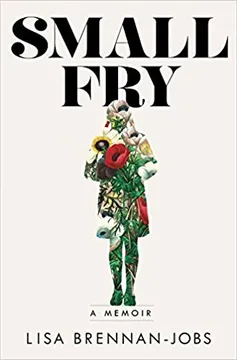
Small Fry is a memoir of family, but also of the difference between a story about belonging and the daily experience of being cared for. Its central relationship is sharpened by a striking imbalance: Lisa’s father is globally recognizable, yet privately difficult to reach. Fame gives her a potent identity to claim, but it cannot supply the routines through which children learn they are safe. Her mother offers intimacy and devotion, but her own loneliness and instability sometimes make Lisa responsible for feelings no child can repair.
The book makes these abstractions tangible through ordinary objects. A couch is not just furniture when a child believes it might make a family permanent. A computer name becomes proof of being chosen. A cold room, a broken dishwasher, a forgotten goodnight, and a stack of family photographs register as evidence of where Lisa stands. These objects do not simply symbolize emotions; they show how a child searches the environment for answers adults fail to give directly.
The retrospective voice is strongest when it keeps childhood certainty beside adult reconsideration. Lisa once interprets her father’s silence, her mother’s distress, and her own role through limited knowledge. The adult narrator does not erase those perceptions, but adds context and uncertainty. That method avoids turning memory into a trial with a simple verdict. Her father can notice beauty, make creative work, behave cruelly, and fail his daughter. Her mother can be loving and also overwhelm her.
The ending refuses the conventional promise that a deathbed apology repairs a damaged childhood. Recognition arrives, and matters, but it cannot restore time or establish a dependable past. Lisa’s release comes instead from seeing that her life need not be validated by her father’s fame, his household, or a perfectly reconciled family. The memoir’s quiet achievement is to make that self-recognition feel earned rather than triumphant.
Glossary
Small Fry
Lisa’s childhood nicknameThe nickname Lisa’s father uses for her. She initially understands it as belittling, like being the leftover at the bottom of a bag. She later learns that fry can also refer to young fish, sometimes returned to the water to grow. The phrase holds both diminishment and possibility, and supplies the memoir’s image of a child growing up among powerful adults.
Small Nation
Nickname for a MercedesLisa’s joking name for her father’s large silver Mercedes. The joke draws attention to the car’s scale and cost, contrasting its expense with the scarcity she experienced in her childhood home. It also captures her mixed response to her father’s wealth: humor and affection sit beside anger about what he did not provide.
Trash Buddha
A sculpture from household wasteThe name Lisa’s mother gives to an art-school sculpture assembled from discarded household material inside a black plastic bag, with small white Christmas lights shining through it. The object changes shape as it is moved and seems faintly alive to Lisa. It reflects her mother’s artistic impulse to find form and meaning in material others would throw away.
Download PDF
Download EPUB
.epub digital book format is ideal for reading ebooks on phones, tablets, and e-readers.








