

Key Takeaways
Read Smile as a masterpiece of fragments, not a finished album.
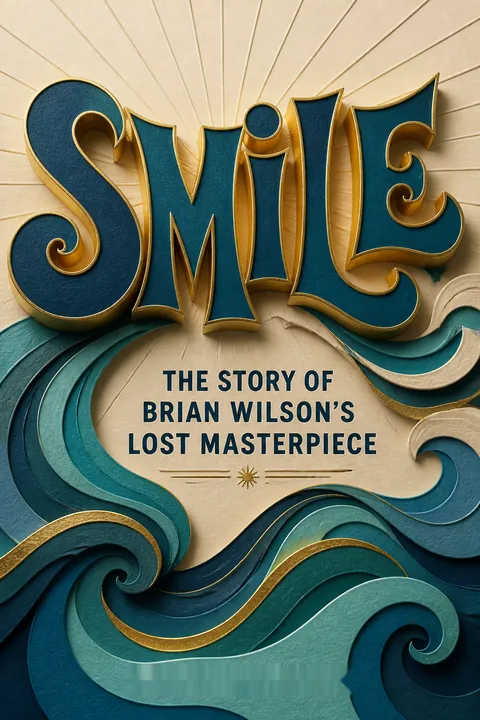
A vision in pieces. Brian Wilson began as a teenager recording with the Beach Boys in a garage, then learned to make the studio part of his musical imagination. By 1966, he was building a new project called Smile from interlocking songs, instrumental passages, and recurring musical ideas. The group never released it as planned. Instead, some pieces appeared across later Beach Boys records, while the complete project survived in tapes, memories, and competing accounts.
A long-delayed arrival. In 2004, Wilson performed and recorded a new version with lyricist Van Dyke Parks and a band led by Darian Sahanaja. It revived the project, but was not simply the original 1967 album finally unboxed. Its history is less a tale of one lost object than of an ambitious work changing shape across decades.
What's striking is how the story questions the idea that an artwork has one definitive form. A composition can persist in sketches, recordings, performances, and other people's memory, with each version carrying different evidence of the creator's intent. That resembles the way historians reconstruct events from incomplete archives. The distinction matters: calling the 2004 album a recovered original would conceal the new decisions that made it possible. Smile's identity lies partly in its music and partly in the history of its interruption.
Brian turned studio constraints into a new instrument for composition.
The room became an instrument. Wilson learned from recording in Los Angeles studios with distinct acoustics, engineers, and equipment. Rather than capture a band performing a complete song, he could record separate musical sections and combine them into a larger whole. On Good Vibrations, work stretched across roughly seven months and several studios. Sessions revisited the song's pieces, changing tempos, instrumental colors, and vocal layers until they formed a continuous track.
Precision through experiment. The approach was demanding. With few available tape tracks, musicians' parts sometimes had to be combined early, and choices could not be casually undone. Wilson's deep knowledge of the equipment let him treat those limits as compositional material. The finished single reached number one in the United States and Britain, demonstrating that intricate studio construction could still connect with a mass audience.
This method anticipates a broader principle of creative technology: a tool becomes expressive when its constraints are understood deeply enough to be bent. The studio was not a neutral container. Its rooms, tape capacity, and mixing decisions shaped the music's structure. Similar dynamics appear in filmmaking and software design, where limits can generate a recognizable style. Yet the story also warns against romanticizing endless revision. Wilson's intensive process was extraordinary, but its costs in time and coordination made it vulnerable to commercial pressure.
Pet Sounds made a pop album feel like one emotional journey.
Songs became an album. Before Smile, Pet Sounds showed Wilson moving beyond the Beach Boys' familiar surf and romance themes. The album drew inspiration from the Beatles' Rubber Soul, but Wilson built its own intimate world through carefully arranged vocals, orchestral colors, and songs about uncertainty, longing, and growing up. He completed much of the musical design while the other Beach Boys were touring, then brought them in for selected vocal parts.
A producer as author. The book emphasizes that Pet Sounds was largely Wilson's studio creation, despite carrying the band's name. Capitol Records did not initially treat it as a major artistic statement, and the album's American sales disappointed compared with expectations. In Britain, however, it became influential, particularly for Paul McCartney. Its example helped establish that a pop record could be heard as a coherent artistic experience, not just a bundle of singles.
The shift from hit collection to album-length emotional design is a change in how listeners organize attention. Motifs, sequencing, and vocal texture can make separate tracks feel like chapters in one argument. That idea now seems familiar, but the book makes clear how radical it was within the group's commercial setting. A useful nuance is that artistic coherence does not guarantee immediate popularity. Pet Sounds' uneven reception shows that cultural influence and sales measure different things, and that an audience may need time to learn a new listening mode.
Pair musical instinct with a collaborator who can enlarge its world.
A new kind of partnership. After Pet Sounds, Wilson began working with Van Dyke Parks, a musician and writer steeped in poetry, folk music, and American cultural history. Wilson brought melodies, rhythms, and musical structures; Parks helped shape lyrics that reached beyond teen romance. Their work on Heroes and Villains drew on Western storytelling, while Roll Plymouth Rock traced a musical journey across the continent toward Hawaii.
More than words. Parks was not simply a lyric supplier. The two worked closely, often building words around music Wilson had already begun. Their collaboration gave Smile a larger frame: California was not only a sunny backdrop, but a place shaped by migration, settlement, and cultural encounter. Parks's historical perspective helped the music ask what stories America tells about itself, and whose experience those stories leave out.
The partnership illustrates complementarity rather than sameness. A collaborator can extend an artist's range by bringing a different vocabulary, not by taking over the central vision. This is common in research teams and design work: shared purpose matters, but distinct expertise creates the new possibilities. The arrangement also depends on trust and access to the creative process. The book's portrayal is warmly admiring, though the final music remains Wilson's compositional achievement as well as Parks's contribution, not proof that any single collaborator can unlock any artist.
Let a song cycle carry history, spirituality, and ecological concern.
A wider American story. Smile joined playful pop with questions about belief, childhood, and the nation's past. Its songs explored westward settlement, railroads, farming, and the transformation of land. The project also engaged with the spiritual language of the 1960s counterculture, which sought inward reflection and universal love as alternatives to violence and political despair.
Nature enters the arrangement. Wilson conceived The Elements as music connected to earth, air, fire, and water. Vega-tables brought health food into the mix; Wind Chimes suggested air; Mrs. O'Leary's Cow made fire a dramatic sonic event; and Love to Say Dada explored water. These pieces were not all completed or sequenced consistently in the surviving versions. Still, their ambition was clear: make the natural world part of the album's subject and sound.
The strongest feature of this vision is its refusal to separate musical beauty from public questions. A song cycle can make abstract issues felt through recurring images and changes in sound, rather than presenting them as a lecture. The historical theme also carries a necessary tension: celebration of national expansion sits beside the dispossession of Indigenous people. The book highlights that tension, although a listener should not assume that poetic allusion alone resolves it. Art can open a moral question without settling the history behind it.
Use recording techniques to make sounds embody the idea.
Sound does the storytelling. Smile's experiments aimed to make musical texture evoke an experience, not merely decorate a lyric. The fire piece, Mrs. O'Leary's Cow, combined unusual instrumental effects with sliding string parts to suggest danger and destruction. For Wind Chimes, musicians recorded mallet passages at half speed, then sped them up, creating a rapid, delicate effect that would have been difficult to perform in the usual way.
Listen beyond the words. Wilson also used familiar instruments in unexpected roles, layered timbres, and built transitions between short sections. The result was often closer to a sound painting than a conventional verse-and-chorus song. This method helps explain why the project could be both funny and unsettling, or pastoral and strange, without relying on lyrics to explain every change.
This is a practical lesson in form: meaning can reside in how a work behaves, not only in what it says. Film scores use the same logic when rhythm, timbre, or silence creates a sense of place before a character speaks. Wilson's approach treats the listener's perception as an active instrument, inviting associations rather than dictating them. That openness has a limit, however. A sound can suggest fire or water, but the intended image may not be obvious to every listener. Ambiguity is productive when the texture remains compelling on its own.
Guard creative work from institutional conflict and crowded rooms.
Pressure accumulated. Smile was made amid tensions with Capitol Records, disputes over royalties, deadlines, and conflict within the Beach Boys. The group sued Capitol in 1967, seeking $225,000 in unpaid royalties and an end to its contract. The book also recounts Mike Love's resistance to some of Wilson and Parks's choices, including the lyrics and direction of Surf's Up. Wilson's circle grew, and people with different business and artistic priorities competed for his attention.
No single cause. The pressures overlapped: a label dispute, strained band relationships, ambitious production, and the need to deliver a major release. The album's sessions stopped before the project was assembled as intended. The author's account strongly emphasizes opposition from the band and record company, but the evidence also depicts a difficult process with many moving parts and no simple explanation for its collapse.
Creative sanctuary is not just a romantic luxury. Complex work needs protected time, clear authority, and a manageable flow of feedback. Organizational research often describes coordination costs: as more stakeholders enter a project, communication and decision-making can consume the work itself. Yet openness also brings useful criticism and resources. The relevant distinction is not whether others participate, but whether their roles and decision rights are clear. The book's conflicts show how money, family, and artistic control can become entangled until every creative choice feels like a referendum on loyalty.
A masterpiece can lose its moment without losing its audience.
The release window closed. Smile was promoted as a forthcoming Beach Boys album, but the royalty lawsuit, internal tensions, and deadline pressures stalled it. The Beatles released Sgt Pepper's Lonely Hearts Club Band in June 1967, while the Beach Boys shifted toward the more quickly assembled Smiley Smile. The planned Smile never appeared. Parts of its music surfaced in later releases, including Surf's Up in 1971, but the group had lost the chance to present the project as a unified statement in its original moment.
History kept moving. The Beach Boys later turned toward FM radio audiences and released Smile-related material, including Surf's Up and the song Sail On, Sailor. But the band increasingly relied on early hits for commercial success. The book argues that Smile's absence damaged the group's standing in the changing pop landscape. That counterfactual cannot be proven, but the album's delayed influence shows that a missed release date does not determine an artwork's entire life.
Timing affects reception, but it does not fully determine artistic value. A work released into one cultural moment may be misread, overlooked, or simply overshadowed, then find listeners when their expectations change. This resembles delayed recognition in literature and visual art, where later audiences supply new contexts. The caution is against treating the unrealized alternative as fact. No one can know whether Smile would have outperformed its rivals or changed the band's trajectory. Its actual history is powerful precisely because the lost possibility remains unresolved.
Fans kept Smile alive while the band's public story turned against it.
An underground archive. In the 1970s and 1980s, fans traded recordings, collected session information, and built newsletters and fanzines around the music. Publications such as The Dumb Angel Gazette gathered research and interpretation that helped listeners understand the surviving Smile tapes. British fan conventions and informal tape networks introduced fragments to new audiences, while writers and collectors documented sessions and song versions.
Influence escaped the vault. As recordings circulated, musicians including XTC, the High Llamas, the Flaming Lips, and others drew inspiration from Smile's layered sound and unusual structures. The Beach Boys' public dismissals could not erase music that listeners had heard for themselves. Fans did more than preserve an album-shaped mystery: they created a listening community and helped make its eventual performance and release culturally possible.
This history shows that preservation is social labor. Fans supplied cataloging, comparison, and interpretation that formal institutions had not provided, turning scattered tapes into a usable archive. Similar work now happens in online communities, where specialists can correct gaps in official records. But enthusiast archives also require skepticism: circulating recordings may be incomplete, misidentified, or sequenced according to a fan's theory. The best contribution of this community is not certainty at any cost. It is the collective care that keeps questions, evidence, and access alive.
Revisit unfinished work through collaboration, not a false claim of restoration.
The music returned to the stage. In 2004, Wilson's wife, Melinda, encouraged him to face Smile, and musician Darian Sahanaja helped organize the material for live performance. Parks rejoined the process, and Wilson responded to familiar musical themes, sometimes recovering melodies and intentions while working through the songs. The new version included lyrics for passages that had been instrumental in the surviving 1960s recordings, and it made practical decisions about sequence and transitions.
A new public life. Wilson performed Smile in London, then recorded Brian Wilson Presents Smile, which reached number 13 on the Billboard album chart. The project was not a time machine: it was a collaboration between the older Wilson, Parks, Sahanaja, and musicians who made the music work onstage. Its success allowed the original creative ambition to be heard without pretending that every choice matched a lost 1967 master.
The revival demonstrates how artists can return to old work without surrendering authorship to nostalgia. The past supplies materials and constraints, while present-day performers contribute new judgment. That process resembles restoration in architecture: preservation may require intervention, and honest documentation matters as much as fidelity. The emotional achievement here is not that history was reversed. It is that a work once associated with conflict became a source of collaboration and public pleasure. The distinction between reconstruction and reinterpretation lets both versions retain their integrity.
Analysis
This book is part music history, part biography, and part advocacy for an album whose absence became as famous as its surviving songs. Its structure follows a compelling arc: a garage band's local beginnings, Brian Wilson's growing command of the studio, the collaboration with Van Dyke Parks, the collapse of the 1967 release plan, and the eventual return of Smile to the stage. The central achievement is to make recording history legible as creative history. Session locations, tape formats, musicians, and shifting song fragments are not trivia here. They explain how Wilson composed and why the project resisted a conventional album shape.
The book also connects sound to place. Los Angeles is not merely scenery: its studios, beach culture, folk venues, and rapid social changes helped form the musical imagination behind the work. Smile's Americana themes are more complex than nostalgia for a simpler country. The songs consider settlement, technology, spirituality, and the natural world, while exposing tensions in the national story. This gives the project a cultural ambition beyond its reputation as a technical experiment.
Priore's account is openly sympathetic to Wilson and often treats the Beach Boys' resistance and Capitol's business decisions as decisive obstacles. That advocacy corrects a long period in which Wilson's creative role was minimized, but it also shapes the book's villains and heroes. The evidence supports a story of overlapping pressures more securely than a single-cause explanation. The counterfactual claim that Smile would have transformed the group's commercial fate remains unknowable. What can be established is more interesting: the album's fragments circulated, influenced later musicians, and eventually enabled a new performance. Its afterlife shows that unfinished art can remain culturally active, but its survival depends on listeners, archivists, collaborators, and institutions willing to treat it as more than a failed release.
Review Summary
Reviews of SMiLE are mixed, with ratings ranging from 1 to 5 stars. Some praise the book's detailed account of Brian Wilson's work and the insights provided by Van Dyke Parks. Others criticize it for being one-sided, lacking balance, and overly focused on the author's personal views. The writing style is described as both engaging and tiresome. While some readers found new information about the Beach Boys and the SMiLE album, others felt the book was too subjective and lacked comprehensive research. Overall, it seems to be a polarizing read for Beach Boys fans.
People Also Read


Glossary
Smile
Wilson's unrealized album projectSmile is the album-length project Brian Wilson developed with lyricist Van Dyke Parks in 1966 and 1967. It combined songs, short musical sections, recurring themes, and experimental studio work. The Beach Boys did not release it as planned. Some material appeared in later recordings, while Brian Wilson Presents Smile, released in 2004, offered a newly performed and arranged version rather than the original 1967 album.
The Elements
Nature-themed musical suiteThe Elements is the name associated with a planned Smile sequence connecting music to earth, air, fire, and water. Pieces linked with the concept include Vega-tables, Wind Chimes, Mrs. O'Leary's Cow, and Love to Say Dada. The surviving recordings and later versions do not establish one uncontested final sequence, and the 2004 arrangement differs from the material recorded in the 1960s.
pocket symphony
A miniature sectional compositionThe phrase describes a compact pop recording built from multiple sections, shifts, and layered instrumental ideas, rather than a simple repeated verse-and-chorus pattern. The book applies it to Good Vibrations, whose changes in tempo, texture, and arrangement create a miniature large-scale composition within a single. It captures Wilson's ambition to combine pop brevity with the movement and detail of a more expansive work.
pictorial music
Sound that evokes scenesPictorial music uses arrangement, timbre, rhythm, and recorded effects to suggest an image, environment, or physical experience. In the Smile material, instrumental choices can evoke elements such as fire, water, or open landscapes without relying entirely on explanatory lyrics. The term emphasizes music's ability to make listeners imagine a scene through sound itself, as well as through melody and words.
Dumb Angel
Early Smile working titleDumb Angel was an early working title for the album project that became Smile. Brian Wilson described it as a passing title before the more cheerful name was chosen. The shift reflects the project's changing presentation, but the music's basic ambition remained: an expansive, multi-part work built from experimental recordings and a broad set of musical and lyrical themes.
Brother Records
The Beach Boys' labelBrother Records was the label established by the Beach Boys as a vehicle for greater creative and promotional control, including the possibility of releasing work beyond the group's own recordings. Its formation became entangled with the band's contractual dispute with Capitol Records. Capitol ultimately handled distribution, and the label's promise of independence did not prevent the pressures surrounding Smile from intensifying.
Download PDF
Download EPUB
.epub digital book format is ideal for reading ebooks on phones, tablets, and e-readers.








