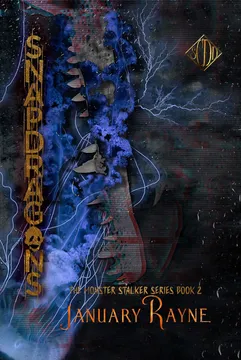


Plot Summary
Prologue
Six months earlier, Mickey Bloom lives chained and starved in a closet, while Tyler controls every movement and threatens her siblings to prevent another escape. When Tyler allows a brief phone call, Mickey’s brother Milo and sister Minnie wait for the family’s code word, Snapdragons.
A delivery interrupts the call. Mickey shouts the signal, smashes a bottle, and stabs Tyler until he falls. She escapes barefoot through the broken glass, and Milo catches her as she collapses outside. Her freedom begins not with rescue alone, but with the moment she chooses to fight back.
The opening makes survival an action rather than an abstract virtue. Mickey’s siblings have offered a route out, but her fear for their safety keeps her silent until the delivery creates a chance she cannot safely wait to repeat. The code word becomes a compact form of trust: a message planted in captivity that still works when her voice has been suppressed. Her violence is not framed as a clean transformation into fearlessness. She leaves injured, exhausted, and dependent on Milo’s arms, but the decisive act is hers. The story begins by separating escape from recovery, a distinction that governs Mickey’s later choices.
Royals Garage Closes In
A year before Mickey’s escape, Rhett Royals is watching his mechanic shop fail under mounting debt. He has sold treasured possessions, borrowed against his home, and dismissed most of his crew, leaving only his loyal friend Fitz. When a representative from Shallow Cove Pharmaceuticals offers Rhett one hundred thousand dollars to join a risky life extension trial, Rhett refuses and points a gun at him.
The representative’s bodyguard Allen attacks from behind and injects Rhett with a drug. Rhett loses consciousness on the garage floor, leaving his failing business and ordinary life behind without agreeing to the experiment that will remake him.
Rhett’s vulnerability is economic before it is supernatural. The failing garage is not merely a backdrop; it is the identity he has built through labor, friendship, and a hope of leaving something to children he does not have. The pharmaceutical recruiter exploits the same quality that makes Rhett proud, his refusal to be foolish, by forcibly removing his ability to choose. His later monstrosity therefore begins with a human institution disguising predation as aid. This first turning point establishes a pattern the novel will repeatedly test: when protection is offered without consent, it can become another form of captivity.
The Patient Becomes Predator
Rhett wakes in confinement as the scientists alter him with several kinds of paranormal DNA. His body develops stone skin, crocodile traits, a tail, wings, a ghost form, and electrically charged jellyfish anatomy. The staff consider his ability to shift among forms a failed result, and a guard named Franklin tries to assault him during a storm.
Rhett’s body resists the tranquilizer, while his saliva can immobilize Franklin. He lets the guard live, breaks through the cell wall by becoming a ghost, and escapes into the night. During the transformation, he sees the image of a dark haired, blue eyed woman and feels compelled to find her.
Rhett’s escape reverses the laboratory’s logic of classification. The researchers call him a failure because he cannot be reduced to a single controllable function, yet the very multiplicity they reject gives him the means to leave. His new powers are not presented as simple gifts: they arrive through pain, invasive testing, and the erosion of his sense of humanity. The image of Mickey introduces desire as a force that predates understanding. Rhett has no language for the bond, only an urgent impression that another person matters. That instinct will offer connection, but it also foreshadows how easily his idea of devotion can become possession.
Mickey Claims the Ruin
After escaping Tyler, Mickey moves with Milo and Minnie to Shallow Cove, where she begins rebuilding her strength. She chooses a neglected house by a lake, despite her siblings’ worries about its damaged roof, broken windows, and unsafe floors. The repairs give her a task she can control, and the view offers a kind of solitude she can choose rather than endure.
In the overgrown yard, Mickey finds a towering gargoyle statue and feels unexpectedly safe beside it. Milo agrees to install a strong security system, using part of the siblings’ inheritance. When the family leaves, Mickey touches the statue and speaks to it as if asking for the protection she has not yet learned to trust in people.
The house externalizes the work of recovery without making renovation a cure. Mickey chooses a place that is still damaged because she wants to participate in its repair, not because she mistakes hardship for virtue. Her insistence on living alone is also psychologically complex: independence helps restore agency, while isolation can repeat the conditions that made her vulnerable. The gargoyle gives her a safer object of attachment, one she believes cannot reach back and control her. That belief matters because the statue will become the story’s central ambiguity: a source of comfort that is also watching, desiring, and acting without her knowledge.
A Ghost Learns Her Name
Rhett has spent months learning to control his altered forms before following Mickey’s scent to the lake beside her new home. He recognizes her as the woman from his vision and begins watching her, first from the water and then as an invisible presence in the house. Mickey sleepwalks to the lake and feels an unseen touch calm her panic and awaken desire, though she remembers none of it afterward.
Rhett also slips into her shower and leaves a message in the condensation. At the diner where Mickey works, he senses her fear around a former schoolmate, Stephen Rowe, who arrives claiming he wants to reconnect. Mickey cannot place Stephen, but her instincts tell her something is wrong.
The lake and the house make privacy unstable. For Mickey, water is a place where her body briefly feels calm; for Rhett, it is both habitat and a route into her life. His presence gives her relief from trauma while denying her the information needed to decide whether that relief is safe. The novel deliberately entangles comfort and intrusion, so the reader must hold two truths at once: Rhett recognizes her pain and wants to protect her, yet he violates her boundaries. Mickey’s distrust of Stephen shows that her instincts are returning, even while she cannot reliably identify the source of every sensation.
The Chains Come Back
Mickey receives a package containing the chains Tyler used to restrain her. An engraved lock confirms that the object is hers, and the delivery makes her fear that Tyler survived the stabbing and has found her. Milo calls Sheriff Jake, who takes the package for evidence and arranges for the house’s security system to be installed.
Mickey’s panic pulls her back into memories of a previous escape attempt, when Tyler hunted her through the woods and dragged her down. The memory makes clear why she struggles to accept reassurance: Tyler trained her to expect punishment after every act of resistance. Even so, Mickey remains in her new home rather than fleeing it.
The chains work as material evidence and as a trigger that collapses past and present. Mickey does not merely remember Tyler; her body responds as if the captivity is happening again, showing how trauma can persist after the immediate danger ends. The scene also complicates the family’s protective instincts. Milo and Jake take practical steps, but Mickey’s recovery cannot be measured by whether she feels calm or accepts their choices. Staying in the house is a modest but meaningful exercise of agency. Her fear remains real, yet it no longer decides every action for her.
The Gargoyle Strikes Back
Stephen enters Mickey’s home while she is alone and reveals that Tyler paid him to locate her. He tries to choke and overpower her, but Mickey fights back, breaking his nose and reaching for a hidden gun. Before Stephen can stab her, Rhett attacks in his monstrous form. He kills Stephen in the lake, then gives Mickey his blood to heal the knife wound in her back.
As she drifts in and out of consciousness, Mickey recognizes the creature as the presence that has protected her. Sheriff Jake later investigates, while Rhett hides the full truth from the authorities. The attack proves that Tyler’s threat is not a false alarm and that Mickey’s former abuser still has people searching for her.
Mickey’s self defense marks a real change, but the scene refuses the fantasy that strength means she can handle every danger alone. She resists Stephen with skill and determination; Rhett’s intervention is still necessary when the knife reaches her. His rescue is protective and also frighteningly lethal, making him both an answer to danger and a new source of uncertainty. The scene’s blood healing establishes intimacy through bodily exchange, a motif the novel links to paranormal bonds. Yet the wound is not simply erased from the story: Mickey’s survival raises the question of whether a rescue can be loving when its rescuer has already crossed boundaries.
Fitz Finds a Signal
While recovering, Mickey plants snapdragons across her yard and sees a televised appeal from Fitz, who is searching for his missing friend Rhett Royals. The mechanic pictured in the appeal resembles the creature she has encountered, so Mickey calls Fitz and tells him she may know where Rhett is.
Around the same time, Rhett replaces Mickey’s wrecked car with a costly blue SUV, a gift that leaves her wary because generosity has often concealed control. Sheriff Jake checks the vehicle for a tracker and finds none. Mickey now has evidence that Rhett existed as a human before his transformation, but she still does not know what happened to him or whether his presence in her life is safe.
The rescue appeal gives Mickey a way to test her experience against the outside world. Until now, the possibility that Rhett is only a hallucination has allowed her to doubt her own perceptions; Fitz’s search supplies an independent human record of the man behind the monster. The car, by contrast, dramatizes how difficult it is for her to receive care without suspecting a hidden price. Both gestures ask her to interpret evidence, not merely feel grateful. Snapdragons become a counter-symbol to the chains: they represent a living future she is planting herself, even as the past keeps sending reminders that it knows her address.
The Voice Takes Shape
During a powerful storm, Mickey wakes to discover Rhett is physically real, not a voice created by her trauma. He explains that the experiment gave him several paranormal forms and that he has been entering her home and approaching her while she sleepwalked. He also admits he removed her birth control and marked her without her conscious consent.
Mickey is disturbed by the deception and the violation, but distinguishes Rhett’s actions from Tyler’s sustained abuse and chooses to continue their relationship. In the bath, Rhett tells her about the laboratory, and she accepts his nonhuman nature. Their fragile understanding is interrupted when Tyler calls and threatens Milo and Minnie, making the danger immediate again.
This revelation is the story’s sharpest ethical and emotional hinge. Mickey’s affection for Rhett does not erase the fact that he has concealed his identity, entered her home, and interfered with her contraception while she was asleep. The novel frames her forgiveness as a distinction between coercive cruelty and a bond she experiences as protective, but the distinction remains morally fraught because her history can make control feel familiar. Her decision is best understood as a choice made under complicated conditions, not proof that the violations were harmless. Tyler’s threat then tests whether Rhett’s claim to protect her will become a partnership or another form of control.
Minnie Nearly Dies
Milo finds Minnie in their ransacked apartment with five stab wounds and blood everywhere. At the hospital, doctors report that she has lost her pulse and may not survive. Mickey blames herself because Tyler threatened her family, but Rhett refuses to let her take responsibility for Tyler’s violence.
The Void Lorcan appears to collect souls and confirms that Minnie is close to death. Vampire coven leader Alexander offers his blood as the only chance to save her, though the change will make Minnie a vampire and require her to leave with his coven.
Mickey agrees. Alexander feeds Minnie his blood, and the hospital staff are mystified so the family will not remember the supernatural intervention. Minnie survives, but her life is irrevocably changed.
Minnie’s injury turns Mickey’s private trauma into a family crisis and confronts her with a painful limit: protecting herself cannot guarantee that Tyler will leave others alone. Her guilt echoes the logic of abuse, in which victims are made to feel responsible for the harm an aggressor chooses to do. The supernatural rescue offers life at a cost rather than a clean restoration. Minnie survives, but must leave the life she knew, and Milo is deprived of the truth by a spell. The scene therefore treats rescue as a transfer of burdens. Love can preserve a person, but it cannot always return them unchanged.
The Horsemen Claim Tyler
After Minnie’s rescue, the Hell’s Harvesters arrive and explain that Tyler is partly demonic, descended from Azazel, and has been tracking Mickey through the brand he carved into her arm. Because ordinary force cannot reliably defeat him, Mickey asks the Horsemen for a way to end the threat.
They reveal Tyler is already weakened by the Black Plague and provide Conquest’s demon made blade. When Tyler emerges from the woods seeking help, Mickey refuses his renewed manipulation.
She cuts off his genitals, wounds him, and finally beheads him with the blade. Death takes Tyler’s soul to Hell, where he will be punished, while his skull is prepared to feel the happiness Mickey builds in her home. The brand disappears, ending his supernatural means of finding her.
The climax gives Mickey the violence she once used to escape, but changes its conditions. In the prologue, she acts alone with a broken bottle and no certainty she will live; here, she understands the threat, chooses the weapon, and decides what justice should mean. The Horsemen make her victory possible, yet she performs the decisive act herself. Her demand for Tyler’s skull is not a sign that the past has vanished. It is a desire to reverse the old arrangement in which he controlled what she could see and feel. The ending offers agency through grotesque humor and vengeance, while leaving recovery as ongoing work rather than a single final blow.
Epilogue
Two weeks later, Fitz arrives in Shallow Cove and embraces Rhett without hesitation, accepting his transformed body and moving to town so they can reopen a garage together. Rhett and Mickey call the business Snapdragons Garage, turning the word that once summoned rescue into a name for their shared future.
A month later, Mickey is pregnant, Milo lives with her, and Minnie is away with Alexander’s vampire coven. At a gathering with their friends, Rhett and Creed set off fireworks for Mickey. Tyler’s skull sits on the mantel as a vase for her flowers, a grim object repurposed to witness the life he tried to prevent.
The two epilogues convert survival symbols into domestic ones. Snapdragons move from code word to business name, while the ruined garage becomes a place where Rhett can recover a form of work and friendship without returning to his old life unchanged. Fitz’s acceptance answers Rhett’s fear that transformation has made him unrecognizable to everyone who loved him. The family gathering is deliberately imperfect: Minnie is absent, Milo remains close, and Tyler’s skull still occupies the house. The ending does not claim that love removes trauma or repairs every relationship. Instead, it shows Mickey choosing what surrounds her, including the meaning assigned to objects that once carried fear.
Analysis
Snapdragons braids recovery, romance, and horror through the question of who gets to decide what safety means. Mickey’s captivity trained her to read affection as a possible prelude to harm; her later fear of gifts, touch, and even her own sleepwalking is grounded in that history. Renovating the house becomes a concrete practice of agency, but the novel refuses to present independence as a clean cure. Mickey remains vulnerable to intrusive memories and must repeatedly distinguish current danger from remembered danger.
Rhett complicates the romance’s protective fantasy. His loyalty is real, as are his efforts to shield Mickey from Tyler and provide for her. But he also watches her secretly, enters her home, approaches her while she is asleep, and removes her contraception without her conscious consent. The story portrays Mickey’s forgiveness as an emotionally meaningful choice, while the events themselves remain violations. That tension matters: the narrative draws a distinction between Rhett’s desire to protect and Tyler’s deliberate abuse, yet both men at times treat Mickey’s body as something they may claim. Her history makes the distinction emotionally legible without making every act ethically uncomplicated.
The novel’s monsters are therefore less a simple contrast between human evil and supernatural devotion than a test of conduct. Rhett looks inhuman but can offer loyalty and tenderness; Tyler’s familiar human role concealed calculated cruelty. Mickey’s judgment increasingly depends on actions and consequences rather than appearances. Her final confrontation gives her a decisive role in ending the pursuit, transforming the bottle she used to escape into a larger claim over what happens next.
The recurring symbols carry that change forward. Chains embody control, the statue offers ambiguous protection, and snapdragons turn a rescue signal into a cultivated future. Even Tyler’s skull is repurposed, not erased. The ending’s happiness rests on an uneasy but deliberate truth: healing does not require forgetting what happened. It requires gaining enough agency to decide what the past will be allowed to mean.
Review Summary
Snapdragons receives an overall rating of 4.01/5, with readers praising its unhinged monster romance between Mickey, a domestic violence survivor, and Rhett, a DNA-experimented hybrid of gargoyle, crocodile, vampire, jellyfish, and ghost. Many highlight the book's therapeutic handling of trauma alongside its extreme, boundary-pushing content. Fans of the series love its humor, steam, and interconnected universe. Critics note repetitive internal monologues, a rushed ending, and some deeply disturbing content that isn't for everyone.
Characters
Mickey Bloom
A survivor reclaiming choiceMickey is a young woman recovering from severe abuse, and her first priority is to rebuild a life that belongs to her. She is observant, resourceful, and protective of her siblings, though trauma makes ordinary decisions and physical closeness difficult. Her wish to renovate a neglected house reflects a desire to make change tangible and self-directed. Mickey’s resilience is not the absence of fear: she can panic, doubt her perceptions, and still take the next step. She is drawn to forms of safety that let her retain control, and she gradually learns to name what she wants rather than live only in reaction to what someone else may do.
Rhett Royals
A transformed protectorRhett is a mechanic and business owner whose practical pride is rooted in hard work and loyalty to his closest friend. Financial collapse leaves him vulnerable to a pharmaceutical scheme that treats desperate people as useful test subjects. After the experiment, his body and instincts become radically unfamiliar, yet he retains fierce attachment to the people he loves. Rhett’s protective impulse is sincere, but it is entangled with possessiveness and a belief that devotion gives him permission to act. His relationship with Mickey tests whether he can offer care without confusing it with ownership, and whether he can accept the risk of being seen as he is.
Tyler
Mickey’s abusive exTyler begins as the attentive boyfriend Mickey believed she could trust, then reveals a need to dominate her life through threats, confinement, deprivation, and violence. He uses affection as leverage and calls his control care, making it harder for Mickey to trust her own judgment. His fixation on possession extends to Mickey’s family, whom he uses as a means of keeping her compliant. Tyler’s defining trait is not simply cruelty, but the calculated ability to make cruelty sound like a consequence of her behavior. He represents the intimate danger Mickey must learn to identify without blaming herself for having once believed him.
Milo Bloom
Mickey’s steadfast brotherMilo is Mickey’s protective brother and one of the people who helps her escape and rebuild her life. He offers practical support, from finding housing to arranging security, and tries to balance concern with respect for her independence. His protectiveness sometimes makes him impatient to solve problems for Mickey, but it grows from fear of losing her rather than a wish to control her. Milo also carries guilt about not having been able to free her sooner. His loyalty gives Mickey a reliable family bond, even as her recovery requires her to set limits on how much she depends on him.
Minnie Bloom
Mickey’s loyal sisterMinnie is Mickey’s sister and part of the close family unit she and Milo protect. She is affectionate, outspoken, and quick to support Mickey’s choices, even when she worries that the old house is unsafe. Her humor helps soften tense moments without denying their seriousness. Minnie and Milo share the work of keeping Mickey connected to family after her escape, while trying not to make her feel indebted to them. Minnie’s warmth is a steady counterweight to Mickey’s fear, and her relationship with her siblings shows that care can be consistent without being conditional.
Fitz
Rhett’s loyal best friendFitz has known Rhett since childhood and remains loyal through the collapse of the garage they built their adult lives around. He is optimistic without being naïve, repeatedly offering partnership when Rhett is ready to give up. His search for Rhett shows a friendship expressed through sustained action rather than sentiment alone. Fitz is emotionally open and persistent, qualities that make him an important reminder of Rhett’s former human life. He sees the person beneath visible change and values the continued bond more than a familiar appearance.
Stephen Rowe
A stalker in disguiseStephen presents himself to Mickey as a former schoolmate who wants to reconnect, but his polished friendliness unsettles her. He uses the language of familiarity to approach her without explaining how he found her or what he wants. His role illustrates why Mickey’s distrust is not irrational, even when trauma makes it difficult for her to separate present danger from memory. Stephen’s threat emerges through the gap between his gentle public manner and his actual intentions.
Sheriff Jake
A careful local allyJake is Shallow Cove’s sheriff and a friend to Mickey’s family. He investigates the threats against Mickey, takes her safety seriously, and tries to offer help without forcing her into decisions. His calm manner gives her a rare experience of authority that does not demand obedience in exchange for protection. Jake is practical and protective, though he cannot solve the supernatural dangers that exceed ordinary law enforcement.
Demi
A generous diner ownerDemi owns the diner where Mickey and Milo work. She treats Mickey with warmth and gives her room to rebuild a routine without demanding explanations. Her pregnancy and relationship with Creed place her within the town’s unusual paranormal community, but she remains grounded and attentive to ordinary needs. Demi’s kindness is active: she offers work, checks on Mickey, and gathers friends when the family faces crisis.
Creed
Demi’s formidable partnerCreed is Demi’s intimidating, nonhuman partner, fiercely devoted to her and their son. His bluntness and readiness for violence can make him seem hostile, but he is also attentive to his family and protective of those they accept. He shares a complicated history with the same kind of experimentation that changed Rhett. Creed’s presence establishes that Mickey’s new town contains people whose monstrous appearance does not neatly predict their loyalties.
Storm
Creed and Demi’s wild sonStorm is Creed and Demi’s young son, energetic, fanged, and still learning to control his ability to fly. He is affectionate on his own terms and often behaves more like a small predator than a well-mannered child. His family’s patient supervision gives the story a glimpse of how unusual traits can be treated as part of a child’s growth rather than as a reason for rejection.
Caden
A diner worker with secretsCaden works at Demi’s diner and offers Mickey a steady, low-pressure presence. His private connection to the town’s supernatural community becomes relevant when unusual storms and a protective spell are explained. He is observant and helpful, but not eager to make Mickey’s recovery the subject of public attention.
Holt
A quiet, generous cookHolt is a large, gentle cook at the diner who communicates largely through gestures and sign. He notices Mickey’s distress and brings her coffee prepared the way she likes it, offering practical kindness without asking her to explain herself. His quiet attention contrasts with the intrusive curiosity that often overwhelms her.
Lorcan
A soul collecting VoidLorcan is a Void who works for Death, appearing when a soul nears its end. He is irreverent, theatrical, and far more conversational than his role might suggest. His visits bring supernatural information into the story, but his jokes can frustrate people facing immediate danger. Lorcan treats death as a profession, not a personal vendetta, and his presence marks the boundary between mortal crisis and the afterlife.
Death
A Horseman weighing soulsDeath is one of the four Horsemen and the authority who determines where collected souls go. He is more approachable and sentimental than his title suggests, though his knowledge of the dead gives him immense power. He speaks plainly about the supernatural rules governing Mickey’s danger and takes her request for justice seriously.
Abaddon
A Horseman leading the groupAbaddon helps coordinate the Horsemen and tries to keep their volatile personalities focused on the task at hand. He is composed and authoritative, serving as a counterweight to their banter and competitive impulses. His presence suggests that even supernatural enforcement has its own hierarchy and procedures.
Famine
A brutal HorsemanFamine is one of the Horsemen, sharp tongued and gleefully aggressive. He approaches danger with a dark sense of humor and little patience for sentimentality. His appetite for conflict makes him useful in a confrontation, though his presence also reminds Mickey that supernatural allies can be frightening in their own right.
War
A battle ready HorsemanWar is one of the Horsemen, direct and comfortable with force. He treats threats as problems to be met decisively, with little interest in pretending that violence can always be avoided. His blunt manner contrasts with Mickey’s careful calculations about risk and consequence.
Conquest
A Horseman bearing a bladeConquest is one of the Horsemen and carries a weapon made for confronting demonic threats. He is controlled, dangerous, and willing to lend Mickey the means to act when ordinary strength is not enough. His role connects supernatural law to the physical choices Mickey must make.
Alexander Monreaux
A vampire coven leaderAlexander leads a vampire coven and understands the risks involved when one of his kind shares blood with a human. He is careful to explain that saving someone may permanently alter their life, rather than presenting transformation as an easy remedy. His responsibility extends to his mate and the people his coven might take in.
Maven
Alexander’s compassionate mateMaven is Alexander’s mate and stands beside him when the coven is asked to help. She is compassionate and open to welcoming another person into their family, while recognizing that the choice carries lasting consequences. Her warmth helps make the vampire world feel like a community rather than merely a source of danger.
Nicolas
A respectful mail carrierNicolas is Mickey’s mail carrier, who asks her out and accepts her refusal without pressure. When she offers a knuckle tap instead of a handshake, he follows her boundary easily. The brief encounter gives Mickey a small, concrete experience of setting limits and being respected.
Allen
The trial’s violent guardAllen is the bodyguard who helps the pharmaceutical recruiter overpower Rhett. His physical aggression establishes the trial’s coercive nature before Rhett understands what is happening. He represents the human force that makes the experiment possible.
Franklin
A predatory laboratory guardFranklin guards Rhett during his captivity and uses the laboratory’s power imbalance to threaten and abuse him. His behavior exposes how the facility treats test subjects as bodies to use rather than people to protect. Rhett’s encounter with him also reveals the first reach of Rhett’s developing abilities.
Plot Devices
The Snapdragons Code
A signal for rescueMilo and Minnie establish Snapdragons as a code word Mickey can use if she needs them to come get her. Tyler’s control of the phone keeps her from using it for months, but she finally shouts it during the moment she attacks him and escapes. The word connects her survival to the siblings who keep believing she can be reached. Later, Mickey plants the flowers around her home, turning the emergency signal into a chosen symbol of renewal and eventually a shared business name.
The DNA Trial
A human body remadeShallow Cove Pharmaceuticals disguises an experimental transformation as a paid clinical trial for people in financial trouble. Rhett is drugged and forcibly altered with several paranormal kinds of DNA, giving him multiple forms and abilities. The laboratory considers his ability to shift among them a failed outcome, but it becomes the reason he can escape and survive in the outside world. The trial binds Rhett’s personal story to the supernatural world of Shallow Cove and establishes that scientific exploitation, not fate alone, creates the novel’s monster.
The Gargoyle Statue
A watcher mistaken for stoneMickey finds a gargoyle statue in the yard of the house she chooses for her fresh start and feels protected by its silent presence. The statue is Rhett in a form that becomes stone in daylight, allowing him to remain near her while she believes she is alone. It functions as comfort, concealment, and a physical marker of the gap between Mickey’s perception and Rhett’s actions. Its recurring appearances make the house feel both defended and watched.
The Mark on Mickey
A supernatural trailTyler’s carved brand on Mickey’s arm is more than a lasting injury. Its demonic origin lets Tyler locate her, explaining how he can continue threatening her after she has moved away and changed her life. The mark gives the Horsemen a way to identify the supernatural nature of the pursuit, and its removal signals that Tyler’s claim can finally no longer reach her. It turns the language of possession into a literal mechanism that must be broken.
The Horsemen’s Blade
A weapon against demonsConquest’s demon made blade gives Mickey a means to kill Tyler despite his demonic ancestry and unusual durability. The Horsemen explain the supernatural limits of ordinary violence, then provide the weapon when Mickey asks to take part in ending the threat herself. It changes the climax from a rescue performed entirely by others into an act Mickey carries out with her own hands. Death then takes Tyler’s soul, while his skull becomes a reminder of the life Mickey chooses to build.
Monster Stalker Series

Download PDF
Download EPUB
.epub digital book format is ideal for reading ebooks on phones, tablets, and e-readers.








