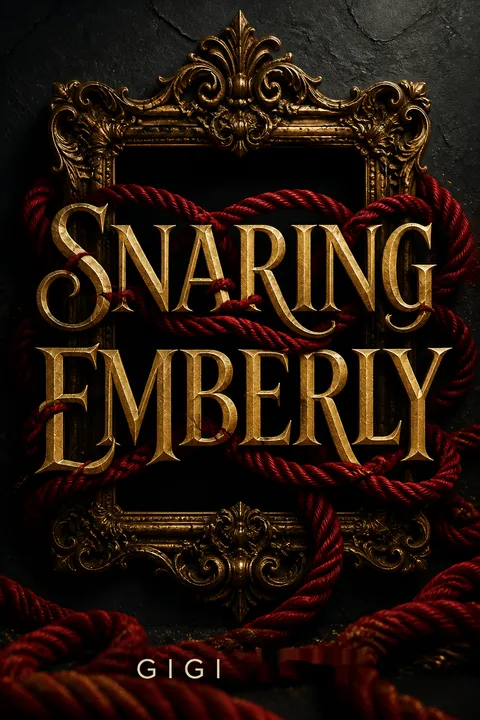


Plot Summary
Death Row, Open Gates
After nearly five years imprisoned for a murder he did not commit, Roman Montesano leaves death row determined to rebuild the family empire and punish the men who dismantled it.
His father died, his brothers have struggled to hold the organization together, and their trusted adviser Vincent helped transfer their businesses to crime boss Frederic Capello. Roman tests Vincent's story on the drive from prison, then takes him to a secluded cabin, where his brothers help expose the forgery and burn him alive.
Capello's remaining assets are still tied up in probate, so Roman identifies the missing heir, Emberly Kay, as the key to reclaiming them. His brother Benito installs surveillance in her apartment and plants nightclub invitations to draw her into Roman's reach.
Roman's release is not a clean return to ordinary life. He leaves prison with the habits of a commander and the instincts of a man who expects every welcome to conceal a threat. Burning Vincent offers a private answer to public injustice, but it also shows that Roman has learned to treat violence as a form of certainty. Emberly enters his plan first as a legal obstacle, not a person. That division between instrumental thinking and genuine attachment will shape the central conflict: Roman can identify betrayal in others while failing to see how his own strategy reproduces it.
Five Paintings, One Trap
Emberly is an artist trying to keep up with rent, materials, and debts when gallery owner Gerard Lafayette sells five of her paintings for almost nothing, then invokes hidden fees that leave her owing him money.
When she threatens to expose his practices, he reports her to the police and claims she stole an antique spoon. Her abusive ex, Detective Jim Callahan, uses the complaint to locate her and threatens to arrest her, then exploit her in custody.
At the Phoenix nightclub, Emberly spots Roman and his brothers, but Jim grabs her before she can leave. Desperate to make him back off, she kisses the nearest imposing man and discovers she has chosen the newly released mafia boss himself. Roman's presence frightens Jim enough to loosen his grip.
The first meeting is built from Emberly's constrained choices. She has already been financially cheated, legally targeted, and found by a man who once controlled her through abuse. Her kiss is not a conventional romantic overture. It is an improvised defense, an attempt to borrow power from the most dangerous person in reach. Roman sees a tactical opening where Emberly sees a way out. Their attraction begins inside that mismatch, making the scene both charged and ethically uneasy: desire is real, but neither character is entering it with equal knowledge or freedom.
One Kiss, No Exit
Roman tells Emberly the police are waiting at the club's exits and offers to help her evade them in exchange for another kiss. He carries her through a guarded back route and into his limousine, where their physical intimacy deepens as he keeps her distracted from their destination.
Rather than taking her home, he brings her to the Montesano estate and carries her into the tower bedroom. Emberly, still shaken by Jim and attracted to Roman, accepts the encounter as a one-night escape from danger.
Roman, however, intends to use her inheritance to recover his family's stolen property and has already imagined killing her once she signs the papers. When she falls asleep, he leaves her in the room and locks the door, turning a night she believed she chose into the beginning of captivity.
This section establishes the novel's sharpest conflict between erotic agency and coercive control. Emberly makes choices, but she makes them with deliberately incomplete information: Roman conceals both his destination and his motive. He can recognize consent as a principle while still arranging circumstances to reduce her alternatives. The locked room converts that contradiction into architecture. It also makes Emberly's earlier history essential rather than incidental. Confinement is not simply a plot obstacle for her; it activates a learned survival response, so Roman's supposedly protective home immediately resembles a threat.
Glass Against the Balcony
Emberly wakes alone, finds the tower door locked, and panics at the prospect of being trapped again. She smashes a balcony window with a lamp, wraps herself in torn bedding, and climbs onto the railing with a shard of glass in her hand. Roman reaches her before she jumps, using the police outside the estate to persuade her that leaving would put her back in Jim's reach.
After Benito sedates her, Roman handles the officers at the gates and later promises a false identity and money in exchange for a portrait. He also converts Cesare's BDSM room into an art studio for her. The studio, supplies, and promise of professional work give Emberly a reason to stay, while Roman's surveillance and guards quietly keep her contained.
The balcony scene makes Emberly's trauma visible as both vulnerability and action. Her fear narrows her choices, yet she still improvises a weapon, tests an exit, and refuses to accept Roman's account without evidence. Roman responds with care and manipulation at once: he talks her down, then uses her fear of Jim to preserve his control. The art studio is therefore an ambiguous gift. It genuinely restores access to work that poverty and abuse had interrupted, but it also keeps her occupied inside the estate. The story asks whether care remains care when the recipient cannot freely refuse it.
Blood on the Easel
As Emberly begins painting Roman, his guard Dominic enters the studio and claims to know the identity of her absent father. When she refuses his sexual advances, he chokes her and reveals that someone named Sam wants her dead.
Roman hears the attack and beats Dominic nearly to death before carrying Emberly to safety. Rather than explain that Samson Capello ordered the hit, Roman tells her the assassin must be connected to Jim or the police, exploiting her fear of her ex.
He later interrogates Dominic, learns that Samson offered money for the murder, and executes Dominic in front of the household. Emberly watches the killing from cover. The display confirms Roman's capacity for violence, while his defense of her makes her more willing to trust him.
Roman's rescue is emotionally persuasive precisely because it is real: Dominic is killing Emberly, and Roman stops him. But Roman then controls the meaning of the rescue by redirecting blame toward Jim. Protection becomes a source of authority over what Emberly believes. The public execution further binds safety to Roman's violence. For Emberly, the spectacle can read as proof that he will punish anyone who hurts her; for Roman's household, it is a warning about disloyalty. The same act serves intimacy and governance, revealing how thoroughly he merges private attachment with the logic of a criminal organization.
Bullets at the Homecoming
Roman invites Emberly to his homecoming celebration, where she meets art dealer Ernest Lubelli and begins to imagine a future for her paintings. During Roman's speech, an assassin fires into his chest, but a concealed protective shirt keeps him alive. In the confusion, a young man disguised as a waiter leads Emberly toward the service exit, then reveals his connection to Jim and tries to drag her away.
She fights back until Roman reaches the courtyard and shoots her attacker. The shooting exposes a wider threat than Jim alone: Roman's enemies are willing to strike at his home and use Emberly as leverage. He increases security, while she begins to understand that being near him offers protection and danger in equal measure.
The attack changes the balance between the lovers. Until now, Roman has controlled the setting and presented himself as the answer to Emberly's danger. The shooting proves that his protection has limits and that his world brings threats directly to her. Emberly's resistance in the courtyard matters: she does not simply wait to be rescued, but fights the man pulling her toward a van. Roman's return completes the rescue, yet her growing attachment is now tied to a frightening reality. The scene makes security a relational question: she is safest with Roman, but his enemies target her because she is with him.
Art Becomes a Deed
At the MoCa gallery, Roman arranges a staged auction that makes Emberly believe her work has found a real market. She receives a fixed payment for one painting, but the contract she signs also transfers ownership of the Montesanos' stolen casino to Roman. Her success feels genuine, and Roman reinforces it by bringing Lafayette, the man who cheated her, to her in the limousine so she can strike back.
Meanwhile, Roman's cousin Leroi tracks down Samson Capello, and Roman's lawyers use Emberly's inherited status to reclaim the casino, hotels, and other assets. Roman and Emberly grow closer as he buys her art and gifts, while she accepts his claim that the money and attention reflect her talent rather than a carefully designed scheme.
Art becomes the novel's most consequential double-edged symbol. For Emberly, painting represents a livelihood, recognition, and a self she has repeatedly been told is worthless. For Roman, the artwork is a legal instrument that can disguise a transfer of power. The staged auction does not merely exploit her financially; it appropriates the very evidence she needs to trust her own competence. His revenge against Lafayette makes the deception harder to recognize because it offers Emberly a real emotional correction. The scene shows how manipulation can feel like rescue when it satisfies a genuine need, and why material generosity cannot substitute for informed consent.
War, Rings, and Ruined Trust
Roman's recovery of the family empire sparks conflict with Tommy Galliano and the Moirai, a contract-killer organization hired to murder the Montesano brothers. Roman and Cesare capture operatives, negotiate a temporary exchange, and reclaim the casino, loan company, real estate, stocks, and safety-deposit holdings.
During this rise, Roman turns intimacy into another form of leverage. At the casino, he tricks an overwhelmed Emberly into signing a marriage certificate disguised among hotel forms.
At the Dolce Vita boutique, he secretly punctures condoms because he wants her pregnant and believes a child will keep her from leaving. He kills Jim in a staged overdose, but hides that fact from Emberly. She learns of Jim's death at his funeral, where his father accuses her of inheriting a fortune.
Roman's emotional transformation does not initially produce ethical change. He can love Emberly more deeply while still treating her body, legal status, and future as things he can arrange. The concealed marriage and sabotaged contraception are not incidental excesses; they expose the limit of his self-understanding. He regards permanence as proof of devotion, even when it is obtained by removing her ability to choose. Meanwhile, his criminal victories restore the institutions that support his identity as head of the family. The tension is not simply between love and crime, but between love as mutual recognition and love as possession secured by power.
The Daughter in the Will
At Jim's funeral, his father claims Emberly has inherited millions from her biological father. She dismisses him as a confused drunk, but the remark unsettles her enough to contact Martina Mancini, a lawyer from the Di Marco firm.
Martina reveals that Emberly is Frederic Capello's daughter and that the law firm has been trying to reach her. Emberly sees how her mother's lifelong fear of being found may have been grounded in a real criminal past.
She also discovers that Roman had arranged the inheritance paperwork and used her signatures to transfer the assets. When she confronts him, he reassures her of his love instead of giving a full account. With Martina's warning that Roman may kill her to protect the transfers, Emberly leaves for New Jersey.
The revelation reorganizes Emberly's history. Her mother's apparent paranoia becomes a survival strategy shaped by the danger of Capello's world, while Emberly's unknown parentage becomes the legal mechanism through which Roman exploited her. The inheritance is not a simple windfall: it is a record of violence, secrecy, and competing claims over her identity. Roman's reassuring response fails because it answers the emotional question while evading the factual one. Emberly's departure is a decisive act of self-preservation. She refuses to let affection, however sincere it may feel, replace the information and autonomy she needs to judge her own life.
Six Months of Silence
Emberly settles under a new name in Carmel, New Jersey, takes an art-teaching job, and lives in an apartment arranged through people connected to Tommy. She is pregnant, but tells Roman the child is Jim's when he finds her six months later.
Roman admits that the art auctions were staged and that he bought her paintings, yet Emberly still refuses to resume their relationship. He returns to New Alderney and has Lubelli promote her portfolio online, hoping to restore the confidence he damaged.
Emberly's grief has left her unable to paint, and Roman watches through hidden cameras as she finally enters her studio, then breaks down and destroys its supplies. He decides that remorse from a distance is no longer enough and goes back to her apartment.
The separation demonstrates that escape from a controlling relationship does not automatically restore the self that relationship diminished. Emberly has a job, housing, and practical independence, yet the deception has severed her from painting, the activity through which she once understood herself. Roman's surveillance repeats the very structure of control he claims to regret, even as he uses it to monitor her distress. His efforts to promote her art may help, but they cannot undo the fact that he turned her creative ambition into bait. The section distinguishes provision from repair: he can arrange opportunities, but only Emberly can decide whether to reclaim them.
Soup, Crib, Confession
Roman returns to Emberly's apartment with a crib and makes her tea and soup, revealing that he arranged her job, housing, groceries, and art supplies while she was away. He says he wants to care for her and the baby, but Emberly maintains that the child is not his. As they talk, Roman admits that the casino check-in made them legally married and that he sabotaged condoms to cause her pregnancy.
Emberly throws hot soup at him and orders him out, recognizing that his tenderness has again concealed control. Before the confrontation can settle, Tommy Galliano arrives. He reveals that he also arranged Emberly's comfortable life in New Jersey, then grabs her and takes her from the apartment, intending to use her against Roman.
Domestic care is the setting in which Roman's strategy finally becomes impossible to mistake. The crib, meals, and housing could signify tenderness, but their hidden origins repeat his earlier pattern of making decisions for Emberly and presenting them as gifts. His confession gives her the truth, yet disclosure does not undo the violations: he has already changed her legal status and reproductive future without permission. Her refusal is therefore not a rejection of love as such; it is a boundary against a relationship that has repeatedly substituted his intentions for her consent. Tommy's arrival immediately tests whether she can protect that boundary under renewed threat.
The Slaughterhouse Bargain
Tommy takes Emberly to the Capello mansion, the place where her relatives were massacred, and plans to make Roman trade his life for hers. He threatens to seize the unborn child and use the boy to claim power over New Alderney. Emberly escapes her locked bedroom by tearing down its heavy curtains, tying them into ropes, and climbing over the balcony.
Roman reaches a slaughterhouse wearing explosives, prepared to die rather than leave her with Tommy. He shoots Galliano and his armed men, then learns from his forces that Emberly is still at the mansion. When she hangs from a failing rope during the rescue, Roman rushes beneath her and catches her as she lets go. He then kneels and admits the full scale of his manipulation.
The climax brings the novel's recurring image of confinement to its most dangerous form. Emberly does not wait for Roman to solve the crisis: she builds an escape route from the room's curtains, drawing on earlier survival attempts while acting for the child she carries. Roman, meanwhile, finally faces a choice in which the family empire cannot be his first priority. His willingness to risk death does not erase the coercion that preceded it, but it demonstrates a change in what he is willing to sacrifice. Catching Emberly becomes a literal counterimage to his earlier efforts to keep her by binding her in place.
Letting Go, Coming Home
After rescuing Emberly, Roman apologizes without demanding that his sacrifice earn forgiveness. He offers her money, an independent art business, and the choice to leave; Emberly confirms that the baby is his but says she cannot yet forgive how he removed her choices.
She returns to the Montesano estate for safety, not as a declaration that the marriage is repaired. Roman agrees to let her set the pace and offers the pool house as her own space.
In the months that follow, they attend couples therapy, talk honestly about their histories, and rebuild their connection through daily acts of care rather than forged contracts or hidden threats. Emberly begins painting again, while Roman learns to support her work without treating it as a means of owning her.
The resolution resists the easy arithmetic of romantic redemption. Roman's willingness to die for Emberly matters, but it does not cancel the legal fraud, reproductive coercion, or emotional manipulation he committed. Her return is conditional and practical: she needs protection, and she retains the right to withhold forgiveness. This distinction gives the reconciliation a more credible foundation than a sudden absolution would. Therapy and conversation make change visible as repeated behavior, not a single grand gesture. The story's central emotional movement is therefore not from captivity straight into love, but from imposed dependence toward a relationship in which Emberly can choose proximity without surrendering judgment.
Epilogue
Three months later, Emberly is overdue and still living on the Montesano estate, where Roman supports her through the final weeks of pregnancy. She accepts his renewed intimacy, goes into labor, and gives birth to their son, Paulo. Two days later, Roman brings her and the baby home to a household that welcomes her as family.
This time, he kneels with a ring and asks for her commitment openly. Emberly says yes, choosing the marriage she was once tricked into rather than being trapped by it. Her art career is recovering, and she helps lead a growing network of women's shelters funded by the couple.
The two-part ending deliberately separates biological family from chosen commitment. Paulo's birth gives Roman the heir he once tried to secure through sabotage, but the child's arrival does not itself repair the relationship. What changes the meaning of marriage is Emberly's final, informed choice. The ring that once represented a concealed legal maneuver becomes an explicit invitation she can accept or refuse. Her renewed art practice and work with women's shelters also prevent the ending from reducing her future to wifehood or motherhood. She returns to Roman while retaining a public vocation and a role in helping others escape coercive conditions. The reconciliation remains a fantasy shaped by dark-romance conventions, but its final gesture recognizes that consent must be restored, not presumed.
Analysis
The novel builds its dark romance around a contradiction it does not resolve by pretending that love makes coercion harmless. Roman's care is often concrete: he protects Emberly from Jim, provides space for her art, and later risks his life to reach her. Yet he also engineers their meeting, lies about threats, falsifies the meaning of contracts, arranges a marriage without her knowledge, and sabotages contraception. The same man can be both protector and source of danger, which is why Emberly's distrust is not a failure of romance but a rational response to its conditions.
Emberly's art gives this conflict a material form. Painting is her route toward independence and public recognition, but Roman turns her work into a vehicle for reclaiming his family's property. Once she discovers the fraud, the damage reaches beyond money: she loses confidence in the very practice that had helped her survive. Her eventual return to painting matters because it cannot be bestowed by Roman as a gift. It has to become hers again.
The book also links control across institutions. Jim weaponizes police authority, Lafayette exploits contract language, Roman manipulates probate and intimate trust, and Tommy treats inheritance as permission to claim people. These men differ in method, but each assumes that power entitles him to manage Emberly's choices. Her resistance therefore takes many forms: confronting Jim, building an escape from curtains, leaving Roman, and insisting that remorse does not erase consequences.
The ending's most persuasive movement is not Roman's rescue or his willingness to die. It is the slower shift from possession toward accountability. Emberly returns for safety without promising forgiveness, and their later commitment follows therapy, sustained honesty, and her renewed artistic life. The final marriage proposal revises the earlier forced one: commitment becomes meaningful only when she can answer freely. The story remains deliberately heightened and morally provocative, but its emotional argument is clearest when it recognizes that protection without agency is another kind of confinement.
Review Summary
Snaring Emberly received mixed reviews, with ratings ranging from 1 to 5 stars. Many readers found the book captivating, praising its complex characters and intense plot. However, some criticized the extensive gaslighting and manipulation by the male protagonist, Roman. The lengthy narrative and repetitive elements were points of contention. Readers appreciated Emberly's strength and the eventual grovel, but some felt the resolution was rushed. The book's dark themes and spicy content were highlighted, with opinions divided on whether they enhanced or detracted from the story.
Characters
Emberly Kay
Artist who fights backEmberly is a talented painter whose financial precarity and history of abuse have trained her to question both generosity and danger. Her quick temper can turn into destructive action, but it also gives her a refusal that earlier partners tried to erode. She is resourceful under pressure, whether she is confronting a fraudulent gallery owner or improvising an escape from a locked room. Art is not merely a career goal for her; it is a way to recover an identity that controlling people repeatedly diminish. Her central need is not rescue alone, but the ability to make choices without having to surrender safety, work, or self-respect.
Roman Montesano
Released mafia commanderRoman returns from prison with a fierce loyalty to his brothers and a plan to reclaim the businesses stolen from his family. Years of confinement and a wrongful conviction have sharpened his suspicion and his capacity for calculated violence. He is observant, disciplined, and capable of tenderness, but he often confuses protection with control and treats other people's choices as obstacles to manage. Emberly challenges that logic because she sees through his performances and refuses to become an obedient beneficiary. His deepest conflict lies between the family duty that shaped him and the reciprocal love he wants, but initially does not know how to practice.
Benito Montesano
Cautious family strategistRoman's measured brother manages finances and legal strategy while trying to keep the family from making preventable mistakes. His caution is not timidity; it comes from bearing responsibility during Roman's imprisonment and watching the empire fracture. Benito frequently identifies the practical consequences Roman and Cesare would rather ignore, especially when emotion threatens to overwhelm a plan. His loyalty is steady, but he also wants a defined share of the future the brothers are rebuilding.
Cesare Montesano
Volatile younger brotherCesare is Roman's youngest brother, a brutal enforcer whose appetite for chaos sits beside fierce family loyalty. He was still young when the family collapsed and carries grief and anger that often emerge as violence or provocation. Unlike Benito, he rarely disguises his impulses with calculation. His unpredictable humor can make him entertaining and alarming in the same moment, while his bond with Roman keeps him connected to a family structure that has repeatedly failed him.
Gil
Loyal family enforcerGil is Roman's trusted associate, a physically imposing man who stayed loyal during the family's decline. He handles security, carries out Roman's orders, and often serves as a bridge between the brothers and the people around them. His ease with violence is balanced by social confidence and a practical ability to read what others want. Gil's loyalty is personal as well as professional, though his romantic involvement with Annalisa complicates the household's already crowded loyalties.
Annalisa
Emberly's unreliable roommateAnnalisa shares an apartment with Emberly and initially presents herself as a lively friend, though her teasing often humiliates rather than supports. She values status and excitement, and she treats proximity to powerful men as an opportunity. Her self-interest can make her unreliable in a crisis, even as she later becomes entangled in the fallout from Emberly's flight. She serves as a contrast to the steadfast intimacy Emberly seeks.
Jim Callahan
Abusive detective exJim is Emberly's former partner and a police detective who uses professional authority to make his private threats more credible. His public role gives him access to information and the power to manufacture legal pressure. At home, he isolates and abuses Emberly, gradually turning dependence into captivity. His ability to present himself as a respectable officer makes him especially dangerous to someone already taught to doubt her own judgment.
Tommy Galliano
Rival New Jersey crime bossTommy is a rival underworld figure whose polished appearance conceals volatility and cruelty. He sees family ties chiefly through inheritance, territory, and leverage, and he treats other people as pieces to be moved in a larger contest. His rivalry with the Montesanos reaches beyond business into old resentments and personal grievance. He is a threat because his behavior is difficult to predict, not because he lacks a plan.
Frederic Capello
Absent crime patriarchFrederic Capello is a powerful crime boss whose past dealings helped reshape the Montesano family's fortunes. Though largely absent from the present action, the secrets, assets, and conflicts attached to his name propel the characters into danger. He represents the kind of authority that survives its holder through legal documents, loyalists, and inherited grudges.
Vincent
Betraying family adviserVincent served as a trusted adviser to the Montesano family and maintained contact with Roman during his imprisonment. His position gives him access to the family's finances and private history, making his loyalty central to Roman's return.
Leroi
Resourceful Montesano cousinLeroi is Roman's cousin, an effective and discreet ally whose investigations and operations help the family regain leverage. He is more useful as a planner and field operative than as a public face. His competence makes him one of the few people Roman can trust with work beyond the estate.
Sofia
Family's steady caretakerSofia is the longtime housekeeper who helped sustain the Montesano household through years of upheaval. Her cooking and quiet attention provide continuity in a family organized around threat and command. She is valued by the brothers not simply as staff, but as one of the people who kept home functioning when its leaders could not.
Dr. Isabella Cortese
Captive lead chemistIsabella leads the Montesanos' chemistry team and combines scientific intelligence with a strong instinct for survival. Her captivity has not erased her authority or her ability to read a dangerous situation. She is an important reminder that people caught in organized crime have skills, loyalties, and families beyond the business that exploits them.
Nick Terranova
Family's legal tacticianNick is a lawyer with a clear-eyed understanding of how criminal power and civil paperwork intersect. He helps Roman design agreements that can survive scrutiny, while warning him about the legal weaknesses of coercion. His personal history with a corrupt legal system gives him reason to sympathize with the family's pursuit of restitution.
Ernest Lubelli
Influential gallery ownerErnest owns the MoCa gallery and has the standing to open doors for emerging artists. He is receptive to Emberly's work and recognizes qualities that less scrupulous dealers overlook. His role links artistic ambition to the commercial world, where opportunity depends on reputation as well as skill.
Gerard Lafayette
Predatory art dealerLafayette runs a gallery that exploits artists through misleading contracts and hidden fees. His polished manners disguise contempt for people with little money or legal support. He is a concrete example of the financial abuse Emberly faces outside the criminal underworld.
Dominic
Compromised household guardDominic works within the Montesano household and is trusted with access to Emberly. His position makes him a reminder that danger can come from inside a supposedly protected home, where personal loyalty and paid allegiance may diverge.
Martina Mancini
Di Marco associateMartina is a lawyer at the Di Marco firm who contacts Emberly about her legal situation. She represents the formal channel through which Emberly can learn about her inheritance and seek independent guidance.
Officer McMurphy
Prison contactMcMurphy is a corrections officer who maintains a practical arrangement with Roman during his imprisonment. Her position gives her access to him under tightly controlled conditions, blurring the boundaries between official duty and personal involvement.
Rosalind
Dangerous underworld operativeRosalind is connected to the Moirai, a contract-killing organization, and carries herself with a mix of danger and independence. Her involvement with Cesare makes her a volatile presence around the Montesano family.
Plot Devices
Capello's inherited assets
Inheritance drives the plotThe assets taken from the Montesano family are legally attached to Frederic Capello's estate. Emberly's unknown connection to that estate makes her the person Roman needs to persuade, deceive, or control if he wants the businesses returned. The inheritance gives the criminal conflict a legal structure: signatures, probate, ownership transfers, and competing heirs matter alongside guns. It also makes Emberly valuable to people who have never cared about her as a person. The device's force depends on the contrast between what the inheritance means to Roman, restitution for his family, and what it means to Emberly, an identity and past she was never allowed to know.
Art purchase agreements
Contracts conceal the theftRoman uses Emberly's desire to sell her work as the surface for fraudulent transfer agreements. Gallery transactions make signatures seem routine, while altered terms transfer valuable businesses to Roman. This device turns her artistic ambition into both the means of her exploitation and the thing he later tries to restore. The deceit works because the agreements resemble an opportunity she has long needed, and because Roman appears to support her talent. Its emotional impact is therefore greater than a simple forged document: the contracts contaminate her confidence in her own art and in the person praising it.
Surveillance network
Watching masquerades as careRoman's cameras and phone tracking let him monitor Emberly, his estate, and potential enemies. At first, surveillance helps his organization locate her and control the conditions of their meeting. Later, he uses it to protect her from threats and to follow her after she leaves. The same tool can therefore resemble vigilance, possession, or a substitute for honest communication, depending on who controls it and whether the person being watched knows. Its repeated presence makes privacy a central measure of freedom in a story where characters routinely claim that keeping someone safe justifies deciding where they can go.
False legal jeopardy
Police power narrows her choicesJim uses a fraudulent theft accusation and his position as a detective to make Emberly believe she faces arrest, imprisonment, and further abuse. Roman then exploits that credible fear to argue that his guarded estate is safer than the outside world. The charges are not merely background pressure: they help create the circumstances of Emberly's capture and make his offer of protection persuasive. The device also complicates the story's view of law enforcement, since official authority can be used to terrorize rather than protect. It forces Emberly to distinguish real threats from Roman's deliberate misdirection.
Sabotaged contraception
Pregnancy becomes coercive leverageRoman secretly damages condoms because he believes a pregnancy will give Emberly a reason to remain with him. The pregnancy then binds their future to a decision he made without her knowledge, turning a private sexual act into a major breach of bodily autonomy. For much of the story, the child's paternity is obscured by Emberly's claims and Roman's assumptions. The device intensifies the novel's tension between desire and consent: the same intimacy that both characters experience as emotionally meaningful has been secretly altered by Roman's plan to make departure harder.
Morally Black Series


About the Author
Other books by Gigi Styx





Download PDF
Download EPUB
.epub digital book format is ideal for reading ebooks on phones, tablets, and e-readers.








