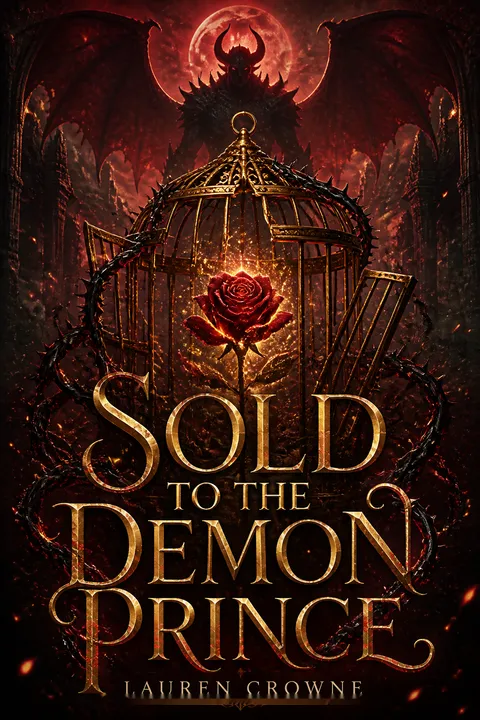


Plot Summary
One Night Off Alliance
Vera, a wingless fairy raised in captivity, persuades her human friend Henry to smuggle her from the dorms to an auction-night party. She wants to glimpse the wealthy patrons who may soon buy her, but the glittering crowd is celebrating the sale of fairies while snorting Dust made from their blood.
When Henry leaves her alone, Vera overhears men degrading an owned fairy and tries to give the woman a break. The fairy fears that leaving her owner will cost her a private room, so she returns to him. The rejection strips away Vera's excitement. She asks Henry to take her home, shaken by the possibility that her own future may look exactly like the life she just witnessed.
Vera's first act of freedom is both a pleasure and an education. The party lets her see a world beyond her controlled routine, yet the people, clothes, and music are bound to the same economy that confines her. Her attempted rescue also exposes a painful limit: she assumes that escape is obviously preferable, while the owned fairy has learned to survive by negotiating small privileges with an abuser. Vera's moral impulse is real, but she cannot yet know what choices captivity leaves available. The scene replaces abstract dread of the auction with a concrete image of what ownership can mean.
The Rose Thorn's Secret
While Henry seeks a career opportunity inside the crowded house, Vera waits alone in its garden. She finds neglected roses and begins tending them, a small act that recalls the flowers she cared for at the dorms. A tall demon approaches, demonstrates a tool projected from his watch, and shares her dislike of the party.
He cuts a rose for her, but a thorn pricks her finger. When he touches the blood, his reaction changes: he recognizes that she is not human and demands to know what she is. Vera flees before Henry can find her. On the drive back, she learns the stranger was Prince Leo, the demon inventor Henry had hoped to meet, and realizes he may attend her auction the following night.
The garden offers a counterpoint to the party's display of wealth: Vera notices living things neglected because they offer no immediate profit. Her care for the roses expresses the modest agency she has cultivated under confinement. Leo's invention initially marks him as another powerful outsider, but his response to her blood makes him a more intimate danger. Their meeting depends on chance, yet it also establishes the story's central contradiction: Vera's body is treated as property because its magic has value, while Leo's curiosity may be scientific, predatory, or both. Neither can read the other's motives yet.
The Auction's Dead Handler
At the auction, chained and inspected by prospective buyers, Vera endures a wolf's invasive examination and refuses to kneel for her handler. Leo arrives with his cousin Rand and human colleague Marcus, but initially refuses to bid. When the handler threatens Vera and strikes her down, Leo returns and snaps the man's neck.
He leaves, then learns the Council plans to punish Vera publicly for the death. To prevent that, he offers several times the highest bid and agrees to compensate the handler's family. The Council accepts, and Vera becomes Leo's purchase. His intervention saves her from immediate punishment, but it also makes her future dependent on the demon who killed a man in front of her.
The auction converts the violence of ownership into procedure: handlers, interviews, records, and bids make cruelty look administratively respectable. Vera's refusal to kneel is a small but consequential defense of selfhood, and it helps provoke the handler's abuse. Leo's violence interrupts the system without dismantling it; he uses wealth and influence to take Vera out of the Council's reach, yet he still acquires her through the same market. His motive remains ambiguous to Vera, which preserves the scene's moral tension. Rescue and possession arrive in the same act.
Freedom With Conditions
After the auction, Henry tells Vera that Leo is rumored to buy fairies who later disappear. At Leo's mansion, she finds two other new arrivals, Lydia and Robinson, but no sign of the many fairies the prince has purchased before. Leo offers them a choice: leave without protection or remain, give blood for his research, and help with fairy hunts.
He claims his goal is synthetic Dust, which could remove the market's demand for fae blood. The three newcomers question his terms, but they have nowhere safe to go. Vera chooses to stay for the chance to help others, and Lydia and Robinson follow. Leo frees them in private, while warning that outsiders must still believe they are enslaved.
The choice is technically voluntary but shaped by the absence of safe alternatives. Vera recognizes this contradiction instead of mistaking Leo's offer for uncomplicated liberation. Her decision to remain grows from solidarity with those still trapped, even as she accepts conditions that limit her own movement and require her blood. Leo's plan is reformist and practical: undermine the economic reason for enslavement before challenging the political structure around it. Yet the secrecy required by that strategy reproduces the appearance of ownership. Freedom begins here as a protected possibility, not a public fact.
Blood Outshines Dust
During the newcomers' first tests in Leo's fighting pit, Vera is paired with Rand, who dismisses her because she has no wings. Her touch produces no effect, so Leo uses a holo-blade to make a small cut. When he tastes her blood, a powerful red aura surrounds him, and he defeats the much larger demon Moskal with startling ease.
The surge is far beyond anything Dust has given him. Leo stops others from testing her and insists on studying her himself. Vera leaves with a bandaged arm and new uncertainty about the power hidden in her body, while Leo's interest shifts from buying an unusual fairy to understanding an unprecedented source of strength.
The test turns Vera's apparent deficiency into the story's most consequential mystery. Her missing wings and low official rating have led others to underestimate her, but blood reveals a capacity that her body has not yet expressed through conventional signs of fae development. Leo's scientific response is also possessive: he recognizes the importance of the discovery and immediately tries to control access to it. Vera's fear is justified, because the experiment demonstrates both her value and the danger of being valued chiefly for what others can extract. Power becomes visible first through another person's body.
Henry's Door Opens
Leo's first blood analysis fails when Vera's sample disrupts the program, so he takes her to Henry's apartment to learn what years of testing may have revealed. Henry claims Vera's readings never changed and that she showed no signs of developing wings, despite Leo's experience of her blood.
Vera urges the two men to work together, but Leo distrusts Henry and cuts the visit short when she mentions the coming hunt. On the drive home, he warns that careless disclosure could expose the free fae to human hunters. Vera apologizes, but she still believes Henry is a decent ally. Leo's suspicion is sharper than hers, though neither can yet explain why Henry recorded her as powerless.
This meeting sets two models of protection against each other. Vera trusts Henry because he has treated her as a person in a system that rarely did; Leo evaluates him through the political risks of information and access. Both positions have evidence behind them, but Vera's personal history makes betrayal difficult to imagine, while Leo's secrecy makes trust difficult to offer. The discrepancy in her records gives suspicion a concrete basis without resolving it. The scene also shows that knowledge is not neutral in this world: a blood report can determine who gets sold, who is overlooked, and who becomes dangerous to expose.
A Book Behind the Desk
At a mansion dinner meant to entertain demons, Vera slips away to Leo's library and is caught hiding behind his desk. Their argument turns into questions about the fairies he has bought and the reason he keeps them out of sight. Leo reveals that they are alive in a secluded colony, not dead in his laboratory, and explains that public knowledge of his work would endanger them.
As Vera's unsuppressed magic intensifies their attraction, Leo asks permission before kissing her. The kiss leaves him glowing and Vera exhausted, but it also changes her understanding of him: he is hiding a refuge, not a graveyard. She wakes with a childhood book he gave her and the sense that his presence feels strangely familiar.
The library makes secrecy tangible: the room contains both Leo's private history and information he withholds for political reasons. The revelation of the colony corrects the rumor that has shaped Vera's fear, but it does not erase the secrecy itself. Leo's choice to ask before kissing her matters because their magical connection can overwhelm ordinary judgment; consent must be made explicit where desire is amplified by power. The scene opens emotional intimacy while leaving the larger imbalance intact. Vera is still dependent on the person who controls her access to safety, and attraction does not resolve that structural fact.
The Hunt Turns Violent
Leo brings Vera on a hunt after buying information from Jax, a wolf who treats her as a bargaining chip. Vera secretly uses her magic on Jax, making him accept a finder’s fee instead of demanding her as payment. At the target hotel, two powerful wild fairies attack rather than submit; Leo shoots them with suppression bullets, and his team captures them alive.
Vera finds a frightened half-fae child hiding in the room and comforts him before Rand takes him to safety. Then wolves burst in. One knocks Vera down and carries her off, while Leo fights the attackers. The hunt ends with the fairies captured, the child separated from his aunties, and Vera badly injured.
The hunt forces Vera to confront the difference between being rescued from one form of captivity and helping impose another. Her intervention with Jax shows growing tactical agency, but she still cannot decide what happens to the wild fairies once the operation begins. The child's fear makes the costs of capture immediate and personal, especially because Vera once entered captivity as a child herself. Leo's methods may be safer than a human hunt, but safety from worse violence does not make forced capture harmless. The attack also demonstrates that the hunters are not the only danger: the information network around them can turn a mission into an ambush.
A Healer's Shared Light
Vera wakes from the attack in pain, with Teddy, an older fae healer, beside her. Teddy uses linking magic to ease Vera's injuries and explains that healing draws on the giver's own strength, so it must be measured. Leo appears defensive when Vera challenges his behavior during the hunt, but he later gives her space and lets her recover in his private suite.
There he shares a childhood book and explains why he allows rumors that he kills the fairies he buys: the false reputation conceals the colony from people who would destroy it. Vera still condemns the delay and the secrecy, but she begins to understand the danger Leo believes he is managing.
Teddy introduces a form of magic based on reciprocal vulnerability rather than extraction. Her healing helps Vera distinguish between power taken by force and power offered with limits, a distinction that will matter later. Leo, meanwhile, reveals that his frightening public image is a political shield, not simply a mask of cruelty. That explanation complicates Vera's judgment without demanding that she excuse his actions during the hunt. Their growing trust is built through small disclosures and practical care, not a sudden reversal of the power imbalance. Leo's choices remain strategic, and Vera insists on measuring them by their human consequences.
The Kiss Becomes Training
Leo trains Vera daily so she can defend herself on future hunts. She discovers that she can summon a brief burst of strength beyond her usual capacity, but it drains her quickly. During one sparring match, she manages to pin Leo; he turns the contest around by kissing her and drawing on the power her magic gives him.
Vera enjoys the kiss until she realizes he treated it as another training tool. She leaves the pit hurt, while Leo is left struggling to understand why their intimacy matters beyond its effect on his strength. His attempt to apologize goes badly, deepening the distance between them even as their attraction becomes harder to deny.
Training gives Vera a kind of bodily knowledge that captivity denied her: she learns what her own power can do, rather than existing only as fuel for another person. But Leo's use of a kiss to gain an advantage repeats the logic of extraction in a more intimate register. Vera's hurt is not a misunderstanding to be dismissed; it reflects the difficulty of distinguishing desire from utility when she is still legally and materially dependent on him. Leo's confusion reveals his tendency to treat measurable outcomes as clearer than emotional meaning. Their conflict makes intimacy accountable to the same questions of agency that govern the larger plot.
Synthetic Dust Ignites
Working through Vera's blood data, Leo isolates a compound unlike anything in his earlier samples and uses it to create a new synthetic Dust. He tests packets of the formula against older prototypes in a sparring match with Rand. The first samples do little, but the final one gives both demons a strong surge of power.
Leo confirms that the successful packet came from the new formula and realizes he has finally made Syn without using fae blood. The breakthrough gives him a product he can show human buyers, but Vera does not yet know what he has achieved. To Leo, the discovery promises a route away from blood harvesting; to Vera, its consequences remain hidden.
The breakthrough converts an individual body's unusual biology into a possible challenge to an entire market. Leo's achievement is materially significant, yet it remains embedded in a system where powerful people control what is tested, produced, and disclosed. The formula's dependence on Vera's distinctive blood also complicates the promise of a bloodless future: her body is the key to ending one form of exploitation, even if the finished product may no longer require her. The secrecy around the result leaves Vera outside a decision that directly concerns her. Scientific success arrives before shared understanding.
Henry Returns At Court
At a dinner for Ambassador Crane, Vera, Lydia, and Robinson must pose as household slaves while the ambassador boasts about exploiting fairies. Vera drinks too quickly and becomes unsteady; Leo keeps her away from Crane, then tells her he had been gone to find a home for the half-fae child. Before she can settle her feelings about that disclosure, Henry appears as Crane's guest.
He says he has missed her and persuades her to show him Leo's laboratory. Henry examines the stored blood and urges Vera to learn what Leo is developing so they can get her out. Leo catches them there and orders Henry to leave. He keeps Vera behind, angry that she brought a human into the lab.
The dinner stages the public lie that makes Leo's private work possible: the three fae must perform contentment while the ambassador openly treats their bodies as assets. Vera's intoxication lowers her guard at the same moment Henry reappears, linking emotional vulnerability to security risk. His familiar concern contrasts sharply with Crane's contempt, which makes his request seem reasonable to her. Leo's anger, however, is rooted in the danger of exposing the colony and the research. The scene leaves Vera caught between two men who claim to protect her, while neither has yet earned complete trust.
The Lab Door Closes
After Henry leaves, Vera defends him and accuses Leo of treating her as a useful specimen. Leo admits that he wants her, not simply her power, and they reconcile in the laboratory before beginning a mutual sexual relationship. The next morning, Vera notices a photograph of a fairy woman tucked into Leo's childhood book and fears she is only one of many women in his life.
Leo instead tells her that her blood enabled Syn, his synthetic Dust, to work without fae blood. He is proud, but Vera worries that once his project succeeds he will have no reason to keep her close. Leo explains that publicizing her freedom could make humans reject Syn and threaten the hidden fairies.
The lab shifts from a place where Vera's body is examined to a place where she confronts Leo about what their relationship means. Their reconciliation does not eliminate the asymmetry, but it gives their intimacy a clearer emotional basis. The photograph then activates Vera's fear that she is interchangeable, while Syn creates a new version of the same fear: she may be valuable only until the research no longer needs her. Leo's political reasoning is plausible, yet it asks her to accept a private freedom with no clear timeline. The scene places romantic commitment beside a practical question neither can solve through desire alone.
Daffodils Before Departure
While Leo travels to demonstrate Syn to diplomats, Vera watches Lydia and Robinson fly and wonders how long she can remain at the mansion without becoming part of a concealed life. Robinson warns her that Leo's future responsibilities may leave her waiting indefinitely, and Vera recognizes how urgently she wants belonging.
Leo returns earlier than expected with daffodils, her favorite flowers, and admits he missed her. Vera tells him she cannot promise to stay as a secret lover who must pretend to be his slave outside the estate. Leo acknowledges that he has no timeline for making their relationship public. He withdraws rather than persuade her to remain, leaving Vera alone with the possibility of departure.
The daffodils recall Vera's earlier understanding of resilience, but here they cannot substitute for a future she can choose openly. Her conflict is not simply whether she loves Leo; she fears that attachment will reproduce captivity through indefinite waiting. Robinson's warning gives language to that concern without dismissing the genuine intimacy between them. Leo's refusal to promise what he cannot deliver respects the limits of his control, but his retreat also leaves Vera bearing the uncertainty. The chapter makes freedom more demanding than escape: Vera wants a life in which love does not require her to disappear from public view.
Blood, Wings, and Truth
Henry reaches Vera in the garden and urges her to escape with him, then reveals that the demon king hired him to steal Leo's research. He suppresses Vera, cuts her arms, and takes blood for his own plans. Leo arrives before Henry can remove her, but Henry uses the stolen blood to fight back and leaves Vera gravely weakened.
Leo defeats him and uses linking magic to heal her. He then reveals that his mother was a fairy and that he inherited the ability to link. Vera understands why he has risked so much to shelter fae. Leo tells her he loves her; she returns the feeling and asks them to pursue their plans together rather than move too slowly.
Henry's betrayal is devastating because it corrupts the history that made Vera trust him: his past kindness was real in her experience, but it does not guarantee his present motives. His language of freedom masks a plan to possess her blood and profit from it, making his offer structurally similar to the system he claims to oppose. Leo's rescue depends on the linking magic Teddy introduced, turning earlier care into an earned capacity to save Vera. His heritage clarifies his commitment, but it does not solve the political danger. Vera's final demand is crucial: love must accelerate action rather than become another reason to wait.
The Kingdom Awaits
The household gathers after the attack, and Vera decides to accompany Leo to confront his father, the demon king, rather than remain behind as his hidden partner. Robinson chooses to join the sanctuary with Teddy, while Lydia and Marcus stay to protect the mansion; Rand is also expected to travel with Leo.
Vera and Leo begin the next stage together, though their plans to meet the king carry obvious risks. In the closing scene, Henry appears before the king with a vial of Vera's blood. The king studies the sample and decides that killing the fairy will make an example of his son. The book ends with the threat still active and the family conflict moving into the open.
The ending offers movement rather than resolution. Vera's choice to travel with Leo answers her fear of being left behind, but it also takes her into the political center of the danger that has shaped their lives. The friends' separate decisions prevent their household from becoming a false picture of unified safety: Lydia, Marcus, Robinson, and Teddy each choose different forms of responsibility. The king's possession of Vera's blood makes the cliffhanger concrete. Her body remains a contested resource, now tied to a dynastic struggle as well as the Dust economy. The closing threat tests whether Leo's private protection can survive public power.
Analysis
The novel builds its conflict around the difference between freedom as a legal status and freedom as a lived condition. Vera is declared free inside Leo's home, but she must wear suppression technology, conceal her status from visitors, and depend on Leo's protection beyond the estate. Her unease is therefore not ingratitude. It is a clear recognition that private kindness cannot by itself undo public power. The story treats romantic attachment as part of this problem: Leo's care is genuine, but his instinct to protect through secrecy and control can reproduce the very imbalance Vera fears.
Dust makes exploitation legible as an economy. The wealthy do not merely possess fae because they hate them; they also profit from their blood, magic, and social status. Leo's Syn project attacks one material incentive, but the book acknowledges that a replacement product cannot instantly dissolve the desires and institutions built around ownership. Its promise is real, yet Vera's blood becomes the ingredient that unlocks it, exposing how reform can rely on a person it intends to liberate. The story's strongest ethical pressure comes from this unresolved contradiction.
Vera's development is not a transformation from helplessness into simple power. She learns to fight and discovers a burst of strength, but her most consequential agency lies in questioning terms, recognizing when intimacy feels transactional, and insisting that change cannot be indefinitely postponed. Her compassion for the captured fairies and the frightened child keeps her from mistaking a safer captor for a just system. Leo, meanwhile, must learn that technical solutions and protective secrecy are not substitutes for shared decision-making. The ending offers commitment, not closure: the king's threat makes private freedom vulnerable to political force, and the protagonists must test whether their alliance can create change in public.
Review Summary
Sold to the Demon Prince receives mixed reviews averaging 3.88/5 stars. Readers praise the unique world-building featuring enslaved fae, demons, and supernatural creatures, as well as the chemistry between protagonists Vera and Leo. Many enjoyed the premise of Leo working to free fae from slavery while developing romance with Vera. However, criticisms include Vera being naive and frustrating, slow pacing, underdeveloped characters, and unclear romantic chemistry. Some found the romance felt rushed or insta-love, while others questioned using slavery as a plot device. The cliffhanger ending divided readers, with some eager for more while others felt unsatisfied.
Characters
Vera
The defiant wingless faeRaised in captivity from childhood, Vera is observant, quick-witted, and unwilling to let her treatment define the limits of her imagination. Tending flowers gives her a small practice of choice in a life where nearly every choice has been controlled. Her courage is not fearlessness: she shakes, doubts herself, and still steps toward people she thinks need help. She wants freedom not only as escape but as a life with dignity and connection. Her curiosity, stubbornness, and emotional openness can lead her into danger, yet they also help her question the bargains others present as inevitable.
Leo Vronsky
The guarded demon inventorLeo is a wealthy demon prince who has withdrawn from court life to build inventions and pursue scientific problems on his own terms. He is blunt, intensely focused, and more comfortable with machines than with people, often treating emotion as something he can postpone until the work is finished. His anger at exploitation coexists with a habit of controlling information and making decisions for others. He is protective, but his protection can resemble possession, especially when fear makes him tighten his grip. Beneath his cultivated distance is a person trying to turn technical skill into political change without surrendering control of the process.
Henry
Vera's human confidantHenry works in a laboratory connected to the systems that monitor and test fae. His friendship with Vera grows through their regular meetings, where he offers conversation and attention she rarely receives from humans. Anxious and ambitious, he is also willing to break rules when he believes the risk is worthwhile. His affection for Vera is entwined with his fascination with her unusual biology, leaving a tension between seeing her as a person and seeing what her blood might make possible. He represents the danger of assuming that kindness, technical knowledge, and good intentions always travel together.
Rand
Leo's irreverent cousinRand is Leo's demon cousin and communications director, responsible for managing outsiders, negotiations, and the social machinery Leo dislikes. He uses flirtation, jokes, and provocation to unsettle people, but his humor also lets him speak frankly to Leo when others are afraid to. He is more comfortable with pleasure and improvisation than his work-focused cousin, though he understands the political performance their plans require. His irreverence can make him seem careless, but he remains closely involved in protecting the household and helping Leo move his inventions into the world.
Marcus
The careful human researcherMarcus is Leo's human colleague, a thoughtful researcher who manages the household's internal operations and records. He is shy around the fae and sometimes struggles to express himself, yet he takes their abilities seriously and approaches their testing with intellectual curiosity. His instinct is to document, analyze, and make procedures more careful, which contrasts with Leo's impatience and Rand's showmanship. Marcus's respect for Lydia grows through their shared work and time in the household. He offers a picture of how a human can participate in this world without treating every fae as an object of study.
Lydia
The gentle yellow faeLydia is a gentle yellow fae who comforts others even when she is frightened herself. She initially doubts her ability to survive outside the dorms, but she learns to develop her defensive magic and gradually gains confidence in her wings. Her sensitivity makes her alert to the emotional temperature of a room, and she often keeps Vera and Robinson from turning fear into conflict with each other. Lydia's growing connection with Marcus gives her a reason to imagine a future beyond survival, while her loyalty to her friends remains central to her choices.
Robinson
The protective green faeRobinson, often called Rob, is a strong green fae whose natural speed and physical confidence make him one of the household's most capable flyers. He is protective of Lydia and Vera, though he can be blunt when he thinks one of them is overlooking a risk. His warnings about Vera's attachment to Leo come from concern about the unequal power between them, not simple cynicism. As he grows more comfortable using his abilities, he also begins to imagine a life beyond the estate. His friendship with Vera gives her a place to test hard truths without losing the bond between them.
Theodora, called Teddy
The fae healerTeddy is an older fae healer whose calm manner makes her feel safe to Vera. She understands linking magic as an exchange that can heal but can also exhaust or endanger the giver if taken too far. Her knowledge comes from experience, including a history of hardship that she does not immediately explain. Teddy offers the younger fae a model of care based on consent, limits, and practical skill. Her presence connects Leo's household to a wider community of fae and gives vulnerable newcomers a source of knowledge beyond the humans who have controlled their lives.
The demon king
Leo's powerful fatherLeo's father rules the demon kingdom and is tied to the wealth and authority built around Dust and demon technology. He expects his son to return to the role prepared for him, while Leo has chosen to live apart and pursue his own work. The king is controlled and accustomed to having others respond to even a quiet command. His relationship with Leo carries the pressure of inheritance, family loyalty, and political power. He represents the courtly system Leo has tried to avoid, as well as the possibility that a ruler may treat personal relationships as instruments of state.
Elise
The entitled demon patronElise is a wealthy demon patron who treats fae as additions to a personal collection and speaks casually about owning, breeding, and using them. Her polished appearance and courtly confidence conceal no discomfort with the institution that benefits her. She also reminds Leo of the royal family and the expectations he has left behind. Elise's presence shows how normalized fae ownership is among the elite, including those who can make cruelty sound like ordinary social conversation.
Jax
The wolfish information brokerJax is a wolf shifter who sells information to whoever will pay and treats people as possible bargaining pieces. He knows how to flatter powerful clients while probing for weakness, and his interest in Vera makes clear that he sees her as more than a person. His role in the hunt demonstrates how information networks can be as dangerous as physical force. Jax is a small-scale operator within a much larger market, profiting from the vulnerability that powerful groups create.
Ambassador Crane
The vulgar human diplomatCrane is an influential human ambassador whose diplomatic standing gives him access to Leo's household and potential influence over the future of Syn. He talks openly about the expense and sexual use of the fae he owns, treating them as commodities while presenting himself as a practical negotiator. His crude manner exposes the values that more polished patrons might hide. For Leo, Crane is both an unpleasant person and a necessary route to human buyers, making every meeting with him a test of political patience.
Benji
The despairing purple faeBenji is a purple fae who expects the worst from life after the auction and voices the despair others are trying to resist. His bluntness provokes Vera because she refuses to accept that survival is pointless, but his hopelessness is rooted in the same evidence she sees around her. He represents a response to captivity that is neither cowardice nor villainy: emotional withdrawal can be a way to protect oneself when no convincing route to safety is visible.
Chairman Wallace
The auction's human authorityWallace chairs the human Council that evaluates auction bids and assigns fae to patrons. He presents the Council's decisions as orderly and principled, yet money and public image shape the outcomes he oversees. He is practiced at managing powerful clients and protecting the institution's reputation. Through Wallace, the auction's cruelty appears not as an individual lapse but as a system administered by people who can make punishment and sale sound like routine governance.
Alexis
The demon combat trainerAlexis is a skilled demon fighter who trains Lydia and demonstrates how fae magic can strengthen a fighter's defenses. Her discipline gives Lydia a demanding but structured way to learn what her abilities can do. She is part of Leo's hunting operation, though the story shows her chiefly through the training she provides and the expertise she brings to the pit.
Moskal
The powerful demon fighterMoskal is a large demon fighter used in Leo's combat tests and hunts. His size and strength make him an imposing opponent, but the pit shows that raw force can be altered by fae magic and tactical skill. He serves as a measure of the abilities Leo is trying to understand.
Jack
The Dust-using patronJack is a human guest at the auction-night party who casually consumes Dust and asks Henry for advance information about the coming sales. He represents the ordinary social use of a drug whose production depends on fae blood. His brief appearance helps Vera see how the auction's profits reach beyond buyers and laboratories into the party culture surrounding them.
Plot Devices
Dust and fae blood
Magic turned commodityDust is an expensive drug made from fae blood, and it gives other species a powerful surge of energy and ability. Its demand sustains the auction system: fairies are sold, harvested, and kept under suppression so that their magic can be controlled. Vera's blood produces a far stronger effect than ordinary Dust, making her both a scientific puzzle and a target. The device connects intimate bodily experience to economic power, showing that the market's abstract profits are paid for through individual lives.
Suppression technology
Power kept under controlCollars, bracelets, and specialized bullets restrict or interrupt fae magic. The devices enable handlers to transport, inspect, and restrain fairies while preventing them from using their abilities freely. Vera's suppression bracelet also becomes a means of negotiating intimacy: turning it off can make touch exhilarating, but it can make others dangerously affected by her magic. The technology embodies the system's assumption that fae power must be managed by someone else, while its limits repeatedly create openings for escape, injury, and resistance.
Synthetic Dust, or Syn
A market without bloodLeo is trying to reproduce Dust's effects without using fae blood. Years of failed experiments give way when he identifies an unusual compound in Vera's sample and creates a working formula. Syn offers a practical challenge to the economic rationale for harvesting fae, but its success does not automatically end slavery: buyers may still value fairies for status, sex, and control, while Leo must persuade powerful humans to accept the product. The breakthrough makes Vera's blood central to a plan intended to make the market no longer need it.
The hidden fae colony
A refuge beyond the auctionsThe fairies Leo has bought are not dead or being secretly consumed in his laboratory. He has sent them to a concealed colony where they can live together outside the auction system. Keeping the refuge secret protects its residents from hunters, but it also requires Leo to preserve a public image that makes Vera and the other newcomers doubt him. The colony gives the story a concrete alternative to both institutional captivity and solitary escape, while raising the question of whether secrecy can remain protective once the political balance changes.
Fae linking
Power shared through careLinking allows one fae to give another a portion of their magic. Teddy uses it to ease Vera's injuries and explains that the giver can become dangerously depleted if too much is taken. The same mechanism later matters because Leo can link with Vera, a capacity connected to his family history. Unlike the forced extraction of blood for Dust, linking can be offered deliberately and governed by mutual attention. Its risks prevent it from becoming a simple cure, and its presence gives the story a contrasting model of power exchanged through care.
Download PDF
Download EPUB
.epub digital book format is ideal for reading ebooks on phones, tablets, and e-readers.








