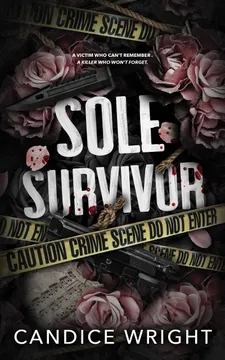


Plot Summary
The Grave Gives Back
Rain and packed earth press against Rue Anderson until she manages to turn her face and breathe. Police searching Highgrove Park hear her weak cries and pull her from a shallow grave; Detective Nathan Hask shields her as she loses consciousness again. At the hospital, Rue can speak and reason but remembers neither her name nor how she reached the park.
Doctors find Sono-d, an experimental memory-suppressing drug, in her system, alongside superficial wounds. Nathan explains that she was found with a music box and appears to be the tenth victim of the Lullaby Killer. The other nine are dead. Rue has survived, but without her memories she cannot identify the person who buried her, or know whether that person will return.
The opening makes survival feel less like rescue than forced re-entry into a life Rue cannot recognize. Her body supplies the first facts: air, rain, soil, pain. The missing memories then turn ordinary self-knowledge into evidence she cannot access. The shallow grave literalizes the story’s central instability: Rue is alive, yet her former identity has been buried from her. Nathan’s reassurance gives her a human anchor, but it also begins a dangerous dependence, because she has no memory with which to judge him.
A Name Without a Life
Three days later, Nathan brings Rue her identification: she is twenty-six, lives alone, and is called Rue Anderson. The name fails to unlock anything. When reporters learn who she is, she leaves the hospital through a service exit and returns to a house that feels bare and unfamiliar.
Nathan explains that she has helped police as a psychic consultant, sometimes describing crimes through visions, and that her parents and teenage sister are dead. He also shows her that the call reporting her attack came from the same burner phone that called her shortly before she disappeared.
The killer may have contacted her directly, but neither the police nor Rue can explain why. She chooses to stay in her home rather than enter protective custody, hoping familiar objects will restore her past.
Rue’s identity arrives as paperwork, not recognition. The practical facts of her life cannot yet become a felt history, and the empty house sharpens that divide: a home can contain her possessions without offering her belonging. Her refusal of protective custody is not simple bravery. She believes hiding might sever her remaining path back to herself. The burner-phone link complicates that hope, suggesting that the killer reached into her life before the grave, while the police’s guardedness leaves Rue to build a theory from scraps.
The Lover Returns
At a grocery store, Rue collides with Valen Ward, a wealthy technology executive who recognizes her and says they have been dating. He has just returned from Japan and cannot understand why she treats him as a stranger.
Rue accepts his offer of shelter because his familiarity is the first proof that someone remembers the person she used to be. At Valen’s coastal home, he recounts small preferences and shows her the ocean she once loved. Their closeness quickly turns sexual, though Valen presses beyond the safety Rue thought they had agreed on while she is asleep and disoriented.
Later, Nathan warns that Valen’s company holds the Sono-d patent and that Valen is a suspect. His tenderness comforts Rue, but his secrecy and control make trust difficult to separate from dependence.
Valen offers Rue something Nathan cannot: intimate knowledge of her habits and an apparent shared past. That knowledge feels like shelter, yet the power imbalance is severe. Rue has no memories with which to verify Valen’s claims, and he initiates sex while she is asleep, exploiting a vulnerability that the romance cannot simply erase. His wealth and connection to Sono-d also make his comfort suspicious. The section’s tension comes from asking whether recognition can be trusted when only one person remembers the relationship.
Music Box in Pieces
After a shattered music box appears outside Rue’s house, she panics and collapses into a vision of a man being drugged, stabbed, and left with the box beside him. The killer’s calm actions and the tune stay with her after she wakes.
A sketch allows police to identify the victim as Bobby Jones, a former Briarwood House psychiatrist whose murder had already occurred. Rue feels relief that no living victim is waiting for her to save him, followed by guilt at having witnessed his death helplessly.
The broken box proves that the Lullaby Killer is still targeting her, while her vision gives investigators information they did not release publicly. Rue’s ability may help solve the case, but each new glimpse of violence leaves her carrying another victim’s terror.
The music box is both evidence and trigger: it links the killer’s ritual to Rue’s involuntary visions. Because Bobby is already dead, the vision offers knowledge without rescue, turning her supposed gift into a burden with no immediate corrective action. That distinction matters to Rue, who measures her usefulness by whether she can prevent harm. The killer’s delivery of the broken object also converts her home from refuge into a message board. Her private space has become part of the crime scene, and the police can offer no certainty that the threat has passed.
Theater Goes Dark
When Rue grows restless at home, Nathan takes her to a quiet movie theater, presenting the outing as friendship rather than a date. After the film, the theater goes dark and footage appears on the screen: first Rue lying in the grave, then Rue asleep in her own bed after the attack. The recording proves that someone entered her house and watched her while she slept.
Nathan holds her through the panic and calls the police, but Valen arrives at the scene and takes Rue to his guarded coastal property. The attack on her privacy finally makes her leave the home she had chosen to reclaim. She moves into Valen’s protection, even as Nathan’s concern and Valen’s jealousy make the two men’s rivalry harder to ignore.
The theater turns spectatorship into a weapon. Rue is forced to watch herself as an object in someone else’s private recording, then sees that the killer has crossed the boundary of her bedroom. Her home had represented a possible route back to her former self; the footage contaminates it. Nathan’s comfort is genuine in the moment, but Valen’s possessive response redirects her toward his protection. The scene makes safety inseparable from control: each man offers shelter, while Rue has little room to decide what protection should cost.
Briarwood's Locked Rooms
As Rue and the investigators compare victims, a pattern emerges: each person had been a patient or employee at Briarwood House, a private institution for troubled young people.
Valen admits he was sent there as a teenager after accusing his stepmother of sexually abusing him; his father believed her, then later tried to repair the damage without undoing it. Valen says Briarwood was brutal and that he filed a complaint about its abuse. Flashbacks show him sneaking through an air vent to comfort a frightened girl in the adjoining room, promising they would escape and make their tormentors pay.
Rue has no conscious memory of those nights, but his account explains the intensity of their bond. His history makes him look more suspicious to police even as it deepens her trust.
Briarwood is not merely a shared setting for the suspects and victims; it is an institution that teaches its residents how power can disguise itself as care. Valen’s account complicates the polished billionaire persona: he is also a survivor whose father’s refusal to believe him shaped his distrust. The flashbacks establish intimacy before Rue can remember it, giving the reader access to a bond that she must take on faith. That asymmetry strengthens the romance and makes it ethically precarious, since Valen controls the story of their shared past.
Visions Turn Against Her
Rue experiences further visions, including the killing of Elenore Houseman, a former Briarwood nurse, and the hanging of Len Smith in a barn. She describes details investigators had not included in their files, but the scenes show completed murders rather than future crimes.
The FBI asks her to consider witness protection; Rue refuses, unwilling to surrender more of her life to the killer. Meanwhile, eight vials of Sono-d disappear from Valen’s laboratory, prompting Nathan to question him again.
The theft strengthens suspicion of Valen because his company makes the drug used on the victims. Valen insists that the investigation is wasting time on him, while Rue sees how little the visions can promise: they expose hidden facts, but cannot undo a death or tell her whom to trust.
The visions deepen the mystery while denying Rue the clean agency that a conventional psychic power might promise. They reveal what investigators missed, but only after the victims are beyond help. The stolen Sono-d intensifies the conflict between evidence and intimacy: Valen’s company is materially connected to the crimes, regardless of his personal history. Rue’s refusal of protection is therefore not uncomplicated courage. She rejects a life organized around fear, even though her choice leaves her exposed to both the killer and the police’s growing suspicion of the man she loves.
The Case Beneath the Case
A vision from a woman’s perspective gives Rue a different kind of evidence: she feels the victim’s injuries and terror, hears distant New Year’s singing, and recognizes the lullaby melody associated with the music boxes. The experience suggests a sexual assault that does not fit the reported Lullaby Killer pattern.
At the station, Rue reviews the case board with Nathan and his colleagues, then notices that investigators searched murder records but not suicides. A broader search uncovers a startling number of suicides connected to Briarwood across its decades of operation.
She also learns that Valen once complained about abuse there and that GhostWard, his company, purchased the old site. The institution’s hidden history now implicates both Valen and the police investigation in ways Rue cannot yet interpret.
This section makes the case’s apparent coherence unstable. Rue’s victim-perspective vision contradicts the official pattern, while the overlooked suicides expose how classification can erase violence: once a death is labeled self-inflicted, investigators may stop asking who helped create the conditions. The Briarwood connection expands from a list of individual victims into a systemic history. Valen’s complaint might support his credibility or deepen suspicion, and GhostWard’s purchase of the property binds his present power to the place he says harmed him.
The Photograph's Other Twin
After Rue confronts Valen about GhostWard’s purchase of Briarwood, he leaves rather than explain everything. In his bedroom, she finds a photograph of him as a teenager outside the institution, standing near a girl who looks exactly like her. Valen’s silence now feels like another theft from a woman already living without her past.
She leaves his house and asks Nathan to take her in, carrying the photograph and the fear that Valen has been using her as a substitute for someone else. At Nathan’s home, she tries to recover by sleeping and keeping her phone off. When she later hears him hum the lullaby, the tune unlocks memories that the Sono-d had buried. Her dependence on Nathan turns, in an instant, into recognition and alarm.
The photograph supplies the first visible contradiction to Valen’s account of their relationship. It does not explain the past, but it makes his omissions concrete, and Rue responds by seeking the one person she still considers a friend. The turn is especially cruel because the lullaby that once marked the killer’s victims now restores Rue’s own history. Memory returns not as a gentle recovery but as a sensory ambush. The scene also exposes how each man has shaped her choices while she lacked the information needed to consent to their competing versions of safety.
The Killer's True Face
The melody brings back Rue’s buried history: she is Hope, the twin who was raped at a New Year’s party and sent to Briarwood after powerful men suppressed her complaint. Her sister Rue visited, tormented her, and eventually became the twin Hope drugged and replaced; the original Rue died at the institution.
Hope survived there with Valen, who comforted her through abuse and helped plan revenge against those responsible. In the present, Hope recognizes Nathan as one of the brothers who raped her.
She has also been the Lullaby Killer, using Sono-d, music boxes, and staged deaths to punish people tied to Briarwood. Valen helped her conceal the crimes and arranged for her to be found alive. The sole survivor was never an accidental exception: she was the killer’s intended cover.
The revelation recasts the novel’s central images without making the trauma less real. Rue’s amnesia concealed not only a personal past but the distinction between victim and perpetrator; restoring memory makes her both witness and author of violence. Her revenge answers an institution that disbelieved and confined her, yet the answer reproduces its logic by deciding who deserves bodily control and death. Valen’s devotion is likewise inseparable from complicity. Their bond is built from mutual survival, but the plan they share turns intimacy into an operational alliance.
Nathan's Last Arrest
At Nathan’s house, Hope drugs him and tells him who she is, recounting how his brother Paul raped her and how Nathan joined the assault. She explains that the Lullaby killings targeted people connected to Briarwood, while Valen reveals his own role in planting clues and protecting her.
When Nathan’s drugged state begins to wear off, Hope stages the room to support a self-defense account, injures herself, and waits for police to respond to a false emergency call. Nathan lunges for her; she shoots him, though the bullet strikes his throat instead of killing him instantly.
Before she collapses beside his body, she injects him with Sono-d and hides physical evidence. Valen leaves ahead of the police, preserving an alibi while Hope becomes the apparent survivor of Nathan’s final attack.
The climax deliberately fuses justice with fabrication. Hope’s account of Nathan’s crime is true, but she stages the evidence that will make her killing of him legible as self-defense. The distinction matters: the book does not present a clean legal reckoning, but a survivor constructing the only story she believes the system will accept. The final injection and hidden evidence continue the Lullaby Killer’s methods even as the last target falls. Hope gains control over the narrative, but she does so by adopting the secrecy and manipulation that once protected her abusers.
A Life Chosen Again
At the hospital, Hope and Valen tell FBI agents that Nathan attacked her after Valen left on business. Their account frames Nathan as the Lullaby Killer, while planted jewelry, a stolen key, missing Sono-d, and recordings support the case against him.
The agents accept the explanation and close in on the evidence that points to Nathan. Hope chooses to keep using Rue’s name rather than reclaim Hope, and she and Valen commit to marriage after years of hiding their relationship.
They know the life they have built rests on crimes and a carefully maintained lie, but the immediate threat is gone. For Rue, the ending is not a return to the untouched person she was before Briarwood. It is the beginning of a life she and Valen have chosen with their history finally restored.
The resolution offers emotional closure without moral or institutional transparency. The FBI’s case is persuasive because Valen and Rue have shaped the evidence to fit it, so public certainty replaces truth rather than discovering it. Rue’s choice of name is similarly double-edged: it honors the identity she has lived under, while refusing to let the past dictate every part of her future. Marriage promises a shared life beyond secrecy, but their intimacy remains rooted in a joint history of violence. The ending asks whether agency can be reclaimed through a story built on concealment.
Epilogue
Three years later, Rue celebrates Valen’s birthday at a dog park with their young son, Casper, and two puppies. She invites Hailey Bale, Valen’s former stepmother, to share wine, then secretly drugs her. Once Hailey is unconscious, Rue identifies herself and makes clear that this is vengeance for what Hailey did to Valen at Briarwood.
She leaves Hailey to die and hurries back to her family. Valen welcomes them home from their outing, unaware of the details but certain that Rue has given him a meaningful gift. Their domestic happiness is real, and so is the violence Rue continues to carry into it.
The epilogue refuses to treat marriage and parenthood as a cure for the couple’s history. Rue’s life with Valen and Casper has tenderness, routine, and play, yet she uses the birthday outing to kill the last person she associates with Valen’s abuse. The contrast is deliberately jarring: a child’s game and family celebration unfold beside a calculated execution. Rue’s revenge remains an active practice, not a wound neatly closed by love. The final domestic image is therefore both a hard-won refuge and a place where the past still determines who is permitted to live.
Analysis
Sole Survivor builds suspense by making memory a contested resource. Rue’s amnesia leaves her dependent on other people’s accounts, especially Valen’s, while her visions supply fragments that feel authoritative but arrive without context. The result is not simply a puzzle about who committed the murders. It is a study of how easily care can become control when one person holds the history the other cannot access.
Briarwood House gives the crimes a structural dimension. The victims share more than an individual enemy: they are connected to a closed institution that protected its reputation and left vulnerable young people without credible recourse. The overlooked suicides show how official categories can settle a case before anyone asks whether the circumstances deserve further scrutiny. The novel’s attention to this institutional failure is forceful, though its revenge plot answers systemic violence through private violence rather than public accountability.
Rue and Valen’s romance is defined by recognition, but recognition does not make their relationship uncomplicated. Valen’s knowledge of Rue comforts her, yet his secrecy and sexual boundary violations demonstrate that devotion can coexist with entitlement. When the truth emerges, their bond becomes an alliance built on shared injury and shared wrongdoing. The story invites readers to feel the emotional force of that loyalty while leaving its moral cost visible.
The final deception completes the novel’s interest in narrative power. Rue’s real history was once dismissed by people who had the authority to define her as unstable; later, she and Valen construct a version of events that authorities accept because it fits the available evidence. Her regained agency is therefore neither pure liberation nor a clean return to justice. It is the ability to choose the story told about her, purchased at the price of further concealment. The ending offers love and family as genuine comforts, but the epilogue makes clear that safety has not dissolved the couple’s appetite for revenge.
Characters
Rue Anderson
Amnesiac psychic survivorRue wakes from a shallow grave with no memory of her name or former life. Her police work as a psychic consultant gives her visions of violent crimes, but she cannot choose when they come or prevent the deaths she sees. Practical, sharp-witted, and increasingly unwilling to be managed by investigators, she tries to rebuild identity through objects, places, and other people’s memories of her. Her need for connection is especially acute because she has no family she can remember and no reliable sense of her own past. Rue’s vulnerability does not erase her stubbornness: even while frightened, she insists on participating in the search for the person who attacked her.
Valen Ward
Watchful billionaire partnerValen is a wealthy technology executive whose company also has a pharmaceutical division connected to Sono-d. He is intensely protective, private, and accustomed to controlling the conditions around him. Beneath his polished confidence is a history of family betrayal and institutional harm, which helps explain why he responds to vulnerability with fierce loyalty and possessiveness. His relationship with Rue is intimate and complicated by the fact that he remembers a shared life she cannot access. He offers her comfort through small details and material safety, but his habit of withholding information places real strain on her ability to trust him.
Nathan Hask
Protective lead detectiveNathan is the detective who finds Rue in the park and becomes her first steady source of reassurance. He is persistent, quick to pursue a suspect, and protective of the woman he rescued. His police work is shaped by old family losses and a strong investment in catching the Lullaby Killer. Because Rue cannot remember her former relationships, his warmth carries unusual weight; she relies on his account of her life as well as his professional judgment. His rivalry with Valen complicates the investigation, making it difficult for Rue to distinguish ordinary concern from personal bias.
Hope Anderson
Estranged twin sisterHope is Rue’s twin sister, whose troubled history and time at Briarwood House shape the family’s long estrangement. She is described as withdrawn and difficult to reach, a contrast to the more socially confident sister Rue remembers. Her experience becomes a source of guilt and grief for Rue, who cannot initially recover the history that would explain their relationship. Hope’s story raises questions about how families protect appearances, how siblings can wound one another, and how institutional harm can deepen the distance between people who once shared a life.
Paul Hask
Nathan's older brotherPaul is Nathan’s older brother, a law student from a prominent family. He is part of Nathan’s personal history and the unresolved circumstances surrounding the family’s loss. The brothers’ different paths and shared past give Nathan’s police work an intimate emotional charge, even when he tries to treat his cases professionally. Paul’s presence in the story is less about a conventional sibling bond than about the consequences of family loyalty, power, and decisions that others would rather keep private.
Hailey Bale
Valen's stepmotherHailey is the woman who married Valen’s father during Valen’s adolescence. Her presence becomes central to a painful family rupture and to Valen’s distrust of the adults who were supposed to protect him. Valen describes a household in which his father’s authority mattered more than his account of what had happened. Hailey’s role connects the private damage of one family to the wider failures of Briarwood House, where wealthy parents could try to conceal distress rather than confront it.
Lance
Open-minded case officerLance works with Nathan on the Lullaby Killer investigation and is the first member of the team inclined to take Rue’s psychic visions seriously. He helps retrieve case files and supports a fresh examination of evidence that the investigators may have overlooked. His willingness to listen contrasts with the skepticism Rue expects, though he remains part of a police team that must translate her disturbing experiences into usable leads.
Eddie
Wry investigative analystEddie is one of Nathan’s colleagues, known for blunt humor and a practical approach to the case. He works through records and searches that help the team test Rue’s questions against official data. His analytical role matters when the investigation moves beyond confirmed murders and begins examining deaths previously classified in other ways. Eddie’s humor gives the team a more ordinary, human texture without diminishing the gravity of the crimes they are investigating.
Cyril
Steady investigative colleagueCyril is a member of Nathan’s team, physically imposing but measured in his interactions with Rue. He describes how the investigators first reacted to her visions and recognizes the value of her help without pretending she can save everyone. His steadiness makes him a counterweight to Nathan’s rivalry with Valen, and he is willing to question whether the team’s assumptions are narrowing the investigation.
Agents Davis and Jones
Federal case investigatorsThe FBI agents join the investigation because the killings cross local jurisdictions. Davis and Jones interview Rue, examine evidence connected to Valen’s company, and urge Rue to consider witness protection. Their procedural focus contrasts with Nathan’s personal investment and Valen’s distrust of law enforcement. They represent the institutional machinery that can collect evidence and question witnesses, but they depend on what other people reveal and on whether the story presented to them is complete.
Plot Devices
Sono-d
Memory erased by drugSono-d is an experimental drug developed to suppress traumatic memories, but it can cause temporary paralysis and amnesia. The killer uses it to incapacitate victims and remove their ability to identify him. Rue wakes with the drug in her system and loses access to her personal history, turning the investigation into a struggle over what she can remember and whom she can trust. Its presence also points suspicion toward Valen because his company owns the drug’s patent. The substance is both a physical means of control and a plot mechanism that makes Rue’s recovered memories arrive in fragments, often triggered by sensory details.
The Music Box
A signature and memory triggerA small music box accompanies the Lullaby Killer’s victims and helps establish a pattern the police can recognize. Its recurring melody becomes more than a calling card: hearing it can pull Rue into visions or unlock memories that Sono-d has suppressed. The box appears in several contexts, from the evidence recovered at Highgrove Park to a smashed object left outside Rue’s house. Those appearances make the tune an audible thread linking the current investigation to older experiences. Its meaning changes as Rue learns more, shifting from a marker of the killer’s ritual to a key that connects crime, memory, and identity.
Rue's Visions
Clues without rescueRue’s visions place her inside scenes of violence, often through the killer’s perspective and sometimes through a victim’s. The images give investigators details that were not public or recorded, allowing them to identify victims and reconsider old conclusions. Yet Rue does not reliably see future crimes, so the visions rarely let her intervene in time. They also carry physical and emotional force, leaving her frightened, nauseated, and uncertain whether each scene belongs to the case under investigation. The visions make Rue valuable to the police while imposing an intimate cost that no official procedure can remove.
Briarwood House
A hidden institutional patternBriarwood House is a private institution for troubled young people, funded by wealthy families and protected by expectations of secrecy. Its former patients and employees become the common link among the Lullaby Killer’s victims. Once Rue and the investigators look beyond murder reports, the institution’s history also raises questions about deaths classified as suicides and complaints that were ignored. Valen’s own connection to the site makes its legacy personally charged as well as evidentially important. Briarwood is the setting that binds childhood trauma, adult power, and the investigation’s apparently unrelated victims into a single history.
The Sole Survivor
A staged identity and alibiRue’s survival initially appears to be an interruption in the killer’s routine: she is the only person among ten victims to wake from the shallow grave. That fact directs public attention toward her and gives the police a reason to protect and question her. As the investigation reaches its end, her status as survivor takes on a different meaning, connected to a deliberately managed identity, planted evidence, and a cover story designed to redirect suspicion. The device reframes the opening without undoing Rue’s genuine trauma. Her survival is both a physical fact and a role constructed to make a hidden plan believable.
Download PDF
Download EPUB
.epub digital book format is ideal for reading ebooks on phones, tablets, and e-readers.








