

Key Takeaways
Build counseling around the life the person wants, not a tour of trouble
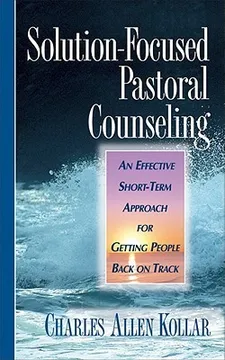
Change the direction of attention. Kollar’s central proposal is solution-focused pastoral counseling, or SFPC: a short-term, Christian approach that helps people describe a preferred future and take steps toward it. Rather than treating a problem’s cause as the only route to change, counselor and counselee look for abilities, relationships, and actions that can support a solution. The counselor’s role is to guide the process; the book understands the Holy Spirit as the primary agent of change.
William finds a next step. After a single relapse following five sober years, William feared losing his job and family and saw his diagnoses as proof he could not manage. Asked what a better morning would look like, he pictured treating his wife and colleagues with respect and feeling more at peace. A scale helped him notice increased hope and choose a modest step toward that future.
The distinctive move is not simply optimism. It shifts the counseling question from “What explains this suffering?” to “What would count as improvement, and what is already helping?” That shift can restore agency without requiring a grand theory of personality. The Christian framework also gives hope a theological source rather than making happiness the sole measure of success. Still, a desired future is a starting point, not proof that serious causes or risks can be safely ignored.
Describe the problem without turning it into the person’s identity
Words shape the available options. Kollar calls descriptions centered on what is broken or deficient “deficiency language.” He argues that labels can overshadow a person’s strengths and encourage the belief that change depends entirely on an expert. His example is William, who had come to define himself through alcoholism and PTSD despite five years without drinking and a record of returning to work and family life.
Make room for agency. In another case, a man’s repetitive rituals were reframed as habits that had begun to control him, rather than proof that he himself was the problem. The counselor explored occasions when the habits did not dominate. This does not mean that diagnoses are always wrong or useless. Kollar’s practical point is narrower: a label should not replace the person’s own goals, history, and capacity to act.
Separating a person from a problem can lower shame and make cooperation easier. The distinction also helps prevent a single difficulty from becoming a total identity. Yet labels can provide access to services, communicate patterns, and help clinicians coordinate care. The key question is therefore not whether to use a diagnosis, but whether it is being used as a provisional tool or treated as the whole explanation of someone’s life.
Let the counselee define what progress would actually look like
Start with their reason for coming. Kollar treats the counselee as the expert on what they want to change. A counselor may know therapeutic methods, but cannot know another person’s inner life well enough to impose the right goal. In the case of Ed, he came seeking help with conflict involving his son, but another counselor’s attention shifted to labeling him and his wife. Kollar returned to Ed’s original concern and asked what kind of help he wanted.
Notice the person’s position. SFPC describes three possible positions: willing, blaming, and attending. A willing counselee is ready to work toward a goal; a blaming person sees someone else as the problem; an attending person is present mainly because another person insisted. These are momentary positions, not permanent types. The counselor tries to find a goal meaningful enough to invite participation.
Goal ownership is a practical antidote to the familiar expert-client imbalance. It also makes progress easier to evaluate: the counselor and counselee can ask whether the agreed change happened, rather than whether the person accepted the counselor’s interpretation. But self-defined goals do not eliminate obligations to protect others or address danger. Collaboration requires both respect for the person’s priorities and clear professional boundaries.
Search for exceptions because the problem is rarely happening every minute
Look for what interrupts the pattern. An exception is a time when a problem is absent, smaller, or handled differently. Kollar argues these moments offer clues to existing capabilities that a problem-saturated account can hide. A couple who repeatedly blamed each other remembered a pleasant evening out. They had agreed not to discuss their conflicts, relaxed together, and enjoyed one another’s company. The counselor treated the evening as evidence of skills they could use again, not as an irrelevant pause.
Make success specific. Ask what was different, what each person did, and what others noticed. Kollar also invokes “grace events,” difficult experiences that, in his Christian understanding, can become part of a person’s formation. David’s past encounters with a lion and a bear, for example, gave him evidence of courage before facing Goliath. The counselor searches for resources without assuming every hardship is beneficial or deserved.
Exception-finding resembles close observation in science: an apparent rule becomes more interesting when the researcher asks when it fails. It can uncover conditions that support a different response, then turn those conditions into practical experiments. The risk is selective attention in the opposite direction: emphasizing successes so strongly that pain, structural barriers, or repeated harm go unrecognized. Good inquiry makes room for both the exception and the difficulty surrounding it.
Choose the conversation track that fits the person’s readiness
Use a flexible route, not a script. Kollar’s “track options” are pathways for moving from a problem account toward a possible solution. Recent-change questions explore what has improved since the person sought help. Future-focus questions invite a picture of life without the problem. Managing questions ask how someone is coping when improvement feels impossible. Externalizing questions treat the problem as something affecting the person or relationship, rather than making a person the enemy.
Begin where cooperation is possible. For someone attending reluctantly, the self-interest track asks what they would want to change for their own reasons. A teenager sent by his parents, for instance, might want greater trust and more freedom. The counselor can help him identify actions within his control that might support that aim. Once a person can imagine a preferred outcome, the conversation can shift to clarifying it.
The tracks work as conversational scaffolding: they give a counselor options without requiring every person to respond to the same intervention. The readiness distinction is especially useful because silence or reluctance need not be interpreted automatically as defiance. A careful counselor still checks whether the chosen path fits the person’s experience. A question that sounds hopeful to one person can feel minimizing or coercive to another.
Turn a vague hope into small actions someone else could notice
Describe the future in observable terms. Kollar calls this “vision clarification”: shaping an outcome into specific, positive, practical actions. Instead of stopping at “I want to be happier,” ask what the person would be doing differently and what a spouse, friend, or child might observe. Alice initially believed she needed to move to Cleveland to feel better. Further questions revealed that she wanted independence: learning to drive, finding work, and making friends. The move was a possible means, not the goal itself.
Use a scale to mark movement. A “tracking scale” asks a person to place their current position between a low point and a desired outcome, often using numbers from 1 to 10. The number is personal, not a clinical score. The counselor then asks what has already moved the person above the lowest point and what a one-step improvement would look like. The goal becomes a path, not a demand for instant transformation.
Observable goals connect intention to behavior, making them easier to try and review. Scaling can also reveal that progress has begun before the person feels fully well. It is important, however, not to mistake a number for objective measurement or to pressure someone to report improvement. Its value lies in the conversation it prompts: what makes this rating meaningful, and what might make the next small step possible?
End with a chosen experiment, then learn from what happens
Make feedback reinforce agency. After the conversation, Kollar recommends a brief pause for counselor and counselee to reflect. The counselor then acknowledges concrete efforts, supports strengths, offers a concise educational observation, reviews the agreed goal, and suggests a simple task. The task should grow from something the person already described, rather than becoming a test set by the expert.
Act, observe, and adjust. Kollar’s shorthand “del/ob” means deliberate action and observation: try a small part of the preferred solution, notice what helps, do more of what works, and observe how others respond. In a second session, begin by asking what has improved. If nothing has changed, or things are worse, revisit the person’s readiness and the goal rather than treating the task as a pass-or-fail assignment. Follow-up and supportive relationships help sustain gains.
A small experiment turns counseling from explanation alone into learning from lived experience. It also resembles a feedback loop: action changes a situation, observation updates the plan, and the next action can be better fitted. The counselor’s praise matters most when it names specific effort rather than offering generic reassurance. A disappointing result can still be useful information, provided it is not framed as the person’s failure.
Keep pastoral care skilled, bounded, and ready to refer
Hope does not replace safeguards. Kollar insists that church counselors need training, supervision, consultation, clear confidentiality limits, and awareness of their competence. He advises avoiding sexual or romantic involvement and dual relationships that compromise judgment. When progress remains absent after a few sessions, or the counselor cannot provide appropriate help, referral is ethically necessary. He also names situations involving suicide risk, danger to others, suspected abuse, and possible physical illness as requiring specialized attention or action.
Treat medication cautiously, never casually. The book questions the tendency to treat medication as an automatic first response, but it also says counselors should consult prescribers and never encourage someone to stop medication without medical supervision. Its case examples involving severe distress do not establish that a pastor can manage every serious condition. Kollar’s own boundary is that complex cases require training, professional consultation, and, when needed, referral or adjunct care.
This boundary-setting is essential because a strengths-based conversation is not a substitute for diagnosis, crisis response, or evidence-based treatment when those are needed. The book’s skepticism about psychiatric labels and medication reflects its 1997 context and should not be read as current medical guidance. A responsible adaptation preserves its useful warning against reducing people to diagnoses while rejecting the inference that diagnoses or medication are inherently disempowering.
Analysis
Kollar’s most durable contribution is procedural rather than doctrinal: the counselor’s questions direct attention, and attention changes what the counselee can imagine doing. A conversation organized around causes, deficits, and expert interpretation may leave a person with a more elaborate account of the problem but little sense of what to try. SFPC instead treats hope as something made concrete through description, action, and observation. Its cases make this method memorable because each starts with a person whose situation appears fixed, then identifies a neglected goal or exception that opens a small route forward.
The approach also carries a particular Christian account of change. The counselor looks for signs of the Spirit’s work, understands growth as participation in grace, and locates support within the church community. This gives pastoral counseling a coherent purpose beyond symptom relief. It also means the method cannot simply be detached from its theology and presented as religiously neutral. For readers outside that tradition, its practical invitation remains intelligible: do not presume that the person is reducible to the problem, and ask what improvement would look like in daily life.
The book is less convincing when it treats diagnostic systems and professional mental health care as a rival world likely to undermine faith or agency. Its own ethical guidelines point toward a better synthesis: pastors can use collaborative, solution-oriented conversations while recognizing that severe illness, risk, and medication decisions require qualified clinical care. Labels may narrow a person’s story, but they can also help identify needs and organize treatment. The sound lesson is not to choose strengths over problems, or church over clinic. It is to keep the person’s goals and capacities in view while matching care to the seriousness of the situation. In that balance, Kollar’s brief counseling method can be humane without pretending that every problem is simple or every counselor is equipped for every case.
Glossary
Solution-focused pastoral counseling
Outcome-focused pastoral counselingKollar’s short-term Christian counseling approach, abbreviated SFPC. Counselor and counselee clarify a preferred outcome, identify existing strengths and exceptions to the problem, and choose practical steps toward change. The approach understands the Holy Spirit as the primary agent of growth while giving the counselor a structured role in guiding the conversation.
Deficiency language
Problem-centered descriptionsLanguage that describes people mainly through what is broken, absent, or inadequate. Kollar argues that this way of talking can make a problem seem like a person’s identity and can obscure abilities or signs of improvement. The term refers to a conversational pattern, not to a claim that every diagnosis or description of difficulty is harmful.
Grace events
Formative difficult experiencesKollar’s term for difficult life situations that can shape a person’s character and readiness to face later challenges. In his Christian framework, these experiences may be understood as part of the Spirit’s formative work. Counselors look for what a person learned or demonstrated in such events, without treating hardship itself as proof of virtue.
Track options
Routes toward a solutionConversational pathways used to help a counselee move from a problem-focused account toward a possible outcome. Kollar describes routes that explore recent change, imagine a preferred future, examine how the person is managing, externalize the problem, or find the attending person’s own interest. The counselor selects a path that fits the person’s readiness.
Vision clarification
Making goals observableThe process of turning a broad hope into a specific description of life with less influence from the problem. The counselor asks what the person would do, what others might notice, and what the first manageable step could be. The resulting goal is intended to be positive, practical, and grounded in the counselee’s own words.
Attentive listening
Listening for strengths and cuesKollar’s form of listening combines validation of the counselee’s experience with careful attention to clues about strengths, exceptions, recent changes, and willingness to participate. It differs from simply reflecting back statements because the counselor listens with a solution-oriented purpose while avoiding premature advice or problem analysis.
Tracking scales
Personal progress ratingsA questioning technique that asks the counselee to rate a goal, confidence, or current situation along a numbered scale, commonly from 1 to 10. The number is based on the counselee’s own meaning, not an external clinical standard. Follow-up questions explore why the rating is where it is and what could move it one step.
del/ob
Deliberate action and observationKollar’s shorthand for a simple solution-focused task: deliberately try a small part of the preferred outcome, observe what happens, notice what helps, and intentionally repeat useful actions. The task is built from the counselee’s own goal and experience, rather than functioning as conventional homework that can be judged as completed or failed.
Download PDF
Download EPUB
.epub digital book format is ideal for reading ebooks on phones, tablets, and e-readers.








