

Key Takeaways
Let cemeteries reveal what a culture cannot say aloud
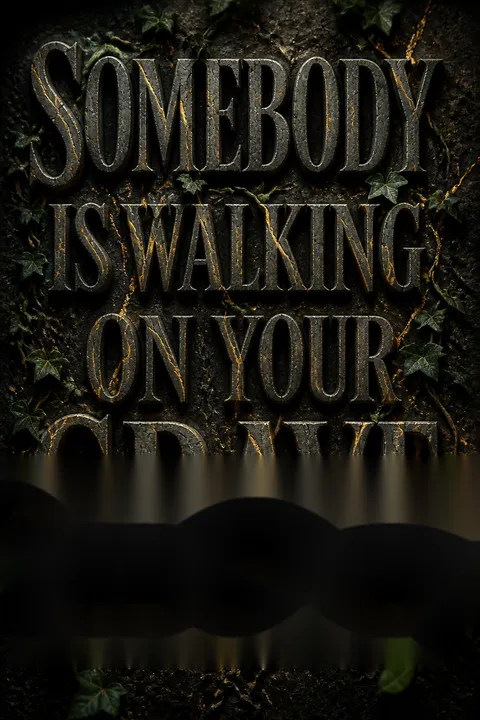
A graveyard can be a beginning. In 1997, twenty-five-year-old Mariana Enriquez visited Genoa’s Staglieno Cemetery with a new camera and an unexpected companion, Enzo, a street violinist. Its extravagant marble figures made death seem intimate, sensual, even funny. One sculpture showed a dead young woman held in a lover’s final embrace. The cemetery became part of a brief, intense romance, and the romance became the origin story of Enriquez’s lifelong fascination with burial places.
The dead are never only dead. Across these journeys, a cemetery holds art, desire, family memory, public history, and the visitor’s private fantasies. Enriquez does not treat her attraction as detached expertise. She brings her own loves, fears, and regrets into the frame, showing how the living continually make meaning around the dead.
What's striking is how the book makes personal emotion a way into public space. The cemetery is not a neutral backdrop: the visitor's memory determines which details glow, while historical research gives those details a wider context. That combination resembles a layered archive, where private associations sit beside inscriptions, monuments, and records. It also demands care. A compelling personal response can illuminate a site, but it cannot stand in for the lives of those buried there.
Read grand monuments against the histories they try to outlast
Wealth leaves evidence. At Punta Arenas’s Sara Braun Cemetery, sculpted angels and carefully pruned cypresses share space with the mausoleums of the region’s wealthy landowners. José Menéndez, remembered by some as a pioneer and denounced by others as an exterminator, amassed vast Patagonian estates. His businesses depended on land taken from Indigenous peoples; ranchers and their agents helped devastate Selk’nam communities. Menéndez-linked elites also helped seek military intervention against striking workers, hundreds of whom were killed during the Santa Cruz labor conflict of 1921 and 1922.
The cemetery stages the contradiction. Near Menéndez’s imposing tomb lies the Unknown Indian, a young Indigenous man remembered by visitors with flowers, flags, and requests for miracles. Devotion is real, but the name and story remain obscured.
A monument can preserve a person’s visibility while concealing the system that made his fortune. Reading the cemetery as a landscape of power does not require dismissing every act of commemoration as propaganda. It means asking whose deeds receive stone, whose suffering becomes a footnote, and who remains unnamed. The Unknown Indian’s popular shrine complicates that imbalance: affection and reverence coexist with the historical erasure that made him unknown to outsiders.
Search the margins for people a polished memorial leaves out
A tourist map is selective. On Rottnest Island, visitors can tour quokkas and shipwrecks, while the island’s Aboriginal history is much less prominent. Between 1838 and 1931, the island held Aboriginal men and boys in prison; many were captured while resisting the loss of their land. The Quod, where twenty-nine cells sometimes held more than 160 prisoners, is now a hotel. An estimated 370 to 400 Aboriginal people lie in the island’s burial ground, which has had little prominence in visitor materials.
Other absences are buried or fenced off. On Martín García Island, Indigenous prisoners were confined in the nineteenth century. More than four hundred died of smallpox in 1879, and their burial ground is in a restricted area. The guide’s casual claim that nobody dies on the island sits uneasily beside this history.
These sites show how omission can be built into a visitor experience without requiring a dramatic cover-up. A hotel, a pleasant tour, or an understated sign can make a violent past feel peripheral. The useful question is not simply whether a site acknowledges history, but whether visitors can encounter it as part of the place’s central story. Better signage cannot repair dispossession, but silence makes recognition harder still.
Compare burial customs to see how cultures keep the dead near
Grief has local grammar. In Jewish cemeteries in Entre Ríos, visitors leave stones rather than flowers. In Mexico, Day of the Dead altars offer food, water, candles, and marigolds to welcome returning souls. A Catrina, the elegant skeleton popularized from José Guadalupe Posada’s satirical image, can make death festive and socially pointed at once. In New Orleans, the high water table made above-ground burial practical; shared tombs were designed to make room for successive burials.
Customs shape the relationship. Some invite the dead to visit, some mark a pilgrim’s presence, and some make the grave a continuing family space. None of these practices makes grief simple. They offer different ways to remember, care for, and speak to the dead.
Comparing rituals helps prevent one culture’s habits from passing as the natural way to mourn. The details also reveal practical forces: geography affects burial architecture, while religious traditions shape what visitors leave behind. A useful caution is that a visible custom never represents every person in a community. Local traditions change, and individual mourners improvise. The book’s strongest implication is not that cultures grieve in fixed ways, but that grief takes form through shared practices.
Keep the mystery, but distinguish folklore from historical evidence
An unanswered question can stay unanswered. At Martín García’s cemetery, many crosses have a tilted crosspiece. Guides offer explanations, including a faulty mold, while local stories connect the shape to prisoners, plague victims, Freemasons, or a religious sect. Cemetery researcher Jorge Alfonsín proposes a link to nineteenth-century Fourierists, but the documentation is missing, and details in his account are uncertain. Enriquez examines the competing stories without claiming that any one solves the puzzle.
Folklore still tells us something. The stories reveal what people fear, remember, or want the cemetery to mean. They are not proof that the dead have supernatural powers. That distinction lets the mystery remain intriguing without turning speculation into fact.
The distinction between a story’s truth and its cultural work is useful well beyond cemeteries. A legend may preserve anxieties about disease, punishment, or social exclusion even when its literal claim cannot be verified. The crossed bars invite interpretation, but the missing records set a real boundary. Respecting that boundary makes the account more credible, not less atmospheric. Uncertainty becomes part of the subject rather than a gap that must be filled.
Tourism can preserve a grave while erasing the place around it
Popularity has a physical cost. In Savannah, the bronze Bird Girl became famous through the cover of a bestselling book about the city. Crowds then overwhelmed its original setting in Bonaventure Cemetery, and the statue was moved to a museum. In Edinburgh’s Greyfriars Kirkyard, Harry Potter fans flock to the grave whose name inspired Tom Riddle. The council reported severe erosion around it after hundreds of thousands of visits.
The visitor is part of the problem. Enriquez had dreamed of seeing Bird Girl in the cemetery and admits that the book that helped bring her there also helped draw the crowds. Her travel writing includes its own discomfort: admiration for a place can change the place being admired.
This is a sharp example of cultural attention behaving like both care and pressure. Tourism can fund restoration, widen public knowledge, and give neglected sites new advocates. The same attention can wear away paths, displace objects, and turn local memory into a product. The difficulty is not solved by simply condemning visitors, especially when the narrator is one herself. More responsible access asks how a site can welcome people without making its most fragile features pay the price.
Give the disappeared a name, a funeral, and witnesses
A burial can answer an old erasure. In 2011, Enriquez attended the funeral of Marta Taboada, whose daughter Marta Dillon had invited friends and comrades to gather. Taboada had been kidnapped during Argentina’s dictatorship in 1976, murdered in 1977, and buried as an unidentified woman. The Argentine Forensic Anthropology Team identified her remains decades later. Her family and supporters decorated her coffin, honored her political life, and buried her beside her parents.
The ritual was public and unfinished. Speakers named what still needed to be investigated, including who had killed her and who had falsified her death certificate. The gathering did not undo the crime. It restored a name, a grave, and a community of witnesses to someone the state had tried to make disappear.
The ceremony shows that forensic identification and mourning are related but distinct forms of repair. Identification establishes who the remains belong to; ritual gives relatives and allies a public way to acknowledge the person and the violence. Neither guarantees accountability. The value lies partly in refusing the imposed anonymity. A grave with a name does not close the history, but it changes what can be said about it.
Track the corpse to see how political power survives death
The body can become a political prize. After Eva Perón died in 1952, her embalmed body was displayed, hidden, and moved as Argentina changed hands. Following the 1955 coup, the military took it from the labor union building where it had been kept. A colonel secretly transported and displayed it; the military government eventually arranged its burial under a false name in Milan. Juan Perón received the body in 1971.
The struggle did not end there. In 1974, Montoneros militants stole the body of former president Pedro Eugenio Aramburu and used it to press for Eva’s return. The remains were exchanged. Enriquez sets these journeys beside the current practice of burying Eva beneath layers of concrete in Recoleta, beyond easy access.
The story makes an abstract contest over national memory unmistakably physical. A body can be hidden, displayed, relocated, guarded, and used as leverage, so political conflict continues through control of the dead. That does not mean every act of burial is political in the same way. Here, the repeated transfers are tied to specific regimes and factions. The material vulnerability of a corpse helps explain why symbolic power can become a literal struggle over remains.
Hold your burial plans lightly; even a beloved grave can change
A chosen resting place is not guaranteed. Enriquez has long hoped that friends will scatter her ashes inside a pyramid-shaped tomb in Recoleta Cemetery. Its inscription says there is nothing there but dust and bones. When she visits with friends in 2020, the plaque has vanished. She cannot tell whether it has been removed for repair or whether she has found the wrong tomb. Then lockdown closes the cemetery, leaving her unable to check.
The ending stays unsettled. The author has spent years imagining where she might rest, yet even a carefully chosen grave depends on caretakers, access, and changing circumstances. Her final question is not just where she wants to be buried, but whether that wish can survive the living world around it.
The missing plaque gives the book’s private meditation on mortality a concrete, almost comic complication: the future dead depend on present-day institutions and other people’s follow-through. A burial wish can express identity, but it is also a request made of friends, caretakers, and changing circumstances. Flexibility does not make the wish less meaningful. It recognizes that remembrance is a shared practice, not something the individual can fully control.
Analysis
This is a travel memoir, a collection of cemetery histories, and an account of how a personal fixation becomes a method of looking. Its structure is episodic: journeys to burial grounds across the Americas, Europe, and Australia each begin with a particular longing, fear, or curiosity, then widen into local history. Staglieno supplies the origin story, but the book’s real subject is the changing relationship between the living and the dead.
Enriquez’s voice is deliberately double. She is a researcher who traces the histories of Indigenous dispossession, workers’ repression, public health, and political violence. She is also a visitor who falls for marble figures, collects objects, invents stories, fears dogs, and admits to wanting a bone from the Paris catacombs. This tension matters. Her fascination can make overlooked details vivid, but it can also risk turning suffering into spectacle. The book is strongest when it exposes that risk, as when the narrator recognizes her own role in attracting crowds to Savannah or notes how tourism treats Aboriginal burial grounds as peripheral.
The cemeteries work as archives, but not complete ones. A monument may preserve a name while obscuring the labor or violence behind a fortune. A shrine may show sustained devotion to a person whose history is unavailable. Folklore supplies imaginative explanations where records fail, yet the book often leaves the supernatural unresolved rather than presenting belief as evidence. That restraint gives uncertainty a legitimate place alongside documented history.
Across the journeys, the dead are neither abstract symbols nor merely private losses. They are bodies shaped by geography, law, wealth, faith, and political conflict. The book’s most consequential contrast is between the spectacular graves of the powerful and the missing, unnamed, or recently identified dead. Its invitation is not simply to visit cemeteries. It is to ask who is remembered, who controls the memory, and what kinds of care remain possible after death.
Review Summary
Reviews for Somebody Is Walking on Your Grave are mixed, averaging 3.81/5. Fans praise Enriquez's vivid, personal narration and her ability to blend history, culture, and memoir through visits to cemeteries worldwide. Spanish-language reviewers are particularly enthusiastic, admiring her accessible yet distinctive voice. Critics, however, find the book disjointed, overly reliant on dry historical facts, and self-indulgent, with some objecting to the author's behavior, including stealing bones and glamorizing questionable acts. Most agree her fiction surpasses this nonfiction work, though cemetery enthusiasts find it rewarding.
People Also Read
Glossary
thanatophile
death-fascinated visitorA person with a strong fascination with death, burial places, and the ways the dead are remembered. Enriquez uses the term for the sensibility that draws her toward cemeteries, tombs, funeral art, and stories of the dead. Her interest is not only historical or artistic; it also involves emotion, atmosphere, and the possibility of supernatural mystery.
necro-tourism
cemetery-centered travelTravel organized around visiting cemeteries, graves, and other places associated with death. In the book, such journeys combine tourism with historical research, personal pilgrimage, and attention to local burial customs. The term also points to a tension: visits can bring attention and resources to a site, while crowds may damage it or turn grief and history into attractions.
Catrina
elegant Mexican skeleton figureA recognizable skeletal figure dressed in fashionable clothing, associated with Mexican art and Day of the Dead imagery. The figure began as José Guadalupe Posada’s satirical Calavera Garbancera, criticizing poor Mexicans who aspired to European styles while rejecting their own culture. Diego Rivera popularized the name Catrina in a later mural, and the image now appears widely in public art and popular celebrations.
Ñatitas
venerated human skullsSkulls honored by some Aymara people in Bolivia, especially during the November Feast of the Ñatitas. Families keep the skulls at home and bring them to the cemetery for a celebration involving flowers, hats, glasses, cigarettes, alcohol, and holy water. The custom treats the skulls as recipients of care and offerings, though the origins of the practice remain unclear in Enriquez’s account.
mortsafes
grave-protecting iron cagesIron structures placed over graves to prevent body snatchers from stealing corpses. At Edinburgh’s Greyfriars Kirkyard, some remain over graves or mausoleum entrances as reminders of the trade in bodies for medical study during the eighteenth and nineteenth centuries. They show how fear of grave robbery shaped cemetery design before legal changes restricted the practice.
charniers
galleries for stored bonesGalleries or ossuary spaces where bones removed from older graves were gathered and stored. At Paris’s former Holy Innocents Cemetery, bones were piled in galleries above arches as space was reused for new burials. The practice made human remains visible within an everyday public place, long before changing ideas about sanitation and death led authorities to close the cemetery.
cenotaph
memorial without remainsA monument built to honor a dead person whose body is buried elsewhere or is absent. Enriquez mentions empty or unused tombs alongside graves that hold remains, showing that a cemetery can preserve memory without containing the person commemorated. The distinction matters in stories of repatriation, political conflict, and families whose dead were moved or never recovered.
The Magnificent Seven
London’s historic garden cemeteriesThe collective name for seven nineteenth-century London cemeteries built outside the crowded city: Kensal Green, Highgate, Brompton, West Norwood, Abney Park, Nunhead, and Tower Hamlets. Their creation reflected rising mortality, urban growth, and concern about churchyard burial. Enriquez visits Highgate, where the protected, garden-like setting also preserves elaborate Victorian funerary architecture and the histories of the people buried there.
Download PDF
Download EPUB
.epub digital book format is ideal for reading ebooks on phones, tablets, and e-readers.








