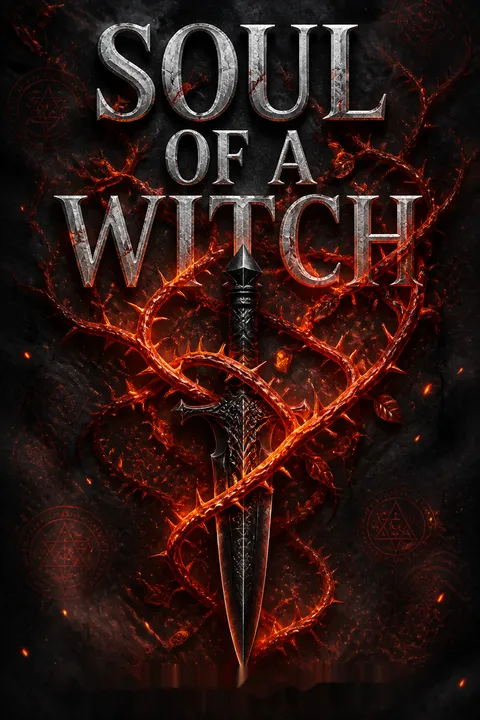


Plot Summary
The Witch on the Battlefield
Two thousand years ago, Callum2 leads Hell’s last defense against invading gods, knowing their victims’ souls will be trapped in endless torment if the gods win. His army survives at terrible cost, and he walks among the dead, removing the piercings given to him by fallen friends and lovers. Victory brings the honor he once wanted, but he can no longer feel it as a reward.
Then a bloodied mortal witch1 appears among the bodies. Her face seems familiar, and she knows his name. Her plea for help breaks through the grief surrounding him. Callum2 cannot understand why she has come or how she knows him, but the encounter becomes a vision he will carry into the centuries ahead.
Callum’s first encounter with Everly arrives at the moment his old ambitions have become emotionally uninhabitable. The war’s victory does not repair its losses, and the jewelry he tears away shows grief translated into physical refusal: he cannot bear to carry love as a visible reminder. Everly’s appearance interrupts that refusal with a future-oriented demand. The vision gives his survival a purpose, but it also risks turning a stranger into an answer to his trauma. His long search begins as both devotion and an attempt to make continued existence bearable.
The Girl Left Underground
Seven years before the present, fifteen-year-old Everly1 witnesses her father4 Kent’s4 cult, the Libiri, sacrifice Juniper Kynes6 in a flooded mine. Juniper6 escapes, and Kent’s4 family helps spread the lie that she harmed herself. Everly’s mother,5 Heidi,5 secretly shielded Juniper6 from the creatures searching for her, but she cannot confess the truth before Kent4 separates them.
Everly’s half-sister9 Victoria9 warns her that their father may discard her, while the rest of the family treats Leon,8 their bound demon, as an instrument of punishment. Kent4 leads the Libiri in worship of the Deep One, which requires three human sacrifices and intends to use Everly1 as its vessel. The girl’s survival has exposed a failure the cult means to correct.
Everly’s childhood is organized around coerced complicity. She is not the architect of Juniper’s torture, yet her silence helps the family turn a survivor into a supposedly unreliable witness. That distinction matters: the story treats fear as a force that narrows moral choice without erasing responsibility. Heidi’s covert rescue is an incomplete act of resistance, while Kent’s public authority disguises private brutality. Victoria’s threat makes family belonging feel conditional, and the sacrifice ritual turns affection, faith, and obedience into tools of control. Everly’s later struggle begins with the question of whether she can act where she once froze.
Marcus Becomes the Offering
In the present, twenty-three-year-old Everly1 lives under Kent’s4 control, haunted by dreams of a stranger named Raelynn7 and by her mother’s5 warning that Sybil19 knows a way to stop the Deep One. At the university, her half-brother10 Jeremiah10 lures her and Marcus Kynes,16 Juniper’s younger brother,16 into a dark building. Jeremiah10 and his friends pin Marcus16 down and carve the ritual marks into his chest.
Everly1 tries to stop them, but Sam restrains and beats her as Jeremiah10 kills Marcus.16 Her magic erupts beyond her control and teleports her into the forest, leaving Marcus’s16 blood behind. She runs to a strange old house as Eld beasts close in. The house opens for her, and an ancient demon2 wakes to find the witch1 he has awaited.
Marcus’s murder repeats Juniper’s sacrifice with a changed witness: this time Everly’s refusal is audible, but it cannot prevent the violence. Her involuntary teleportation is a survival response and the first unmistakable evidence that Kent’s account of her weakness is false. Yet power does not immediately mean agency. She escapes without knowing where she is, while the murdered brother’s blood binds the present crime to the earlier one. The house offers a possible refuge, but its welcome leads Everly into another relationship with overwhelming power, one she will have to negotiate rather than simply submit to.
Callum Wakes Hungry
The awakened demon, Callum,2 destroys the wraiths pursuing Everly,1 then chases her through the house in a feral, long-starved state. He knows her name and identifies her as the last Laverne witch, though she has never met him. Once he settles, he explains that he is an archdemon and the former god-slayer Magni Deicide.
He gives Everly1 his demonic sigil, a mark that could let a witch command him, because he wants her to understand she has power over him if she chooses to use it. Callum2 leaves to punish Sam, who bruised her, and returns with the claim that Everly’s grandmother3 Winona3 can explain the house and the threat pursuing her.
The first meeting deliberately unsettles the usual predator and prey arrangement. Callum’s hunger makes him dangerous, but his gift of the sigil gives Everly a meaningful safeguard rather than asking for blind trust. His behavior remains ethically troubling: he pursues her for pleasure and acts violently toward Sam without her consent. The scene does not mistake attraction for safety. Instead, it puts the question of authority on the table. Everly has spent her life being told she lacks power; Callum’s willingness to be commanded offers a practical test of that belief, even as his possessiveness raises new risks.
Winona Names the Choice
Callum2 leads Everly1 to the greenhouse, where a radio carries the voice of her dead grandmother, Winona Laverne.3 Winona3 explains that House Laverne belonged to Everly’s1 maternal coven, driven from the area as Kent’s4 cult strengthened the Deep One. She confirms that Everly’s mother5 helped Juniper6 escape and that Marcus’s16 murder has begun awakening the god.
Everly1 is not weak, Winona3 insists; Kent4 has kept her untrained because he fears her potential and intends to surrender her body as the god’s vessel. Sybil Laverne’s19 grimoire, now held by Kent,4 may unlock the coven’s sealed research vault. Everly1 chooses to return to her family, steal the book, and find a way to kill the Deep One.
Winona gives Everly an alternative genealogy. Kent has defined her as a defective daughter and future container; the coven presents her as an heir with intellectual, magical, and ethical responsibilities. The distinction is not simply between a bad father and a good grandmother. Winona admits that her own efforts to control Heidi contributed to Heidi’s departure, so the old coven must reckon with its failures as well as its knowledge. Everly’s decision to return is the first deliberate risk she takes for a purpose of her own. She does not yet feel powerful, but she chooses action before confidence arrives.
The God Enters Her Mind
Everly1 returns to Kent’s4 home and claims her magic accidentally teleported her away. Kent4 does not believe her. He locks glass cuffs around her wrists that drain her power, withdraws her university enrollment, and tells her that the Deep One will inhabit her when it rises. At Marcus’s16 post-funeral dedication in the ruined church of St. Thaddeus, Kent4 forces Everly1 to commune with the god.
It disguises its rotting, monstrous form behind a beautiful vision of a remade world, but Everly1 sees through the illusion and resists its demand for submission. The god marks her mind and turns her attention toward Raelynn Lawson,7 the next intended sacrifice. Everly1 escapes the encounter physically, but the god’s psychic pressure follows her home.
The cuffs make Kent’s ideology literal: he does not merely tell Everly to suppress herself, he installs a device that punishes attempts at independent action. His promise that the god will take her body also clarifies the family’s function within the cult. Everly’s vision at St. Thaddeus exposes the gap between the god’s benevolent self-image and the ecological horror behind it. Her resistance is not yet a victory; she leaves with an intrusion in her mind and a new target in danger. The ability to recognize deception becomes a form of self-protection, but it carries a psychological cost.
The Grimoire Slips Away
Everly1 visits Kent’s4 office at the Historical Society, using spilled coffee to distract him long enough to take Sybil’s19 grimoire from his jacket. Before she can escape, Kent4 catches her, searches her belongings, and forces her to undress. He sees Callum’s2 bruises and marks on her body, but Everly1 blames a harmless acquaintance.
Kent4 sends her home in his car and tightens surveillance. The grimoire, hidden in a box at the Society, is collected by an unknown person the next morning. Callum2 never appears to help: Lucifer13 has captured him and taken him to Hell. Kent4 keeps Everly1 confined with the cuffs, while Leon8 patrols the grounds. The stolen book and her only reliable ally are both suddenly beyond reach.
This failed escape strips away the fantasy that a clever plan will automatically defeat an abusive system. Everly succeeds at taking the grimoire but cannot control the conditions around the theft, and Kent turns the discovery into bodily humiliation. His inspection of her marks is not concern but an assertion that her private life belongs to him. Callum’s absence compounds the wound because she has begun to trust him. The story makes the consequences concrete: she loses access to education, freedom of movement, and the book needed to open the vault. Her next opportunity will require both help and power she does not yet command.
A Witch Breaks the Cuffs
At Abelaum’s Art Fest, Everly1 recognizes Raelynn7 from her nightmares and feels the Deep One urging her to kill the young woman. Raelynn’s7 tarot reading leaves Everly1 with a vision of her holding Sybil’s19 grimoire. When Kent4 and Jeremiah10 move to capture Raelynn,7 Leon8 refuses their order, revealing that the missing grimoire has weakened Kent’s4 control.
The confrontation sends Everly1 into a violent psychic attack, but she escapes the house and runs into the forest. Eld beasts surround her, and the cuffs begin to poison her wrists as she forces her magic through them. She burns the creatures and part of the forest, then uses Callum’s sigil to summon him. To save her life, Callum2 binds their souls in a bargain that joins their strength.
The sequence gives Everly’s agency a cost rather than a clean triumph. She cannot warn Raelynn plainly because the god’s influence constricts her, and the escape that saves her nearly kills her. Yet her decision to summon Callum is deliberate, and the soul bargain is made under conditions where both consent and danger matter. The cuffs reveal Kent’s methods as reversible only through pain and extraordinary force. Callum’s bond gives Everly strength, but it also makes intimacy consequential: she can feel his emotions, and he can no longer pretend attachment is harmless. Survival becomes a shared obligation.
The Past Meets the Present
After recovering at House Laverne, Everly1 learns from Callum2 that he saw her on the battlefield two thousand years earlier and searched for her ever since. She finds Raelynn’s7 cabin, retrieves the grimoire, and casts a protective ward before leaving.
Training with Winona3 and Callum2 teaches her to use fire, meditation, and teleportation, though mistakes remain dangerous. A creature hidden beneath the vault attacks her, and her body shifts into a fanged form that lets her kill it.
Later, Juniper6 returns to Abelaum with the demon Zane12 to pursue vengeance for Marcus.16 Callum2 nearly kills them, but Everly1 stops him and confronts Juniper6 about the sacrifice. Juniper6 agrees to target the Libiri, not forgive Everly.1 Everly1 accepts the alliance without asking her to absolve the past.
Everly’s training joins technical learning to moral repair. She gains power through practice, but the dangerous creature shows that magic may surface instinctively before she can understand it. Juniper’s return prevents the story from treating Everly’s change of heart as sufficient restitution. Juniper has endured the consequences of the cult’s violence, and she does not owe Everly comfort or forgiveness. Their alliance is strategic and unresolved, which preserves Juniper’s agency. Callum’s near-violence exposes a parallel challenge: Everly must learn not only to wield force, but to interrupt the protective impulses that would reproduce the control she is escaping.
Sybil’s Hidden Ritual
Everly1 studies Sybil’s19 research in the vault and laboratory beneath House Laverne, where notes suggest the Deep One can be poisoned from within. Her magic also teaches her to guard against the god’s attacks, which once disguise themselves as her mother5 and Callum2 in a nightmare.
During meditation, she finally reads Sybil’s19 coded instructions through a vision: a ritual requires blood from a resentful dead person, blood from a willing lover, and offerings of sweetness, liquor, and pain.
Winona3 and Darragh11 identify the rite as a request for a fae blessing on a weapon. Juniper6 kills Kent4 on Halloween, and Everly1 collects his blood. With Callum’s2 blood and a blade prepared in a bonfire, she performs the ritual, and the Old Man15 grants the knife power to pierce a god.
The ritual converts several forms of intimacy into a tool against the Deep One. Kent’s blood carries the violence of a family lineage; Callum’s is given willingly, distinguishing chosen vulnerability from coerced sacrifice. The fae blessing is not purchased through a simple bargain, but granted because the Old Man recognizes Everly’s purpose and the threat to his forest. This matters in a story where every powerful being might demand ownership. Everly must interpret inherited knowledge rather than obey it blindly, while Juniper’s vengeance supplies the blood without being softened into forgiveness or spectacle.
Hell Grants Permission
Callum2 takes Everly1 through the Veil to Hell, where he asks the ruling council21 for permission to hunt the Deep One. Everly1 sees the High City and meets Kimaris,14 Callum’s former second-in-command,14 before standing before Lucifer13 and the other rulers. The council21 reveals that the god has crossed into a new phase: it has killed Victoria9 and placed part of itself inside Jeremiah,10 while Raelynn7 is now the third sacrifice in Libiri hands.
Everly1 asks permission as a gesture of respect, but makes clear she will fight even if the council21 refuses. Callum2 explains that his old war against the gods never truly ended. The council21 approves their mission, and its members join Everly1 and Callum2 in a ritual marking the start of war.
Hell changes the scale of the conflict without relieving Everly of responsibility. The council can authorize the hunt, but Everly refuses to treat its approval as the source of her right to act. Her declaration marks a sharp break from the obedient role Kent assigned her. For Callum, returning home confronts him with the community he abandoned and the grief he tried to outlive by continuing to hunt. The council’s revelation also makes the threat immediate: Victoria’s body has become part of the god’s strategy, and Raelynn’s life is at risk. Political recognition cannot substitute for rescue.
Rot Reaches the House
When Everly1 and Callum2 return from Hell, House Laverne is freezing, its protective plants dying. The radio reveals that the Deep One’s fungal network has infected the soil from beneath the house, weakening Darragh11 and disrupting Winona’s3 connection.
Everly1 restores Darragh11 temporarily with the greenhouse’s stored nectar, then prepares the grimoire, the blessed knife, and spell ingredients. In the flooded tunnels, the god speaks through Victoria’s9 mutilated body, which it uses as a puppet.
Everly1 refuses to welcome the imitation into her house and attacks with fire and lightning until it collapses into charred remains. The encounter confirms the Deep One has reached the mine tunnels and tells her that Raelynn7 is already in its grasp. Everly1 and Callum2 continue downward.
The attack turns House Laverne from sanctuary into contested territory. Its living defenses are not a permanent shield; the god has found a route beneath them through fungal growth, the same network that spreads its influence elsewhere. Everly’s rejection of Victoria’s puppet is both tactical and emotional. She does not confuse a loved one’s face with the person herself, nor allow the god to dictate what family loyalty means. The scene also shifts Everly from a student defending a home to its recognized mistress. She can name who belongs and who does not, then act on that judgment.
The Mine Opens Its Mouth
Everly1 and Callum2 descend through flooded mine passages to the Deep One’s cavern, where they find Raelynn’s7 clothes and Leon’s8 recovered sigil but no sign of either captive. The god erupts from a black pool, its body tearing at the boundaries between worlds. Callum2 attacks from the air while Everly1 freezes the water and tries to weaken its limbs with the blessed knife.
A tentacle tears Callum’s2 wing and then strikes Everly,1 breaking her body and knocking the weapon into the pool. Her soul is ripped beyond the Veil. Callum2 believes she is dead and abandons self-preservation, preparing to meet the god in a final, hopeless assault. Everly,1 lost between worlds, follows the silver thread of their bond and finds a path back to him.
The battle exposes the limits of strength without coordination. Callum’s instinct is to shield Everly, but the creature’s scale overwhelms his ability to protect her. Everly’s injury does not result from cowardice; it is the consequence of fighting an enemy whose body can fracture reality itself. The soul bond becomes more than a romantic emblem when her disembodied self can follow its thread across distance and time. Callum’s response reveals the danger in making survival depend on one person: his devotion has given him hope, but the imagined loss nearly returns him to the battlefield’s fatal logic.
A Thread Through Time
Beyond the Veil, Everly1 cannot find her body, so she follows the bond’s thread through a landscape of still pools. A vision shows Raelynn7 stabbing the Deep One with a second enchanted blade, giving Everly1 hope that the captive has resisted. Another vision reveals that Everly1 is pregnant, though she has not yet recognized it.
As her life fades, the Veil carries her into Callum’s2 distant past, immediately after his victory over the gods. He does not know her and threatens her, but she shows him the scars bearing his sigil and tells him she will find him again. Her words become the memory that launches his centuries-long search. Everly1 withdraws into the Veil and continues toward the present, refusing to let death sever their bond.
The novel’s chronology closes into a loop, but the encounter is not a simple destiny explanation. Everly arrives in Callum’s past not to make his search inevitable through romantic certainty, but to give a grieving warrior a reason to continue when he has lost nearly everyone. The future relationship becomes part of its own origin, shaped by her chosen act of reaching back. Her pregnancy vision complicates that mission: she is fighting not only for the person she loves, but for a future that has barely begun. The silver thread is both attachment and direction, keeping her identity intact as time threatens to dissolve it.
The Forest Answers
Back in the mine, Everly1 finds Callum2 alive in the god’s grasp and clutches a tree root, invoking the forest’s strength. The cavern rematerializes as roots bind the creature, and Everly1 rises with her body transformed by borrowed power. She pulls Callum2 clear, then climbs the god’s tentacle to reach Raelynn’s7 enchanted blade.
Channeling her fire through it, she burns the Deep One from the inside until its body collapses into ash and rot. The Old Man15 confirms that the forest’s scars will heal. When Callum2 wakes, Everly1 places his hand on her stomach and shares the future she saw. They survive the battle with their bond intact, and Callum’s2 long war finally has an end beyond vengeance: a life he can choose to inhabit.
Everly wins by combining capacities that the god treats as mutually exclusive: the forest’s living power, her own destructive fire, and the enchanted blade made through a willing bond. The Deep One’s defeat is therefore not a victory of raw force alone. It depends on Raelynn’s resistance, the fae’s attention, and the knowledge inherited from Sybil. Everly’s return also reverses the god’s central claim that she belongs to it. Callum’s survival matters, but so does his changed relation to war: he can imagine a future rather than using combat to avoid grief. Their survival is not an escape from consequence; it is the beginning of chosen life.
Epilogue
Three years later, Everly1 paints in House Laverne’s garden while Callum2 watches their three-year-old daughter, Heidi, try to sneak up on her. The child is already quick, strong, and mischievous, but Everly1 knows when she is near. Callum2 sends Heidi to help Winona3 with dinner, then draws Everly1 onto his lap.
Everly1 has learned that darkness no longer belongs to the Deep One, and that family can be built around care rather than obedience. A meditation vision has also shown her that Raelynn7 and Leon8 are alive in France. Everly1 plans to send Raelynn7 a painting, and Callum2 offers to take her there. Their life continues through travel, art, love, and the ordinary mischief of raising a child.
The epilogue measures victory through ordinary freedoms rather than another display of magical power. Everly paints because her time and attention belong to her; Callum cares for their daughter without needing to turn protection into confinement. Their child’s boldness echoes the danger of their world, but the parents respond with guidance rather than fear. Everly’s vision of Raelynn also keeps the past from being neatly sealed away. She chooses to send art toward someone she once failed, an act that cannot undo the harm but can sustain a fragile connection. Peace here is not innocence restored. It is a life in which danger no longer dictates every choice.
Analysis
Soul of a Witch makes the recovery of agency a practical problem. Everly1 must learn to use magic, but she must also distinguish protection from possession, justice from revenge, and inherited knowledge from inherited obedience. Kent’s4 family and the Deep One use similar methods: they narrow the choices available to others, then call submission faith or safety. Callum’s2 love can echo that logic when his first response to danger is to kill, conceal, or decide for Everly.1 Their relationship develops as she increasingly commands him to listen, while he learns that care cannot mean keeping her untouched by risk.
The novel’s supernatural systems give these conflicts material form. The cuffs punish magical action, the sigil makes command possible, and the soul bargain joins two beings through explicit consent. The blessed knife further complicates the idea of power as domination: it works through knowledge inherited from Sybil,19 a gift from the fae,15 Callum’s2 willing blood, and Everly’s1 own fire. No single character can make it effective alone. Even the climax depends on Raelynn’s7 earlier resistance and the forest’s response, extending the circle of agency beyond the romantic pair.
The book also refuses a simple redemption through good intentions. Everly1 cannot undo what her family did to Juniper,6 and Juniper6 is not required to forgive her. Their cooperation matters precisely because guilt remains. Likewise, Callum’s2 grief does not vanish when the god dies; he learns to carry memory without making war his only reason to live. The ending locates hope in a future built from ordinary choices: art, parenting, travel, and repair. Peace is not the erasure of violence or loss. It is the regained ability to choose what one does next.
Review Summary
Soul of a Witch received mixed reviews, with ratings ranging from 1 to 5 stars. Many readers praised the spicy romance between Everly and Callum, as well as the satisfying conclusion to the trilogy. Some appreciated the character development and unique dynamics. However, others found the pacing slow, the plot repetitive, and felt disconnected from the characters. Critics noted inconsistencies in Everly's personality and some found Callum's character disappointing compared to expectations. Despite mixed opinions, many fans expressed sadness at the series ending and anticipation for the author's future works.
People Also Read



Characters
Everly Laverne
The untrained witchEverly is a history student, painter, and daughter of cult leader Kent Hadleigh4 and witch Heidi Laverne5. Raised to believe that her magic is weak and her role is obedience, she copes by studying, making art, and carefully managing the moods around her. Her anxiety is not a lack of intelligence; she notices patterns, remembers details, and reads people closely, but fear has taught her to mistrust her own conclusions. Her central psychological struggle is learning that action can coexist with fear. As she claims her inheritance, she must also decide what kind of power to practice, especially when protecting others would be easier through violence.
Callum
The grieving archdemonCallum is an ancient demon warrior who fought in Hell’s war against the gods and became known as Magni Deicide. He is physically formidable, intensely sensual, and inclined to treat threats as problems that violence can solve. Beneath that appetite for action lies unresolved grief over the comrades he lost and fear of forming attachments that could be taken from him. Everly1 challenges both his isolation and his habit of equating protection with control. His loyalty is not gentle by default, but he is capable of learning that serving someone means listening to what they actually need, not only defending them from danger.
Winona Laverne
The coven’s ghostly guideEverly’s1 maternal grandmother is a powerful witch and former diviner whose spirit remains in House Laverne, often speaking through a radio. Blunt, funny, and fiercely protective, Winona carries the coven’s history and understands the danger posed by Kent’s4 cult. She offers Everly1 knowledge without pretending the path will be easy. Her relationship with her daughter Heidi5 was strained by Winona’s attempts to manage fate, giving her guidance an edge of regret as well as authority.
Kent Hadleigh
The cult’s patriarchEverly’s father1 leads the Libiri, a cult devoted to freeing the Deep One. In public, Kent is composed and persuasive, able to present cruelty as religious duty. In private, he controls his family through punishment, surveillance, and the deliberate denial of Everly’s1 education and magical training. He values his children according to their usefulness to the cult, making family affection conditional on obedience. His confidence rests on controlling information and other people’s choices.
Heidi Laverne
Everly’s conflicted motherHeidi is Everly’s mother1 and a witch from the Laverne line. She loves her daughter, but her relationship with Kent4 draws her into the Libiri’s violence and leaves Everly1 exposed to terrible acts. Heidi’s resistance begins quietly, through a secret effort to protect Juniper6, and her guilt shapes the warning she leaves for Everly1. She represents the painful difference between recognizing wrongdoing and acting boldly enough to stop it.
Juniper Kynes
The survivor seeking justiceJuniper is Marcus’s older sister16 and the first young woman targeted by the Libiri’s sacrifices. She survives an ordeal that leaves her distrustful, scarred, and fiercely protective of her own agency. Years later, her return to Abelaum is driven by grief and a desire to confront the people who destroyed her life. She does not owe Everly1 forgiveness, and her refusal to offer easy absolution gives their uneasy alliance its moral seriousness.
Raelynn Lawson
The next intended sacrificeRaelynn is a university student with an interest in horror, folklore, and the strange histories surrounding Abelaum. Her openness makes her approachable, but she is more resourceful than the Libiri expect. Everly’s1 visions connect Raelynn to the missing grimoire and to the cult’s plans, placing her near the center of the conflict. She is not simply a helpless target; her choices become crucial to resisting the Deep One.
Leon
The bound hellionLeon is a demon held in service to the Hadleigh family for generations through a grimoire and his hidden sigil. Powerful, resentful, and accustomed to being treated as a weapon, he knows how to wait for an opening. His long captivity makes freedom more than a change of location: it means recovering control over his own name and decisions. His connection to Raelynn7 exposes a capacity for loyalty that Kent’s4 system cannot command.
Victoria Hadleigh
Everly’s polished half-sisterVictoria is Kent’s4 daughter with his wife, Meredith20, and Everly’s half-sister1. She is socially fluent and skilled at presenting different faces to different people. Her loyalty to the Libiri is entangled with rivalry and the need to secure her place in Kent’s4 favored family. She knows how to wound Everly1 with intimate knowledge of her insecurities, making their conflict feel personal as well as ideological.
Jeremiah Hadleigh
The cruel half-brotherJeremiah is Everly’s stepbrother1 and a favored member of Kent’s4 household. He uses charm and mockery to make cruelty look casual, then becomes openly violent when the cult’s plans require it. His treatment of Everly1 and Marcus16 shows how religious loyalty can become permission for sadism. He is less controlled than Kent4, but no less committed to the family’s power.
Darragh
The forest’s thorny guardianDarragh is a Woodsprie, a tree-bound fae being who helps protect the forest surrounding House Laverne. He is vain, talkative, and flirtatious, but his connection to the land gives him knowledge and power unavailable to either witches or demons. His presence reminds Everly1 that magic is not merely a personal weapon; it belongs to relationships between beings and the places they protect.
Zane
Juniper’s demon allyZane is the younger demon who accompanies Juniper6 to Abelaum. He is talkative, loyal, and willing to put himself between her and danger. His bond with Juniper6 mirrors Callum’s2 connection with Everly1 while offering a less ancient, less war-scarred version of demon devotion.
Lucifer
Hell’s wary rulerLucifer is one of Hell’s oldest rulers and a former intimate ally of Callum2. He is proud, politically astute, and inclined to use control when fear makes him feel vulnerable. His conflict with Callum2 grows from their different responses to the war’s losses: Lucifer wants stability, while Callum2 cannot accept that the threat has ended. His concern is genuine, though it often emerges as coercion.
Kimaris
Callum’s former secondKimaris once served as Callum’s second-in-command2 in Hell’s army. She is direct, capable, and among the few people who knew him before grief drove him away from Hell. Her welcome gives Callum2 a rare chance to reconnect with a life he had abandoned, while her experience helps frame the war as a shared history rather than his private burden.
The Old Man
The fae kingKnown through Darragh11 as the Old Man, the fae king watches over the forest and the balance of power within it. He is difficult to summon and does not grant help merely because someone asks. His attention rests on intention and consequence, making his blessing a judgment on Everly’s1 purpose as much as a gift of magical force.
Marcus Kynes
Juniper’s younger brotherMarcus is Juniper’s younger brother6, a university soccer captain who remains troubled by the family’s silence about her disappearance. His instinct to remember and seek contact with Juniper6 makes him vulnerable to the Hadleigh family, who want to use him for their ritual.
William Frawley
Everly’s kind librarianWilliam is a librarian at Abelaum University and one of the few people outside the cult who treats Everly1 with uncomplicated kindness. He offers her a ride, friendship, and help finding the mining records. His ordinary decency gives Everly1 a glimpse of the life she might have chosen without Kent’s4 control.
Leaina
Lucifer’s council envoyLeaina is a member of Hell’s council21 and Lucifer’s13 trusted representative. Precise and unsentimental, she confronts Callum2 about his actions on Earth and warns him that his choices carry political consequences. Her professional manner does not erase her concern for him.
Sybil Laverne
The coven’s lost scholarSybil is the founding Grand Mistress of the Laverne coven, a witch whose research into demons, gods, and magic survives in the family house. Her coded writings and sealed vault preserve knowledge that later generations need, even though she cannot guide Everly1 directly.
Meredith Hadleigh
Kent’s controlling wifeMeredith is Kent’s wife4 and mother to Victoria9 and Jeremiah10. She resents Everly1 as a living reminder of Kent’s4 infidelity and treats her as an unwanted intrusion in the household. Her hostility reinforces the family’s hierarchy and leaves Kent’s4 authority largely unchallenged.
The Hell Council
Hell’s ruling powersThe council includes Lucifer13, Leaina18, Bael, Paimon, Caim, and Murmur. Its members govern Hell and weigh threats according to both political balance and their realm’s survival. Their approval matters to Callum2, but Everly1 makes clear that she will not outsource her decision to fight the Deep One.
Plot Devices
Callum’s sigil and the grimoire
Power through true namesA demon’s sigil is the mark of its true name, and a witch who possesses it can compel that demon. Callum2 gives Everly1 his sigil willingly, making it both a safeguard and a test of trust. The grimoire holds demonic names and the Laverne family’s magical research, while its connection to the family means Everly1 can claim it where others cannot. The book also opens Sybil’s19 sealed vault. Together, sigil and grimoire show how knowledge can either enforce bondage or restore choice, depending on who holds it and how they use it.
The glass cuffs
Magic under restraintKent4 locks enchanted glass cuffs around Everly’s1 wrists, claiming they will protect the family from her uncontrolled magic. In practice, the cuffs drain and poison her power whenever she tries to use it. They make her imprisonment visible and bodily, turning obedience into a condition of physical survival. Everly1 eventually forces magic through them to escape the Eld, but the effort nearly kills her. The cuffs therefore establish both the cost of her resistance and the danger of treating power as something that can be safely controlled through coercion.
House Laverne
A refuge with living defensesThe ancestral house is protected by old spells, plants connected to the forest, a greenhouse, and Winona’s3 ghostly guidance through a radio. It gives Everly1 shelter from the Deep One’s immediate psychic reach and contains the library, grimoire vault, armory, and Sybil’s19 laboratory. The house is not invulnerable: the god’s fungal network eventually reaches it from below and infects the land. Its defenses require active care and a witch willing to claim responsibility for them, making the house a source of inheritance rather than a simple safe haven.
The soul bargain
Strength joined by consentWhen the poisoned cuffs leave Everly1 close to death, Callum2 offers to bind her soul to his in exchange for his loyalty, protection, and strength. The bargain requires her consent and is sealed with his sigil carved into her body. It saves her, increases both their power, and allows their emotions to cross the bond. The connection later lets Everly1 follow a silver thread through the Veil and across time. It also makes Callum’s2 fear of attachment unavoidable, since their suffering and survival are no longer separable.
The blessed knife
A weapon made for godsSybil’s19 coded notes reveal a ritual requiring blood from the resentful dead, blood from a willing lover, and offerings of sweetness, liquor, and pain. Everly1 uses Kent’s4 blood and Callum’s2 willing blood to prepare a blade, then seeks the fae king’s15 blessing on Halloween. The blessing gives the weapon the ability to pierce the Deep One’s alien body. The knife does not defeat the god by itself; Everly1 must channel her fire through it while the forest holds the creature in place. Its power depends on knowledge, consent, and cooperation.
FAQ
Synopsis & Basic Details
What is Soul of a Witch about?
- A Witch's Awakening: Soul of a Witch follows Everly Laverne, a young woman raised in a cult worshipping the ancient Deep One, who discovers her suppressed magical heritage and a hidden ancestral coven house. Haunted by psychic attacks and family trauma, Everly must confront her past and embrace her power to prevent the Deep One from consuming her and remaking the world.
- Fated Demonic Guardian: Everly's journey is intertwined with Callum, an ancient archdemon scarred by millennia of war, who has been waiting for her since a prophetic vision. Their complex, often dark, relationship becomes a crucible for her growth and his healing, as they navigate a world where gods, demons, and humans vie for power.
- Battle for Existence: The narrative builds towards a climactic confrontation with the Deep One, requiring Everly to master her magic, forge unlikely alliances, and perform dangerous rituals. It's a story of breaking generational curses, reclaiming agency, and finding love and purpose amidst chaos, culminating in a fight for the very soul of their dimension.
Why should I read Soul of a Witch?
- Deep Psychological Exploration: The novel delves into the profound psychological impact of trauma and abuse, showcasing Everly's journey from self-doubt and fear to fierce self-acceptance and power. Readers will find a compelling exploration of how characters reclaim their agency and heal from deep-seated wounds.
- Unique Power Dynamics: It offers a nuanced portrayal of a dark romance with BDSM elements, where power exchange is a tool for healing, trust, and mutual transformation. Callum's devotion and Everly's burgeoning dominance create a dynamic that is both intensely erotic and emotionally resonant, challenging conventional notions of love and control.
- Rich World-Building & Lore: Beyond the personal narrative, the book expands on a complex universe of gods, demons, witches, and fae, with intricate lore surrounding ancient wars, magical artifacts, and interdimensional threats. The detailed descriptions of Hell, the coven house, and various magical creatures immerse readers in a vibrant, dangerous, and captivating world.
What is the background of Soul of a Witch?
- Ancient Demonic History: The story is set against a backdrop of an ancient war in Hell, where archdemons like Callum fought invading gods for millennia, leading to profound trauma and a deep-seated fear of loss among the survivors. This history informs Callum's character and his protective instincts towards Everly.
- Generational Witchcraft & Cultism: On Earth, the narrative is rooted in the history of the Laverne coven, a lineage of powerful witches, and their long-standing conflict with the Libiri cult, which worships the Deep One. This generational struggle, marked by manipulation and ritual sacrifice, directly impacts Everly's upbringing and her inherited destiny.
- Interdimensional Threats: The core conflict stems from the Deep One, an entity from another dimension that feeds on suffering and seeks a physical vessel to fully manifest on Earth. The novel explores the thin Veil between worlds, allowing for the presence of various supernatural beings like Eld beasts, fae, and ghosts, all interacting within the Pacific Northwest setting of Abelaum.
What are the most memorable quotes in Soul of a Witch?
- "Only the dead have seen the end of war.": This quote, introduced by Callum in Chapter 1, encapsulates his eternal burden as an immortal warrior. It highlights the pervasive theme of unending conflict and trauma, suggesting that true peace is elusive, especially for those who cannot die, and sets the stage for his longing for an end to his personal war through Everly.
- "Home is wherever I can keep you safe.": Uttered by Callum in Chapter 10, this line profoundly redefines "home" for Everly, who has never known true safety or belonging. It symbolizes Callum's unwavering devotion and his role as her protector, transforming a physical location into a state of being, and foreshadowing their eventual creation of a new, secure life together.
- "I am far more a God than you will ever be.": Everly's defiant declaration to the Deep One in Chapter 51 marks her ultimate reclamation of power and identity. This pivotal quote signifies her transformation from a victim to a formidable force, asserting her creative and destructive capabilities over the parasitic god, and embodying the novel's theme of self-determination.
What writing style, narrative choices, and literary techniques does Harley Laroux use?
- Dual Timelines and Reincarnation: Laroux employs a dual first-person perspective, alternating between Everly and Callum, which provides intimate access to their internal thoughts and emotional complexities. The narrative also fluidly shifts between past and present timelines, particularly in Callum's chapters, to reveal ancient lore and character backstories, enriching the world-building and thematic depth.
- Magical Realism and Body Horror: The author utilizes highly descriptive and evocative language, particularly in depicting magical phenomena, emotional states, and erotic encounters. The prose is often visceral, immersing the reader through detailed sensory imagery (smell of rot, taste of blood, feeling of magic), which enhances the horror and intensity of the narrative.
- Symbolism & Metaphorical Language: Laroux frequently uses symbolism to convey deeper meanings, such as Callum's piercings representing his lost loved ones and his healing, or the coven house as a living entity mirroring Everly's own transformation. Metaphorical language, like comparing Everly's magic to a "firestorm" or Callum's presence to a "vortex," adds layers of interpretation to character and plot.
Hidden Details & Subtle Connections
What are some minor details that add significant meaning?
- Callum's Piercings as Memorials: Callum's decision to remove his piercings after the ancient war (Chapter 1) and later to re-adorn himself with new ones (Chapter 45) is a subtle but powerful symbol of his healing journey. He explains that "Demons mark each other with piercings, gifts of metal," signifying devotion. His initial removal reflects his profound grief and inability to bear reminders of loss, while his later acceptance of Everly's mark, including a clitoral piercing for her, signifies his renewed capacity for love and willingness to embrace vulnerability.
- The House as Character: Beyond being a mere setting, the Laverne coven house is subtly portrayed as a living entity that anticipates needs and reacts to its inhabitants. Examples include the spontaneous appearance of food and drink (Chapter 7, 11), the self-lighting fires (Chapter 11), and the enchanted water in the bath (Chapter 7). This detail reinforces the theme of Everly's inherent connection to her magical heritage and the idea that "home" is a place of active protection and nurturing, not just a physical structure.
- The "Hellkite" Term and God's Origin: Sybil's notes refer to the Deep One as a "Hellkite" (Chapter 37), an old word suggesting the gods were once believed to originate from Hell itself. This detail, though briefly mentioned, hints at a deeper, perhaps forgotten, history of interdimensional beings and challenges the established lore of gods being purely external invaders. It subtly questions the nature of these entities and their true relationship to the demonic realm.
What are some subtle foreshadowing and callbacks?
- Juniper's Prophetic Screams: In Chapter 2, Juniper's frantic screams of "Monsters! In the trees! They…they came out of the ground…the mine!" are initially dismissed as drug-induced hysteria. This subtly foreshadows the existence of the Eld beasts and the Deep One's connection to the mine, which Everly later directly encounters. It's a callback to the truth that was suppressed and gaslighted by the cult.
- Callum's "Feral" State and Everly's Control: Callum's initial unhinged behavior upon awakening (Chapter 5) and his constant struggle with "going feral" (e.g., Chapter 12, 13) foreshadows his need for Everly's control. His repeated requests for her to "punish" him or "command" him, and his admission that "destruction needs boundaries. Every weapon needs a handler" (Chapter 15), subtly sets up their power exchange as a necessary dynamic for his stability and her empowerment.
- The Old Man's "Trees are Always Listening": The Fae King's parting words to Everly in Chapter 41, "the trees are always listening," serve as a crucial callback in the final confrontation. When Everly is near death and grasps a tree root, she whispers for help, and the forest responds by feeding her strength and binding the Deep One (Chapter 51). This highlights the deep, often unseen, connection between the fae, the forest, and Everly's magic, emphasizing nature's protective role.
What are some unexpected character connections?
- Leon's Affection for Raelynn: Leon, the Hadleigh family's enslaved demon, develops an unexpected protective instinct towards Raelynn (Chapter 21, 34). Despite his long servitude and initial indifference, his refusal to harm her and his later pursuit of her after being freed reveals a capacity for loyalty and love beyond his forced obedience. This mirrors Callum's devotion to Everly, highlighting that even "wicked" beings can form genuine bonds.
- Juniper's Shared Trauma with Everly: Juniper, initially Everly's victim and later her vengeful pursuer, forms an uneasy alliance with Everly based on shared trauma and a common enemy (Chapter 34). Their conversation reveals that despite their opposing roles in the past, both were victims of Kent's cult. This connection, born from mutual suffering, allows for a pragmatic, if not friendly, collaboration against the Libiri and the Deep One.
- Callum's Past Relationship with Lucifer: The interaction between Callum and Lucifer (Chapter 15, 46) reveals a complex history beyond simple demon hierarchy. Lucifer's initial anger at Callum's refusal of a council seat and his "god-hunting crusade" hints at a deeper, almost paternal, concern. Their final conversation before the Deep One confrontation shows a lingering affection and respect, suggesting a bond that was "broken" by war and Callum's trauma, rather than pure animosity.
Psychological, Emotional, & Relational Analysis
What are some unspoken motivations of the characters?
- Callum's Pursuit of Peace: Beyond his stated desire to kill gods, Callum's deepest unspoken motivation is to find peace and an end to his internal suffering. His centuries of "god-hunting" are a coping mechanism for the profound grief and PTSD from the ancient war (Chapter 1, 23). Everly becomes his "reason, his logic," and his "one and only God" (Chapter 15), representing his last hope for a life free from the endless cycle of violence and loss.
- Everly's Desire for Control: Everly's initial self-doubt and fear of her magic stem from a deep-seated need for control, a coping mechanism developed from a lifetime of being controlled and manipulated by her father. Her reluctance to embrace her power is an unspoken fear of losing control, both of herself and her environment, which Callum actively challenges and redefines through their power exchange dynamics (Chapter 12, 26).
- Heidi's Redemption Through Betrayal: Heidi's suicide and her final act of shielding Juniper (Chapter 2, 8) are driven by an unspoken desire for redemption. Her "lovesick fool" devotion to Kent blinded her, but her guilt over Juniper's sacrifice and her realization of Kent's true nature motivated her to betray the cult. Her cryptic message to Everly is a final attempt to right her wrongs and protect her daughter from the same fate.
What psychological complexities do the characters exhibit?
- Callum's Trauma-Induced Detachment & Obsession: Callum exhibits classic signs of severe trauma and PTSD from the ancient war, leading to emotional detachment and a compulsive need for control. His obsession with Everly, initially a "vision" and later a "lifeline," is a complex psychological response: she represents both the potential for healing and a new source of vulnerability he desperately tries to protect, often through extreme measures (Chapter 23, 46).
- Everly's Internalized Shame & Self-Worth: Everly's upbringing under Kent's gaslighting and Meredith's cruelty instilled deep internalized shame and a distorted sense of self-worth. She believes her magic is "weak" and herself "useless" (Chapter 16), despite evidence to the contrary. Her journey is a psychological battle to dismantle these beliefs, with Callum's unwavering praise and insistence on her power serving as a crucial counter-narrative (Chapter 24, 26).
- The Deep One's Parasitic Psychology: The Deep One is not merely a monster but a psychologically manipulative entity. It feeds on "suffering," "pain," and "fear" (Chapter 1, 46), and its psychic attacks are designed to exploit Everly's deepest insecurities and traumas (Chapter 3, 20). Its "voice" in her head, mimicking loved ones or taunting her with self-doubt, reveals a parasitic psychological warfare that aims to break her will and claim her mind.
What are the major emotional turning points?
- Heidi's Suicide and Letter: Heidi's death and the discovery of her letter (Chapter 2, 3) serve as the initial emotional catalyst for Everly. This event shatters Everly's remaining illusions about her family and forces her to confront the true nature of the cult, propelling her towards seeking "Sybil" and ultimately, the coven house. It marks the definitive end of her childhood innocence and the beginning of her rebellion.
- Callum's Soul-Binding to Save Everly: The moment Callum chooses to bind Everly's soul to his to save her from the vampiric cuffs (Chapter 22, 23) is a profound emotional turning point for both. For Callum, it's a terrifying act of vulnerability, forcing him to confront his deepest fear of loss and re-engage with emotional connection after centuries of avoidance. For Everly, it's a moment of ultimate trust and surrender, solidifying their bond and granting her the strength to survive.
- Everly's Confrontation with Juniper: Everly's decision to spare Juniper and seek an alliance (Chapter 34), despite Juniper's vengeful intent and Callum's desire to kill her, is a critical emotional turning point. It demonstrates Everly's refusal to perpetuate the cycle of violence and her commitment to a different path than her father's. This act of mercy, born from her own guilt and empathy, showcases her growth as a leader and her unique moral compass.
How do relationship dynamics evolve?
- Everly & Callum: From Predator/Prey to Mutual Devotion: Their relationship begins as a dangerous game of cat-and-mouse, with Callum as the "unhinged monster" and Everly as the "frightened little fox" (Chapter 5). It evolves through erotic power exchange, where Callum's "sadism" is balanced by his deep respect and Everly's "wickedness" is nurtured. By the end, they are a partnership of mutual devotion, with Callum as her "eternal servant" and Everly as his "Mistress," each finding healing and purpose in the other's presence (Chapter 28, 45, Epilogue).
- Everly & Her Family: From Subservience to Severance: Everly's dynamic with her father, Kent, is initially one of forced subservience and manipulation, where her identity and power are systematically undermined (Chapter 16, 19). Her relationship with her half-siblings, Victoria and Jeremiah, is marked by cruelty and rivalry. The narrative shows a complete severance of these toxic bonds, culminating in Kent's death and Victoria's consumption by the Deep One, symbolizing Everly's liberation from her family's destructive legacy.
- Everly & Ancestral Spirits: From Cryptic Guidance to Active Mentorship: Everly's connection with her grandmother, Winona, and the legacy of Sybil Laverne evolves from distant, cryptic messages to active, hands-on mentorship. Winona's ghostly presence provides direct magical training and emotional support (Chapter 8, 25), while Sybil's journals offer crucial knowledge and inspiration (Chapter 7, 38). This dynamic highlights the importance of ancestral wisdom and the continuity of the coven's fight across generations.
Interpretation & Debate
Which parts of the story remain ambiguous or open-ended?
- The Nature of Callum's Prophetic Vision: The exact nature and origin of Callum's vision of Everly (Chapter 23) remain ambiguous. Was it a true premonition, a unique demonic ability, or a manifestation of his deep-seated longing for purpose after the war? The text suggests demons don't typically have such visions, leaving it open to interpretation whether it was a fated encounter or a powerful desire shaping his reality.
- The Full Extent of the Deep One's Influence: While the Deep One is defeated, the long-term effects of its psychic infestation on Everly and the world are left somewhat open. Everly experiences lingering paranoia (Epilogue), and the narrative hints at the possibility of "new terror" (Chapter 51). This suggests that while the immediate threat is neutralized, the scars of its presence, and the potential for other such entities, may always remain.
- The Future of Hell's Council and Earth's Balance: The council of Hell grants their blessing for the Deep One's execution, but the underlying political tensions and Lucifer's complex relationship with Callum remain. The ending implies a new era of peace, but the broader balance between Heaven, Hell, and Earth, and the potential for future conflicts, is not fully resolved, leaving room for continued world-building.
What are some debatable, controversial scenes or moments in Soul of a Witch?
- The Justification of Violence and Revenge: The novel presents several controversial moments regarding violence and revenge. Juniper's vengeful murder of Kent (Chapter 40) is portrayed as a justified act, fulfilling a long-awaited retribution. Similarly, Callum's brutal killing of Sam (Chapter 6) is framed as a protective act for Everly, despite its extreme nature. This raises questions about the morality of "justified" violence and whether it truly breaks cycles or perpetuates them.
- The Ethics of Demonic Soul-Binding: Callum's act of binding Everly's soul to his (Chapter 23) is presented as a life-saving necessity, but it inherently involves a loss of Everly's ultimate autonomy in the afterlife. While framed as an act of love and protection, the concept of "owning" a soul, even with consent, can be debated for its ethical implications, particularly given the power imbalance between an ancient demon and a human.
- The Portrayal of Consent in Power Exchange: The BDSM elements, particularly Callum's "punishments" and Everly's "begging" (Chapter 26, 37), can be controversial. While the narrative emphasizes Everly's agency and her ability to use a safeword, the context of her trauma and her initial fear of Callum might lead some readers to question the true nature of consent in these scenes, despite the explicit portrayal of her desire and empowerment through them.
Soul of a Witch Ending Explained: How It Ends & What It Means
- The Deep One's Demise & Everly's Triumph: The novel culminates in Everly's direct confrontation with the Deep One in the mine. After being seemingly killed and cast beyond the Veil, Everly's soul glimpses a future with Callum and their child, motivating her return. Empowered by the forest's strength and the fae king's blessing, she transforms and
Souls Trilogy Series


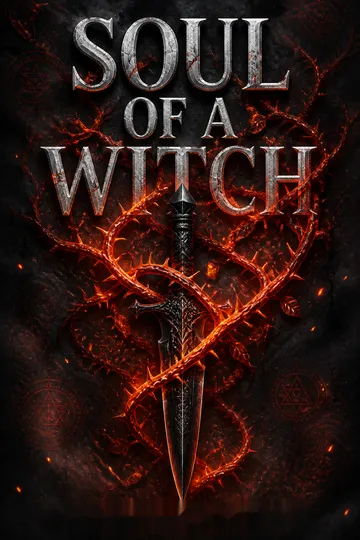
About the Author
Other books by Harley Laroux


Download PDF
Download EPUB
.epub digital book format is ideal for reading ebooks on phones, tablets, and e-readers.








