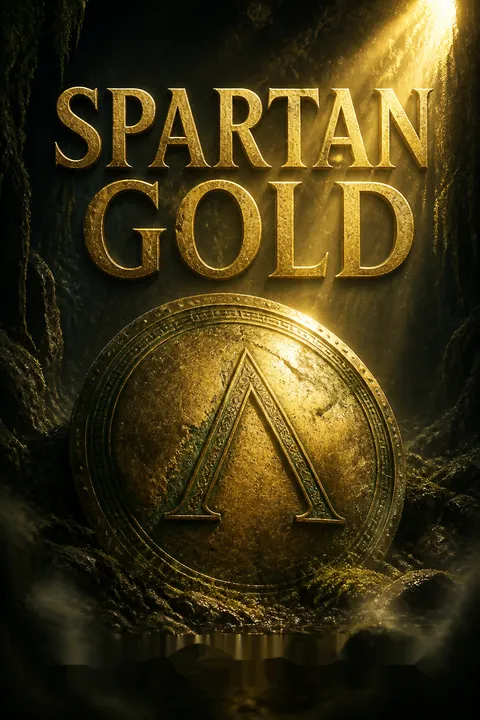


Plot Summary
Prologue
In 1800, Napoleon leads his army across the snowbound Grand St. Bernard Pass toward Italy. A scout, Arnaud Laurent, guides him to a hidden ice cavern, where Napoleon finds an ancient Persian shield and, deeper inside, two towering columns of ice.
A woman’s golden face stares from within one. The discovery is never explained here, but it leaves a bright, hard question buried in the mountains: what treasure could draw Napoleon’s closest friend into such a place?
The prologue sets history in motion through an image rather than an explanation. Napoleon is introduced as a commander who believes the future belongs to whoever can seize it, yet the golden face presents him with a past he cannot control. The Persian shield quietly links his campaign to an older empire, while the sealed woman suggests that the material traces of history may outlast the ambitions attached to them. This contrast prepares the novel’s central irony: powerful men pursue legacies through objects, but the objects do not necessarily serve the story their owners imagine.
A Periscope in the Swamp
Sam and Remi Fargo, a married team of adventurers and philanthropists, have come to Maryland’s Pocomoke Swamp to search for the loot of outlaw Patty Cannon. A brooch linked to Cannon’s victim Henrietta Bronson gives them a promising search area, though their first find is only a modern padlock. On the boat ride back, Sam spots an unnatural shape hidden in a side channel.
He dives beneath a curtain of branches and discovers that the jutting object is a submarine periscope. The tiny craft is far upriver, where no ordinary military submarine should be. Their Cannon search can wait. Sam and Remi return to shore with a new mystery and no idea that someone else is already hunting its answer.
The opening establishes the Fargos’ partnership through complementary habits rather than exposition alone. Sam trusts the pattern his eye catches in the water; Remi tests the evidence before she commits. Their treasure hunt also gives the novel an ethical baseline: they intend to donate most of any Cannon find to a center devoted to the history of slavery. The sudden periscope redirects that pursuit from a local legend to a wartime secret, but the old hunt’s moral purpose remains a quiet measure against the greed that will soon surround them.
A Shard Worth Killing For
Before visiting Ted Frobisher, the antique dealer who supplied the Cannon brooch, Sam and Remi learn he has been taken from his home. They follow his abductor to a remote boiler yard, where a scarred Russian interrogates Ted about a green-glass bottle fragment. Sam draws the attacker’s attention while Remi drops a rock onto his foot, giving Sam the opening to knock him down and free Ted.
At their bed-and-breakfast, Ted explains that the shard came from an old boot he snagged while fishing on the Pocomoke. He posted its strange insect mark online, then forgot about it. Sam recognizes the assault as deliberate and professional. The fragment has become dangerous, and whoever wants it may come back for anyone connected to it.
The rescue turns curiosity into obligation. Sam and Remi do not simply stumble upon a threat; they choose to intervene when Ted’s vulnerability makes the cost of standing aside unmistakable. Their improvised teamwork mirrors their marriage: Sam creates the opening, Remi makes the precise intervention, and neither treats the other as a sidekick. Ted’s inconsequential-seeming shard also challenges the distinction between treasure and evidence. Its value lies not in its material worth but in the chain of histories it can unlock, a chain violent men are prepared to protect.
The Dead Captain’s Bottle
Returning to the hidden craft, Sam and Remi identify it as a German Molch-class midget submarine from the Second World War. They secure the hull, roll it onto the bank, and open its hatch to find Commander Manfred Boehm’s remains inside. His log and diary reveal a companion vessel, the Lothringen, and a fellow submariner, Wolfgang Müller.
Among Boehm’s belongings lies a carefully wrapped bottle whose etched insect matches the mark on Ted’s shard. Research chief Selma Wondrash traces the bottle’s label to Henri Archambault, Napoleon’s winemaker, and dates it to 1819. The Fargos realize they have uncovered one piece of the legendary Lost Cellar, a cache of Napoleon’s wine supposedly hidden after his exile.
The submarine makes history physically intimate: Boehm’s fatal confinement is not an abstraction but a body and a cramped interior the Fargos must enter. Their decision to recover his papers and identify his family gives the discovery an obligation beyond solving the puzzle. The bottle then links two apparently incompatible pasts, Napoleon’s exile and a German wartime mission. That collision suggests history is not a clean sequence of eras. Objects travel, disappear, and acquire new meanings as different people place them in danger.
Bondaruk Claims a Dynasty
The man behind the attack is Hadeon Bondaruk, a Ukrainian crime boss who believes he descends from Xerxes I, the ancient Persian king. His wealth has bought him a private museum, but one important Persian legacy remains beyond his reach.
He tells his operatives that Napoleon’s bottles are only clues to something older. Grigoriy Arkhipov, the scarred mercenary who failed to seize Ted’s shard, is ordered to find the Fargos. Bondaruk then shoots Arkhipov dead for letting the couple intervene, and promotes Arkhipov’s partner, Vladimir Kholkov, to take over the pursuit.
Meanwhile, Selma’s research connects Boehm’s submarine to the Lothringen, sunk off Virginia, and a secret refit stop on Rum Cay. Sam and Remi fly to the Bahamas to follow the trail.
Bondaruk’s self-made royal identity gives the antagonist a psychological logic more complicated than simple acquisitiveness. He has converted historical descent into personal entitlement, treating the past as a title deed and violence as a means of enforcing it. The execution of Arkhipov shows that this private mythology governs his management as well as his goals: failure is intolerable when it threatens the story he tells about himself. By contrast, the Fargos approach history as a shared record. Their journey begins to test whether knowledge can resist a man who mistakes possession for inheritance.
Rum Cay’s Hidden Harbor
On Rum Cay, Sam and Remi search the shoreline for the Goat’s Head landmark mentioned in Boehm’s diary. A reclusive beachcomber lends them his hut and identifies a submarine hydroplane he found near Liberty Rock, suggesting the island’s sea caves may conceal a base. From offshore, Remi recognizes a cliff profile that resembles a goat’s head.
Sam enters the cave during a narrow window between tides and finds a submerged pier, catwalks, and a Nazi flag. Before he can explore further, Remi spots a helicopter. Kholkov’s men arrive and shoot up their dinghy, forcing the Fargos into the cave’s currents. They discover a second submarine, the UM-77, but the pursuers reach it first and take its wooden box.
The island search turns interpretation into a physical skill. The Goat’s Head is not a marked destination but a shape that becomes legible only through Remi’s change of perspective, while Sam’s dive converts that reading into evidence. Their exposure to the cave’s dangerous currents also makes the historical puzzle costly in the present. Kholkov’s attack erases any remaining doubt that this is an academic hunt. The Fargos are no longer free to investigate at leisure; each clue must be read while someone else is actively trying to seize it.
The Cave Becomes an Escape
When Kholkov’s men seal the main cave entrance with explosives, Sam and Remi are trapped underground without their dinghy. Sam finds the flooded UM-77, a smaller Marder-class submarine, and devises a risky way to make it float: he releases its scuttle valves, then rigs a scuba tank to break the catwalk supports and lift the craft.
The plan works. They climb inside and let the underground river carry them through hours of rapids until the submarine emerges in another lagoon. In the aftermath, Selma learns that Kholkov recovered the coded bottle from the cave. The Fargos have lost that clue, but they have survived, and the trail now points to Arnaud Laurent’s grave on Elba.
Sam’s engineering does not conquer the cave so much as negotiate with it. The escape depends on calculated force, decaying infrastructure, and luck, leaving the couple alive but aware that control is partial. Their use of the UM-77 also grants the wreck a second purpose after the death it once carried. That transformation is not uncomplicated triumph: the boat becomes a lifeline, while its box falls into enemy hands. Survival and loss arrive together, strengthening the novel’s recurrent idea that historical objects do not remain inert once people begin using them.
Laurent’s Grave Opens
In Monaco, Sam and Remi meet Yvette Fournier-Desmarais, a descendant of Laurent who reveals that the Russian crime boss had already sought information about the general. Yvette explains that her family secretly moved Laurent’s remains to protect them, then directs the Fargos to a cemetery on Elba.
Their local guide, Umberto Cipriani, admits that corrupt police officer Carmine Bianco has threatened his family and forced him to cooperate with Kholkov. Umberto changes sides and helps them reach the crypt. Inside Laurent’s sarcophagus, Sam finds a small codebook and a metal stamp shaped like the same cicada used on the bottles. Kholkov and Bianco arrive, but the Fargos escape with Umberto and the key to the riddles.
The crypt episode makes family memory a fragile form of stewardship. Yvette’s decision to hide Laurent’s remains protects a relative from vandalism while still allowing honest researchers access; her trust is earned by the Fargos’ conduct, not their reputation alone. Umberto’s coercion complicates the easy division between ally and traitor. He risks betraying the visitors under threat to his family, then chooses to disclose the danger. The episode recognizes that moral agency is exercised under unequal pressure, while the recovered book and stamp turn private burial objects into tools for deciphering a public historical mystery.
The Empty Oubliette
Laurent’s codebook leads Sam and Remi to the Château d’If, where Napoleon’s brother-in-arms Arnaud Laurent may have hidden more wine. The first riddle points to the fortress’s oubliettes, the forgotten prison cells beneath the castle. The Fargos break in after hours, evade a guard, and descend through the dungeon levels, but the marked cell is empty.
They find only the cicada sign, proof that Laurent used the location but no surviving bottle. When they escape through the fortress’s old defensive tunnels, they learn that the next clues depend on another bottle’s label. Selma deciphers a further riddle from the image of Bondaruk’s bottle, sending the Fargos toward Saint Bartholomae’s Pilgrim Church in Bavaria.
The empty cell matters because it prevents the puzzle from behaving like a conventional treasure map. The cicada confirms that the Fargos have read Laurent correctly, yet the absent bottle denies them the satisfaction of a direct reward. The architecture of the oubliette gives this frustration weight: a place designed to erase people becomes a sign in a system intended to preserve a secret. Their escape through the fortress’s older passages also mirrors the investigation itself, which repeatedly requires them to move beneath official surfaces to find the histories those surfaces conceal.
A Bottle Beneath Bavaria
At Saint Bartholomae’s, Remi interprets a clue about the Greek thinker Pythagoras as a direction to form an isosceles triangle. Sam uses the angles of an enormous sextant, presented by Napoleon to Bavaria, to aim toward the church’s minaret. Three cicada marks inside the tower confirm the alignment and point to the nearby hunting lodge of a former Prince-Provost.
Beneath its stonework, the Fargos find a hidden box and another Lost Cellar bottle. Kholkov has followed them, but a sudden snowstorm empties the island. The Fargos hide, sabotage a workboat to draw him away, then escape in another craft. The pursuit leaves them with the bottle and a new question about what Napoleon’s map ultimately protects.
This clue requires the couple to coordinate different forms of thought: Remi notices the geometric implication, while Sam translates it into a usable physical alignment. The bottle’s recovery rewards that partnership without making the search feel effortless. Kholkov’s presence turns the tourist site into a temporary trap, and the sudden storm gives the Fargos cover while also stripping away the comfort of a predictable setting. The episode’s central contrast is between public display and concealed history: Napoleon’s ceremonial sextant becomes useful only when treated not as an ornament but as an instrument.
Bucklin’s Impossible History
In Salzburg, Remi contacts Evelyn Torres, a former curator at Delphi, to ask about Persian artifacts. Torres recalls that Thomas Bucklin, a visiting scholar, was dismissed after trying to test ancient columns with nitric acid, a method used to detect gold.
The Fargos recognize Bucklin as the restorer working in Bondaruk’s private laboratory. His papers argue that Xerxes’ soldiers stole two Karyatids, Greek statues shaped as women, which the Spartans later captured and hid while carrying them north.
Bondaruk believes these golden columns are the Persian family legacy he must recover and melt into a throne. Selma deciphers the next bottle’s symbols, and the Fargos follow the trail to Venice, where another riddle may reveal the Spartans’ route.
Bucklin’s theory reframes the chase from a search for collectible wine to a contest over whether historical scholarship can correct its own blind spots. His methods are suspect, but the Fargos cannot dismiss his argument simply because it is academically unfashionable; they must test it against physical evidence. Bondaruk’s intended throne sharpens the stakes: he wants to turn artifacts bearing a violent history into a monument to his own lineage. The Karyatids therefore embody a conflict between preservation and appropriation, with research serving as the means by which the Fargos distinguish recovery from possession.
Tradonico’s Hidden Inheritance
The next riddle sends Sam and Remi from Venice’s archives to Poveglia, where they learn that the ninth-century Doge Pietro Tradonico and his wife were moved after Napoleon annexed the island. Their remains went first to the Basilica della Salute, then to the Tradonico family’s home in Oprtalj, Croatia. At the family museum, Andrej Tradonico leads them into catacombs beneath the building.
Pietro and his wife lie in separate niches, but an old box from their coffin has been stored with family objects. Inside it is another Napoleon bottle. Selma’s translation of its label supplies the next directions: east of a waterway, toward a temple at the crossroads of conquerors. The final trail points back to the Grand St. Bernard Pass.
The Venetian sequence shows how a clue can survive through administrative changes, family custody, and even a forgotten historical society. Tradonico’s remains are not simply evidence to be extracted; they belong to a living community that has kept a partial record of their movement. The Fargos gain access by asking for help rather than treating the catacombs as an abandoned vault. The bottle’s concealment inside a coffin box also entwines the puzzle with mourning and continuity. What Napoleon designed as a private legacy has persisted because ordinary descendants preserved what they did not fully understand.
The Pass Starts Closing
Selma deciphers the last riddle and Sam and Remi identify the Grand St. Bernard Pass, where Napoleon once crossed with his army. Before they reach the mountain, Selma discovers that a security guard at the Fargos’ home was blackmailed into installing a keylogger on her computer. Their plans have leaked to Bondaruk.
At the pass, Sam locates the remnants of the Temple of Jupiter and follows the riddle’s bearings to a sheer rock face. Cool air blowing through a crack reveals a hidden cavern. The Fargos shift a heavy slab and uncover Laurent’s cicada stamp. They enter the descending cave system, but Bondaruk and Kholkov arrive behind them, convinced the prize lies below.
The keylogger exposes the cost of trusting systems that appear secure. Bondaruk does not need to outthink the Fargos at every turn; he can exploit another person’s vulnerability and let their own research disclose the route. The guard’s coerced act is especially important because it resists a simplistic betrayal narrative. At the pass, the puzzle becomes topography: historical names and measurements guide the Fargos to a fissure that ordinary visitors would overlook. The mountain’s beauty now carries pressure, as the site that opened the story becomes the place where competing ideas of legacy will finally collide.
The Karyatids in Darkness
Deep underground, Sam and Remi find a Spartan sword and follow signs of the ancient Greek and Persian forces through the cave. Beyond a narrow crawlspace, two gold Karyatids lie side by side, their robes and faces remarkably intact. Kholkov corners the Fargos near a waterfall, but Remi shoots him before he can kill Sam.
Bondaruk then appears and wounds Sam while aiming at Remi. Sam uses the recovered Spartan sword to sever Bondaruk’s gun hand, disarming him. Rather than let the crime boss reach the columns, Sam and Remi force him away from the chamber. They have found the treasure Bondaruk pursued, but its survival now depends on getting out alive and placing it beyond his control.
The climax gives material form to the novel’s argument about historical inheritance. The Karyatids have survived conquest, concealment, and centuries of misinterpretation, yet their survival is not guaranteed by age alone. It depends on present choices. Remi’s action against Kholkov and Sam’s use of the Spartan sword turn the rival empires’ weapons against those who would repeat their violence. Bondaruk seeks to complete Xerxes’ imagined victory by converting the statues into a throne; the Fargos instead treat them as evidence that belongs to a broader human record. Their intervention interrupts the cycle without claiming ownership.
Epilogue
Four weeks later, Sam and Remi help return the Karyatids to Greece, where archaeologists uncover the remains of the Spartan and Persian soldiers who guarded them. Their research accounts for eleven of Napoleon’s twelve bottles, including seven hidden beneath the farmhouse of Louisa Foque, a young descendant of the sailor who helped conceal the cache.
The discovery lets Louisa pay her debts and return to school. The Fargos turn over their bottles to France and direct the resulting endowment to their foundation. Patty Cannon’s Maryland treasure remains unfound, and the couple leave Beaucourt already looking toward their next search.
The ending resolves the central contest without pretending that every mystery has been closed. The Karyatids return to public study, while the bottles become both historical evidence and practical help for Louisa, whose inheritance is not a claim to power but a chance to rebuild her life. The contrast with Bondaruk’s dynastic obsession is exact: he wanted wealth and artifacts to confirm a private identity; the Fargos use discoveries to restore context and distribute benefit. Yet one bottle remains unaccounted for, and Patty Cannon’s treasure still waits. Resolution, in this adventure, means returning what can be returned and continuing to ask what history has hidden.
Analysis
Spartan Gold makes the past less like a stable archive than a contested landscape. Its histories travel through bottles, military logs, family catacombs, museum records, and caves, with each medium preserving some facts while obscuring others. The Fargos succeed not because they possess a single authoritative key, but because they combine engineering, anthropology, archival research, and trust in one another. Their method is collaborative and corrigible: Selma revises a translation, Remi notices a pattern, and Sam tests an interpretation against the physical world.
Bondaruk offers the inverse model. He converts genealogy into entitlement and treats historical objects as instruments for confirming a self-image. His claimed descent from Xerxes matters less as a fact than as a psychological structure: it lets him interpret an ancient king’s unfinished ambition as his own assignment. The planned throne is therefore not merely a criminal project. It is a monument to the fantasy that recovering an object can repair a wounded lineage. The novel counters that fantasy by showing how little Bondaruk understands the human histories attached to what he wants to possess.
The Karyatids’ movement through successive empires complicates any clean account of ownership. Persians seize them, Spartans carry them away, Laurent conceals them, and modern characters pursue them for incompatible reasons. The Fargos’ ethical distinction is not that they avoid taking objects; they sometimes remove clues to protect them or survive. It is that they understand temporary custody as a responsibility, not a title. Their charitable work and eventual return of artifacts make this principle concrete.
The ending also refuses total closure. The recovered bottles and statues can be returned, Louisa can be helped, and Bondaruk’s attempt can be stopped, but one bottle remains missing and Patty Cannon’s treasure is still in the swamp. History remains open not because the story lacks resolution, but because discovery creates further obligations and questions.
Review Summary
Spartan Gold receives mixed reviews, with an average rating of 3.86/5. Readers praise the fast-paced adventure and historical elements but criticize the unrealistic scenarios and lack of character development. The protagonists, Sam and Remi Fargo, are seen as too perfect and invincible. Some enjoy the treasure hunt aspect and global settings, while others find the plot formulaic and the villains ineffective. Despite its flaws, many readers find it entertaining as a light, summer read, though some struggle to stay engaged.
People Also Read
Characters
Sam Fargo
The inventive field engineerSam is an engineer, former DARPA employee, and half of the married treasure-hunting team he forms with Remi. He trusts mechanical intuition and physical problem-solving, often turning whatever is nearby into a tool or an escape route. His appetite for risk is balanced by affection and responsibility: he notices danger quickly, but he is especially attentive to Remi and to people caught in the Fargos’ investigations. Sam’s interest in history comes through stories of people acting under pressure. Across the adventure, he must repeatedly decide when calculation can help and when he must accept uncertainty, especially as the trail moves from decipherable objects into unstable caves and hostile territory.
Remi Fargo
The historian who sees patternsRemi is an anthropologist and historian whose careful reading of people, places, and historical context complements Sam’s engineering instincts. She notices patterns others miss, from the shape of a distant cliff to the geometry hidden in a cipher. Her composure does not make her cautious to the point of passivity; she chooses danger knowingly and acts decisively when Sam is threatened. Remi and Sam’s relationship is intimate but not hierarchical. They challenge each other, share decisions, and trust each other’s competence under pressure. She is also alert to the human consequences of discovery, helping ensure that the Fargos treat artifacts as evidence and responsibility rather than prizes to keep.
Hadeon Bondaruk
The self-made Persian heirBondaruk is a wealthy Ukrainian crime boss whose power rests on organization, fear, and a carefully cultivated public image. Raised amid political violence in Turkmenistan, he learned to equate survival with strength and later turned that lesson into a ruthless business philosophy. His asserted descent from Xerxes I transforms historical research into a personal obsession: he treats the past as proof of his own stature and seeks objects that can make that identity tangible. Bondaruk is intelligent and informed, but his scholarship is subordinated to possession. He has little patience for failure because setbacks threaten not only his plans but the grand narrative he has built around his lineage.
Vladimir Kholkov
The relentless field commanderKholkov is Bondaruk’s senior operative and a former Spetsnaz officer accustomed to planning, surveillance, and controlled force. Compared with Bondaruk, he is more practical and less invested in the historical mythology behind the mission. He tracks the Fargos, anticipates their habits, and repeatedly adjusts when they escape. His military discipline makes him dangerous, but his work remains tied to a hierarchy in which the employer’s ambitions set the terms. Kholkov serves as the Fargos’ most persistent human counterforce, testing their ability to remain inventive when an opponent can match their preparation and has far fewer scruples about using violence.
Selma Wondrash
The research-room commanderSelma leads the Fargos’ research team from California, coordinating archival work, travel, and technical analysis with exacting discipline. Her knowledge connects scattered artifacts to dates, people, and places, while her team supplies the patient labor needed to decipher Laurent’s layered code. Selma is rigorous enough to acknowledge and correct her own errors, a quality that makes her more valuable than an infallible plot device. Although she is often physically distant from the danger, her choices shape the Fargos’ route and help keep their home team safe.
Ted Frobisher
The antique dealer with a clueTed is a knowledgeable antique dealer in Princess Anne and a friend of the Fargos. His interest in local history leads him to post an image of a peculiar glass shard, unaware that the mark will draw violent attention. Ted is private, prickly, and deeply attached to his shop and routine. His reluctance to involve authorities reflects his distrust of institutions as much as his wish to put the ordeal behind him. Though he is not an adventurer by temperament, his small act of curiosity starts the chain that connects the Maryland swamp to Napoleon’s hidden legacy.
Grigoriy Arkhipov
Bondaruk’s scarred enforcerArkhipov is a former Russian special-forces soldier, experienced interrogator, and Bondaruk’s original choice to recover the shard. He is physically tough and professionally patient, able to conceal himself and adapt after the Fargos foil his first attempt. His confidence comes from years of surviving armed conflict, where pain and risk have become familiar measures rather than deterrents. Arkhipov recognizes Sam and Remi as more capable than ordinary bystanders, but he still underestimates the complications they can create.
Arnaud Laurent
Napoleon’s trusted cryptographerLaurent is Napoleon’s longtime friend, military adviser, and confidant, introduced in the prologue as the man who leads the emperor to a hidden cavern. His close relationship with Napoleon gives him access to the emperor’s private plans, while his burial objects and coded notes later preserve a separate record of those plans. Laurent’s defining role is that of custodian: he translates a ruler’s anxieties into a system designed to outlast the ruler himself. The Fargos encounter his legacy through the cipher, the cicada stamp, and the scattered clues that guide them across Europe.
Napoleon Bonaparte
The exiled emperor and plannerNapoleon appears in the prologue and through the historical scheme that drives the modern adventure. A commander consumed by ambition and legacy, he entrusts Laurent with an elaborate trail of clues meant to preserve a route to a hidden prize. His plans reveal a ruler who continues to think politically even after defeat, hoping that a later generation might restore the Bonaparte name. In the present-day story, Napoleon’s influence persists not as direct authority but as a puzzle built from bottles, symbols, history, and assumptions about who deserves to inherit power.
Manfred Boehm
The trapped submarine captainBoehm is the German commander of the UM-34, whose diary and naval log become crucial records in the Fargos’ investigation. His entries reveal a close friendship with Wolfgang Müller and a dangerous wartime mission undertaken during Germany’s decline. The Fargos encounter him through the evidence left in his submarine, which makes the human cost of the vessel’s history impossible to ignore. His writings connect the two midget submarines, the Lost Cellar bottles, and the secret stop at Rum Cay.
Wolfgang Müller
The surviving submarinerMüller is a former German naval officer who commanded the UM-77 and survived the war after the Lothringen was captured. In old age, he lives with his granddaughter in Marseille and provides the Fargos with information about the bottles and his wartime companion. He remembers duty as complicated rather than glorious: he and Boehm did not support Hitler, yet they served their country in a mission they understood might be suicidal. His testimony supplies a human account where archives offer only gaps.
Umberto Cipriani
The pressured Elban guideUmberto is a museum assistant and longtime friend of Yvette who knows Elba’s local history and can guide the Fargos toward Laurent’s crypt. His family’s experience of wartime occupation shapes his understanding of courage and resistance. When a corrupt officer threatens his household, Umberto faces a choice between protecting his relatives and honoring the trust placed in him. He is neither a flawless ally nor a simple betrayer; his decisions show how coercion can narrow a person’s options without extinguishing moral responsibility.
Yvette Fournier-Desmarais
Laurent’s generous descendantYvette is Laurent’s distant descendant, a wealthy Monaco resident who lives with unusual ease around her privilege. She values generosity over social display and responds to the Fargos because their adventures are joined to charitable work. Her family quietly moved Laurent’s remains to protect them, giving her practical knowledge of the crypt and the authority to grant access. Yvette’s hospitality also offers the Fargos a rare place to recover and think while Bondaruk’s pursuit tightens.
Carmine Bianco
The corrupt local officerBianco is a police officer on Elba who uses his position to serve criminal interests. He threatens the Ciprianis and helps Kholkov corner the Fargos, turning local authority into a tool of intimidation. His conduct complicates the travelers’ assumption that official institutions will protect them.
Rubin Haywood
The intelligence contactRube is Sam’s longtime friend from their early government training and a CIA case officer with a broad network of contacts. He offers information about Bondaruk, Arkhipov, and Kholkov, then helps arrange security for the Fargos’ home team. Rube is concerned for Sam and Remi without pretending he can control their choices. His support gives them useful intelligence, though it cannot remove the risks their investigation creates.
Thomas Bucklin
The controversial antiquities scholarBucklin is a historian formerly associated with the University of Edinburgh whose independent research focuses on Persia and Greece. Evelyn Torres remembers him attempting an unauthorized test on Delphi artifacts, a method that suggests he was searching for gold rather than conducting ordinary conservation work. The Fargos later recognize him as Bondaruk’s restorer. His theory about the Karyatids is controversial, but it provides the historical framework that links Bondaruk’s obsession to the Lost Cellar.
Evelyn Torres
The Delphi museum expertEvelyn is a former assistant curator at the Delphi Archaeological Museum and a trusted contact of Remi’s. Her firsthand knowledge of the site and its artifacts helps the Fargos assess Bucklin’s behavior and research. She is careful about the difference between accepted history and unverified claims, but she does not withhold useful evidence merely because it complicates the official account.
Louisa Foque
The descendant in debtLouisa is a young woman living in a heavily mortgaged farmhouse in Beaucourt after her parents’ deaths. She has studied American literature and hopes to resume her education, but family troubles have interrupted her plans. Her connection to Léon Pelletier gives the Fargos a final lead in the Lost Cellar mystery. Louisa represents a very different kind of inheritance from Bondaruk’s: one that can offer a person a future rather than a claim over the past.
Andrej Tradonico
The family museum keeperAndrej runs a small museum devoted to the Tradonico family in Oprtalj, Croatia. His knowledge is modest but concrete, grounded in family objects and local memory rather than grand historical theory. He helps the Fargos locate Pietro Tradonico’s remains and the box kept with them.
Pete Jeffcoat
The archaeological researcherPete is one of Selma’s research assistants, trained in archaeology and accustomed to working through difficult historical leads. His upbeat manner helps sustain the research team during a dangerous investigation, while his work with Wendy contributes to deciphering the bottle symbols.
Wendy Corden
The research team analystWendy is a social-sciences graduate and Selma’s research assistant, as well as Pete’s partner. She helps analyze and reproduce the coded symbols, providing the detailed technical work that allows the Fargos to keep moving through the riddles.
Guido
The discreet arms supplierGuido is a Nassau shoemaker and a trusted contact of Rube’s. He supplies Sam and Remi with an unregistered revolver before their trip to Rum Cay, while urging them to avoid killing anyone. His small act of assistance shows how the Fargos’ network extends beyond formal agencies.
Petro Bohuslav
The archive curator with plansBohuslav works with historical records at Taras Shevchenko University and possesses old plans and notes about Bondaruk’s estate. He hopes to move to Trieste with his ill wife, Olena, and offers information that could help him keep that promise. His practical desperation makes the Fargos question his motives before they accept his help.
Arnaud Laurent
Napoleon’s trusted cryptographerLaurent is Napoleon’s longtime friend, military adviser, and confidant, introduced in the prologue as the man who leads the emperor to a hidden cavern. His close relationship with Napoleon gives him access to the emperor’s private plans, while his burial objects and coded notes later preserve a separate record of those plans. Laurent’s defining role is that of custodian: he translates a ruler’s anxieties into a system designed to outlast the ruler himself. The Fargos encounter his legacy through the cipher, the cicada stamp, and the scattered clues that guide them across Europe.
Plot Devices
The Lost Cellar bottles
A wine-based treasure mapNapoleon’s rare Lacanau bottles are valuable in their own right, but their labels carry coded symbols and riddles devised with Arnaud Laurent. Each bottle points toward another piece of the route, while Laurent’s book and cicada stamp help interpret the marks. The bottles connect the modern search to Napoleon’s exile, the wartime submarines, and the hidden Karyatids. Their unusual form also explains why the clues survive: the bottles can be treated as collectibles and passed through private hands without revealing their purpose. The device drives the geographical journey while repeatedly asking whether the Fargos are pursuing wine, history, or the object concealed at the end.
The UM-34 and UM-77
Wartime wrecks preserve evidenceThe two German midget submarines connect the Pocomoke River to Rum Cay and reveal the wartime route of Boehm and Müller. The UM-34 contains Boehm’s remains, diary, log, and a Lost Cellar bottle. The UM-77 preserves another bottle and becomes an improvised escape craft when the Fargos are trapped underground. The submarines turn archival history into physical investigation, but their confined interiors also embody the lethal conditions faced by their crews. Their discovery gives the Fargos clues, evidence, and danger in equal measure.
The cicada and codebook
A repeatable mark identifies cluesThe cicada symbol appears on the wine labels, Laurent’s stamp, and the hidden locations that form the trail. Its association with Napoleon’s family emblem gives the Fargos a way to distinguish deliberate markers from ordinary decoration. Laurent’s codebook explains how the bottle symbols function as a cipher, while the riddles require historical knowledge, geometry, and attention to language. Together, stamp and book make the search decipherable without making it easy: the clues offer a method, but each solution still depends on interpretation.
The cave networks
Hidden routes turn history physicalCaves beneath Rum Cay, Château d’If, Bondaruk’s estate, and the Grand St. Bernard pass hide the submarines, smuggling passages, and final archaeological chamber. Their currents, unstable supports, narrow crawls, and limited exits force the Fargos to solve immediate physical problems alongside historical riddles. The caves repeatedly place old structures in new use: wartime submarine docks become an escape route, a fortress’s forgotten passages shelter intruders, and an alpine fissure conceals objects carried across continents.
The golden Karyatids
The real prize behind the wineBucklin’s theory identifies the Karyatids as Greek statues whose stone forms were replaced with gold and whose disappearance was disguised by the histories of the Persian invasion. Bondaruk sees them as the completion of Xerxes’ ambition and plans to transform them into a throne. For the Fargos, they are an irreplaceable record of an ancient conflict and its aftermath. The statues concentrate the novel’s struggle over historical ownership: whether the past exists to magnify a powerful claimant or to be preserved, studied, and returned to public knowledge.
FAQ
0. Synopsis & Basic Details
What is Spartan Gold about?
- A Global Treasure Hunt: Spartan Gold follows Sam and Remi Fargo, a husband-and-wife team of treasure hunters, as they stumble upon a mysterious World War II German mini-submarine in a Maryland swamp, leading them to a rare bottle of wine connected to Napoleon Bonaparte's legendary "Lost Cellar." This discovery propels them into a high-stakes international chase across Europe and the Black Sea.
- Unraveling a Napoleonic Riddle: The Fargos must decipher a complex series of riddles and symbolic codes left by Napoleon and his trusted enologist, Henri Archambault, to uncover a hidden prize. Their quest takes them through historical sites, ancient crypts, and treacherous landscapes, revealing layers of a two-century-old secret.
- Clash of Legacies: Their pursuit is relentlessly shadowed by Hadeon Bondaruk, a ruthless Ukrainian mafia kingpin obsessed with a personal ancestral legacy tied to the ancient Persian king Xerxes I. Bondaruk believes Napoleon's treasure map leads to a prize that will validate his own lineage, setting up a deadly confrontation between historical preservation and megalomaniacal ambition.
Why should I read Spartan Gold?
- Intricate Historical Weaving: Readers should dive into Spartan Gold for its masterful blend of historical fact and thrilling fiction, seamlessly connecting Napoleon's ambitions, World War II naval secrets, and ancient Greek and Persian history into a cohesive, fast-paced narrative. The novel offers a fresh perspective on historical figures and events, making the past feel alive and relevant.
- High-Stakes Global Adventure: The book delivers a relentless, globe-trotting adventure, taking readers from the murky Pocomoke Swamp to the sun-drenched Bahamas, the medieval charm of Elba, and the treacherous Alps. Each location is vividly described, serving as more than just a backdrop but an integral part of the unfolding mystery and danger.
- Intellectual Thrill and Resourceful Heroes: Beyond the action, Spartan Gold is a puzzle-solver's delight, challenging readers alongside Sam and Remi Fargo as they decode complex riddles and outwit a formidable adversary. The Fargos' blend of intellect, resourcefulness, and unwavering moral compass makes them compelling protagonists, offering both excitement and a satisfying sense of justice.
What is the background of Spartan Gold?
- Napoleonic Era Intrigue: The core of Spartan Gold is rooted in the historical context of Napoleon Bonaparte's exile and his desperate attempts to secure his legacy. The narrative draws heavily on Napoleon's strategic foresight, his relationship with trusted confidants like Arnaud Laurent, and the symbolic importance he placed on objects like the Lacanau wine and his family crest's cicada.
- World War II Naval Secrets: The discovery of the Molch-class mini-submarine, UM-34, and the Marder-class UM-77, grounds the story in the clandestine naval operations of Nazi Germany. The details of these "death trap" subs and their improbable journey across the Atlantic add a layer of historical realism and mystery, highlighting the desperate measures taken during the war.
- Ancient Greco-Persian Conflict: A significant historical backdrop is the Greco-Persian War, particularly Xerxes I's invasion of Greece and the Battle of Thermopylae. The novel reinterprets historical accounts, positing a hidden treasure—the Siphnian Karyatids—that becomes the ultimate prize, linking ancient ambition with modern-day obsession. This intertextual connection enriches the narrative, providing a deep historical foundation for the treasure hunt.
What are the most memorable quotes in Spartan Gold?
- "A tyrant is most tyrant to himself.": Sam Fargo's quote, attributed to George Herbert, encapsulates the tragic irony of Napoleon's fate and, by extension, Bondaruk's. It highlights the theme of self-imprisonment through unchecked ambition and paranoia, suggesting that even the most powerful individuals are ultimately undone by their own psychological burdens.
- "Money is just money. It's what you do with it that counts.": Sam's retort to Bondaruk during their phone call defines the Fargos' core philosophy and contrasts sharply with Bondaruk's materialistic and power-driven worldview. This quote underscores the novel's thematic exploration of wealth's purpose, emphasizing philanthropy and historical preservation over personal gain or destructive obsession.
- "Fortune favors the bold.": This recurring phrase, often uttered by Sam, serves as both a guiding principle and a subtle foreshadowing of the Fargos' daring tactics. It reflects their adventurous spirit and willingness to take calculated risks, contrasting with Bondaruk's more brutal but less adaptable approach, ultimately proving crucial to their success in Spartan Gold.
What writing style, narrative choices, and literary techniques does Clive Cussler and Grant Blackwood use?
- Fast-Paced, Action-Oriented Narrative: Cussler and Blackwood employ a propulsive, high-octane narrative style, characterized by rapid scene changes, cliffhanger chapter endings, and a constant sense of urgency. This keeps the reader engaged, mirroring the Fargos' relentless pursuit and narrow escapes, a hallmark of the adventure thriller genre.
- Detailed Historical Integration: The authors skillfully weave extensive historical research into the plot, providing rich context for the riddles, locations, and characters. This is achieved through expository dialogue, character internal monologues, and detailed descriptions of historical artifacts and sites, enhancing the reader's understanding of the deeper 'Spartan Gold' themes.
- Dual Protagonist Perspective: The narrative primarily follows Sam and Remi Fargo, utilizing their complementary skills—Sam's engineering intuition and Remi's anthropological expertise—to drive the plot. This dynamic partnership allows for diverse problem-solving approaches and enriches character development through their witty banter and mutual reliance, a key element of the 'Sam Fargo motivations' and 'Remi Fargo character' analysis.
1. Hidden Details & Subtle Connections
What are some minor details that add significant meaning?
- The Cicada Symbol's Evolution: Selma's discovery that Napoleon's family crest's "bee" was originally a "golden cicada" representing "immortality and resurrection" (Chapter 13) is a crucial detail. This subtle shift in symbolism from a common insect to one with profound ancient meaning elevates the entire quest from a simple treasure hunt to a pursuit of eternal legacy, directly linking Napoleon's ambition to Bondaruk's obsession with Xerxes.
- The "Goat's Head" as a Navigational Aid: What Sam and Remi initially assume is a tavern name in Boehm's diary turns out to be a specific rock formation on Rum Cay (Chapter 14). This seemingly minor detail highlights the meticulous planning of Napoleon and Laurent, who designed the riddles to be solvable only through careful observation and a deep understanding of the local environment, a key aspect of the 'Spartan Gold analysis'.
- Pelletier's Dual Identity: The revelation that Sergeant Léon Arienne Pelletier, Laurent's subordinate, later became the smuggler Lionel Arienne (Epilogue) is a brilliant callback to the prologue. This hidden connection explains how a trusted military man could be involved in a clandestine operation, adding a layer of depth to Laurent's network and Napoleon's foresight in choosing loyal, adaptable agents for his long-term plan.
What are some subtle foreshadowing and callbacks?
- Napoleon's Prologue Discovery: The opening scene where Napoleon and Laurent discover the "golden face of a woman" encased in ice (Prologue) subtly foreshadows the ultimate prize: the golden Siphnian Karyatids. This early glimpse primes the reader for the ancient origins of the treasure, linking Napoleon's initial encounter with the Fargos' eventual discovery.
- The "Huisgenooten" Etymology: Sam's sudden recollection of the word "Huisgenooten" (Chapter 44), meaning "House Fellows" and referring to French Calvinists, is a clever callback to his college reading. This seemingly obscure linguistic detail unlocks the first line of the riddle, demonstrating how seemingly unrelated knowledge can be crucial to solving complex puzzles in Spartan Gold.
- The Grand St. Bernard Pass Revisited: The Fargos' journey to the Grand St. Bernard Pass (Chapter 56) is a direct callback to the book's prologue, bringing the narrative full circle to the site of Napoleon's initial discovery. This structural choice emphasizes the cyclical nature of history and the enduring power of the past, reinforcing the 'Spartan Gold themes' of legacy and ambition.
What are some unexpected character connections?
- Bondaruk's Xerxes Obsession: The revelation that Hadeon Bondaruk believes himself to be a direct descendant of Xerxes I (Chapter 2) and his subsequent creation of a private Achaemenid Dynasty museum (Chapter 38) is an unexpected and deeply psychological connection. This personal obsession drives his ruthless pursuit of the Karyatids, transforming him from a generic villain into a character motivated by a profound, albeit deluded, sense of ancestral destiny, central to 'Hadeon Bondaruk motivations'.
- Umberto Cipriani's Redemption: Umberto's initial betrayal under duress, followed by his courageous decision to aid the Fargos and confront Bianco (Chapter 24-26), creates an unexpected bond of trust and respect. His personal history with Nazi occupation and his family's partisan past provide a moral anchor, highlighting the theme of standing against tyranny, even in small ways, a nuanced aspect of 'Spartan Gold character analysis'.
- The Mysterious "Sampson" / "Cussler" Hut: The beachcomber on Rum Cay, who provides the Fargos with a crucial clue and whose hut bears the name "CASA DE CUSSLER" (Chapter 14), is an unexpected meta-fictional connection. This subtle nod to the author Clive Cussler himself creates a playful, almost guardian-angel-like presence, hinting at a benevolent force guiding the Fargos' quest.
Who are the most significant supporting characters?
- Selma Wondrash: The Research Backbone: Selma, the Fargos' research chief, is indispensable, providing critical historical context, deciphering complex codes, and managing logistics from afar (e.g., Chapter 10, 13, 21, 55). Her "near-photographic memory" and "rabid" dedication to uncovering facts are the intellectual engine of the Fargo Foundation, making her crucial to solving the 'symbolic codes and riddles' and understanding 'Spartan Gold themes'.
- Yvette Fournier-Desmarais: The Influential Descendant: Yvette, Arnaud Laurent's distant granddaughter, provides not only the crucial access to Laurent's crypt but also a safe haven and invaluable insights into her ancestor's character (Chapter 22). Her independent spirit and admiration for the Fargos' charitable work highlight the theme of responsible wealth and legacy, offering a stark contrast to Bondaruk's greed.
- Umberto Cipriani: The Local Guide and Moral Compass: Umberto, the museum assistant curator on Elba, initially succumbs to fear but ultimately aids the Fargos, risking his life and family to do so (Chapter 24-27). His deep local knowledge and personal history with wartime resistance provide authentic cultural context and a powerful example of moral courage, enriching the 'historical context Spartan Gold' and character dynamics.
2. Psychological, Emotional, & Relational Analysis
What are some unspoken motivations of the characters?
- Bondaruk's Quest for Validation: Hadeon Bondaruk's unspoken motivation is a profound need for ancestral validation and a desire to rectify historical "wrongs" against his perceived lineage. His obsession with Xerxes I and the Siphnian Karyatids isn't just about wealth, but about completing a "family legacy" (Chapter 29, 43), a deep-seated psychological drive to prove his royal bloodline and assert his place in history.
- Laurent's Loyalty to Napoleon's Legacy: Arnaud Laurent's meticulous creation of the riddle-map and his dedication to hiding the bottles stem from an unspoken, unwavering loyalty to Napoleon's vision for his dynasty. Despite Napoleon's personal failings, Laurent's actions are driven by a desire to ensure the "Bonaparte name" could return to greatness (Chapter 21), even if Napoleon II proved unworthy, highlighting the theme of enduring fealty.
- Sam's Protective Instincts for Remi: Beneath Sam's adventurous spirit and intellectual curiosity lies a powerful, unspoken motivation to protect Remi. His insistence on her safety, his willingness to take the most dangerous tasks, and his constant checks on her well-being (e.g., "If you get killed I'll never forgive you," Chapter 5) reveal a deep emotional bond that underpins their partnership and adds a personal stake to the 'international intrigue'.
What psychological complexities do the characters exhibit?
- Bondaruk's Megalomania and Insecurity: Bondaruk exhibits a complex blend of megalomania, believing himself a descendant of Xerxes I, and underlying insecurity, as evidenced by his violent reactions to setbacks and his need for external validation through ancient artifacts (Chapter 2, 43). His "management style" (Chapter 11) reveals a man who demands absolute control, masking a fragile ego that cannot tolerate failure or challenge.
- Manfred Boehm's Fatalistic Duty: Korvettenkapitän Manfred Boehm's diary entries reveal a psychologically complex character grappling with fatalism and duty. He volunteers for a "suicide" mission, knowing the Molch is a "death trap" (Chapter 8), yet expresses a desire to "prove worthy of our commands" (Chapter 12). This internal conflict between self-preservation and patriotic obligation paints a poignant picture of a man resigned to his fate in a losing war.
- Sam Fargo's Calculated Impulsiveness: Sam Fargo displays a fascinating psychological complexity, balancing his engineer's logical, calculated approach with moments of daring impulsiveness. His "intuitive, right-brain thinking" (Chapter 1) allows for creative solutions, but his "adventurous impulses" (Chapter 1) often lead him into immediate danger, a dynamic that Remi frequently calls out, adding tension and humor to their 'Sam Fargo character' development.
What are the major emotional turning points?
- Discovery of Boehm's Mummified Remains: The emotional turning point for Sam and Remi occurs with the discovery of Manfred Boehm's mummified body in the UM-34 (Chapter 9). This visceral encounter humanizes the historical mystery, transforming it from an abstract puzzle into a tangible tragedy, deepening their resolve to honor Boehm's memory and ensure the treasure's proper disposition.
- Umberto's Confession and Redemption: Umberto Cipriani's tearful confession of being coerced by Bianco (Chapter 25) is a significant emotional turning point, shifting the Fargos' perception of him from a potential accomplice to a victim. His subsequent courage in aiding their escape and confronting Bianco evokes empathy and highlights the moral complexities of survival under duress.
- Sam's Near-Fatal Confrontation with Bondaruk: Sam's near-death experience in the Grand St. Bernard cave, where he is shot by Bondaruk (Chapter 57), is a major emotional climax. This moment underscores the extreme stakes of their quest and Remi's fierce loyalty, solidifying their bond and reinforcing the personal cost of their pursuit of 'Spartan Gold'.
How do relationship dynamics evolve?
- Sam and Remi's Deepening Partnership: The Fargos' relationship evolves from a strong, loving partnership into an almost telepathic bond under extreme pressure. Their witty banter and good-natured disagreements (Chapter 1) give way to seamless teamwork and unwavering trust in life-or-death situations (Chapter 5, 17, 49). Their shared commitment to justice and mutual protection strengthens their emotional connection, making them a formidable force against Bondaruk.
- Bondaruk's Brutal Hierarchy: Bondaruk's relationship dynamics are characterized by absolute power and ruthless pragmatism, as seen in his "management style" with Arkhipov and Kholkov (Chapter 11). He views his subordinates as expendable tools, brutally punishing failure to maintain control. This dynamic highlights his tyrannical nature and the fear he instills, shaping the 'Hadeon Bondaruk explained' aspect of the narrative.
- The Fargos' Evolving Trust with Allies: The Fargos' relationships with supporting characters like Yvette Fournier-Desmarais and Umberto Cipriani evolve from cautious alliances to deep trust. Yvette's immediate openness and Umberto's eventual courage demonstrate the Fargos' ability to inspire loyalty and forge genuine connections, contrasting with Bondaruk's inability to do so, a key 'Spartan Gold character' theme.
4. Interpretation & Debate
Which parts of the story remain ambiguous or open-ended?
- The Fate of the Remaining Seven Bottles: While the Fargos account for five of Napoleon's twelve bottles and recover three, the ultimate fate of the remaining seven bottles from the "Lost Cellar" remains ambiguous (Epilogue). The narrative suggests they could be "either superfluous parts of Napoleon's riddle or hidden for their own safety," leaving readers to ponder if more adventures await or if some secrets are meant to stay buried.
- The Karyatids' Initial Discovery: The exact mechanism by which Napoleon and Laurent initially discovered the Siphnian Karyatids in the Grand St. Bernard Pass is never fully explained. The prologue shows Laurent leading Napoleon to them, but how Laurent found them in the first place, after two millennia, is left to the imagination, adding a layer of enduring mystery to the 'Spartan Gold analysis'.
- Napoleon's True Intent for the "Prize": While Laurent's diary suggests Napoleon intended the Karyatids to "help return the Bonaparte name to greatness" (Chapter 55), the specific use for them remains open to interpretation. Was it purely for a symbolic throne, or did Napoleon envision a more practical use, perhaps to fund a future military campaign for his son? This ambiguity allows for debate on the depth of Napoleon's foresight and desperation.
What are some debatable, controversial scenes or moments in Spartan Gold?
- Bondaruk's Execution of Arkhipov: Hadeon Bondaruk's brutal, methodical execution of Grigoriy Arkhipov by shotgun amputation (Chapter 11) is a highly controversial scene. While it establishes Bondaruk's ruthlessness, the graphic nature and cold calculation of the act push the boundaries of villainy, sparking debate about the necessity of such extreme violence in the narrative.
- Sam's Decision to Leave Kholkov on the Cliff: Sam's choice to leave Kholkov and his partner teetering on the precipice of a ravine (Chapter 27) rather than ensuring their capture or demise is debatable. While it avoids direct murder, it leaves their fate ambiguous and allows them to continue their pursuit, raising questions about the Fargos' moral boundaries and the practical consequences of their actions.
- The Fargos' "Grave Robbing": The Fargos' actions of entering Manfred Boehm's submarine and Arnaud Laurent's crypt to retrieve artifacts (Chapter 9, 25) could be seen as controversial. Despite their noble intentions to return items to rightful owners or museums, their methods involve unauthorized entry and disturbance of historical sites and human remains, prompting ethical discussions about the means justifying the ends in 'treasure hunting'.
Spartan Gold Ending Explained: How It Ends & What It Means
- The Karyatids' Return and Bondaruk's Demise: The story culminates with Sam and Remi recovering the golden Siphnian Karyatids from the Grand St. Bernard Pass, preventing Hadeon Bondaruk from melting them down to create a throne. Bondaruk is ultimately killed by Sam, falling into a crevasse, ensuring the ancient artifacts are preserved and returned to the Greek government (Chapter 57, Epilogue). This resolution highlights the triumph of historical preservation over destructive ambition.
- Pelletier's Unveiled Role and the Lost Cellar's Legacy: The Fargos discover that Sergeant Léon Arienne Pelletier, Laurent's subordinate, was the smuggler Lionel Arienne, who helped hide Napoleon's wine bottles. They recover several bottles, including one from Pelletier's descendant, Louisa Foque, whose life is transformed by the discovery (Epilogue). This reveals the full extent of Napoleon's intricate plan to secure his legacy, even if his direct heir failed to follow it.
- Meaning: The Enduring Power of Legacy and Preservation: The ending of Spartan Gold underscores the profound theme that history and legacy are not static but living entities, constantly shaped by those who seek to understand and preserve them. Bondaruk's failure to claim the Karyatids, and Napoleon's ultimate inability to control his own legacy, contrast with the Fargos' success in ensuring these historical treasures find their rightful place. The Fargos' decision to continue their quest for Patty Cannon's treasure signifies their ongoing commitment to uncovering and protecting history, reinforcing the idea that the pursuit of knowledge and justice is a continuous journey, a core 'Spartan Gold analysis' insight.
Download PDF
Download EPUB
.epub digital book format is ideal for reading ebooks on phones, tablets, and e-readers.








