

Key Takeaways
A hidden family history reveals how one Soviet general helped keep the Cold War cold
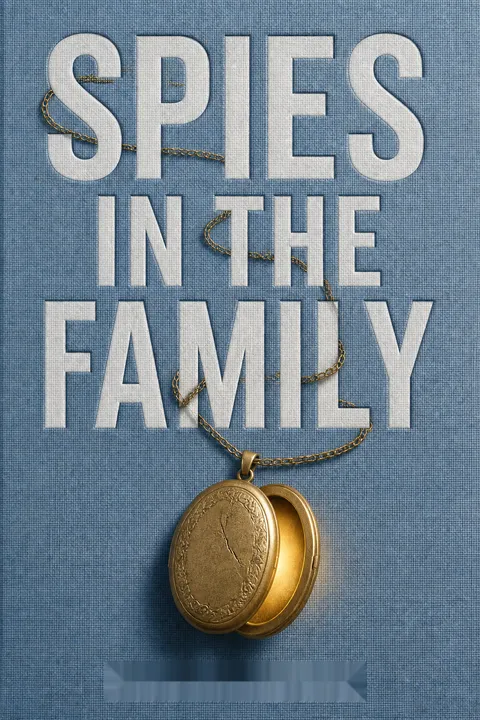
The story began at home. Eva Dillon grew up moving between countries with her father, Paul, a calm, affectionate man whom the family understood to be a diplomat. His funeral in 1980 drew hundreds of colleagues, many secretly CIA officers. Years later, while sorting her parents’ belongings, Dillon found evidence that her father had worked with Dmitri Polyakov, a Soviet general who secretly supplied the United States with intelligence for decades.
Private lives, public stakes. The book follows both families, from New York and Moscow to Berlin, Mexico City, Rangoon, and New Delhi. Polyakov’s information reached the White House and Pentagon, shaping American understanding of Soviet intentions. The opening frames the stakes: during the 1988 Moscow summit, Reagan asked Gorbachev to pardon a Soviet prisoner. Gorbachev said the man, Polyakov, had already been executed.
What's striking is how family archives turn an abstract intelligence history into a story about ordinary people living beside extraordinary secrets. The daughter’s search also changes the scale of the narrative: diplomatic crises coexist with children, spouses, friendships, and household routines. That intimacy makes the geopolitical consequences easier to grasp without pretending that any one spy single-handedly determined history. The book’s central achievement is this double vision, showing both the strategic value of clandestine information and the emotional costs of a life built around concealment.
Polyakov served Russia's people by betraying the state that claimed to embody them
A patriot turned against power. Polyakov’s distrust had deep roots. As a child in Ukraine, he survived famine and political terror. As a decorated officer, he watched Khrushchev dismiss military veterans and force the revered general Georgy Zhukov into retirement. Living in America gave Polyakov a close view of a society he had been taught to regard as the enemy, and sharpened his doubts about Soviet rule.
Not an American convert. Polyakov did not seek to defect or become an American. He believed Soviet leaders were reckless, deceptive, and willing to risk war, and he wanted the United States to understand their intentions. His allegiance was to Russia and its people, not to the officials who ruled them. That distinction explains why he could spy for America while insisting that he would live and die Russian.
Polyakov complicates the familiar story of the defector who trades one national identity for another. His motives are better understood as a conflict between country and regime, a distinction relevant wherever states claim exclusive authority to speak for a people. His experience also shows how personal contact can unsettle political caricature: years in America gave him evidence that contradicted Soviet propaganda. Still, his judgment of American policy was not uncritical, and his mission was not a blanket endorsement of democracy. His loyalties remained particular, conflicted, and Russian.
Verify intelligence channels before risking lives on their promises
A failed operation concealed a breach. In the early 1950s, Paul Dillon trained refugees in Germany to parachute into Soviet territory and gather intelligence through the CIA’s REDSOX operation. About fifty teams were sent over two years, yet none reported back. Trainers hoped the agents needed time to establish themselves, but the silence was a warning they could not explain.
The secret was shared. At CIA headquarters, James Angleton passed operation details, including drop locations and timing, to British intelligence liaison Kim Philby. Philby was secretly working for the Soviet Union. The teams were intercepted and killed. Their fate shows the lethal cost of treating an information-sharing relationship as safe simply because it is customary and friendly.
This episode makes security failures visible as failures of institutional design, not merely as the work of a brilliant enemy. Trust between agencies can accelerate cooperation, but it also concentrates risk when one liaison has access to multiple operations. The missing reports should have prompted an immediate reassessment of the operation, yet the teams kept going. Silence is not proof of betrayal, but repeated silence is evidence that a system is failing. Institutions need ways to question a trusted channel without assuming that loyalty is permanent.
Paranoia can cripple intelligence as surely as an enemy mole
Suspicion became a doctrine. After Philby’s betrayal and the defection of Soviet officer Anatoliy Golitsyn, Angleton embraced the theory that the KGB was running a vast deception campaign. This “Monster Plot” held that apparent defectors and sources might be controlled Soviet agents. Officers who shared the outlook, nicknamed the Black Hats, challenged source after source, including Polyakov, despite the value of his reporting.
The damage was real. The CIA’s internal mole hunt investigated roughly one hundred to two hundred employees, smeared reputations, and stalled Soviet operations without uncovering a mole. Yuri Nosenko, a KGB officer who said the Soviets had not recruited Lee Harvey Oswald, was held in harsh isolation for years before the CIA cleared him. A defense against deception had become a source of institutional paralysis.
Counterintelligence requires skepticism, but skepticism becomes self-defeating when every fact can be reinterpreted as proof of the same theory. The Monster Plot had no practical stopping rule: a source’s credibility could never be established because evidence of credibility might itself be part of the deception. This is a problem of unfalsifiable reasoning, not simply bad temperament. The episode argues for disciplined doubt: test claims against independent evidence, define what would change the assessment, and account for the costs of rejecting a source as well as the risks of accepting one.
Match the handler to the human being, not merely the source
A partnership rebuilt trust. When Polyakov returned to New Delhi in the early 1970s, Paul Dillon became his CIA handler. The two met through an approved cover story: Polyakov pretended to develop Dillon, an American embassy official, as a potential source for the GRU. Their meetings could therefore take place in settings that seemed legitimate to Soviet observers.
Respect made the work possible. Dillon spoke Russian, understood the culture, and treated Polyakov as a person rather than a stream of documents. Their shared outings included fishing trips, where Dillon could record Polyakov’s reporting without attracting attention. Polyakov had previously been angered by CIA contact attempts that ignored his safety instructions. With Dillon, he found a careful, trustworthy partner, and the flow of intelligence grew.
The relationship illustrates why operational competence includes emotional and cultural judgment. A handler who understands an asset’s fears can make safer decisions and obtain better information, while a purely transactional approach may produce compliance without trust. The book does not suggest that friendship replaces procedure: their meetings depended on a cover arrangement and careful planning. Rather, the human relationship helped make those procedures workable. The useful lesson is not to romanticize espionage partnerships, but to recognize that people assess whether an institution deserves their confidence through the conduct of its representatives.
Polyakov's files corrected America's picture of Soviet power
Secrets changed strategic assumptions. As a general with access to senior military and political circles, Polyakov supplied documents that American analysts could not have obtained through ordinary diplomatic contact. He copied the secret military journal Military Thought, Soviet policy directives, and material on weapons and intelligence operations.
The details mattered. The documents showed that Soviet military leaders feared nuclear war and did not believe victory in one was achievable. That evidence challenged American assumptions that Soviet leaders might use nuclear weapons more readily. Polyakov also revealed thousands of Soviet programs seeking Western military technology, information that prompted tighter controls on sensitive equipment. His value was not simply that he exposed secrets; his reporting helped American decision-makers distinguish actual Soviet capabilities and concerns from frightening estimates.
Intelligence is most useful when it corrects a model of the adversary, not when it merely adds facts to a file. Polyakov’s reporting helped policymakers see both Soviet vulnerability and Soviet ambition, a more complicated picture than either reassurance or alarm alone. The strategic value lay in reducing the chance that worst-case assumptions would drive decisions. Yet one source, however well placed, cannot represent every faction or moment in a state. The strongest use of such material is to test it against other evidence, not to treat access as a guarantee of completeness.
Give agents tools they trust, then respect their security rules
Technology reduced exposure. In New Delhi, the CIA developed UNIQUE for Polyakov: a compact, two-way device that encrypted typed messages and sent them in bursts lasting just 2.6 seconds. Its range was about one thousand feet. The device could be hidden inside a portable Panasonic stereo, allowing Polyakov to communicate without visiting a dead drop or meeting an American officer.
The user knew the danger best. Earlier, CIA officers had pressured Polyakov into attending an embassy reception in Moscow and attempted an unplanned handoff, despite his instructions not to approach him there. The invitation triggered KGB questioning, and Polyakov threw away the device he had been handed. He went silent. A technical solution could improve security, but it could not compensate for handlers who disregarded the operative’s judgment about local danger.
The contrast between UNIQUE and the risky reception captures a lasting principle of technology design: a tool is only as effective as the practices surrounding it. The device worked because it fit the user’s environment and minimized exposure. The contact attempt failed because headquarters treated its own plan as more authoritative than the person living under surveillance. This is a broader lesson for high-risk systems: frontline knowledge is not an inconvenience to central control. It is a safety resource that should shape decisions, especially when the consequences of error fall most heavily on the person being managed.
Spy work enters family life even when its secrets stay sealed
Children learned the cover story. The Dillon children grew up believing their father worked for the State Department. They learned otherwise through public revelations and, eventually, an official meeting at the CIA training base where the family lived. The Polyakov sons were similarly told their father was a military diplomat, not a spy. In both households, secrecy shaped what children knew, where families lived, and how they understood their parents.
The consequences outlasted the operation. After Polyakov’s arrest, his sons lost their jobs, valuable possessions were confiscated, and friends avoided the family. His wife and children had known nothing of his work, but secrecy did not protect them from its consequences. Dillon’s later care for Soviet defector Viktor Belenko offers another glimpse of the human side of the job: he helped the frightened pilot navigate ordinary American life.
The family stories correct the image of espionage as a sealed professional world. Secrecy is practiced at home too, through omissions, relocations, and carefully maintained explanations. That arrangement may protect operations, but it also transfers uncertainty and risk to people who never consented to participate. The Polyakov family’s punishment makes the imbalance stark: they were uninformed, yet bore social and economic costs. The narrative does not offer a simple alternative, since disclosure can endanger lives. It does make the hidden cost of compartmentalization impossible to ignore.
Ames's betrayal prospered because warning signs were explained away
A familiar colleague became the mole. CIA officer Aldrich Ames had a poor record of drinking problems, lateness, and operational mistakes, yet continued to receive sensitive assignments. In 1985, deeply in debt, he offered Soviet intelligence the names of agents in exchange for money. His disclosures included Polyakov, who had retired and was no longer spying. The KGB eventually paid Ames millions.
The agency missed visible clues. Ames displayed a lifestyle far beyond his salary, but early investigations were delayed, incomplete, or misdirected. His unexplained spending was removed from a polygraph preparation memo, and a weak inquiry into his wife’s family wrongly suggested they were wealthy. A later task force linked Ames’s access to lost sources with deposits made after meetings with Soviet contacts. He was arrested in 1994, nearly nine years after he began selling secrets.
Ames’s case shows how a serious betrayal can hide in plain sight when organizations treat each warning as an isolated anomaly. His debts, conduct, access, and spending were individually explainable, but together they formed a pattern. The CIA’s memory of Angleton’s destructive mole hunt also made investigators wary of repeating a false accusation, a reasonable caution that became an excuse for delay. Effective oversight needs both safeguards: evidence strong enough to prevent witch hunts and procedures strong enough to pursue credible patterns without protecting a colleague from scrutiny.
Polyakov chose Russia even knowing its government might execute him
He refused escape. Polyakov repeatedly rejected offers to defect to the United States. When his handler warned that exposure could mean death, he said he intended to remain Russian. In 1986, after American press leaks helped the KGB narrow its search for the spy called TOPHAT, he was arrested. He confessed and secured a promise that his wife and sons would not be prosecuted.
The price reached his family. A secret military court sentenced him to death in 1987. He was executed in March 1988, and his burial place remains unknown. His family lost work, property, and friends, despite knowing nothing about his espionage. Years later, his sons and their families moved to the United States. Polyakov’s loyalty was never simple: he opposed the Soviet rulers, but would not leave the country he believed he was serving.
Polyakov’s decision resists an easy moral verdict. He knowingly endangered himself and, despite his effort to protect them, exposed his family to severe consequences. His stated loyalty to ordinary Russians gives his actions coherence, but cannot erase the secrecy imposed on those closest to him. The book’s ending holds both truths together: principled motives can coexist with painful collateral harm. That tension is more revealing than a simple hero narrative, because it asks whether service to a country can be separated from the duties owed to particular people.
Analysis
Spies in the Family is both a family memoir and a history of Cold War intelligence, and its structure depends on holding those genres together. Eva Dillon begins with the private mystery of her father’s hidden career, then braids his professional life with Dmitri Polyakov’s. The result is not just a chronicle of secrets exchanged, but a study of how institutions decide what counts as truth, loyalty, and danger.
The book’s most important contrast is between Polyakov’s disciplined skepticism about Soviet power and James Angleton’s suspicion that every source might be controlled. Both men understood deception as a real threat. Their difference was methodological. Polyakov used his access to revise his judgments about his own country; Angleton treated a theory of deception as a filter through which nearly every new fact had to pass. The distinction matters because intelligence agencies cannot avoid uncertainty, but they can choose whether uncertainty prompts testing or confirms prior belief.
The narrative also makes personal trust operationally consequential. Paul Dillon’s warmth toward Polyakov was not separate from the work. It supported a relationship in which sensitive reporting could be exchanged under demanding conditions. In contrast, unsafe contact attempts and internal suspicion weakened that relationship. The story therefore complicates the idea that intelligence success comes mainly from clever devices or dramatic recruitment. Reliable judgment, restraint, and regard for an asset’s lived environment matter just as much.
Finally, the book refuses to let strategic value erase human cost. Polyakov’s reporting helped American leaders understand Soviet military thinking, yet his family paid for a secret they had not shared. Ames’s betrayal then shows the opposite failure: institutional caution and fragmented oversight allowed a compromised insider to destroy lives. Taken together, these episodes suggest that intelligence work is a moral enterprise as well as an information system. Its products can help prevent conflict, but its methods distribute risk among people who may never know what they are carrying.
Review Summary
Spies in the Family receives high praise for its engaging blend of family memoir and Cold War espionage. Readers appreciate the unique perspective of Eva Dillon, daughter of CIA agent Paul Dillon, and her insights into the lives of her father and Russian double agent Dmitri Polyakov. The book is lauded for its well-researched content, riveting storytelling, and balanced portrayal of both families. Many find it a fascinating, fast-paced read that offers a personal look into the world of Cold War-era intelligence operations.
People Also Read




Glossary
GRU
Soviet military intelligenceThe Soviet Union’s Main Intelligence Directorate, a military intelligence organization focused on foreign threats and the collection of military and technical information. The GRU operated overseas and trained officers and deep-cover agents. It sometimes competed with the KGB, which focused more heavily on domestic security and counterintelligence.
KGB
Soviet security serviceThe Soviet Union’s principal state security and intelligence organization. Its responsibilities included internal surveillance, suppression of dissent, counterintelligence, and foreign intelligence. In this story, the KGB investigates suspected spies, monitors diplomatic contacts, and arrests and interrogates Dmitri Polyakov.
REDSOX
CIA infiltration operationA CIA program in the early 1950s that trained refugees in Germany and sent them into Soviet-controlled territory to gather intelligence and support resistance. Trainees learned communications, surveillance, weapons, and cover identities. Around fifty teams were sent without reporting back, later understood to have been betrayed through Kim Philby.
illegals
Deep-cover foreign agentsIntelligence officers or recruited agents sent abroad without official diplomatic status, often living under fabricated identities and personal histories. Soviet illegals in the United States posed as ordinary residents and sought access to sensitive industries, institutions, or military information. Their invented biographies were commonly called legends.
dead drop
Hidden message exchangeA concealed location where one person leaves information for another to collect without meeting face to face. Spies might hide a message beneath a bench or inside an object, then use a separate signal to indicate that the drop was ready. The method reduced direct contact but could be compromised by surveillance or missed signals.
double agent
Agent serving opposing sidesA spy who appears to work for one intelligence service while secretly being controlled by another, or who has been captured and compelled to provide information to the opposing side. Kaarlo Tuomi, a Soviet illegal, became an FBI-controlled double agent after his arrest in the United States.
Monster Plot
Theory of sweeping Soviet deceptionThe name CIA officers used for James Angleton’s theory that Soviet intelligence was running a broad plan to mislead the Agency through controlled defectors, false sources, and provocations. The theory made Soviet sources suspect by default and contributed to internal investigations, mistrust, and stalled operations.
one-time pad
Single-use code systemA printed set of random numbers used once to encrypt or decode a message. Because each set is discarded after use, the code cannot be reused as a pattern for later messages. The CIA supplied Polyakov with one-time pads for secure communications while he operated in Moscow.
UNIQUE
Short-range encrypted transmitterA compact, two-way communications device developed by the CIA for Polyakov. It encrypted typed messages and transmitted them in very brief radio bursts within roughly one thousand feet. Hidden inside a portable stereo, it allowed Polyakov to exchange messages near the American embassy without arranging a face-to-face meeting or conventional dead drop.
FAQ
What's Spies in the Family about?
- Historical Espionage Narrative: The book tells the story of Dmitri Polyakov, a Soviet spy for the CIA, and his impact on the Cold War's end.
- Family Perspective: Author Eva Dillon, Polyakov's daughter, offers a personal view of her father's secretive life and its effects on family dynamics.
- Cold War Context: It explores the geopolitical tensions and moral complexities of espionage during the Cold War.
Why should I read Spies in the Family?
- Engaging Storytelling: Eva Dillon combines personal history with thrilling espionage tales, making it both informative and captivating.
- Insight into Espionage: The book provides a rare glimpse into GRU and CIA operations, offering a nuanced understanding of Cold War intelligence.
- Personal Reflection: Dillon's reflections on her father's life add depth, connecting readers with the human side of espionage.
What are the key takeaways of Spies in the Family?
- Complexity of Loyalty: The book highlights the conflicting loyalties spies face, both to their country and families.
- Impact on Families: It emphasizes how espionage can fracture family bonds and create emotional distance.
- Historical Significance: The story underscores the role of intelligence in shaping world events during the Cold War.
Who is Dmitri Polyakov, and what was his role in the Cold War?
- High-Ranking GRU Officer: Polyakov was a colonel in Soviet military intelligence and a key CIA asset.
- Key Asset for the CIA: He provided critical intelligence on Soviet military operations, influencing U.S. strategies.
- Complex Motivations: Polyakov was driven by a desire to protect Soviet citizens from corrupt leadership.
How did Polyakov's relationship with the CIA develop?
- Initial Contact: Polyakov approached the CIA at a diplomatic function, seeking to share intelligence.
- Trust Building: He established a rapport with CIA handlers, built on mutual respect and understanding.
- Information Exchange: Polyakov provided valuable intelligence, solidifying his status as a key CIA asset.
What challenges did Polyakov face as a spy?
- Constant Surveillance: He operated under KGB watch, using meticulous tradecraft to avoid detection.
- Moral Dilemmas: Polyakov grappled with the ethical implications of his actions on his family and fellow citizens.
- Risk of Exposure: The threat of exposure was constant, especially after other spies were arrested.
How does Spies in the Family portray the relationship between Paul Dillon and Dmitri Polyakov?
- Mutual Respect: Their relationship was characterized by deep mutual respect amidst espionage complexities.
- Trust and Betrayal: Their partnership was tested by betrayal, leading to tragic consequences for Polyakov.
- Human Connection: The book illustrates how their relationship evolved into a friendship, complicating loyalties.
What role does Aldrich Ames play in Spies in the Family?
- Betrayer of Trust: Ames is depicted as the mole who compromised Polyakov, leading to his execution.
- Catalyst for Change: His actions highlight vulnerabilities within intelligence agencies and the impact of betrayal.
- Moral Complexity: The book explores Ames's motivations, prompting readers to consider the human cost of espionage.
How does the author, Eva Dillon, connect her personal experiences to the broader themes of espionage?
- Childhood Memories: Dillon shares anecdotes illustrating the impact of her father's work on family life.
- Emotional Resonance: Her family's story evokes empathy and understanding for those involved in espionage.
- Reflections on Identity: Dillon reflects on how her CIA family upbringing shaped her identity and worldview.
What methods did Polyakov use to communicate with the CIA?
- Dead Drops and Signals: He used dead drops and coded messages in personal ads to discreetly pass information.
- Onetime Pads: Polyakov employed onetime pads for encrypting messages, ensuring secure communication.
- Radio Communications: He used shortwave radios to receive CIA messages, maintaining secrecy.
What is the overall message of Spies in the Family?
- Consequences of Espionage: The book underscores the profound personal and societal consequences of espionage.
- Complexity of Loyalty: It challenges readers to consider the complexities of loyalty in espionage.
- Human Stories Behind History: Dillon emphasizes the human stories behind historical events, filled with sacrifice and tragedy.
How did Polyakov's story end?
- Return to Moscow: After years of intelligence work, Polyakov returned to Moscow, maintaining influence within the GRU.
- Legacy of Espionage: His contributions to American intelligence are recognized, though his life remained secretive.
- Impact on Future Generations: Polyakov's story influences modern espionage understanding and practices.
Download PDF
Download EPUB
.epub digital book format is ideal for reading ebooks on phones, tablets, and e-readers.








