Key Takeaways
1. Humanity is Evolving: From Five-Sensory to Multisensory.
This is a book about change, the biggest change possible or imaginable—change bigger than the discovery of fire, bigger than the invention of the wheel, bigger than the origin of cultures, the birth of religions, the rise of nation-states, and the impacts of science.
A profound transformation. Humanity is undergoing an unprecedented evolutionary shift, moving from a five-sensory species to a multisensory one. This "Gift" of expanded perception allows us to experience reality beyond what our five senses can detect, revealing nonphysical intelligence, compassion, and purpose. Millions are already experiencing this, sensing connections, intuitions, and a deeper meaning in life that was previously unimaginable.
Beyond the physical. Our traditional five-sensory perception limits our understanding to the physical world, leading us to believe that events are random or that consciousness is temporary. Multisensory perception, however, unveils a larger, living, wise, and compassionate Universe where our lives are purposeful and interconnected. It's like seeing the vast, mostly unseen, Cascade Mountains, with only Mount Shasta and Mount Rainier visible to the five senses.
The Work begins. While multisensory perception is a gift, it doesn't automatically change us. It illuminates new possibilities but requires conscious choice—"the Work"—to integrate this expanded awareness into our lives. This means actively transforming the internal sources of our painful emotions and destructive behaviors, and cultivating our pleasing emotions, to create a fulfilling and joyful life.
2. Authentic Power Replaces External Power.
The old kind of power—the ability to manipulate and control—now produces only violence and destruction.
The old power is toxic. Historically, humanity pursued "external power"—the ability to manipulate and control circumstances, including other people, for survival. This old power, once a tool for survival, has now become a poison, leading only to violence, destruction, and isolation. It's a zero-sum game where one's gain often comes at another's expense, fostering competition and conflict.
A new kind of power. A "new kind of power—authentic power—has become the new good medicine." Authentic power is the alignment of your personality with your soul, driven by intentions of harmony, cooperation, sharing, and reverence for Life. It's not about controlling others, but about mastering oneself and creating a life of meaning, fulfillment, gratitude, vitality, creativity, and joy.
Evolutionary imperative. The shift to multisensory perception makes the pursuit of authentic power an evolutionary requirement. Without it, our expanded awareness can be wielded destructively. Authentic power is the path to spiritual growth, transforming us from a species that evolves by surviving to one that evolves by growing spiritually.
3. The Ultimate Pain: Powerlessness and Its Healing.
The deepest pain of every human is needing to be loved and feeling unlovable, longing to love and feeling incapable of loving, wanting to belong and feeling unworthy.
The core wound. At the heart of the human experience lies the "pain of powerlessness"—the excruciating feeling of being intrinsically defective, inherently ugly, and without value. This self-hatred fuels our desperate need to be loved and belong, and our fear that if others truly saw us, they would reject us.
Masking the pain. To avoid this unbearable pain, we engage in destructive behaviors and emotions: anger, jealousy, vengefulness, obsessive thoughts, compulsive activities, and addictions. These acts are temporary anesthetics, providing momentary relief but ultimately deepening our suffering. We use external things—fame, wealth, relationships—to feel valuable, but this is merely a flight from our inner pain.
Healing the source. The journey to authentic power requires us to confront this core pain directly. Instead of fleeing into external power, we must journey inward, experiencing the painful sensations in our bodies that signal powerlessness. This courageous act, though difficult, is the only way to dismantle the "bogeyman" of self-disgust and despair, allowing us to make conscious choices rooted in love, not fear.
4. Your Intentions Create Your Reality (The Butterfly Effect).
Your decisions are continually creating new “initial conditions,” and the weather that those varying conditions are continually changing is your experience.
The power of intention. Just as a butterfly's wing flap can influence weather patterns across the globe, your intentions—the "Why beneath the Why" of your actions—are the "initial conditions" that profoundly shape your experiences. Every choice of intention sets in motion the Universal Law of Cause and Effect and the Universal Law of Attraction, determining the consequences you will face.
Unconscious creation. Most people operate with a "windshield painted black," unaware of their true intentions. They are surprised by painful consequences, not realizing these are the direct result of hidden agendas or fear-based motivations. For example, caring for others to feel worthy (external power) will eventually lead to feelings of being used or unappreciated, rather than genuine connection.
Conscious creation. Multisensory perception illuminates these nonphysical causes, making your creative power impossible to ignore. By consciously choosing intentions rooted in harmony, cooperation, sharing, and reverence for Life, you create positive consequences. This awareness transforms your life from a series of random events into a purposeful journey where you actively shape your reality.
5. Joy is Internal, Happiness is External.
Happiness depends on what happens outside of you, which is beyond your control, and frightened parts of your personality forever attempt to control it.
The illusion of happiness. Happiness is a temporary state, dependent on external circumstances. When a frightened part of your personality gets what it wants—a new car, a successful relationship, recognition—you feel happy, experiencing momentary relief from the pain of powerlessness. But this relief is fleeting; when circumstances change or expectations aren't met, unhappiness (and the underlying pain) returns.
The permanence of joy. Joy, in contrast, is a permanent, internal state of being, independent of external events. It emerges when you remove the "obstructions" of your frightened personality parts, much like Michelangelo freed David from a block of marble. Joy is contentment, gratitude, appreciation, and awe of Life, a fulfillment in the present moment that is boundless.
A conscious choice. Bringing joy into your life requires becoming an artist of your own being, using your intention as a chisel and your will as a mallet. Each time you choose a loving part of your personality over a frightened one, you chip away at the "stone" that encases your joy. This process is not about creating joy, but about freeing the joy that already exists within you.
6. You are the Coach of Your Inner Team.
Your responsibility is to choose the player that you will put on the court at each moment.
Your inner players. Imagine yourself as the coach of a team called "Life," with numerous players representing different parts of your personality—some expert at anger, jealousy, or disdain, others at patience, gratitude, or kindness. One player is always on the court, representing you and creating consequences. Your responsibility is to consciously choose which player to field.
Unconscious plays. Many coaches are unaware of all their players, allowing frightened parts of their personality to step onto the court without conscious choice. This leads to repetitive, painful consequences like isolation or anger, as these players always create their best (most destructive) outcomes. Becoming aware of these players is the first step to gaining control.
Mastering the game. Spiritual growth involves getting to know all your players, especially the frightened ones, and choosing not to play them. When you sideline these "mutinous players," they object forcefully, but their power diminishes over time. This courageous act of choosing loving players, even amidst the demands of frightened ones, is how you master the game and create authentic power.
7. Spiritual Partnership: A New Relationship for a New Humanity.
A spiritual partnership is a partnership between equals for the purpose of spiritual growth.
Beyond traditional relationships. As humanity becomes multisensory, traditional relationships like friendship, designed for survival and external power, are no longer sufficient. A new archetype is emerging: "spiritual partnership," a relationship between equals dedicated to mutual spiritual growth. This is a vehicle for multisensory individuals to create and support authentic power.
Shared purpose, individual journey. Spiritual partners are colleagues on a shared journey, committed to their own spiritual development and helping each other heal frightened parts of their personalities. Unlike friends who seek to change external circumstances or console pain, spiritual partners focus inward, using interactions to identify and transform the internal causes of their suffering.
Three core dynamics:
- Growing Together: Partners use painful emotional experiences as opportunities for spiritual growth, challenging frightened parts of their personalities rather than blaming each other.
- Choosing Roles: Partners consciously choose roles that express love, rather than being unconsciously confined by fear-based roles dictated by culture or past experiences.
- Saying What Is Most Difficult: Partners bravely share their deepest fears and secrets, not to manipulate, but to foster intimacy and integrity, knowing that hiding secrets destroys connection.
8. Commitment to Spiritual Growth is Your Highest Priority.
Love and fear are the two great commitments of the human experience. They are mutually exclusive.
The ultimate choice. Everyone is committed to something, whether consciously or unconsciously. The two fundamental commitments are to love or to fear. If you are frequently angry, jealous, or engage in addictive behaviors without challenging them, you are committed to fear, regardless of your stated beliefs. Commitment to love, however, means choosing to respond with love even when fear's magnetic pull is strong.
Transformative power. A commitment to love—to spiritual growth and creating authentic power—is a daily application of your will to create constructive consequences. It means choosing harmony, cooperation, sharing, and reverence for Life, no matter what. This commitment is not passive; it actively transforms, heals, and opens new avenues of creativity, attracting support from the Universe.
The well of wholeness. Even a small commitment to love can ignite a flame. Each time you challenge a frightened part of your personality, you "drink from the well" of your wholeness, weakening fear's grip. Eventually, the need for commitment to return to love diminishes because love becomes your natural state, just as you don't need a commitment to drink when thirsty.
9. Cultivate Courage to Heal Your Fears.
Spiritual growth requires the courage to use your will to heal your own fears instead of trying to change everyone else.
The new courage. Traditional "old courage" involves facing external dangers or doing what's necessary to feel accepted or valuable, often masking the pain of powerlessness. "New courage," however, is far more profound: it's the courage to turn inward, experience the painful sensations of your frightened personality parts, and choose not to act on them.
Challenging inner compulsions. This new courage is required when your will intersects with fear. For example, if you compulsively speak, courage means remaining silent and experiencing the discomfort. If you habitually withdraw, courage means speaking up. Each act of challenging a compulsive behavior brings to the surface the underlying fear, allowing you to directly experience and diminish its power.
Integrity as a guide. Practicing integrity means honoring the needs of your healthiest self, acting from love even when frightened. It's different from conscience, which is fear-based conformity to external demands. Integrity calls you to your highest potential, guiding you to take responsibility for your experiences and actions, rather than blaming others or circumstances.
10. Compassion: Seeing Souls, Not Just Personalities.
Compassion is caring about others without second agendas.
Beyond sentimentality. True compassion is not sentimental or fear-based. It's an aware, fully present state of caring for others without hidden agendas, attachments, or expectations. Giving to the homeless out of fear of being moneyless yourself is not compassion; it's a self-serving act that masks your own pain of powerlessness.
Recognizing shared humanity. Compassion arises when you can distinguish between frightened and loving parts of your own personality, and then recognize these same dynamics in others. You see others not as adversaries or objects, but as fellow souls navigating the Earth school, with struggles as complex as your own. This understanding obliterates distinctions between "us" and "them."
The birth of compassion. Challenging and healing your own frightened parts creates compassion. The less you judge yourself, the less you judge others. When you experience the difficulty of your own inner work, you understand the difficulty for others, fostering a genuine desire to support their spiritual growth without trying to fix, teach, or convert them. Compassion for self and others are two sides of the same coin.
11. Conscious Communication and Action Transforms Your Life.
Striving to make all my interactions conscious and loving.
Total immersion. Creating authentic power encompasses every aspect of your life, every interaction, person, and circumstance. It's like learning to swim by fully immersing yourself in water, not just imagining it. This means transforming every unconscious, unloving interaction into a conscious, loving one, challenging every frightened part of your personality in the process.
Intention over action. Multisensory humans understand that intention, not just action, creates consequences. A message of compassion delivered without a compassionate intention will not create compassion; it will create sentimentality or righteousness. Conscious communication and action means choosing intentions of harmony, cooperation, sharing, and reverence for Life before you speak or act.
A spiritual activist. This commitment makes you a "spiritual activist," like Gandhi, unrestrained by fear and free from the need to punish. You become the change you wish to see, transforming the collective consciousness by changing your own. Your interactions at work, with family, friends, and partners become opportunities to create authentic power, shifting the world from fear to love, one conscious choice at a time.
Last updated:
Review Summary
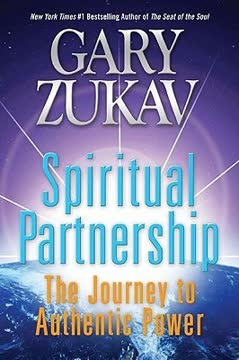
Spiritual Partnership by Gary Zukav receives mixed reviews averaging 4.14/5 stars. Supporters praise its revolutionary approach to relationships based on spiritual growth rather than external power, emphasizing authentic power through emotional awareness and self-transformation. Readers appreciate practical guidelines and Zukav's personal examples. Critics find it repetitive, male-centric, and lacking practical guidance, with some disliking its "New Age" philosophy and dogmatic tone. Most agree the core concept—using relationships as mirrors for inner growth rather than trying to change others—is valuable, though execution varies in appeal.
Similar Books