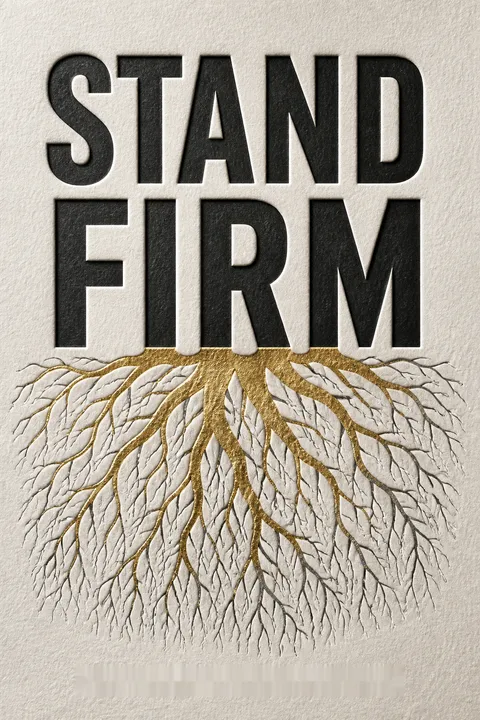


Key Takeaways
Treat standing still as a deliberate answer to compulsory self-improvement
The treadmill has a history. Brinkmann describes an accelerating culture in which work, technology, and relationships are expected to keep changing. The pressure is not merely to adapt when circumstances require it, but to treat personal development as a goal in itself. He notes that people sleep less than previous generations and that time saved through technology often gets filled with more tasks, not more leisure. In this climate, stability can look like failure, even when it protects a life from becoming an endless series of upgrades.
Roots are not a retreat. Brinkmann argues for learning to live with oneself rather than constantly searching for a better self. This does not mean restoring rigid social rules or refusing every change. It means resisting the assumption that flexibility is always virtuous, and recognizing that commitments, places, and relationships can give life shape.
The useful distinction is between change as a response to real needs and change as a permanent performance of employability. That helps explain why a person can feel exhausted even while making visible progress: the finish line keeps moving. Stability can also preserve attention for work that matters, rather than spending it on repeated transitions. Still, not everyone experiences flexibility as coercion. For people escaping restrictive roles or unsafe relationships, change can be liberating. The strongest version of Brinkmann’s argument is not that change is bad, but that a culture should not make adaptation the measure of a person’s worth.
Look outward for standards; introspection cannot answer every human question
Feelings are not instructions. Brinkmann challenges the popular idea that an inner voice contains reliable answers. A gut reaction may change quickly, reflect outside influences, or point toward an action that harms someone else. Questions about how to help a person, whether a professional has the skills for a job, or what a society should do about climate change require attention to other people, evidence, and shared standards. They cannot be settled by asking what feels authentic.
Self-examination has limits. Brinkmann invokes the health paradox: as diagnostic tools and treatments improve, some people become more preoccupied with symptoms and self-diagnosis, and may feel worse. His alternative is not to ignore oneself, but to turn attention outward toward duties, relationships, knowledge, and the world that gives actions meaning.
This argument corrects a common category error: feelings can reveal what matters to someone without proving what is right or true. The distinction resembles the difference between first-person experience and public evidence. Both are valuable, but they answer different questions. A person’s unease may signal a problem worth investigating; it cannot, by itself, diagnose the cause or settle the ethical response. The challenge is to avoid swinging from overconfidence in intuition to contempt for it. Reflection is most useful when it opens inquiry, not when it is treated as a private oracle.
Use imagined loss to notice what ordinary comfort hides
Borrow the Stoic exercise. Negative visualisation means deliberately imagining the loss of something valued, not to predict disaster, but to interrupt the habit of taking it for granted. Seneca urged people to remember that possessions and relationships are not guaranteed. Epictetus applied the thought to family life, asking parents to recognize a child’s vulnerability. The point is not to dwell on catastrophe; it is to make affection and gratitude more vivid in the present.
Practise without panic. Brinkmann also recommends small experiences of voluntary discomfort, such as choosing a less convenient way to travel or declining an indulgence. These exercises can make ordinary comforts easier to appreciate and reduce the fear of discomfort. The larger practice is memento mori, a reminder of mortality that is meant to support a fuller life, not a fixation on death.
Imagining loss works by changing the frame around the familiar. A routine meal, a loved one’s presence, or an ordinary day can become noticeable again when treated as finite rather than guaranteed. This is a practical antidote to adaptation, the tendency for repeated pleasures to fade into the background. The exercise needs proportion, however. For someone already prone to anxiety or intrusive thoughts, repeatedly picturing loss may intensify distress rather than gratitude. The useful test is whether the reflection returns attention to present care and action. If it traps attention in dread, the exercise has missed its purpose.
Say no when new demands threaten commitments you already owe
A refusal can protect integrity. Brinkmann contrasts the fashionable expectation to welcome every opportunity with the mature ability to decline. He uses character to mean a commitment to values that remain important across changing circumstances. Saying yes to every new project can leave people overbooked and make existing responsibilities seem disposable. A polite refusal, or a pause to think, can protect time for work and relationships already deserving attention.
Doubt is a useful brake. Brinkmann argues that certainty can close off listening, while hesitation leaves room to consider consequences and other perspectives. His advice is not to reject every proposal. It is to ask whether the request is worthwhile, whether it conflicts with prior obligations, and whether the urgency comes from fear of missing out. In workplaces, that also means making criticism and cancellation legitimate options, not signs of disloyalty.
A well-placed no is not simply self-protection. It can also be a commitment to people who would otherwise bear the cost of another abandoned promise. This reframes boundaries as relational rather than merely personal. Doubt is especially valuable where a decision affects others, because it slows the leap from confidence to action. Yet doubt cannot become a permanent escape from choosing. The practical aim is not paralysis, but a short interval in which evidence, consequences, and obligations can be weighed before enthusiasm is mistaken for a reason.
Let feelings inform you without handing them the steering wheel
Emotion is human, not sovereign. Brinkmann rejects the idea that every feeling must be expressed to be authentic. Guilt can alert someone to wrongdoing, and shame can reveal that conduct has violated shared expectations. But anger, pride, or enthusiasm can also be misplaced. In an emotional culture, workers may be expected to display passion and positivity as part of the job, much as flight attendants are trained to keep passengers cheerful. Feelings can be genuine and still be shaped by social demands.
Choose a response. Brinkmann recommends controlling or sometimes suppressing emotions that would damage judgment or relationships. Seneca’s advice on anger includes using humor to defuse an insult; Epictetus suggests imagining an upsetting event happening to someone else to gain perspective. The research cited in the book is mixed, so restraint is offered as a practical discipline, not a universal medical rule.
The distinction between feeling an emotion and acting it out is central to mature self-regulation. Emotional expression can support honesty, but unfiltered expression can also make other people responsible for managing every passing impulse. Social rituals and polite restraint give people room to disagree without turning every encounter into a test of authenticity. At the same time, restraint should not become a demand to conceal abuse, grief, or justified anger. The value lies in choosing an expression suited to the situation, rather than assuming that either suppression or disclosure is always healthy.
Trade coaching dependence for friendships and actions valued beyond personal gain
Development can become its own trap. Brinkmann uses coachification of life for the spread of coaching-style self-development into workplaces, education, and private life. The coach is supposed to help people uncover inner goals and continually improve. Brinkmann worries that this can turn every difficulty into a personal failure and every relationship into a tool for growth. If exhaustion comes from constant demands to improve, adding more self-development may deepen the problem.
Recover non-instrumental ties. Drawing on Aristotle’s account of friendship, Brinkmann distinguishes a true friend from a useful contact: a friend matters for their own sake, not only for what they can provide. He recommends activities such as visiting a museum, walking in nature, or doing something kind without seeking recognition. These practices direct attention toward people, culture, and nature as valuable beyond personal advantage.
The critique is strongest when it identifies how a market logic can enter relationships: people become resources to cultivate, and even leisure becomes another route to self-optimization. Friendship offers a different test of value, based on care that is not conditional on immediate return. That does not make coaching inherently harmful. Focused guidance can help people make decisions or build skills when it has clear limits and accountability. The deeper question is whether support expands a person’s engagement with others, or keeps attention circling around the self as a project that is never finished.
Read novels to meet lives too tangled for self-help formulas
Fiction resists neat lessons. Brinkmann argues that self-help books and many biographies present life as a sequence of individual choices leading toward a truer, more successful self. Novels can instead show people caught in social, historical, and personal forces they do not control. Their characters may misunderstand themselves, change unpredictably, or face problems with no satisfying solution. That complexity can make readers more attentive to lives unlike their own.
Let literature widen the frame. Brinkmann points to writers such as Haruki Murakami, Michel Houellebecq, and Karl Ove Knausgård, whose work unsettles tidy ideas of identity and achievement. He also describes a novel as a technology of the self, borrowing a term from Michel Foucault for practices that shape how people understand and form themselves. Reading is not a guaranteed moral cure, but it can loosen the grip of simple narratives about personal control.
Stories offer a kind of rehearsal for ambiguity. Readers encounter motives that conflict, consequences that arrive late, and characters whose lives cannot be reduced to a checklist. That can cultivate interpretive patience, a useful counterweight to advice that promises a repeatable route to happiness. Fiction is not automatically wiser than nonfiction, though. A novel can reinforce clichés just as readily as it can complicate them, and biographies can illuminate forces larger than individual choice. The key is not genre alone, but whether a book makes life seem more complex or falsely manageable.
Build identity from remembered obligations and traditions, not future reinvention
A life needs continuity. Brinkmann argues that knowing one’s past helps connect yesterday’s actions to present responsibilities. Philosopher Paul Ricoeur’s idea of self-constancy describes the continuity that lets other people trust someone to keep promises and honor commitments. Without memory of past actions, it becomes harder to acknowledge mistakes or understand what one owes others. A coherent life is not a flawless story; it is a life in which people can answer for what they have done.
Tradition can stay alive. Brinkmann draws on Alasdair MacIntyre’s idea of living traditions: practices inherited from the past, sustained through ongoing debate and participation. Learning a craft, playing music, or raising children can connect people to histories they did not invent alone. This is not a demand to preserve every custom. It is a reminder that new work gains meaning from what came before, and that responsibility often requires staying present over time.
The emphasis on continuity gives morality a temporal dimension. Promises matter because they bind a present self to a future action, while memory makes accountability possible after the moment has passed. Traditions similarly offer shared standards that no individual has to invent from scratch. Their strength depends on remaining open to argument, since inherited practices can preserve injustice as well as wisdom. Brinkmann’s useful contribution is to distinguish rootedness from mere repetition: continuity supports trust, but a living tradition must still be examined and revised by its participants.
Analysis
Brinkmann’s book is an intentionally contrarian response to a culture that treats flexibility, optimism, and personal growth as universal goods. Its central move is to reverse familiar advice: look outward rather than endlessly inward, give negative experience room rather than forcing it into a success story, and regard refusal and continuity as capacities rather than defects. Stoicism supplies practical exercises, but the deeper argument is social. When institutions ask people to manage structural uncertainty through private self-improvement, they can convert collective problems into personal inadequacies. The book’s examples of coaching, performance reviews, and emotional labor make that conversion tangible.
The seven-step format is itself a productive joke. It borrows the packaging of self-help while trying to loosen readers’ dependence on self-help. That tension also marks a limit: advice to resist individualism can still arrive as a list of individual duties. Brinkmann recognizes this, and the tension should remain visible rather than be resolved by pretending personal practice can repair economic or political systems. His suggestions may offer perspective and room to breathe, but they cannot substitute for collective action or better institutional design.
The Stoic material is selective, adapted for present use rather than presented as a complete historical account. That makes it accessible, though readers should not mistake self-control for emotional invulnerability or acceptance for passivity. Some forms of change are necessary, and some inherited commitments should be broken. The book’s strongest standard is therefore not stillness for its own sake, but judgment: distinguish change that serves a real human purpose from change demanded merely because movement has become the default. Standing firm means being answerable to other people, not retreating into stubbornness.
Review Summary
Stand Firm received mixed reviews, with an average rating of 3.60 out of 5. Many readers appreciated its critique of self-help culture and emphasis on stoicism, finding it refreshing and thought-provoking. However, some felt the arguments were oversimplified or poorly executed. Critics noted the book's satirical tone and paradoxical nature as an anti-self-help book. While some found it insightful and liberating, others were disappointed by its lack of depth and nuance. Overall, readers acknowledged its importance in challenging contemporary notions of personal development and positivity.
Glossary
The accelerating culture
Life organized around constant changeBrinkmann’s name for a social climate in which people and institutions are pressured to adapt, improve, and move quickly. Work, technology, and personal identity are treated as ongoing projects. The term describes more than a fast pace: it captures the expectation that development is inherently good and that standing still means falling behind.
Negative visualisation
Imagine losing what mattersA Stoic exercise in which a person imagines losing a valued possession, relationship, or condition. The purpose is not to predict disaster or indulge fear, but to remember that good things are temporary and to appreciate them more clearly. Brinkmann presents the practice as a way to counter habituation and prepare for inevitable difficulty.
Memento mori
Remember your mortalityA Stoic reminder that every person will die. Brinkmann recommends contemplating mortality not to become morbid or despairing, but to become more aware of life’s limits and value. Remembering that time with loved ones is finite can make ordinary moments more vivid and help put minor frustrations into perspective.
The health paradox
More care, more perceived illnessA pattern Brinkmann cites in which expanding medical knowledge and diagnostic possibilities can lead some people to monitor themselves more intensely and feel more unwell. The term does not mean treatment is harmful or that symptoms should be ignored. It warns that constant self-checking can amplify worry and turn ordinary sensations into sources of distress.
Coachification of life
Coaching spreads into everyday lifeBrinkmann’s term for the spread of coaching and self-development methods beyond formal coaching into work, education, and personal relationships. These methods often direct people to identify inner goals and continually improve themselves. Brinkmann criticizes the trend when it makes individuals responsible for structural problems and turns life into a perpetual development project.
Religion of the self
The self as life’s authorityBrinkmann’s critical description of a worldview that treats the individual self as the main source of values, direction, and meaning. Coaching and self-help practices can reinforce this view by asking people to discover inner preferences and realize them. Brinkmann argues that it can obscure external standards, social duties, and the value of relationships for their own sake.
Technology of the self
Practice that shapes self-understandingA term Brinkmann borrows from Michel Foucault for practices through which people form and understand themselves. Examples include writing, reflection, reading, and other activities that shape a person’s way of acting. In Brinkmann’s account, novels can serve this role by challenging simple ideas about identity and exposing readers to different perspectives.
Self-constancy
Continuity that makes promises credibleA concept Brinkmann draws from Paul Ricoeur for the continuity that allows a person to be recognized as accountable across time. Remembering one’s past and linking it to present actions helps others trust that promises will be kept. Self-constancy does not mean never changing; it means remaining answerable for commitments and actions.
Living traditions
Practices renewed through shared debateA concept Brinkmann draws from Alasdair MacIntyre. A living tradition is a practice extended through history and sustained by people who participate in it, argue about its value, and sometimes change it. It is neither fixed repetition nor a simple consensus. Traditions give present actions a shared background and connect individuals to a history beyond themselves.
Projective visualisation
Gain distance by changing perspectiveA Stoic technique Brinkmann uses to reduce anger. A person imagines an upsetting event happening to someone else, then considers how they would interpret or respond to that situation. The shift in perspective can reveal that an immediate reaction is disproportionate and help the person respond with greater restraint.
About the Author
Other books by Svend Brinkmann

Download PDF
Download EPUB
.epub digital book format is ideal for reading ebooks on phones, tablets, and e-readers.








