

Key Takeaways
When a future feels impossible, make the next step small enough to take.
Start with what is doable. As a teenager, Reeve left school, drifted into depression, and came close to suicide. He could not picture a career or a life five years ahead. A kind woman at a benefits office gave him a more manageable instruction: move slowly, one step at a time. He bought a cheap train ticket to Scotland, then climbed into Glencoe without proper clothing or equipment, setting tiny targets along the way. Reaching a ridge gave him a first sense of accomplishment in years.
Small actions restart motion. The hike was dangerously ill-prepared, not a model for others to copy. Its importance was that Reeve began before he felt confident. He later found part-time work, volunteered, and kept applying for jobs. Progress came in increments, not as a sudden cure or a perfect plan.
What's striking is the shift from imagining an entire repaired life to choosing a single reachable action. That resembles behavioral activation, a therapeutic approach that uses manageable activities to interrupt withdrawal and rebuild a sense of agency. The account also avoids pretending that one trip resolves depression: Reeve's recovery was uneven, and support from other people mattered. The mountain climb is emotionally clarifying but practically unsafe, a useful distinction between the principle and its risky illustration. For someone in acute danger, small steps are not a substitute for professional or emergency support.
Credit effort, but remember how much of a life depends on luck.
A route is not a formula. Reeve grew up in an ordinary West London family, left school with few qualifications, and had no influential contacts. His life changed through a mixture of persistence and fortunate openings: his mother lent him money for Scotland, a benefits-office worker treated him kindly, and his father spotted a newspaper advertisement aimed at non-graduates. Reeve applied to the Sunday Times for one of five entry-level positions. More than 5,000 people applied, and he got one.
Help and timing mattered. The job gave him access to mentors, including investigative reporter Peter Hounam, and a newsroom where initiative could be noticed. Reeve does not present this as proof that anyone can succeed through effort alone. He describes how small differences in circumstance might have sent him down another path.
This account complicates the familiar success story in which discipline appears to explain everything. Sociologists distinguish individual effort from opportunity structures: family resources, institutional access, and a well-timed introduction can determine which efforts have somewhere to land. Reeve's story shows agency at work, but also the role of people who open doors. Its useful challenge is to replace either extreme, pure self-made triumph or pure fate, with a more accurate view of how effort and circumstance interact. That view encourages gratitude without denying personal responsibility.
Become useful before asking to be recognized.
Start with the unglamorous work. At the Sunday Times, Reeve began as a post-boy, sorting mail and running errands. He learned to repair the failing photocopiers, offered help to reporters, and took care over small research jobs. One arts editor gave him a byline after he searched hundreds of reviews for sharp quotations. His first major investigative assignment came only four months into the job, when an editor sent him to meet two South African extremists in Boston, Lincolnshire, not Boston, Massachusetts.
Trust creates access. Reeve handled the assignment well and was soon helping with investigations into terrorism, arms dealing, and nuclear smuggling. Experienced journalists taught him how to research and write. The work was exciting, but it also exposed a young, untrained employee to serious danger. His story shows the value of initiative, not the wisdom of sending novices into hazardous situations without safeguards.
The pattern resembles apprenticeship: a newcomer learns the institution by solving real problems, then gains responsibility through demonstrated reliability. It also shows how informal mentorship can make talent visible where credentials might otherwise exclude it. The caution is equally important. Being eager and indispensable can be exploited, particularly when an organization mistakes willingness for informed consent or adequate preparation. A healthy workplace pairs initiative with training, supervision, and limits. Reeve's experience is compelling as a story of access, but it should not be romanticized as a template for unchecked risk.
A warning is not prevention unless institutions are willing to hear it.
Research can precede attention. Reeve's first book, The New Jackals, examined Ramzi Yousef, Osama bin Laden, and the emerging al-Qaeda network. Published in 1998, it argued that a more indiscriminate form of terrorism was developing. The book sold poorly, and a review in his former newspaper dismissed its warnings as alarmist. Reeve had not foreseen the exact attacks of September 11, 2001. He had identified a threat and a pattern, not predicted a date or method.
Attention arrived after catastrophe. Once the attacks happened, the book became a bestseller and Reeve was suddenly sought by newsrooms and government officials. He felt guilt that he had not made a greater impact, although he had already tried to communicate what he knew. The episode reveals a gap between producing information and getting decision-makers to act on it.
The story is a vivid case of the difference between a signal and a response. Organizations often discount warnings that challenge settled assumptions, especially when the evidence is incomplete and the proposed threat seems improbable. Yet hindsight can exaggerate how obvious a danger was beforehand. Reeve's account resists claiming prophetic certainty, which strengthens its lesson: risk assessment requires listening to inconvenient evidence without treating every warning as equally credible. Better systems make room for dissent, test competing interpretations, and assign responsibility for acting rather than merely collecting intelligence.
Travel with your eyes open to beauty and the systems beneath it.
Look beyond the postcard. Reeve's television journeys combine striking landscapes and unexpected encounters with the political and economic forces shaping them. In Central Asia, the dried Aral Sea revealed the human cost of Soviet river diversion for cotton farming. Fishing communities had lost their livelihood, while dust from the exposed seabed contributed to serious health problems. In the Democratic Republic of Congo, Reeve met Ngozi, a 68-year-old man who carried firewood several kilometres to earn about 42 pence a day.
Beauty and hardship coexist. The point is not to make every trip a catalogue of suffering. Reeve also records humour, music, hospitality, and moments of wonder. But looking only at scenery can conceal how people live and what has changed their surroundings. His style asks travelers and viewers to notice both the landscape and the human systems embedded in it.
The approach pushes travel storytelling beyond scenery toward context. Environmental history, economics, and everyday life become visible in the same frame: the vanished sea is not simply a dramatic view, but the result of decisions about water and agriculture. This gives audiences a way to connect place with policy. There is also an ethical tension. A camera can make hardship legible, but it can turn another person's suffering into compelling content. Responsible reporting needs consent, context, and attention to what subjects want understood, not merely what makes the strongest scene.
Let real encounters replace the national stereotypes you brought with you.
People exceed their labels. Reeve remembers a group of Kazakh musicians who kept their love of the Beatles alive when Western music was restricted. Their enthusiasm, and their later chance to perform in Liverpool, made a distant political history intimate. In Paraguay, he met Margarita Mbywangi, an Aché woman kidnapped into servitude as a child. She escaped, returned to her people, became a community leader, and eventually served as the country's Minister for Indigenous Affairs.
Listen before simplifying. Such encounters shift the focus from a country as a single stereotype to the lives of people within it. Reeve's guides, activists, workers, and families often provide the most lasting memories of a journey. Their stories can expose resilience and complexity that statistics alone miss, while reminding outsiders that a person's circumstances do not define the whole of who they are.
This is close to the logic of the contact hypothesis, the idea that meaningful interaction across social boundaries can weaken prejudice, especially when people meet as individuals rather than as representatives of a category. The stories do not erase political differences; they make those differences harder to flatten into caricature. Still, a brief encounter cannot stand in for an entire population, and a visitor with a camera holds unusual power over what gets shown. The strongest travel journalism treats a vivid personal story as an opening into context, not as proof that one person speaks for everyone.
Treat disputed borders as people's homes, not merely geopolitical puzzles.
Recognition changes daily life. Reeve visits places such as Somaliland, Transnistria, and Taiwan, which have very different histories and political circumstances but all face questions about international status. Somaliland had its own government and relative stability, yet its lack of recognition restricted investment and access to aid. In Transnistria, isolation and weak oversight were associated with concerns about smuggling and illegal arms. Reeve notes that more than 250 million people lived in unrecognised states or considered themselves unrepresented.
Maps leave people out. The question is not only whether a territory qualifies as a state. Residents may have competing histories, identities, and claims, as the conflict over Nagorno-Karabakh makes clear. Reeve argues that outsiders should understand these human realities before offering easy solutions. A disputed border can shape access to healthcare, investment, security, and a person's sense of belonging.
The chapter's strongest insight is that legal status is not abstract to people living under it. International recognition can enable aid and commerce, while refusing recognition may preserve existing borders or avoid encouraging other secession movements. Those aims can conflict. The difficult question is how to weigh self-determination against the risks of partition and renewed violence. Reeve's encounters do not resolve that dilemma, and they should not. They demonstrate why policy debates need local histories and voices, while reminding readers that a political label never captures all the people contained within a boundary.
Protect wildlife without making neighboring communities bear conservation's costs.
Conservation has human consequences. In Gabon, the government rapidly designated 11 per cent of the country as national parks. The decision offered important protection for wildlife, but villagers near Lopé lost access to traditional hunting grounds. Headman Jean Jacques explained that his community needed another way to feed itself. Organizing traditional dances for visitors was a start, but not a complete replacement for a livelihood.
Share the benefits locally. Reeve sees the potential for residents to guide, host, and feed tourists. At Kenya's Lake Nakuru, a ranger explains that visitor fees help pay for park staff, patrols, and fences that keep poachers and encroaching farms out. Tourism can support conservation, but only if its benefits reach the people living beside protected areas. Otherwise, protection can look like another way outsiders claim local land and resources.
This is a classic collective-action problem: wildlife protection benefits a broad public, while restrictions and costs often fall on nearby communities. Conservation is more durable when residents have meaningful authority and a reliable share of its economic returns. Tourism can help fund that arrangement, as the Nakuru example suggests, but visitor revenue is vulnerable to downturns and can be unevenly distributed. The deeper test is not whether tourists arrive, but whether local people gain secure livelihoods and a voice in decisions. Protecting nature and protecting human dignity should be designed together.
A passport can mean freedom for one person and confinement for another.
Movement is unequally distributed. Near Kenya's border with Somalia, Reeve visits the Dadaab refugee camps. Fatima, a Somali woman of 23, had spent 17 years there. She did not expect to return to Somalia, where violence had taken people she loved, but Kenyan rules also prevented her from settling elsewhere in the country. Camp residents could travel only a short distance beyond its perimeter without permission and valid identification.
Privilege becomes visible. Reeve could leave with a British passport and continue his journey; Fatima could not freely choose where to live. Her description of the camp as an open prison made the unequal value of mobility impossible to ignore. The same book also considers how poorer countries lose skilled workers when people migrate for opportunity abroad. Travel, migration, and staying put are not equally available choices.
This account connects mobility to the capability approach associated with economist Amartya Sen: freedom is not merely possessing a formal right, but having the practical ability to use it. A passport can open borders, while displacement, poverty, and restrictive policy can close them. The comparison is morally powerful, though it does not make the two lives interchangeable. Refugee policy involves security, resources, and political responsibility as well as individual liberty. Fatima's story makes those abstractions concrete and asks what genuine protection means when safety comes with prolonged confinement.
Carry grief without demanding it disappear, and keep moving in small ways.
Loss does not need a deadline. Reeve describes his father's death from cancer, followed soon after by the end of a serious relationship and his grandmother's death. He rejects the idea that grief should simply be overcome. Instead, he learns to accept loss as part of life and to maintain a relationship with memory. Depression also remains a recurring possibility rather than a problem solved once and for all.
Movement can be meaningful. Reeve once used the initials MAFA for “mistaking activity for achievement,” a reminder to focus on productive work. During periods of depression, he reinterprets the phrase: sometimes activity itself is an achievement. Going to the gym, stopping drinking, or taking any manageable action helped him move through a dark period. These are personal strategies, not a universal cure or replacement for care.
The account reflects the idea of continuing bonds: grief need not mean severing a connection with the dead; memory can remain part of an ongoing life. It also resonates with behavioral activation, where small actions can help counter the inertia of depression. The important nuance is that neither insight makes suffering a failure of will. Reeve describes support, relapse risk, and uneven progress, not a tidy recovery arc. For some people, activity helps; for others, medical or psychological treatment is essential. The value lies in allowing grief and action to coexist.
Prepare carefully, then leave room for the encounter no itinerary can predict.
Preparation makes risk manageable. Before filming, Reeve's teams researched possible stories, arranged guides and permits, packed for different conditions, and trained for hostile environments. His own equipment list grew to more than twelve pages because journeys could involve remote roads, extreme weather, or limited medical help. Preparation did not eliminate uncertainty, but it helped the team respond to it.
Leave the meeting unscripted. Reeve preferred to let cameras follow him into situations rather than stage a presenter's surprise. The team planned routes and subjects, then stayed alert for what appeared: a local festival, an unexpected conversation, or a nearby demonstration. The balance is deliberate. A spontaneous approach can capture genuine reactions, but without research and safety planning it can become careless or intrusive.
This is a useful model of bounded improvisation: prepare the conditions and limits, then remain flexible about what happens inside them. In organizational settings, plans help teams coordinate, while slack allows them to notice surprises that a fixed script would miss. The distinction matters because spontaneity is often romanticized as pure authenticity. Reeve's own journeys depend on months of research, skilled guides, and safety support. Good improvisation is not the absence of preparation; it is the ability to respond well when reality refuses to follow the plan.
Analysis
Step by Step is a memoir organized around a change in scale. It opens with Reeve incapacitated by malaria in Gabon, then rewinds to a childhood in West London, a troubled adolescence, and a near-suicidal crisis. A modest journey to Scotland becomes the first action in a life that expands through journalism, books, and television. The circular structure makes travel more than a profession: it is the setting where a person repeatedly tests what he can see, endure, and understand.
The book's most persuasive argument is not that adventure fixes suffering. Reeve remains vulnerable to depression and grief. Rather, movement, curiosity, and contact with other people can create purpose without erasing pain. The same ethic shapes his reporting. He seeks both spectacle and context, from a beautiful canyon to a poisoned landscape, from a political border to a family trying to survive. His travel method insists that places are not just scenery and that people are not illustrations of a national stereotype.
A productive tension runs through the memoir. Reeve values unscripted encounters, yet he travels with a BBC crew, institutional access, and a passport that can open doors unavailable to most people he meets. The camera can make neglected lives visible, but it also selects, edits, and turns them into a story for distant viewers. The book is strongest when it acknowledges that asymmetry and lets local voices complicate the presenter's perspective. Its accounts of conservation and contested states also resist easy moral solutions: protecting wildlife can dispossess people, while self-determination can collide with territorial stability.
The resulting lesson is less about becoming fearless than about becoming attentive. A meaningful journey combines preparation with openness, personal initiative with recognition of luck, and empathy with political context. Reeve's own recklessness is not a general prescription. His more durable practice is to keep asking what a place looks like from the lives being lived there, and what a traveler owes to the people who make those lives visible.
Review Summary
Step by Step receives high praise for its engaging mix of autobiography and travelogue. Readers appreciate Reeve's honesty about his troubled youth and mental health struggles, contrasting with his later success. The book offers insights into his journalism career and early TV documentaries. Many find his writing style warm and empathetic, enjoying stories from his global adventures. Some readers expected more focus on travel, but overall the book is well-received for its inspiring personal journey and fascinating glimpses into lesser-known parts of the world.
Glossary
MAFA
Activity mistaken for achievementAn acronym Reeve used for “mistaking activity for achievement,” originally as a reminder to distinguish productive work from mere busyness. During periods of depression, he came to understand that even modest activity could itself matter, helping him get moving when he felt stuck. It describes his personal way of thinking, not a clinical treatment or universal rule.
light and the shade
Beauty alongside difficult realitiesReeve's description of a travel-story approach that shows both the pleasures and the problems of a place. A journey might include landscape, humour, and hospitality alongside poverty, political repression, conflict, or environmental damage. The contrast is meant to make travel more complete than a picturesque itinerary or a report focused only on crisis.
vodka terrorism
Overwhelming alcohol hospitalityReeve's humorous name for situations in parts of the former Soviet Union where guests are repeatedly pressed to drink strong vodka as a sign of hospitality. Refusing can be socially difficult, particularly when the host considers an opened bottle something to finish. Reeve describes trying various evasions, including secretly tipping drinks away, to avoid becoming incapacitated.
unrecognised state
A state lacking broad recognitionA territory with many attributes of statehood, such as a population, governing institutions, and control over territory, but without broad international recognition as an independent country. In Reeve's account, places with this status can issue documents and run local services while facing barriers to diplomacy, investment, aid, or participation in international institutions. Their histories and political claims differ substantially.
open prison
Restricted refugee movementFatima's description of life in the Dadaab refugee camp, where residents could move only a limited distance beyond the camp without permission and valid identification. The phrase captures the contradiction of being outside a locked facility yet unable to travel freely, settle elsewhere, or return safely to one's country of origin.
FAQ
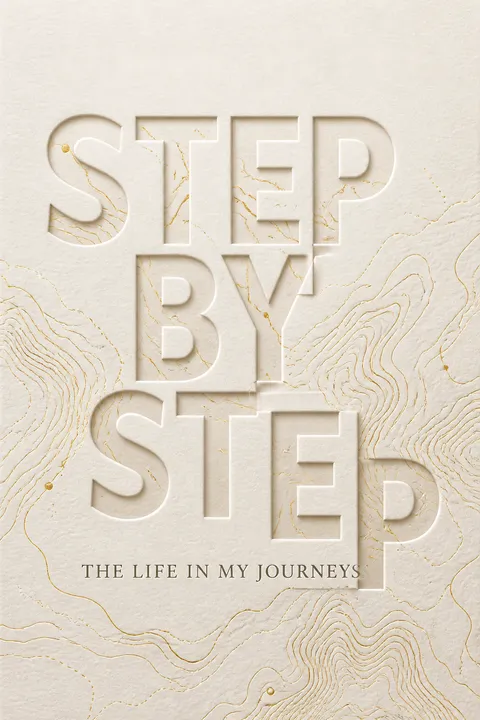
What's Step By Step: The Life in My Journeys about?
- Travel and Adventure: Simon Reeve chronicles his extensive travels across more than 120 countries, focusing on lesser-known regions and the beauty and challenges of exploration.
- Personal Growth: The book details Reeve's transformation from a troubled youth to a successful author and TV presenter, highlighting how travel has shaped his life.
- Social Issues: Reeve addresses global issues like poverty, disease, and environmental degradation, offering insights into the complexities of the world through his encounters with local communities.
Why should I read Step By Step: The Life in My Journeys?
- Inspiring Journey: Reeve's story of overcoming adversity is relatable and motivating, especially for readers facing their own challenges.
- Rich Cultural Insights: The book provides vivid descriptions of diverse cultures and landscapes, serving as both a travelogue and a call to appreciate global diversity.
- Engaging Storytelling: Reeve's accessible writing style, filled with humor and poignant moments, makes for a compelling and enjoyable read.
What are the key takeaways of Step By Step: The Life in My Journeys?
- Embrace Adventure: Reeve emphasizes stepping out of comfort zones and embracing new experiences for personal growth and understanding.
- Resilience in Adversity: The narrative illustrates how facing challenges can lead to strength and resilience, highlighting the value of perseverance.
- Awareness of Global Issues: Readers are encouraged to engage with pressing global issues, with Reeve's encounters shedding light on the realities many face.
What are the best quotes from Step By Step: The Life in My Journeys and what do they mean?
- Conservation and Livelihoods: “If you want us to stop hunting the wildlife, someone needs to provide us with an alternative means of putting food on the table.” This highlights the need for sustainable solutions that consider human livelihoods.
- Determination and Resilience: “I was still alive. If I was still alive I wanted to continue.” This reflects Reeve's determination to push through adversity and live life fully.
- Practical Advice: “Take things step by step.” This advice encourages tackling problems incrementally rather than feeling overwhelmed.
How does Simon Reeve's background influence his journey in Step By Step: The Life in My Journeys?
- Challenging Childhood: Growing up in a modest family with health challenges shaped Reeve's perspective on life, instilling empathy and resilience.
- Unconventional Path: Without a university degree, Reeve's journey into journalism and television was marked by determination and overcoming obstacles.
- Family Influence: The dynamics with his father, particularly during his father's illness, play a significant role in Reeve's development and narrative.
How does Step By Step: The Life in My Journeys address global issues?
- Environmental Concerns: Reeve discusses deforestation, pollution, and climate change, calling for readers to be more environmentally conscious.
- Social Injustice: The book highlights struggles related to poverty and access to resources, emphasizing the need for sustainable solutions.
- Cultural Preservation: Reeve advocates for preserving cultural heritage and recognizing indigenous cultures in the face of globalization.
What personal challenges does Simon Reeve face in Step By Step: The Life in My Journeys?
- Health Issues: Reeve recounts a near-fatal experience with malaria, highlighting the risks associated with travel.
- Mental Health Struggles: He candidly discusses his battles with depression and suicidal thoughts, emphasizing the importance of mental health awareness.
- Family Dynamics: Reeve shares the complexities of his relationship with his father, adding depth to his story and illustrating themes of familial love and loss.
What unique experiences does Simon Reeve share in Step By Step: The Life in My Journeys?
- Kazakh Beatles: Reeve encounters Kazakh musicians who secretly loved the Beatles, illustrating cultural resilience under repression.
- Kokpar Experience: He participates in a traditional Kazakh game, showcasing the cultural richness and unique traditions of the region.
- Mbandaka's Reality: In the DRC, Reeve meets a man living in poverty, highlighting the stark realities and resilience of individuals in challenging circumstances.
How does Simon Reeve's storytelling style in Step By Step: The Life in My Journeys enhance the reader's experience?
- Vivid Descriptions: Reeve's descriptive language brings places to life, immersing readers in the landscapes and cultures he visits.
- Personal Anecdotes: His honesty and vulnerability create a relatable and engaging reading experience, making his journey feel authentic.
- Humor and Insight: Reeve balances serious topics with humor, providing a well-rounded perspective that keeps readers engaged.
How does Step By Step: The Life in My Journeys reflect Simon Reeve's personal growth?
- Transformation Through Travel: Reeve's journeys make him more empathetic and aware of global issues, emphasizing understanding different perspectives.
- Embracing Challenges: The book illustrates Reeve's resilience and adaptability in facing difficult situations, from illness to dangerous encounters.
- Connection with Humanity: His interactions with diverse people deepen his appreciation for human connection, highlighting shared experiences.
What lessons does Simon Reeve impart about travel in Step By Step: The Life in My Journeys?
- Travel with Purpose: Reeve encourages approaching travel with curiosity and a desire to learn, engaging with local cultures and communities.
- Embrace the Unexpected: He highlights the importance of spontaneity and being open to new experiences, leading to memorable encounters.
- Respect Local Cultures: Reeve advocates for responsible travel that honors local traditions and promotes positive interactions.
How does Step By Step: The Life in My Journeys compare to other travel narratives?
- Focus on Unrecognised States: Reeve explores lesser-known regions, offering a fresh perspective on global politics and culture.
- Personal and Reflective: His writing blends adventure with introspection, sharing thoughts and feelings that make the narrative relatable.
- Cultural and Historical Context: The book provides rich context for the places Reeve visits, weaving in stories that highlight human diversity.
Download PDF
Download EPUB
.epub digital book format is ideal for reading ebooks on phones, tablets, and e-readers.








