

Key Takeaways
Question the cultural script that treats aging as personal failure
A label can shrink a life. At sixty-two, Ram Dass was startled when a train conductor offered him a senior discount. The savings felt good; the identity attached to them did not. He recognized how readily a label can become a badly fitted role. He also saw older adults represented as only about three percent of television images in a study he cites, often as comic or helpless figures.
Elders need an audience. In Elder Circles, older participants shared experience while younger people listened. Many said nobody had previously invited them to be wise. Dass argues that aging can offer reflection, patience, and perspective, but those gifts are harder to claim when a culture prizes novelty and information above experience.
The chapter makes ageism concrete by showing how public images can become private expectations. Its Elder Circles offer a practical counterexample: wisdom is not merely a personal possession, it needs occasions for exchange. That shifts the question from whether older people remain useful to whether communities make room for what they know. The argument is most persuasive when it invites participation rather than assigning every older person the same role. Age does not automatically produce wisdom, but a culture that never asks for it makes its development less likely.
Stop treating the aging body as the whole of who you are
A wider identity can steady you. Dass distinguishes the Ego, the body, personality, thoughts, and social roles; the Soul, the observing and learning self; and Awareness, the boundless ground he identifies with God. These are his spiritual commitments, not scientific findings. He believes the Soul continues beyond bodily death, but the practical invitation is to notice that a changing body need not define the entirety of experience.
Try the sky as a metaphor. In sky-gazing, a person watches clouds cross the open sky, then treats thoughts and sensations as passing weather. The exercise does not make the clouds unreal or stop them from hurting. It offers a little room around them, so fear or loss can be present without becoming the only possible account of the self.
This spiritual map gives aging a perspective larger than decline: the body changes, while the witness can notice change. Its value need not depend on accepting reincarnation or a literal eternal Soul. Used more modestly, it can loosen the reflex to equate a diagnosis, role, or appearance with a whole person. The distinction also carries a risk: if taken as proof that bodily suffering is unimportant, it could encourage neglect. Dass's most grounded use of the model keeps attention on the body while refusing to reduce a person to it.
Separate pain from the extra suffering your mind builds around it
Notice the second layer. Dass distinguishes physical pain from the fear, rumination, and self-judgment that can gather around it. Mindfulness practice, a form of attention training, begins simply: sit comfortably, rest some attention on the breath, notice when thought pulls attention away, and return without scolding yourself. This does not remove pain or make every circumstance controllable. It helps reveal how the mind responds to what cannot immediately be changed.
A diagnosis can redirect attention. Elaine, a retired teacher with lymphoma and a survival prognosis below fifty percent, described using the shock of diagnosis to face an unhappy marriage while receiving treatment. Her story illustrates a possible response, not a guaranteed outcome. Dass also stresses that poverty, isolation, inadequate care, and illness are real hardships, not merely mistaken thoughts.
The distinction is useful because it identifies a space for choice without pretending that choice can abolish illness. The breath exercise is modest by design: attention wanders, and the practice is the gentle return, not a perfect state of calm. Elaine's story adds an important dimension, showing that a crisis can prompt changes beyond the medical problem itself. Still, no one should be asked to treat severe pain, depression, or poor access to care as a failure of awareness. Mental practice can accompany treatment and support; it cannot substitute for them.
Practice meeting your fears before they become the whole room
Give fear a closer look. Dass names common anxieties of aging, including memory loss, loneliness, embarrassment, powerlessness, and losing a sense of purpose. Rather than trying to suppress fear or letting it spin into imagined catastrophe, he recommends noticing its thoughts and bodily sensations in the present. Approach the feared possibility gently, and step back if the experience becomes overwhelming.
Specific fears may surprise you. Dass recounts a dying woman who could not let go because she feared being buried and eaten by worms. Once her children promised cremation, she relaxed and died peacefully in her sleep. The story shows why vague reassurance can miss the real source of distress. Fear becomes more workable when a person can name what it is, discuss it, and seek a concrete response where one is possible.
The account of the woman afraid of burial makes an abstract lesson unusually practical: fear often has a particular image or condition attached to it, and listening can reveal a solvable need. The approach also avoids demanding bravado. A person can investigate a fear in manageable steps and seek support rather than forcing a confrontation. This is especially important when cognitive illness or severe distress is involved. Not every fear is a misunderstanding to outgrow; some point to genuine risks, unmet needs, or decisions that deserve practical attention.
Care for your body without making youth its only acceptable form
The body is not an obstacle. Before his stroke, Dass often treated his body as an inconvenience to spiritual life. He skipped blood-pressure medication, ignored an unusual hearing problem, and pushed himself to match younger companions. He came to see that spiritual distance had partly been avoidance. Respecting the body means attending to its needs, not pretending that aging can be defeated or that medical care is unnecessary.
Let limits change the pace. When energy falls, Dass suggests pausing rather than treating fatigue as a personal failure. Walking meditation makes slowing down deliberate: notice each shift of weight, each step, and the breath. He also tells a friend overwhelmed by her to-do list to count resting among her tasks. Acceptance here means responding to the body's actual condition, not abandoning care or choice.
The book's body-centered correction matters because spiritual language can sometimes become a refined way to avoid vulnerability. Dass recognizes that his earlier detachment was partly neglect, and that insight changes the practical meaning of acceptance. Slowing down can support attention, but fatigue may also signal a medical problem or a need for assistance. The sound principle is not to interpret every limitation as wisdom. It is to stop treating the body as an enemy or an embarrassment, then respond to its signals with both care and curiosity.
Let dependence become a relationship, not a verdict of weakness
A role can change without ending connection. After the stroke, Dass needed help with ordinary tasks and had to move from being the helper to being helped. At first, dependence embarrassed and frustrated him. Then he began to see caregiving as an exchange in which both people could offer and receive something. When he could no longer drive his BMW, he reframed being driven as a chance to enjoy the scenery rather than mourn the lost control.
Care can reconnect generations. Dass describes caring for his aging father, a relationship that began with a sense of obligation and became a chance to spend time together. He also argues that older adults can serve through community work, companionship, or simply sharing experience. Independence remains valuable, but treating it as the only dignified way to live can deepen isolation and make help harder to accept.
This insight turns dependency from a one-way deficit into a relationship, without pretending that needing care is always easy or freely chosen. The BMW story shows how a change in interpretation can affect both the person receiving help and the person giving it. The father-son account makes the same point through time and intimacy rather than convenience. Still, reciprocal meaning does not erase unequal burdens or the need for reliable care. The strongest version of Dass's idea is that receiving help can preserve connection and dignity, not that dependence must always feel like a gift.
Slow your pace until the present can catch up with you
Change is happening now. Dass draws on anicca, the Buddhist teaching that all phenomena are impermanent. The point is not to become indifferent, but to notice how clinging to the past or rehearsing the future can obscure the life occurring in front of us. He recommends simple attention: do one thing at a time, watch the breath, or examine a memory without letting it dictate the present.
Speed can erase memory. Near the end of his father's life, Dass drove him to the site of a family farm. The quick car journey left his father quiet and disconnected. When they retraced the route at a slower pace, his father began recalling childhood details. The journey had not changed destination; its speed had changed what the experience made available.
The farm visit gives the book's argument about time a human scale. Slowness is not merely a private meditative preference; it can make conversation and memory possible between people. The idea of impermanence also helps distinguish remembering from being trapped in one's biography. A memory can be welcomed without being mistaken for the present. Yet the slower pace is not equally available to everyone in environments built around speed. Personal attention can help, but the story also points to how settings and schedules shape whose experience is accommodated.
Talk about death early, then prepare for the death you want
Silence can isolate the dying. Dass recalls his mother being surrounded by people who reassured her while privately believing she was near death. Their evasions left her alone with what she already sensed. Honest conversation gave them a chance to speak as people rather than as patient and visitors. Hospice, in his account, offers an alternative to treatment focused only on keeping the body alive, while supporting comfort and the emotional or spiritual needs of the dying.
Make choices while you can. Dass organizes the questions around dying, the moment of death, and what may follow it. He recommends discussing where and how one wants care, recording medical and legal wishes, arranging practical affairs, and identifying people who can provide support. His spiritual account of an afterlife is a belief, not settled evidence. Preparation remains useful whether or not that belief is shared.
The chapter's clearest practical contribution is its insistence that death is not only an inner or religious question. It involves communication, medical decisions, family expectations, and the conditions in which care is given. Speaking beforehand can reduce avoidable confusion and allow the dying person to remain a participant in decisions. The spiritual perspective may comfort some people, while others may find it unpersuasive. The preparation does not depend on settling that dispute. It begins with honesty about uncertainty and respect for the person's stated wishes.
Seek healing even when recovery cannot return you to your old life
The stroke changed the lesson. While trying to finish this book, Dass suffered a massive cerebral hemorrhage; doctors gave him a ten percent chance of survival. He lived with paralysis, difficulty speaking, pain, and dependence on caregivers. His recovery included medical treatment and rehabilitation, but it did not restore his previous life. He found that slower speech created silences in which listeners could hear their own thoughts.
Cure and healing are different aims. Dass uses cure to mean restoring a prior physical condition, and healing to mean finding a way for present circumstances to deepen awareness, love, or connection. He calls the stroke a form of fierce grace because it brought spiritual learning through severe disruption. That interpretation belongs to him; it does not make the stroke good, excuse preventable harm, or replace treatment. His ending is a changed relationship to what remains.
The stroke gives the book its strongest test: its ideas are no longer applied only to other people's aging. Dass describes real losses and ongoing care, then makes meaning without claiming that physical recovery is complete. This distinction can help people whose lives do not return to a previous baseline. It also needs careful handling. Calling catastrophe grace can comfort the person who chooses that interpretation, but can wound others if imposed on them or used to romanticize disability. Meaning is most humane when it is offered as a possible response, never as an obligation.
Analysis
Still Here is strongest as a memoir of changing identity. Its argument does not arrive as a detached program: the senior discount unsettles Ram Dass's self-image, his stroke exposes how he neglected his body, and dependence forces a former helper to receive care. These experiences give the book a narrative test. The question is not simply whether spiritual ideas sound wise, but whether they remain available when the body, public role, and control over daily life are diminished.
The central distinction between Ego, Soul, and Awareness offers a powerful interpretive tool. It lets readers imagine a self larger than appearance, productivity, or diagnosis. Yet the book moves between that practical psychological use and strong metaphysical claims about reincarnation and consciousness surviving death. Those claims are matters of faith in the text, not conclusions established by the stories. The distinction matters because readers can use the witnessing practice without accepting the entire cosmology.
The book also resists a common spiritual shortcut. Dass eventually acknowledges that his distance from the body was partly neglect, and that honoring spiritual life does not require refusing medical care or human vulnerability. This makes his account more credible than a simple celebration of detachment. His definition of healing, however, can be misunderstood if separated from that humility. Finding meaning in illness is not evidence that suffering is deserved, chosen, or easily transformed.
Its social argument is equally important. Aging is not only an individual adjustment; roles, pace, family structures, and public images determine whether older people can contribute and remain connected. Elder Circles, caregiving, and slowing down show how relationships can make wisdom visible. The book's best practical lesson is therefore not to become serene on command. It is to notice what is changing, care for the body and relationships that remain, and loosen the assumption that a life has value only while it looks young, independent, and productive.
Review Summary
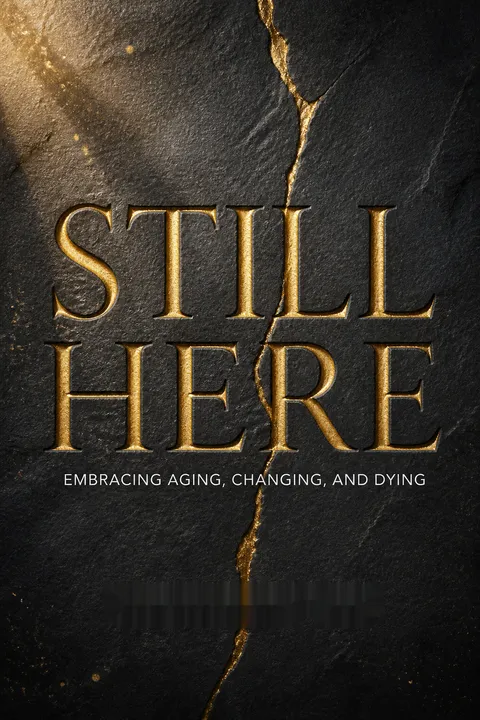
Still Here explores aging, change, and death through Ram Dass's spiritual lens. Readers praise his wisdom, compassion, and humor in addressing these challenging topics. Many find the book comforting and illuminating, appreciating Dass's insights on embracing life's transitions. Some readers connect deeply with his teachings on mindfulness and acceptance, while others find his approach too New Age. Overall, the book is seen as a valuable guide for those confronting mortality and seeking spiritual growth in later life.
People Also Read








Glossary
Three Levels of Being
A map of identityRam Dass's spiritual model distinguishes the Ego, the Soul, and Awareness. The Ego includes the body, personality, thoughts, possessions, and social identity. The Soul is the witnessing and learning self. Awareness is the boundless ground of being that he identifies with God. The model invites a person to view changing experiences from a perspective larger than the body and personality.
Ego
The body and personality selfIn this book, Ego means the psycho-physical identity built from the body, personality, thoughts, feelings, possessions, reputation, and roles. Dass does not treat it as inherently bad: it helps people function in daily life. Suffering grows when a person mistakes this changing identity for the whole of who they are and struggles to preserve it at all costs.
Soul
The witnessing, learning selfDass uses Soul for the dimension of a person that can observe the body's and mind's changing experiences without being entirely defined by them. He believes the Soul continues beyond bodily death and develops through successive lives. In practice, the term names a wider perspective from which aging, pain, and loss can be faced without reducing a person to those experiences.
Awareness
The ground of beingAwareness is the deepest and most inclusive level in Dass's model of consciousness. He describes it as beyond ordinary concepts, time, and the boundary of an individual self, and uses names such as God and the Absolute for it. Awareness is not simply paying attention in the everyday sense; it is a spiritual reality in his account.
anicca
The impermanence of phenomenaAnicca is the Buddhist teaching that all phenomena are impermanent. Dass applies it to the body, possessions, relationships, memories, and changing circumstances. Contemplating impermanence is meant to loosen clinging, not to deny grief or discourage care. By recognizing that change cannot be prevented, a person may meet it with less resistance and more attention to the present.
mindfulness practice
Attention to present experienceDass describes mindfulness practice as observing present experience, often by resting attention on the breath. When thoughts, sensations, or distractions arise, the practitioner notices them and gently returns attention without self-criticism. The purpose is to become familiar with the mind's habits and create space between an experience and the reactions that can intensify distress.
karma-yoga
Using action as spiritual practiceKarma-yoga is the path of treating ordinary activity and relationships as opportunities for spiritual learning and service. Dass contrasts it with renouncing worldly involvement. In this approach, work, caregiving, illness, and daily responsibilities can become part of one's practice when approached with attention and less attachment to status or reward.
Guru kripa
Grace through the guruGuru kripa means the grace of the guru. In Dass's devotional understanding, a guru helps a student connect with the divine awareness already within. He interprets events in his own life, including the stroke, as occasions through which his guru's compassion teaches him. The concept depends on a devotional spiritual framework rather than a claim that hardship is objectively caused by a guru.
fierce grace
Growth through severe changeDass's phrase for spiritual learning that arrives through painful or disruptive experience. He uses it particularly for the stroke, which caused lasting physical limitations while deepening his sense of dependence, love, and spiritual identity. The term describes his personal interpretation of adversity, not a claim that injury is beneficial or that others should regard suffering as a gift.
FAQ
1. What is "Still Here: Embracing Aging, Changing and Dying" by Ram Dass about?
- Exploration of Aging and Dying: The book delves into the psychological, spiritual, and cultural aspects of aging, change, and death, offering a roadmap for conscious aging.
- Personal and Spiritual Journey: Ram Dass shares his own experiences, including his stroke, to illustrate how aging and physical decline can become opportunities for spiritual growth.
- Challenging Cultural Taboos: The book critiques Western society’s denial of aging and death, encouraging readers to face these realities with openness and acceptance.
- Practical and Philosophical Guidance: It combines practical advice, mindfulness techniques, and philosophical insights to help readers find meaning and peace as they age.
2. Why should I read "Still Here" by Ram Dass?
- Universal Relevance: Aging, change, and death are inevitable for everyone; the book offers tools to approach these experiences with wisdom and grace.
- Spiritual Perspective: Ram Dass provides a unique blend of Eastern and Western spiritual teachings, making the book valuable for those seeking deeper meaning in later life.
- Personal Stories and Humor: The author’s candid stories, humor, and vulnerability make complex topics accessible and relatable.
- Practical Tools: Readers gain mindfulness practices, meditations, and reframing techniques to reduce suffering and increase joy in the face of aging.
3. What are the key takeaways from "Still Here: Embracing Aging, Changing and Dying"?
- Aging as Opportunity: Aging is not just decline but a chance for spiritual and personal growth, wisdom, and deeper connection.
- Mindfulness and Acceptance: Mindfulness practices help transform suffering, fear, and loss into acceptance and peace.
- Redefining Identity: Our true self is not limited to the body or ego; cultivating Soul and Awareness perspectives brings liberation.
- Facing Death Consciously: Preparing for death and embracing impermanence can lead to a more joyful, present, and meaningful life.
4. How does Ram Dass define conscious aging in "Still Here"?
- Awareness Beyond Ego: Conscious aging involves shifting identification from the ego and body to the soul and pure awareness.
- Embracing Change: It means accepting the physical, social, and psychological changes of aging without resistance or denial.
- Learning from Suffering: Challenges like illness, loss, and dependency are seen as teachers that can deepen wisdom and compassion.
- Living in the Present: Conscious aging emphasizes being present, letting go of past regrets and future anxieties, and finding meaning in each moment.
5. What are the main fears and challenges of aging discussed in "Still Here"?
- Fear of Senility and Loss: Concerns about losing mental faculties, memory, and independence are addressed with compassion and practical advice.
- Loneliness and Isolation: The book explores the pain of social disconnection and offers ways to find connection and meaning.
- Embarrassment and Powerlessness: Ram Dass discusses the shame and loss of status that can come with aging, and how to reframe these experiences.
- Loss of Role and Meaning: The transition from active roles (worker, parent) to new identities can cause depression and existential anxiety, which the book helps to navigate.
6. What practical methods and advice does Ram Dass offer for dealing with aging in "Still Here"?
- Mindfulness Meditation: Step-by-step instructions for mindfulness and walking meditation to cultivate presence and reduce suffering.
- Reframing Suffering: Techniques for shifting perspective from ego to soul, allowing pain and loss to become opportunities for growth.
- Compassion and Service: Encouragement to connect with others through service, community, and compassion to alleviate loneliness and isolation.
- Acceptance and Humor: Embracing the realities of aging with humor, self-compassion, and a willingness to let go of societal expectations.
7. How does "Still Here" address the relationship between body, mind, and soul as we age?
- Body as a Vehicle: The body is seen as a temporary home for the soul, deserving of care but not the sole source of identity.
- Mind’s Role in Suffering: The ego-mind often creates unnecessary suffering through attachment, fear, and resistance to change.
- Soul Perspective: By identifying with the soul and awareness, one can witness the changes of body and mind without being overwhelmed.
- Integration, Not Denial: True spiritual maturity involves honoring the body and ego as part of the journey, not rejecting them.
8. What does Ram Dass say about facing death and dying in "Still Here"?
- Death as Transition: Death is viewed not as annihilation but as a transition for the soul, a natural part of the life cycle.
- Preparation and Mindfulness: Preparing for death through mindfulness, completing unfinished business, and letting go of attachments is emphasized.
- Cultural Critique: The book critiques Western denial of death and advocates for more open, honest conversations about dying.
- Spiritual Opportunity: Facing death consciously can bring peace, reduce fear, and deepen one’s connection to the divine.
9. How does "Still Here" suggest we deal with loss of roles, retirement, and shifting identities?
- Letting Go of Old Roles: The book encourages releasing attachment to former identities (career, parenthood) and embracing new ways of being.
- Being vs. Doing: Ram Dass highlights the importance of shifting from defining oneself by achievements to embodying wisdom and presence.
- Eccentricity and Freedom: Aging is seen as a time to embrace individuality, eccentricity, and the freedom to live authentically.
- Service and Connection: Finding new meaning through service, community involvement, and sharing wisdom with others is recommended.
10. What are the core spiritual concepts in "Still Here," such as Ego, Soul, and Awareness?
- Ego: The ego is the constructed self, focused on roles, achievements, and physical identity; it is limited and impermanent.
- Soul: The soul is the deeper, learning aspect of our being, which transcends death and is on a journey toward union with the divine.
- Awareness: Awareness is the ground of being, the infinite consciousness that contains both ego and soul; it is timeless and unchanging.
- Spiritual Practice: Moving from ego to soul to awareness is the heart of conscious aging and spiritual liberation.
11. What are the best quotes from "Still Here" by Ram Dass and what do they mean?
- “Healing is not the same as curing, after all; healing does not mean going back to the way things were before, but rather allowing what is now to move us closer to God.”
- This quote emphasizes that true healing is about spiritual growth and acceptance, not just physical recovery.
- “Getting old isn’t easy for a lot of us. Neither is living, neither is dying. We struggle against the inevitable and we all suffer because of it.”
- Ram Dass points out that suffering comes from resistance, and peace comes from acceptance of life’s natural processes.
- “Don’t be a wise elder, be an incarnation of wisdom.”
- The goal is not to play a role, but to embody wisdom authentically in daily life.
- “The spirit is more powerful than the vicissitudes of aging.”
- Our spiritual essence remains strong and unchanging, even as the body and mind undergo change.
12. How did Ram Dass’s personal experience with his stroke influence the teachings in "Still Here"?
- Firsthand Encounter with Disability: Ram Dass’s stroke forced him to confront dependency, loss of independence, and physical suffering, deepening his empathy and insight.
- Transformation of Fear: The experience allowed him to move through his own fears of aging and death, providing a living example of his teachings.
- Embracing “Fierce Grace”: He describes the stroke as “fierce grace,” a difficult but ultimately transformative spiritual gift that brought him closer to his soul and to God.
- Teaching Through Example: By sharing his vulnerabilities and the lessons learned, Ram Dass offers readers a practical, compassionate model for conscious aging and dying.


Download PDF
Download EPUB
.epub digital book format is ideal for reading ebooks on phones, tablets, and e-readers.








