

Plot Summary
Prologue
Fulbert Freakfinder’s traveling carnival arrives in Grubbers Nubbin, but its performers fail to frighten the townspeople. Arabella, a sharp-tongued girl who claims to fear nothing, points out that the real terror lies in Castle Grotteskew, where Mad Professor Erasmus makes monsters.
The castle’s distant roars send the town fleeing indoors. Freakfinder recognizes the chance to revive his failing business and begins plotting a way inside.
The opening sets up two kinds of looking. Freakfinder treats unusual bodies as a way to make money, while the townspeople treat the castle’s unknown inhabitants as a reason to hide. Arabella unsettles both responses: she sees that the carnival’s performers are not frightening, and she names the castle as the town’s genuine fear. Her bluntness makes her a bridge between the human village and the creatures it misunderstands. Freakfinder, by contrast, hears her information as an opportunity, turning fear into a business plan before he knows who lives inside.
The First Creation Runs
In Erasmus’s laboratory, Stitch Head watches his maker celebrate a new creation, a huge, three-armed creature assembled from unnatural ingredients. As the full moon draws out its werewolf nature, the monster tears free, smashes through a door, and heads for the town. Stitch Head has spent years secretly giving the professor’s dangerous creations calming potions, but this one is larger than any he has faced.
He scrambles onto its back and throws Wolf-Away into its mouth, then crashes into a wall. When he wakes, the creature is frightened of him rather than murderous. The potion has quieted its rampage, and the creature eagerly decides they are friends, though Stitch Head, accustomed to being forgotten, does not know how to accept one.
Stitch Head’s rescue is an act of care that receives no recognition from its intended beneficiary, Erasmus. He acts because he fears the professor will be harmed, not because he expects affection in return. The new creature changes the emotional terms of that work: it responds to him as a person, not as a hidden caretaker or a ghost. Its abrupt friendliness is comic, but it also exposes Stitch Head’s learned suspicion. After a lifetime of being useful in secret, even uncomplicated attention feels dangerous.
A Castle Full of Monsters
The creature insists on following Stitch Head through Grotteskew, where it mistakes the castle’s monsters for threats and carries him away in panic. Soon it discovers that the grotesque creations are sociable, and that they know Stitch Head as the Ghost of Grotteskew.
They explain that he has secretly cured their dangerous impulses, from vampirism to man-eating, then vanished before they could thank him. The creature realizes Stitch Head treated its moon-driven madness the same way.
When it accidentally drops him, it searches the castle, calling loudly enough to risk drawing human attention. Stitch Head returns to quiet it and reluctantly lets it follow him to his underground home. There, the creature finds bottles of remedies and learns how much work Stitch Head does alone.
The castle’s inhabitants reveal a version of Stitch Head that he cannot see in himself. To them, he is not insignificant but a source of safety, although his secrecy has prevented gratitude from becoming a relationship. The creature’s exuberant search makes affection noisy and inconvenient, which is exactly why it reaches Stitch Head. His hidden labor has protected the castle for years, yet it has also kept him isolated. The ghostly reputation captures that contradiction: he is present in everyone’s life, but never fully known.
A Star Behind the Door
A trumpet system Stitch Head built to monitor the castle carries a human voice from the Great Door. Freakfinder has found Grotteskew and wants the creatures for his struggling carnival. When Stitch Head answers the hatch, Freakfinder notices his unusual face and presents a poster advertising a place among the show’s curiosities.
The offer unsettles Stitch Head, who has never imagined that others like him might live beyond the castle. Meanwhile, the creature lights hundreds of candles in Stitch Head’s dungeon, hoping to make it welcoming.
The brightness drives Stitch Head back into the shadows, but it also prompts him to explain why he hides: Erasmus made him when they were boys, then left him locked away for years. Stitch Head still believes the promise of friendship belongs only to his master.
The door and the dungeon present opposing forms of exposure. Freakfinder offers a public identity, but one defined by spectacle; the creature offers companionship, but cannot understand why being seen might hurt. Stitch Head’s memory of waiting gives his withdrawal a concrete history rather than making it simple shyness. He has learned to treat hope as a promise that can be withdrawn without explanation. The poster therefore attracts him for two reasons: it suggests a life outside the castle, and it appears to offer the recognition he has been denied at home.
The Ladder to Nowhere
Freakfinder keeps returning to the Great Door, and Stitch Head gradually listens longer, curious about the outside world. When one expected visit does not come, Stitch Head realizes he has begun to look forward to the knock.
He then hears Freakfinder climbing a shaky chain of ladders toward the ramparts. The showman praises Stitch Head’s appearance and promises to make him famous, but Stitch Head refuses to leave Erasmus. Instead, he tips the ladder backward, sending Freakfinder tumbling into a tree.
That night, Stitch Head dreams of crowds cheering for him beyond the castle walls. He wakes to a note from the creature, inviting him to find it, and the message leads him toward the professor’s laboratory and another chance to face the past he avoids.
Stitch Head’s small act of refusal is more than a rejection of fame. For the first time, he chooses not to let another person define his future, even when the offer touches his hunger to be remembered. His disappointment when Freakfinder misses a visit shows that isolation has begun to loosen its grip. Yet his dream turns recognition into a crowd’s applause, an image shaped by the only model of public attention available to him. The creature’s invitation redirects that longing toward a personal bond, though its idea of help is about to test Stitch Head’s fragile confidence.
Dangling Over Erasmus
The creature has tied a rope around Stitch Head’s ankle and lowers him from the laboratory rafters during Erasmus’s latest experiment. It believes this Dingle Dangle will force the professor to notice his forgotten first creation.
Stitch Head, terrified but tempted by the possibility, finds himself directly above Erasmus and hopes the old promise may still matter. The professor looks up, but reaches past Stitch Head to take a potion from his bag, mistaking it for the missing ingredient in his experiment. The brief hope collapses into humiliation.
The creature pulls Stitch Head back to safety and tries to explain away the professor’s failure to recognize him, but Stitch Head leaves the laboratory in silence. He has spent years imagining this meeting; now he knows proximity alone cannot make Erasmus see him.
The scene turns a childlike game into a painful test of recognition. Stitch Head is physically placed where he cannot be overlooked, yet Erasmus interprets him as part of the laboratory’s equipment. The mistake makes visible the difference between being useful and being known, a distinction Stitch Head has spent his life trying to erase. The creature’s impulsive scheme is not cruel; it reflects its faith that affection can solve what it does not understand. Its optimism cannot protect Stitch Head from the evidence before him, and his retreat marks a sharper break with the hope that waiting will be rewarded.
The Poster’s Lie
On the ramparts beneath the full moon, Stitch Head sees posters bearing his face fall from the sky. Freakfinder arrives by hot-air balloon and renews his offer. Remembering the professor’s blank stare and imagining a life beyond Grotteskew, Stitch Head opens the Great Door and steps outside.
Freakfinder immediately drops the friendly act: he used promises of fame to manipulate Stitch Head into admitting that Erasmus makes monsters. He wants the professor to create attractions for profit, and he has kidnapped Arabella to make the town believe the castle’s creatures took her.
An armed mob is already approaching. Freakfinder grabs Stitch Head and threatens to seize Erasmus, while Arabella fights him and calls out his lie. Stitch Head has escaped the castle only to discover that his choice has helped endanger everyone inside.
Freakfinder exploits Stitch Head’s deepest vulnerability by offering recognition without any intention of knowing him. The posters turn that deception into an object he can hold, making the later betrayal especially concrete: his own face has been used to lure him out. His decision to leave is still meaningful, even though it leads into danger. He acts on a genuine desire for a life beyond duty and neglect. The trap complicates the idea that independence is simply escape; choices made under emotional deprivation can be freely made and still be manipulated.
Arabella Joins the Fight
Freakfinder’s performers close in on Arabella, but Stitch Head throws calming potions that put several of them to sleep. He drags the drowsy girl through the Great Door before Freakfinder can recapture her, then uses another potion to wake her with a burst of anger.
Arabella learns that the mob is coming and that Stitch Head blames himself for betraying the castle. She refuses to let him collapse into guilt, while the creature returns and apologizes for the earlier Dingle Dangle.
Arabella points out that Grotteskew’s many creations could face the mob, but they are terrified of humans. Stitch Head decides they must stop hiding. He prepares a potion to control the creature’s hunger and plans to use its full-moon transformation to frighten the attackers away.
Arabella’s arrival changes the story’s moral balance. Unlike Freakfinder, she sees Stitch Head’s guilt without using it to control him, and she answers it with practical solidarity rather than reassurance alone. The creature’s apology also makes friendship reciprocal: Stitch Head is not only the caretaker who saves others, but someone whose hurt deserves repair. Their plan depends on accepting fear without letting it dictate every action. Stitch Head cannot undo the door he opened, but he can choose what to do next, transforming a private failure into a shared defense.
Grotteskew Fights Back
As Arabella’s grandmother leads the armed townspeople into the courtyard, Stitch Head gives the creature an anti-man-eating mixture and sends it out beneath the full moon. The potion does not prevent the transformation; it prevents the creature from eating anyone.
Hair, fangs, and claws return, and its furious charge scatters the mob, which flees toward Grubbers Nubbin. While Arabella and Stitch Head rush to Erasmus’s laboratory, Freakfinder reaches it first, sacks the professor, and tries to carry him away.
Stitch Head climbs into the rafters, ties a rope around his ankle, and repeats the Dingle Dangle. This time he pours Shake ’n’ Wake into Erasmus’s unfinished creation. The giant beast awakens, pursues Freakfinder, and gives Stitch Head time to free the professor.
The climax turns Stitch Head’s solitary expertise into a public defense. His potions do not erase the creatures’ frightening nature; they make that nature survivable, allowing the monster to repel the mob without consuming its people. The repeated Dingle Dangle also changes meaning. Once it exposed Stitch Head to the professor’s indifference, now he uses it deliberately to interrupt a kidnapping and awaken a force capable of saving Erasmus. The scene joins care and risk: Stitch Head’s knowledge matters because he chooses to act visibly, not because the world suddenly becomes safe or fair.
Epilogue
After the professor recognizes Stitch Head by the name he gave him, he immediately turns back to his next experiment. This time, Stitch Head can bear the familiar distraction without retreating into loneliness. Arabella stays until the creature returns at sunrise, then promises to visit again.
The newly awakened monster becomes friends with the other creations and adopts Freakfinder’s name. Above the laboratory, Stitch Head, Arabella, and the creature watch Erasmus work. Stitch Head no longer expects his life to be remembered by everyone; friendship, curiosity, and the chance to be seen by those beside him are enough to begin.
The ending offers recognition without pretending that one remembered name repairs decades of neglect. Erasmus acknowledges Stitch Head, then slips back into his habitual absorption, so Stitch Head’s relief must coexist with the old pattern. The important change is that he no longer makes his entire sense of worth depend on his creator’s attention. Arabella and the creature provide relationships grounded in present actions: they stay, return, and invite him to participate. The final image of the friends watching another experiment reframes the laboratory. It remains a place of creation, but Stitch Head is no longer only a witness hidden in the rafters.
Analysis
Stitch Head’s central problem is not simply that he looks unusual or lives among monsters. It is that he has built his identity around an absent witness. Erasmus created him, named him, and promised friendship, so Stitch Head interprets every later act of neglect as proof that he has become disposable. His years of protecting the castle complicate that belief: the creatures depend on him, but because he works unseen, care does not automatically become recognition.
The book tests two competing versions of being seen. Freakfinder offers public attention by turning Stitch Head into an attraction, and his praise seems to answer the boy’s longing while concealing an attempt to exploit the professor. Arabella’s straightforward loyalty and the Creature’s clumsy affection offer a different model. They do not require Stitch Head to become impressive, famous, or useful before treating him as a friend. Their care is expressed through presence, apology, and shared risk.
The story’s comic monsters also expose how fear is manufactured. Grotteskew’s creations look dangerous, but many have been made safer by Stitch Head’s work. The town’s violence, meanwhile, is driven by Freakfinder’s lie and by the ease with which people mistake appearance for intention. The final confrontation does not erase that fear; Stitch Head uses the Creature’s frightening transformation to stop the mob while ensuring it cannot eat anyone. His response is neither denial nor surrender. He understands the danger and acts with care.
Erasmus’s eventual recognition matters, but it does not become a miraculous cure for neglect. He remembers Stitch Head and then turns back to his experiments. The lasting change is Stitch Head’s willingness to value relationships that exist in the present, rather than waiting in the dark for a single person to repair the past. The story locates belonging not in universal applause, but in being known by companions who choose to stay.
Review Summary
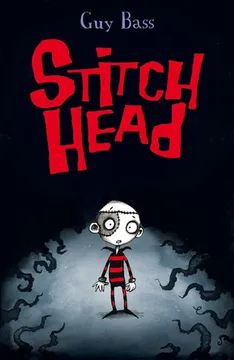
Stitch Head is a delightful children's book about a forgotten creation of a mad scientist who protects the castle and its monstrous inhabitants. Readers praise its quirky humor, Gothic-style illustrations, and themes of friendship and acceptance. Many found it entertaining for both children and adults, with its Frankenstein-inspired story and lovable characters. The book is part of a series that has captivated young readers, encouraging them to continue with subsequent volumes. Overall, it's highly recommended for its fun narrative, engaging illustrations, and valuable life lessons.
Characters
Stitch Head
The forgotten first creationA small, stitched-together being assembled by Erasmus from spare parts, Stitch Head has mismatched eyes and a habit of disappearing into the castle’s shadows. He is observant, inventive, and deeply loyal, secretly using potions to protect the professor’s creations from the dangerous impulses built into them. His loyalty is shaped by an old promise of friendship and by years of waiting for Erasmus to remember him. Because he has learned to equate being useful with being loved, attention can feel both necessary and frightening. His story centers on whether he can imagine a life beyond the role he has occupied in Grotteskew.
The Creature
The oversized new friendA huge, three-armed creation with little memory of its past, the Creature meets Stitch Head just after a full-moon rampage. It is energetic, curious, and so direct in its affection that it overwhelms Stitch Head’s defenses. Its innocence is not the same as harmlessness: dangerous ingredients can transform its body and impulses, and it must learn to trust Stitch Head’s knowledge of those risks. The Creature treats friendship as something to declare and enact immediately, making it a lively counterweight to Stitch Head’s fear of being forgotten.
Arabella
The fearless town girlArabella is a messy-haired, sharp-tongued girl from Grubbers Nubbin who is unimpressed by the carnival’s supposed horrors and refuses to be easily intimidated. Her courage comes with a combative streak, but she is also perceptive about other people’s motives and quick to act when someone is in danger. She challenges both the town’s panic and Stitch Head’s tendency to blame himself for everything. Her bluntness can sound unkind, yet it often cuts through helplessness and turns a frightening situation into a problem someone can tackle.
Professor Erasmus
The distracted makerThe resident mad professor of Castle Grotteskew, Erasmus spends his days assembling bizarre creations and trying to bring them to life. His delight in invention is genuine, but it narrows his attention until he can overlook the beings and relationships around him. He once knew Stitch Head as a boy and made him from experimental leftovers, yet the demands of his work have shaped an unreliable presence in Stitch Head’s life. Erasmus is neither a conventional villain nor a dependable caretaker; his distractedness creates real emotional consequences even when he does not intend harm.
Fulbert Freakfinder
The opportunistic showmanFreakfinder is the short, shabby ringmaster of a traveling carnival whose old attractions no longer frighten audiences. He is practiced at turning people’s curiosity and prejudice into entertainment, and his charm is a tool rather than a sign of trustworthiness. Where Stitch Head hopes to be seen as a person, Freakfinder sees unusual bodies as marketable attractions. His ambition makes him an immediate threat to Grotteskew’s hidden community, while his polished promises reveal how easily a desire for recognition can be exploited.
Arabella’s grandmother
The determined town elderArabella’s grandmother is a forceful presence in Grubbers Nubbin and a fierce protector of her granddaughter. When fear turns the townspeople against Grotteskew, she is at the front of the crowd. Her anger shows how a protective instinct can be steered by alarming, false information.
Doctor Contortion
The struggling performerOne of Freakfinder’s carnival performers, Doctor Contortion is a stiff man whose act depends on bending his body into impossible positions. He follows the ringmaster despite his act’s limited success, serving as a glimpse of the insecure people who depend on Freakfinder’s show for their livelihood.
Madame Moustache
The carnival’s bearded performerA burly performer with a horsehair moustache, Madame Moustache knows her appearance is part of the act and that the work pays her bills. Her dry practicality contrasts with Freakfinder’s grand sales pitch and hints at the performers’ complicated dependence on his carnival.
The Topsy-Turvy Twins
The unsteady carnival duoTwo tiny, elderly performers who struggle to hold a handstand, the twins travel with Freakfinder’s carnival. Their clumsy act helps establish that the show’s promise of terror is mostly bluster.
The creations of Grotteskew
The castle’s hidden communityErasmus’s many creations range from slime-covered beasts to clockwork oddities. Their appearances are alarming, but most are sociable and grateful for the remedies Stitch Head has secretly provided. They have learned to shelter in the castle’s shadows because humans fear them, making their community both a source of belonging and a reminder of the world beyond Grotteskew.
Plot Devices
Stitch Head’s potions
Remedies for monstrous impulsesStitch Head makes antidotes and calming mixtures to protect Erasmus’s creations from the dangerous traits introduced by the professor’s experiments. The bottles establish that Stitch Head has practical expertise as well as loyalty, and they repeatedly turn fear into a problem he can address. Their effects are specific rather than magical solutions to everything: some calm creatures, some wake them, and the anti-man-eating mixture limits what the Creature can do while transformed. The potions connect Stitch Head’s years of unseen care to the choices he makes when Grotteskew is threatened.
The full moon
A trigger for transformationThe professor’s use of Werewolf Extract makes the full moon a dangerous condition for certain creations. It causes the Creature to grow larger, hairier, and more aggressive, turning the castle’s newest arrival into a threat to the town. Stitch Head’s knowledge of the cycle gives him a way to prepare, but not to prevent the transformation. In the final defense of Grotteskew, he uses that predictable danger strategically and pairs it with a potion that prevents the Creature from eating people.
Freakfinder’s posters
A lure disguised as praiseThe carnival poster gives Stitch Head a picture of a possible life beyond the castle and a version of himself presented as worth looking at. Freakfinder uses this promise to court him, knowing that Stitch Head longs to be remembered. The posters later fall from a hot-air balloon, making the offer seem vivid and personal enough to draw him outside. Their meaning changes when Freakfinder reveals that he wanted access to Erasmus, not a place for Stitch Head in his show.
The listening trumpets
An alarm across the castleStitch Head has built a network of trumpet-shaped listening devices connected by pipes throughout Grotteskew. They let him hear trouble elsewhere in the castle and, eventually, detect that someone is knocking at the Great Door. The network reflects the way he has made himself responsible for everyone’s safety without making himself visible to them. It also turns his hidden vigilance into a practical means of discovering that the isolated castle is no longer untouched by the outside world.
Dingle Dangle
A repeated test of recognitionThe creature invents Dingle Dangle by tying Stitch Head to a rope and lowering him from the laboratory rafters. Its first use is a clumsy attempt to make Erasmus notice his forgotten creation, and the professor instead takes a potion from Stitch Head’s bag. Later, Stitch Head reuses the same risky setup by choice, lowering himself over Erasmus’s new experiment so he can awaken it and interrupt Freakfinder’s capture of the professor. The repeated device changes from a failed bid for recognition into a tool Stitch Head controls.
Download PDF
Download EPUB
.epub digital book format is ideal for reading ebooks on phones, tablets, and e-readers.








