

Key Takeaways
Treat stress as a response to demands, not proof you are failing.
Stress is a body response. Stress is the mind and body reacting to change, pressure, or a perceived threat. The trigger can be external, such as a looming deadline, or internal, such as worrying about what might go wrong. Even welcome changes, including a promotion or a new baby, can bring pressure because they require adjustment.
Capacity shapes the reaction. The book’s central point is that stress depends partly on how demanding a situation feels compared with the resources available to handle it. The body’s alarm response releases hormones such as adrenaline and cortisol, raising alertness, heart rate, and breathing. A short burst can sharpen focus or motivation. When pressure keeps arriving without relief, the same response can become exhausting and disruptive.
This framing replaces self-blame with a more useful question: what is being demanded, and what support or capacity is missing? It also explains why the same event can energize one person and overwhelm another. The distinction matters because stress management is not simply an effort to feel calmer; it can involve changing expectations, seeking help, or reducing demands. The account is strongest when it treats stress as an interaction between circumstances and coping resources, rather than implying that attitude alone determines the outcome.
Use stress's duration and pattern to choose the right level of response.
Three patterns matter. Acute stress is a short-term reaction to a recent or approaching demand. It can feel intense, and sometimes exciting, but generally eases when the situation passes. Episodic acute stress means those acute surges happen repeatedly, often amid persistent urgency, overcommitment, and worry. Chronic stress is pressure that continues over a long period, gradually wearing down a person’s mental and physical resources.
Notice when pressure persists. The book describes headaches, tension, sleep problems, irritability, and difficulty concentrating among possible stress symptoms. Chronic stress can become so familiar that a person stops recognizing it as a problem. Repeated or prolonged distress calls for more than a quick calming exercise. The book advises professional help when entrenched patterns or serious symptoms are involved.
The categories offer a practical sorting tool: a temporary spike, a recurring pattern, and an ongoing burden are not interchangeable. That distinction can keep a person from treating persistent overload as a personal failure to relax. The labels are descriptive, not a substitute for medical assessment, especially because stress symptoms can resemble other health problems. The book’s emphasis on professional support is important here: self-help can build coping capacity, but it cannot establish what is causing persistent symptoms or determine the right treatment.
Keep a trigger log to catch overload before it becomes your normal.
Track the early signals. Stress can show up in the body, emotions, thinking, and behavior. Headaches or muscle tension may arrive alongside irritability, anxious thoughts, poor concentration, social withdrawal, or increased reliance on caffeine, alcohol, or cigarettes. Because these signs can be vague, people may miss the pattern until they feel overwhelmed.
Record what precedes it. The book recommends a stress journal: note moments of frustration, anxiety, or overload, then record what was happening and what thoughts or reactions followed. Look for internal triggers, such as perfectionism, pessimism, or rigid expectations, as well as external ones, such as work pressure, financial concerns, or relationship conflict. Some circumstances cannot be controlled, but recognizing the pattern helps identify where a response or boundary can change.
A brief log turns a blurry feeling into information. It can reveal that stress clusters around particular tasks, relationships, or self-imposed standards, making targeted adjustments more realistic than a vague promise to worry less. The distinction between internal and external triggers is useful, provided it does not imply that external hardship is merely a matter of interpretation. A record should help clarify both what can be changed and where practical support is needed, not become another scorecard for judging oneself.
Use breath and muscle release to interrupt the body's alarm cycle.
Start with the body. During a stress response, breathing can become rapid or shallow, muscles tighten, and attention narrows. The book describes a simple breathing practice: sit, stand, or lie comfortably; let the breath move gently into the belly; breathe in through the nose and out through the mouth; and count steadily if helpful. Practice for three to five minutes without forcing deep breaths or holding them.
Release tension deliberately. Progressive muscle relaxation involves briefly tensing a muscle group, then letting it soften. The book suggests working through areas such as hands, shoulders, face, and legs, while avoiding pain or cramping. These exercises offer a way to notice physical tension and create a pause before reacting. They are tools for settling the body, not a guarantee that the source of stress has disappeared.
A physical reset is useful because stress is not only a story in the mind; it is also a state of bodily readiness. A slower breath or softened shoulder can create a small gap between feeling alarmed and acting on that alarm. The modest claim is the credible one: these practices may help someone settle enough to think more clearly. They should not be treated as a cure for unsafe conditions, ongoing overload, or unexplained physical symptoms.
Build stress resilience from movement, decent meals, and reliable sleep.
Support the body's basics. The book presents regular physical activity as a way to lift mood and break cycles of negative thinking. Walking, swimming, dancing, or running can all provide movement; the advice is to begin with what is manageable rather than wait for an ideal routine. A short walk is still a start.
Make recovery easier. A balanced diet with vegetables and fruit, planning meals ahead, and limiting caffeine or alcohol are offered as practical supports. The book also stresses consistent, adequate sleep, noting that roughly eight hours can help with energy and concentration. These habits do not remove every stressor, but they can reduce the strain of coping while tired, inactive, or poorly nourished. Small routines are more useful when they fit ordinary life.
The strength of this advice is its emphasis on several supports working together, rather than a single miracle fix. Movement can interrupt rumination, while food and sleep help preserve the energy needed to meet daily demands. Yet a list of healthy habits can itself feel like another assignment to someone already overloaded. The practical test is whether a routine is repeatable, not whether it looks perfect. The book’s suggestion to start small helps keep self-care from becoming a new standard for self-criticism.
Treat supportive relationships as part of your stress toolkit.
Reach beyond solo coping. The book treats friends, family, and trusted colleagues as practical sources of support, not merely pleasant company. Talking through a problem can ease the sense of being alone with it and may reveal another perspective or a solution the stressed person cannot see clearly. Shared activities, such as taking a walk or watching a film, can also offer a break from constant problem-solving.
Choose people who help. Support matters most when a person can speak honestly and expect care rather than dismissal. The book encourages reaching out during difficult periods instead of withdrawing and letting worries grow in isolation. A supportive network does not take away every pressure, but it can provide reassurance, perspective, and the strength to address what remains.
This advice broadens stress management beyond private discipline. Many pressures are relational, and conversation can help distinguish a solvable problem from an imagined catastrophe or a burden that needs to be shared. The emphasis should be on supportive connection, not contact for its own sake. Some relationships increase pressure rather than relieve it, so choosing a trusted listener matters. Support works best as a resource that complements practical action, rather than a substitute for it.
Schedule recovery and self-kindness instead of waiting for collapse.
Make room to recover. The book recommends setting aside time each day for rest, hobbies, or quiet reflection. Reading, watching something funny, cooking, or enjoying another interest can provide a deliberate pause from demands. It also suggests soothing the senses and gently massaging tense areas, which may help someone notice and ease physical strain.
Stop adding self-criticism. People under pressure may judge themselves harshly, compare their appearance with others, or treat every shortcoming as evidence of failure. The book encourages noticing personal strengths, accepting imperfections, and praising genuine effort. It also suggests taking a break from social media when comparison is worsening a person’s self-image. Recovery is not earned only after everything is finished; it is part of maintaining the capacity to keep going.
Rest and self-acceptance address a subtle source of added strain: the pressure to perform well while condemning oneself for struggling. A planned break can make recovery less dependent on reaching a breaking point. Self-kindness is not the same as denying problems; it can make honest problem-solving easier by reducing the threat of failure. At the same time, affirmations alone cannot repair mistreatment or excessive demands. Their greatest value is in changing the tone of self-response while real conditions are also considered.
Practice relaxation when calm, so it is easier to reach under pressure.
Build a repeatable skill. Progressive muscle relaxation teaches a person to tense and release muscle groups in sequence. A body scan meditation takes a different route: move attention through parts of the body, noticing sensations without labeling them good or bad. Both practices train awareness of tension and help direct attention away from scattered worry.
Use movement as well. The book presents yoga and tai chi as gentle practices that combine movement, attention, and breathing. Tai chi uses a self-paced sequence of flowing movements; yoga can range from gentle poses to more demanding forms. The point is not to perform them perfectly. Regular practice gives the person familiar options for calming and refocusing when stress rises.
The value of rehearsal is easy to underestimate. A technique practiced only at peak distress may feel unfamiliar or frustrating, while ordinary practice makes it easier to remember what to do. These methods also differ in what they ask of attention: one notices muscles, another bodily sensations, and others coordinate movement with breathing. That variety matters because no single technique suits everyone. Comfort, physical ability, and personal preference should shape the choice.
Use mindfulness to reclaim attention, then act on what you can change.
Return to the present. Mindfulness, as described in the book, means paying attention to what is happening now rather than getting pulled entirely into past regrets or future fears. A basic practice is to sit quietly, follow the sensations of breathing, notice when attention wanders, and gently return to the breath. The aim is not to suppress thoughts, but to see them without immediately following them.
Choose the next useful action. The book pairs mindfulness with practical organization: list priorities, plan time, and be realistic about what can be taken on. Some situations cannot be changed, while others allow a concrete response. Accepting the first category need not mean giving up; it can free attention for the second. Flexibility matters because a fixed response may not fit every challenge.
Mindfulness is most useful here as a way to reclaim choice, not as a demand to feel peaceful at all times. Pausing can help separate a thought about danger from the task actually in front of someone. Pairing that pause with planning prevents present-moment awareness from becoming passive avoidance. The crucial nuance is that acceptance and action are not opposites: recognizing limits can make action more focused, while real external pressures may still require resources or change.
Analysis
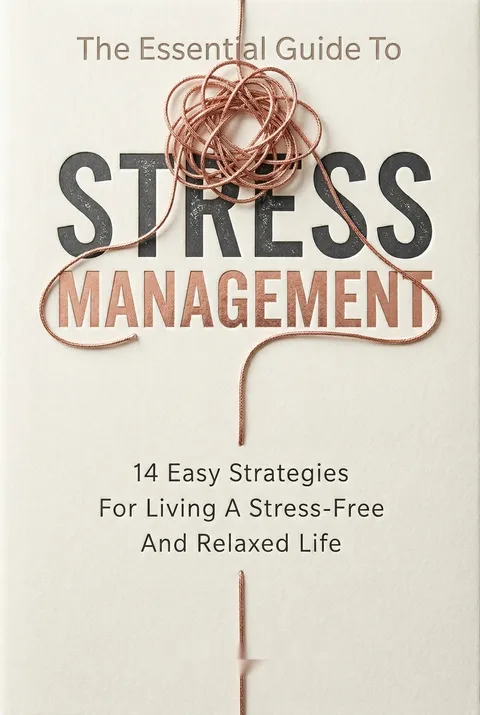
This book is a compact self-help guide organized as a progression from understanding stress to practicing ways of responding. Its central argument is practical: stress cannot be removed from ordinary life, but people can learn to recognize its signals, understand their triggers, and build a more deliberate response. The most coherent thread is the connection between perceived demands and coping resources. The book moves from the body’s alarm response to habits, relationships, relaxation, and mindfulness, treating stress as both physiological and behavioral rather than purely a matter of attitude.
Its strongest contribution is breadth with a low barrier to entry. Readers encounter several routes into recovery: physical movement, sleep and food routines, social contact, brief breathing exercises, muscle relaxation, and attention training. This variety matters because a person who cannot benefit from one method may find another more accessible. The distinction among short-lived, recurring, and persistent stress also gives readers a useful first-pass way to assess whether a quick reset is enough or more sustained help may be needed.
The guide is less rigorous when it presents broad health effects without specifying the strength or limits of the evidence. Its occasional promises of a stress-free life also exceed its more realistic insight that stress is unavoidable and manageable. A further limitation is the strong emphasis on individual coping. Work insecurity, financial strain, conflict, and other external pressures cannot always be solved by breathing, positive thinking, or better scheduling. A complete interpretation therefore holds two levels together: personal skills can improve a response, while institutions, relationships, and material conditions shape the stress load itself.
The book is best used as a menu, not a prescription. Readers can observe their own patterns, test a small number of practices, and seek professional assessment when symptoms are persistent, severe, or confusing. Its durable message is not that every stressor can be mastered, but that earlier recognition creates more options for responding with care and judgment.
Glossary
MBSR
Mindfulness-based stress practiceThe book uses MBSR for mindfulness-based stress and anxiety reduction techniques. These practices direct attention toward present experience, often through breathing or meditation, with the aim of reducing stress responses and improving coping. The text also associates mindfulness-based approaches with support for conditions such as chronic pain, depression, and panic disorders.
fight and flight mechanism
Automatic threat responseThe body's rapid response to a perceived danger or challenge. The book describes the release of stress hormones, including adrenaline and cortisol, alongside changes such as faster breathing, increased heart rate, sweating, and muscle readiness. These reactions can help prepare a person to confront or escape danger, but prolonged activation may be harmful.
Acute stress
Short-term stress responseA brief reaction to recent pressure or an approaching demand. The book describes acute stress as common and sometimes energizing, especially when it helps a person respond to a challenge. It generally eases when the situation passes, though frequent or intense episodes can bring physical and emotional symptoms.
Episodic acute stress
Repeated acute stress episodesA pattern in which short-term stress reactions occur frequently. The book associates it with lives marked by recurring crises, overcommitment, rushing, persistent worry, and difficulty organizing demands. Repeated episodes can strain health, relationships, and performance, and changing entrenched patterns may require professional support.
Chronic stress
Persistent long-term stressStress that continues over an extended period, often because its triggers do not go away. The book describes it as gradually depleting a person's resources and contributing to difficulties such as poor sleep, headaches, anxiety, and physical health problems. Because it can become familiar, a person may fail to recognize how much it is affecting them.
Distress
Harmful stress reactionThe book uses distress to describe negative stress reactions that disrupt a person's balance when pressure continues without sufficient relief. Possible signs include physical problems such as headaches or sleep disruption, as well as emotional difficulties such as anxiety, depression, and panic. It distinguishes distress from stress that is brief or useful in meeting a challenge.
Progressive muscle relaxation
Tense, then release musclesA relaxation technique in which a person deliberately tightens a muscle group for a short time and then releases it. The book recommends moving through areas such as the hands, face, shoulders, and legs while keeping the practice comfortable and avoiding pain or cramps. Repetition can improve awareness of muscular tension.
Body scan meditation
Sequential bodily attentionA meditation practice that directs attention through parts of the body in sequence, noticing sensations without judging them as good or bad. The book describes beginning with the feet and gradually moving attention through the body while maintaining awareness of breathing. The exercise is intended to develop focused awareness and notice areas of discomfort.
Download PDF
Download EPUB
.epub digital book format is ideal for reading ebooks on phones, tablets, and e-readers.








