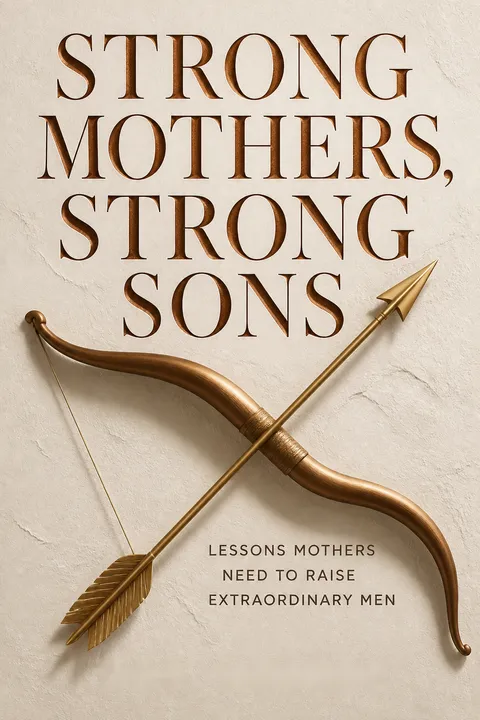


Key Takeaways
Make your love a secure base, not a claim on his future
Love that can travel. Meeker argues that a mother’s dependable care gives a boy an early template for trust, affection, and his later relationships with women. This is not a demand for perfect parenting. Janie, whose buried trauma led her to treat her son Jason with contempt, began repairing their bond by changing her tone and behavior and getting counseling. The relationship improved as she separated her past from her son.
Closeness without possession. A boy also needs love that makes room for other people and for growing independence. John, whose father died when he was ten, remembered his mother’s devotion even though work kept her away for long stretches. Her steady care, shared family responsibilities, and reminders that he could still be a child helped him feel loved. The goal is not to keep a son emotionally exclusive, but to help him feel he can leave and still belong.
What's striking is the distinction between a secure bond and constant access. Developmental psychology describes a secure base as the relationship that lets a child explore, then return for support. That model fits Meeker's emphasis on durable affection without possessiveness. The story of Jason also shows why parenting is relational: a parent's unaddressed history can shape a child's behavior, and repairing the adult's part can change the family pattern. Still, the book's claims about mothers as the primary template should not erase fathers, adoptive parents, or other caregivers who provide steady care.
Teach him to name feelings before anger becomes his only language
Feelings need words. Meeker calls an emotional vocabulary the ability to identify feelings, express them, and choose what to do with them. She argues that boys can learn to hide sadness or fear when adults treat those emotions as weakness. Nancy helped her son Brandon after his father left by listening, making room for grief, and asking him to distinguish one feeling from another rather than settling for a general sense of feeling awful.
Listen before fixing. A mother can begin simply: name a toddler's frustration, listen to an older child's account, and make clear that a feeling is acceptable even when harmful behavior is not. Brandon could be angry about his father's absence without being allowed to hurt his sister. The skill is not endless discussion. It is helping a boy recognize his inner state, find a safe outlet, and remain responsible for his actions.
Emotional labeling is useful because it turns an overwhelming state into something a person can notice and respond to. The book's three-part sequence, recognize, express, choose a response, also avoids treating emotional openness as the same thing as acting on every impulse. This distinction connects naturally to emotion-regulation approaches used in therapy and education. The advice to listen without shaming is especially strong. Its limitation is the assumption that mothers are naturally better at this work. Caregiving skill is learned, and fathers can provide the same calm attention.
Read his pushback as development, while holding firm on safety
Conflict can signal change. Meeker describes boys' resistance as sometimes part of practicing independence, not proof that a mother has lost her son. Five-year-old Jaden became oppositional after starting kindergarten. He was tired, managing a structured day, and trying to make more decisions. His mother was advised to reduce extra demands, choose a few important behaviors to address, and enforce clear consequences rather than fighting over every preference.
Stay the adult. Adolescents may also pull away as they work out who they are, while still needing dependable support. That can help a parent avoid taking every sharp remark personally. It does not make intimidation or violence acceptable. Meeker's advice is to hold boundaries, keep communication open, and examine whether adult stress or old hurt is intensifying conflict. If aggression or serious distress appears, the response must include appropriate safety steps and professional help, not just patience.
The useful move here is to interpret conflict without automatically personalizing it. A developmental lens can reduce escalation: a parent who sees a child's resistance as a bid for agency may respond with a choice or a clear limit rather than retaliation. But the framing should not become a universal explanation for boys' behavior. Fatigue, bullying, trauma, neurodevelopmental differences, and family stress can look like ordinary rebellion. The book's strongest practical advice is therefore its combination of curiosity and boundaries, rather than its broad claims about how boys mature.
Give him real work and consequences instead of rescuing every struggle
Hand over a tool. Meeker uses the phrase give him an ax for age-appropriate opportunities to practice competence, with instruction and support rather than a parent taking over. Chores, a first job, and responsibility for a mistake can teach a boy that he contributes and can handle difficulty. Work should grow with his abilities; the point is not to give a child unsafe freedom, but to let him do what he is ready to do.
Let consequences teach. When high-school soccer player Tim was suspended after drinking at a party, his mother pressured the coach to reverse the decision. She meant to protect him, but he lost a chance to face a consequence he had agreed to accept. Meeker recommends resisting that reflex. Help a son understand the situation, then let him take responsibility where it is safe and appropriate.
This advice connects parental support with competence: confidence grows not only from praise but from evidence that effort can solve real problems. The distinction between coaching and rescuing is especially useful when a parent's intervention would remove a consequence the child can manage. Yet independence is not a virtue in isolation. A child with a disability, acute anxiety, or a dangerous situation may need substantial adult help. The practical question is not whether to assist, but whether assistance builds capacity or quietly replaces it.
Connect him to trustworthy men without making his father a battlefield
Build a wider circle. Meeker argues that boys benefit from seeing trustworthy men model adult life, while warning mothers not to assume they can replace a father. If a father is absent, a mother might invite a reliable uncle, coach, teacher, pastor, or grandfather into the boy's life. She can acknowledge that this person is not his father while still valuing the support he offers.
Look beneath the conflict. Kyle's behavior changed after his father Carl's own father died. Carl, who had been criticized by his father as a child, began criticizing Kyle and withdrawing from him. Kyle's mother recognized that grief might be shaping the conflict. When Carl acknowledged what was happening and reconnected with his son, Kyle's mood and schoolwork improved. Meeker also advises criticizing harmful behavior rather than turning a child against a parent, unless safety requires protective action.
The emphasis on a network of caring adults is a strength because no single parent can meet every need. A trusted mentor can offer a boy a different perspective and a dependable relationship, especially during family disruption. The account of Carl also illustrates how grief and learned parenting patterns can travel across generations. At the same time, father involvement is not automatically beneficial: reliability, safety, and respect matter more than gender alone. Encouraging a relationship should never mean pressuring a child to tolerate abuse or excuse harmful behavior.
Turn his strengths outward, because achievement alone cannot supply purpose
Make ability useful. Meeker argues that talents and accomplishments do not by themselves give a boy a sense of purpose. He also needs to see how his abilities can serve other people. She calls this being other-oriented, meaning attentive to needs beyond one's own interests. Adam, a high-achieving graduate unsure about his future, joined a medical trip to Ecuador to help children with basic health and hygiene. The experience shifted his plans toward medicine and service.
Start with small acts. Purpose need not arrive as a grand career calling. Eight-year-old Will, who had undergone repeated eye surgeries, found comfort in a stuffed elephant. He and his mother gathered stuffed animals for other young patients. The activity gave him a concrete way to turn his own experience into care for others. Parents can nurture this by helping sons identify what interests them and find practical ways to contribute.
This section resists the common equation of self-worth with achievement. Its sharper claim is that skill becomes meaningful through relationship: a boy discovers not only what he can do, but whom it can help. That idea aligns with purpose research emphasizing contribution and belonging, and it offers a grounded alternative to résumé-building. Service should not be treated as a guaranteed cure for distress or imposed as a performance badge. Its value comes when a young person has genuine agency and can see the human consequence of the work.
Let faith be visible in your conduct, not just your instructions
Show what belief does. Meeker says a young child often forms ideas about God through the way a trusted parent behaves. Patience, kindness, and reliability can make faith seem tangible; anger and inconsistency can complicate that picture. Jackson remembered his mother as a single parent who worked several jobs, took her children to church, and taught them that their lives had value. He believed her faith helped his family endure a difficult neighborhood and gave him a foundation he carried into adulthood.
Offer, do not merely lecture. The book cites survey findings associating religious involvement with lower rates of several adolescent risks and stronger reported closeness to parents. These are associations, not proof that faith alone causes better outcomes. Meeker's practical emphasis is to explain one's beliefs, answer questions honestly, and model them in daily choices rather than relying on rules or religious instruction alone.
The section's most durable insight applies beyond religion: children judge a worldview partly by the life they see it produce. A parent's conduct makes abstract commitments observable. The cited survey associations may reflect many factors, including family support and community connection, so they cannot establish that religious belief itself prevents risk. Faith can also be experienced as coercive if questions are discouraged. A healthier interpretation combines example with intellectual honesty, allowing a son to explore belief without making parental love conditional on agreement.
Start sex conversations early, calmly, and without making curiosity shameful
Make yourself available. Meeker recommends beginning age-appropriate conversations before puberty, so a son learns that questions about bodies, relationships, and sex can be brought to a parent. Heather's twelve-year-old son, Sean, eventually told her that he and a same-age friend had engaged in sexual exploration. She stayed calm, asked whether he felt pressured or harmed, listened without demanding details, and addressed his fears. Her response made room for both safety assessment and honest conversation.
Pair openness with guidance. Meeker urges parents to discuss consent, privacy, emotional consequences, sexually transmitted infections, and the limits of what media portray. She argues for a nonjudgmental tone because shame can shut down disclosure. The book favors delaying sexual activity and reducing risk, while recognizing that a parent cannot make a teenager's choices. Accurate, current medical information and attention to coercion or age differences are essential.
The strongest part is the method: keep the door open, assess safety, and distinguish curiosity from coercion rather than reacting with disgust. That approach supports disclosure, which matters when a young person needs protection or medical care. The book also makes broad claims about boys' sexuality and presents some older health statistics, so readers should seek current clinical guidance. Calm conversation is not the same as endorsing every behavior. It creates conditions for clear information, consent education, and appropriate safeguarding.
Use instincts, questions, and apologies to teach wisdom by example
Wisdom is practiced. Meeker describes it as a blend of experience, knowledge, judgment, intuition, emotion, and moral clarity. She urges mothers to resist the pressure to copy other families when their own judgment says a choice is unsafe or unwise. One mother formed a group with other parents who shared her concern about teen drinking, then offered boys alternative activities rather than simply giving in to local norms.
Model accountability. Meeker's ATM story makes the lesson personal: when a machine dispensed twenty dollars more than requested, she first let her son keep it, then realized the money was not theirs and corrected her decision. The son was upset, but she explained her mistake and returned the cash. Parents can also ask sons questions, listen fully, and require apologies when their actions harm someone.
The book treats wisdom as judgment under pressure, not as accumulated information. The parent group is a useful example of how social norms can be changed through collective action rather than relying on one family to bear the cost alone. The ATM episode adds an important element: parental credibility does not require infallibility, but it does require repair. Maternal intuition can be valuable, especially when a parent knows a child well, yet it is not self-validating. Evidence, consultation, and openness to correction strengthen good instincts.
Hand over responsibility in stages, so adult closeness can grow freely
Love stays; control changes. Meeker describes letting go as transferring responsibility to a son while keeping affection and support intact. It begins in small steps, such as letting him manage suitable chores, friendships, and decisions, and grows as his abilities develop. She warns against making a boy responsible for a parent's emotional or practical wellbeing. One divorced mother mistakenly accepted her young son's offer to become the man of the house; Meeker says the child needed reassurance that the adult remained in charge.
Check the motive. Meeker asks mothers to consider whether they are helping because a son needs it or because being needed eases their own anxiety. Enmeshment is a blurred boundary in which a parent's needs and a child's responsibilities become tangled. The aim is not distance for its own sake. It is a relationship in which a grown son can choose closeness without carrying the burden of managing his mother's life.
This is the book's central developmental balance: dependable attachment supports autonomy when care does not become ownership. Family-systems thinking adds a useful test: can each person have separate feelings and goals without the bond being threatened? The distinction between support and emotional dependence is especially important for single parents, who may have fewer adults to lean on. The argument should not imply that adult closeness is unhealthy or that every son must separate in the same way. Healthy independence is gradual, culturally shaped, and compatible with interdependence.
Analysis
The book's most coherent argument is that a mother's influence is strongest when it creates both security and agency. The stories repeatedly show a parent moving from reaction to attention: Janie recognizes that her history is shaping her treatment of Jason; Elayne waits through months of awkward conversations until Brody can disclose abuse; and a mother who stops rescuing a son allows consequences to teach what lectures cannot. These episodes make the book more than a list of parenting tips. Its narrative logic is that sons often communicate distress indirectly, and parents must interpret behavior without excusing harm or assuming every change is ordinary adolescence.
The most useful synthesis is a three-part parental stance: stay emotionally available, set clear limits, and transfer responsibility at a pace matched to the child's capacities. Emotional availability without limits can become overinvolvement. Limits without warmth can turn guidance into rejection. Independence without support can become abandonment. The book's metaphors of home and tools capture the balance vividly, even when its gendered explanations are broader than the evidence presented.
That gender framing needs care. Meeker often presents boys as less verbal, more physical, and more dependent on male models, while assigning mothers a special role as emotional teachers. These patterns may fit some families, but they are not rules for every child. Temperament, disability, culture, family structure, and individual relationships matter. A father can be an emotionally skilled listener, and a mother can be an imperfect model. Nor can maternal behavior alone prevent depression, abuse, addiction, or violence. The book's anecdotes illuminate possibilities, not universal causal laws.
Its best advice survives those limitations: listen for what behavior may be communicating, distinguish feelings from actions, seek help when a problem exceeds the family's capacity, and do not confuse love with managing every outcome. The deeper promise is reciprocal. A parent who supports separation does not erase the bond; the parent makes room for a relationship between two adults who can choose one another freely.
Review Summary
Strong Mothers, Strong Sons receives mixed reviews. Many readers appreciate the practical advice on raising sons and strengthening mother-son relationships. Positive reviews highlight the book's insights on emotional intelligence, faith, and preparing boys for adulthood. However, some criticize the author's perceived gender stereotypes, religious bias, and outdated views. The book's length and repetitiveness are common complaints. While some find it invaluable for navigating the challenges of raising sons, others feel it perpetuates harmful stereotypes and lacks scientific backing. Overall, readers' opinions vary widely based on their personal beliefs and parenting styles.
People Also Read




Glossary
emotional vocabulary
Skills for handling feelingsMeeker uses this term for a boy's ability to identify emotions, express them in a useful way, and decide how to respond. Naming sadness, fear, or anger helps a child understand what is happening without treating the feeling as a command. The parent also teaches that feelings are legitimate while harmful behavior remains subject to limits.
boy code
Rules that suppress vulnerabilityA term Meeker attributes to psychologist William Pollack. It describes social expectations that boys should hide sadness, fear, grief, or tenderness to appear masculine. Meeker argues that boys may interpret correction of an emotional display as a rule against having the emotion at all, and recommends adults explicitly distinguish feelings from behavior.
the blessing
A father's affirmation of his sonMeeker draws on a concept described by Gary Smalley and John Trent: a son's need to receive acceptance, attention, and affirmation from his father. In the book, this is not approval of every choice. It is a father's message that his son is valued and respected, including when he fails or makes a mistake.
give him an ax
Practice with growing independenceMeeker's metaphor for giving a son an age-appropriate tool, task, or responsibility, then teaching him how to use it and allowing him to try. The tool may be literal, such as a lawn mower, or practical, such as managing a challenge. The goal is to build capability without either abandoning the child or doing the task for him.
other oriented
Attentive to others' needsMeeker's phrase for turning one's abilities and interests toward the wellbeing of other people. She contrasts it with a life focused only on achievement or personal advantage. Examples include helping younger patients through a child's toy drive or using a professional skill to serve a community. The term links contribution with a sense of purpose.
enmeshment
Blurred parent-child boundariesMeeker uses this term for a relationship in which a parent's emotional needs and a child's responsibilities become tangled. A son may feel responsible for his mother's happiness, become her confidant or protector, or have difficulty making independent choices. The remedy is not withdrawing love, but restoring adult-child boundaries and allowing the son a separate life.
National Survey of Youth and Religion
Study of adolescent religious lifeA research project directed by Christian Smith at the University of Notre Dame, described in the book through reports including Soul Searching. Meeker cites findings associating religious involvement with differences in reported happiness, parent closeness, and several risk behaviors. The book presents these as evidence of a relationship; the reported associations do not by themselves establish that religion caused the outcomes.
FAQ
What is Strong Mothers, Strong Sons by Meg Meeker about?
- Mother-son relationship focus: The book explores the unique and vital bond between mothers and sons, emphasizing the mother’s role in raising emotionally healthy, responsible, and extraordinary men.
- Guidance and support: Meg Meeker offers practical advice and emotional support to help mothers understand their sons’ needs and navigate parenting challenges.
- Addressing modern pressures: The book discusses the cultural and societal pressures facing boys today and how mothers can help their sons thrive despite these challenges.
Why should I read Strong Mothers, Strong Sons by Meg Meeker?
- Deep insight into dynamics: The book provides a comprehensive understanding of the emotional and developmental stages boys go through, helping mothers avoid common pitfalls.
- Actionable parenting strategies: Readers gain practical tools for communication, discipline, and fostering independence in their sons.
- Encouragement and hope: Through real-life stories and professional experience, Meeker reassures mothers that their influence is powerful and lasting, even in difficult circumstances.
What are the key takeaways from Strong Mothers, Strong Sons by Meg Meeker?
- Mother’s love is foundational: A mother’s love shapes a son’s view of women and relationships, influencing his future.
- Emotional education is crucial: Teaching boys to identify and express emotions helps prevent repression and destructive behaviors.
- Independence and boundaries: Sons need both loving support and clear boundaries to develop confidence and maturity.
- Spiritual and moral guidance: Mothers play a significant role in shaping their sons’ spiritual identity and moral character.
How does Meg Meeker describe the mother-son relationship in Strong Mothers, Strong Sons?
- Unique and intense bond: Sons see their mothers as their first love and primary source of nurture and safety, which is different from mother-daughter relationships.
- Source of male identity: Mothers influence how sons view women, love, and themselves, shaping their future relationships.
- Complex and evolving: The relationship is marked by developmental challenges, gender differences, and societal expectations, requiring patience and adaptability from mothers.
What is the “boy crisis” discussed in Strong Mothers, Strong Sons by Meg Meeker?
- Alarming statistics: The book highlights boys’ struggles in education, behavior, and emotional health, such as higher dropout rates and emotional repression.
- Cultural pressures: Boys face societal expectations to be stoic and independent, which can hinder emotional development.
- Mother’s pivotal role: Meeker argues that mothers are key to reversing these trends by providing love, discipline, and guidance.
What does Meg Meeker advise about teaching boys emotional vocabulary in Strong Mothers, Strong Sons?
- Boys are sensitive but repressed: Boys feel deeply but are often taught to suppress emotions due to cultural norms.
- Mothers as emotional teachers: Mothers are uniquely positioned to help sons identify, express, and manage their feelings in healthy ways.
- Start early and be patient: Emotional education should begin in early childhood and continue through adolescence, using active listening and modeling openness.
How should mothers handle the “wars” sons wage against them, according to Strong Mothers, Strong Sons?
- Developmental necessity: Sons challenge mothers as part of their journey toward independence, not out of personal animosity.
- Firm boundaries and patience: Mothers should set clear rules and consequences while remaining patient and emotionally steady.
- Emotional detachment: Maintaining some emotional distance during conflicts helps mothers respond with calm authority rather than guilt or anger.
What does “Give Him an Ax” mean in Strong Mothers, Strong Sons by Meg Meeker?
- Metaphor for empowerment: “Giving him an ax” symbolizes equipping sons with tools—physical, emotional, or cognitive—to foster independence and competence.
- Age-appropriate challenges: Mothers should match challenges to their son’s developmental stage, allowing safe experiences of success and failure.
- Teaching responsibility: It’s important to instruct sons on using their “tools” wisely and to let them face consequences, building maturity and self-control.
How does Strong Mothers, Strong Sons by Meg Meeker address the mother’s role as “home” for her son?
- Emotional foundation: Mothers provide the security, love, and attachment that sons need for healthy development.
- Teaching life’s meaning: By encouraging talents and service, mothers help sons find purpose and belonging.
- Character building: Everyday interactions are opportunities for mothers to teach courage, acceptance, forgiveness, and hope.
What does Meg Meeker say about the importance of the father-son relationship in Strong Mothers, Strong Sons?
- Father’s blessing is vital: Sons need their fathers’ acceptance and admiration to develop self-confidence and a healthy masculine identity.
- Mothers as connectors: Mothers can facilitate and strengthen the father-son bond, even when fathers are distant or imperfect.
- Role models matter: For single mothers or those with absent fathers, Meeker suggests finding positive male role models to support sons’ development.
How does Strong Mothers, Strong Sons by Meg Meeker advise mothers to empower their sons toward independence and responsibility?
- Encourage independence early: Challenge sons with age-appropriate tasks and avoid over-helping, which builds self-confidence and problem-solving skills.
- Teach responsibility through chores: Assigning regular chores and encouraging work helps boys develop a strong work ethic and sense of being needed.
- Allow healthy battles: Letting boys assert themselves and defend their beliefs builds self-esteem and teaches them to stand up for others.
What practical tips does Meg Meeker offer in Strong Mothers, Strong Sons for strengthening the mother-son relationship?
- Include fathers and role models: Encourage father involvement and seek out other positive male influences in your son’s life.
- Use praise and positive communication: Applaud both fathers and sons to build confidence and improve family dynamics.
- Work and pray together: Engage in shared activities and spiritual practices to deepen your bond and provide emotional strength.
About the Author
Other books by Meg Meeker

Download PDF
Download EPUB
.epub digital book format is ideal for reading ebooks on phones, tablets, and e-readers.








