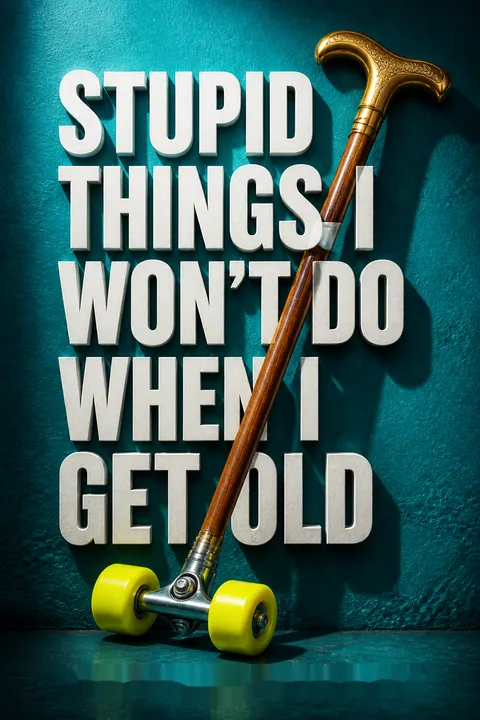


Key Takeaways
Treat age as a chapter, not a verdict on what remains possible.
Identity is larger than symptoms. Petrow also questions efforts to disguise age, from dyeing gray hair to shaving years off a dating profile, and resists turning ordinary conversation into an “organ recital,” a running inventory of ailments. His aim is not to deny illness, but to keep it from becoming a person’s entire introduction. The book’s original list of things he would not do becomes less an indictment of older people than a reminder to make choices that keep life open.
The contrast makes aging visible as both a bodily process and an interpretation shaped by circumstance. That distinction matters because age stereotypes can constrain people before their abilities do. Yet resisting ageism should not mean pretending disability, illness, or dependence are merely attitudes. The stronger point is that neither a number nor a diagnosis tells the whole story. A more humane view leaves room for agency while acknowledging real limits and the social conditions that make those limits harder to navigate.
Commit to the wave, and learn to fall without letting fear steer.
Risk can be practiced. Petrow connects the surf lesson to his parents’ repeated falls and their growing fear of falling. Fear can narrow activity, while lost strength and confidence may make movement harder still. His practical response is to keep attention on the task, learn safer ways to recover, and accept that falling is sometimes part of trying. The goal is not bravado. It is to avoid making fear the decision-maker.
Surfing offers a vivid model of skilled risk: attention and preparation make action safer, while anxious overthinking can interfere with coordination. This resembles exposure-based approaches to fear, where gradual practice can restore confidence. But the metaphor has limits. A person with significant fall risk should not treat every hazard as a challenge to conquer. The useful distinction is between avoiding life because failure is possible and reducing preventable danger through training, equipment, and sound judgment.
Let routines bend before they harden into a smaller life.
Change can reveal options. Petrow recalls getting lost in fog and repeating an unsuccessful strategy until he remembered a lesson from a horse trainer: a different result requires a different approach. He changed direction and found his way. The same principle shaped his response to aging parents who resisted safety changes. Their routines offered comfort, but refusal to reconsider them could deepen danger and dependence.
Routines conserve attention, and that is a genuine benefit, especially when daily tasks become more demanding. The problem is not repetition itself, but repetition that prevents noticing when circumstances have changed. In motor learning and cognitive science, adaptation depends on encountering manageable variation, not simply rehearsing one fixed pattern. The book’s lesson is therefore less “break every habit” than “keep enough flexibility to detect when a habit no longer serves its purpose.”
Use mobility or hearing aids before pride turns independence into danger.
Hearing loss also isolates. Petrow’s father resisted hearing aids, while his grandmother eventually obtained them after missing dialogue at a theater. A friend who adopted hearing aids noticed sounds and conversations he had been missing. Petrow’s broader point is practical: a cane, walker, hearing aid, or other support is not proof that a person has given up. It can help protect the independence that pride is trying to defend.
Assistive devices are often treated as symbols of decline, when they can function more like infrastructure: they make participation possible. Design and language matter because people are more likely to accept tools that fit their identity. Still, family members face a difficult boundary between respecting autonomy and preventing harm to others. The driving story shows that persuasion may fail, and that protective action can carry emotional costs even when the safety case is clear.
Tell your doctor what you actually take, especially for silent illnesses.
Silent conditions still matter. Petrow cites estimates that 20 to 30 percent of prescriptions are never filled and nearly half of medications for chronic conditions are not taken as directed. High blood pressure may cause no immediate symptoms, so stopping treatment can feel harmless until damage accumulates. After his own medication crisis, he returned to his prescribed dose and began using a weekly pill organizer. The safer move is to tell the doctor about missed doses, cost worries, and side effects before changing treatment.
Medication adherence is not simply a test of discipline. Cost, side effects, memory, and the emotional meaning of chronic illness all influence whether people take prescriptions. That makes candid conversations essential: a clinician cannot safely interpret worsening symptoms if the actual dose is hidden. The book’s practical reminder is also a systems lesson. Pill organizers can support memory, but affordable prescriptions and nonjudgmental care are just as important.
Build friendships across ages before loneliness makes the circle hard to widen.
Friendship supports health. Petrow cites a large study finding that people with strong social relationships had a 50 percent greater likelihood of survival than those with poor relationships. The comparison does not mean any single friendship guarantees health; it underscores how consequential social connection can be. Denise’s circle also shows that belonging is something people can build deliberately, through shared activities, curiosity, and treating younger people as peers rather than as an audience for complaints.
Denise’s friendships challenge the idea that support flows only from younger people to older people. Her example resembles social-capital theory: relationships provide practical resources, emotional recognition, and access to new information. Such ties are especially valuable when family networks are distant or absent. Still, friendship cannot substitute for professional care, and cross-generational relationships should not be reduced to informal tech support. Their deeper value lies in mutual interest and respect.
Meet dementia where it is instead of forcing painful corrections.
Kindness can run one way. Petrow calls the patience owed to people with cognitive decline “one-way etiquette.” His mother’s dementia altered her manners and judgment, including how she spoke to a caregiver. He eventually understood that correcting every lapse or demanding a familiar personality could add shame without restoring control. The same patience helped him care for his dog with dementia. In both cases, practical comfort and respect mattered more than winning an argument about reality.
This approach gives priority to the person’s present emotional experience over factual correction that cannot be retained. It echoes person-centered care, which attends to comfort, identity, and relationship rather than treating conversation as a memory test. The ethical boundary is important: a compassionate response should not mock, exploit, or casually deceive someone for convenience. Petrow’s account frames the choice as a respectful response to repeated suffering, not a blanket license to disregard truth.
Choose a care plan before a crisis makes your family the plan.
Plan for a future self. Petrow urges people to assess housing and care options based on who they may be in ten or twenty years, not only who they are today. Options discussed include home care, assisted living, continuing-care communities, and cohousing, where residents share some spaces and responsibilities. He found no perfect answer, but recognized that waiting until a move becomes unavoidable can make upheaval harder. His own deposit gave him and his nieces greater clarity.
The book usefully distinguishes independence from the fantasy of never needing help. Planning can preserve choice by allowing decisions before illness or crisis narrows the options. But the burden should not be framed as a personal failure of families or elders. Long-term care is expensive, public coverage is limited, and available communities vary widely. Individual planning helps, yet it cannot replace accessible services, realistic financing, and public policies that support caregivers.
Say love and goodbye while the person can still hear you.
Make practical plans too. Petrow’s father prepared notes for his obituary, and Petrow kept a folder with funeral preferences. He also recognizes the value of updating legal and medical documents and writing letters before a health crisis makes those tasks difficult. Jacqueline’s letters, written as her illness progressed, offered specific encouragement to her children at later milestones. These acts of preparation do not remove grief, but they can give loved ones guidance, comfort, and a clearer sense of the person who is gone.
End-of-life communication is emotionally difficult partly because ordinary language feels too small for the situation. The examples here show that presence, repeated affection, and a written message can each carry meaning without producing a perfect farewell. Advance planning can also protect loved ones from having to guess about funerals or practical wishes. Such preparation is not a prediction of imminent death; it is a way to make care and memory less dependent on last-minute decisions.
Spend time on your chosen work before mortality forces the question.
Purpose is not retirement. Petrow distinguishes leaving a job from withdrawing from work. He did not plan to spend his remaining years idle; he wanted to make writing his primary work. The book also suggests that concern about the future can consume attention that belongs to present choices. His decision did not eliminate fear or hardship, but it replaced a deferred ambition with a daily practice.
The story is not an argument for impulsive resignation or for treating a speculative lifespan estimate as reliable. Its force comes from using mortality as a question about priorities, then combining desire with preparation and counsel. That distinction matters: urgency can prompt action, but it can also distort financial judgment. The useful lesson is to stop treating meaningful work as a reward reserved for a future moment when every risk has disappeared.
Protect pleasure and play, not just the years on the calendar.
Adapt pleasure rather than abandon it. Petrow describes sexual function changing after cancer treatment and with age, but argues that intimacy can continue in different forms when partners communicate and seek appropriate medical support. He also found acceptance in the scar left by surgery, eventually seeing it as evidence of survival rather than a defect to hide. These stories share a principle: bodily changes may call for new ways of enjoying life, not a verdict that enjoyment is over.
This is a useful counterweight to wellness culture, which can turn health into moral performance and make ordinary enjoyment feel like failure. Quality of life cannot be reduced to longevity, though pleasure does not erase medical risks. The aunt’s choice is meaningful because it reflects her circumstances and preferences, not because one meal has a universal health lesson. The broader point is to ask what care is for: more time, but also a life that still feels inhabited.
Analysis
The book’s form is its argument. Petrow begins with an inventory of habits he considers foolish, then revisits that judgment through the experience of caregiving, illness, and bereavement. The result is neither a clinical manual nor a simple celebration of positive aging. It is a memoir organized around decisions: whether to use a walker, disclose symptoms, accept help, stop driving, plan care, or speak about death. The repeated first-person promise gives the reader a practical device, while the stories show how difficult promises become when identity, shame, money, and family history are involved.
Its strongest insight is that preparation can protect agency. A hearing aid or care plan is not merely evidence of decline; it can keep a person connected and reduce the burden of improvised decisions. The book is equally strong when it shows that autonomy is relational. Petrow’s parents depended on children and aides even as they resisted being treated as dependent. His examples reveal the tension between preserving choice and intervening when safety is at stake, without pretending that either side has an easy answer.
The memoir’s limits are also part of its value. Individual stories make complex choices memorable, but they cannot establish how every older person should act. The ability to choose a continuing-care community, pay for medication, or access reliable aides is unevenly distributed. Advice to plan ahead is useful, but it does not solve the structural shortage and expense of care. Likewise, positive attitudes may help people resist stereotypes, yet they cannot undo disease or discrimination.
Petrow’s movement from judgment to compassion keeps the book from becoming a catalog of rules. The most persuasive promise is not to avoid becoming one’s parents in every detail. It is to notice when fear, pride, or habit is shrinking life, then choose a more honest and humane response while choice remains possible.
Review Summary
Stupid Things I Won't Do When I Get Old by Steven Petrow offers a humorous yet poignant look at aging. Readers found the book relatable, thought-provoking, and filled with practical advice. Some appreciated Petrow's candid approach and personal anecdotes, while others felt it was repetitive or privileged in perspective. The book covers topics like health, technology, and end-of-life planning. Many readers recommended it for its insights on dealing with aging parents and preparing for one's own later years, though some found the tone occasionally off-putting or depressing.
People Also Read





Glossary
Perennial
Curious across generationsA term Petrow borrows from Gina Pell for people of any age who stay engaged with the present, remain curious about changing culture and technology, and form friendships across generations. Perennials are not defined by a particular birth cohort. The idea emphasizes participation, learning, mentoring, and connection rather than treating age as a boundary around identity.
organ recital
Ailments taking over conversationPetrow’s name for social conversation that becomes a running account of medical complaints, diagnoses, procedures, and bodily problems. He does not argue that illness should be hidden. Rather, he distinguishes serious disclosures that invite support from routine symptom lists that can make health problems the only thing others learn about a person.
therapeutic fibbing
A calming lie in dementia careA caregiving approach in which someone avoids correcting a misconception or offers a gentle falsehood when a person with dementia would otherwise experience repeated distress. Petrow used it after repeatedly telling his father that his wife had died, causing him to relive the loss. The approach aims to reduce anxiety while preserving the person’s dignity, not to mock or exploit them.
one-way etiquette
Patience for dementia-related behaviorPetrow’s term for responding with patience when dementia changes a person’s manners, judgment, or social behavior. The person may no longer be able to follow familiar rules or understand the impact of an outburst. Caregivers can preserve dignity by avoiding reflexive correction and treating the behavior as a possible effect of illness rather than a deliberate insult.
döstädning
Swedish death cleaningA Swedish practice of removing unnecessary possessions and organizing a home while still alive, so that family members are not left to sort through a lifetime of accumulated belongings. Petrow adopts the idea after clearing his parents’ homes and finding that delayed decisions create a large practical and emotional burden for relatives.
FAQ
What's "Stupid Things I Won't Do When I Get Old" about?
- Author's Perspective: The book is a candid and humorous exploration of the things Steven Petrow vows not to do as he ages, based on observations of his parents and others.
- Themes of Aging: It addresses common mistakes and stereotypes associated with aging, aiming to provide a roadmap for living a more fulfilling life in later years.
- Personal Anecdotes: Petrow uses personal stories and experiences to illustrate his points, making the book relatable and engaging.
- Practical Advice: The book offers practical advice on how to avoid becoming a "miserable malcontent" or a "cranky curmudgeon" as one grows older.
Why should I read "Stupid Things I Won't Do When I Get Old"?
- Insightful Observations: The book provides insightful observations about aging, drawn from the author's personal experiences and reflections.
- Humorous Approach: Petrow's humorous approach makes the topic of aging less daunting and more approachable.
- Practical Tips: It offers practical tips and advice on how to age gracefully and avoid common pitfalls.
- Relatable Content: Readers will find the content relatable, especially those who are experiencing or anticipating the challenges of aging.
What are the key takeaways of "Stupid Things I Won't Do When I Get Old"?
- Avoiding Stereotypes: The book emphasizes the importance of avoiding negative stereotypes associated with aging.
- Embracing Change: It encourages readers to embrace change and adapt to new circumstances as they age.
- Maintaining Relationships: Petrow highlights the importance of maintaining relationships with people of all ages to stay connected and engaged.
- Self-Acceptance: The book advocates for self-acceptance and finding joy in the aging process.
What are the best quotes from "Stupid Things I Won't Do When I Get Old" and what do they mean?
- "We are not hostages to our fate." This quote emphasizes the idea that individuals have the power to shape their own aging experience.
- "Age, like beauty, is in the eye of the beholder." It suggests that age is a subjective concept and can be perceived differently by each person.
- "Don't let fear get in the way of living your dreams." This encourages readers to overcome fears associated with aging and continue pursuing their passions.
- "The important thing is to remember no matter how much we tell ourselves we won’t be like our parents, no matter how hard and fast we run in the other direction, we become them." This reflects the inevitability of inheriting traits from our parents, despite our efforts to avoid it.
How does Steven Petrow suggest dealing with the fear of aging?
- Embrace Change: Petrow suggests embracing change and being open to new experiences as a way to combat the fear of aging.
- Stay Connected: Maintaining relationships with people of all ages can help alleviate feelings of isolation and fear.
- Focus on the Present: He advises focusing on the present moment rather than worrying about the future.
- Find Humor: Using humor to address the challenges of aging can make the process less intimidating.
What specific advice does Steven Petrow give about maintaining relationships as you age?
- Intergenerational Friendships: Petrow emphasizes the importance of having friends of all ages to keep perspectives fresh and avoid isolation.
- Stay Engaged: Actively participating in social activities and community events can help maintain strong relationships.
- Be Open-Minded: Being open to new friendships and experiences can lead to meaningful connections.
- Value Existing Relationships: Nurturing and valuing existing relationships is crucial for emotional support and companionship.
How does "Stupid Things I Won't Do When I Get Old" address the concept of self-acceptance?
- Embrace Imperfections: Petrow encourages readers to embrace their imperfections and accept themselves as they age.
- Celebrate Achievements: Recognizing and celebrating personal achievements can foster a sense of self-worth and acceptance.
- Let Go of Comparisons: Avoiding comparisons with others can help individuals focus on their own unique journey.
- Find Joy in Aging: The book advocates finding joy and fulfillment in the aging process, rather than resisting it.
What are some common mistakes associated with aging that Steven Petrow highlights?
- Clinging to Youth: Petrow warns against clinging to youth and suggests embracing the natural aging process.
- Isolation: He highlights the dangers of isolation and the importance of staying socially connected.
- Resistance to Change: Resisting change can lead to stagnation; Petrow advises being open to new experiences.
- Neglecting Health: Ignoring health issues or failing to adapt to physical changes can have negative consequences.
How does Steven Petrow use humor to discuss aging in "Stupid Things I Won't Do When I Get Old"?
- Lighthearted Tone: Petrow uses a lighthearted tone to make the topic of aging more approachable and less intimidating.
- Relatable Stories: He shares relatable and humorous personal anecdotes to illustrate his points.
- Playful Language: The use of playful language and witty observations adds humor to the discussion of serious topics.
- Encouragement Through Laughter: Petrow encourages readers to find humor in the aging process as a way to cope with its challenges.
What role do personal anecdotes play in "Stupid Things I Won't Do When I Get Old"?
- Illustrate Points: Personal anecdotes are used to illustrate key points and make the content relatable.
- Engage Readers: They engage readers by providing real-life examples of the challenges and joys of aging.
- Add Humor: Anecdotes often add humor to the narrative, making the book enjoyable to read.
- Provide Insight: They offer insight into the author's personal experiences and reflections on aging.
How does "Stupid Things I Won't Do When I Get Old" address the importance of self-care?
- Prioritize Health: Petrow emphasizes the importance of prioritizing health and well-being as one ages.
- Mental Health: He highlights the significance of maintaining mental health and seeking help when needed.
- Physical Activity: Staying physically active is encouraged to promote overall health and vitality.
- Balanced Lifestyle: The book advocates for a balanced lifestyle that includes healthy eating, exercise, and relaxation.
What lessons can be learned from "Stupid Things I Won't Do When I Get Old" about embracing the aging process?
- Acceptance: Embracing the aging process involves accepting the changes that come with it.
- Positive Outlook: Maintaining a positive outlook can enhance the experience of aging.
- Continued Growth: Aging is an opportunity for continued growth and learning.
- Living Fully: The book encourages living fully and making the most of each day, regardless of age.
Download PDF
Download EPUB
.epub digital book format is ideal for reading ebooks on phones, tablets, and e-readers.








