

Plot Summary
Prologue
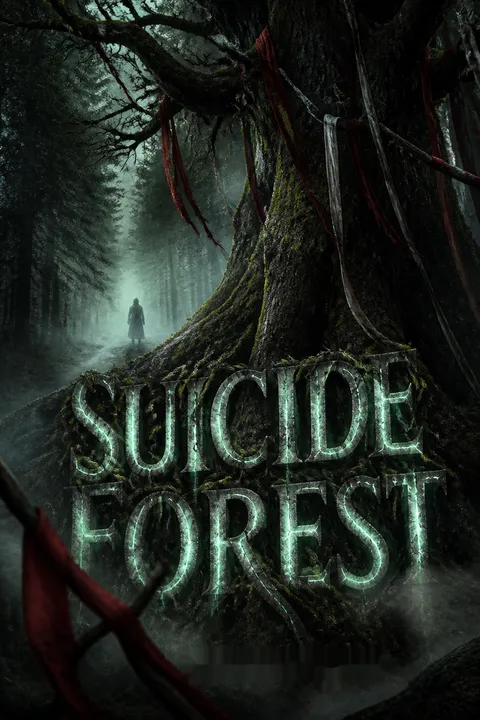
Aokigahara, the forest beneath Mount Fuji, draws visitors with its volcanic caves and dense, unusually silent trees. It also draws people who intend not to return.
Authorities remove more than a hundred bodies from the forest in some years, while warnings asking visitors to stay on marked trails are often ignored. The story begins in 2004, when a group of foreign residents of Japan mistake this place of private despair for an adventurous detour.
The opening establishes a real landscape before introducing anything supernatural. Aokigahara’s quiet and density are not merely atmospheric; they make it difficult to distinguish a refuge from a trap. The contrast between public warnings and thrill seekers’ curiosity also sets up the group’s central misjudgment. They approach a place shaped by other people’s suffering as spectators, assuming that knowledge of its reputation is equivalent to understanding its risks.
Storm Cancels Fuji
American English teacher Ethan Childs has planned a Mount Fuji climb with his girlfriend, Melinda Clement, their Japanese friend Tomo Ishiwara, and fellow teacher Neil Rodgers. A storm closes off the plan before they reach the mountain. At a station in Kawaguchiko, they meet Israeli travelers Ben and Nina, who explain that they are heading to nearby Aokigahara, known as Suicide Forest.
Honda, the Japanese businessman who drove a second car, refuses to go there. Ethan, Tomo, Neil, Mel, and the brash American soldier John Scott decide to join Ben and Nina instead. For Ethan, the detour promises a memorable adventure; for Mel, it is a chance to see a place her students have told her about.
The failed climb is more than a weather delay. It removes the itinerary that would have given the group a clear route, timetable, and shared purpose. Ethan fills that vacancy with curiosity, while John Scott’s appetite for novelty helps push the decision forward. Mel agrees, but her interest is more informed: she already knows the forest is associated with suicide. The group therefore enters with unequal knowledge, yet treats consent to visit as if it meant consent to every danger the place holds.
Beneath the Warning Rope
At the forest parking lot, the group notices an abandoned Mitsubishi with a suit, briefcase, and shoes concealed beneath a sheet. They leave the belongings untouched and enter the main path. Close-packed trees and exposed volcanic roots make the forest feel unlike the landscapes they know, while signs warn visitors not to leave the trail.
When John Scott asks local hikers about side paths, one man angrily objects to their presence. The group later finds a rope and a clear warning against entering the woods, beside a surveillance camera. Ben persuades them to cross anyway. Ethan follows, though Mel has already questioned the choice. The marked boundary is the last place where their excursion still feels like ordinary hiking.
The group does not stumble unknowingly into danger; it repeatedly receives information and chooses to discount it. The covered belongings in the car suggest a human crisis, the hikers’ anger communicates local concern, and the rope makes the prohibition unmistakable. Each clue is converted into atmosphere rather than a reason to turn back. This pattern matters later: the forest’s danger is partly physical, but the visitors’ confidence keeps stripping away the safeguards that might have helped them respond to it.
The Forest Takes Mel
Away from the marked trail, the group finds a flashlight, tools, and a lone shoe, each raising questions about the people who entered the forest before them. At a junction marked by painted arrows, they split up, with John Scott, Ben, and Nina taking one route while Ethan, Mel, Neil, and Tomo continue along a ribbon.
Mel steps through a concealed opening in the volcanic ground and drops onto a narrow ledge above a deep shaft. Ethan and Tomo steady him as Neil joins tent ropes into a line. Together they haul Mel to safety. She insists on continuing, even after the fall shakes her confidence. The rescue leaves the group more tightly bound to one another, but it does not persuade them to leave.
The fall briefly replaces spectatorship with responsibility: Mel is no longer a figure in a frightening setting but a person whose survival depends on the others’ coordination. Neil’s rope knowledge and Ethan’s willingness to reach into danger become practical forms of care. Yet the group mistakes surviving a crisis for proof that it can manage the forest. The rescue increases their confidence at the precise moment when caution would be more useful.
Yumi's Last Inventory
Following a white ribbon, Ethan’s group reaches a clearing scattered with a handbag, toiletries, clothes, alcohol, cigarettes, and a doll nailed upside down to a tree. They uncover a suicide manual and pieces of identification naming the young woman Yumi Akido. The remains suggest someone prepared for death through familiar routines, then destroyed the documents that connected her to ordinary life.
Neil and Tomo search nearby, while Ethan and Mel wait. During their uneasy rest, Mel remembers a former student, Degawa, who died by suicide alone in his apartment. Thunder rolls above the canopy. Ethan’s own memories of his brother Gary surface, but he avoids explaining the depth of his grief to Mel.
Yumi’s scattered possessions resist the group’s earlier appetite for a spectacular discovery. They are ordinary objects, and their ordinariness makes the absent person harder to reduce to a ghost story. Ethan tries to interpret the objects because analysis gives him distance from grief, just as he keeps Gary’s history largely unspoken. Mel’s memory of Degawa complicates that distance: suicide is not an abstract feature of Japan, but a loss already attached to people they have known.
A Corpse in the Dark
John Scott returns from exploring with wild mushrooms, which he gives to Ben and eats himself. Later, Ethan goes with Ben and Nina to collect firewood. He finds painted marks and small wooden crucifixes, then discovers a badly decomposed man hanging from a tree. Ben panics and runs; Ethan follows after vomiting. Back at camp, John Scott admits he supplied the mushrooms but dismisses the risk.
Nina shows Ethan a photograph with an unexplained pale shape beside the fire. A blocked caller then asks why Ethan is in the forest, using a voice that sounds Japanese. Ethan decides it must be a coworker’s prank. Meanwhile, an argument with Mel over calls and messages from his former girlfriend Shelly worsens their private mistrust.
Several uncertainties converge, but Ethan keeps assigning each one a separate, manageable explanation: drugs explain Ben’s panic, a camera flaw explains Nina’s image, and a prank explains the call. This compartmentalizing protects his skeptical worldview while leaving the group exposed. The relationship conflict follows the same pattern. Ethan hides Shelly’s contact to prevent a quarrel, and the concealment creates the very distrust he hoped to avoid. Both the supernatural threat and the intimate one grow in the space between what he sees and what he admits.
Ben's Vanishing String
In the morning, Ben is gone. Nina fears he is lost, and a search party finds him hanging from a pine tree. Ethan and the others lower his body, but John Scott denies that the mushrooms could have contributed to the death. The group also discovers their phones and the long string they had followed are missing.
Ben’s pack contains the suicide manual from Yumi’s clearing, although Nina says she had put it there. Neil grows violently ill, losing strength through repeated vomiting and diarrhea. The group finds no way to call for help until they locate Neil’s phone. A dispatcher asks them to call back so the signal can be traced, but the battery dies before they can reach the police again.
Ben’s death changes the expedition from reckless sightseeing into an emergency without reliable communication. The missing string and phones make the forest’s disorientation active, not merely atmospheric. John Scott responds by protecting himself from blame, while Nina tries to preserve a more complicated account of Ben than the others will accept. Neil’s illness then exposes how quickly a group can lose its capacity to care for anyone: they must make decisions with dwindling water, uncertain direction, and a sick man who cannot keep food down.
Tomo Hangs Beside Ben
After a night of unexplained screams, the group searches for Ben and finds Tomo hanging from his scarf. Ethan recognizes a head injury, and Nina finds the same kind of contusion on Ben. The matching wounds undermine the assumption that Ben took his own life and suggest someone struck both men before hanging them.
Ethan accuses John Scott, whose earlier behavior has fed their suspicion, but the accusation collapses into a fight rather than an answer. Mel then admits she invented a past sexual relationship with John to punish Ethan for concealing Shelly’s messages. She had invited John only as an old friend. Ethan accepts the confession and reconciles with Mel, while the unseen killer remains close.
The matching injuries force the survivors to revise their understanding of the first death: what looked like private despair may have been staged. That revelation arrives alongside Mel’s confession, which exposes a different kind of manufactured story. Her lie and Ethan’s concealment are not equivalent to murder, but both show how fear makes people manipulate what others know. Their reconciliation matters because they regain trust just as the danger becomes unmistakably external.
Smoke Above the Canopy
The group waits for rescuers, but Neil remains gravely ill and John Scott breaks his leg when he falls while climbing a tree to locate Mount Fuji. Ethan climbs another tree despite his fear of heights and spots smoke several miles away. The survivors plan to leave John and Neil at camp while Ethan, Mel, and Nina investigate, hoping the person near the smoke has a phone.
They mark their route with crossed branches and find a memorial beside another crater, but their next marker disappears. Sounds in the dark and a pale face between the trees scatter them. Nina is dragged away, and attackers stab Ethan before he reaches Mel. He fights free, but the two escape separately through the forest.
The smoke offers a practical solution, but reaching it means abandoning the relative safety of waiting. Ethan’s climb is a decisive shift from his earlier reliance on others: he accepts a fear he has long avoided because the group has run out of workable alternatives. The lost marker and ambush show the limits of his plan. The forest is not only difficult terrain; someone is using its darkness and cover to control who can move through it.
The Ranger's Stolen Cache
Ethan and Mel reach a remote cabin and meet Hiroshi, a forest ranger who first appears unable to understand their request for help. A hidden radio gives them a way to summon rescuers, and the recovered phone lets Ethan contact his coworker Derek. A locked chest contains wallets, jewelry, and phones taken from the dead.
Hiroshi admits he has traded with a man named Akira, who survived childhood abandonment in Aokigahara and now lives there with his sons. Akira abducts suicidal visitors, keeps women captive, and raises the boys in isolation. Before help arrives, the boys attack the cabin. Hiroshi kills himself, Akira carries Mel away, and the cabin catches fire. John Scott reaches Ethan through the smoke, but Mel is gone.
The story’s supernatural ambiguity gives way to a human system of violence. Hiroshi is not the forest’s master, but his trade with Akira has helped turn the dead into inventory and the living into captives. Akira’s history explains the origin of his isolation without excusing what he does with it. The cabin, a supposed point of rescue, becomes another site where survival depends on whether someone will tell the truth and act before the attackers return.
The Cavern of Captives
With John Scott too injured to follow, Ethan tracks Mel and Nina alone. He finds Akira’s underground refuge, where boys play games beside a captive woman who has been blinded. Ethan discovers the mushrooms John Scott collected and secretly mixes them into the stew. When Akira and his sons eat, the drug incapacitates most of them.
Ethan kills three older boys as they attack, frees Nina, and follows Mel into a clearing filled with women Akira has murdered. Mel wounds Akira, and Ethan spears him. Nina, who reveals Akira raped her, mutilates him while Ethan restrains him. They bind the surviving boys and stay with Mel, Nina, and another captive, Oshima Mano, until daylight offers a chance to find help.
Ethan turns the mushrooms from an act of careless bravado into a tool for disrupting Akira’s control. The reversal does not make the choice morally clean; it makes it an emergency tactic against a captor who has used force and isolation to dominate others. Nina’s violence is also an answer to a history of having control taken from her. The rescue restores agency, but it cannot undo the trauma that made the women’s freedom necessary.
Rescue, Then Another Crisis
At first light, Oshima helps Ethan, Mel, and Nina reach the burned cabin, where police officers are waiting. Rescuers retrieve the surviving boys and bring the group to hospital; John Scott and Neil are airlifted to care in Tokyo. Neil survives, and John keeps his leg. Japanese authorities hold Ethan, Mel, and Nina for nearly two weeks and consider charges over Akira’s death.
Public attention after Ethan’s parents share their account prompts their release. The three leave Japan separately. Later, Ethan joins Mel in Napa Valley, where the couple struggle to find work and adjust to what happened. Mel becomes pregnant, but her mother’s suicide and Mel’s own attempt to use a pistol return the story’s threat of loss to their home.
Physical rescue does not provide a clean moral or psychological ending. The authorities scrutinize the survivors’ violence even as the press briefly casts them as heroes, revealing how public narratives simplify actions taken under coercion. In Napa, Ethan and Mel inherit consequences that cannot be left behind with the forest: isolation, grief, financial strain, and a new child. The return of suicide at home makes survival an ongoing practice rather than a single triumphant escape.
Epilogue
In Napa Valley, Ethan and Mel live with Mel’s burned, bedridden mother while searching for work. Mel is pregnant, but the strain of their isolation and the memory of Japan deepen her depression. Her mother hangs herself, and Mel takes her mother’s pistol and raises it to her temple.
Ethan stops her by reminding her that the baby would die too. Mel lowers the gun, and Ethan holds her as he decides they must leave St. Helena and begin again elsewhere. The sirens approach. Their future remains uncertain, but Ethan no longer treats commitment as something he can postpone until life feels safe.
The final crisis makes the novel’s connection between suicide and social abandonment immediate. Mel’s mother carries the burdens of a ruined marriage, public stigma, and severe injury; Mel carries trauma, pregnancy, and a town that rejects her. Ethan cannot solve those conditions with a promise, but he can interrupt the immediate act and choose presence over withdrawal. The ending is not a cure or a settled future. Its hope lies in a decision to face the next day together, despite knowing that love cannot guarantee safety.
Analysis
Suicide Forest builds horror by making interpretation itself dangerous. Ethan and his companions repeatedly encounter signs of real human distress, but at first they convert them into curiosities: the covered belongings in a car, a discarded shoe, the grave, and a decomposed body. Their failure is not simply that they ignore warnings. They assume that observing suffering gives them knowledge of it, while their own explanations protect them from the emotional cost of looking closely.
The forest intensifies this error because its physical properties frustrate ordinary confidence. Volcanic cavities hide beneath roots, ribbons disappear, and the dense canopy erases familiar cues. Yet the novel’s ultimate violence is human. Akira’s isolation and history of abandonment explain the world he has built without making it morally acceptable. Hiroshi’s exchanges show how cruelty can persist through passive accommodation as well as direct force. The shift from possible ghosts to a human captor does not eliminate the supernatural atmosphere; it makes the setting’s legends a cover that real people can exploit.
The intimate plot echoes the survival plot. Ethan withholds the truth about Shelly to avoid conflict, while Mel invents a sexual history with John to hurt him. Their deceptions differ in scale, but both reveal the same defensive logic: if pain can be managed indirectly, perhaps it can be avoided. The forest defeats that strategy. Ethan must make decisions without certainty, accept help, and acknowledge that attachment always involves risk. The ending offers no guarantee that trauma will stop repeating. Its limited hope rests in his decision to remain present, protect Mel’s choice to live, and build a future rather than wait for perfect safety.
Review Summary
Suicide Forest by Jeremy Bates received mixed reviews. Some readers found it creepy and suspenseful, praising the atmospheric setting and character development. Others criticized the slow pacing, stereotypical characters, and unexpected ending. The book's portrayal of Aokigahara forest in Japan and its treatment of suicide themes drew both praise and criticism. While some enjoyed the horror elements and plot twists, others felt the story was predictable or poorly executed. Overall, readers appreciated the unique setting but had varying opinions on the book's overall quality and effectiveness as a horror novel.
People Also Read


Characters
Ethan Childs
Grieving American teacherEthan is a Wisconsin-born English teacher living in Japan with Mel. He is observant, physically capable, and inclined to explain frightening events through evidence, yet his skepticism often serves as protection from feelings he does not want to examine. His older brother’s violent death left him with a private history of grief and suicidal thinking. Ethan also tends to delay decisions about home, work, and marriage, telling himself that commitment can wait until he is more prepared. His affection for Mel is real, but his fear of future loss makes him cautious in ways that can look like indifference. The forest repeatedly forces him to act before certainty is possible.
Melinda Clement
Practical, unsettled partnerMel, Ethan’s girlfriend and fellow English teacher, is warm, direct, and attentive to other people’s needs. She wants a more settled future than their itinerant life in Japan seems to offer, and she is increasingly drawn toward returning to California to be near her mother. Her history is marked by public shame that is not her own, since her father’s crime made her hometown feel hostile. Mel generally prefers safety to spectacle, but she is neither timid nor passive when the situation demands action. She asks Ethan for honesty and a shared plan, even when she struggles to say plainly how much uncertainty frightens her. Her bond with Ethan is affectionate, but their different ways of avoiding pain create real tension.
Nina
Traveling Israeli survivorNina is an Israeli traveler moving through the world on a limited budget, relying on hostels and couch surfing. She is candid, adventurous, and comfortable stating uncomfortable truths, which can make her seem flirtatious or reckless to people who mistake directness for invitation. Her military service has given her discipline and practical knowledge, while meditation reflects a desire for solitude and inner steadiness. Nina is close to Ben, though the nature of their relationship is more complicated than it first appears. She has come to Japan with a particular need to confront what happened to her, but she does not easily surrender control of her story. Her capacity for resolve coexists with deep vulnerability.
John Scott
Blunt American soldierJohn Scott is an American soldier stationed in Okinawa and an old high-school acquaintance of Mel’s. Confident, competitive, and quick with a joke, he often treats hesitation as weakness and prefers to take charge before others have agreed on a plan. His manner irritates Ethan, whose suspicion grows from their first meeting, but John’s bravado is not the whole of him. He has experienced military combat and personal bereavement, though he rarely discusses either with much tenderness. He also has an impulsive relationship to risk, especially when he believes he understands the danger better than everyone else. Under pressure, his actions reveal a more complicated mixture of self-interest, courage, and responsibility.
Neil Rodgers
Eccentric Kiwi teacherNeil is a New Zealand teacher who has spent many years in Japan. Older than Ethan and Mel, he is idiosyncratic, economical, and more socially perceptive than his odd habits initially suggest. He is devoted to his wife, Kaori, and their young daughter, and he brings a quiet competence to the group, including the rope knowledge that becomes crucial during a rescue. Neil dislikes the group’s trespassing and recognizes that curiosity can become disrespectful when other people’s suffering is treated as entertainment. His dry humor can ease tension, but his reserve sometimes makes his concerns easy for louder companions to dismiss.
Tomo Ishiwara
Restless Japanese psychology studentTomo is a young university student studying psychiatry and Ethan’s friend in Tokyo. Stylish, sociable, and fond of English slang, he performs a carefree persona that conceals a thoughtful, caring side. Ethan has seen Tomo patiently support his autistic younger sister, an act that contradicts the party-loving image Tomo usually presents. He is impulsive and eager to join the group’s adventure, but he also contributes energy and humor when the forest’s silence becomes oppressive. His presence connects the foreign visitors’ expedition to everyday life in Japan, including the pressures and social rules they often misunderstand.
Ben
Hopeful Israeli travelerBen is an Israeli traveler who meets Ethan’s group with easy warmth and quickly persuades them to visit Aokigahara. He is affectionate with Nina, though their closeness does not mean they share the same expectations of one another. Ben has completed military service and hopes to become an actor, a dream he discusses despite lacking the confidence to perform publicly. He is open about his family and his ambitions, and his friendliness makes him seem unusually unguarded among strangers. The difference between his buoyant manner and the seriousness of his interest in the forest becomes increasingly important to how the others interpret his choices.
Hiroshi
Isolated forest rangerHiroshi is an older man living in a sparse cabin within the forest, where he works as a ranger and has little contact with ordinary society. He speaks limited English, and his manner can seem bewildered or evasive to visitors who arrive in distress. Years of isolation have made him accustomed to arrangements that outsiders would find disturbing. He knows the forest’s paths and history, but the knowledge he offers is shaped by his own interests and loyalties. Hiroshi represents the compromised observer, someone who has learned how to live beside violence without necessarily stopping it.
Akira
Forest-raised recluseAkira is a hard, self-contained man whose life has been shaped by deprivation and prolonged isolation in Aokigahara. He is physically powerful and accustomed to exercising authority without explanation. The forest is not a temporary refuge for him but the whole world through which he understands survival, kinship, and power. His history is entangled with the place’s long association with abandonment, yet hardship does not make his conduct inevitable or excusable. Akira stands in sharp contrast to Ethan, who must enter the forest briefly and still struggles to imagine how it might remake a person’s sense of ordinary moral limits.
Oshima Mano
Japanese woman seeking refugeOshima Mano is a Japanese woman who speaks some English and has come to Aokigahara during a period of acute despair. She is a restrained presence among people whose stories are often told through what they do under pressure. Her experience shows how a person seeking privacy or an end to suffering can instead become vulnerable to someone else’s control. Oshima’s ability to communicate with the younger captives helps the survivors understand their situation and find a route toward help. She is more than evidence of Akira’s crimes; she remains a person with a voice and a future that the story leaves unresolved.
Gary Childs
Ethan's lost older brotherGary is Ethan’s older brother, a gifted hockey player whose career and family made him the celebrated sibling in Ethan’s memory. He was determined, generous, and accustomed to looking after his younger brother. His death left Ethan with grief, guilt, and the sense that the more valuable life was taken first. Gary appears in Ethan’s recollections and dreams, not as a supernatural guide but as the measure by which Ethan thinks about courage, responsibility, and missed chances. The tenderness between the brothers remains one of the strongest emotional bonds in Ethan’s life.
Yumi Akido
A stranger's remembered lifeYumi is a young woman whose identification and possessions are found in a secluded clearing. She is present through fragments: a driver’s license, clothes, toiletries, and a suicide manual. Those objects invite the visitors to imagine a private life they cannot truly recover. Ethan studies them because imagining her last choices gives him a way to approach suffering without pretending he understands it.
Katsuichi Honda
Cautious Japanese businessmanHonda is a Japanese construction-company employee who drives one of the cars from Tokyo. He is polite, practical, and deeply uneasy about entering Aokigahara after dark. His refusal to join the others marks him as the one person who recognizes that the forest is not simply another tourist attraction.
Plot Devices
Ribbons and trail markers
Fragile paths through disorientationRibbons and string mark routes through Aokigahara, but they are not reliable maps. The group follows them deeper into the forest, uses them to divide and reunite, and later discovers that the string has vanished. Ethan’s crossed-branch markers offer a substitute, but one also disappears. These devices make navigation a visible contest between human planning and a landscape that obscures direction. They also connect the survivors to people who came before them, some seeking help and some seeking death.
The suicide manual
A clue with misleading ownershipA copy of a book about suicide appears among the belongings in Yumi’s clearing and later in Ben’s backpack. Its presence seems to confirm the group’s assumptions about why Ben came to the forest. The later explanation complicates that inference: Nina had placed it in Ben’s pack. The book therefore functions as both evidence and misdirection, showing how easily the survivors convert an object into a story before they know who handled it or why.
Wild mushrooms
Carelessness becomes a weaponJohn Scott gathers wild mushrooms and gives them to Ben, without knowing how potent or safe they are. Ben’s altered state encourages the others to attribute his behavior to drugs, obscuring the evidence that someone attacked him. Later, Ethan uses the remaining mushrooms to incapacitate Akira’s sons during the underground confrontation. The same substance first represents irresponsible confidence, then becomes a desperate tactical advantage. Its changing function underscores how context, not the object alone, determines whether it endangers or protects the group.
Missing phones
Cutting off the outside worldThe disappearance of the group’s phones makes it difficult to call for help and fuels suspicion that Ben took them. The survivors eventually learn that stolen phones are part of a cache of possessions taken from the dead. A phone recovered in Hiroshi’s cabin allows Ethan to reach his coworker, Derek, and bring the police back into the story. The device moves from ordinary convenience to missing evidence, then to the practical link that helps turn an isolated crisis into a rescue operation.
Lava tubes and the cabin
A hidden world beneath the forestThe forest floor conceals unstable volcanic hollows, one of which nearly swallows Mel. Later, an opening in the rock leads Ethan into Akira’s underground refuge. These geological features make the landscape physically dangerous while also concealing a human community beyond the group’s expectations. The cabin initially appears to be a route to help, but its radio and stolen-property chest reveal that safety depends on understanding who controls a place. Aboveground paths and underground passages together turn the forest into a maze with both natural and human predators.
World's Scariest Places Series
Download PDF
Download EPUB
.epub digital book format is ideal for reading ebooks on phones, tablets, and e-readers.








