

Key Takeaways
Reject the Arab 'Superman': masculinity needs honesty, not invulnerability.
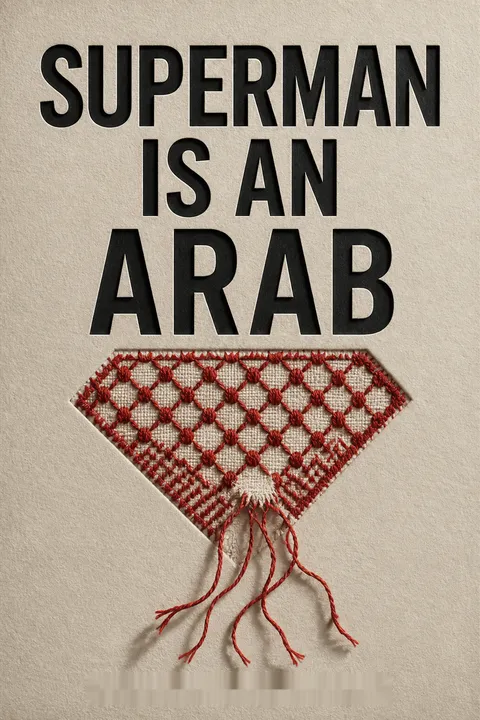
The costume hides fear. As a child in Beirut, Haddad loved Clark Kent's awkward sincerity but recoiled when he became the flawless rescuer. She later uses Superman as a metaphor for a man who claims superior judgment and authority, whether he is a dictator, cleric, boss, father, or boyfriend. Her target is not Arab men as a group, but a learned ideal of masculinity that equates strength with control.
Make room for dependence. The alternative man can admit fear, ask for help, accept support, listen, and make decisions with a partner rather than on her behalf. Haddad also says women can perpetuate the system by praising dominance or teaching sons and daughters unequal roles. That responsibility does not erase unequal power; it widens the work of change.
What's striking is how the Superman image links private behavior to public authority. The same claim of knowing what is best can appear in a controlling partner or an autocratic leader. This resembles gender-role strain: when men are taught that dependence is failure, ordinary vulnerability becomes a threat to identity. The metaphor is memorable, though it risks making unlike forms of power seem interchangeable. Haddad's more precise target is the shared script of unquestioned authority, not every Arab man or every expression of masculine confidence.
Challenge religious authority when it governs women's citizenship and family rights.
Belief becomes law. Haddad argues that monotheistic religions did not invent patriarchy, but helped give it institutional force. In Lebanon, she describes personal status and marriage as organized through religious authorities, with consequences for divorce, child custody, travel with children, and access to civil marriage. She asks readers to notice the difference between being called a citizen and having equal control over one's legal and family life.
Separate critique from chronology. Her account is a polemical genealogy, not a complete history of religion or proof that every believer supports discrimination. Still, its central question is concrete: who has power to interpret sacred rules, and whose interests do those rules protect? Haddad sees secular civil institutions as necessary for equality, while acknowledging that secularism alone cannot end discrimination.
The useful connection here is institutional path dependence: rules can outlast the social conditions that produced them because courts, family customs, and political bargains keep reproducing them. That helps explain why equal language may coexist with unequal rights. The argument is strongest when it examines specific legal consequences, such as custody or civil marriage. Its broad claims about religious traditions invite disagreement, since believers and reform movements interpret texts differently. That debate need not obscure the question of whether a system gives women equal legal standing.
Judge sexual ethics by consent, not by a woman's hymen.
Purity hides the harm. Haddad recounts the case of Maha, a Jordanian woman who was raped, became pregnant, and was killed by her brother in the name of family honor. The court gave him a six-month sentence, citing his anger. The episode exposes a moral inversion: the woman is treated as the source of shame, while the violence against her is minimized. Haddad also describes virginity tests and hymen reconstruction as ways of policing women's sexual histories.
Consent is the line. Her argument is not that sex has no ethics, but that ethical judgment should focus on consent, coercion, and harm rather than gendered purity. She cites an estimate, current at the time of publication, that 140 million girls and women had undergone female genital mutilation. Women's participation in enforcing these norms does not prove free choice when punishment and ostracism restrict alternatives.
This section turns an abstract debate about sexual morality into a test of whose suffering counts. The useful distinction is between agency and permission: a person may make a choice, but the conditions around that choice can be coercive. That perspective is compatible with bodily autonomy without treating every decision as equally free. The account also needs cultural precision. Practices and laws vary widely, and criticism is clearest when it targets coercion and unequal treatment rather than treating a region or religion as uniform.
Test egalitarian claims by how men treat women without an audience.
Behavior reveals belief. Haddad describes dating a man who seemed accomplished and supportive until he blamed a young woman for being raped because she had gone out at night. Another man spoke publicly in favor of women's rights and secularism, then kept his wife hidden in their hotel room during a conference. In both stories, polished language conceals a private hierarchy.
Look for consistency. A person's politics are not measured only by the causes they endorse in public. They also show in how they respond to women's freedom, safety, work, and visibility when no applause is available. Haddad's stories make hypocrisy legible in everyday choices, not just in speeches or doctrine. A sympathetic claim about equality means little if it disappears at home.
The contrast between public values and private conduct connects to moral licensing, the tendency to treat a good deed or stated principle as permission to ignore contradictory behavior. The antidote is not mind-reading but attention to repeated conduct and accountability. These anecdotes are incisive illustrations, not evidence that every advocate is insincere. They also suggest a practical standard for evaluating institutions: inspect who has decision-making power and who bears the consequences, rather than relying on an organization's self-description.
A revolution fails women when protest brings no power over the laws.
Visibility is not authority. Writing in the wake of the Arab uprisings, Haddad notes that women took part in demonstrations in Tunisia and Egypt, yet worried that they were being sidelined as new political systems formed. Islamist parties gained electoral strength in several countries, while women remained underrepresented in decision-making. She also cites reports of Egyptian women protesters being beaten and forced to undergo virginity tests by military authorities.
Measure the new order. A revolution cannot be judged only by whether it removes a dictator or holds an election. Haddad asks whether women can shape laws, enter public life, and exercise basic civil rights. Her concern is that one form of authoritarian control could give way to another. The book's political argument is that women's equality is not an optional benefit to add after democracy arrives; it is part of what democracy must mean.
The section anticipates a central problem in transitions: participation in protest does not guarantee representation in the institutions that follow. Political science distinguishes mobilization from power-sharing, and the gap between them can leave old exclusions intact under new leadership. The caution is especially valuable when revolutions are celebrated as completed events. Still, election results alone cannot establish what a population wants or what a government will do; rights protections, civic organizing, and women's access to office are better measures over time.
Replace the sex war with mutual agency, not reversed domination.
A different feminism. Haddad identifies with third-wave feminism, a strand she associates with diversity among women, control over one's sexuality, and the freedom to define womanhood without copying an earlier generation's model. She rejects both male dominance and a feminism that treats men as permanent enemies. Equality, in her view, means partnership, not making everyone identical or replacing patriarchy with matriarchy.
Stop rehearsing old roles. She questions scripts that make men the pursuers and women the prize, or cast women as muses rather than creators. Both people should be able to express desire, refuse, and take initiative without turning attraction into a bargaining game. Haddad acknowledges that sex and gender are complex, and argues against reducing people to rigid masculine and feminine templates.
The emphasis on mutual agency helps move feminism beyond a simple contest over who controls whom. It also connects to intersectional thinking, which asks how gender interacts with culture, sexuality, and individual circumstance rather than treating women as a single bloc. Yet the language of partnership should not flatten differences in material power. A manipulative dating script and a law that restricts movement are not equivalent harms. The strongest version of Haddad's argument challenges domination while keeping those differences visible.
Build the material independence that makes refusal possible.
Money changes the terms. Haddad argues that financial dependence can turn a promise of protection into a means of control. She urges women to pursue education, work, and their own income, rather than relying on fathers, brothers, or husbands for basic choices. A reader's testimony makes the point tangible: Wafaa, an Iraqi woman, trained as a nurse in secret and found hospital work. Once she earned money, family members who had previously mistreated her had less power to block her decisions.
Independence is not a slogan. Haddad also recalls urging a schoolgirl who imagined a future husband buying her a Porsche to imagine earning and buying it herself. The aim is not to shame people who lack access to work, but to expose a social expectation that men provide and women depend. Economic autonomy can strengthen a woman's ability to say no.
This argument aligns with the capability approach, which measures freedom by the real options people can exercise, not simply by formal rights. Income can increase bargaining power inside families and make exit from abuse more feasible. But independence should not be reduced to individual self-sufficiency. Low wages, unpaid care, and unequal hiring can constrain choices even for educated women. A fuller response pairs personal earning power with public services, fair labor rules, and protection from violence.
Treat marriage as a choice, not proof of a woman's worth.
A private bond, public rules. Haddad criticizes marriage where religious authority controls its terms, divorce is difficult, and women's rights within the family are unequal. She recounts the case of Amina Filali, a sixteen-year-old Moroccan girl who was forced to marry her rapist under a law that allowed him to avoid prosecution; she later died by suicide. The story shows how marriage can be used to protect a perpetrator and punish the person harmed.
No single model fits all. Haddad questions compulsory lifelong marriage and monogamy, but she does not claim that every marriage is empty. She respects monogamy when it is mutual and freely chosen, and argues for honesty and equal consent in other arrangements. Her provocation is that a ring should not be the price of a woman's social legitimacy, sexual respectability, or access to family life.
The distinction between marriage as a relationship and marriage as a legal institution is crucial. Marriage can provide security and recognition, but laws and customs can also lock in unequal bargaining power. Haddad's critique is strongest against coercion and the idea that a woman's value depends on marital status. Her preferred alternatives are personal proposals, not universal solutions. Open relationships, like monogamous ones, require mutual consent, clear expectations, and safeguards against one partner setting the terms for both.
Let age deepen desire instead of shrinking life to youth.
Forty is not an ending. Haddad remembers asking her son how old his supposedly ancient art teacher was. His answer was forty, the age she had just reached. The mismatch exposed how differently children and adults imagine aging. She argues that women face a harsher cultural penalty for growing older, intensified by advertising and media images that equate youth and beauty with happiness and desirability.
Maturity has layers. Her artichoke metaphor treats a life as a gradual uncovering of defenses built from fear, hurt, and disappointment. Aging can mean greater self-knowledge, not simply physical decline. Haddad is not opposed to pleasure or beauty; she objects to the pressure to buy youth or reshape one's face to meet an ideal. She would rather feel alive than perform looking young.
The book usefully separates vitality from appearance, a distinction obscured by industries that sell youth as a condition for social value. Ageism is not merely a private attitude; it can shape employment, desire, and whose voices are heard. At the same time, celebrating aging should not dismiss grief, illness, or the real consequences of time. Haddad's strongest point is not that age brings only confidence, but that women should not be required to disguise it to remain visible.
Use words to make private shame publicly contestable.
A voice begins in danger. Haddad traces her vocation to a French poem read in a Beirut classroom during the civil war, with sandbags at the windows to protect students from gunfire and debris. The poem's language gave her a way to imagine both freedom and a life as a writer. The book returns to that origin through personal stories and letters from Arab readers whose experiences of abuse, fear, faith, and independence are often silenced.
Speech builds recognition. Haddad says her central commitment is to live and write without surrendering her convictions. She does not claim that a book alone can change institutions. Instead, telling the truth can help someone recognize that private suffering is shared, and make injustice harder to dismiss as normal. The reader testimonies give the polemic a chorus rather than leaving it as one author's solitary complaint.
Testimony can create a form of social knowledge: a story names an experience that isolated people may have been taught to treat as personal failure. That recognition can support solidarity and political action. It is not a substitute for legal change, safety, or material resources, and disclosure can carry risks in hostile settings. The book's literary form matters because it moves between argument, memoir, poem, and witness, showing how private experience can become public evidence without pretending to be a complete survey.
Analysis
This book is a feminist polemic shaped as a braid of memoir, poems, satire, political argument, and testimony. Its organizing image, Superman, turns an ideal of invulnerable manhood into a recognizable habit of authority: the supposed protector who claims the right to decide for others. Haddad follows that habit from the family to religious institutions, sexual norms, marriage, and politics. Her most important move is to connect intimate freedoms, such as sexual choice, with civic questions such as custody, travel, and legal standing.
The autobiographical form gives the argument urgency. A childhood fascination with Clark Kent, early encounters with religious authority, an unhappy marriage, and later relationships make the author's positions legible as lived conclusions rather than detached theory. Her sharply drawn stories expose the distance between public progressivism and private conduct. The letters from readers further suggest that her voice is not an isolated experience, even though it is unusually public.
The book is strongest when it identifies concrete mechanisms of control and the double standards that excuse them. It is less secure when a vivid polemic becomes a universal claim about monotheism, Arab societies, feminism, or marriage. Religious traditions are internally contested, and secular legal systems do not automatically produce gender equality. Haddad herself notes that secularism is necessary but insufficient, a qualification that sharpens her broader argument. Some statistics and political judgments belong to the book's 2012 moment and should be read in that context, not as current measurements.
Her relationship advice is best understood as an invitation to honest, mutual choice, not a template for everyone. She criticizes compulsory monogamy while valuing it when freely shared. Across the book, the consistent ethical test is whether people can speak, choose, earn, desire, and leave without being treated as property. The closing appeal to her sons makes masculinity a practice of listening and vulnerability, not a fixed badge of power.
Review Summary
Superman Is an Arab received mixed reviews. Some praised its boldness in addressing taboo subjects and criticizing Arab society, while others found it self-indulgent and lacking nuance. Readers appreciated Haddad's frank discussion of women's rights and sexuality, though some disagreed with her atheistic views. The provocative writing style was seen as both a strength and weakness. Many valued the book for sparking important conversations, even if they didn't agree with all of Haddad's arguments. Overall, it was viewed as a significant but controversial feminist work in the Arab world.
People Also Read


Glossary
Superman pattern
Invulnerable masculine authorityHaddad's metaphor for a model of manhood built around apparent strength, certainty, and rescue. The person performing it assumes he knows what others need and has the right to control them. The pattern can appear in political leaders, religious authorities, employers, fathers, and partners. Its alternative is a more honest masculinity that can admit limits, ask for help, and share power.
third-wave feminism
Diverse, self-defined feminismThe feminist approach Haddad identifies with, associated in her account with women's varied identities, agency over sexuality, and freedom to define equality in ways suited to their own lives. She contrasts it with forms of feminism she sees as treating men as enemies or femininity as weakness. Her emphasis is on partnership and diversity, not on denying gender or reversing domination.
Scheherazade syndrome
Winning power through performanceHaddad's shorthand for a gendered strategy in which a woman uses stories, sexual appeal, compliance, or emotional labor to persuade a man to grant what should be hers as an equal. The strategy can offer limited influence, but it leaves the man in the role of gatekeeper and requires the woman to negotiate rather than act freely.
sexual hypocrisy syndrome
Public chastity, private desireHaddad's phrase for a culture in which sex is publicly condemned while privately pursued, often alongside unequal standards for women and men. Women may be stigmatized for desire, while men's sexual behavior is excused or celebrated. The resulting secrecy, shame, and double lives protect social appearances rather than supporting honest, consensual relationships.
artichoke theory
Maturity beneath defensesHaddad's metaphor for personal development as the gradual removal of protective layers built from fear, hurt, doubt, and disappointment. The process can be demanding, but it may reveal a more vulnerable and trusting self. In the book, the artichoke represents maturity and a life shaped by experience, rather than a simple story of decline with age.
zawaj al mut'ah
Fixed-term contractual marriageA form of temporary marriage described by Haddad in relation to Shia practice. The partners agree on a specified period and payment, and the contract ends when that period is complete. Haddad criticizes its use as religiously sanctioned sex work, particularly when unequal power or economic need shapes the arrangement. The term refers to a contested religious and legal practice.
zawaj al misyar
Marriage with waived obligationsA form of marriage Haddad associates mainly with Sunni practice, in which a wife may waive some customary marital rights or provisions, often allowing a man to maintain a relationship while traveling. She compares it with mut'ah because both can permit sexual relationships within a formal contract while sidestepping ordinary expectations of shared domestic life. Interpretations and practice vary.
FAQ
1. What is "Superman is an Arab" by Joumana Haddad about?
- A critique of patriarchy: The book is a passionate, often satirical critique of patriarchal systems in the Arab world, focusing on how machismo and religious dogma oppress both women and men.
- Personal and cultural memoir: Haddad weaves her own life experiences with broader social commentary, using anecdotes, poetry, and rants to illustrate her points.
- Deconstruction of gender roles: The book challenges traditional gender roles, especially the "Superman" ideal of masculinity and the expectation of female docility.
- Call for authenticity: Haddad advocates for real, vulnerable men and empowered women, urging both to reject societal masks and embrace genuine partnership.
2. Why should I read "Superman is an Arab" by Joumana Haddad?
- Unique feminist perspective: The book offers a bold, unapologetic feminist voice from the Arab world, rarely heard in mainstream discourse.
- Insight into Arab societies: Readers gain a nuanced understanding of the intersection between religion, culture, and gender in Arab countries.
- Provocative and engaging style: Haddad’s mix of humor, poetry, and raw honesty makes for a compelling and thought-provoking read.
- Universal relevance: While rooted in Arab contexts, the book’s themes of gender, power, and authenticity resonate globally.
3. What are the key takeaways from "Superman is an Arab" by Joumana Haddad?
- Machismo is destructive: The "Superman" ideal harms both men and women, fostering insecurity, violence, and hypocrisy.
- Patriarchy is perpetuated by both sexes: Women, through compliance and self-victimization, also contribute to the endurance of patriarchal norms.
- Religion and tradition as tools of control: Monotheistic religions and cultural traditions are critiqued for institutionalizing gender inequality.
- Authenticity and self-empowerment: True liberation comes from embracing one’s vulnerabilities, rejecting societal expectations, and striving for genuine partnership.
4. How does Joumana Haddad define the "Superman" archetype in "Superman is an Arab"?
- Facade of invincibility: The "Superman" is a man who hides his insecurities behind a mask of strength, control, and superiority.
- Split personality: Haddad likens the Superman/Clark Kent duality to the split in many Arab men between public machismo and private vulnerability.
- Agent of oppression: This archetype justifies despotism, misogyny, and even terrorism, under the guise of knowing what’s best for others.
- Counterfeit masculinity: Haddad argues that the world needs real men—flawed, open, and collaborative—not fictional heroes.
5. What are the "disastrous inventions" discussed in "Superman is an Arab" by Joumana Haddad?
- Monotheism: Critiqued for institutionalizing patriarchy and gender inequality.
- Original sin: Used to instill guilt and control female sexuality.
- Machismo: The cult of hyper-masculinity that leads to violence and oppression.
- Battle of the sexes: The false dichotomy that pits men and women against each other instead of fostering partnership.
- Chastity, marriage, and aging: Each is examined as a social construct that limits personal freedom and authentic relationships.
6. How does "Superman is an Arab" by Joumana Haddad critique religion and its impact on women?
- Religious texts as patriarchal: Haddad cites passages from the Bible, Torah, and Qur’an that explicitly subordinate women to men.
- Religion as institutional control: She argues that organized religion perpetuates misogyny, racism, and homophobia, often justifying violence.
- No harmony with feminism: The book asserts that true gender equality cannot be achieved within the current frameworks of monotheistic religions.
- Secularism as a solution: Haddad advocates for secular societies as a necessary (though not sufficient) condition for women’s liberation.
7. What does Joumana Haddad say about machismo and its effects in "Superman is an Arab"?
- Machismo as a plague: The book presents machismo as a global epidemic, particularly acute in the Arab world, leading to violence, abuse, and the suppression of women.
- Men as victims too: Haddad notes that machismo also harms men by forcing them into rigid, emotionally stunted roles.
- Perpetuated by women: Women’s complicity—through raising sons to be machos and admiring "bad boys"—is highlighted as part of the problem.
- Need for new masculinity: The author calls for a redefinition of manhood based on vulnerability, partnership, and mutual respect.
8. How does "Superman is an Arab" by Joumana Haddad address the role of women in perpetuating patriarchy?
- Mothers as "Superman" breeders: The book points out that mothers often raise sons to be entitled and daughters to be submissive.
- Female compliance and self-victimization: Women’s acceptance of their own oppression, and their role in enforcing it on others, is critically examined.
- Stockholm syndrome analogy: Haddad likens women’s attraction to their oppressors to psychological conditioning.
- Call for self-empowerment: She urges women to educate their children differently and to claim agency over their own lives and bodies.
9. What solutions or alternatives does Joumana Haddad propose in "Superman is an Arab"?
- Financial independence for women: Economic self-sufficiency is presented as crucial for genuine freedom.
- Rejecting gender binaries: Embracing both masculine and feminine traits in all people is encouraged.
- Partnership, not opposition: Haddad advocates for men and women to work together to dismantle patriarchy, rather than replacing it with matriarchy.
- Secular, civil societies: The book calls for the separation of religion and state as a foundation for equality.
10. How does "Superman is an Arab" by Joumana Haddad approach topics like sex, marriage, and monogamy?
- Sexual double standards: The book exposes the hypocrisy in how male and female sexuality are judged, especially regarding virginity and chastity.
- Marriage as a flawed institution: Haddad critiques marriage for being patriarchal, religiously controlled, and based on unrealistic expectations.
- Monogamy as a social construct: She questions the naturalness of lifelong monogamy and advocates for honesty and flexibility in relationships.
- Sex-positivity: The author encourages women to embrace their desires and reject shame-based narratives.
11. What is the writing style and structure of "Superman is an Arab" by Joumana Haddad?
- Hybrid format: The book blends memoir, essay, poetry, and satirical "rants" to create a dynamic, engaging narrative.
- Direct and provocative tone: Haddad writes with candor, wit, and sometimes biting sarcasm, unafraid to challenge taboos.
- Personal and universal: While deeply personal, the stories and arguments are used to illuminate broader social issues.
- Accessible yet literary: The language is both accessible and rich, appealing to a wide range of readers.
12. What are the best quotes from "Superman is an Arab" by Joumana Haddad and what do they mean?
- "This is not a book, in the ordinary sense of the word. No, this is a prolonged insult, a gob of spit, a kick in the pants to God, Man, Destiny, Time …" – Sets the rebellious, confrontational tone of the book.
- "The tragedy of machismo is that a man is never quite man enough." – Highlights the insecurity at the heart of hyper-masculinity.
- "Superman is a counterfeit man and of the poorest quality. Time for him to rip off the costume and stick to his street clothes." – Urges men to abandon false ideals and embrace authenticity.
- "Women’s liberation worldwide has always happened in a secular context, and it is important – and vital – to remember that." – Emphasizes the necessity of secularism for gender equality.
- "Machismo is not about men against women. It is about boys against men." – Suggests that true maturity and manhood are incompatible with machismo.
Download PDF
Download EPUB
.epub digital book format is ideal for reading ebooks on phones, tablets, and e-readers.








