

Key Takeaways
Let the person of Jesus challenge the caricature before judging the faith
A childhood shaped by fear. Bernstein grows up in Queens with Jewish parents who carry the memory of the Holocaust. Antisemitic violence near the family candy store makes evil feel immediate, while his father's loss of faith leaves questions about God unresolved. At sixteen, Bernstein secretly reads a New Testament and finds Jesus unlike the hostile caricature he expected: restrained, compassionate, and courageous under attack.
Belief begins as a search. After weighing possible explanations for the Gospel accounts, Bernstein prays for God to reveal whether Christ is true. He describes a sudden, unmistakable experience of divine presence and identifies it as his conversion. He does not present this experience as a formula for everyone; he says people come to faith in different ways.
What's compelling here is the sequence: inherited suspicion gives way not to argument alone, but to sustained attention to a person. That approach has broad value beyond religious debate. People often assess a tradition through its most damaging representatives, while a close encounter with its central texts can complicate the verdict. Bernstein's experience is powerful as testimony, but private certainty cannot function as public proof. Its wider invitation is more modest and useful: investigate the strongest version of a belief before dismissing it, while recognizing that sincere seekers may reach different conclusions.
Read Christian claims through Israel's story, not as a break from it
A connected scriptural story. Bernstein sees Christianity not as a rejection of Judaism, but as the fulfillment of Israel's Scriptures. He is persuaded by passages that Christians interpret as pointing toward Jesus, including Isaiah's suffering servant, Psalm 22's persecuted speaker, and Daniel's timetable for a coming messiah. He also notes prophecies about the Messiah's descent from David and birth in Bethlehem. Together, these readings give him a narrative extending from Israel's formation to Jesus' life and death.
A claim with contested readings. Bernstein argues that some Jewish interpreters once understood these passages messianically, while later interpretations differ. He considers the destruction of the Temple in AD 70 significant to prophecies that place the Messiah's arrival before that event. For him, the converging passages make Jesus' identity compelling, not merely plausible.
The book's case gains force from cumulative interpretation: lineage, place, suffering, and historical timing are read as parts of one pattern rather than isolated predictions. That is how religious traditions often make sense of their sacred histories. Yet the method depends on interpretive choices, including which texts count as predictions and how they are translated. Jewish and Christian communities do not agree on those choices. The fairest reading treats fulfilled prophecy as a central source of Bernstein's conviction and a window into Christian interpretation, rather than as a neutral test that compels every reader to the same conclusion.
Treat Scripture as a received witness, not a self-interpreting manual
A book before the book. As a young evangelical, Bernstein assumes the Bible can be read independently and that the Church arrived after the New Testament. Studying early Christian history reverses that picture. The first Christians worshiped and taught before the New Testament was complete, and the earliest churches relied on eyewitness accounts, oral teaching, and the writings available to them. A complete list of the New Testament's twenty-seven books appears centuries after Jesus' life.
Community shaped the canon. Bernstein points to Athanasius's list in AD 367 and to early councils that identified books for church use. He concludes that the Church preserved and recognized Scripture, while Scripture remains central to the Church. His carpentry example makes the point: an instruction manual may contain directions, but a skilled teacher can help a reader understand how to use them.
This argument usefully distinguishes a text's authority from the practical question of how readers identify and interpret it. Every community inherits languages, habits, and judgments that shape reading, whether or not it acknowledges them. Bernstein's historical emphasis also corrects the imagined picture of every early Christian holding a complete Bible. The harder question is how to distinguish faithful tradition from institutional error. Community can preserve insight, but institutions also require scrutiny. The book makes a strong case against solitary interpretation as the only safeguard; it does not, by history alone, settle every dispute about which community interprets best.
Look for a church whose worship embodies its oldest claims
Worship as historical evidence. Searching for the Church that shaped the New Testament, Bernstein studies early Christian descriptions of worship. He finds a recurring pattern: Scripture readings, sung psalms, a sermon, prayers for the community, and the Eucharist. The Eucharist is the Christian Communion meal, understood in the early sources he cites as participation in Christ's Body and Blood, not merely a reminder of them. The service is led by clergy, and Communion is reserved for baptized believers in good standing.
A difficult discovery. This pattern resembles Orthodox worship more than the informal services Bernstein knows. He also encounters closed Communion, the practice of restricting the sacrament to members of the Church who share its faith and discipline. The restriction initially troubles him, but he comes to see it as expressing the seriousness with which the Orthodox Church treats the sacrament.
Bernstein treats ritual as more than atmosphere: it carries beliefs through repeated, embodied practice. That insight helps explain why worship can preserve a community's identity more durably than written statements alone. It also makes the Eucharist a practical test of what Christians believe about belonging and unity. Historical resemblance, however, is not identical to proof of exclusive continuity. Traditions change, and similar practices can be inherited or revived in different ways. Readers can appreciate the book's evidence for ancient liturgical worship while still asking how much institutional continuity a worship pattern establishes.
Conversion need not erase Jewish identity or Christianity's Jewish beginnings
A divided inheritance. Bernstein's faith repeatedly puts him between communities. Some Christians tell him that the Church has replaced Israel; some Jewish relatives see his Christian belief as betrayal. Reading Paul's letters to the Romans, especially chapters 9 to 11, he finds a continuing concern for the Jewish people and rejects the idea that Christian identity requires contempt for Jewish identity.
Recovering the Nazarenes. Bernstein investigates early Jewish followers of Jesus, often called Nazarenes, who believed in Christ while retaining Jewish practices. He argues that some remained orthodox in belief and were gradually absorbed into Gentile Christian communities. He proposes that part of their legacy survives among Middle Eastern Orthodox Christians, especially those linked to Antioch. This is his historical reconstruction, not an uncontested conclusion, but it gives his own conversion a sense of cultural as well as theological continuity.
This part of the story matters because conversion is often narrated as a clean break, when real lives contain family ties, inherited memory, and overlapping identities. Bernstein resists a theology that makes Jewish survival seem irrelevant once Christianity appears. His recovery of the Nazarenes also counters the assumption that the earliest Church was culturally uniform. The proposed line from ancient Jewish Christians to modern Antiochian communities is suggestive, but the surviving evidence cannot establish a simple, unbroken descent. The deeper insight does not depend on that claim: Christianity's origins are inseparable from Jewish history.
See sin as a wound that spreads death, not merely a legal record
A different account of the Fall. Bernstein contrasts a legal model of sin, centered on inherited guilt and punishment, with the Orthodox account he adopts. In this view, Adam and Eve's turning from God, the source of life, leads to mortality and corruption. Their descendants inherit that damaged condition, called ancestral sin, but not personal guilt for Adam's act. Each person remains responsible for their own sins, and human freedom is injured rather than erased.
The disease metaphor. Sin is not only breaking a rule; it is a condition that damages life and relationships. Bernstein argues that a cure must address the underlying sickness, not just change a person's legal standing. He criticizes some Western theological accounts as too focused on inherited guilt, while presenting Orthodox teaching as more compatible with the Jewish emphasis on personal responsibility.
The disease model has an important strength: it portrays wrongdoing as harmful to the wrongdoer and to others, not merely as a violation awaiting sentence. It naturally points toward repair, moral formation, and healing. The model also preserves responsibility by distinguishing inherited mortality from personal acts. Bernstein's contrast with Western Christianity is sharper than the diversity of those traditions warrants; many Western thinkers also treat sin as bondage, illness, or damaged relationship. The most productive use of his distinction is as a question: does a theology explain how people are healed, as well as how wrongdoing is judged?
Measure salvation by healed participation in Christ, not pardon alone
Salvation as restoration. Bernstein describes the Orthodox view of salvation as healing and wholeness, not only forgiveness or release from punishment. Theosis means becoming more like God by grace while remaining human and distinct from God. The Incarnation, in which God the Son takes on human nature, is central: Christ joins divine and human life without confusing them, a union known as the hypostatic union. Through Christ's death and Resurrection, humanity is healed and death's power is overcome.
A lived transformation. Salvation includes participation in Christ through the Church's sacraments, especially baptism and Communion, as well as ascetic effort: prayer, fasting, self-denial, and acts of love. Bernstein presents these not as ways to earn salvation, but as practices that help people receive and live out God's transforming life.
This account refuses to reduce salvation to a changed verdict. It gives the Resurrection, the body, and daily moral practice a central role, making faith an embodied process rather than an abstract status. Theosis also preserves an important distinction: participation in divine life does not mean becoming God by nature. The risk is that readers may hear transformation as self-improvement or spiritual achievement. Bernstein counters this by emphasizing grace and sacramental life, though the balance between divine action and human effort remains a question each tradition answers differently. The framework is strongest when both are kept in view.
Understand judgment as encountering God's love with a heart formed to resist it
One presence, two experiences. Bernstein presents an Orthodox view in which God's uncreated light and love are present to everyone. Uncreated light means God's divine presence and activity, not physical light. A heart open to God experiences that presence as joy and illumination; a heart that resists experiences it as pain. In this account, heaven and hell are not simply separate places created by God, but different experiences of being before God.
A choice with consequences. Bernstein uses the image of a river of fire flowing from God's presence: the same fire warms and purifies some, while tormenting others. He argues that God does not stop loving the lost; their resistance shapes how they experience that love. The image of hell's doors locked from within summarizes this emphasis on human freedom.
The model offers a morally serious alternative to imagining divine love and divine judgment as opposites. It makes character matter: repeated choices shape a person's capacity to receive what is good. It also avoids depicting God as changing from loving to vindictive. But this account can understate the force of biblical passages that describe judgment as an act of God, and it cannot resolve every question about suffering or freedom after death. Its value is less as a complete map of the afterlife than as a challenge to ask what habits of love or resistance are being cultivated now.
Practice humility through confession, reconciliation, and costly love
Humility as strength. For Bernstein, humility is not self-contempt or passive submission to abuse. It is the willingness to admit need, seek forgiveness, and serve others. He describes it as central to spiritual growth because repentance begins when people stop defending themselves against the truth. Christ's willingness to suffer without abandoning love becomes the model, and love of enemies the clearest test of becoming more like God.
Practices that train the heart. Orthodox life offers repeated disciplines: prayer for mercy, the Jesus Prayer, confession, fasting, charity, and asking or granting forgiveness. Before Communion, believers reconcile with one another; in some communities, a special service makes that exchange explicit. Bernstein connects such habits to his own marriage, crediting shared faith, patience, and mutual forgiveness with helping him and Bonnie endure conflict.
Humility is presented here as a practiced capacity, not a flattering opinion about oneself. Repeated confession and reconciliation can make accountability ordinary, which is more demanding than occasional declarations of good intent. The connection to marriage gives the idea a tangible setting: durable intimacy requires repair after injury. Still, humility can be misused to demand silence from people with less power. Bernstein explicitly distinguishes it from weakness, and that distinction matters. Any practice of submission is healthiest when paired with protection from abuse, honest accountability, and the same expectation of repentance from leaders.
Analysis
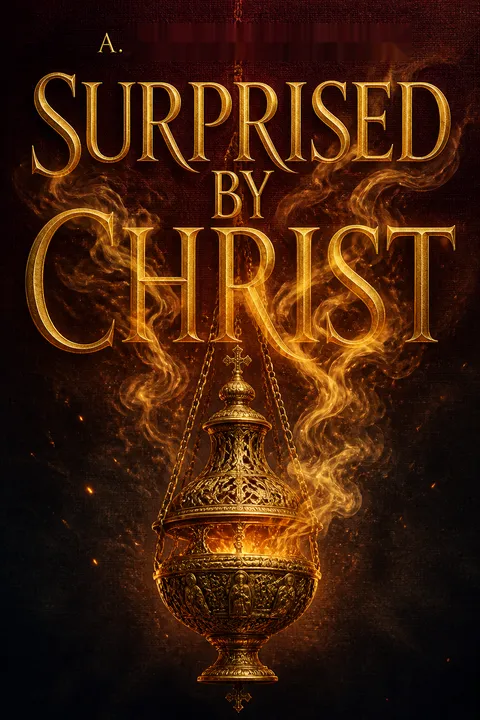
Surprised by Christ works as three books at once: a conversion memoir, a history-led search for the original Church, and a presentation of Orthodox theology. Its narrative engine is a series of reversals. A Jewish teenager expects Christianity to conceal a hostile Jesus, then finds the Gospels compelling. A Protestant who treats Scripture as a self-sufficient guide discovers that the early Church existed before the New Testament was assembled. A convert seeking an ancient form of worship encounters a tradition he once dismissed as overly formal. Each change alters not just his conclusions, but the questions he thinks are worth asking.
The book's strongest contribution is its contrast between salvation as legal acquittal and salvation as healing, participation, and transformation. This changes the meaning of sin, the Cross, the Resurrection, Communion, and moral discipline together. It also supplies a distinctive account of judgment: divine love remains constant, while human beings experience that presence differently according to their orientation toward it. The ideas are memorable because Bernstein joins them to concrete scenes, from his father's rejection of Christian books to his discovery of ancient liturgical sources.
The account is openly confessional, not a neutral survey of Christian traditions. Bernstein often presents Orthodox positions in their strongest form and Western positions in simplified or adversarial form. Readers should therefore distinguish his personal theological contrast from a comprehensive description of Catholic and Protestant thought. His arguments about prophecy and the historical survival of Jewish-Christian communities also depend on interpretations that other scholars and religious communities dispute. These limits do not diminish the memoir's value; they clarify what kind of value it offers. It shows how a thoughtful person can move through evidence, inherited identity, worship, and experience toward a coherent faith, while making the case that doctrine shapes how people imagine God's character. The book is most persuasive as an account of that lived transformation, and most contestable when it treats its historical and theological conclusions as uniquely decisive.
Review Summary
Surprised by Christ is highly praised for its clear explanation of Orthodox theology and the author's compelling journey from Judaism to Christianity. Readers appreciate the personal narrative combined with theological insights, particularly comparisons between Orthodox, Catholic, and Protestant views. Many found it enlightening about Jewish-Christian connections and Orthodox beliefs. Some criticize certain theological interpretations or find parts repetitive, but overall the book is recommended for those interested in Orthodox Christianity or religious journeys.
Glossary
Holy Tradition
The Church's inherited teachingIn Bernstein's account, Holy Tradition is the living transmission of Christian teaching and practice through the Church. It includes apostolic oral teaching, worship, interpretation, and the decisions that identify and preserve Scripture. It is not presented as a rival to the Bible, but as the community and history through which the Bible is received and understood.
Eucharist
Communion in Christ's Body and BloodThe Eucharist is the central Communion service in Orthodox worship. Bernstein describes the Orthodox and early Christian understanding as the consecrated bread and wine truly becoming Christ's Body and Blood while retaining their ordinary appearance. It is both a sacrament and the Church's shared act of worship, restricted to those in communion with the Orthodox Church.
ancestral sin
Inherited mortality and corruptionAncestral sin is the Orthodox term Bernstein uses for the fallen condition humanity inherits from Adam and Eve. It includes mortality, corruption, and an inclination toward sin, but not personal guilt for their act. Individuals are accountable for their own sins, and human freedom is damaged but not destroyed.
theosis
Becoming godlike by graceTheosis is the Orthodox understanding of salvation as an ongoing participation in God's life. Human beings become increasingly like God through grace, without becoming God by nature or losing their created identity. Bernstein presents it as the goal made possible by Christ's Incarnation and lived through sacramental participation, prayer, moral struggle, and love.
hypostatic union
Christ's two natures, one PersonThe hypostatic union is the Christian doctrine that Jesus Christ is one Person with both divine and human natures. In Orthodox teaching as Bernstein presents it, those natures are united without being mixed or confused. This doctrine explains how Christ can share human life while remaining divine, and why the Incarnation is central to humanity's healing.
uncreated light
God's manifest divine presenceUncreated light refers to God's presence and activity as experienced by human beings, rather than to physical light or a created object. Bernstein distinguishes it from God's essence, which remains unknowable. In his account, this divine presence can illuminate and purify those who welcome it, while being experienced as painful by those who resist it.
closed Communion
Communion reserved for church membersClosed Communion is the practice of limiting participation in the Eucharist to people who belong to the Church and are in good standing. Bernstein describes the Orthodox practice as requiring Orthodox baptism and chrismation, along with appropriate spiritual preparation. The restriction expresses the Church's understanding that Communion signifies shared faith, worship, morality, and obedience.
Download PDF
Download EPUB
.epub digital book format is ideal for reading ebooks on phones, tablets, and e-readers.








