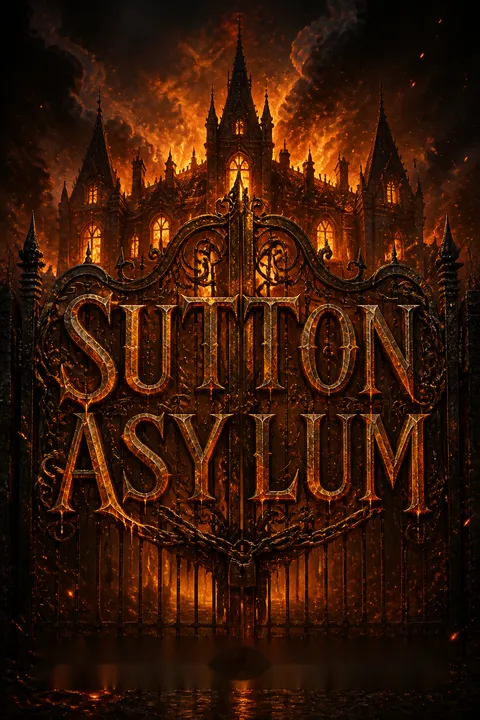


Plot Summary
Prologue
At fifteen, twins Jasper and Iris are caught together by their parents, who tie them down and threaten Iris while forcing Jasper to watch. Iris frees herself by dislocating her thumb, knocks their father unconscious, and releases Jasper.
Together they kill both parents, but their mother calls the police before Jasper can stop her. The sirens arrive as the twins cling to each other, bloodied and certain they will never be separated. Their murders lead to a court finding them unfit for trial and confining them at Sutton Asylum.
The opening makes the twins' violence both an act of escape and the foundation of their shared identity. Their parents use restraint, humiliation, and forced witnessing to control them; Iris and Jasper answer by reversing the arrangement and becoming the agents of violence. Yet the scene does not present their freedom as uncomplicated. Their mother’s call brings the state into the story, and the twins’ insistence that they belong only to each other foreshadows the intense, isolating bond that shapes their life at Sutton.
A Kingdom Behind Bars
At nineteen, Jasper and Iris have spent four years at Sutton, a locked Victorian mansion repurposed as an asylum. They have built a small court among its residents, using charm, intimidation, and the threat of violence to keep staff at a distance. Their relationship is not ordinary sibling closeness: they treat each other as exclusive lovers and co-rulers, and Jasper’s self-made ownership tattoo makes that bond visible.
They also protect Dex, a quiet resident Iris found outside in the rain. Their fragile order is tested when head nurse Karen and her assistant Beth arrive and try to assert stricter control. Doctor Peters backs the new staff, warns the twins to cooperate, and makes clear that their confinement is meant to be permanent.
Sutton is not simply a prison the twins endure. Jasper and Iris remake it as a territory where their own rules can displace the institution’s authority. Their eroticized, possessive attachment offers security after childhood abuse, but it also narrows the space available to anyone else. The asylum’s surveillance and locked doors threaten that private sovereignty, while the twins’ performance of power helps them conceal fear of separation. Dex complicates their closed pair: their protection of him shows an ability to form a family beyond themselves, even as they insist that no outsider may dictate what family means.
Dex Beneath the Rain
After Doctor Peters mentions Dex during a tense session, Jasper secretly accesses his file and learns why he rarely speaks. Dex’s older sister repeatedly raped him from the age of twelve until he killed her at eighteen; Sutton received him only days after his parents found him in the aftermath. Jasper tells Iris what he discovered, and she absorbs the history without treating Dex as dangerous or broken.
In the library, Dex rests his head in her lap and holds her hand while she comforts him for hours. His whispered name for her confirms a bond he cannot yet express in any other way. Jasper and Iris now understand that their protectiveness is not just a preference: Dex has become part of their family.
The revelation reframes Dex’s silence as a response to prolonged violation, not a lack of feeling or agency. Iris’s care is meaningful because she does not demand disclosure or offer a cure; she lets Dex set the pace of contact. Jasper’s search of the file is more intrusive, but it grows from the same protective impulse and gives the twins a sharper sense of what Dex has survived. Their family structure expands through acts of trust rather than conventional speech. At the same time, the narration’s emphasis on vengeance foreshadows how easily protection can become permission to retaliate.
Breakfast Becomes Mutiny
At breakfast, Iris climbs onto a table and addresses the residents as though Sutton were her own domain. She mixes practical announcements with pointed provocations aimed at Karen and Beth, who have just entered the dining hall.
When Karen orders her down, Jasper refuses to let the nurse take control of the room, and the residents join Iris in shouting, pounding tables, and drawing aides into a spreading disturbance. Even Ms. O resists staff efforts to sedate her.
Doctor Peters ends the uproar by sending Jasper, Iris, and Dex to their separate rooms, leaving their doors open and canceling outside time. The punishment is carefully chosen: Iris can hear Dex nearby but cannot reach him, turning the institution’s power into a direct attack on their family.
Iris’s announcements are both theater and political action. By making the residents an audience, she turns the staff’s demand for obedience into a public contest over who defines order at Sutton. The crowd’s participation gives her authority a collective dimension, but it also exposes other residents to punishment. Doctor Peters responds by separating the trio, targeting the very attachment that makes the twins feel invulnerable. This establishes the institution’s most effective leverage: not simply locked doors or medication, but the ability to make care feel like a vulnerability that staff can exploit.
The Doctor Takes Dex
In Doctor Peters’s office, Jasper proposes a deliberately outrageous form of couples therapy, hoping to unsettle the doctor and keep the conversation on the twins’ terms. Peters rejects the performance and insists on discussing the murders that brought them to Sutton.
Jasper recounts how their parents restrained Iris and how the twins killed them, refusing the doctor’s hope that treatment will make them remorseful or compliant. The confrontation ends with Peters ordering all three back to their rooms.
Once the doors are locked, Karen and aides enter Dex’s room to sedate him. Jasper and Iris hear him calling for help and try to break through their door, but cannot reach him. The staff drag Dex away, leaving Iris and Jasper together behind a locked barrier.
The session shows the twins using provocation to control the emotional terms of an encounter, while Peters tries to reclaim his professional authority by naming their past as a problem to be managed. Neither side listens well: the twins dismiss care as domination, and the institution answers conflict with coercion. Taking Dex makes that coercion intimate. Because the twins have built their stability around protecting one another, the staff’s decision to seize the least powerful member of their family destabilizes the entire arrangement. The locked door converts helplessness into a sensory experience: they hear Dex’s distress but cannot act.
A Roll Against Surrender
For four days, Iris barely moves, refuses food, and allows staff to medicate her while Dex remains missing. Jasper keeps watch over her and reassures Sutton’s residents that she is only unwell. When he learns the staff may use a feeding tube if she continues refusing food, he brings her a dinner roll that Ms. O saved for her.
He explains that she needs strength if they are to get Dex back. Iris finally lifts her hand, eats the roll, and begins to return to herself. The change is small but decisive: she accepts Jasper’s care without accepting the institution’s control. Soon she is dressed, back among the residents, and ready to act rather than remain numbed by the loss.
Iris’s collapse reveals the cost of the role she performs as Sutton’s fearless queen. Dex’s absence breaks through her usual defiance because it touches the childhood wound of being unable to protect someone she loves. Jasper’s response is not a grand rescue plan but a practical appeal that gives her a reason to move. The roll matters because eating becomes an act of renewed agency, a refusal to let the institution determine what happens to her body. Ms. O’s quiet contribution also shows that the twins’ authority has produced genuine loyalty, not only obedience born of fear.
The Finale's Hidden Route
Once Iris has recovered enough to act, she rushes to Doctor Peters hoping to provoke a punishment that might let her see Dex. Peters recognizes the ploy and sends her and Jasper back without revealing Dex’s location.
Rather than force another direct confrontation, Jasper studies the corridor mirror and uses a shard to catch the reflection of a hidden camera lens. The discovery lets the twins plan around Sutton’s surveillance. They choose the residents’ Grey’s Anatomy finale party as cover, knowing staff will be occupied keeping the event calm.
While preparing, Jasper and Iris cut matching marks into each other’s skin, a private sign of their shared commitment before the rescue. Their plan depends on timing, secrecy, and getting through the basement locks.
The failed attempt to reach Dex teaches the twins that nerve alone cannot overcome a system designed to observe and contain them. Jasper’s mirror trick is a rare moment of patient attention: instead of charging at the institution, he learns how it watches. The television finale offers a mundane distraction that becomes tactically useful precisely because the residents care about it. Their reciprocal marks translate devotion into a visible ritual, strengthening resolve while reinforcing their closed, possessive identity. The scene’s tension comes from the contrast between their impulsive image and the careful planning required to make escape possible.
The Assistant's Dangerous Keys
At the crowded television party, Jasper and Iris slip toward the staff corridor, intending to reach the basement. Beth intercepts them and admits she disagrees with the treatment Dex is receiving.
She gives them the keys to the basement locks and explains that the staff-only areas and basement are not covered by cameras. The twins accept the keys but do not trust her sudden help; Beth’s gesture cannot undo her role in the institution’s treatment of them.
Iris kills Beth before they leave, refusing to let the exchange become a bargain for forgiveness. Jasper helps conceal the body in a closet, then leads Iris toward the basement door. The party continues upstairs, buying them a narrow window in which to find Dex before anyone discovers Beth.
Beth’s intervention introduces moral ambiguity without resolving it. She risks her career to help Dex, yet the twins cannot separate this choice from her earlier complicity in their confinement. Iris responds according to a private code in which loyalty is proven through action and past harm remains unforgiven. Her decision closes off the possibility of negotiated trust and commits the pair to a more violent course. The keys function as access, not redemption. Their usefulness is immediate, while their human cost is already present in the body the twins hide.
The Basement's Open Door
The basement keys open the outer locks, but a separate room is still locked, so Jasper kicks its door in. Inside, they find Dex naked, restrained to a metal table, bruised and burned, with blood around his damaged fingers. Headphones have forced loud music into his ears while staff subjected him to electrical shocks. Iris freezes at the sight until Jasper grounds her and she focuses on freeing Dex.
They remove his restraints, help him dress, and wait while he gathers himself enough to stand. When Jasper asks who hurt him, Dex identifies Doctor Peters, Karen, and two aides. Iris and Jasper lead him out together, no longer guessing at who is responsible and no longer willing to leave the people who harmed him in charge.
The rescue changes the twins’ anger from suspicion into certainty. Dex’s injuries make the institution’s claim to care difficult to sustain, especially because his vulnerability was known to the staff. Iris’s momentary dissociation demonstrates that her violence is not immunity from shock; Jasper’s steadying presence lets her return to action. Dex’s restrained identification of his abusers is significant because it gives him a role in what follows, rather than leaving him only as the object of protection. Their exit from the room is a fragile reunion, but it also commits the three to confrontation.
Three Patients Turn Judges
On the way to Peters’s office, Iris attacks two aides involved in dragging Dex away, and Jasper and Dex join her. They hide the bodies, then confront Peters while another resident, Joseph, leaves the room. Iris and Jasper restrain the doctor and carve a warning into his forehead; Jasper staples his eyelids open as Dex holds him down.
Karen arrives, and the twins accuse her and Peters of using Dex to punish them. Dex turns on Karen, cutting her face and hands while Jasper keeps her from escaping. Iris stabs Peters through the tongue and ears before she and Jasper attack him further. Dex eventually kills Karen with repeated stabs. By the end, both Peters and Karen are dead, and the trio has crossed from rescue into revenge.
The twins cast themselves as judges because the institution has failed, in their eyes, to distinguish treatment from abuse. Their retaliation mirrors Sutton’s methods of restraint and bodily control, making their claim to justice morally unstable even as the harm done to Dex is real. Dex’s participation matters: the person the staff treated as helpless becomes an agent of vengeance, though the scene gives little space to what he might want beyond retaliation. The staged punishments turn the office into a counter-court where authority is reversed. Yet the outcome is not repair. It is a new crisis that the three will have to flee.
Blood Prom, Burning Mansion
With Peters and Karen dead, Iris uses the intercom to announce an improvised prom and directs residents toward the office, where the twins have left the bodies. Ms. O and residents from the secure wing join the gathering, and the building’s fragile order collapses into a riot.
Joseph, whose fascination with fire has already been established, sets the library alight. As alarms sound and smoke spreads, residents and staff surge toward the front doors, which unlock automatically during the emergency.
Jasper leads Iris and Dex in the opposite direction, through the back exit and across the grounds to a gate in the perimeter fence. They leave Sutton before authorities arrive, refuse to take other escapees with them, and disappear into the surrounding woods.
The prom transforms the twins’ private retaliation into a collective uprising, but the crowd’s freedom is brief and dangerous. Iris turns a fantasy of celebration into a practical signal, while Joseph’s fire supplies the emergency that defeats the asylum’s locked exits. The residents’ escape is not a planned liberation movement; it is a chain reaction sparked by institutional collapse and personal grievances. Jasper’s choice to leave other escapees behind protects the trio but exposes the limits of their solidarity. They have broken Sutton’s control over them, yet they do so by narrowing responsibility back to their own family.
The Church's Buried Fortune
After days of walking through the woods, Jasper recognizes the stream near the South Carolina home where he and Iris grew up. He enters the boarded house alone and searches his parents’ bedroom for a concealed compartment he once saw their father use. Inside, he finds a duffel bag of cash, apparently connected to his father’s work for the church.
The money gives the fugitives resources, but they remain wary of being recognized and continue traveling on foot. They eventually settle in an abandoned barn, gathering supplies carefully and avoiding attention. Their new home is more refuge than security: Sutton is behind them, but the threat of capture remains, and their survival still depends on secrecy and loyalty among the three of them.
The return to the family house brings the twins back to the origin of their trauma, but Jasper approaches it as a practical search rather than an emotional reckoning. The hidden money exposes another secret their parents kept and converts the family’s former wealth into a tool for survival. It cannot restore the children the twins were or erase the murders that made them fugitives. The abandoned barn offers a provisional alternative to Sutton: a space they can shape without staff or locks. Its safety remains contingent, however, and their isolation continues to be both protection and self-imposed boundary.
Epilogue
A few years later, Jasper, Iris, and Dex have made the abandoned barn their home, living cautiously on the money found in the family house. Iris notices Dex watching a young woman from a nearby farmhouse as she gathers wildflowers. The twins follow him and decide to give him the woman as a surprise.
They abduct her and place her in a buried cold-storage container. When Dex arrives at the barn, Iris points him toward the container and reveals what they have done. The story ends before Dex’s response or the woman’s fate is known, turning the trio’s fragile refuge into the opening of another act of violence.
The epilogue shifts the trio’s protective family bond into a new and disturbing register. Iris and Jasper believe they are responding to Dex’s attraction by arranging access to the woman, but their gift treats her as an object rather than a person with agency. That contradiction echoes the violence they once suffered under people who claimed authority over their bodies. The barn has given them space from institutional control, yet freedom has not made them more attentive to other people’s boundaries. Ending on Dex’s unspoken reaction preserves uncertainty while making clear that the escape has not ended the cycle of coercion.
Analysis
Sutton Asylum builds its story around competing claims to care and control. The institution calls its restrictions treatment; the twins call them captivity. The text gives that conflict a concrete form through doors, solitary rooms, medication, surveillance, and the staff’s ability to separate people who rely on one another. Yet it does not make Jasper and Iris uncomplicated freedom fighters. Their capacity to protect Dex sits beside their readiness to dominate, punish, and kill. The story’s most consequential question is therefore not whether their violence is justified in each moment, but how easily love becomes a private law that excludes everyone else.
The central trio complicates that law. Dex enters the twins’ closed world through Iris’s care, and his presence reveals a tenderness that their public performance of cruelty often conceals. His history also links the protagonists’ family trauma to a larger pattern of abuse, while the revelation of his torture inside Sutton makes the institution’s language of safety increasingly suspect. Still, the revenge that follows does not repair what was done to him. The twins reproduce the bodily coercion they condemn, recasting it as justice and deciding for Dex what vengeance should mean.
The asylum’s theatrical details, including Iris’s announcements, the television finale, and the imagined prom, turn violence into spectacle. That style lets the novel move rapidly between grotesque humor, eroticized devotion, panic, and grief. The humor belongs to the characters’ coping and performance, not to a reliable moral distance from their actions. Escape brings physical freedom but no transformation into safety: the trio remain fugitives, and the epilogue shows them imposing their own desires on a stranger. The ending thus refuses to equate survival with healing. Jasper, Iris, and Dex leave Sutton’s walls, but the habits of possession and retaliation travel with them.
Review Summary
Sutton Asylum has polarized readers with its dark, taboo themes. Many praise the unhinged characters, particularly Iris and Jasper, and the intense asylum setting. Fans enjoy the twisted romance, gore, and Kincaid's writing style. However, critics find the content disturbing and poorly written. The book features incest, violence, and mental health themes. Reviews range from 1 to 5 stars, with some DNFing early and others eagerly anticipating the next installment. Trigger warnings are strongly emphasized for potential readers.
Characters
Jasper Ashford
Iris's possessive twinJasper is Iris’s twin brother, lover, and closest ally. Childhood abuse has taught him to anticipate danger and to regard separation as a threat, so he uses control, intimidation, and violence to keep their shared world intact. He is more strategic and outwardly composed than Iris, studying Sutton’s routines and noticing details that can turn into an escape plan. His care for Dex shows that his loyalty can extend beyond his twin, though he still frames belonging in possessive terms. Jasper’s self-made tattoos make his attachment visible, while his willingness to act as Iris’s anchor suggests that tenderness and domination coexist in him rather than cancel each other out.
Iris Ashford
Sutton's volatile queenIris is Jasper’s twin and the more openly volatile half of their partnership. She turns attention into power, making announcements, provoking authority, and drawing residents into her orbit. Beneath her theatrical bravado is a fierce need to protect the people she considers family, especially Jasper and Dex. She is emotionally expressive where Jasper is guarded, and her moods can move quickly from playfulness to rage or despair. Iris rejects institutional definitions of normality, but her own sense of loyalty is intensely selective. Her care can be generous and attentive; it can also become controlling when she decides that another person’s wishes matter less than her idea of protection.
Dex
The quiet third siblingDex is a resident who communicates mostly through gestures and brief words. Iris finds him outside in the rain, and he gradually becomes part of the family she shares with Jasper. His reserve should not be mistaken for passivity: he watches people closely, recognizes threats, and can act decisively when the people he trusts are at risk. The twins’ protection gives him a place to belong, while his history makes touch, safety, and trust especially charged. Dex’s bond with Iris is maternal in the language she uses, and his relationship with Jasper carries the ease of brothers. He remains an individual with his own instincts, not simply an extension of their twin bond.
Doctor Henry Peters
Sutton's authority figureDoctor Peters oversees Sutton and holds formal power over residents’ treatment, restrictions, and punishments. He sees Jasper and Iris as dangerous and resistant to care, while they see his rules as another attempt to control them. His sessions try to force the twins to confront their history, but his reliance on discipline and institutional authority undermines his claim to help. Peters is not merely a distant administrator: his decisions shape the daily conditions of the asylum and the conflicts that unfold there.
Karen
The hard-line head nurseKaren is Sutton’s new head nurse, a strict and confrontational presence who tries to separate the twins and impose discipline. She interprets their defiance as a challenge to her authority and becomes increasingly involved in the struggle over how residents are treated. Her friction with Iris is immediate, while her influence over Beth and Doctor Peters gives her more reach than her title alone suggests. Karen’s confidence in rules contrasts with the informal loyalty the twins have built among residents.
Beth
Karen's uneasy assistantBeth assists Karen and adopts the name Susan in the twins’ mocking vocabulary. She is part of the staff structure that enforces Sutton’s restrictions, yet her view of the residents is less settled than Karen’s. Her position gives her access to rooms, supplies, and procedures that the twins cannot reach openly. Beth’s role reveals how institutional complicity can coexist with private doubt, especially when the people enforcing rules begin to recognize the harm those rules cause.
Mr. H
The hidden audienceMr. H is Jasper and Iris’s neighbor at Sutton, a resident who rarely leaves his room. He enjoys observing the twins’ private performances from his doorway and appreciates the attention they give him, including celebrations of a birthday he chooses for himself. His isolation makes him an audience to the asylum’s daily life, but he is not only a voyeur: he notices when Iris’s absence signals trouble and urges Jasper to act. His eccentric routines provide the twins with a small, valued friendship.
Ms. O
The unpredictable allyMs. O is an older resident whose calm appearance hides a capacity for sudden violence. Sutton keeps her medicated, but she retains a mischievous streak and a strong sense of her own preferences. Iris admires her and treats her as a kindred spirit rather than a patient to be managed. A small act of generosity from Ms. O becomes meaningful when Iris is in distress, showing that the residents’ community contains care as well as chaos.
Joseph
The fire-loving residentJoseph is a resident with a fascination for fire and a willingness to act when the twins’ plans create an opening. His presence connects Sutton’s everyday eccentricities to the danger of the final upheaval. He is not part of the Ashfords’ inner family, but his choices alter what becomes possible for everyone in the mansion.
Jasper and Iris's father
The controlling parentThe twins’ father controls the household through severe punishments and deliberate cruelty. He treats their attachment as something to suppress and uses their fear of separation against them. His authority shapes the children’s early understanding of love, pain, and power.
Jasper and Iris's mother
The passive parentThe twins’ mother follows her husband’s lead and fails to protect her children from his punishments. Her passivity becomes a source of particular anger for Iris, who sees inaction as its own form of betrayal. She represents the household’s quiet enabling force.
Sutton residents
A restless captive communityThe residents of Sutton form the audience and sometimes the backing for Iris’s public displays of authority. They have their own needs, habits, and volatile impulses, so their loyalty is never simply an extension of the twins’ wishes. Their participation in the asylum’s upheaval shows both the appeal and the danger of a community organized around fear, spectacle, and shared confinement.
Plot Devices
The Twin Bond
A private line of loyaltyJasper and Iris treat their shared history, private signals, and handmade tattoos as proof that they belong to each other. The bond helps them coordinate under surveillance and withstand separation, but it also intensifies jealousy and narrows their definition of family. Their connection is both refuge and source of danger: it gives them the confidence to resist Sutton while encouraging them to treat outside authority as an enemy and loyalty as something that can excuse almost anything.
Sutton Asylum
A locked pressure chamberThe mansion’s locked doors, restricted rooms, cameras, punishments, and hierarchy create the conditions for the conflict. Sutton promises care while controlling residents’ movement and access to one another. Its architecture makes separation a weapon, but its routines also give Jasper and Iris patterns to study. The setting therefore acts as both antagonist and tactical puzzle: the same walls that trap the residents can be exploited when the twins learn where surveillance ends and the staff’s attention is weakest.
The Grey's Finale
A crowd-sized distractionThe residents’ television party gives Jasper and Iris cover to move through staff areas without immediately drawing notice. The finale matters because the residents have been anticipating it, giving the event enough importance to occupy aides and nurses. A mirror shard helps Jasper identify a hidden camera, allowing the twins to time their movement around Sutton’s surveillance. The ordinary entertainment becomes the practical hinge of the rescue plan, while the gathering later provides the setting for a much wider breakdown of order.
The Basement Keys
Access to the hidden wardBeth’s keys let the twins pass the multiple locks protecting Sutton’s basement. They turn a desperate search into a direct route to Dex, whose location and condition have been kept from Jasper and Iris. The keys do not make Beth trustworthy in the twins’ eyes, nor do they erase her place among the staff. Their function is strictly practical: they open a door at the moment when the television party offers cover, making the rescue possible before the wider plan collapses.
The Hidden Cash
A means of staying fugitiveJasper remembers a concealed compartment in his parents’ bedroom and searches it after the trio escapes Sutton. The duffel bag of cash, tied to his father’s church work, provides resources for a life outside the asylum. It does not end the danger of being recognized or returned to custody, so the fugitives spend cautiously and make a home in an abandoned barn. The money transforms an old family secret into a survival tool, but it cannot turn their new refuge into a secure or ordinary life.
Download PDF
Download EPUB
.epub digital book format is ideal for reading ebooks on phones, tablets, and e-readers.








