

Plot Summary
A Cane and a Complaint
At Albert Mission School, Swaminathan dreads arithmetic, but the Scripture lesson is worse. Mr. Ebenezar attacks Hindu beliefs, then twists Swami's ear when the boy challenges him with questions about Jesus. Swami tells his father, who sends a formal complaint to the Head Master.
The next day, the Head Master questions both boy and teacher, but Swami retreats from the accusation and wishes the whole matter would disappear. He leaves with a letter for his father and a warning to bring future troubles directly to school authorities. The incident shows how quickly a child's curiosity can become a contest between adult power, religious intolerance, and the safer refuge of silence.
Swami's questions are not a carefully planned act of resistance. They rise from the concrete mismatch between Ebenezar's denunciation of Hindu gods and the boy's own religious assumptions. His father's letter gives the injury institutional weight, but the Head Master's response also teaches Swami that adults may value procedure and reputation as much as justice. Swami's retreat does not mean the hurt was imaginary; it shows how an impulsive child can be brave enough to object and too frightened to sustain the consequences. The classroom is both a place of instruction and an early lesson in how authority decides which questions are permitted.
Mani Meets His Match
Swami's closest companions include Mani, a physically imposing boy who expects others to yield. That confidence falters when Rajam, a polished new classmate and the Police Superintendent's son, refuses to be intimidated. Mani plans to confront him by the Sarayu, and Swami is pulled into carrying hostile messages between them.
At the meeting, Rajam arrives in khaki with an air gun, while Mani has brought a wooden club. Rajam points out the unfairness, asks what caused the quarrel, and offers to end it with friendship. Mani accepts, and Rajam shares biscuits with both boys. Later, Swami hosts them in his father's room. Rajam's toys impress his visitors, but his attempt to command the cook fails, and he has to carry the food himself.
The friendship begins when the boys discover that neither physical force nor social rank can comfortably settle their rivalry. Rajam's gun could have made the confrontation more dangerous, yet he uses the advantage to expose the absurdity of the fight and offer a way out. Mani's willingness to accept it complicates his bully's reputation: he wants respect, but he can also respond to a direct, face-saving peace. Swami's role as messenger reveals his central social instinct. He is anxious to belong to both boys, and their reconciliation lets him turn divided loyalties into a shared adventure.
The Tail Is Cut
As Swami spends more time with Rajam, his former classmates Somu, Sankar, and Samuel begin to treat him as an outsider. They mock him as Rajam's appendage, and Somu explains that his new friendship with the Police Superintendent's son has made the old group feel discarded. Swami misses their jokes and companionship but cannot bring himself to abandon Rajam.
When the insult appears on the classroom blackboard, he slaps Samuel and Sankar, and the quarrel spills into a larger fight. Mani and Somu then turn on each other. Rajam intervenes by gathering the boys and offering each a small gift in exchange for ending the feud. The prizes give the divided group a practical reason to make peace.
The nickname hurts because it turns Swami's affection into a public loss of standing. He has not consciously rejected his first friends, yet their accusation forces him to see that friendship is being treated as a scarce possession. His impulsive blows cannot explain or repair the change; instead, they expose how little control he has over the group's shifting loyalties. Rajam's gifts are a child's improvised diplomacy, reducing a moral demand to a choice each boy can make. The settlement is imperfect but revealing: among schoolboys, belonging is maintained through shared play and concrete gestures as much as through declarations of loyalty.
A Hoop Bought With Lies
After Swami's mother gives birth to a baby boy, the child he once dismissed becomes a source of fascination, especially during the anxious weeks before examinations.
Vacation brings a different obsession: Swami wants a rolling hoop so badly that a coachman persuades him to pay small sums for a supposed method of turning copper into silver. When no money appears, Swami asks Rajam and Mani for help recovering it. Mani tries to befriend the coachman's young son, but the boy takes a toy and runs inside, while hostile neighbors threaten the boys with stones and dogs.
They flee injured and empty-handed. Later, at his father's tennis club, Swami recognizes the same boy and sees him brandish a penknife, making the unpaid debt feel much more dangerous.
The hoop is a child's imagined freedom made tangible: Swami pictures it carrying him through town and even across the river. His willingness to believe the coachman's scheme grows from desire and inexperience, not from simple foolishness. He understands that the promised transformation is suspect, yet each small payment keeps the hoped-for object within reach. When Mani and Rajam become involved, a private mistake acquires the force of group action, and Swami discovers that adult deception can expose children to threats they cannot control. His later fear at the tennis club shows how a brief encounter can become an enduring private danger.
The Hartal Turns Violent
At a public protest against a political arrest, Swami is swept up by speeches about Indian freedom and throws his cap into a bonfire of foreign cloth. The next morning, a crowd keeps Albert Mission closed, and Swami joins the disorder, smashing windows and helping wreck furniture at another school.
When police charge the procession, Rajam's father leads them; Swami runs, is struck, and is too frightened to explain the full day's events at home. The following day, the Head Master identifies Swami among the boys who stayed away and confronts him with evidence that he broke windows. Cane blows and the threat of dismissal push Swami past fear. He throws the cane out the window, grabs his books, and runs from the school.
Swami's political awakening arrives through a child's appetite for vivid, actionable gestures. A speech becomes a bonfire, a slogan becomes a stone, and national grievance becomes permission to smash glass. His participation is neither informed activism nor mere mischief; it is an unstable mixture of moral excitement, imitation, and pleasure in breaking rules. The violence then returns to him through police force and school punishment. His father's certainty that the cap was khadi further exposes the gap between adult political claims and a boy's limited understanding. Swami's final flight is an immediate refusal of pain, not a considered political choice.
A Club Called MCC
Swami's father transfers him to the Board High School, where the workload and discipline differ sharply from Albert Mission. Rajam has kept his distance since the protest, but visits Swami after six weeks and accepts his explanation, then proposes a cricket team. Swami and Mani help turn the idea into the Malgudi Cricket Club, or MCC, selecting equipment from a catalogue and writing to a sports shop despite not understanding its payment terms.
The boys improvise while they wait for gear, using scrap wood as bats and tennis balls. At the first practice, Rajam opens the batting and Swami bowls him out with the first delivery. His teammates name him Tate, giving Swami a new place in the club and a responsibility to take seriously.
The cricket club gives the boys a structure they can claim for themselves, unlike the schools that schedule their days and judge their worth. Their grand plans meet practical limits: money, equipment, spelling, and the confusing language of commercial correspondence. These obstacles do not diminish the club; they make its creation a shared performance of adulthood. Rajam's return matters because he restores friendship through an invitation rather than an argument. Swami's first wicket then turns admiration into expectation. Being called Tate is both a compliment and a burden, because the team now imagines him as the player who can decide a match.
Cricket Against the Timetable
The Board High School keeps Swami in lessons, drill, and scouting long after his friends have started cricket. He arrives late and finds the team tired, while Rajam grows anxious about the coming match against the Young Men's Union. Swami's daily rush also makes him impatient with his grandmother; after refusing her request to fetch a lemon, he later returns worried, only to learn that his mother had already brought one.
Rajam tries to secure an exemption from the Board Head Master, but the Head Master rejects the request and insults the other school. Swami then approaches Dr. Kesavan for a certificate, claiming illness so he can practice. The doctor refuses to write one but says he will speak to the Head Master.
Swami is caught between two systems that define time differently. The school treats discipline as preparation for a distant future, while the cricket club gives immediate value to the evening he is losing. His anxiety makes him dismiss his grandmother's small need, then feel remorse when he has leisure to reconsider it. That same moral rhythm, selfishness followed by guilt, shapes his attempts to evade school. The Head Master's refusal leaves Swami with no legitimate route to practice, and Dr. Kesavan's courteous promise appears to create one. The section shows how a child can mistake a sympathetic adult's intention for an actual change in the rules.
The Cane Goes Flying
Swami takes the doctor's response as permission and skips drill and scouting to bowl with the MCC. When the Board Head Master discovers the absences, Dr. Kesavan has not secured an exemption. The Head Master humiliates Swami before his class and prepares to cane him. Swami snatches the cane and throws it out the window, then escapes over the school gate.
Certain that his father will force him back, he avoids home and visits Rajam at Albert Mission, where he admits he may have to leave town. Rajam says the MCC depends on him, but Swami conceals that he plans to disappear. His refusal to ask for help turns a school rebellion into a flight that leaves his family and friends searching for him.
Swami's escape is the sharpest expression of his habit of solving intolerable moments by leaving them. The Head Master's public humiliation and threatened beating make his fear understandable, but Swami's secrecy multiplies the harm: he seeks comfort from Rajam while hiding the plan that matters most. His belief that his father will only punish him prevents him from testing whether the adult might instead help. The cricket match provides an additional pressure, since Swami knows the team relies on his bowling. He wants the freedom to escape authority without surrendering the approval of his friends, an impossible balance that drives the next crisis.
A Road Without Home
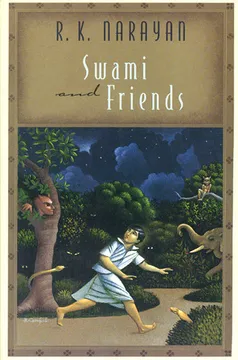
While Swami wanders from Malgudi, his father searches the streets, the hospital road, the Sarayu riverbank, and the railway line, fearing an accident he cannot confirm. Swami, meanwhile, mistakes a forest road for the Trunk Road and walks deeper into unfamiliar country. Darkness, exhaustion, and hunger distort the landscape until imagined animals and demons seem to pursue him.
He collapses by the roadside, dreaming that the MCC wins with him as its star bowler. At dawn, cartman Ranga finds him alive and takes him to District Forest Officer M. P. S. Nair. After food and rest revive him, Swami still thinks chiefly of the match and asks how soon he can get back. Nair arranges to identify his home and return him to Malgudi.
The journey strips Swami's rebellion of its imagined glamour. On the road, freedom means no familiar landmarks, no meals, and no one who can interpret danger for him. His mind turns ordinary darkness into animals and demons, but the fear has real bodily causes: hunger, fatigue, and isolation. The dream of winning the cricket match shows that his loyalties remain active even when he has tried to escape them. Meanwhile, his father's search reverses their usual pattern of authority. The man who once sent Swami to his desk now moves through the night because he cannot bear not knowing where his son is.
A Book at the Station
Swami returns to a household relieved to have him alive, but Rajam's father had found out during the MCC match, and Rajam stayed on the field rather than go to him. The team is struggling without its bowler, and Mani tells Swami that his disappearance has damaged the club. Swami's father negotiates his return to the Board High School, while Swami regrets failing to thank the Forest Officer who rescued him.
Ten days later, Mani reveals that Rajam's family is leaving Malgudi. Swami reaches the station but cannot get through the crowd to speak privately with his friend. He gives Mani a small book for Rajam; as the train pulls away, Rajam takes it and waves. Swami watches the train vanish, then breaks down beside Mani.
The ending gives Swami what he wanted in childhood, a friend who would choose him, but not in the clean form he imagines. His disappearance has consequences for the team and for Rajam's trust, and Swami cannot repair them through explanation before the separation arrives. The book becomes a substitute for the conversation he has delayed: it carries affection, apology, and the hope that the friendship can outlast distance. Rajam's acceptance and wave offer recognition without resolving every hurt. Swami's tears register not only loss but a first sharper awareness that affection can be real even when it cannot prevent change.
Analysis
Swami and Friends turns childhood into a world of consequential misreadings. Swami interprets a teacher's rebuke, a political speech, a doctor's reassurance, and a friend's silence through partial knowledge, then acts as though his interpretation were complete. The comedy comes from the mismatch between his confidence and the facts, but the book does not treat his mistakes as harmless. A false belief about money brings him into conflict with a poorer neighborhood; a burst of political enthusiasm brings police violence and school punishment; a lie meant to secure cricket practice ends in a night lost from home.
The adults around Swami represent competing forms of authority. His father insists on study but searches for him when he disappears. Teachers defend discipline, sometimes at the cost of a child's dignity. Rajam's father embodies the official power the boys imitate in their games, while the Forest Officer and Ranga offer help without demanding that Swami first explain himself. These contrasts keep the book from reducing adults to either villains or rescuers. Care and control often occupy the same household or institution.
Friendship is the emotional structure that makes these episodes matter. Swami wants to belong to several groups at once, but school loyalties, status, and competition make that difficult. Rajam's confidence attracts him, Mani's loyalty steadies him, and the old classmates' rejection shows that affection can be mistaken for betrayal. Cricket gives the boys a shared project, yet Swami's disappearance reveals that belonging also requires reliability. At the station, the gift of a book cannot erase the hurt or stop Rajam's departure. It can only make Swami's affection visible. The ending's sadness comes from that limit: growing up begins not with a final lesson learned, but with recognizing that love does not give a child control over time, distance, or other people's choices.
Review Summary
Swami and Friends is a beloved classic about a mischievous 10-year-old boy in pre-independence India. Readers praise Narayan's simple yet charming writing style, which captures the innocence and adventures of childhood. The novel offers a nostalgic glimpse into small-town life in colonial India, with relatable characters and situations. While some found the ending abrupt or characters unlikable, most readers appreciated the book's humor, cultural insights, and ability to transport them back to their own school days. Many consider it a must-read for both children and adults.
People Also Read










Characters
Swaminathan
Restless schoolboy observerSwaminathan, usually called Swami, is an imaginative boy whose attention moves quickly from school lessons to friends, games, and whatever danger or pleasure has caught his eye. He dislikes confinement and often acts before he has understood what an action will cost. His fears are vivid, but so are his loyalties: he wants to be admired by Rajam, secure beside Mani, and loved at home. Swami is not a simple rebel. He can be selfish, tender, boastful, guilty, and frightened within the same day. His comic misunderstandings reveal how a child builds explanations from partial information, while his emotional intensity makes ordinary events, from an evening game to a friend's departure, feel enormous.
Rajam
Confident cricket captainRajam is a new classmate whose polished clothes, fluent English, strong marks, and father's high position make him seem older and more capable than the other boys. He is not merely privileged: he has a decisive temperament, enjoys organizing people, and expects his plans to be taken seriously. His rivalry with Mani comes from a refusal to be cowed, while his bond with Swami grows through shared games and ambitious schemes. Rajam likes control, whether he is managing a cricket club or trying to settle a quarrel, and he can mistake his own confidence for a complete understanding of other people. His friendship offers Swami both admiration and the pressure of being relied upon.
Mani
Imposing loyal companionMani is the largest and most intimidating boy in Swami's circle, a forceful presence who claims power through his size and wooden clubs. He is proud of his reputation and quick to threaten anyone he believes has challenged him. Yet his attachment to Swami is unmistakable, and he can accept a truce or comfort a friend when anger gives way to concern. Mani distrusts elaborate explanations and favors direct action, which makes him both a source of protection and a source of trouble. His friendship with Rajam begins as a contest for status, but his loyalties are more flexible than his fearsome image suggests. He wants respect, companionship, and the freedom to act without adult interference.
Swami's father
Strict household authoritySwami's father is a busy, practical man who expects his son to study, obey household rules, and take school seriously. His demands can seem arbitrary to Swami, especially when they interrupt holidays or games, and his temper makes the boy reluctant to admit mistakes. He is also capable of defending Swami when a teacher mistreats him and of taking action when his son disappears. The distance between father and child comes partly from their different understandings of care: the father expresses it through discipline and provision, while Swami longs for sympathy without having to ask for it.
Swami's mother
Warm domestic anchorSwami's mother manages the household and cares for her children, often mediating between Swami and his father's rules. Her attention is tangible in meals, comfort, and concern, although Swami sometimes treats her patience as an obstacle when he wants to escape outdoors. The arrival of a baby changes the household's rhythms and eventually awakens Swami's affection for his younger sibling. She responds quickly when she thinks Swami is ill and shares the family's anxiety when he is missing.
Swami's grandmother
Keeper of family storiesSwami's grandmother lives in a cramped passageway and offers him a lap, a store of family memories, and a gentler audience than his parents. Her stories wander through relatives and the past, sometimes testing Swami's patience, while he eagerly supplies tales of his friends and exaggerates their exploits. She does not always understand his school or cricket enthusiasms, but she offers affection without requiring him to perform well. Their exchanges reveal both Swami's impatience with the old and his deep need for a safe listener.
Somu
Easygoing class monitorSomu is the class monitor, a relaxed and socially assured boy who seems comfortable with teachers and classmates alike. Swami regards him as a dependable older-brother figure. Somu's place in the group is secure enough that he can speak bluntly when he feels displaced, and his sharpness shows that an easy manner does not mean he is free of pride or hurt.
Sankar
Brilliant young scholarSankar is the class's academic star, quick with mathematics, history, and English. Swami admires his intelligence, although other boys suspect that his success comes from ingratiating himself with teachers. Sankar's confidence in the classroom contrasts with the ordinary uncertainties of friendship, where his standing is no more secure than anyone else's.
Samuel, called Pea
Nervous comic companionSamuel, nicknamed Pea because of his small size, is an unremarkable student who shares Swami's weakness in arithmetic and his nervousness about trouble. Their bond rests on a similar sense of the ridiculous: they can find comedy in details other boys overlook. Samuel's Christian background also makes him uneasy when Swami challenges Ebenezar's attacks on Hindu beliefs.
Mr. Ebenezar
Combative Scripture teacherMr. Ebenezar teaches Scripture at Albert Mission School and speaks with intense conviction about Christianity. His attacks on Hindu beliefs turn a lesson into a personal confrontation, especially for Swami, whose questions expose how little room Ebenezar allows for genuine inquiry. He embodies the danger of a teacher using religious authority to humiliate rather than educate.
Albert Mission Head Master
Cautious school authorityThe Albert Mission Head Master oversees the senior classes and intervenes when Swami's father complains about Ebenezar. He expects boys to bring difficulties through school channels and is more controlled than the teachers who lose their tempers in class. His authority represents a formal system that may investigate a complaint without giving a child the reassurance he hoped for.
Board High School Head Master
Harsh disciplinarianThe Board High School Head Master enforces a demanding routine of lessons, drill, and attendance. Swami experiences him as forbidding and quick to punish, especially when the boy's absences interfere with school rules. His strictness helps explain why Swami tries deception instead of asking openly for help, although the Head Master sees himself as protecting order and standards.
Rajam's father
Police SuperintendentRajam's father is the town's Police Superintendent, a position that gives Rajam's family unusual status among the boys. He is encountered most often through that official authority, which fascinates and sometimes frightens Swami's companions. His role also places a public conflict between the police and schoolboys close to the boys' private world.
The coachman
Persuasive opportunistThe coachman is an adult acquaintance who recognizes Swami's longing for a hoop and exploits it with a tale about multiplying coins. His smooth promises contrast with the boy's limited experience of money and make a small desire the opening for a larger trouble.
The coachman's son
Threatening neighborhood boyThe coachman's young son is a wary, mischievous child who draws Swami into the attempt to recover the money his father has taken. His quick retreat and later threat with a penknife make him a source of fear for Swami, who imagines danger even when the boy is not nearby.
D. Pillai
Warm history teacherD. Pillai teaches history through vivid stories about the private lives and battles of historical figures. His lively, humane classroom stands in contrast to the school's harsher lessons and inspections. Swami remembers him as a teacher who makes the past feel populated rather than abstract.
Ranga
Village cartman rescuerRanga is a cartman traveling near the Mempi Forests who finds Swami unconscious on the road. Practical and compassionate, he brings the child to someone better equipped to help, acting on what he sees rather than waiting to solve the mystery of how Swami got there.
M. P. S. Nair
District Forest OfficerM. P. S. Nair is a District Forest Officer camping near the Mempi Forests. He tends to Swami after Ranga brings the boy to him, offering food, medicine, and help returning him to his family. His calm practical care contrasts with the frightening confusion of Swami's journey.
Dr. Kesavan
Friendly local doctorDr. Kesavan runs a local dispensary and is approachable enough that Swami believes he can help the MCC. He examines the boy, recognizes that his claimed illness is invented, and declines to provide a false certificate, though his friendly manner leaves Swami expecting more than he has promised.
Plot Devices
The Malgudi Cricket Club
Friendship under pressureThe boys' self-created cricket club gives their ambitions a shared shape. Rajam organizes the team, Mani contributes force and confidence, and Swami becomes its hoped-for bowler. Equipment orders, improvised bats, practice schedules, and an approaching match turn play into a real obligation. The club also makes the boys' friendship measurable: they must show up, cooperate, and depend on one another rather than simply claim to be friends.
School discipline
Pressure toward rebellionAlbert Mission and Board High School impose different styles of authority on Swami, but both make school a daily contest between adult expectations and a boy's wish for freedom. Homework, examinations, attendance, drill, and corporal punishment repeatedly shape what Swami can do. Changing schools does not solve the conflict; it changes its form, building the pressure that feeds his attempts to evade rules.
The promised hoop
Desire invites exploitationSwami's wish for a hoop makes him vulnerable to the coachman's promise that small payments can be transformed into enough money to buy one. The deception gives the boy an early encounter with adult opportunism, while his effort to retrieve the money draws Mani and Rajam into a confrontation beyond their control. The hoop remains a vivid measure of how a child's imagination can make a dubious bargain seem worth the risk.
The nationalist hartal
Politics enters childhoodA public protest against a political arrest carries national slogans and the boycott of foreign cloth into Swami's everyday life. He joins the crowd through excitement and imitation, not a settled political understanding. The disruption closes school, draws police into conflict with the procession, and gives the Head Master grounds to punish him. The episode connects public agitation to the intimate consequences of a boy's impulsive choices.
Malgudi's roads and river
Familiarity gives way to fearThe Sarayu, the Trunk Road, and the lanes around Malgudi first serve as the boys' playgrounds and meeting places. Their geography is familiar enough for Swami to roam without much thought. Once he leaves town alone, the same reliance on his sense of direction fails him: a curved forest road leads him away from home, and darkness turns ordinary trees into imagined threats. The landscape makes his distance from family physically visible.
About the Author
Other books by R.K. Narayan


Download PDF
Download EPUB
.epub digital book format is ideal for reading ebooks on phones, tablets, and e-readers.








