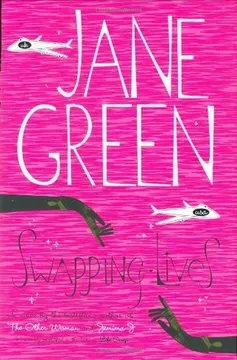


Plot Summary
Two Lives, Two Hungers
At thirty-five, Vicky Townsley has built a respected career as features director of London magazine Poise!, yet still longs for marriage and children. Her brother Andy and sister-in-law Kate seem to have the country home and noisy family she wants. Vicky's regular lover, Daniel, offers sex and comfortable cuddling but no commitment.
Across the Atlantic, Amber Winslow appears to have Vicky's dream: a handsome husband, two children, a huge Connecticut house, and money for every luxury. But Amber's nanny, charity committees, and competitive social circle leave her feeling strangely absent from her own life. Her childhood in poverty taught her to fight for security, and the prestige she has won has not quieted her old fear of not belonging.
The novel opens by making envy reciprocal rather than simply comic. Vicky idealizes the visible warmth of family life, while Amber experiences abundance as a system that has taken over her time and agency. Their dissatisfaction is not proof that either life is fraudulent; it shows how people use another person's circumstances to imagine a solution to needs they have not yet named. Amber's history makes her status-consciousness more than vanity: polished surfaces are protection against the instability she knew as a child. Vicky, meanwhile, treats marriage as a future threshold, risking the belief that her present life has not fully begun.
The Celebrity Disappears
When a friend cannot appear on a radio program about quick sex, Vicky takes her place and meets Jamie Donnelly, a charming comedian whose comedy has made him a celebrity. Their on-air chemistry continues over drinks, and he spends the night with her.
Vicky reads their intimacy as the beginning of the settled partnership she has imagined, but Jamie does not call. Days later she sees him kissing actress Denise Van Outen in a tabloid and feels foolish for trusting the promise she thought she saw.
Editor Janelle Salinger turns Vicky's disappointment into a feature idea: a single woman and a married mother will exchange homes, routines, clothes, and social lives. Vicky agrees before fully grasping how completely the experiment will disrupt both women's lives.
Jamie matters less as a uniquely cruel villain than as a screen for Vicky's wishful interpretation. She takes a charismatic stranger's attentiveness as evidence of future devotion because that reading supports the life story she has been waiting to enter. The tabloid image punctures the fantasy, but not yet the underlying habit of idealization. Janelle's proposal converts private disappointment into professional opportunity, making Vicky's emotional wound the engine of a public experiment. The plot's central device therefore grows from character rather than coincidence: Vicky's longing supplies the question, and the magazine supplies a way to test it.
Armor in Highfield
Amber's rise began far from the polished suburb where she now lives. Raised by a single mother in a trailer park, she put herself through college, became a lawyer, and carefully adopted the speech and clothes of the people whose acceptance she wanted.
She chose Richard, heir to the old Winslow name, and fell genuinely in love with him. After they moved to Highfield, she helped replace their modest colonial with a costly mansion and joined the Highfield League of Young Ladies, where charity work doubles as a contest in clothes, houses, and influence.
Amber buys designer outfits and hires celebrated decorators partly to keep pace with the League's queen bee, Suzy. Richard objects to the spending, while Amber privately knows that status has begun to feel like armor rather than pleasure.
Amber's behavior is shaped by an unresolved problem of safety. Money and taste promise to make her immune to the shame of her childhood, but every new standard creates another test she can fail. Highfield offers the appearance of escape from Manhattan's competition while reproducing its hierarchy in domestic form. The League's charitable language makes that hierarchy easier to defend, since social rank can be presented as public service. Richard sees the expense but not yet the emotional function it serves. Their conflict is therefore not simply about a credit-card bill: Amber is protecting an identity she built through effort, even as she senses that it no longer belongs to her.
A Swap Takes Shape
Poise!'s invitation draws hundreds of replies from women eager for a break, a career, or a way to examine unhappy marriages. Vicky visits Sarah Evans near Oxford, but Sarah's six-year-old Jack terrorizes his family and dismantles a garden wall, making the idyllic household impossible to imagine living in.
Sally Lonsdale is warm and funny, but her home is half-demolished and her days are consumed by unfinished repairs. Hope Nettleton has a beautiful home and children, but her husband Adam openly flirts with Vicky despite his past affair, so Vicky refuses that arrangement.
Amber's letter describes her Connecticut mansion, children, nanny, and exhausting social obligations. The combination of comfort and dissatisfaction sounds like the clearest test of Vicky's fantasy, so she travels to meet Amber.
The candidate visits prevent the swap from becoming a simple exchange of a glamorous life for a miserable one. Vicky rejects Sarah not because Sarah is a bad mother, but because her particular household would overwhelm her; she rejects Sally because the life she offers is not Vicky's aspiration; and she rejects Hope because Adam makes the arrangement ethically and emotionally unsafe. The choices expose Vicky's own criteria: she is seeking not merely family, but a version of family that feels inviting and secure. Amber's letter stands out because her dissatisfaction exists inside apparent success, matching the novel's central question about the gap between a life admired from outside and one actually inhabited.
Across the Atlantic
Vicky's visit to Amber's home reveals a scale of domestic comfort she has never experienced, from the vast house to its private cinema and swimming pool. Amber confides that she grew up with almost nothing, and Vicky sees the effort behind the luxury.
Jared welcomes Vicky by showing her his drumming and piano; when Grace gets into the pantry chocolate and eats it with the dog, Vicky stays with the children while Amber takes Ginger to the vet. Richard, meanwhile, resents the experiment and fears Amber wants to escape their marriage.
Yet he finds Vicky warm and funny, and the family's easy dinner together softens his resistance. Once the exchange is agreed, Amber prepares to leave for London, despite Richard's anger and her own growing awareness of how much she will miss her family.
The visit turns the abstract exchange into a test of trust. Vicky's ease with Jared and Grace gives Amber evidence that the children will be cared for, while Richard's hostility expresses a different fear: that a request for space is really a verdict on the marriage. Amber's departure is not a rejection of her family, but she has difficulty making that distinction believable to him because she has not yet explained her own dissatisfaction clearly. Vicky's ability to respond to the children also complicates her self-image as an outsider to motherhood. Before the swap begins, each woman has already glimpsed a truth her fantasy omitted.
The First Week Reverses
In London, Amber initially delights in sleeping late and wandering the shops, then misses Richard and the children so sharply that she calls Vicky's sister-in-law Kate for comfort.
At Poise!, the staff struggles to invent work for a woman who is not a journalist, until Amber writes a box of advice for mothers and impresses them enough to receive more assignments. In Connecticut, Vicky expects to enjoy the pool and family life, but Amber's schedule is packed with camps, lessons, and errands.
On her first day she falls asleep in the pool wearing underwear, burns badly, and is caught by the returning nanny and a neighbor. She then has to manage the children, their meals, and a missing zoo permission slip, while the local women begin gossiping about her.
The first week replaces fantasy with friction. Amber discovers that single life is not automatically fulfilling, but work restores a sense of competence she had lost while performing social roles. Vicky mistakes freedom from office demands for leisure, only to learn that the household's apparent ease depends on invisible labor and tightly scheduled care. Her pool mishap is funny, but it also marks her lack of familiarity with the rules of this world. The swap asks both women to perform identities before they understand their demands. Their embarrassment and homesickness are not failures of the experiment; they are the first reliable information it provides.
A Country Mirror
After a week writing at Poise!, Amber visits Kate and Andy in Somerset. Their small, untidy home, home-cooked lunch, children, garden, and chores offer a sharp contrast to the Winslows' staff-managed mansion.
When Amber asks who helps Kate with the children, Kate explains that she and Andy do nearly everything themselves. Amber recognizes that she has outsourced much of her own life, then realizes she has used charity work and League politics to fill the space left by the nanny and household staff.
Meanwhile, Vicky's life in Connecticut becomes less like a holiday. She takes over the children's routines and hosts a jewelry lunch for the League, but a food-order mix-up leaves her serving supermarket macaroni and meat loaf. The women attend as much to gossip about Vicky as to the jewelry.
Kate does not offer Amber a perfect alternative; she offers a life in which labor and affection are visibly connected. The contrast helps Amber name what she has been missing: not simply more time with her children, but participation in ordinary decisions and tasks. Vicky's disastrous luncheon makes the same point from the opposite direction. Hosting is not a glossy pose but an accumulation of details that can go wrong, and local acceptance depends on rules she never knew. Both women encounter the backstage labor concealed by the other's idealized image. The scenes also distinguish intimacy from status: Kate's modest household feels rich in participation, while Highfield's elaborate social rituals turn attention into surveillance.
Two Boundaries Give Way
In London, Daniel arrives drunk at Vicky's flat and flirts with Amber, who lets him in but sends him home after tea. Their later picnic feels romantic until Hugh Janus joins them and reveals that Jamie is known for dating many women.
Amber realizes Vicky may be investing in a man who does not share her hopes, then calls home and feels unsettled when Vicky's voice answers the machine. In Connecticut, Vicky grows close to Richard through dinners and family routines.
One night they swim together in the dark, move close enough to nearly kiss, and separate when Grace appears. The next day Vicky learns from Deborah that Jamie is publicly kissing actress Nicollette Sheridan. She is heartbroken, angry, and ashamed of how close she came to betraying Amber's trust.
The near-affairs function as parallel tests of desire, but the women respond differently because they understand their commitments differently. Amber enjoys Daniel's attention while keeping the boundary intact, discovering that attraction can enliven her without requiring betrayal. Vicky's almost-kiss with Richard exposes how easily intimacy born of shared routines can be mistaken for a claim on someone else's life. Jamie's public behavior then dismantles her remaining romantic projection. The answering-machine moment adds a quieter anxiety: Amber hears her own absence speaking through Vicky's voice. Together, these events make fidelity less a rule than a practice of recognizing the other person as real, not as a role available for one's own needs.
The Aquarium's Secret
After Jamie's betrayal leaves Vicky raw and homesick, she takes Jared and Grace to the aquarium, where she unexpectedly finds Richard watching the jellyfish. He tells her he lost his Wall Street job six months earlier and has been concealing it from Amber, hoping to find another position before the money ran out.
Instead, the severance pay is nearly gone, debt is mounting, and he is terrified that Amber will leave when she learns they cannot sustain their lifestyle. Vicky urges him to tell his wife face to face.
She also recognizes that the swap has answered enough of its question: the children miss Amber, and Vicky misses her own home and work. She calls Janelle, then Amber, who is relieved to end the exchange early and return to her family.
Richard's confession reveals that the polished household has been more precarious than either woman knew. His secrecy is meant to preserve Amber's security, but it removes her ability to act as his partner and makes his shame a private burden. Vicky's response reflects what she has learned through living inside the marriage: love cannot substitute for truthful participation. Her decision to end the swap is not a retreat from the experiment but a judgment that its emotional evidence is already sufficient. Amber's immediate relief confirms that the distance she requested has helped her see her attachments more clearly, even though she still has to face the consequences waiting at home.
Homecoming and Hard Truths
Amber returns to Kennedy Airport to find Richard and the children waiting, and their reunion dissolves her resolve to treat the exchange as a carefree adventure. That evening she talks enthusiastically about working again, then Richard admits he has been unemployed for six months and they are nearly out of money.
Amber is furious that he let her keep spending without telling her the truth. After several tense days, they discuss selling the mansion, leaving Highfield, and replacing Richard's Wall Street career with a small business.
Amber supports the change, though she does not immediately forgive his deception. The crisis clarifies what each has feared: Richard has stayed in work he no longer wants, while Amber has mistaken a costly suburban performance for the secure life she thought she had earned.
The return does not restore the old household; it forces the couple to renegotiate what their household is for. Richard's silence and Amber's status spending are different strategies for avoiding vulnerability. He hides failure to protect the image of a provider, while she spends to protect the image of someone who can never again be poor. Neither strategy allows the marriage to function as a partnership. Amber's anger is therefore necessary, not a temporary obstacle to romance. Her willingness to consider a smaller life shows that the exchange has changed her priorities, but her insistence on time to forgive keeps reconciliation from becoming an effortless reward.
An Orchard, Open Futures
Amber searches for a business and finds Appletree Orchard near Albany, a farm with a shop, animals, and room to expand through mail-order pies and gift baskets. Richard has independently researched the same possibilities, and they plan a visit, list their Highfield house, and imagine running the orchard together.
Amber also intends to leave the League and use her writing skills. Back in London, Vicky ends her casual sexual arrangement with Daniel because she no longer wants intimacy without the possibility of commitment.
She visits Kate and Andy, reconnects with the children, and accepts a dinner invitation from Bill, a divorced chicken farmer. She also agrees to see Hugh again after an unexpectedly lively dinner. Poise! prepares to publish their account, while Vicky understands that she need not exchange her present life for an imagined one.
The ending offers direction rather than a sealed fairy-tale outcome. The orchard is still a plan, but its appeal lies in the kind of work and family participation it might support, not in another display of wealth. Amber's new ambition grows from the genuine pleasure she found writing, while Richard's business idea gives his desire for a less regimented life practical form. Vicky's change is quieter: she stops treating sex as the price of companionship and recognizes that being single need not mean being incomplete. Bill and Hugh represent possibilities, not solutions guaranteed by the plot. The final measure of growth is an ability to choose without pretending certainty.
Analysis
Swapping Lives treats envy as an imperfect diagnostic tool. Vicky and Amber are not simply wrong to want what the other has; each has correctly noticed a need, but misidentified the entire life surrounding it as the solution. Vicky wants intimacy and family, yet assumes marriage will deliver them without also demanding labor, compromise, and limits on spontaneity. Amber wants freedom from a suffocating social performance, yet initially treats distance from her family as the route back to herself. Living one another's routines corrects these fantasies through experience rather than argument.
The novel also distinguishes visible wealth from felt security. Amber's designer purchases answer a childhood shaped by abandonment and scarcity, but they cannot settle the question of belonging. Richard's old family name similarly cannot protect him from financial failure, and his attempt to preserve the appearance of competence prevents his wife from sharing the problem. Their eventual change depends on making vulnerability mutual. Amber's willingness to leave Highfield and Richard's willingness to imagine work outside Wall Street become meaningful only when they can discuss them together.
Work matters because it gives Amber a self defined by skill rather than consumption. Her success at Poise! is not a conversion into a careerist; it shows that her intelligence and ambition survived beneath years of managed domestic routines. Vicky's change is less about renouncing marriage than refusing to treat any man as a shortcut to completeness. She can want a family while choosing not to accept casual intimacy that no longer satisfies her.
The ending resists a tidy exchange of one perfect life for another. The orchard is still a plan, and Vicky's new romantic possibilities remain uncertain. That incompletion suits the book's argument: maturity is not discovering a final arrangement that removes longing. It is learning to act on what experience has clarified, while accepting that love, work, money, and belonging require continued negotiation.
Review Summary
Reviews of Swapping Lives are mixed, with many readers finding it disappointing. Common criticisms include repetitive descriptions, underdeveloped characters, and a slow-paced plot. Some found the premise interesting but felt the execution was poor. Several readers couldn't relate to or disliked the main characters. Positive reviews praised the book as a light, enjoyable read that tackles relevant themes. Overall, the book seems to divide readers, with some finding it entertaining and others considering it a waste of time.
Characters
Vicky Townsley
The hopeful magazine editorVicky is the thirty-five-year-old features director of Poise!, quick-witted, professionally assured, and privately convinced that marriage and children would complete her life. Her career gives her independence, but she often treats it as a waiting room before the family she imagines. She adores her brother Andy's home and envies his wife Kate's domestic life, while her arrangement with Daniel lets her have sex without asking for commitment. Vicky's romantic imagination can make a brief encounter seem like destiny, but she is also observant, funny, and capable of revising her assumptions. Her interest in other people's stories is both a professional skill and a way to examine the life she has built.
Amber Winslow
The restless suburban motherAmber is a Connecticut wife and mother whose handsome house and expensive wardrobe conceal a history of poverty and fierce self-reinvention. After putting herself through college and becoming a lawyer, she learned to imitate the habits of people she wanted to impress. Her marriage to Richard brought love as well as the security she had long sought, but Highfield's social competition revives her fear of being judged inadequate. Amber loves her children, Jared and Grace, yet her reliance on staff and charity commitments leaves her unsure how much of her life she actually inhabits. Her careful hospitality and sharp intelligence coexist with a vulnerability she rarely shows.
Richard Winslow
The dutiful family manRichard is Amber's husband, Jared and Grace's father, and a member of an old New England family whose inherited prestige outlasted its wealth. His childhood at the decaying family estate gave him fond memories of outdoor freedom, and he wants his children to have a less status-driven upbringing. He is affectionate and present with them when he can be, but his long commute and demanding financial career have narrowed his daily life. Richard tends to protect others by withholding worries, a habit that can look like responsibility to him and exclusion to those who love him. He values family more than display, though he does not always know how to say so.
Daniel
Vicky's charming casual loverDaniel is a television producer and Vicky's neighbor, a handsome, easygoing womanizer who prefers casual arrangements to exclusive relationships. He enjoys being desired and rarely has to pursue anyone for long, which allows him to mistake his own lack of commitment for harmlessness. Vicky's refusal to demand more makes their arrangement comfortable for him. His flirtation with Amber reveals both his appetite for the unavailable and his ability to be attentive company. Daniel is not cruel by design, but his charm often shields him from considering what his behavior means to someone else.
Jamie Donnelly
The dazzling comedianJamie is an Irish comedian and writer whose sudden fame has made him a fixture of entertainment gossip. His humor and focused attention make people feel specially chosen, while his celebrity image encourages Vicky to imagine that he wants the same settled future she does. Jamie's charm is real, but it does not necessarily signal the devotion Vicky reads into it. He represents the difference between being fascinated by someone and knowing them well enough to trust them.
Kate
Vicky's grounded sister-in-lawKate is married to Vicky's brother Andy and raises their children in the Somerset countryside. Warm, candid, and practical, she loves her family without pretending domestic life is effortless or perfectly romantic. She teases Vicky's idealism while also understanding the appeal of dating and independence. Kate's relaxed home gives Amber a picture of family life built around direct participation rather than hired help or social display. Her advice is useful because it comes from someone who can admit both the pleasure and fatigue of her choices.
Deborah
The candid English friendDeborah is an English mother living near Amber in Connecticut, and one of Amber's closest friends. Wry and perceptive, she recognizes the class performance beneath the Highfield League's charitable gatherings and refuses to take its rivalries entirely seriously. She offers Amber companionship without demanding that she compete for approval. Deborah also cares for Vicky, giving her practical help and a candid view of the town's social hierarchies. Her humor is not indifference: it is a way to survive a community whose rules can otherwise make small slights feel enormous.
Hugh Janus
The reality-show producerHugh is a Channel 4 documentary producer who sees the exchange as a compelling television idea and approaches Vicky about filming it. He is sociable and quick with humor, but his work also makes him alert to the gap between what people present and what their lives contain. Hugh is navigating an uncertain relationship and questions about becoming a father, which give his conversations with Vicky a personal edge. His interest in the swap is professional, though their ease together opens the possibility of a connection beyond work.
Jared Winslow
Amber's sensitive older childJared is Amber and Richard's six-year-old son and Grace's older brother. Gentle and observant, he is proud of his drumming and piano playing, and he takes family routines seriously. He is slower than Grace to express his feelings, but he misses his mother during the exchange and notices when the household changes. His sensitivity can make him vulnerable to conflict, especially when he feels blamed or overlooked.
Grace Winslow
Amber's spirited younger childGrace is Amber and Richard's three-year-old daughter, a forceful, funny child who knows what she wants and is not shy about demanding it. She prefers vivid pink clothes to the elegant outfits Amber chooses and can swing from mischief to tenderness in a moment. Her closeness with her mother gives Amber's departure its sharpest emotional cost, while her affection for familiar comforts helps Vicky understand that care is made of repeated, ordinary acts.
Lavinia
The family's capable nannyLavinia is the Winslows' Jamaican nanny, deeply familiar with Jared and Grace's needs and responsible for much of their everyday care. She is competent, protective of the children, and loyal to the family, though she can be frank about Vicky's mistakes. Her work makes the Winslow household run smoothly, but her constant presence also helps obscure how little Amber knows about some of the routines she has delegated.
Andy
Vicky's country-dwelling brotherAndy is Vicky's younger brother, Kate's husband, and father to Luke, Polly, and Sophie. He has built a practical family life in Somerset, where he tackles home projects, cares for the children, and takes pride in the chicken run he constructs. His household represents the kind of close, imperfect domesticity Vicky admires. Unlike Richard, Andy's work and family life are not divided by a daily commute to Wall Street.
Leona
Vicky's sharp work allyLeona is the features editor at Poise! and Vicky's closest friend at work. Funny, direct, and experienced at balancing a demanding job with young children, she understands both the magazine's rhythms and the compromises of parenthood. When Amber arrives, Leona finds ways to give her meaningful writing assignments rather than leaving her idle. Her practical support helps Amber rediscover the satisfaction of using her own judgment and skills.
Janelle Salinger
Poise!'s visionary editorJanelle is the glamorous, mercurial editor of Poise! and Vicky's boss. She has an instinct for stories that appeal to readers' aspirations and turns Vicky's romantic disappointment into the idea for the life exchange. Janelle is affectionate toward her staff and can be disorganized, but her creative confidence drives the project forward. She sees the swap as both a magazine feature and a chance to explore why people believe another life would suit them better.
Bill
The chicken-raising farmerBill is a divorced farmer near Andy and Kate who advises them about keeping chickens. A father of two with a good-humored manner, he is comfortable with the unconventional arrangement of sharing a divided home with his former wife. His easy conversation gives Vicky a glimpse of a possible connection that is less theatrical than her imagined romances.
Suzy
Highfield's social queen beeSuzy is a wealthy, sharply dressed member of the Highfield League who enjoys being at the center of its social hierarchy. She measures influence through possessions, invitations, and loyalty, and treats Amber as a rival for local prominence. Her polished manners can conceal calculated unkindness, making her a vivid example of the town's competitive social code.
Sarah Evans, Sally Lonsdale, and Hope Nettleton
Vicky's three swap candidatesThese three women answer Poise!'s invitation for different reasons. Sarah has a country home but a difficult young son; Sally is warm and funny but exhausted by family life and an unfinished house; Hope has a beautiful home and children but is trying to cope with her husband's infidelity. Their contrasting circumstances help Vicky understand what she is and is not seeking.
Adam Nettleton
Hope's unfaithful husbandAdam is Hope's husband, a successful man whose history of infidelity has damaged their marriage. When Vicky visits, he openly flirts with her, revealing a self-serving attitude toward the boundaries of the exchange. His behavior helps Vicky decide that Hope's apparently enviable home would not feel safe to inhabit.
Luke, Polly, and Sophie
Vicky's beloved young relativesLuke, Polly, and Sophie are the children of Andy and Kate, and Vicky's nephew and nieces. Energetic and affectionate, they fill their Somerset home with games, performances, animals, and noise. Vicky's devotion to them helps explain why her brother's family represents such a powerful picture of the life she wants.
Icy Winslow
Richard's poised motherIcy is Richard's mother, a woman of old family manners who remains gracious despite the Winslows' diminished fortune. Amber studies her warmth and hospitality as a model for how to behave when she feels insecure. Icy's composure contrasts with Amber's reliance on labels and expensive objects to signal that she belongs.
Eartha
Vicky's devoted catEartha is Vicky's cat and constant companion in her London flat. Her easy presence gives Vicky a small, affectionate household of her own, one she misses while living in Amber's much larger home.
Plot Devices
The Swapping Lives experiment
A life lived from insideJanelle's magazine feature asks Vicky and Amber to exchange homes, clothes, routines, and social roles for a month. The rules are designed to make each woman inhabit the other's world rather than visit it as a tourist. That structure creates practical comedy, exposes assumptions about marriage and work, and gives each protagonist enough distance to see her own habits more clearly. The swap also makes the story's alternating viewpoints concrete: every pleasure one woman expects is tested against the labor and emotional costs the other actually knows.
The shared wardrobes
Identity worn on the bodyThe women agree to use one another's clothes and personal routines, making social identity visible in daily choices. Vicky discovers how Highfield's designer labels and workout clothes function as signals of rank, while Amber experiments with Vicky's London wardrobe and enters a workplace where she is not defined as a wife or mother. The clothes are not merely costumes: they expose the difference between an identity someone performs to gain acceptance and an identity that feels natural to inhabit.
The magazine feature
Private lives made publicPoise! turns the exchange into a story, giving the women a reason to document their experiences and a structure for choosing candidates. The feature also attracts a possible television adaptation, though Richard refuses to be filmed. The magazine frame keeps the experiment professional while making it harder for either woman to treat the arrangement as a private holiday. It connects Vicky's career to her emotional questions and gives Amber an unexpected chance to write again.
Richard's hidden unemployment
The secret beneath prosperityRichard's job loss and silence about it reveal that the Winslows' apparent financial security is already failing before Amber leaves. He conceals the truth because he fears losing her respect and because he assumes he must protect the family alone. His confession to Vicky forces the exchange to end early and requires Amber and Richard to confront their finances together. This revelation is a major plot spoiler.
Download PDF
Download EPUB
.epub digital book format is ideal for reading ebooks on phones, tablets, and e-readers.








