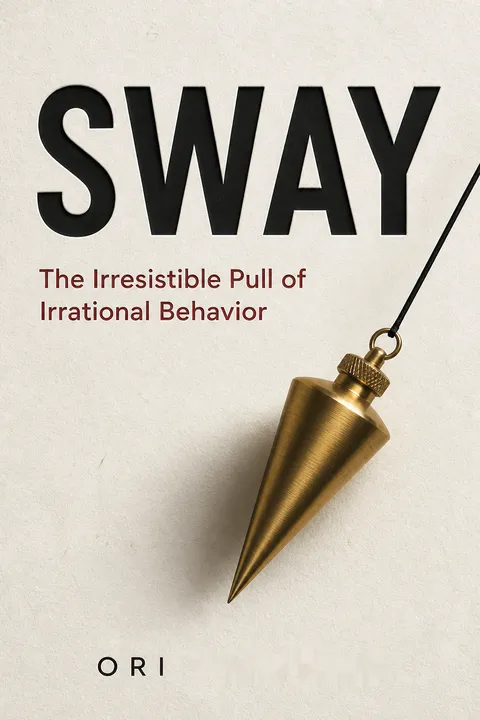


Key Takeaways
Treat rationality as fragile, especially when pressure narrows your options.
Skill does not guarantee judgment. In 1977, KLM captain Jacob Van Zanten faced delays, a looming crew-rest deadline, and thick fog at Tenerife Airport. Though highly experienced, he began takeoff without clearance and collided with another 747 on the runway. The disaster killed 584 people, according to the book. The authors argue that his expertise did not protect him from psychological pressures: frustration, fear of delay, and fixation on getting airborne narrowed his attention until routine safeguards lost force.
Look beneath the obvious cause. Fog, airport congestion, and communication failures mattered, but the story shows how pressures can combine with technical hazards. The book calls these influences hidden psychological currents: forces that quietly bend decisions even when people believe they are acting logically. Recognizing the currents is a first step toward building safeguards that do not depend on perfect composure.
What's striking is the gap between technical competence and decision quality. High-reliability fields such as aviation and medicine cannot assume that training makes people immune to stress; they need procedures that interrupt predictable errors. The same principle applies outside emergencies: a deadline, a public commitment, or a status threat can shrink the perceived choice set. Still, the disaster should not be reduced to one captain's psychology. The book's own account includes fog, airport congestion, and communication problems, a reminder that individual bias and system design can reinforce each other.
A small feared loss can make a catastrophic risk feel sensible.
Losses grab attention. Loss aversion is the tendency to feel a loss more strongly than an equivalent gain. In a study of supermarket purchases, shoppers reacted to rising egg prices about two and a half times more strongly than to comparable price cuts. The same pattern appears when customers choose costly flat-rate phone plans to avoid a possible large bill, or buy extra rental-car insurance despite already having coverage.
The stakes can intensify it. Van Zanten wanted to avoid the expense and disruption of an overnight delay. As the delay grew, avoiding it became more urgent than following normal procedure. The book's point is not that every cautious choice is foolish. It is that the fear of losing something, even time or reputation, can crowd out a clear comparison of the risks involved.
This pattern helps explain why a person may take greater risks to avoid a loss than to pursue a gain. In finance, the same reference point can make an investor cling to a declining stock simply because its earlier price feels like the rightful outcome. Yet loss sensitivity is not automatically irrational: avoiding a real loss can be prudent, and the relevant question is whether the feared outcome deserves its weight. A useful check is to describe the decision without the word "loss," then compare the likely consequences from the present forward.
Set exit rules before sunk costs make retreat feel impossible.
Past effort distorts the next choice. Commitment, as the book uses the term, is the pull to keep following a chosen course because of prior investment, habit, or public resolve. In Harvard professor Max Bazerman's twenty-dollar auction, the highest bidder wins the bill, but the runner-up must still pay. Once bids pass the bill's value, the two remaining bidders often keep escalating rather than accept a smaller loss. One auction reached $204.
Escalation can scale up. Florida coach Steve Spurrier gained an advantage by playing aggressively against rivals who stuck with conservative football. The book also uses Lyndon Johnson's Vietnam decisions to show how political commitment and fear of retreat can reinforce each other. Before beginning a high-stakes project, decide what evidence would justify stopping or changing course.
Precommitted exit criteria are useful because they separate evaluation from the moment when identity and embarrassment are most activated. This resembles stopping rules in clinical trials, where researchers specify in advance when evidence warrants ending a study. The comparison is not exact, but the design principle travels well: make the threshold explicit before sunk costs accumulate. Such rules should remain revisable when new evidence changes the situation. Otherwise, a tool meant to prevent stubbornness can become another rigid commitment.
Question the price tag before deciding what deserves your attention.
Signals can masquerade as quality. Value attribution is the tendency to judge an object or person by perceived worth, including price, reputation, or setting, rather than by direct evidence. In a Washington subway station, violinist Joshua Bell performed for free on a costly Stradivarius, yet most commuters passed by. His ordinary clothes and street-performer setting shaped what listeners thought they were hearing.
The same shortcut distorts expertise. Eugene Dubois's important fossil discovery was initially dismissed, while the fraudulent Piltdown Man gained acceptance partly because its discoverer was respected and the find fit scientists' expectations. At Coney Island, Nathan Handwerker's half-price hot dogs struggled until doctors in white coats ate at his stand. Status and price can be useful clues, but they are not proof of quality.
Value cues are efficient because people rarely have time to inspect every product, argument, or person from scratch. The danger is allowing a shortcut to become a verdict. The Bell experiment also reveals how context determines what gets noticed, not simply how it is evaluated: rushed commuters may have had little capacity to attend to any performer. A practical countermeasure is to ask what evidence would remain if the label, setting, price, and credentials disappeared. That question does not remove judgment, but it makes its ingredients more visible.
Replace first impressions with evidence that can actually predict performance.
Labels outlast the evidence. Diagnosis bias is the tendency to settle on an initial label and discount later information that challenges it. A study of 271 NBA players found that draft position continued to influence playing time and career length even after researchers accounted for measured performance. A separate classroom experiment found that students rated the same substitute teacher very differently after reading a biography that described him as either warm or cold.
Hiring invites the same error. The book reports that structured interviews, focused on job-related evidence, predicted performance about six times better than informal, conversational interviews. Common questions about a candidate's greatest weakness or five-year plans invite rehearsed answers, not reliable evidence. For important decisions, use consistent questions, work samples, or tests tied to the actual task.
The key distinction is between information that feels vivid and information that predicts the outcome of interest. Interviews often reward fluency, similarity, and social ease, qualities that may have little relation to job performance. Structured assessment does not eliminate bias, since the chosen criteria can themselves be flawed, but it makes comparisons more transparent and testable. The NBA example also warns that initial classifications can become self-reinforcing: early picks receive more opportunities to demonstrate their worth, while later picks get fewer chances to revise the label.
Treat labels as interventions, because expectations can reshape behavior.
A diagnosis can change the diagnosed. The chameleon effect is the process by which people adjust their behavior, often unconsciously, to match how others expect them to act. In a study of Israeli military trainees, instructors received fabricated ratings that randomly identified some soldiers as high in command potential. Those soldiers later scored 22.7 percent higher on an assessment than trainees assigned lower ratings, despite the ratings having no factual basis.
Expectations can become evidence. The book links this dynamic to a 40-fold rise in recorded childhood bipolar diagnoses between 1994 and 2003, arguing that broadened criteria and increased attention to the condition helped expand diagnosis. It also describes how labels can shape how families and clinicians interpret behavior. A label may help organize care, but it should remain open to review rather than turning every new observation into confirmation.
Expectations are not merely opinions when they alter attention, opportunity, and feedback. A supervisor who trusts an employee may give that person harder assignments and useful coaching, producing stronger performance that appears to validate the original belief. This is a powerful reason to audit how labels affect treatment, not just whether they sound accurate. At the same time, psychiatric diagnosis can guide communication and access to care. The book's discussion of medication and diagnosis reflects debates and evidence available at its publication; it should not be used as current clinical guidance.
Make fairness visible, and remember its rules vary by culture.
People judge the process, not just the payout. In an experiment where one stranger divided money and another could accept or reject the offer, many recipients refused an unequal split and chose nothing rather than reward an unfair division. On the French version of Who Wants to Be a Millionaire, 56 percent of the audience backed the wrong answer to a basic astronomy question, apparently judging the contestant undeserving of help.
Fairness is culturally shaped. The book describes car dealers, convicted defendants, and venture investors who cared about whether they were heard and treated respectfully, not just the final result. In a Peruvian Amazon community, participants commonly accepted unequal offers that American students would reject. When decisions affect others, explain the reasoning, invite input, and do not assume another culture uses the same fairness rules.
Procedural fairness matters because people need to understand how a decision was reached and to have a meaningful chance to respond. That can build trust even when the outcome disappoints. But fairness is not a universal formula: the Machiguenga participants described in the book treated an offer as a gift, while American participants expected a more equal division. Those differences caution against mistaking one group's norm for human nature. In organizations, transparent criteria and voice are useful precisely because they let people contest a process without requiring everyone to share identical values.
Do not let a small reward price out meaningful motivation.
Payment can change the meaning of a task. In a Swiss survey, 50.8 percent of residents said they would accept a nuclear-waste facility in their town for the common good. When researchers added an annual payment of 5,000 francs, acceptance fell to 24.6 percent. The offer appeared to recast civic contribution as a transaction, and the amount did not compensate residents for the perceived risk.
Incentives can redirect effort. In a mock GMAT study, students paid a small amount per correct answer performed worse on average than unpaid students. At Michigan's Community High School, teacher bonuses tied to attendance coincided with a sharp drop in student GPA, even as course completion rose. Rewards are not inherently harmful, but a poorly chosen metric can draw attention away from the purpose of the work.
This is a warning about motivation design, not an argument to eliminate pay. Compensation is essential for many forms of labor, and fair wages can communicate respect rather than crowd out purpose. The risk is strongest when a small, narrow reward is attached to a task people previously understood through duty, craft, or shared benefit. Metrics can also invite gaming: if attendance earns a bonus, teachers may optimize attendance rather than learning. Good incentive systems therefore measure the outcome that matters and preserve room for professional judgment.
Give dissent a protected route before authority turns into tunnel vision.
One voice can loosen conformity. In Solomon Asch's line-judgment experiments, people sometimes agreed with a group that was plainly wrong. When even one person gave a different answer, participants found it easier to resist the majority. The dissenter did not have to be correct; breaking unanimity was enough to make independent judgment more possible.
Make speaking up operational. After the Tenerife crash, aviation developed Crew Resource Management, training crews to communicate concerns and challenge unsafe decisions. The book describes a three-step method: state the facts, directly challenge the decision if needed, then take action if the danger remains. A first officer had challenged Van Zanten's takeoff attempt, but the challenge did not stop him. A dissenting voice only helps when leaders are prepared to hear it.
Dissent is most valuable when it changes the information available before a decision becomes irreversible. This is why structured challenge protocols can outperform vague invitations to "speak freely": they give lower-status participants language and escalation steps. Yet dissent can become theater if leaders solicit objections and then ignore them without explanation. A healthy group distinguishes critique of a proposal from disloyalty to the group. The strongest protection is not a designated contrarian alone, but a decision process that records objections, answers them, and makes clear who can halt action.
Use distance, delay, and alternate explanations to escape hidden currents.
Create space between impulse and action. The book offers several practical checks: judge a setback against a long-term plan, ask whether a project still deserves investment if starting today, and consider whether price or status is shaping an impression. These questions make it easier to see an immediate loss as one event rather than a command to react.
Keep judgments provisional. Personal construct theory describes how people use mental categories to interpret experience. Propositional thinking means holding those interpretations as possibilities rather than settled facts, and testing more than one explanation before deciding. Intel leaders used a version of this reset when they asked what a newly appointed CEO would do about the company's struggling memory-chip business. The answer helped them leave a familiar line of work and shift resources to microprocessors.
Awareness is most useful when converted into a procedure. A pause, an outside perspective, or a written decision rule can create the distance that sheer willpower often cannot. The question about what a new leader would do is a compact way to reduce ownership bias by imagining the choice without its accumulated history. Still, no checklist can guarantee objectivity: people can rationalize an answer that protects their preferred plan. The aim is not perfect neutrality, but a decision that has survived more than one interpretation and has faced the strongest relevant counterargument.
Analysis
Sway's central insight is that irrational decisions are often not isolated lapses. They arise when ordinary mental shortcuts reinforce one another. Fear of a loss can narrow attention; prior commitment can make retreat feel costly; a label can direct what evidence gets noticed; and authority can silence the person who might have interrupted the sequence. The Tenerife disaster serves as a vivid opening because it shows these mechanisms operating under pressure, while the later examples reveal their quieter forms in shopping, hiring, medicine, politics, and group life.
The book's strongest contribution is practical rather than diagnostic. It shifts the question from "Why did that person act foolishly?" to "What pressures made this action feel reasonable at the time, and what guardrail could interrupt them?" Structured interviews, explicit exit criteria, transparent procedures, and protected dissent all change the decision environment rather than relying on individuals to become perfectly rational. This is a useful bridge between behavioral psychology and organizational design.
Its broad reach also calls for caution. The book assembles striking experiments and anecdotes, but a memorable case is not the same as a universal law. Fairness norms vary across settings, labels sometimes provide valuable information, and incentives can support rather than undermine motivation when they are adequate and well aligned. Some medical claims in a 2008 book also reflect the research debates of that period, not current clinical consensus. The most durable reading is therefore not that humans are helplessly irrational, but that judgment is context-sensitive and corrigible. Better decisions come from combining evidence with processes that anticipate predictable distortions, invite challenge, and make revision possible.
Review Summary
Sway explores the irrational behaviors and decisions humans make, drawing on psychological research and real-world examples. Readers found it engaging and insightful, praising its accessibility and thought-provoking content. Many appreciated the book's exploration of cognitive biases and decision-making processes. Some critics felt it lacked depth or originality compared to similar works. Overall, reviewers considered it a quick, entertaining read that provides a solid introduction to behavioral economics, though opinions varied on its effectiveness in offering practical solutions to combat irrational behavior.
People Also Read








Glossary
loss aversion
losses weigh moreA tendency to experience a potential loss as more significant than a comparable gain. In the book's examples, shoppers react more strongly to an increase in egg prices than to an equivalent decrease, while investors may hold a failing stock in the hope of avoiding a realized loss.
value attribution
worth inferred from cuesThe tendency to assign qualities or worth to a person or object using cues such as price, reputation, appearance, or setting. These cues can guide attention, but they can also overpower direct evidence, as when listeners overlook an accomplished violinist performing in a subway station.
diagnosis bias
first label filters evidenceThe tendency to settle on an early judgment about a person or situation, then notice confirming details while discounting contradictory evidence. The book applies this to hiring, sports, medicine, and relationships, where an initial label can continue shaping evaluation even after relevant new information appears.
chameleon effect
expectations shape behaviorThe book's umbrella term for people unconsciously adjusting their behavior to fit others' expectations. In the examples, trainees performed better when instructors believed they had high potential, and women in phone conversations acted in ways that matched the positive or negative impressions formed by their partners.
procedural justice
fairness of the processThe importance people place on how a decision is made, including whether they are heard, treated respectfully, and given a chance to explain their position. The book shows that people may judge an outcome more favorably when the process feels fair, even when the result itself is unchanged.
Pygmalion effect
positive expectations improve performanceA pattern in which positive expectations held by another person can help produce stronger performance. The book uses military trainees and workplace examples to illustrate how belief can affect attention, opportunities, and behavior, making the original expectation appear confirmed.
Golem effect
negative expectations impair performanceA pattern in which negative expectations can contribute to poorer performance. In the book's discussion, low expectations may affect how people are treated and how they see themselves, creating a cycle in which behavior appears to validate the unfavorable label.
Crew Resource Management (CRM)
structured crew communicationAn aviation training approach designed to reduce human error by improving communication, teamwork, and the handling of authority in the cockpit. It teaches crew members to raise concerns and challenge unsafe decisions, while requiring captains to make their reasoning understandable and remain receptive to feedback.
personal construct theory
mental categories shape interpretationA theory of how people use interpretive categories, or constructs, to organize experience and make quick judgments. These categories are useful shortcuts, but they can narrow perception when treated as complete descriptions. The book recommends keeping interpretations flexible and considering alternative explanations.
propositional thinking
hold judgments as hypothesesA way of thinking that keeps evaluations tentative rather than treating an early interpretation as certain. It involves considering multiple explanations, tolerating contradictory information, and delaying a final judgment until more evidence is available.
twenty-dollar auction
bidding escalates past valueA classroom auction in which the highest bidder wins a twenty-dollar bill, while the runner-up must still pay the amount bid and receives nothing. Once bids approach the bill's value, bidders may continue raising them to avoid becoming the person who loses their existing stake, sometimes driving the final price far above twenty dollars.
FAQ
What's "Sway: The Irresistible Pull of Irrational Behavior" about?
- Exploration of Irrational Behavior: The book delves into the psychological forces that lead people to make irrational decisions, even when they believe they are acting rationally.
- Real-life Examples: It uses a variety of real-world scenarios, from business to personal life, to illustrate how these irrational forces manifest.
- Psychological Forces: The authors identify and explain several key psychological forces, such as loss aversion, value attribution, and the diagnosis bias, that sway our decision-making.
- Interdisciplinary Approach: The book combines insights from psychology, economics, and sociology to provide a comprehensive understanding of irrational behavior.
Why should I read "Sway: The Irresistible Pull of Irrational Behavior"?
- Understand Decision-Making: It offers valuable insights into why we make the decisions we do, helping readers become more aware of their own biases.
- Improve Personal and Professional Life: By recognizing these irrational forces, readers can make better decisions in both their personal and professional lives.
- Engaging and Accessible: The book is written in an engaging style, making complex psychological concepts accessible to a broad audience.
- Practical Applications: It provides practical advice on how to counteract these irrational forces, making it useful for anyone looking to improve their decision-making skills.
What are the key takeaways of "Sway: The Irresistible Pull of Irrational Behavior"?
- Loss Aversion: People tend to overreact to potential losses, which can lead to irrational decision-making.
- Value Attribution: We often assign value based on initial perceptions, which can cloud our judgment.
- Diagnosis Bias: Once we label a person or situation, we tend to ignore evidence that contradicts our initial assessment.
- Commitment and Consistency: People have a strong desire to remain consistent with their past actions, even when it is not in their best interest.
How does "Sway" explain the concept of loss aversion?
- Definition: Loss aversion is the tendency to prefer avoiding losses over acquiring equivalent gains.
- Impact on Decisions: This bias can lead individuals to make irrational choices, such as holding onto losing investments or avoiding necessary risks.
- Real-world Examples: The book provides examples like Captain Van Zanten's decision-making in the Tenerife air disaster to illustrate how loss aversion can have catastrophic consequences.
- Overcoming Loss Aversion: The authors suggest adopting a long-term perspective to mitigate the effects of loss aversion.
What is value attribution according to "Sway"?
- Initial Perceptions: Value attribution is the tendency to assign value to a person or object based on initial perceptions rather than objective data.
- Influence on Behavior: This can lead to misjudgments, such as underestimating a valuable item found in a flea market or overvaluing a brand-name product.
- Examples in the Book: The authors discuss how Joshua Bell's subway performance was ignored due to value attribution, despite his status as a world-class violinist.
- Counteracting Value Attribution: Being mindful and questioning initial perceptions can help counteract this bias.
How does "Sway" describe the diagnosis bias?
- Definition: Diagnosis bias is the tendency to label people or situations based on initial impressions and to ignore evidence that contradicts these labels.
- Impact on Judgments: This bias can lead to persistent misjudgments, affecting everything from hiring decisions to personal relationships.
- Illustrative Examples: The book uses examples like NBA draft picks and job interviews to show how diagnosis bias can skew perceptions and decisions.
- Mitigating Diagnosis Bias: The authors recommend using structured approaches and considering multiple perspectives to reduce the influence of this bias.
What role does commitment play in irrational behavior according to "Sway"?
- Commitment to Past Actions: People often stick to their past decisions, even when they are no longer beneficial, due to a desire for consistency.
- Examples in the Book: The authors discuss how commitment led to poor decisions in contexts like the Vietnam War and business investments.
- Psychological Underpinnings: Commitment is driven by a need to justify past actions and avoid the discomfort of admitting mistakes.
- Breaking Free from Commitment: The book suggests adopting a fresh perspective and being willing to change course when necessary.
What are some practical applications of the concepts in "Sway"?
- Improving Decision-Making: By understanding these psychological forces, individuals can make more rational decisions in both personal and professional contexts.
- Enhancing Negotiations: Recognizing biases like fairness and commitment can lead to more effective negotiation strategies.
- Better Hiring Practices: Awareness of diagnosis bias can improve hiring decisions by focusing on objective criteria rather than first impressions.
- Personal Growth: Understanding these sways can lead to greater self-awareness and personal development.
What are the best quotes from "Sway" and what do they mean?
- "People aren't rational." This quote encapsulates the book's central thesis that human behavior is often driven by irrational forces.
- "The deeper the hole they dig themselves into, the more they continue to dig." This highlights the concept of commitment and how it can lead to irrational persistence in failing endeavors.
- "A rose by any other name really doesn’t smell as sweet." This challenges the notion that value is inherent, emphasizing the role of perception in value attribution.
- "We’re all susceptible to the irresistible pull of irrational behavior." This underscores the universality of the psychological forces discussed in the book.
How does "Sway" address the concept of fairness?
- Procedural Justice: The book explains that people are often more concerned with the fairness of the process than the outcome itself.
- Cultural Differences: It highlights how perceptions of fairness can vary across cultures, affecting behavior in different contexts.
- Impact on Decision-Making: Fairness can lead to irrational decisions, such as rejecting a beneficial offer because it seems unfair.
- Practical Implications: Understanding fairness can improve negotiations and interpersonal relationships by focusing on transparent and equitable processes.
How can understanding "Sway" help in professional settings?
- Better Leadership: Leaders can use insights from the book to understand and mitigate irrational behaviors in their teams.
- Effective Communication: Recognizing biases like value attribution can improve communication and collaboration within organizations.
- Strategic Planning: Awareness of commitment and loss aversion can lead to more flexible and adaptive strategic planning.
- Conflict Resolution: Understanding fairness and procedural justice can aid in resolving conflicts and fostering a positive work environment.
What is the significance of the Tenerife air disaster in "Sway"?
- Illustration of Loss Aversion: The disaster is used to demonstrate how loss aversion can lead to catastrophic decision-making.
- Commitment and Consistency: Captain Van Zanten's actions exemplify how commitment to a course of action can override rational judgment.
- Human Error in High-Stakes Situations: The incident highlights the importance of understanding psychological forces in preventing human error.
- Learning from Mistakes: The book uses this example to emphasize the need for awareness and strategies to counteract irrational behavior in critical situations.
About the Author
Other books by Ori Brafman

Download PDF
Download EPUB
.epub digital book format is ideal for reading ebooks on phones, tablets, and e-readers.








