

Plot Summary
The Third-Date Rejection
At thirty-two, dog walker Naomi Bracken has already told Jason, a werewolf she hoped to date seriously, that she has no wolf form. He waits until their third date to reject her, citing his pack and the possibility of children inheriting her condition, then suggests she remain available for sex. Naomi throws water in his face and leaves, furious at his entitlement but wounded by another reminder that her own community considers her defective.
At home, her online friend Tweety comforts her and wonders why supernatural people accept so little accommodation for one another. Their joking discussion of trying human dating apps stays with Naomi after they log off. Unable to sleep, she downloads ByChance, telling herself it is only a distraction.
Jason's rejection is not simply a failed romance. It makes the social rule governing Naomi's world unmistakable: a partner is assessed as a bearer of useful traits, and her inability to shift is treated as a defect in a hypothetical bloodline. Her sharp retort protects her dignity in public, but the shame waiting at home shows the limit of performance as self-defense. The app becomes an experiment in being encountered before being categorized. Naomi does not yet believe it can work; she is testing whether another social system might ask different questions.
A Covenside Cold Shoulder
Rowan, a vampire more than a century old, prepares flowers and an elaborate outfit to ask Celestia, a fellow coven member, on a date. Before he reaches her, Orthallow warns that Celestia and the coven mock Rowan's personality and albinism, and tolerate him mainly because his connections supply them with donated blood.
Rowan abandons the bouquet and returns home to the familiar loneliness of being treated as a mistake. His friend Iko, a blind cyclops, eases the hurt by sharing an old human record with him. Later, Rowan searches its title and finds an advertisement for ByChance, a human dating app. Curious about meeting people outside the coven, he creates a profile, unaware that Naomi has done the same.
Rowan's exclusion has a different vocabulary from Naomi's, but the structure is parallel: his community defines normality as a condition he cannot satisfy, then disguises exploitation as belonging. The revelation hurts partly because he has spent years interpreting neglect as a temporary awkwardness he might outgrow. Iko's companionship offers genuine care, yet it cannot by itself replace a wider circle. Rowan's turn toward a human app is therefore more than romantic optimism. It is an attempt to stop asking the same rejecting group for permission to be valued.
Ice Cream Under Jazz Lights
Their profiles identify each other as perfect matches, and after two days of messages, Naomi and Rowan meet at a city park. She worries that her build and hairy arms will expose her shifter nature; he arrives in a cardigan, wig, and makeup that conceal his albinism. The awkwardness quickly turns into easy teasing over ice cream, followed by an unexpected jazz performance.
Naomi draws Rowan toward the band, and they dance until the music makes the crowded park feel private. When she leans in to kiss him, thunder cracks and heavy rain erupts. Rowan sees his foundation running and fears his disguise will fail, so he bolts, leaving Naomi alone in the storm and convinced she has misread the evening.
The date gives both characters a brief experience of being liked without having to explain their difference. That ease is real, but it rests on a fragile bargain: each is hiding the very fact most likely to provoke rejection. The sudden rain turns concealment into a physical problem for Rowan, while Naomi interprets his retreat through her own history of being unwanted. Their first rupture is thus caused less by incompatibility than by two people trained to anticipate humiliation. The nearly shared kiss matters because it gives each of them something specific to risk losing.
The Face Beneath Makeup
After replaying the date and blaming herself for leaning in, Naomi sends Rowan an apology and asks for another chance. Rowan answers that he also owes her an explanation, then meets her in a quiet part of the park without his wig, makeup, or colored contacts.
Naomi is startled by his white hair and pale, violet eyes, but understands why he wanted to be seen without strangers' assumptions. She accepts the confidence he places in her, and they walk together along the waterfront.
Their conversation deepens over food, until a flock of seagulls attacks Naomi's dessert and bats sweep down to scatter them. The absurd interruption finally gives them room to kiss. Distant fireworks brighten the water as the second date turns into the beginning of a relationship.
Rowan's unmasking changes the terms of intimacy: Naomi is no longer responding to an image carefully engineered to avoid stigma, but to the person beneath it. Her acceptance does not erase his reasons for hiding; it makes those reasons discussable rather than shameful. The comic animal interruption also fits the book's repeated refusal to let romance unfold in polished isolation. Their connection survives mishap, appetite, and embarrassment. By choosing the kiss after the truth is visible, both move from the fantasy of being safely ordinary toward the harder possibility of being known.
Brothers at the Table
After a month of dates, Naomi brings Rowan to a soul-food restaurant, where her brothers Reggie, Mason, and Maverick arrive uninvited. They tease her with the old nickname Otto-Roboto, a reminder that she cannot shift, and treat Rowan as an unsuitable human interloper.
Rowan calmly challenges their behavior, and Naomi chooses to stay for dinner rather than retreat. Outside, Maverick escalates the humiliation by shifting into a huge wolf and landing on Naomi's car to threaten Rowan.
Naomi steps between them and beats her brother's head with her purse, condemning him for risking their hidden species just to punish her. Her brothers withdraw. Rowan has witnessed both the family's cruelty and Naomi's supernatural strength, leaving their carefully maintained human cover impossible to sustain.
Naomi's family conflict shows how affection can coexist with a damaging hierarchy. The brothers frame their intrusion as protection, but their jokes and physical intimidation keep Naomi in the childlike position of someone whose choices require supervision. Rowan's intervention offers solidarity, yet Naomi must still act for herself: her defense of him becomes a refusal to let her family dictate whom she may love. Maverick's public transformation also turns a private injury into a threat to the supernatural community's secrecy, raising the cost of the family's cruelty beyond the dinner table.
Two Secrets, One Match
After Maverick's attack, Rowan identifies himself as a vampire, and Naomi admits she is a latent shifter with no wolf form. She explains that her kind are rare, cannot be cured, and often face suspicion or exclusion.
Rowan describes the vampire belief that transformation should perfect the body, a standard that leaves his albinism marked as corruption. Their shared experience of being rejected by their own people replaces the fear that either will be judged by the other.
Rowan tells Naomi about the family who raised him and the maker who valued his character over his appearance. They choose each other openly, become boyfriend and girlfriend, and finally act on the attraction they had restrained while pretending to be human. Their mutual deception gives way to mutual trust.
The revelation does not make the couple identical; it lets them recognize the mechanism each has endured. Naomi's condition is framed by pack utility and reproduction, while Rowan's is framed by a vampire ideal of bodily perfection. Their empathy works because it is specific rather than appropriative: neither claims to know the other's exact life, but each understands what it means to be reduced to a deviation. The relationship's decisive shift is reciprocal choice. Neither is rescuing a broken partner; both are refusing the standards that made them feel broken.
Sunlight Through the Skylight
A loosened roof tile breaks the seal around Rowan's skylight while he is asleep, letting sunlight strike him before he realizes the danger. He forces himself awake, retreats to a dark closet, and calls Naomi in a dazed, injured state. She races to his house, kicks through the locked door, and covers the skylight with black garbage bags and tape so no more light can reach him.
Then she guides him downstairs to his coffin, where he can heal. Rowan had tried calling the coven, but no one came; Naomi stays beside the coffin instead. The emergency makes the practical risks of loving a vampire impossible to ignore, while her quick, steady care shows him that he no longer has to face danger alone.
This crisis reverses the familiar rescue pattern without turning Naomi into an invulnerable savior. She does not know every detail of vampire medicine; she listens, improvises, and keeps Rowan moving toward the protection he needs. The failed calls to his coven sharpen the difference between nominal membership and dependable care. His vulnerability is not romanticized as a test Naomi must pass. Instead, the scene makes safety a shared task, one involving knowledge, preparation, and someone willing to show up when the emergency is inconvenient.
Garlic in the Abgoosht
To comfort Rowan after the skylight accident, Naomi cooks abgoosht, a stew tied to his childhood, and buys bloodwine and a gramophone so he can enjoy the meal fully. The food restores memories of his adoptive family and his maker, Ibrahim, who taught him kindness mattered more than fitting vampire ideals.
But garlic in the stew triggers a severe allergic reaction: Rowan's face swells, his throat tightens, and his vision falters. Naomi closes the kitchen, recognizes that ordinary medication will not be enough, and offers her blood so he can heal quickly. Rowan checks that she is choosing freely before feeding. Her blood stabilizes him, and the frightening intimacy becomes another form of trust between them.
The meal is both care and risk: Naomi reaches toward Rowan's past with an effortful act of cultural attention, but love cannot make her omniscient. The allergy forces the couple to negotiate consent under real pressure, rather than treating their attraction as automatic permission. Rowan's hesitation reflects an ethic of gratitude and restraint; Naomi's insistence is meaningful because she understands the choice and makes it herself. The scene joins domestic tenderness to supernatural danger, showing that intimacy is built not by perfect care but by honest judgment when care goes wrong.
A Door Left Unopened
When Naomi's online best friend Carolina stops appearing on their game server, Naomi contacts her through an emergency number and drives to her apartment with Rowan. They find Carolina distressed behind a closed door. A building power failure has left her without a working phone, but her deeper obstacle is agoraphobia: she has been unable to leave her apartment or ask a neighbor for help.
Rowan charges her devices and brings food, while Naomi stays with her, helps contact building management, and arranges regular visits. Carolina's crisis shows them how easily an isolated person can be stranded by an ordinary mishap. On the drive home, Naomi proposes a gathering for magical outsiders, and Rowan joins her in organizing it.
Carolina's emergency exposes a crucial distinction between having resources and being able to reach them. Food, neighbors, and a management office are physically close, yet anxiety has made each route feel inaccessible. Naomi and Rowan help without treating Carolina as foolish or taking control away from her; practical assistance arrives alongside a renewed promise of friendship. The episode also widens the novel's scale. Their private love has given them a dependable circle, and Naomi begins asking how to make such a circle available to people who do not already have one.
The Misfits Stand Together
Naomi and Rowan's first Magical Misfits Mixer brings together people excluded for different reasons, including Carolina, Iko, and supernatural newcomers seeking friendship. Orthallow attends after Rowan posts flyers, but the evening is disrupted when Celestia's coven circle arrives alongside Maverick and other wolves.
Carolina, Iko, and the guests refuse to let the intruders shame them into leaving; Naomi confronts her brother, and Rowan names Celestia's cruelty as a choice rather than an unavoidable trait. Orthallow breaks with the coven's behavior, and some vampires stay to join the gathering. With the community around them, Rowan finally tells Naomi he loves her. She returns the declaration, and they dance as the party resumes.
The mixer turns belonging from a private feeling into a collective practice. Its guests do not need to share one species or one injury; what unites them is having been told that their needs make them inconvenient. The antagonists try to restore hierarchy by isolating individuals, but the crowd changes the power equation. Rowan's declaration of love follows this public refusal, linking romance to the community they are building without making the community merely a backdrop. Orthallow's change also complicates the social landscape: people who have enabled exclusion can choose to challenge it.
A Network for Outsiders
The mixer gives the group a first foothold, but Naomi worries that flyers and city events cannot reach everyone living beyond their neighborhood. She works with Rowan, Carolina, Iko, Daniella, Xiánlü, Chuck, and other allies to build Mis-Matched, a supernatural platform for friendship, practical support, networking, and romance.
After months of development, they connect it to the magical scrying network. At the launch gathering, the interface appears in their mirror, and the first half-hour brings fifty downloads and ten new profiles.
The numbers are small beside the need, but they prove strangers are already looking for what the group has built. Naomi celebrates a system that makes connection more deliberate than the chance meeting that brought her and Rowan together.
The app transforms the story's lucky coincidence into intentional infrastructure. ByChance could bring Naomi and Rowan together, but it was designed for a different world and could not answer the needs they discover around them. Mis-Matched is broader than a dating service because exclusion also affects housing, work, friendship, and emergency support. Its early metrics matter less as proof of commercial success than as evidence that people are waiting to be reached. The project gives Naomi's impulse to care a durable form, while distributing responsibility across a team rather than making her the sole rescuer.
Forever, By Choice
By the third annual mixer, Mis-Matched has grown to roughly five thousand users, and the circle of friends around Naomi and Rowan is larger than either once imagined. Rowan arranges for their first-date jazz song to play while their friends gather nearby. He kneels and asks Naomi to marry him, promising partnership in the work and life they have made together.
Naomi accepts, then tells him she loves him and wants a future with him. The proposal does not require her to become a vampire: Rowan has made clear that immortality is her choice, not the price of staying with him. Surrounded by people who once might have been isolated from one another, Naomi understands that her life did not improve by becoming acceptable to her old pack.
The proposal resolves the opening wound without pretending that romance repairs every social injury. Naomi is not rewarded with a mate who validates her by making her normal; she chooses a partner who leaves her body and lifespan hers to decide. Rowan's promise of partnership also extends beyond the couple, since their shared life includes a growing network of people they have helped connect. Returning to the music of their first date frames fate not as a supernatural decree, but as an opportunity that became meaningful through repeated acts of attention and choice.
Epilogue
With their wedding three months away, Rowan struggles through vendor problems and wedding logistics while reflecting on the circle of friends the couple has built. He welcomes a chance to meet with Maverick, but refuses to discuss an apology behind Naomi's back, leaving the decision with the person her brother hurt.
Rowan also makes plans with Orthallow and answers Carolina about Iko's birthday. Their life now includes Naomi's rescued dog alongside Rowan's cat, and the ordinary work of planning a celebration has become another shared project rather than a solitary burden.
The epilogue measures the happy ending through logistics rather than a final grand declaration. Rowan's stress over caterers and emails makes commitment tangible: love requires coordination, patience, and the ability to ask others for help. His response to Maverick protects Naomi's agency even when reconciliation might be welcome, refusing to substitute his forgiveness for hers. The expanding web of texts, friendships, and plans contrasts sharply with the isolated lives both protagonists began with. Their future is not free of friction; it is a future in which difficulty no longer has to be faced alone.
Analysis
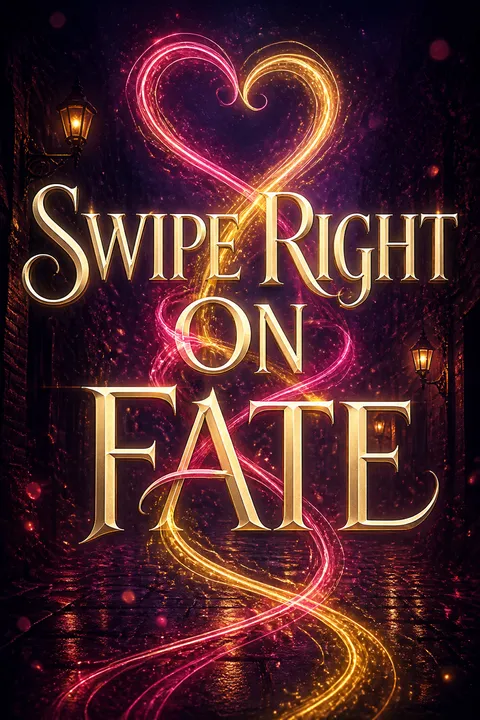
Swipe Right on Fate makes romance a challenge to systems that rank people by the bodies they can produce, the abilities they can display, and the appearances their communities recognize. Naomi's absent wolf is treated as a failure of inheritance; Rowan's albinism is treated as a failure of supernatural transformation. Those judgments differ in their details, but both teach their targets to anticipate rejection before anyone has spoken. Their early disguises and silences are therefore understandable defenses, not evidence that either is incapable of honesty. The narrative's key movement is from guarded self-presentation to chosen disclosure, with trust built through concrete acts: Rowan defending Naomi at dinner, Naomi protecting him from sunlight, and both of them asking for consent when vulnerability becomes physical.
The book also refuses to make romance a private cure for public exclusion. Carolina's power outage reveals how anxiety and inaccessible support can turn an ordinary utility failure into danger. Naomi and Rowan respond first as friends, then as organizers, creating mixers and a platform that can reach people beyond their immediate circle. This progression gives care a material form. A quiet room, a charged phone, food, accessible communication, and a useful contact network matter as much as declarations of affection.
The story's idea of fate is consequently less mystical than its title suggests. A dating algorithm creates an opening, but it cannot guarantee belonging. The couple's future is made through repeated choices to listen, accommodate, and remain accountable. Naomi is not required to become immortal to prove her love, and Rowan does not have to perform a more acceptable version of vampirism. The satisfying ending comes from a community learning to hold difference without demanding that difference disappear.
Review Summary
Characters
Naomi Bracken
The wolfless romanticNaomi is a dog walker and latent wolf shifter, born without the inner wolf that defines her family and community. She is funny, physically strong, emotionally perceptive, and more vulnerable to rejection than her sharp humor first suggests. Years of being treated as a disappointing exception have taught her to expect romantic and familial judgment, yet she keeps seeking companionship and builds a life beyond her pack. Her care for animals reflects her attention to individual needs, not abstract ideals of strength. Naomi is not defined by an urge to become a conventional shifter; she wants to be valued without having to apologize for what her body cannot do.
Rowan
The outsider vampireRowan is an old vampire, instrument restorer, music lover, and devoted caretaker of his orange cat, Brahm. His albinism remains after his transformation, making him an object of suspicion among vampires who expect vampirism to erase bodily difference. Thoughtful and courteous, he can mistake politeness for a way to earn acceptance, while his honesty makes deception especially uncomfortable for him. He values art, kindness, and the small rituals of companionship, but years of exclusion have left him touch-starved and doubtful that he can be wanted as himself. Naomi's warmth draws him toward connection without asking him to become less earnest.
Carolina Crestworth
The wingless confidanteCarolina, whom Naomi first knows online as Tweety, is a harpy without functional wings and Naomi's closest friend. She is witty, loyal, and comfortable offering blunt encouragement, but her mobility challenges and severe social anxiety make in-person contact difficult. Gaming lets her build a deep friendship while controlling how much of the outside world reaches her. Her fierce humor is not evidence that she has no fear; it is one of the ways she remains connected despite it.
Iko
The steadfast cyclopsIko is Rowan's longtime friend, a blind cyclops with a generous nature and a love of music, books, and old-fashioned conversation. He and Rowan share the experience of being pushed to the edge of their communities, though for different reasons. Iko's warmth and willingness to make room for others give Rowan a rare example of friendship without pretense. He is direct, physically affectionate, and often louder than the room expects.
Maverick Bracken
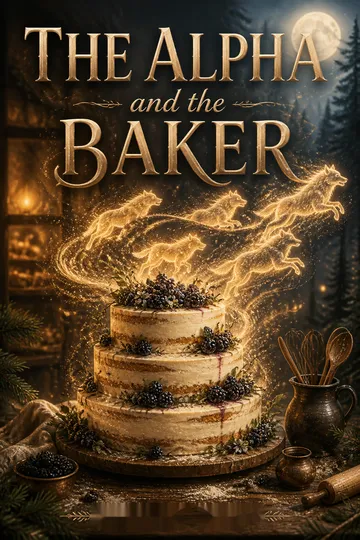
The dismissive alphaMaverick is Naomi's eldest brother and an alpha wolf shifter. He treats his sister's inability to shift as a reason to tease and manage her, presenting family interference as concern. His physical confidence and status in the pack make his mockery more than harmless banter. He represents the family pressure Naomi must navigate when she tries to make decisions without seeking her brothers' approval.
Reggie Bracken
The teasing middle brotherReggie is one of Naomi's brothers, quick with jokes and accustomed to joining the family's teasing. His curiosity about Naomi's private life often crosses into intrusion, even when he frames it as interest. Beneath the banter is a sibling whose relationship with Naomi is shaped by the pack's assumptions about her, and by the possibility of seeing her as more than the family's target.
Mason Bracken
The blunt younger brotherMason is Naomi's youngest brother, a wolf shifter who shares the family's teasing habits but is less central to its conflicts. His bluntness and casual jokes can make him difficult to read, especially when Naomi wants privacy. He is part of the sibling group whose treatment of her has taught her to guard her personal life.
Orthallow
The conflicted covenmateOrthallow is a relatively young vampire in Rowan's coven, taciturn and fond of appearing effortlessly cool. He is the one who first warns Rowan that the coven's apparent friendliness is false, though his silence about the mistreatment has its own cost. His discomfort with confrontation makes him an imperfect ally, but he is capable of recognizing when a group's behavior has become indefensible.
Celestia
The coven's social climberCelestia is a vampire artist whose poised, aristocratic manner helps her command attention within the coven. Rowan admires her creative interests before he understands how little regard she has for him. She values status and appearance, and her social ease allows cruelty to pass as sophistication. Her role exposes the gap between artistic refinement and actual generosity.
Ibrahim
The generous makerIbrahim is Rowan's vampire maker and a formative influence on his understanding of kindness. He recognizes worth in people others dismiss and teaches Rowan through example that power can be used to improve lives rather than secure status. Rowan's memories of him remain connected to travel, music, family, and the possibility of being accepted without being remade.
Brahm
The orange familiarBrahm is Rowan's fluffy orange cat and his constant household companion. Rowan consults him about clothes and treats his opinions as valuable, even when the cat's responses are mostly mysterious noises. Brahm gives Rowan a dependable source of affection in an otherwise solitary home.
Jason
The unsuitable suitorJason is a werewolf Naomi dates before Rowan. He is concerned with pack approval and the possibility of inherited traits, and he treats Naomi's inability to shift as a reason to reject her while still seeking casual sex. His self-serving politeness makes clear why Naomi has grown wary of supernatural dating.
Daniella
The welcoming designerDaniella is a designer and a member of the circle that helps organize the mixers and build Mis-Matched. She brings practical creativity to the group's work and is comfortable welcoming newcomers. Her enthusiasm helps turn the project from an idea into an event people can actually attend.
Xiánlü
The inventive sirenXiánlü is a mute siren and accomplished coder who communicates through a device she has programmed herself. Her technical skill makes her an important contributor to the group's plans, while her direct questions challenge people who assume disability means passivity. She is determined to make communication fit her rather than the other way around.
Chuck
The candid shifterChuck is a shifter and coder who contributes technical work to the community platform. He speaks plainly, has a dry sense of humor, and is willing to lend his skills to a project built for people who are often overlooked. His practical approach helps keep the group's hopeful plans grounded.
Plot Devices
ByChance
The unlikely meeting placeByChance is a human dating app that pairs Naomi and Rowan after each independently decides to try dating outside their own supernatural communities. The app's ordinary questions and profile pictures let the characters meet without immediately confronting the categories that have defined their lives. Its algorithmic promise of a perfect match is not treated as proof of destiny; the relationship succeeds because the pair keep choosing honesty, attention, and repair after misunderstandings.
Hidden identities
The fragile first impressionNaomi conceals that she is a latent shifter, while Rowan disguises his albinism with a wig, makeup, and contacts. Their parallel omissions let them experience a brief, uncomplicated first date, but also create the conditions for mistrust when the rain ruins Rowan's disguise and a later family confrontation exposes Naomi's nature. The concealments dramatize the difference between privacy and deception: each is protecting a vulnerable part of themselves, but lasting intimacy requires them to risk being seen.
Bodily difference
A shared language of exclusionNaomi's absent wolf and Rowan's albinism are distinct conditions, but both are judged by supernatural communities that treat a preferred body as proof of belonging. These differences shape dating, family life, safety, and self-image rather than serving as decorative traits. Their recognition of each other's experience gives the romance its emotional basis, while the book avoids presenting love as a cure: neither character's body changes, and acceptance does not remove the need for practical accommodation.
The Magical Misfits Mixer
A room made for belongingThe mixers turn the protagonists' private recognition of loneliness into a public effort to help other outsiders meet. Their accessible rooms, food, music, quiet spaces, and varied attendees make inclusion a matter of design and behavior, not just a welcoming slogan. The gathering also gives antagonistic members of Naomi's pack and Rowan's coven a chance to disrupt the space, forcing the new community to demonstrate whether it can support its members under pressure.
Mis-Matched
Connection beyond coincidenceBuilt by Naomi, Rowan, Carolina, and their allies, Mis-Matched extends the mixers across the supernatural scrying network. Unlike a romance-only service, it is meant to help users find friends, work contacts, housing, practical help, and partners. Its launch translates the book's central accident, the match on ByChance, into intentional infrastructure for people whose communities have failed them. The platform's early users show that the need is larger than one couple or one city event.
Download PDF
Download EPUB
.epub digital book format is ideal for reading ebooks on phones, tablets, and e-readers.








