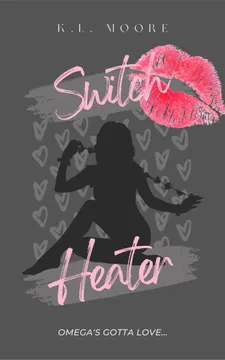


Plot Summary
Twenty-One, Still Unchosen
On her twenty-first birthday, Ripley Jacobs1 prepares to graduate from the Omega Center after three years without finding a scent match. Her older siblings have already built careers and packs, while she expects to return to her parents’ home alone. The Center’s ceremony is meant to send graduating omegas to their new families, making Ripley’s1 isolation especially visible.
Director Khan announces to the room that she has no suitors and labels her incompatible, turning her private disappointment into public humiliation. Her friends Huntleigh9 and Gabriel10 are leaving with their bonded partners, though they promise not to forget her. Ripley1 insists she can manage alone, but the future she imagined for herself feels farther away than ever.
The Center promises that compatibility can be organized, screened, and safely delivered, so Ripley’s failure to match feels less like bad luck than a verdict on her personhood. Her siblings’ easy transitions sharpen that feeling: the family has not rejected her, yet its examples make her solitude look like a defect. Khan’s announcement turns institutional care into public classification. Ripley’s insistence that she needs no one is less independence than self-protection, a way to pre-empt the pity she fears. The story begins with a social system declaring her anomalous before she has met the people who will redefine what belonging can mean.
Three Scents Break Through
At the ceremony, beta Kian4 and female alpha Syn3 notice Ripley1 and react with an intensity neither expects from a bonded pair. Ripley1 feels the same pull toward them, especially toward a third scent clinging to them, but overhears that their pack already has an omega named River.2
When another alpha, Victor,8 grabs Ripley’s1 arm after she rejects his advances, Syn3 intervenes and makes him release her. Kian4 and Syn3 escort Ripley1 back to the dormitory. She thanks them, then says she is returning to her parents rather than joining a pack. Their confusion suggests that her departure matters to them more than ordinary courtesy would explain, though none understands why yet.
The first mutual attraction arrives through scent before conversation, undermining the Center’s assumption that its matching process can account for every bond. Ripley’s longing and Syn and Kian’s guilt coexist: each experiences an unmistakable pull while believing the other relationship structure makes it forbidden. Victor’s grab provides a sharp contrast between instinct and consent. Syn’s intervention is not romantic proof but an ethical act, and it is what lets Ripley encounter her without fear. The escort becomes an accidental bridge between households, while the unseen River scent gives the attraction a third participant before anyone has met him.
River Appears at the Festival
After returning home, Ripley1 tells her mother, Valley,11 that the people who drew her at the ceremony already have an omega. Valley11 urges her not to mistake convention for impossibility. At the Lunar Festival, Ripley1 catches the familiar coconut and honeysuckle scent and finds River,2 the omega bonded to Syn,3 Kian,4 and three alphas.
He recognizes her as the woman his pack helped and welcomes her rather than treating her as a threat. They talk easily, exchange numbers, and discover shared interests, including romance books and teasing humor. River’s2 alphas return while they are speaking, but he asks Ripley1 to stay in contact. For the first time, her attraction is answered instead of merely endured.
The festival replaces the Center’s formal stage with a public, ordinary setting where Ripley can choose her own approach. Her mother’s story of once meeting a pack that already had an omega gives her permission to imagine a nonstandard future without promising that it will work. River’s welcome matters because it disarms the anticipated territorial rejection. Their connection is neither explained nor justified by social precedent; it is built through conversation, curiosity, and reciprocal desire. The book makes fate a useful name for recognition, but the relationship still needs deliberate choices, beginning with the simple act of exchanging contact details.
An Omega Opens the Door
Weeks of messages and calls turn Ripley1 and River’s2 first encounter into an attachment neither hides. When River2 invites her to spend a day at his home, Ripley’s1 fathers question whether his mates accept her, but River2 reassures them that the visit is his own choice and that his pack knows she is coming.
Their private time quickly becomes intimate, then shifts into laughter and a playful chase through the woods when River2 steals her underwear. Syn,3 Nico,5 Knight,6 and Kian4 arrive to check on them after Ripley’s1 startled scream. Rather than treating her as an intruder, the pack draws her into conversation and play. River’s2 desire is no longer confined to a phone screen or a fantasy of what might be.
River’s invitation makes the relationship concrete by bringing Ripley into a home whose emotional center is already occupied. The visit tests whether she is wanted as herself or merely indulged by an unusually permissive omega. His direct reassurance to her fathers answers their protective concern without allowing them to decide for her. The pack’s response to the scream is comic, but it also reveals its reflex: they rush toward danger together and include Ripley in the circle they protect. The chapter’s physical intimacy is matched by domestic contact, suggesting that desire is becoming a practice of shared life rather than a private exception.
Victor Presses His Claim
At lunch with Huntleigh,9 Ripley1 meets Victor8 again. He presses to court her despite her refusal and treats her as prey rather than a person making a choice. Nico5 arrives, stands beside Ripley,1 and tells Victor8 that Pack Kingston is courting her, including River.2 Victor’s8 contempt for an omega-omega relationship makes the claim more pointed, but Ripley1 answers that her connection with River2 is real.
After Victor8 leaves, Nico5 admits he wants to know her better and later takes her to the pack’s lakeside retreat. He holds her while they talk about family, grief, and art, then lets her tattoo a small drawing over his heart. His guarded affection becomes an offer of trust.
Victor’s presence converts Ripley’s unusual romance into a target for someone who believes designation grants ownership. Nico’s public support is significant because he has rarely pursued anyone outside his bond with River. He does not speak for Ripley; he stands beside her while she names the relationship herself. The lakeside conversation deepens that choice through reciprocal vulnerability, particularly Nico’s account of losing his mother and fearing the cost of attachment. The tattoo makes intimacy durable without yet making it a bond mark. His skin becomes a place where Ripley’s imperfect artwork is valued precisely because it comes from her.
Eyes in the Parking Lot
While running errands before a family gathering, Ripley1 feels watched and finally sees a man standing between cars in the grocery parking lot. Too frightened to drive away, she calls Knight,6 who talks her into leaving safely; she then hides the incident from River2 and her parents to avoid alarming them. That evening, Pack Kingston meets Ripley’s1 family.
Her parents and siblings welcome the people who make her happy, while her brother Ridge19 accepts the relationship without demanding an explanation. River’s2 possessive warmth and the group’s easy humor help Ripley1 feel at home. The unseen man remains a danger, however, and her choice to keep quiet leaves the pack without information it will soon need.
Ripley’s first clear experience of stalking exposes the limits of the safety she has learned to provide for herself. She can recognize danger and seek help, but shame and a wish to preserve a happy evening lead her to withhold what happened. The family gathering then offers a counter-image to threat: acceptance is expressed through food, teasing, and ordinary inclusion rather than formal approval. This warmth helps explain her silence; she does not want fear to take over the life she has just begun building. The omission is understandable, but it creates a gap between her private vigilance and the pack’s ability to protect her.
Nico Leaves His Mark
After the family gathering, Nico5 steals Ripley1 away for a motorcycle ride and takes her to his tattoo shop. He lets her place a simple drawing on his chest, choosing to carry something made by her even though she is inexperienced. The gesture moves their connection beyond attraction into chosen permanence.
When Ripley1 returns home, she falls asleep between Nico5 and River2 and realizes she loves River.2 She asks him for a bond mark, and they bite one another, joining their lives in a way neither can undo. Soon afterward, Ripley1 moves into Pack Kingston’s home. Kian,4 who has held back from pursuing her, finally kisses her while she is packing. Her life changes from visiting the pack to belonging within it.
The tattoo and the bond mark are different kinds of permanence. Nico chooses a visible, personal piece of art, while Ripley and River make a reciprocal commitment that links their bodies and emotional lives. Her realization arrives in a mundane cuddle, not at the height of a dramatic declaration, which suits the book’s view of intimacy as accumulated care. Moving in converts that bond into logistics, shared space, and access to the whole household. Kian’s long-awaited kiss signals that Ripley’s belonging is not limited to River’s permission. Each relationship must become its own choice.
Grace Meets the New Pack
Ripley1 travels with Syn3 to meet Syn’s parents17 and help care for Syn’s nieces20 while Syn’s sister Grace16 gives birth. Grace16 openly objects to Ripley’s1 relationship with River,2 insisting that omegas cannot want other omegas. Ripley1 calmly defends their choices and refuses to treat their love as something shameful.
When Grace16 delivers twin boys, her daughter Violet20 is disappointed that they are not sisters. Ripley1 comforts her, helping turn the surprise into a welcome. She also sees that Grace16 still wants Syn’s3 approval, so she encourages the sisters to embrace. Syn3 follows Ripley’s1 lead. The trip gives Ripley1 and Syn3 time alone, builds trust, and leaves their family conflict less rigid than before.
The trip tests Ripley’s place in the pack through a relative who voices the social rule the couple has already challenged. Ripley responds without begging for acceptance, a sign that her security no longer depends on everyone approving of her. Yet she does not reduce Grace to an antagonist: she notices the younger sister’s need for Syn’s affection and prompts a reconciliation. The twins’ arrival gives that emotional shift a practical setting, as the family must make room for an unexpected future. Ripley’s care extends beyond romance, showing that her gift to the pack is not simply desirability but attention to other people’s unmet needs.
The Watcher Returns
After Syn3 and Ripley1 return, River2 takes Ripley1 to a carnival. As they leave, a scarred alpha blocks their path and watches her in silence. Ripley1 recognizes him as the man from the grocery lot and tells River2 what she had concealed. River2 brings her home, where the entire pack gathers around her and learns that someone has been following her.
Knight6 and the others commit to finding him, while Ripley1 accepts their comfort instead of pretending she was never frightened. The encounter confirms that the earlier warning was not a passing scare. It also makes the pack’s protective attention newly complicated: care can reassure Ripley,1 but it cannot erase the threat or replace her agency.
The return of the watcher forces Ripley to revise the story she told herself about the parking lot. What she dismissed as a one-off becomes evidence of deliberate pursuit, and her secret becomes a source of regret rather than protection. The pack’s response is collective and bodily: they surround her with familiar scents and let her settle before deciding what to do. Their care is real, but the scene avoids making it a magical solution. The threat remains outside the house, and Ripley’s safety will depend on both the pack’s vigilance and her willingness to share information that feels frightening.
Knight's Haunted Date
Knight6 plans a day of haunted attractions for Ripley,1 including a warehouse haunted house and a nighttime corn maze. Ripley1 delights in the scares, while Knight6 tries to keep her close through each room. When a final room fills with clowns, his hidden fear overwhelms him. Ripley1 stops teasing and guides him toward the exit, keeping his attention on her until they are outside.
They laugh together afterward, then return home closer than before. Their trust is built through a reversal of roles: the alpha who usually protects her lets her see his vulnerability, and Ripley1 responds without ridicule. The date marks their growing intimacy just before her heat arrives unexpectedly.
The haunted attractions turn fear into a shared, chosen experience, but the clown room exposes a difference between playful fright and a genuine vulnerability. Ripley’s response matters because she does not use Knight’s fear to diminish him after teasing him earlier. She becomes his anchor, allowing protection to move in both directions. That reciprocity complicates the pack’s familiar roles without discarding them. Knight remains an alpha, but he can be frightened and accept care. The timing before Ripley’s heat lets the date function as a quiet rehearsal for intimacy: trust means being seen in a state one cannot fully control.
Heat Makes Them Family
Ripley’s1 heat begins weeks early while Kian4 is the only pack member at home. He helps her build a nest and meets her desire rather than retreating from the sudden intimacy. River2 returns, then Nico,5 Syn,3 and Knight,6 and the household turns the unexpected heat into shared care. Ripley1 asks for bonds as the heat overtakes her.
River2 had already marked her; Nico,5 Syn,3 and Knight6 now exchange marks with her, while Kian4 waits until the heat has passed and bonds with her in a quiet bath. By its end, Ripley1 is bonded to all five members of Pack Kingston. Her instinctive pull has become an explicit, mutual family commitment.
The heat strips away the polite pacing that had allowed the pack to postpone its choices. Kian’s presence at its start makes his hesitation impossible to maintain, while the other members must respond to Ripley’s needs as a group rather than as competing suitors. The bonds are not interchangeable: River’s first mark predates the heat, the alphas join during it, and Kian waits until afterward. That sequence preserves individual agency within collective belonging. The biological urgency risks making commitment look automatic, but the text repeatedly makes consent legible through Ripley’s requests and each partner’s deliberate answer.
Kian Chooses the Sunrise
After the heat, Kian4 wakes Ripley1 before dawn and takes her along a trail to a cliff overlooking the lake. He brings her a warm drink, guides her through the dark woods, and shares the sunrise with her. They spend hours talking about their hopes and the places they want to see, without the urgency or crowd of the household around them.
Ripley1 thanks him for trusting her with his heart, and Kian4 accepts her love without retreating into old doubts. Their outing gives the newest bond a form of its own: not a crisis or a ceremony, but a recurring possibility of shared exploration. It also precedes the night their safety will be tested again.
Kian’s hike is a deliberate counterpoint to the heat’s intensity. He initiates a private ritual tailored to Ripley’s love of nature, showing that he has learned her preferences rather than merely responded to her desire. The sunrise provides a temporal image of beginning, but the emotional work is conversational: each can be present without needing to prove the relationship through a crisis. Kian’s earlier caution had been shaped by fear of being unwanted; here, he acts from trust. Their quiet confidence makes the coming danger more disruptive, because the pack has begun to experience security as ordinary life.
The Night the Drinks Turn
For New Year’s Eve, Ripley1 joins River,2 Kian,4 Huntleigh,9 and Gabriel10 at a club restricted to omegas and betas. Their alphas reluctantly agree to let them go without an escort, trusting Kian4 to stay close. An unknown omega sends drinks to their table, and the group accepts them. Later, Ripley1 and Huntleigh9 head to the bathroom while Gabriel10 and River2 return to the table.
A frightened stranger injects Ripley1 with a drug, and a club worker carries her away. The drug also incapacitates Kian,4 River,2 and Gabriel;10 Kian4 manages only to send a brief emergency message before losing consciousness. Ripley’s1 bond goes silent, leaving her family unable to locate or comfort her.
The club is designed as a refuge from alpha surveillance, but the group’s attempt at independence is exploited by someone who understands how to make danger appear generous and ordinary. The drugged drinks compromise Kian’s vigilance without making him careless in any simple moral sense; he notices the risk too late to stop the plan. Ripley’s separation from her bonds is both physical and emotional, turning the romance’s central comfort into an absence. The scene also reactivates the earlier stalking thread: the threat has learned the pack’s routines and waited for a moment when its protective structure was deliberately loosened.
Cozette in the Cage
Ripley1 wakes tied to a chair in Victor’s8 hideout, with a bruised omega named Cozette7 locked in a cage nearby. Cozette7 explains that Victor8 took her from her small town, abused her, and forced her to help lure Ripley.1 She says the injection suppresses the bonds temporarily, preventing Ripley1 and her pack from sensing one another.
Victor8 enters, threatens Ripley,1 and treats both omegas as property. Cozette7 expects punishment for trying to help, while Ripley1 refuses to blame her for acting under coercion. Their alliance begins in a place designed to isolate and degrade them. Ripley1 promises not to escape without Cozette,7 even though she has no plan yet.
Cozette’s account transforms the kidnapping from an isolated obsession into part of a pattern of coercive control. The drug is especially cruel because it attacks the victim’s access to emotional support while leaving the bonds themselves intact. Victor wants not only physical obedience but the experience of being unreachable. Ripley’s refusal to blame Cozette distinguishes survival under coercion from betrayal; she recognizes that the person who helped Victor was also trying to stay alive. Their promise creates a counterbond in the cage, a small act of mutual recognition inside a system designed to make each omega feel alone.
Ripley Turns the Tables
When Victor8 orders Cozette7 out of the cage, she refuses, drawing his attention and giving Ripley1 a chance to slip through the unlocked door. As he lashes Cozette,7 Ripley1 finds knives and a leather cord in his torture closet. She loops the cord around Victor’s8 throat, then stabs him when he fights back.
He pins her down, but she uses a second knife to wound him again and stops him from attacking either omega. Ripley1 frees Cozette,7 and together they reach the outside just as police and medics arrive. Victor8 dies from his wounds. Ripley1 is battered and exhausted, but she has escaped with the woman who helped her survive.
Ripley’s escape is not a sudden transformation into an invulnerable fighter. She is frightened, physically overpowered, and acting with limited tools, but she converts observation into opportunity. Cozette’s refusal to obey Victor provides the distraction; Ripley’s promise to leave with her determines how the escape is used. Violence is presented as a last resort against an ongoing threat, not as proof that Ripley has become like Victor. The killing ends his immediate power, yet the emotional climax is broader: the two omegas reach the outside together, refusing the isolation he imposed on them.
Home After the Sirens
At the scene, Ripley’s1 five mates surround her, and their scents and touch bring her back from shock. The medics find bruising but no broken bones; Ripley1 insists on checking that Cozette7 is also being cared for. At home, her parents welcome her while the pack settles her into the nest and gives her time to rest.
The next day, Ripley1 tells police what Victor8 did and explains that his hatred of Syn3 helped fuel his pursuit. She then visits Cozette7 in hospital and promises to remain part of her life. The pack accompanies her but gives them privacy. Ripley’s1 recovery begins with safety, truthful testimony, and a friendship she refuses to abandon.
The rescue does not erase what happened; it restores the conditions in which recovery can begin. Ripley’s mates offer touch and familiar scent, while her parents provide an older source of home, joining chosen and birth family around her. Her decision to visit Cozette keeps the aftermath from narrowing into a simple return to romance. She recognizes that survival has created a responsibility of companionship, not ownership. The police statement also matters: Ripley converts private violence into public testimony. Her agency now includes both defending herself and helping ensure that Victor’s harm is named rather than hidden.
Epilogue
Months later, Ripley1 is pregnant and nearing the end of a difficult pregnancy. Her mates share the work of comforting her, and she jokes that she is ready for the baby to arrive. During an intimate moment with River,2 Kian,4 and Knight,6 her water breaks unexpectedly.
The pack rushes her to the hospital, where she gives birth with all five partners beside her. The baby is a boy, and they name him Finn. When he settles in Ripley’s1 arms, the family that began with her lonely graduation has grown again, not through the Center’s rules but through the life they built together.
Finn’s birth completes the book’s movement from institutional matchmaking to a family assembled through specific acts of choice. Ripley began by measuring herself against a promised system that had failed to find her a pack. The epilogue shows her surrounded by partners who share labor, fear, and care, although pregnancy is difficult rather than idealized. Her joke about being finished with pregnancy preserves her irreverence and keeps motherhood from replacing her individuality. The baby does not resolve every past wound, but his arrival gives the pack a future that Victor’s attempt at possession could never imagine: a family expanding by consent and affection.
Analysis
Switch Heater begins with a failed promise: the Omega Center is designed to find a safe, compatible pack for every omega, yet Ripley1 reaches graduation alone and publicly labeled incompatible. The romance overturns that verdict not by proving the system entirely useless, but by showing its categories are narrower than lived desire. Ripley’s1 attraction to River,2 an omega already bonded to three alphas and a beta, asks whether family can expand without treating love as a limited resource. Each member must answer that question personally. River2 has to share; Kian4 must trust that he is wanted; Syn3 must expose an old insecurity; Nico5 must risk attachment; Knight6 must let protection coexist with vulnerability.
Scent, heat, and bonding give this world an unusually physical language for recognition and commitment. Yet the story’s most important decisions remain ethical rather than biological. Syn3 intervenes when Victor8 grabs Ripley,1 the pack asks what Ripley1 wants, and Cozette’s7 coerced actions are judged in light of the danger controlling her. That distinction matters because Victor8 also invokes alpha authority, but uses it to erase another person’s agency. The novel contrasts care that increases someone’s safety and choice with possession that narrows both.
Ripley’s1 kidnapping tests whether the belonging she has found can survive separation and fear. When the bond is chemically muted, she cannot rely on her pack to rescue her; she and Cozette7 must act together. Ripley’s1 escape does not make trauma vanish, and the pack’s later therapy and changed protectiveness acknowledge that survival has consequences. The resolution is therefore not simply romantic completion. It is a family learning that care cannot mean confinement, while Ripley1 extends the safety she receives to another survivor. Finn’s birth closes the arc with an imagined future built from chosen bonds, shared labor, and room for the family to grow.
Characters
Ripley Jacobs
The stubborn late-blooming omegaRipley is a twenty-one-year-old omega, avid reader, lover of eerie stories, and daughter in a close, unconventional family. Three years without a match have left her wary of false hope, but she remains curious, funny, and unwilling to settle for a bond that does not feel right. Her instinct to care for others is matched by a sharp tongue and a stubborn streak; she can be frightened without accepting that fear makes her helpless. She values emotional safety, mutual affection, and the freedom to be strange without apology. Her attraction to River2 and his pack unsettles the expectations she has inherited, while her warmth and directness draw each person toward her in a different way.
River Kingston
The devoted omega partnerRiver is the omega at the heart of Pack Kingston, a gifted painter with auburn hair, a playful manner, and a possessive streak he does not always hide. He loves his bonded alphas and beta deeply, yet Ripley1 awakens a new kind of recognition in him. His instinct is to pull her close and give her what she wants, sometimes before he has learned how to share her time. Under the teasing and confidence is a generous, emotionally perceptive partner who welcomes an unconventional relationship rather than treating it as a threat. He sees Ripley1 as both a fellow omega and a person uniquely suited to him.
Syn Kingston
The fierce female alphaSyn is a female alpha, accomplished lawyer, and one of Pack Kingston’s most formidable protectors. Her public manner can be sharp and intimidating, but her bonded pack sees a reader, a lover of strange romance, and a deeply affectionate woman who guards her vulnerabilities carefully. Syn’s attraction to Ripley1 unsettles her because she is already devoted to River2, and she initially worries that wanting another omega makes her disloyal. Her care is expressed through action: she intervenes when Ripley1 is threatened and works to keep her safe. Ripley’s1 honesty and acceptance allow Syn to lower her defenses and explore affection without giving up her own strength.
Kian Kingston
The patient outdoorsman betaKian is a thoughtful beta, event planner, and lover of hiking and quiet natural places. His soft-spoken manner and careful attention can make him seem less certain than he is, especially when old rejection has made him wary of pursuing Ripley1. He is observant, loyal, and often the practical center of Pack Kingston. Ripley’s1 shared interest in the outdoors gives them an easy point of connection, while her playful nicknames help him relax into a more openly flirtatious role. He values being trusted rather than merely needed, and his gradual approach reflects a genuine desire to make sure Ripley1 wants him for himself.
Nico Kingston
The tattooed gentle giantNico is a large, heavily tattooed alpha who owns a tattoo shop and communicates affection more readily through care than conversation. His size can make him look imposing, but he is patient, domestic, and happiest when feeding or comforting the people he loves. He has been exclusively bonded to River2, so his attraction to Ripley1 surprises him and forces him to reconsider the limits he assumed for himself. Ripley1 responds to his gentleness beneath the intimidating exterior, and he values her warmth and courage. His tattoos represent both his artistic identity and his wish to make meaningful attachments visible.
Knight Kingston
The game-making protectorKnight is an alpha who designs video games and tends to disappear into work when a project demands his attention. He is affectionate, playful, and protective, with a calm manner that can become commanding when someone he loves is in danger. Ripley1 draws him out of his work habits and takes his creative interests seriously, while he gives her reassurance without demanding that she become less independent. He is comfortable offering tenderness and structure, but the two sides coexist with a private vulnerability, including fears he does not readily advertise. Their growing relationship lets him be both protector and someone who can accept comfort.
Cozette
The wounded omega survivorCozette is a young omega with a gentle manner and a strong instinct for self-preservation. Her past has taught her to expect danger from people who claim authority, so kindness can initially feel as suspicious as cruelty. She is remorseful about the choices fear has forced on her, yet she retains the capacity to act for someone else when the moment matters. Ripley1 recognizes that her actions cannot be separated from the coercion surrounding them. Cozette’s need for safety and dignity becomes central to their bond, and her quiet courage complicates any easy distinction between victimhood and agency.
Victor Travis
The predatory alphaVictor is a powerful, polished alpha whose pleasant public scent and controlled manner conceal a predatory view of omegas. He expects obedience and interprets refusal as a challenge to his authority. His contempt for Syn3 is bound up with resentment toward a woman who will not yield to him, and he regards the relationships around Ripley1 as obstacles to possession. Victor uses charm as camouflage and benefits from others underestimating the danger he presents. His presence tests the difference between protective alpha behavior and domination dressed up as care.
Huntleigh Adams
Ripley’s exuberant best friendHuntleigh, usually called Hunt, is Ripley’s1 longtime friend from the Omega Center. She is energetic, affectionate, and happiest when sharing plans, celebrations, and gossip with the people she loves. Her devotion to her own bonded pack gives Ripley1 an early example of the security she wants, though Hunt can be impulsive and assumes that enthusiasm will solve most problems. She encourages Ripley1 to take romantic risks and remains emotionally invested in her happiness. Their friendship survives the transition from dorm-room closeness to separate homes because Hunt treats the bond as something worth maintaining.
Gabriel
Ripley’s steadfast omega friendGabriel is a male omega and one of Ripley’s1 closest friends at the Center. Warm, perceptive, and comfortable discussing unconventional relationships, he offers her a kind of acceptance she does not find everywhere. He recognizes that she should not settle for his pack simply because they care for one another, and he supports her search for a match that feels right. Gabriel’s humor softens difficult moments, while his history of a less secure childhood makes him particularly attentive to the comfort of chosen family.
Valley Jacobs
Ripley’s perceptive motherValley is Ripley’s1 affectionate mother, observant enough to notice what her daughter is hiding and patient enough not to force a confession before Ripley1 is ready. She believes that love does not have to follow the Center’s expected pattern, partly because she once considered joining a pack that already had an omega. Valley offers encouragement without pretending that unconventional choices are risk-free. Her support helps Ripley1 trust her instincts and take the chance of getting close to River2.
Damien Jacobs
Ripley’s protective fatherDamien, whom Ripley1 calls Pops, is a tattooed former biker with a formidable appearance and a tender devotion to his family. He is protective without being emotionally distant, and his daughter knows that his intimidating exterior hides a deeply affectionate parent. Damien’s history gives him practical connections when his family faces danger, while his first instinct remains to stand between Ripley1 and anyone who might harm her.
Shep Jacobs
The optimistic family fatherShep, whom Ripley1 calls Papa, is a cheerful, thoughtful father with a love of coding and a habit of looking for what remains good in a difficult situation. His gentle optimism helps create the secure childhood Ripley1 remembers, and his concerns about her unusual relationship come from protectiveness rather than judgment. He wants her to be safe while respecting that she must choose her own life.
Aeon Jacobs
The practical family fatherAeon, whom Ripley1 calls Dad, is a steady, practical father who likes cars and outdoor activity. He is one of the parents who helped make home welcoming when Ripley1 returned from the Center, even restoring her old car so she could move around independently. His affection is plain and dependable, offering Ripley1 a grounded source of security alongside the more openly expressive members of her family.
Ridleigh Jacobs
Ripley’s doctor sisterRidleigh is Ripley’s1 older sister, a physician and mother who balances professional responsibility with a close bond to her family. She can be brisk when her children test her patience, but her affection for Ripley1 is unmistakable. Her life provides another example of a sibling who has found a vocation and family, without making her a rival in Ripley’s1 search for belonging.
Grace
Syn’s judgmental sisterGrace is Syn’s3 younger sister, an omega whose strict ideas about pack roles put her at odds with Syn3 and Ripley1. She is not simply hostile; beneath her certainty is a desire for the older sister’s approval that she struggles to express directly. Ripley1 notices that need and encourages a more honest connection between them. Grace’s character shows how someone can enforce restrictive social rules while still longing for affection herself.
Talia
Syn’s welcoming motherTalia is Syn3 and Grace’s16 warm, family-centered mother. She welcomes Ripley1 quickly and is curious about the relationship without treating it as a spectacle. Her affection for her daughters gives Ripley1 a glimpse of the family ties Syn3 carries into her pack.
Callum
Syn’s affectionate fatherCallum, often called Cal, is Syn’s father18 and a generous presence in the family. He welcomes Ripley1 with uncomplicated warmth and supports the people his daughter loves. His relaxed manner balances the tension surrounding Grace’s16 judgment.
Ridge Jacobs
Ripley’s protective brotherRidge is Ripley’s1 older brother, a mechanic who is affectionate, teasing, and protective without trying to control her choices. He accepts her relationship when he sees that it makes her happy. His easy welcome helps make her family home feel like a place she can return to even as she builds a new one.
Saxon and Violet
The lively young niecesSaxon and Violet are Ripley’s1 young nieces, energetic children who bring humor and candor into family gatherings. Their questions about omegas and pack life make adult assumptions visible in simple terms. Ripley’s1 easy affection for them shows how naturally she takes a caring role with the younger generation.
Plot Devices
The Omega Center
A formal matchmaking systemThe Omega Center offers education, safety screening, and introductions between omegas and prospective packs. It gives Ripley1 structure after she presents at eighteen, and its near-perfect matching record intensifies her fear when she remains unmatched for three years. The graduation ceremony turns its promise into a public measure of success, but the story eventually shows that the Center cannot anticipate every form a family may take. Its role is both practical and symbolic: it protects omegas while also making its conventions feel like the only route to belonging.
Scent recognition
Instinct signals compatibilityScent lets characters recognize attraction before they understand it. Ripley1 reacts to Syn3 and Kian4, then becomes captivated by the traces of River2 carried on them. The same scent reaches her again at the Lunar Festival, prompting her to find River2. The device makes desire physical and immediate, but it does not decide what the characters must do. They still have to speak honestly, seek consent, and negotiate how an omega can join a pack that already has one.
Marks and bonds
Commitment made bodilyIn this world, reciprocal bites create enduring bonds that let partners sense emotional states and recognize one another as family. Ripley1 and River2 bond first, and she later chooses marks from the other members of Pack Kingston. The sequence emphasizes that biology provides a mechanism, not a substitute for choice. Each relationship develops through conversation, trust, and explicit willingness before becoming physically permanent.
Heat and nesting
Biology intensifies intimacyAn omega’s heat brings pain, heightened desire, and an urgent need for a safe nest and attentive partners. Ripley’s1 heat begins earlier than expected while Kian4 is the only one home, making the pack respond without its usual preparation. Her nest gathers each partner’s scent, while her requests guide how they care for her. Heat creates urgency, but the story presents trust and consent as necessary alongside biological need.
Victor’s suppressant
It silences the pack bondVictor8 has Cozette7 use a drug that temporarily prevents Ripley1 and her bonded partners from sensing one another. The effect isolates Ripley1 during captivity and prevents the pack from locating her through their emotional connection. The drug does not sever the bonds permanently. Its influence fades during the confrontation, allowing Ripley1 to feel her mates again as she prepares to escape.
Download PDF
Download EPUB
.epub digital book format is ideal for reading ebooks on phones, tablets, and e-readers.








