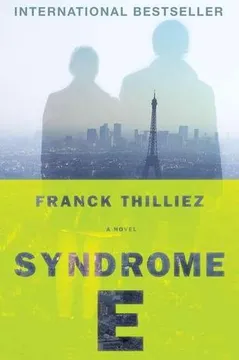


Plot Summary
The Reel That Blinds
Ludovic Sénéchal, a film collector from Lille, buys an unmarked reel from Luc Szpilman, whose elderly father has just died. He saves the short film for the end of a late-night screening in his basement cinema. It opens with a woman’s eye being cut, then shows a little girl, a bull that stops just before trampling her, and the child calmly killing it.
Ludovic does not see the whole film. Soon after the screening, he stumbles upstairs, unable to see even with the lights on. At a hospital, doctors find no damage to his eyes. Panicked and convinced the reel caused his blindness, he calls his former girlfriend, police lieutenant Lucie Henebelle, and asks her to investigate.
The film first works as a breach in ordinary perception: a private hobby turns into a medical crisis, while the doctors’ normal tests cannot explain what happened. Ludovic’s certainty that the reel is responsible may sound irrational, but it gives Lucie a concrete lead when institutional medicine has none. The episode also establishes the story’s governing unease: sight is not simply a function of the eyes. A viewer can be harmed by images without understanding what they have seen, and the inability to interpret an experience can be as frightening as the experience itself.
Lucie Watches Alone
Lucie is already sleeping beside her hospitalized daughter Juliette when Ludovic calls. She sends an ambulance, then visits him and agrees to examine the reel in his home cinema.
The short unsettles her with its slit eye, a girl’s unnaturally fixed gaze, and the bull’s sudden obedience; afterward, Lucie finds the front door open and unmarked film cans scattered through Ludovic’s collection. Someone has searched specifically for the anonymous reel. Film restorer Claude Poignet agrees to inspect it.
Meanwhile, doctors conclude that Ludovic’s blindness is psychological rather than physical, and that the film may have revived a buried childhood trauma. Lucie recognizes that the strange images, the break-in, and the unexplained blindness may belong to one investigation.
Lucie enters the mystery through loyalty, not official assignment. She is a detective, but she is also exhausted, worried about Juliette, and still emotionally connected to Ludovic. That combination makes her vulnerable to the film’s effects while giving her a reason to persist. The intrusion at his home changes the problem from a disturbing medical oddity into a deliberate hunt: someone else knows the reel matters. The book also begins to connect private memory with perception. Ludovic’s mind may be protecting him from a past shock, just as the film’s unseen images bypass the viewer’s conscious defenses.
Five Open Skulls
In Rouen, chief inspector Franck Sharko is pulled from psychiatric treatment and assigned to five bodies unearthed near a pipeline construction site. He has spent years away from fieldwork after losing his wife and daughter, and he still sees Eugenie, a little girl created by his schizophrenia, despite treatment.
Forensic examinations identify five young men, including one Asian victim, shot before burial. Their hands and teeth are missing, their skulls were expertly opened, and their brains and eyes removed.
One body was partly skinned, apparently by its own fingernails. Sharko sees an odd division of labor in the careful burial and the differing mutilations, but has no names or witnesses. The discovery gives his return to the field a violent, unsettling purpose.
Sharko’s case begins as a procedural puzzle, but his return to crime scenes is also a test of whether he can work without being consumed by them. He tries to remain analytical, yet the bodies awaken a professional appetite he both misses and fears. Their mutilation suggests more than concealment: the victims have been stripped of the features that ordinarily allow them to be recognized. The precise skull work beside the rough removal of hands and teeth hints at distinct perpetrators or distinct purposes. The crime scene resists a single explanation, matching Sharko’s own divided life between disciplined investigator and vulnerable patient.
A Call From Montreal
Poignet identifies the reel as a 1955 Canadian print containing rapid, hidden images of sex and mutilation, including a wound pattern that gradually forms an eye. Lucie questions Luc Szpilman and learns that his father, Vlad, called a Montreal number shortly before falling from the attic ladder. A guarded Canadian caller later demands details about the Normandy bodies and links them to children and rabbits.
In Rouen, an Interpol telegram reveals that three Egyptian girls were murdered in 1994 with their skulls opened and their eyes and brains removed. Sharko and Lucie meet in Paris, compare the separate clues, and agree to cooperate. The anonymous film and the bodies now point toward a history that crosses continents and decades.
The investigation’s scale expands through information exchanged by people who do not fully trust one another. Lucie has a suspicious phone number and an evasive informant; Sharko has an old telegram and incomplete forensic findings. Neither clue is sufficient alone. Their first partnership is therefore practical before it is intimate: each offers what the other lacks. The recurring eye motif begins to join cinema and murder, while the reference to children and rabbits signals that the film’s visible horror is not its central secret. The narrative turns from parallel oddities into a chain of evidence, though the chain remains deliberately incomplete.
The Restorer Is Silenced
After Poignet studies the film, intruders kill him in his Lille workshop and take the reel and his computer. They strangle him, hang his body with strips of celluloid, remove his eyes, and place developed film frames in their sockets. Lucie recognizes the crime’s connection to the missing reel and finds the frames came from Poignet’s own camera, preserving the view from the room during his last moments.
The killers have left a clue as well as a warning. Forensic evidence suggests one attacker wore combat boots, while the method of eye removal points to medical skill. Lucie’s business card is found in Poignet’s mouth, making her a visible target and forcing her to bring her superiors into the case.
The murder converts the film’s central metaphor into a crime-scene procedure: the killers use the victim’s own equipment to make his eyes carry an image. Their staging is not merely theatrical. It asserts control over what the police can see, and over how the victim will be remembered. Yet the display also betrays the perpetrators’ need to communicate. By leaving frames, they invite interpretation even as they punish those who interpret. Lucie’s guilt is immediate because she brought Poignet into the investigation, but the discovery of technical evidence prevents guilt from becoming paralysis. The murder makes her responsibility professional and personal at once.
The Housecleaning Continues
Belgian police arrive at the Szpilman home to search for evidence and find Luc Szpilman and his girlfriend dead. Both have been stabbed repeatedly, and a hidden wall safe has been broken open. The killers have removed the computer and books that might reveal what Vlad learned about the film.
Lucie realizes that Vlad’s son could have identified the man who searched the attic, but the murders have erased that route. The violence is less carefully staged than Poignet’s death, yet its timing shows that the same pursuit is still active. Across the investigation, the killers are not only recovering copies of the reel. They are destroying anyone who might explain why it matters.
The second household crime strips away the comfort of treating the earlier murder as a singular warning. Luc and his girlfriend are killed because knowledge has become dangerous, even when it is incomplete or inherited. The broken safe and missing research suggest an organized effort to control evidence, not simply a collector’s quarrel. Lucie’s investigative choices now carry a measurable human cost, sharpening her tendency to blame herself for outcomes she could not control. The perpetrators’ changing methods also complicate profiling: they can stage a death with technical precision or erupt into uncontrolled violence, a contrast that will later prove meaningful.
Sharko Crosses Cairo
Sharko travels to Cairo to investigate the 1994 murders. Police chief Hassan Noureddine allows him to inspect a thin file but refuses access to crime scenes or further records. He says the original investigator, Mahmoud Abd el-Aal, died after being accused of extremism. Sharko’s interpreter, Nahed Sayyed, quietly helps him reach Mahmoud’s brother, Atef.
Atef slips Sharko a warning and later explains that Mahmoud kept investigating after his superiors closed the case. At their next meeting, Atef lures Sharko into the desert, binds him, and tortures him for information. Sharko escapes by charging Atef while still tied to a chair; Atef is impaled and dies. Sharko hides the killing and follows Mahmoud’s hospital lead alone.
Cairo forces Sharko to work without the protections he expects from law and procedure. Noureddine controls the records, the interpreter’s access, and the terms of the investigation, while the missing file suggests that institutional obstruction is part of the mystery rather than background noise. Sharko’s decision to continue despite those limits reflects both professional integrity and a dangerous inability to retreat. His desert escape makes that danger literal. Killing Atef in self-defense leaves Sharko alive but morally compromised, and his decision to conceal it binds him to a private balance of threats that will later shape his choices in France.
The Cairo Girls Share Something
At the Salaam Center in Cairo’s garbage collectors’ district, director Taha Abou Zeid remembers Boussaina Abderrahmane, one of the murdered girls. A year before her death, Boussaina and thousands of other Egyptian schoolgirls suffered unexplained fainting spells or bursts of aggression.
The episodes spread across the country, then subsided, but Boussaina and the two other murdered girls remained behaviorally changed. Sharko learns that all three had passed through hospitals and that investigators found ketamine in their bodies.
This gives Mahmoud’s old theory new weight: the girls were not chosen at random. Sharko suspects their shared experience of collective hysteria drew the killer’s attention, while his parallel inquiries in France continue to connect the mutilated victims with a similar pattern of sudden violence.
The hospital supplies a pattern where official police records supplied only absence. The girls’ shared history is social and psychological, not simply geographic, and it gives their deaths a possible motive without explaining the cruelty. The account also complicates the word hysteria: the girls experienced real symptoms and lasting changes, even though doctors could not identify an ordinary disease. Sharko’s investigation turns toward how violence might move through a group, but he has evidence of correlation, not yet a mechanism. The difference matters. The book makes the investigators confront the temptation to turn an inexplicable event into a theory too quickly.
A Film Inside the Film
A neuromarketing scan of the surviving digital copy shows that the reel’s obvious sexual images and white circle distract from another concealed sequence. Adjusted for brightness and contrast, the dark areas reveal girls in a clinical room, with rabbits gathered nearby.
At five frames per second, the hidden footage shows the children slaughtering the animals in a frenzy. A lip-reader finds that the visible girl speaks of Lydia, a doctor, and a child who cannot go outside.
Lucie and her captain realize the images provoke reactions beyond the visible scenes. The discovery explains the caller’s cryptic reference to children and rabbits, but it also raises a more disturbing question: whether the film records a real experiment rather than an elaborate cinematic trick.
The film’s construction makes looking an active, compromised process. The viewer must alter the image before its hidden layer appears, but the brain may already have registered that layer without conscious recognition. This reverses the usual detective’s confidence in visual evidence: close observation alone is not enough when the image has been engineered to redirect attention. The children’s violence also shifts the moral center of the case. They appear both as perpetrators of cruelty and as frightened subjects in a controlled room. Lucie’s response is not to excuse the act, but to ask who designed the conditions that made it possible.
Judith Remembers Montreal
In Marseille, former erotic-film performer Judith Sagnol recognizes the short and identifies its maker as Jacques Lacombe, her former lover. She describes his unusual experiments with film, his earlier feature about cannibals, and his disappearance after moving to North America.
Lacombe summoned her to Montreal in 1954 for a secret shoot, where masked men handled her while he filmed. He drugged her with what she believes was LSD and cut her skin to create realistic wounds.
Judith remembers a doctor working beside him and says Lacombe repeatedly obsessed over Syndrome E, though she never learned what the term meant. Her account gives the investigators a filmmaker, a medical accomplice, and a possible link to secret research, while making the film’s apparent fantasy much harder to dismiss.
Judith’s testimony changes the evidentiary status of the images. What looked like stylized horror was made through the exploitation of a living woman, and the director’s craft becomes inseparable from his willingness to injure. Her account also cautions against treating artistic innovation as moral innocence: technical brilliance can make abuse more convincing, not less real. The film’s hidden content remains unexplained, but its production history supplies a plausible network of collaborators. Judith speaks from the position of someone once paid to keep quiet and now old enough to name what happened, though memory can only recover fragments.
A Warning at Aubagne
DNA identifies one Normandy victim as Mohamed Abane, a violent offender released from prison months earlier. His brother says Mohamed planned to join the Foreign Legion, then disappeared, and that Akim’s identification card also went missing. Sharko concludes that Mohamed may have enlisted under his brother’s identity.
While Lucie travels to Montreal, Sharko confronts Legion commander Bertrand Chastel and bluffs that he knows about Syndrome E. Chastel betrays alarm but denies everything. Sharko later finds listening devices in his apartment and receives a photograph of himself with Lucie, her face circled. Leclerc admits his marriage is failing and that he may resign, leaving Sharko afraid of losing his closest ally as well as the case.
The Legion lead converts an abstract theory into a possible institutional setting where young recruits could be subjected to extreme stress. Sharko’s approach to Chastel is less an investigation than a calculated provocation, and it exposes the cost of acting without proof. The hidden microphones show that the state’s secrecy has reached into the investigators’ homes. At the same time, Leclerc’s marital crisis mirrors Sharko’s own fear of isolation. The case threatens not only suspects and witnesses but the fragile relationships that keep the detectives functional. Sharko’s growing attachment to Lucie intensifies his protective impulse, even as it risks turning her into leverage.
The Archives Name Alice
In Montreal, Lucie searches religious and orphanage records using the film’s first name, Lydia, and the face of the girl on the swing. She identifies the girl as Alice Tonquin, an orphan who moved among convents and hospitals.
Archivist Patricia Richaud explains that Quebec’s Duplessis government reclassified many illegitimate orphans as mentally disabled, allowing them to be confined in asylums and used as unpaid labor. Lucie learns that the girl’s friend Lydia later died in a psychiatric hospital.
Before Richaud can explain more, Philip Rotenberg, the guarded Canadian informant, abducts Lucie and takes her to a forest cabin. He reveals that the film contains evidence of a covert CIA program connected to experiments on patients at McGill and in Quebec institutions.
The archive makes bureaucracy part of the violence. Alice’s identity emerges from administrative traces created by institutions that also erased children’s family ties and recast them as patients. Lucie’s search is painstaking, but it yields a name only because the system retained records it once used to control the children. Rotenberg’s abduction then complicates the distinction between protection and coercion: he has information Lucie needs, yet he begins by taking away her choice. The plot’s conspiracy becomes historically grounded in documented abuse, while Alice’s uncertain fate remains the emotional question at the center of the investigation.
The Cabin Burns
Rotenberg explains that lawyer Joseph Rauth once proved the CIA funded abusive mind-control experiments at Montreal’s Allan Memorial Institute, but insists the rabbit footage points to a separate program. He believes violent images can produce a spreading mental contamination.
Before he can finish, Lucie discovers a tracking device hidden in her phone. A sniper fires through the cabin window, mortally wounding Rotenberg, and attackers set the woods ablaze. Lucie takes Rotenberg’s gun, kills the man who enters the burning cabin, and escapes.
Canadian police arrest her because Rotenberg is dead and she has no identification or papers. Sharko reaches her the next morning and secures her release process. The hidden key Rotenberg gave her, however, remains the only surviving route to his research.
Lucie’s investigative method has made her both witness and delivery mechanism: the device in her phone turns her movements into a path to Rotenberg. Her survival requires violence, not merely observation, and the second killing of her career leaves a lasting moral wound. The fire repeats the destruction associated with Lacombe, but this time it fails to erase every trace because Rotenberg has hidden a key and backed up his files. Sharko’s arrival offers emotional reassurance, yet it cannot undo the choices that put Lucie in danger. Trust between the partners becomes more consequential as they learn that surveillance can reach across borders.
The Nuns Recall Mont Providence
Lucie and Sharko visit the elderly Sister Marie du Calvaire, who fled Mont Providence decades earlier. She recalls Alice, Lydia, and ten other girls transferred into the hospital’s most severe ward, where healthy orphans were mixed with patients and punished for resistance.
A young superintendent, known by the names James Peterson and Peter Jameson, took children into restricted rooms. There, the girls were startled with noise, filmed, and returned frightened and hostile. Sister Marie remembers Jacques as the filmmaker Alice trusted.
At Montreal’s central station, police give the detectives Rotenberg’s locker key and a flash drive. Its files include footage of the experiments and Szpilman’s research into historical massacres, connecting the children’s film to a much larger investigation.
Sister Marie’s account exposes how harm can be administered by ordinary institutions through routine, obedience, and confinement. She remembers her own participation as well as her flight, so her testimony carries both knowledge and guilt. The children were not simply observed; they were subjected to an environment designed to produce fear and then treated as defective when they reacted to it. The flash drive extends that history beyond one hospital, but it does not yet prove the theory behind the massacres. Evidence accumulates in layers: testimony, footage, and patterns across time, each clarifying the next without removing uncertainty.
Alice Becomes Coline
The files on Rotenberg’s drive include a brainwashing film made by Lacombe, marked with the same white circle as the reel, and photographs of massacres whose victims’ brains and eyes were taken.
Professor Jean Basso explains that James Peterson pioneered experiments in direct brain stimulation, including a bull stopped by an electrical impulse. Canadian police then report that Peterson adopted an orphan named Coline Quinat before disappearing. Sharko finds her name among French researchers who attended the 1994 Cairo conference.
Coline Quinat is an anagram of Alice Tonquin. Lucie and Sharko realize that the child from the film became a neurobiology researcher, while the repeated murders and brain removals point to her continuing search for evidence of Syndrome E.
The revelation collapses the distance between victim and investigator, child and perpetrator. Alice’s name has been reconstructed through the same methods that earlier institutions used to rename and relocate her, but the anagram also makes identity feel unnervingly unstable. The investigators’ theory now has an embodied history: a child exposed to engineered violence becomes a scientist studying the brain’s capacity for violence. That connection explains the pattern without absolving the adult responsible for later crimes. Scientific knowledge appears here as both explanation and temptation, capable of clarifying harm while encouraging the belief that people can be engineered and controlled.
The Eyes Beneath Grenoble
French police raid Coline Quinat’s Grenoble home, where she calmly admits that she continued her father’s research. She says the Egyptian girls were killed so she could inspect their brains, and that she studied massacre victims in Rwanda and elsewhere for evidence of a violent contagion.
She also confirms that the Legion deaths followed an uncontrolled outbreak among recruits, after which she experimented on the surviving Mohamed Abane. In the basement, Lucie discovers jars of preserved eyes, including Abane’s. Quinat regards them as records of the images that altered the brain.
Her confession implicates military and intelligence officials, prompting a wider inquiry, but she shows no remorse and insists the research justified its cost. Sharko and Lucie leave with the killer caught and the system still under investigation.
The climax refuses the comfort of a single mad individual detached from institutions. Quinat committed the murders, but she describes a network that funded, protected, or used her research, and her calm certainty makes her more chilling than a conventional confession. The jars turn the story’s repeated eye imagery into literal trophies, yet her explanation also exposes the moral fantasy beneath them: that a human being can be reduced to data and manipulated toward violence. Arrest ends her freedom, not the political problem. The detectives have established what happened, but accountability depends on whether powerful institutions can be forced to answer.
Epilogue
A month later, Lucie spends a beach holiday with Clara and Juliette while waiting for Sharko. He arrives carrying his miniature train and tries to imagine leaving his police career to build a life with them. Lucie has thrown out the girls’ video-game consoles, hoping to shield them from the violence that consumed the case.
Yet when the twins run toward an ice-cream stand, they vanish from sight in the crowded beach. Lucie calls for Sharko, who scans the moving crowd. The story ends before either parent can find them, leaving the family’s tentative happiness suspended in a fresh moment of fear.
The beach offers the detectives a deliberate counterimage to the hidden film: sunlight, children at play, and a family trying to choose ordinary pleasures. But the final disappearance prevents that calm from becoming a simple reward. Lucie’s decision to remove the girls’ consoles shows how deeply the investigation has changed her sense of safety, while Sharko’s plan to leave the force suggests a genuine opening toward family life. The missing children revive the book’s central anxiety about what vision can and cannot guarantee. A parent may watch closely and still lose sight of a child in a crowd. The ending leaves love hopeful, but not protected.
Analysis
Syndrome E builds its thriller around a problem of perception: images can be seen without being understood, while institutions can record a person so completely that they erase the person behind the record. The hidden film is not only a puzzle but a model of the novel’s method. Its visible surface misdirects; meaning emerges through technical adjustment, testimony, and the comparison of evidence gathered in different countries. The investigators never solve the case through intuition alone, even when intuition points them forward. They need forensic analysis, archives, medical history, and witnesses whose accounts complicate one another.
The novel’s account of violence is deliberately double. It asks whether aggression can spread through groups and whether brain structure can be altered, but it does not let scientific explanation absolve individual or institutional responsibility. Quinat’s experiments are enabled by authorities who value military or geopolitical advantage over the lives of children, patients, and recruits. Her belief that research justifies sacrifice echoes the bureaucratic logic that first confined Quebec’s orphans. Power turns people into subjects, then treats their suffering as data.
Lucie and Sharko embody opposing costs of the same vocation. Lucie is pulled between her daughters and a job that offers her identity as well as danger. Sharko has already lost his family and fears that work has left him with nothing beyond grief, routine, and hallucinations. Their growing attachment does not cure either problem; it gives them a reason to imagine a life beyond the investigation. The unresolved final image of the twins disappears that certainty at the moment it seems possible. The novel’s warning is not simply that violent images damage viewers. It is that people who claim mastery over the mind can reproduce violence on a social scale, while those left to protect others must accept how little control sight alone can provide.
Review Summary
Syndrome E received mostly positive reviews, praised for its intriguing plot, complex characters, and blend of science and thriller elements. Readers found it suspenseful and well-researched, with many appreciating the psychological aspects and historical connections. Some criticized the romance subplot and felt the ending was rushed. The book's dark themes and graphic content were noted as potentially disturbing for some readers. Overall, it was considered a compelling and unique entry in the thriller genre, leaving many eager to read more from the series.
Characters
Lucie Henebelle
Relentless northern detectiveA lieutenant in Lille’s Criminal Investigations unit, Lucie is a single mother of twin girls, Clara and Juliette. Her instincts are sharp, her curiosity nearly inexhaustible, and her attraction to violent cases often puts her at odds with supervisors and family. She is capable of tenderness, especially with her daughters and people in distress, but can use work to avoid confronting old emotional injuries. Her investigation begins as a favor to an ex-lover and grows into a cross-border pursuit that tests the boundary between professional commitment and maternal responsibility. Lucie values evidence, yet she is also willing to trust intuition when official channels stall.
Franck Sharko
Wounded behavioral analystA chief inspector in Paris’s Violent Crimes bureau, Sharko once worked directly on crime scenes and now analyzes violent cases from a desk. He is a widower and father whose grief has shaped his isolation, routines, and attachment to miniature trains. He lives with schizophrenia and recurring hallucinations, managed with medication and psychiatric treatment, while continuing to work with formidable concentration. His dry humor and demands for small comforts conceal both vulnerability and a powerful appetite for investigation. Lucie’s directness unsettles him, but he recognizes in her the same capacity for obsession that once consumed his own life.
Ludovic Sénéchal
Collector and former loverA gentle, solitary film collector, Ludovic owns a private basement cinema and spends long nights watching old reels. He and Lucie once dated, but their temperaments and hopes for the future did not align. His knowledge of projection equipment allows Lucie to examine the anonymous short that starts the investigation. His unexplained blindness exposes the gap between physical sight and psychological perception, while his recovered memories show how a film can bring old trauma back into consciousness.
Vlad Szpilman
Obsessive film archivistLuc Szpilman’s elderly father, Vlad spent his life preserving films and studying the darker history of conflict, espionage, and political violence. His private research into the anonymous reel leads him to seek help from a Canadian lawyer. Vlad is not present for most of the investigation, but the call he made shortly before his death gives Lucie her first link between the film and Canada. His habit of collecting, copying, and investigating makes him an important source of evidence.
Luc Szpilman
Collector’s estranged sonVlad’s son, Luc is young, rebellious, and eager to repurpose his father’s attic for his band. He has little interest in the old films or his father’s consuming passions, but his account of the attic fall and an unusual visitor gives Lucie valuable leads. His casual manner should not be mistaken for knowledge of his father’s research. Lucie’s interview with him reveals how little Vlad communicated with his family.
Claude Poignet
Old-film restorerA retired specialist who once taught Ludovic to use a projector, Poignet still works among cameras, film stock, and restoration equipment. His affection for cinema is both practical and scholarly: he can date the reel, identify its Canadian manufacture, and expose the obvious subliminal images. He helps Lucie understand how the film was assembled, while recognizing that its most disturbing effect remains unexplained. His expertise turns fragile celluloid into evidence.
Martin Leclerc
Sharko’s trusted chiefLeclerc heads the Violent Crimes bureau and has known Sharko for decades. He gives Sharko a place in the police service when illness makes ordinary fieldwork difficult, and he understands both his friend’s strengths and his instability. His professional authority is tempered by loyalty, though he must balance that loyalty against rules and political pressure. His private marriage troubles reveal that even a seasoned police chief can be pulled apart by the consequences of work.
Judith Sagnol
Surviving film performerA former erotic-film performer, Judith is now an elderly woman living comfortably in Marseille. Her carefully maintained appearance and self-possession conceal painful memories of a shoot that left her physically scarred. She recalls Jacques Lacombe as a brilliant, secretive filmmaker who exploited her trust and staged disturbing images. Judith is not merely a witness to the film’s production; her account reveals the human cost hidden behind its technical ingenuity.
Jacques Lacombe
Experimental filmmakerA mid-century director fascinated by optical tricks, montage, pornography, and the viewer’s response to images, Lacombe made short experimental films that challenged conventional storytelling. He was ambitious and inventive, but his pursuit of realism crossed into cruelty. His disappearance from public life leaves gaps in the history of the reel and in the motives behind its production. Through Judith’s memories and surviving footage, he becomes a figure whose artistic skill cannot be separated from ethical failure.
Philip Rotenberg
Lawyer turned informantA former civil-liberties lawyer, Rotenberg helped challenge the CIA over mind-control experiments conducted in Montreal. He becomes Vlad Szpilman’s cautious contact after recognizing the film’s possible connection to covert research. Years of danger have made him secretive and suspicious, but he has preserved documents and copies rather than trusting a single archive. His knowledge helps Lucie understand the historical stakes, though his methods initially compromise her freedom.
Nahed Sayyed
Cairo interpreterAn Egyptian interpreter attached to the French embassy, Nahed guides Sharko through Cairo’s police bureaucracy and translates the 1994 case file. She knows the city through both its formal institutions and its poorer neighborhoods. Her family history and personal discomfort around senior officials give her reasons to help Sharko cautiously. She is intelligent, observant, and alert to the risks of defying authority in a system where she has limited power.
Sister Marie du Calvaire
Nun who fled the asylumAn elderly nun who once cared for Alice Tonquin and Lydia Hocquart, Sister Marie has lived for decades with memories of Mont Providence. She was ordered to serve in a psychiatric ward where healthy orphans were confined alongside patients and subjected to harsh discipline. She eventually fled, but her recollections remain vivid. Her testimony gives the investigators a human account of how institutional cruelty was made to seem routine.
Coline Quinat
French neurobiology researcherA French researcher in neurobiology, Quinat has a professional connection to the Army Health Services and attended the Cairo scientific conference that becomes central to Sharko’s inquiry. Her background appears closely tied to the history of brain research and the institutions investigating violent behavior. She is controlled, highly intelligent, and difficult to read. Her presence in the investigation draws together scientific ambition, military interest, and the question of whether the mind can be altered through deliberate intervention.
Alice Tonquin
Girl in the hidden filmThe child Lucie recognizes in the film is an orphan who moved between religious institutions in Quebec. The footage shows her first as a lively girl on a swing, then in unsettling scenes shaped by an unseen adult presence. Her connection to Lydia and to the room where the rabbits are kept makes her identity a central question for the investigators. Alice’s story draws attention to the vulnerability of children whose lives are governed by institutions and adults who control their surroundings.
Atef Abd el-Aal
Mahmoud’s estranged brotherAtef is the brother of Mahmoud Abd el-Aal, the Egyptian detective who pursued the girls’ murders. A successful businessman, he keeps a guarded distance from the police and speaks cautiously about his brother. His history with Mahmoud is shaped by resentment and shame, while his connections give Sharko a route into the old investigation. Atef’s apparent cooperation makes him difficult for Sharko to assess.
Taha Abou Zeid
Director of Salaam CenterA physician and director of Cairo’s Salaam Center, Taha works among the city’s Zabbaleen communities. He remembers Boussaina Abderrahmane and explains the earlier wave of unexplained illness and aggression that affected schoolgirls. His care for patients and attention to neglected records give Sharko a crucial lead.
Juliette and Clara Henebelle
Lucie’s twin daughtersLucie’s eight-year-old daughters are central to the life she struggles to protect while working. Juliette’s illness keeps Lucie close to the hospital during the investigation’s opening days, while Clara is away at camp. Their needs expose the cost of Lucie’s work and remind her that duty at the police station does not cancel duty at home.
Hassan Noureddine
Controlling Cairo police chiefThe chief of police in Cairo’s Qasr el-Nil district, Noureddine controls Sharko’s access to the Egyptian murder file. He treats the old case as a threat to the state’s preferred account of itself and uses rank to limit outside scrutiny. His official politeness never disguises the power imbalance between him and the visiting investigator.
Plot Devices
The anonymous 1955 reel
A portable hidden archiveThe anonymous short film is discovered among Vlad Szpilman’s collection and passed to Ludovic Sénéchal, who loses his sight after viewing it. Its visible images of eyes, a girl, and a bull draw Lucie in, while its physical features point toward Canada and filmmaker Jacques Lacombe. The reel also contains concealed footage that can be revealed through changes in projection and image processing. Because multiple copies have circulated through archives and private collections, the killers cannot simply destroy one print and be certain their secret is safe.
The hidden film layer
Images beneath conscious noticeThe film uses rapid inserts, double exposures, masks, contrast, and unusual projection speeds to present more than one sequence at once. Its obvious images distract from scenes of children and rabbits, while the brain may register material the viewer cannot consciously identify. Film analysis, lip-reading, and an MRI experiment help Lucie and her colleagues separate the layers. The device turns cinema into both evidence and instrument, challenging the assumption that a witness can reliably report everything that entered their field of vision.
Missing eyes and brains
A signature and a clueAcross the Egyptian and French crimes, victims have their eyes and brains removed, while other identifying features are destroyed. The repeated mutilation initially suggests ritual, concealment, or a divided set of perpetrators. It eventually connects the crimes to research into vision, the brain, and violent behavior. The eye sockets also become spaces where killers leave film frames, making the body itself part of their message. This device gives the police a recurring pattern, but the meaning of the pattern changes as they learn more about the film.
Syndrome E
A theory of contagious violenceThe term surfaces first through Judith Sagnol and later through the investigators’ research into historical massacres, the Cairo murders, and the Legion deaths. The detectives come to understand it as a proposed form of mental contamination, in which an initiating act of violence may provoke further violence and leave changes in the brain. The theory gives a possible framework for otherwise unrelated outbreaks, but the story also shows how dangerous it becomes when institutions treat a theory as permission to experiment on people.
The paper trail
Lost records reveal erased livesOld telegrams, phone logs, archive cards, hospital records, conference lists, film catalogues, and a hidden flash drive carry information that surviving witnesses cannot supply. Lucie’s archival search identifies Alice and Lydia, while Sharko’s investigation recovers Mahmoud Abd el-Aal’s abandoned case and links the victims to Cairo’s hospitals. The records are incomplete or deliberately suppressed, so each clue must be cross-checked against testimony and physical evidence. Their uneven survival makes bureaucracy both a weapon of erasure and the means by which the detectives reconstruct the past.
Download PDF
Download EPUB
.epub digital book format is ideal for reading ebooks on phones, tablets, and e-readers.








