

Plot Summary
Prologue
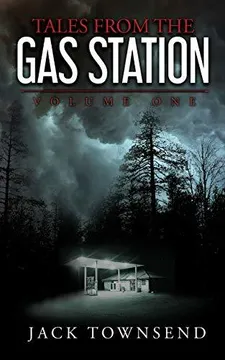
At the downhill edge of a small Southern town, a shabby gas station sits beyond the last streetlights, surrounded by woods that swallow people and explanations alike. Jack, its lone full-time cashier, works among missing-person posters, returning bloodstains, roaming cold spots, and a family of mutant raccoons.
Regulars arrive with stories about devils, vanished children, and livestock with human faces. Most customers see an ordinary store. The few who notice its oddities are warned away from the forest and, especially, from the green-hatted lawn gnomes.
The station is introduced as both workplace and threshold: its cheap, familiar routines sit directly beside the inexplicable, so horror never receives a clean entrance. Jack’s matter-of-fact inventory makes the bizarre feel administratively manageable, a survival strategy rather than a claim that everything is harmless. The missing-person posters quietly establish the cost of looking away. The prologue’s warning about the gnomes gives an everyday object the authority of folklore, while the station’s bad coffee and faulty fixtures keep the setting stubbornly mundane. That contrast becomes the book’s engine: the uncanny is not elsewhere. It is part of the shift.
The Fortune and the Robbery
Jack works alone despite a fatal illness that has left him unable to sleep and expecting an early death. One night, an elderly traveler pays for a roadmap with a tarot reading, declares him cursed, and warns that something dangerous is hunting nearby. Later, a frightened couple rushes in, claiming a monster killed the woman’s boyfriend.
Jack recognizes their story as a robbery scheme, refuses to leave the register, and lets them take the cash. When the pair run outside, genuine screams rise from behind the building. The old woman returns afterward, grips Jack’s hand with unnatural strength, and predicts that he will watch everyone he cares about die. He dismisses the prophecy, but the night has made his usual indifference harder to trust.
Jack’s first defense is not courage but classification. He identifies the couple’s monster story as a familiar criminal tactic, and that judgment is initially correct, which makes the actual danger arrive with an especially bitter irony. His illness has already trained him to treat death as settled business; the fortune teller’s prediction therefore lands less as a new fear than as a challenge to his numbness. The episode also establishes the book’s comic method: Jack’s procedural concerns remain intact even when reality breaks its own rules. His skepticism protects him from manipulation, but it also risks making genuine threats look like another tedious customer problem.
A Blog Opens the Door
After the robbery, Deputy Tom repairs the gas station’s cut phone line, and Jack drives out of town for his monthly appointment with Dr. Vicedomini. The psychiatrist asks him to record his feelings because Jack’s dry logic seems to keep grief at a distance.
On the way home, Jack stops at New Pages, a struggling bookstore run by former minister Brother Riley, and takes Riley’s suggestion to publish a blog instead of keeping a private diary. Jack posts a plain description of the station and its oddities.
He later recounts incidents such as a screaming half-pig appearing indoors, expecting readers to reject them. Instead, online strangers invite him into a paranormal chat group. By turning private anomalies into public stories, Jack unknowingly gives them a route out of town.
The blog is a practical compromise between the doctor’s therapeutic request and Jack’s instinct to avoid intimacy. A public audience feels safer than a face-to-face confidant because readers can be kept at a distance, even while they are invited into his experiences. That distance proves illusory. The story’s central mechanism begins when Jack treats narration as harmless documentation: the act of describing the supernatural changes its reach. His habit of converting fear into anecdotes makes him readable, but it also turns attention into a force with consequences. The book’s internet horror grows from an emotionally recognizable impulse, the wish to be heard without having to be known.
Gnomes Beneath the Ceiling
Jack’s blog gathers a handful of conspiracy-minded followers while the station’s lawn gnomes appear in impossible places and multiply ahead of storms. A cult member Jack calls Marlboro repeatedly tries to recruit him, and Farmer Junior keeps asking about the hand-shaped plants growing behind the building.
Jack also catches himself digging a hole without remembering why, then notices a motionless man in a blue raincoat watching from beyond the pumps. Meanwhile, Antonio, Jack’s closest coworker, confesses that a politician named Kieffer has been dead in his car for days.
Antonio says he struck Kieffer by accident after hearing something in the woods. When Jack checks the trunk, Kieffer’s body is unmistakably there, even though another Kieffer has recently been seen alive.
The growing hole, the raincoat figure, and the gnomes form a pattern Jack notices but refuses to interpret. His attention repeatedly catches the evidence, then his mind slips away from it. This is more than comic distraction: it makes the reader share his uncertainty about whether the station is changing or whether Jack’s memory is failing. Antonio’s corpse is the first anomaly that cannot be filed away as a vague sighting. Yet even here, the impossible arrives wrapped in ordinary guilt and bad judgment. The book makes the supernatural intimate by attaching it to a friend’s fear of punishment and Jack’s reluctance to ask what he would rather not know.
Kieffer Comes Back Twice
Antonio explains that he saw a living Kieffer after the collision, then ran him over again while fleeing a creature in the woods. Jack helps him hand the corpse to Spencer Middleton, a polished former schoolmate who arrives with the living Kieffer and quietly accepts the body.
Their exchange leaves Antonio shaken and binds Jack to a secret he never wanted. Marlboro then explains the Mathmetists’ doctrine: they believe ending all life would prevent future suffering, and their planned global massacre is framed as moral arithmetic.
On Halloween, the cult arrives in force to buy supplies for its Feast of Samhain, but Marlboro is absent. Jack notices the gap, then puts his unease aside, as he has with the dead politician and the strange man watching the store.
The Kieffer exchange turns Jack’s habitual noninterference into complicity. He does not create Antonio’s predicament, but he helps conceal it because loyalty feels simpler than judgment. The Mathmetists offer a grotesque philosophical mirror: their calculations reduce human lives to quantities, while Jack’s emotional detachment has also made people easier to treat as passing details. The difference is that Jack’s withdrawal is a defense against grief, not an ideology of extermination. Marlboro’s absence at the feast quietly tests whether Jack’s concern extends beyond a customer he finds irritating. By the time he notices, his decision to look away has already become part of the plot’s causal chain.
The Island’s Wrong Door
Mama Susan, a spiritualist regular, insists that Jack’s dark aura requires cleansing, and her husband Paul offers him money to endure the ceremony. Blindfolded in an inflatable pool, Jack revisits his first birthday with a foster family, then the site of a car crash that marked the beginning of his sleepless illness.
A voice from the darkness recognizes him before Mama Susan guides him to an island cabin and a painted door that will not match the color she expects. Behind it, Jack finds a sleeping gray creature rummaging through a box and panicking about an open entrance. He returns to the station disoriented. Mama Susan suffers a nosebleed, and Paul pays Jack to keep the experience quiet.
The ritual appears to offer care, but its structure strips Jack of control: he is blindfolded, chemically altered, and directed through memories he has avoided. His childhood birthday shows that joy exists in his past, though he experiences it as an observer of a child who does not understand the celebration. The door’s stubborn color marks a limit to suggestion. Jack can cooperate socially, but he cannot make his perception obey another person’s script. The creature’s alarm reverses the expected roles: what Mama Susan calls healing may have trespassed into someone else’s world. Jack’s instinct to stay quiet protects him from embarrassment while allowing a dangerous misunderstanding to persist.
The Cultists Disappear
Mama Susan returns, visibly aged and frightened, convinced that the first ritual has severed access to healing energy. She makes Jack repeat it. This time he finds a beach crowded with strange pink animals and meets a gray imp who says the island is being cleared. Mama Susan and Paul choose to remain there, and a doorway closes behind them.
Back in the station, Jack finds their clothes and belongings but no couple. When Tom examines the dark water left in the pool, an imp bursts out and bites his neck; Tom shoots it, and the water clears. Dr. V later calls Jack’s account an elaborate hallucination. A deputy tells him Tom died that Halloween in a dog attack, leaving Jack unsure whether memory or official reality can be trusted.
The second ritual transforms private experience into a choice with permanent consequences. The Ledfords see the island’s promise as worth abandoning their ordinary lives, while Jack remains unwilling to surrender the world he knows, however shabby it is. Tom’s apparent injury and the later report of his death create a deeper fracture than a simple question of whether the ritual worked. Jack has no stable external witness to validate his memory. The book therefore uses medical skepticism and supernatural danger as equally incomplete explanations. His most urgent problem becomes epistemic: if he cannot trust his recollection, then even loyalty and grief may be built on uncertain ground.
Two Bricks, One Warning
Two identically named agents calling themselves Brick Roscoe arrive from the CDC and seize Jack’s phone. They explain that copies of his ritual have spread online and that people attempting it have suffered horrifying consequences.
To make Jack’s account impossible to believe, one agent removes his own eyes in front of him. After they leave, Kieffer returns, behaving drunkenly and stripping in the store. He learns that Jack cannot sleep and suggests this is why someone cannot reach him, then Spencer takes him away.
Jack’s online following grows beyond his awareness. An anonymous fan sends him a laptop and satellite router, making the isolated station internet-connected. Another package, which Jack leaves unopened, waits beneath the counter as his stories attract both attention and danger.
The agents make explicit what Jack’s blog has been doing: copying a story is not the same as containing it. Their grotesque self-mutilation is both a threat and a performance designed to exploit the reader’s disbelief. Kieffer’s strange interest in Jack’s sleeplessness hints that his condition may matter to forces beyond the station, but offers no reliable explanation. The gifted router is a material change in the setting, not merely a convenience. The station’s isolation had limited the spread of information; now the outside world can enter, and Jack’s account can leave. His wish to be heard has become a channel he cannot control.
The Extra Kieffers
Jack’s memory gaps worsen, and he repeatedly comes to himself holding a shovel beside the growing hole. In the walk-in cooler, he and Antonio find several dead Kieffers, each apparently killed in a different accident.
Jack later wakes from another lost interval to discover he has killed one himself and dragged the body inside. Marlboro, who has secretly been living in the supply closet, helps conceal the growing pile. Jack finally opens the fan’s first package, a laptop and satellite connection, while a second parcel remains unopened.
Then a heavily armed man arrives seeking help with his SUV, which has grown a young oak through its engine. He identifies himself as Benjamin, suspects an entity in the woods is luring people, and disappears into the trees.
The multiplying Kieffers turn repetition into a crisis of responsibility. Each death can be explained as an accident, but the pile makes the excuses accumulate into a pattern that Jack can no longer ignore. His own missing time intensifies the fear that he may be acting without conscious consent. Marlboro’s presence in the closet complicates the station’s loneliness: Jack has acquired a companion without ever deliberately choosing one. Benjamin’s tree-grown vehicle provides a physical clue that the forest is not simply a setting for rumors. The unopened package symbolizes Jack’s effort to preserve a boundary, even as every other boundary around him is becoming porous.
The Plant’s Human Face
When Jack finally burns the overgrown hand plants, he discovers a fully formed Kieffer rooted in the forest. The plant-man tells him that an ancient being beneath the station has awakened and that Kieffer’s bodies are part of its work. Spencer appears, beats Jack, and throws him into a hidden hole below a surveillance room.
Jack breaks his leg and loses time before waking in hospital. There he learns that official records say Tom died on Halloween, although Jack remembers speaking with him later. During recovery, Jack reads his journal to reconstruct events, and Dr. V explains that his memory may invent missing pieces. Jack returns to work on crutches, carrying more evidence than certainty.
The hand plants are the story’s most literal image of buried harm: Jack has tended them, trimmed them, and burned them without understanding what they connect to. The rooted Kieffer forces him to recognize that maintenance can become participation when the system being maintained is alive. Spencer’s violence makes that recognition bodily, leaving Jack injured and dependent on other people. The hospital then offers no clean correction. Official accounts conflict with his memories, and the journal helps while also exposing how unstable those memories are. Jack’s problem is not simply whether he is sane; it is how to act ethically when every available account of events may be incomplete.
A Siege Behind Glass
After Jack returns to work, Benjamin reappears in ragged clothes and warns that the woods contain something dangerous. Spencer attacks him inside the station, but Benjamin kills Spencer before the others can intervene.
Soon, naked, decaying figures approach the building, and trees knot together over the windows and doors. Benjamin, Jack, Antonio, and Marlboro barricade themselves inside as the power fails. With food, light, and phone service dwindling, Marlboro reveals a concealed route through the old surveillance room.
The group tears down the wall and descends into the foul tunnel beneath the station. Benjamin carries explosives, while the others follow with makeshift torches, uncertain whether the passage leads to escape or to the source of everything outside.
The siege turns the station’s usual containment into a trap. Its glass doors once separated the cashier from passing strangeness; now the barrier is being physically absorbed by the forest. Benjamin’s decisive violence saves the group from Spencer, but his willingness to use explosives signals that survival may require destruction rather than negotiation. Marlboro’s knowledge of the hidden room makes him unexpectedly useful, despite Jack’s earlier habit of treating him as comic nuisance. Their descent is a collective act born from scarcity. The group does not share trust or a coherent theory, but dwindling power and food make cooperation more rational than waiting for certainty.
The God Beneath the Floor
The tunnel ends at an enormous black tree fused with human bodies, and Benjamin plants explosives against it. A vast hand pulls Jack away from the others and carries him into a chamber where he meets the Dark God, an immense, vain creature who complains that Jack has been killing its children. The god says the Kieffers and hand plants were attempts to influence the town and restrain logging, not to conquer the world.
It also reveals that a far more destructive entity is approaching, one that feeds on suffering. The god returns Jack and his companions to the surface. Benjamin detonates the charge, destroying the tree network; something inside Jack’s mind screams and falls silent as the station is left wrecked.
The revelation destabilizes the familiar division between monster and victim. The Dark God is grotesque and manipulative, yet its stated aim is preservation, while the humans have repeatedly answered the unknown with fire, weapons, and concealment. The book does not turn this reversal into a simple absolution: the god’s plans involve bodies and coercion, and Jack’s fear remains understandable. Instead, the encounter exposes how moral judgment changes when one learns what a threat is protecting. The distant suffering-entity enlarges the scale without resolving it. Even the successful blast offers only a local reprieve, not a guarantee that the world has been saved.
Tony’s Last Hunt
Back at the station, Jack gradually discovers that Antonio has been hiding a mass grave of Kieffers and working with people who want Jack silenced. Antonio takes Jack and Marlboro into the woods at gunpoint.
As he prepares to kill them, Marlboro maneuvers him onto an ant bed, then strikes him with Jack’s crutch. Antonio shoots Marlboro, who gives Jack time to escape. Jack hides among the decomposing bodies, reaches the station, and tries to call for help. The raincoat figure finally reveals its distorted face, then vanishes.
Antonio catches Jack, but the Brick agents arrive and shoot Antonio, then insist Jack accept their version of events. Jack refuses to inspect his friend’s body and goes inside, where the bathroom cowboy appears once more.
Antonio’s betrayal hurts because it converts accumulated intimacy into evidence Jack cannot reinterpret away. Jack’s forgiveness at gunpoint is not naïveté; he is trying to preserve the possibility that his friend has not become irredeemable. Marlboro’s improvised rescue shows that care can arrive through a person Jack had once treated as a joke. The agents’ false account repeats the book’s central pressure: institutions decide which version of reality will be believed, regardless of what witnesses saw. Jack’s refusal to look at Antonio’s body is a retreat, but also an acknowledgment that some losses cannot be processed on command. The cowboy’s appearance offers no explanation, only a strange final pause.
Epilogue
Marlboro, whose real name is Jerry, survives his wound, and Jack visits him in hospital to apologize for leaving him in the woods. Jack decides to stop writing about the station and tries to erase his blog, only to find that someone has already removed it from the internet.
His anonymous fan sends one last postcard, telling him to rest and suggesting the story has run its course. Jack accepts the quiet as a chance to stop watching friends die. But he still knows that a greater, suffering-driven presence may be approaching, so the calm feels temporary rather than earned.
The ending gives Jack a modest recovery rather than a clean victory. Jerry’s survival permits an apology to become an actual exchange between friends, not a private regret. Removing the blog reverses the decision that began the cascade, though the internet’s earlier copies make that act feel more symbolic than absolute. The fan’s postcard blurs care and intrusion once again: someone who has followed Jack’s life closely tells him to sleep, yet offers no proof of who they are or how much they know. Jack’s resolution to stop recording the strange events is emotionally coherent, but the threatened apocalypse leaves silence feeling like shelter, not safety.
Analysis
The book’s central trick is to make unreliable narration both a joke and a material danger. Jack’s deadpan voice keeps converting impossible events into shift reports, but the comic distance that protects him from fear also obscures his responsibility. He loses time, forgets what he has seen, and sometimes declines to intervene because looking away is easier than risking attachment. The journal becomes a fragile countermeasure, yet Dr. V’s warning about memory reconstruction prevents it from serving as unquestionable proof.
The gas station works as a social system where the extraordinary is normalized through repetition. Strange visitors buy coffee, coworkers hide corpses, and the cashier still worries about the register and the phone charges. This is not simply absurdist contrast. It shows how institutions and individuals adapt to harm by making it routine. The Mathmetists formalize one version of that logic, reducing suffering to arithmetic; Jack’s emotional withdrawal offers a less murderous but related attempt to manage pain by minimizing connection.
The blog extends the same problem into a networked world. Jack thinks that recording events is passive, but copying turns his account into an intervention. His audience can imitate what he describes, while government agents try to contain the story by controlling its credibility. The result is a narrative about attention as a form of power: witnessing can preserve experience, spread danger, or make a person legible to forces he cannot control.
Finally, the Dark God revelation overturns the expected moral map without restoring certainty. The apparently monstrous being claims to oppose destruction, while human characters repeatedly kill, conceal, or exploit what they do not understand. Yet the god is not made innocent by its stated purpose, and the greater threat remains unresolved. Jack’s growth is therefore modest but meaningful. He does not become fearless or certain; he becomes more aware that other people’s lives matter enough to complicate his preferred indifference. The book ends not with mastery over the uncanny, but with the uneasy choice to care while still knowing that no account, institution, or explanation can make the world fully safe.
People Also Read


Characters
Jack
The sleepless station keeperJack is the gas station’s full-time cashier, a young man diagnosed with a fatal sleep disorder who expects his life to be short. He uses dry humor, books, and strict routines to keep other people’s distress at a manageable distance. His talent for noticing inconsistencies coexists with severe memory gaps, so he often distrusts both his perceptions and his recollections. He is not naturally heroic; he prefers to keep working and let trouble pass. Yet his loyalty to coworkers repeatedly draws him into danger. His central psychological tension is between preparing for death alone and discovering that attachment makes other people’s survival matter to him.
Antonio
The loyal cashier with secretsAntonio is a former prisoner who works several short shifts at the station and becomes Jack’s closest friend. Quiet, capable, and careful about privacy, he offers support without demanding personal explanations. His practical manner makes him seem dependable, especially beside Jack’s disconnection from ordinary friendship. Antonio carries guilt from past events and has a strong instinct to protect himself and those near him, though fear can make his choices difficult to read. The friendship matters because it grows through small acts of routine rather than declarations: coffee, shared shifts, and invitations to spend time together beyond the store.
Jerry, formerly Marlboro
The stranded cultist turned clerkInitially known to Jack as Marlboro, Jerry is an enthusiastic Mathmetist who frequently tries to recruit him. He is sociable, impulsive, and more emotionally open than the station’s regulars, traits that make him seem unserious until his vulnerability becomes visible. The cult’s disappearance leaves him without the community he expected to join, and he improvises a new place for himself among the station’s employees. Jerry’s blend of cheerful absurdity and genuine loyalty unsettles easy judgments: he can be both a source of comic disruption and a person willing to act when someone else is in danger.
Tom
The weary anomaly deputyTom is the older deputy assigned to the gas station and one of the few local officials who treats its impossible incidents with calm practicality. He repairs phone lines, checks on Jack, and offers help without prying into every secret. His familiarity with the town’s history suggests years of exposure to events that cannot be handled through ordinary police work. Tom’s steady presence gives Jack a model of care that does not require emotional performance. He is patient, observant, and quietly protective, though even his knowledge cannot make the station’s dangers fully predictable.
Dr. Henry Vicedomini
Jack’s skeptical specialistDr. Vicedomini is the specialist who monitors Jack’s rare condition through monthly testing and conversations. He is professional, controlled, and interested in how Jack’s memory and emotional life are changing. His insistence on honesty gives their relationship structure, but his clinical skepticism also leaves Jack feeling that extraordinary experiences are being reduced to symptoms. The doctor is neither a simple confidant nor a villain; he tries to distinguish illness from reality using the tools available to him. His presence emphasizes Jack’s difficult need to seek help from someone who cannot automatically validate what he has seen.
Spencer Middleton
The polished violent alumnusSpencer is Jack’s former schoolmate, now a sharply dressed man whose composure contrasts with troubling memories from their youth. As a teenager, he was isolated and associated with cruelty toward animals, while the adults around him failed to respond meaningfully. In adulthood he keeps his motives guarded and moves through town with the confidence of someone accustomed to controlling a situation. Spencer’s cultivated appearance does not erase the unsettling history beneath it. He represents the persistence of harm that a small community prefers to gossip about rather than understand or address.
Kieffer
The uncanny local politicianKieffer is an older local politician with a conspicuous comb-over, moustache, and habit of appearing in situations that leave other people uncertain what they have witnessed. He is often intoxicated or disoriented, yet his manner can shift into unnerving calm. His connection to Spencer and his repeated presence around the gas station make him a persistent source of unease. Kieffer seems less like a conventional antagonist than a figure whose identity and purpose resist ordinary explanation. His presence tests how much evidence Jack needs before he accepts that a familiar face may not mean a familiar person.
Benjamin
The armed outsider investigatorBenjamin is a heavily armed stranger who arrives seeking help with a vehicle altered by a growing tree. He has the bearing of someone experienced in hostile environments and speaks with blunt certainty about dangers in the woods. His suspicion makes him difficult to trust, but he is attentive to threats other people have not recognized. Benjamin approaches the supernatural as a tactical problem, relying on weapons, explosives, and preparation rather than speculation. That practical focus gives him influence during crises, though it also raises questions about how much collateral damage he considers acceptable.
Mama Susan
The spiritualist ritual leaderMama Susan is a local spiritualist who speaks openly about energy, auras, and ritual healing. Warm and socially confident, she is accustomed to guiding conversations and interpreting other people’s experiences through her beliefs. Her concern for Jack appears sincere, but she often treats his agreement as less important than her certainty that she knows what will help him. She is driven by a desire to reach a source of healing and meaning beyond ordinary life. Her spiritual conviction gives her courage, but also makes it harder for her to recognize when the unknown is not answering to her expectations.
Paul Ledford
The practical devoted husbandPaul is Mama Susan’s quiet, supportive husband, a steady presence beside her more forceful spiritual enthusiasm. He handles practical tasks, helps arrange the ceremony, and tries to make Jack’s participation easier. Paul’s affection for his wife is evident in the way he follows her lead without making a display of it. At the same time, he is not simply passive; when a decision carries real consequences, his attachment to family and ordinary commitments becomes clear. He represents the domestic life that the station’s larger mysteries continually place under pressure.
Brother Riley
The ex-minister booksellerBrother Riley runs New Pages, a bookstore and record shop that also serves as Jack’s refuge from the gas station. A former youth minister, he is irreverent, practical, and willing to offer help without demanding a polished explanation. He encourages Jack to turn his journal into a blog, unknowingly helping set the larger story in motion. Riley’s humor and relaxed manner make him a rare source of ordinary companionship. His shop stands for a fragile alternative community in a town where conformity is strong and even a small independent business struggles to survive.
Vanessa
The buoyant night cashierVanessa is a cheerful part-time cashier whose energy contrasts with Jack’s habitual detachment. She decorates lawn gnomes, makes an effort to enjoy Halloween, and notices more about Jack’s routines than he expects. Her friendliness offers him a brief glimpse of uncomplicated company, though he remains awkward about responding to it. Vanessa’s role shows how a little optimism can brighten the station without erasing its dangers.
Deputy O’Brien
The new deputy chauffeurO’Brien is a deputy who takes over some of the station-related duties after staff changes in the sheriff’s department. She drives Jack to work and medical appointments while his leg is injured, keeping the arrangement brisk and professional. Her reserve makes her difficult for Jack to read, but she follows through on practical responsibilities. O’Brien represents the rotating law-enforcement presence around the station, where even official roles are shaped by local strangeness.
The Brick Roscoe agents
The impossible federal twinsTwo federal agents who both identify themselves as Brick Roscoe arrive to contain the spread of Jack’s ritual online. They are theatrical, self-assured, and disturbingly casual about injury and disbelief. Their presence brings government intervention into the story but offers little stable reassurance, since their methods are as bizarre as the phenomenon they claim to control. They understand how stories reproduce across the internet, yet their own behavior makes them nearly impossible to believe.
The tarot reader
The fortune-reading strangerThe elderly traveler who reads Jack’s cards appears pushy, theatrical, and difficult to take seriously. Her odd clothes and abrasive manner invite Jack to dismiss her as a nuisance, but her physical strength and warnings complicate that judgment. She functions as a stranger who sees danger before Jack is willing to name it. Her mixture of comedy and menace establishes the uncertainty that governs many encounters at the station.
Farmer Junior
The obsessed farmer’s sonFarmer Junior is a local who becomes fixated on the hand-shaped plants growing behind the station. He repeatedly contacts Jack to ask whether more specimens are available, even when Jack has little interest in explaining the plants. His curiosity links the station’s strange ecology to the town’s everyday commerce. Junior’s persistence is comic at first, but it also signals that the plants have drawn attention beyond Jack’s private experiments.
The Dark God
The buried cosmic presenceThe Dark God is an ancient presence associated with the station’s underground passages and the strange growths around it. Jack encounters only fragments of what it knows, filtered through its own theatrical personality and his uncertain perceptions. It is difficult to classify as simply benevolent or hostile, since its actions mix protection, manipulation, and harm. Its existence enlarges the story beyond the town while preserving its central uncertainty: even a powerful being may understand only part of the danger surrounding the station.
Plot Devices
The gas station
The town’s strange nexusThe station concentrates the book’s supernatural incidents inside a recognizably shabby workplace. Its broken fixtures, missing-person posters, cold drafts, damaged phone line, and unreliable doors make each anomaly feel attached to an ordinary task. For Jack, the location is both livelihood and refuge, a place where repetition makes the impossible easier to tolerate. Its physical isolation initially limits contact with the outside world, but hidden rooms and underground passages show that the building is less contained than it appears. The setting holds together the episodic stories while gradually becoming the center of a larger conflict.
Jack’s blog
Stories that spread themselvesJack begins posting online because Dr. V asks him to keep a journal and Brother Riley offers a public alternative. The blog lets Jack describe events without confronting a listener, and its growing readership seems harmless until fans imitate a ritual he recounts. Copies of the stories travel beyond Jack’s control, attract government attention, and bring strangers closer to the station. The blog turns narration into a causal force: recording an event can help preserve Jack’s memory, but distributing it can change what happens next. Its popularity also blurs whether readers see Jack as a person, a fictional character, or a source of dangerous instructions.
The journal and memory tests
A record against forgettingDr. V’s word tests and journaling assignment establish memory as both a medical concern and a narrative problem. Jack often loses stretches of time, finds himself digging, and later has difficulty distinguishing lived events from recalled or reconstructed ones. The journal gives him a record he can consult, but it cannot guarantee that every entry is accurate or complete. Readers must navigate the same uncertainty as Jack, especially when his memories conflict with official accounts. The device makes unreliability concrete rather than decorative: it affects his relationships, his safety, and his ability to judge what he has done.
Hand plants and Kieffers
The buried plot made visibleThe hand-shaped plants first appear as a bizarre patch behind the gas station, an eccentricity Jack waters and occasionally burns back. Their roots, growth, and human resemblance gradually connect the station’s surface oddities to the underground presence. Kieffer’s repeated appearances and the growing number of his bodies provide another physical sign that ordinary explanations are failing. Together, plants and bodies make the hidden conflict material: Jack can touch, move, and even destroy evidence without understanding what it means. Their grotesque repetition also turns the comedy of local weirdness into a question of responsibility.
The island ritual
A doorway through memoryMama Susan’s aura-cleansing ceremony uses a pool, blindfold, memory prompts, and a drugged mint leaf to carry Jack into an island landscape. The ritual begins as an attempt to heal him, but it exposes a cabin, a door that resists suggestion, and a world whose inhabitants do not welcome visitors. Online copies of Jack’s description later encourage others to attempt the same process, multiplying the consequences. The ceremony functions at once as supernatural threshold, psychological excavation, and plot trigger. Its uncertain mechanics preserve doubt about whether Jack entered another world, hallucinated one, or experienced both possibilities together.
Download PDF
Download EPUB
.epub digital book format is ideal for reading ebooks on phones, tablets, and e-readers.








