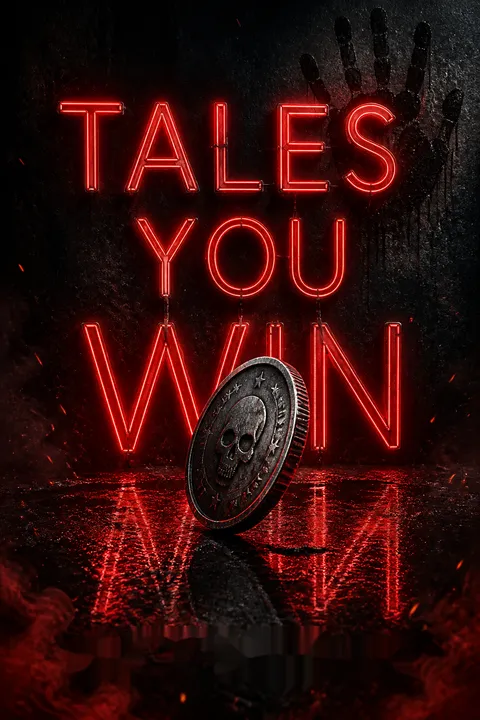


Plot Summary
Prologue
In a letter to her young daughter Iris, Kate explains why she and Iris’s father must leave to rescue Kate’s kidnapped sister, Christy. She has entrusted Iris to trusted friends and admits that the rescue could leave the child without parents.
To give Iris something lasting, Kate leaves her the account of how she and her father found each other. She recalls a coin toss that shaped her fate and frames their imperfect romance as a story passed from mother to daughter.
The letter gives the romance a future shadow before its beginnings are known. Kate writes as a mother who may not return, turning the love story into both inheritance and preparation for loss. Her choice to leave Iris a written account also counters the violence surrounding the family: instead of handing down only danger, she gives her daughter a record of how love formed inside it. The coin toss introduces chance as a force that can redirect a life, while Kate’s decision to act for Christy shows that family loyalty remains the story’s governing rule.
Fists, Nicknames, and Boundaries
Kate Davidson, nearly eighteen and known as Grim, trains in the ring at Tales, her father Carter’s underground fight club. Her instructor is Beast, Carter’s imposing enforcer and the man assigned to protect her. Kate wants to inherit the club, and she needles Beast with flirtation, insults, and challenges to see where his limits lie.
He calls her Princess and insists she is off limits because she is young and his employer’s daughter, even as their attraction complicates every lesson. Their sparring teaches Kate to defend herself, but their sharp exchanges reveal that Beast knows her better than Carter’s other men do. When trouble at Tales demands his attention, he leaves her behind.
The ring gives Kate a rare arena where she can test herself without pretending she is already invulnerable. Yet Beast controls the terms of her training, as Carter controls the future she imagines for herself. Their nicknames expose competing identities: Princess is the protected daughter, while Grim is the successor she wants to become. Beast’s refusal is partly ethical restraint, but his attention makes the boundary emotionally unstable. The opening conflict is therefore not simply whether they desire each other. It is whether Kate can be recognized as an adult without being pushed prematurely into the violence that defines her family.
The Informant's Last Choice
While interrogating a captured dealer beneath Tales, Beast learns that Saxon has been arranging secret bets and threatening the dealer’s ten-year-old sister to keep him silent. Beast gets the child and her aunt moved to safety through his old friend Connall, then forces the dealer to confirm Saxon’s involvement.
Because the man has sold drugs to minors, Beast kills him once he has the information Carter needs. The decision does not erase his discomfort: he knows the dealer’s family will bear the consequences of a crime they did not commit. Beast leaves the basement with Saxon’s name and a safe house arranged, carrying both the evidence Carter sought and the burden of deciding who deserves protection.
Beast’s violence is presented as practical rather than pleasurable, but his practical code still lets him decide who lives and dies. Protecting the dealer’s relatives is a meaningful limit on that authority: he refuses to treat family members as extensions of a criminal’s guilt. At the same time, he kills the man without claiming innocence or moral purity. This tension gives Beast depth beyond the fearsome enforcer role. His conscience does not prevent violence; it appears in the obligations he accepts afterward, especially toward people who cannot defend themselves.
Macey's Dance Floor
Carter expects Kate to be with her friend Hudson, but Beast finds her at Macey’s Bar instead. He watches her laugh with Hudson, grows jealous when another man dances with her, and breaks up the encounter with more force than his job requires. Kate turns the confrontation into a challenge, dancing against Beast until he finally holds her and moves with her.
For a few minutes, bodyguard and heiress stop performing their assigned roles. He then carries her out rather than risk letting the moment go further. In the car, Kate notices that he is troubled and learns he killed a dealer that day, while also protecting the man’s young sister and aunt. A new call sends Beast back to Tales, and he leaves Kate behind.
The dance makes visible what both characters have been disguising as banter. Beast’s jealousy contradicts his insistence that Kate is merely a responsibility, while Kate’s willingness to provoke him lets her test whether he sees her as desirable or simply dangerous to supervise. His abrupt retreat restores the professional boundary, but not its credibility. The scene also links intimacy to moral disclosure: Kate learns about Beast’s killing not through a confession designed to impress her, but through his difficulty living comfortably with what he has done.
The Gun She Surrenders
Beast goes to Tales without Kate, hoping to spare her the execution of Saxon, the man accused of stealing from the club. Kate follows by cab and arrives as Carter demands that she shoot the beaten, tongue-severed prisoner to prove she can inherit the business. Her hand shakes, and Saxon’s helplessness makes the order impossible to carry out.
Beast steadies the gun with her, then gives her a silent choice: kill Saxon and become the person Carter expects, or refuse. Kate lowers the weapon and gives it to Beast. He shoots Saxon himself. Carter treats Kate’s mercy as failure, but Beast’s intervention keeps her from taking a life simply to satisfy her father’s test.
Carter turns succession into a moral exam with only one acceptable answer: obedience expressed through killing. Kate’s refusal is not proof that she lacks courage. She has entered the cage and faced the consequence, then chosen not to let her father dictate what kind of person she must become. Beast’s role is complicated because he both guides her and completes the violence she declines. The episode marks a divide between competence and complicity. Kate may need to survive her father’s world, but survival does not require accepting every ritual he calls necessary.
Choosing the Davidson Crown
After Saxon’s death, Kate scrubs herself raw and takes Carter’s contempt as proof that she has disappointed him. Beast visits, brings coffee, and talks about the mother he cared for while she died of cancer, and the violent father he nearly killed after her funeral. He admits that becoming an enforcer was a choice made in grief, not a life he recommends.
Kate asks why he wants her to remain Kate instead of becoming Grim; he wants her to have time to choose another future. Carter soon orders Beast to retrain her with a gun after learning she has been pole dancing at Nine Lives. Kate protests, proves her aim at the range, and insists that she still wants to run Tales.
Beast’s history lets Kate see that the criminal identity he wears was not an inevitable destiny, even if he now believes it cannot be changed. His account offers her an alternative to Carter’s model of inheritance: a person can be formed by violence without treating violence as a calling. Kate hears the warning but does not accept its conclusion. Her decision to pursue Tales is not simple obedience to family tradition; she wants power in the world she has actually inherited. The unresolved question is whether she can claim that power without letting it define her entirely.
Dinner Behind Stained Glass
After the shooting range, Beast takes Kate to Sapori, a discreet Italian restaurant hidden beneath stained glass and run by the Ricci family. Its polished rooms are a world away from Tales, and Kate studies the place as a model for what her club might become. Over an elaborate meal, Beast feeds her an olive and watches her closely; Kate calls the outing a date and teases him about Romeo, the restaurant’s owner.
The flirtation briefly makes Beast blush, but he retreats as soon as Kate points out that his actions do not match his claim that he will never touch her. They finish dinner with the attraction acknowledged but unresolved, and Kate recognizes that wanting Beast will collide with Carter’s authority.
Sapori gives Kate a glimpse of criminal power presented as hospitality, taste, and controlled spectacle rather than blood on a fight-club floor. She does not merely admire the restaurant; she imagines adapting its sophistication to her own business. The meal also exposes Beast’s inconsistency more gently than the ring does. He seeks intimacy through small gestures, then retreats when Kate asks him to name what those gestures mean. Her insistence on clarity signals that desire alone is not enough. She wants to be treated as a person whose expectations matter, not as a temptation he can approach and disclaim.
The Playground Bloodbath
When Hudson calls for help, Kate finds him injured after a fight with Dougie Slimon and his crew. Hudson has a concussion and refuses an ambulance because he fears jeopardizing the chance to take his younger brothers, Max and Bryce, out of care.
Kate fights the men herself, breaking bones after they threaten her, until Beast arrives with Connall. Beast takes Hudson for treatment, then tells Kate that he will deal with the attackers.
Later he returns to her house carrying a metal box containing their hearts, having killed them and hidden their bodies in construction concrete. He says Carter ordered the deaths, but the hearts were his own grim promise to Kate. The gesture frightens her, yet it also reveals how personally he takes threats against her.
The episode draws a sharp line between Hudson’s vulnerability and Kate’s agency. She chooses to enter danger for a friend, while Hudson’s refusal of medical help reflects the precarious future he is trying to protect for his brothers. Beast’s retaliation is framed as care, but it is care expressed through ownership and spectacular violence. The hearts convert his promise into a physical object, making devotion difficult to separate from menace. Kate’s mixed response is important: she is neither sheltered from the violence nor simply seduced by it. She recognizes that affection can arrive in forms that are both intimate and alarming.
Hearts on the Counter
Kate asks Beast why he brought the hearts into her home, and he admits he wanted her to know her attackers could not hurt her again. She helps clean the blood from his face, then the two settle in to watch a film. Their closeness shifts when Beast says he believes she has never been with anyone.
Kate challenges him to do something about it, but he refuses, insisting that she is still too young and that he will not cross the line he has set. Kate hides her hurt beneath a cutting remark and leaves him on the sofa. His refusal may be principled, but after weeks of flirtation and possessive gestures, she experiences it as another instance of him deciding what she can handle.
The hearts and the refusal reveal two versions of Beast’s care. In one, he acts decisively on Kate’s behalf; in the other, he denies her the right to decide what intimacy means for herself. His restraint has a genuine ethical basis, especially given her age, but his mixed signals make that restraint feel less like respect and more like control. Kate’s response shows how easily protection can become paternalism when the protected person is not consulted. The scene deepens the romance’s central conflict: a boundary can be morally necessary and still hurt when it is enforced through ambiguity.
The King at Supper
Carter takes Kate and Beast to meet the King, a powerful criminal contact with whom he is entering business. The King appraises Kate as a future wife and dismisses women’s place in the criminal trade. Kate answers him calmly, argues that she can run Tales herself, and exposes the inconsistency in his views by asking about his estranged wife.
Carter does not defend her; instead, he belittles her and reminds her that Tales is still his business. In the car, Kate asks what the new partnership means, but Carter refuses to explain. Beast drives her to his flat rather than let her drink alone. There, wounded by her father’s contempt, Kate offers herself to Beast. He refuses, invoking his promise to protect her as family.
The dinner makes Kate’s exclusion explicit: men discuss a business that shapes her future while treating her as an asset or a future wife. Her composure is not submission; it is a strategy that lets her challenge the King without surrendering control of the room. Carter’s dismissal cuts more deeply because he has previously given her responsibility for the club’s rebuild. At Beast’s flat, Kate seeks intimacy partly as desire and partly as reassurance that she is wanted. His refusal preserves a boundary, but it cannot repair the hurt created by the men who keep defining her value for her.
A Dress, a Pole, a Crown
Carter sends Kate to an exclusive boutique to find a modest dress for her birthday party, specifying what she is not allowed to wear. She resists the attempt to manage her appearance, but Beast finds a long black lace dress that meets Carter’s rules while still fitting her figure. Later, Kate secretly trains at Nine Lives with Matilda and the dancers.
When Beast discovers her there, he warns that Carter will be furious; Kate climbs onto the stage and performs anyway. Her practiced turns and strength transform the pole into a display of skill rather than an invitation for men to judge her. Beast watches without stopping her, visibly affected. Kate leaves feeling that she has claimed her body on her own terms.
The boutique and the pole stage offer two competing scripts for Kate’s body. Carter’s dress rules aim to make her respectable by making her less visible, while the club’s customers often reduce dancers to the parts of them they can buy. Kate’s performance refuses both terms: she treats dance as trained physical work and chooses when to be seen. Beast’s response confirms the power of the scene without making his approval its point. Her confidence comes from acting, not from being declared beautiful by a man. The moment gives her a form of authority she can exercise before she inherits any official title.
No More Offers
Later, Kate strips in front of Beast and begins touching herself, hoping to end his evasions by making her desire impossible to misunderstand. Beast is visibly aroused but does not touch her, holding to his promise to Carter and his own rule against sleeping with someone under twenty. Kate reaches orgasm while he watches, then dresses and tells him she will never offer herself to him again.
Beast insists he would kill any man who tried to take her, but his possessiveness does not soften the rejection. He drives her to Tales for a fight night without changing his mind. Kate’s decision protects her pride, while leaving both of them with the knowledge that their attraction is no longer harmless banter.
Kate turns sexual display into a test of agency: she chooses what to reveal and asks Beast to meet her as an adult who can name her own desire. His refusal is not indifference, since his body and jealousy betray him, but that distinction offers little comfort to her. The scene exposes a weakness in their dynamic: Beast believes that restraint proves care, while Kate experiences repeated refusal as humiliation. Her vow to stop offering herself is an attempt to reclaim emotional control. It also raises the stakes for Beast, who must decide whether his rules protect her or protect him from risk.
A Hand Over His Heart
At Tales, Beast faces Clayton in the cage and nearly loses after taking a heavy blow. Kate’s shouts help pull him back into the fight; he wins, then asks whether she meant her promise never to pursue him again. She confirms it. Beast takes her to his tattoo shop, where he outlines her hand over his heart and finally admits that his attraction has become love.
He asks her to wait while he works out how to be with her without betraying Carter or his own principles. Kate agrees only after making clear that she will not tolerate betrayal. They share their first kiss. The next day, Kate tells Hudson she is in love with Beast; Hudson shares his plan to buy and renovate flats so he can build a home for Max and Bryce.
The tattoo makes an inward attachment visible on Beast’s body, reversing the usual direction of protection: he carries Kate’s mark rather than merely guarding her. His confession changes the question from whether desire exists to whether he can act responsibly on it. Kate’s agreement is conditional, not passive; she sets the terms of trust and refuses to wait without a promise. Hudson’s conversation then grounds romantic intensity in another kind of loyalty. His plan for his brothers shows Kate that chosen family can be built through patient, ordinary work, not only defended through violence.
The King's Price
At the Crib Club, Beast notices the King speaking privately with Rodriguez, Carter’s newer associate, and overhears enough to suspect a larger scheme. When he confronts the King, the man makes clear that he knows Kate is what Beast wants most. Beast agrees to a dangerous bargain: he will kill Derby and Carter, while the King remains a silent business partner and supplies protection for Kate and the club.
The King’s offer depends on the arrangement Carter has made with him, though Beast does not yet know every term. Rather than trust the King, Beast accepts because he believes the deal can keep Kate alive and leave her a path to control Tales. He enters the birthday party knowing he has made himself responsible for the consequences.
Beast’s bargain is an act of protection that also repeats the story’s most troubling pattern: men make decisions about Kate’s future without her consent. He believes he is buying her security and preserving her access to Tales, but secrecy deprives her of the chance to judge the risk herself. The King exploits Beast’s devotion by turning it into leverage. Rodriguez’s presence also signals that Carter’s inner circle may not be as loyal as it appears. The deal converts love into a criminal transaction, exposing the danger in Beast’s belief that he can control outcomes by carrying the burden alone.
The Coin Chooses Blood
At Kate’s birthday party, Carter changes the usual cage rules and declares that Beast and Derby must fight to the death with weapons. Kate tosses an old coin, and Beast wins the first choice, taking a butcher’s knife; Derby selects a crowbar.
Carter adds his own gun to the tray, turning the match into an execution dressed as entertainment. He pulls Kate into his office as the fight begins, and Beast eventually collapses, leaving her to believe he has died.
While Carter celebrates his control, Beast revives and kills Derby, then drives the knife into Carter. The King reveals that Carter owed him money, had signed away a forty-eight percent share of Tales, and intended to trade Kate to settle his debts. Beast’s bargain kept that plan from being carried out.
The party turns family succession into public spectacle. Carter makes Kate’s birthday the stage for a fight whose rules erase the distinction between sport and murder, while the coin gives arbitrary chance a ceremonial role in a decision already shaped by power. The revelation about Carter’s debt reframes his earlier contempt: Kate was not merely being underestimated but treated as currency. Beast’s violence stops that immediate sale, yet his secrecy leaves Kate facing both a dead father and a future negotiated in her absence. The apparent victory therefore contains a new injury: protection has again arrived as a decision made for her.
Grim Pulls the Trigger
Kate takes aim at the King, furious that he helped turn her father’s business into a contract and her future into a bargaining chip. Beast steps between them and claims responsibility for Carter’s death, saying he acted to protect their relationship. Kate rejects that explanation: he made the choice without her and killed her father rather than trusting her to help find another way.
She also knows that allowing him to walk away would weaken her authority over the club she has inherited. Beast tells her that he loves her. Kate answers that people like them do not get to love, then points her gun at him and fires. The book ends on the shot, leaving both their fate and the King’s control of Tales unresolved.
The final shot is both an act of grief and a political decision. Kate’s anger is not simply a lover’s response to betrayal; Beast’s unilateral action has placed her authority at risk at the very moment she must establish it. His declaration of love cannot erase the fact that he repeated the paternal pattern she has resisted, deciding what was best for her without asking. Kate’s gun turns the choice from a private quarrel into a test of whether she can act as the successor she claims to be. The unresolved ending denies the couple an easy reconciliation and leaves love suspended beside power.
Analysis
Tales You Win frames romance as a struggle over who has the right to make choices for Kate. Carter calls coercion preparation for leadership; Beast calls it protection; the King turns the same logic into a business arrangement. Each man believes that deciding for Kate is justified by his position or his intentions. Kate’s repeated resistance, from refusing to shoot Saxon to claiming the pole stage, establishes that competence and obedience are not the same thing. She wants the power to act, but also the authority to define what her actions mean.
Beast’s appeal lies in the contradiction between his capacity for violence and his efforts to limit its reach. Protecting the dealer’s family, caring for Kate, and carrying the handprint tattoo all suggest a moral self beneath the enforcer’s persona. Yet he repeatedly withholds information and makes unilateral choices, so tenderness does not automatically make him trustworthy. The novel refuses to treat good intentions as a substitute for consent. His fatal flaw, as Kate sees it, is not simply violence but the belief that love licenses control.
The recurring fairy-tale and coin imagery complicates the idea of destiny. A coin appears to assign outcomes, but people with power choose the rules and decide what the result will cost. Likewise, Kate’s nickname may sound like a fixed identity, yet her central struggle is to choose between inherited roles rather than accept one as fate. The ending leaves that choice unresolved. Her shot at Beast can be read as grief, self-defense, political necessity, or all three at once. The romance therefore closes its first movement not with reconciliation, but with the consequences of a protection that denied its supposed beneficiary a voice.
Review Summary
Tales You Win received mostly positive reviews, praised for its intense sexual tension and character development. Readers loved the slow-burn romance between Grim and Beast, though some found the writing cringeworthy. Many appreciated the backstory of these fan-favorite characters from previous series. The book's cliffhanger ending left readers eager for the sequel. Critics noted excessive profanity and a lack of explicit content. Overall, fans of the author's work were satisfied, while new readers had mixed reactions.
People Also Read






Characters
Kate Davidson
The fierce heirKnown as Grim, Kate is Carter Davidson’s daughter and the aspiring successor to his underground fight club, Tales. She is sharp-witted, physically capable, and impatient with the rules men impose on her. Her love of Grimms’ fairy tales gives her a private language for thinking about danger and fate, while her training gives her practical confidence in a world that rarely treats her as an equal. Kate wants more than protection: she wants authority, competence, and the right to choose who she becomes. Her boldness can mask vulnerability, especially when the people she trusts treat her as a child or an asset rather than a person.
Beast
The guarded enforcerBeast, born Roger Smith, is Carter’s head enforcer and Kate’s bodyguard and trainer. His size, tattoos, and reputation make him a convincing instrument of violence, but his choices reveal a private moral code: he protects innocent relatives, remembers the people he has harmed, and avoids pretending that his work makes him good. His mother’s illness and his father’s abandonment shaped his distrust of weakness and intimacy. Beast is loyal to the people he chooses, yet he often confuses protecting someone with making decisions for them. Kate’s independence challenges both his professional discipline and his belief that he can keep emotional distance.
Carter Davidson
The ruthless fatherCarter owns Tales and raises Kate within the criminal world he expects her to inherit. He prizes control, reputation, and practical toughness, and he treats tests of violence as preparation for survival. His relationship with Kate is complicated by genuine investment in her future and a harsh inability to recognize what his demands cost her. He can be charming when managing business, but his authority becomes cruel when challenged. Carter’s decisions shape the central conflict because he sees the club as his domain and Kate as both family and part of its future.
The King
The calculating partnerA powerful criminal contact, the King offers Carter access to fighters and a wider business network. He presents himself as a businessman while holding deeply sexist assumptions about women and authority. His polished manner conceals a talent for turning people’s needs into leverage. He recognizes Kate’s intelligence and independence, but that recognition does not make him trustworthy; he views power as something to acquire through contracts, debts, and calculated bargains. His partnership places pressure on Carter’s business and on Kate’s hopes of shaping Tales herself.
Hudson Freed
Kate's chosen familyHudson is Kate’s close friend, a smart and streetwise young man who treats her as an equal rather than Carter’s daughter. He has spent years working toward a stable home for his younger brothers, Max and Bryce, and his loyalty to them shapes his choices. He is wary of criminal attention but willing to stand by Kate when she is in trouble. His friendship gives her a relationship outside Tales and its hierarchy, one built on mutual trust rather than protection or authority.
Connall
Beast's oldest friendConnall is Beast’s longtime friend and a member of the O’Brien criminal family. Beast trusts him to protect people who cannot safely remain where they are, and Connall helps without demanding explanations. His easy humor contrasts with Beast’s guardedness, though he understands the danger of their work. Their old friendship gives Beast a rare connection that predates his role as Carter’s enforcer.
Dom
Carter's battle-tested soldierDom is one of Carter’s senior men, a scarred fighter whose blunt humor and loyalty make him a familiar presence at Tales. He works closely with Beast and knows the rhythms of the club’s violence. Beneath the banter, Dom is observant about the people around him and capable of keeping confidence when a situation turns serious.
Joey
The underworld medicJoey treats the injuries that criminal life produces, operating outside ordinary medical channels. Older and experienced, he speaks plainly to Beast and recognizes emotional danger as readily as physical damage. His advice is shaped by years of watching powerful people mistake control for protection.
Rodriguez
Carter's ambitious associateRodriguez is a newer member of Carter’s circle with connections to the Perez crime family. He is comfortable around violence and eager to demonstrate his usefulness. Beast regards him cautiously because Rodriguez moves easily into responsibilities that once belonged to the established enforcers.
Saxon
The rival's operativeSaxon is linked to illicit betting around Tales and commands enough fear to threaten a captured associate’s young sister. His role exposes how criminal rivalries reach beyond the people directly involved.
Cal
Hudson's loyal friendCal is close to Hudson and his brothers, often joining them in the easy, teasing household they have built together. He has his own family ties and does not pretend that friendship erases them. His presence underscores that chosen family can include people who do not share the same history or name.
Max Freed
Hudson's younger brotherMax is one of Hudson’s younger brothers, raised alongside him and Bryce in the care system. He shares their irreverent humor and their hope of building a secure life together.
Bryce Freed
Hudson's younger brotherBryce is Hudson’s other younger brother. Big, hairy, and playful, he helps give the brothers’ home its lively, teasing atmosphere. Hudson’s plans for their future are shaped by his determination to keep the three of them together.
Matilda
Nine Lives managerMatilda manages Carter’s strip club, Nine Lives, and treats its dancers as skilled performers rather than decoration. She supports Kate’s interest in pole dancing and helps her develop technique in a private, respectful setting.
Christy
Kate's imperiled sisterChristy is Kate’s sister, whose danger motivates the future rescue described in the letter to Iris. Kate’s commitment to family is clear in the lengths she is willing to go to protect her.
Iris
Kate's young daughterIris is the young recipient of Kate’s letter. Though she is too young to understand its danger, Kate leaves her the story of her parents as an inheritance of memory and affection.
Plot Devices
The coin toss
Chance as a verdictThe coin links Kate’s remembered fate to the fight staged at her birthday party. In the ring, its result determines which fighter chooses a weapon first, giving an appearance of fairness to a contest Carter has made lethal. The device makes chance visible, but it does not make the participants equal: Carter controls the rules, the weapons, and the consequences. Its recurrence connects the family’s fairy-tale language to the way power can disguise deliberate choices as fate.
Tales fight club
Violence as inheritanceTales is the underground club Carter owns and the place where Kate trains, watches executions, and is expected to learn the family business. Its cage turns violence into entertainment and authority into spectacle. For Kate, the club is both an inheritance she wants and a system that demands proof of toughness on terms set by men. Its planned rebuild also lets her imagine changing the institution rather than merely occupying her father’s place.
The handprint tattoo
Love made visibleBeast tattoos the outline of Kate’s hand over his heart, turning a private attachment into a mark carried on his body. The image answers the story’s repeated language of protection and possession, but it also makes him vulnerable: he chooses to display the person whose independence he struggles to respect. The tattoo becomes a concrete token of his promise and the intimacy that follows, while the story tests whether a visible declaration can compensate for decisions made without Kate’s consent.
Grimms' fairy tales
A private map of dangerKate’s love of Grimms’ fairy tales gives her the nickname Grim and a way to think about stories that rarely protect their characters from violence. The tales are not a refuge from her world so much as a language for recognizing its brutality. The prologue extends that motif when Kate leaves Iris a written account of her and Beast, making their romance a family story rather than a clean, comforting fairy tale.
The King’s contract
Debt turned into leverageThe agreement between Carter and the King converts business debt into ownership and personal risk. Its terms make the King a substantial stakeholder in Tales and place a price on Kate’s future, even though she is excluded from the negotiations. The contract drives Beast toward a secret bargain and forces Kate to confront the gap between inheriting the club and actually controlling it. It is a plot mechanism for the story’s central conflict over who gets to decide her future.
Grim & Beast Duet Series

Download PDF
Download EPUB
.epub digital book format is ideal for reading ebooks on phones, tablets, and e-readers.








