

Plot Summary
Barking in French Class
Sven Beekman arrives at his new school determined to make an impression before anyone can reduce him to the boy with pills and medical rules. Parker Montijn, starting over in a class where nobody knows her, is still grieving the dog her family had to give away. During French, Sven’s lateness and mangled attempt at the lesson make the class laugh together.
Then Parker admits she can bark a Christmas song, and Sven dares her to prove it. She does, to the class’s delight, but the attention quickly curdles: Sven coins a teasing nickname from her name and performance. Parker leaves the first day feeling exposed, while Sven has found a way to be noticed, though not the way he planned.
Their first connection is built through embarrassment, but the same laughter means different things to each child. Sven uses it as a shield against the attention his illness attracts; Parker becomes its target despite having acted on a dare. Their competing needs are already visible: he wants control over how others see him, while she longs to pass unnoticed until she feels safe. The classroom’s quick transformation into a group offers warmth, but also shows how easily belonging can be purchased at one child’s expense.
A Seizure, Then Alaska
During homeroom, Sven has a brief seizure that leaves him smacking his lips and laughing without awareness. Afterward, he explains his epilepsy to the class, including the risk of more serious seizures and the restrictions that have reshaped his life. Parker watches classmates react with pity, then spots a white dog outside wearing an assistance-dog vest.
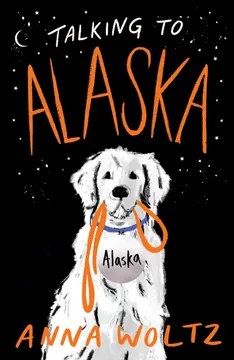
The dog is Alaska, the retriever Parker’s family gave up because her youngest brother, Joey, was allergic. Sven takes Alaska’s leash without greeting her, and Parker reads his distance as proof he does not deserve her. She had imagined Alaska living happily with someone who needed help. Now she decides she must take her back.
The scene pairs two forms of involuntary exposure. Sven must explain a condition others cannot see, while Parker watches a beloved relationship made visible again in a place she cannot approach. Her conclusion about Sven is emotionally understandable but incomplete: she judges his guardedness as lack of love because she cannot yet imagine the burden attached to the dog’s vest. The mistaken judgment propels the plot, while the assistance dog links Parker’s private grief to Sven’s public vulnerability.
Through Sven’s Window
After preparing a disguise, rope, treats, and a route to Sven’s house, Parker climbs into his room through a partly open sliding door in the middle of the night. Alaska recognizes her at once, and Parker gets the reunion she has been aching for. Sven wakes to find a masked stranger in his bedroom, but Alaska’s joy keeps him from raising the alarm.
Parker explains that Alaska used to be hers and that Joey’s allergy forced the family to choose between dog and child. Sven tells her Alaska now presses an alarm button when he has a seizure at night. Parker understands that the dog is not simply a pet in a yellow vest. Before leaving, she asks to visit again, and Sven agrees.
The break-in turns Parker’s private longing into a real encounter, but the bedroom forces both children into unfamiliar intimacy. Sven’s medical dependence is no longer an abstract label on a handout; it is embodied in the dog sleeping close enough to summon his parents. Parker’s knowledge of Alaska’s old life gives her access to Sven, while his account of her present work begins to revise Parker’s assumption that he is indifferent. The disguise creates space for honesty, even as it postpones the question of trust.
Two Stories in Darkness
Parker returns in her balaclava after Sven has suffered another seizure and injured his hand. He admits that the new school, constant explanations, and fear of being alone have crushed his plan to become famous through a stunt. Parker recognizes the loneliness beneath his jokes and tells him about the armed robbery at her parents’ camera shop.
She hid among coats as one robber threatened her parents and another shot her father in the shoulder. Her father survived, but now watches the store through security cameras instead of returning to work. Parker cannot understand how people keep living when danger might return at any moment. Sven sits beside her and awkwardly rests a hand on her shoulder. She leaves with permission to come back.
The nighttime conversation reverses their daytime roles. The boy who seemed to control the room through ridicule becomes a frightened patient of other people’s attention, while Parker’s anger gives way to a fear she has never shared with peers. Their disclosures do not solve either problem, but they replace performance with recognition. Sven’s tentative touch matters because he has no practiced script for comfort; he acts anyway. Their bond begins not with agreement but with each child allowing the other’s fear to be seen.
The Mask Comes Off
After Yvonne, Alaska’s trainer, refuses to identify the dog’s former family, Sven searches online and links Parker’s surname to the robbery. He keeps the discovery secret until Parker visits again, then takes her and Alaska into the field behind his house. There he pulls off her balaclava and accuses her of deceiving him.
Parker fires back that his jokes made her the class clown, while Sven insists she has no right to judge how he handles his illness. When he yanks Alaska by the collar, Parker kicks him and runs with the dog. Sven calls Alaska back. Parker then proposes that they walk away in opposite directions and let Alaska decide. She runs to Sven, confirming him as her present owner and leaving Parker heartbroken.
The disguise had allowed confessions without social consequences, so its removal feels like a second betrayal to Sven. Yet both children have concealed themselves: Parker hid her identity, and Sven hid tenderness behind the nickname he gave her. Their fight exposes the cost of treating another person’s coping strategy as a moral failure. Alaska’s choice is not a verdict on which child loves her more. It marks the difference between an old bond and the daily responsibility of caring for her now.
The Seizure on Film
At lunch, Sven suffers a major seizure in the crowded hall. Parker puts her sweater under his head and follows the guidance from his epilepsy handout while classmates and teachers gather around. Someone films him. After he returns from hospital, the video spreads through school group chats, exposing the shaking and blood he never wanted others to see.
Sven watches it and decides he will not return to a place where he feels like a spectacle. Parker calls him, but her attempt to explain that everyone feels different cannot undo the humiliation. She sees why he wants a school where epilepsy is ordinary, even as she fears losing the one person who now understands her. His desk remains empty.
The video transforms a medical event into a social event Sven cannot control. His body has already betrayed his sense of privacy, and the recording makes that loss portable and permanent. Parker’s care during the seizure matters, but it cannot cancel the crowd’s gaze or the circulation of the clip. Her reassurance also reveals a limit: recognizing shared difference is not the same as erasing the particular cost of being filmed. Sven’s withdrawal is not simple defeat; it is an attempt to reclaim control over exposure.
The House Stays Awake
When Sven’s departure becomes official, Parker signs his class card and returns to a school day that feels hollow. At home, her father remains fixed to the security-camera feed, while her brothers turn the idea of soldiers and weapons into games. Parker has already helped Finn understand that his classmates are not enemies, but her father’s fear is harder to redirect.
On a late shopping night, she asks whether he means to watch the store forever and points out that his children still have to go out into the world. He cannot promise when he will feel safe again. Instead, he switches off the screen and proposes a family card game, drawing himself back toward his children for one evening.
Parker’s vigilance once made her believe that watching closely could prevent catastrophe. Now she sees that her father’s surveillance has become another form of confinement, even though it began as protection. Her question does not cure his trauma or make the store safe; it creates a small action he can manage. The card game is modest precisely because it avoids a miraculous recovery. Parker’s growing courage is relational: she names the cost of his retreat without pretending she can control the danger that caused it.
Red Flames in Town
On a Friday walk, Parker recognizes the black sneakers with red flames that she saw during the robbery. She follows the man through town, too frightened to call without alerting him, and texts Sven for help. Sven has been refusing to leave his bed, but he gets dressed, puts on his helmet, and rides out with Alaska.
The emergency operator will not dispatch police because Parker is not yet under direct threat. Sven reaches her with Alaska before the suspect reaches the shopping district. Parker is relieved to see them, though neither child has a safe way to identify the man beyond the shoes. Sven suggests using Alaska and the busy street to draw the suspect’s attention toward a camera phone.
The shoe clue converts Parker’s habit of watching into action, but it also exposes the danger of believing observation alone gives her control. Sven’s decision to leave bed answers her fear with practical solidarity, not a speech about courage. The failed emergency call leaves the children facing the consequences of adult systems that distinguish a possible threat from an immediate one. Their improvised plan is risky, yet their decision to meet the danger together marks a change from two isolated observers to partners.
Alaska’s Warning
The suspect turns away before Parker’s photos can clearly capture his face. Alaska then whines, nudges Sven, and presses close in a way Parker recognizes from accounts of dogs that can anticipate seizures. She makes Sven sit on the grass rather than continue following the man. A major seizure begins, and Parker times it, protects his head, and calls his mother instead of letting bystanders take over.
The suspect escapes. Afterward, Parker goes to the camera shop and tells both parents what happened. Her father realizes that the phones had stayed near each other during the pursuit, giving police a possible way to identify the man through location records. At the station, a detective agrees to seek permission to examine those records.
Parker’s choice costs her the evidence she wanted, but it shows that she can now rank a person’s immediate need above the demand to finish her own investigation. Alaska’s warning changes the meaning of assistance: she is not merely a device that responds after disaster, but a partner whose behavior Parker has learned to read. The robber is not captured on the page, and the police trail remains uncertain. Still, Parker’s report and her father’s reasoning turn a failed pursuit into a credible lead.
A Place in 1B
With help from Benjamin, Parker sends the class a childhood video of herself barking along to a song with puppy Alaska. Classmates answer with clips of their own embarrassing or eccentric moments, turning the group chat into a portrait of people who do not fit their polished school selves. Sven watches from home and calls Parker.
She suggests that Alaska could attend school as his assistance dog, warning him before a seizure rather than simply responding afterward. Sven is wary, but he and his parents ask the principal, who approves the arrangement. On Monday morning, Parker waits as Sven and Alaska arrive. The two students acknowledge their first awkward meeting, then walk inside together with Alaska between them.
Parker’s video answers the seizure recording with a different use of circulation: instead of turning one person’s helplessness into a spectacle, the class shares moments each student has chosen to reveal. That shift makes belonging an action rather than a promise. Sven’s return also depends on material accommodation, not just peer kindness; Alaska must be permitted to do her job in school. The ending joins social acceptance to practical access, while leaving the children’s fears intact and making room for them to act beside those fears.
Analysis
Talking to Alaska follows two young people who mistake vigilance and bravado for control. Parker studies shoes, exits, and men’s faces because she believes attention might prevent another attack; Sven jokes, provokes, and withdraws because he cannot control when his brain will interrupt him. Their fears are not equivalent, but the novel makes each child revise the other’s private image. Parker discovers that Sven’s distance from Alaska hides dependence and affection. Sven discovers that Parker’s apparent certainty is organized around a terror she cannot turn off.
Alaska is more than a bridge between them. Her work exposes the gap between a visible aid and an invisible condition, while her steady attention offers a model of care that does not require a person to perform normality. The story also distinguishes help from control. Parker’s father watches cameras but remains trapped by what he has seen; Sven’s classmates may intend to help yet worsen his humiliation by recording him. Effective support instead requires listening, consent, and practical changes, such as allowing Alaska into school.
The book’s resolution does not promise that danger, epilepsy, or public cruelty will disappear. The robber is not captured within the story, and Sven’s seizures remain part of his life. What changes is the children’s response to uncertainty. Parker chooses Sven’s safety over pursuing the suspect, and Sven leaves his room to help her despite his own risks. Their classmates answer a harmful recording with videos shared by choice. Belonging becomes less a reward for appearing ordinary than a structure people build around one another, through attention, accommodation, and the courage to stay.
Review Summary
Talking to Alaska receives high praise from readers for its heartwarming story about friendship, invisible disabilities, and the bond between humans and dogs. Reviewers appreciate the well-developed characters, emotional depth, and important themes addressed, including epilepsy, PTSD, and anxiety. Many found it to be a quick, engaging read suitable for both children and adults. The book's exploration of acceptance, empathy, and overcoming challenges resonates strongly with readers. Alaska, the service dog, is often highlighted as a standout character that brings the story together.
Characters
Parker Montijn
Watchful grieving daughterParker is a bright, observant first-year student who studies faces, shoes, exits, and possible danger. Her family’s loss of Alaska and a violent robbery at her parents’ shop have made attention feel like a form of protection. She is sharp-tongued about cruelty and distrustful of easy advice to simply be herself, partly because she knows how little control people have over what happens to them. Beneath her apparent toughness, Parker is lonely and deeply attached to the people and animals she loves. Her care often takes the form of action: she notices what others miss, assumes responsibility for her younger brothers, and struggles to distinguish vigilance from fear.
Sven Beekman
Guarded new studentSven is a thirteen-year-old beginning again at a new school while living with epilepsy. Seizures, medication, safety rules, and other people’s concern have narrowed a life that once revolved around competitive swimming and physical confidence. He tries to seize control of how classmates see him through jokes and plans for a memorable stunt, but his bravado covers exhaustion and dread. Sven can be unkind when he feels exposed, especially toward Parker, yet he is also capable of frankness when someone gives him room to speak without staring. His relationship with Alaska reflects his ambivalence about needing help: he resents what the dog represents even as he longs for her companionship.
Alaska
Working white retrieverAlaska is a white golden retriever who first belonged to Parker’s family and now works as an assistance dog with Sven. Her gentle persistence contrasts with the children’s quick judgments: she approaches each of them without measuring worth by illness, fear, or past ownership. At work she wears a bright vest and follows carefully taught routines, including helping Sven stay safer around seizures. At home she is affectionate, playful, and at ease in silence. Alaska cannot explain what she senses or whom she remembers, but her attention gives Parker and Sven a reason to look beyond the roles they have assigned each other.
Parker’s father
Traumatized shopkeeperParker’s father co-owns a photographic-supplies shop and is a devoted parent to four children. After a violent event at the store, he withdraws from ordinary routines and watches the security cameras from home. His silence is not indifference; it reflects a fear he cannot easily put into words. Parker understands both his vulnerability and the strain his retreat places on the family, though she sometimes wishes he could be as forceful as her mother. His careful attention to details and ability to reason remain beneath the shock.
Parker’s mother
Steady family protectorParker’s mother helps run the family shop and maintains its daily life through a difficult period. She is practical and resilient, continuing to work even when fear has changed how the family moves through the world. Her care for Parker includes checking in and making agreements, while her insistence on protecting the family can feel both reassuring and restrictive. She is one of the adults who keeps routines going when uncertainty threatens to consume them.
Dex, Finn, and Joey Montijn
Parker’s younger brothersParker’s three younger brothers bring noise, affection, and disorder into the family home. Dex, Finn, and Joey love military games and treat Parker as their commanding general, giving her a role that is part sibling and part caretaker. Their play can spill into real trouble, especially when Finn carries the soldier fantasy into school. Joey’s allergy is also the practical reason the family could no longer keep Alaska. The boys reveal how children absorb the fears and stories around them, then turn them into games.
Sven’s mother
Anxious devoted parentSven’s mother has reorganized much of her life around keeping her son safe. She helps manage his medical care and supports the training that makes Alaska part of his daily routine. Her vigilance comes from real risks, including night seizures, but Sven experiences constant protection as another reminder that illness governs his choices. She is loving and practical, even when her concern clashes with his need for independence.
Sven’s father
Quiet caregiving parentSven’s father shares the responsibility of caring for a child with epilepsy and helps establish the family’s safety routines. He is less prominent than Sven’s mother, but his presence reinforces that Sven’s medical needs shape the household as a whole.
Yvonne
Assistance-dog trainerYvonne trains assistance dogs and teaches Sven how to work with Alaska. Confident, perceptive, and unsentimental, she understands that the handler must learn as much as the dog. She protects Alaska’s focus by insisting that people respect the dog’s working role. Yvonne also guards the privacy of Alaska’s former family, refusing to satisfy Sven’s curiosity simply because he asks.
Mr. Blockmans
Steady homeroom teacherMr. Blockmans is the homeroom teacher for Sven and Parker’s class. He responds calmly when Sven has a seizure, explains the school’s safety responsibilities, and encourages Sven to describe his condition in his own words. His measured presence offers students a model for responding to medical emergencies without turning a classmate into a spectacle.
Benjamin
Classmate and connectorBenjamin is a sociable classmate who becomes one of Sven’s early school friends. He helps Parker involve the class in sharing childhood videos, using his social ease to make an unusual idea spread. His willingness to participate helps turn a class group chat into a place where students can reveal their imperfect, funny selves.
Ziva
Class representativeZiva is a friendly student with dark curls who helps organize the class group chat. Her ordinary acts of inclusion, such as saving Sven a seat, help establish the social world Parker and Sven are trying to enter.
Sol
Classmate and messengerSol is one of Sven’s classmates. He reacts quickly during Sven’s first seizure and later alerts Sven that a recording of the event is circulating, giving Sven direct knowledge of what the school has seen.
Mr. Gomes
French teacherMr. Gomes teaches the first French lesson and uses a get-to-know-you exercise to help the new class relax. His classroom gives Sven and Parker their first shared moment of attention, laughter, and risk.
The robber
Unidentified armed manOne of the men who rob Parker’s parents’ shop is remembered by Parker through his distinctive black sneakers with red flames. His face remains unknown to her, making the shoes a concrete but incomplete clue in her effort to identify him.
The police detective
Robbery investigatorThe detective listens to Parker and her parents after they report seeing a possible suspect. He explains that phone-location information requires legal approval, then treats the family’s account as a lead worth pursuing.
Plot Devices
Alaska’s assistance harness
Safety made visibleAlaska’s yellow vest marks her as a working assistance dog and makes Sven’s otherwise invisible disability legible to strangers, though not always understood. Her trained tasks include helping him at crossings and pressing an alarm button when he has a seizure. Later, Parker recognizes that Alaska’s unusual nudging and whining can signal danger before Sven does. The harness therefore serves both as a practical tool and as a visible reminder of the complicated boundary between a beloved pet and a dog whose work helps protect someone.
Parker’s balaclava
Anonymity for honestyParker’s disguise lets her visit Alaska at Sven’s house without immediately revealing that she is the dog’s former owner. It also changes the conditions of conversation: Sven confides in a stranger he believes knows nothing about his school life, while Parker can listen without confronting the social identity attached to her name. The mask makes intimacy possible but builds deception into their friendship. When Sven discovers who she is, the disguise becomes the source of a rupture rather than a refuge.
Cameras and shared videos
Control versus exposureSecurity cameras let Parker’s father monitor the shop after the robbery, but watching does not restore his sense of safety. A classmate’s phone recording of Sven’s seizure creates a different kind of camera: one that turns a private medical crisis into content shared without consent. Parker’s later use of childhood videos reverses that harm by inviting classmates to choose what they reveal. Across the story, recording is neither automatically protective nor automatically cruel; its meaning depends on who controls the image and why it is circulated.
The red-flamed shoes
A remembered clueParker remembers the robber’s sneakers because she watched his feet from behind the coats during the attack. Their red flames make the shoes a striking detail amid a robbery whose masked perpetrators left few usable descriptions. When Parker sees a man wearing a similar pair, the memory gives her a reason to follow him. Her phone’s location data may later offer investigators a way to connect his movements with hers, though the pursuit itself does not produce a clear photograph or an arrest.
The 1B video chain
Chosen public vulnerabilityParker begins a chain of childhood videos after seeing how Sven’s seizure recording has made him feel exposed and alone. Her own clip shows her barking along with puppy Alaska, and classmates answer with selected glimpses of their own odd or embarrassing moments. The exchange creates a counterexample to the cruel circulation of Sven’s seizure: students can make vulnerability communal when they choose to share it and meet one another without mockery. It also gives Parker a way to include Sven from a distance and help him imagine returning to school.
Download PDF
Download EPUB
.epub digital book format is ideal for reading ebooks on phones, tablets, and e-readers.








