

Key Takeaways
Read Taoism as a living landscape, not a single doctrine
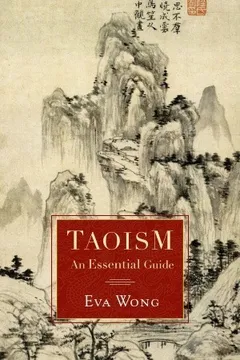
Many paths, one terrain. Eva Wong presents Taoism as a tradition with philosophical texts, organized religion, meditation, divination, ritual, healing, and bodily training. Its forms overlap, but they are not interchangeable. A person might meet Taoism through the Tao Te Ching, through a temple ceremony, or through practices such as tai chi, each revealing a different part of the terrain.
A guide, not a final map. Wong writes as both scholar and practitioner and emphasizes that her account is selective. Her aim is orientation: readers should understand enough to recognize the tradition’s variety, its history, and the cautions around demanding practices. The central thread is learning to live in relation to the Tao, the underlying way or order of existence, though Taoists have understood that task in markedly different ways.
The landscape metaphor is useful because it resists a familiar trap: treating a vast tradition as a handful of inspirational sayings. It also invites readers to ask what kind of knowledge they are encountering. A philosophical argument, a ritual, and a breathing discipline make different claims and should not be judged by one standard alone. The guide’s practitioner perspective makes its account vivid, while also reminding readers that no single map can represent every community. That limitation is not a flaw so much as a reason to read with curiosity and discernment.
Follow Taoism from shamanic roots through philosophy, religion, and alchemy
A tradition in motion. Wong traces Taoism to ancient Chinese shamanic practices associated with figures such as Yü, the legendary flood-tamer whose ritual steps were said to carry him through celestial patterns. She links those traditions to talismans, healing, divination, and later ceremonial practices. In the Classical Period, the Tao Te Ching and writings associated with Chuang-tzu developed philosophical accounts of the Tao and sagehood.
New forms answered new needs. From the Eastern Han onward, Taoism acquired priests, scriptures, ceremonies, and popular followers. Shang-ch’ing Taoism developed mystical visualization practices, while alchemists pursued longevity through substances and, increasingly, internal cultivation. Later schools drew together Taoist practice, Buddhist meditation, and Confucian ethics. This history is not a straight march from superstition to philosophy. It is a series of adaptations shaped by changing political conditions and spiritual demands.
The historical arc makes religious change legible as a response to human circumstances. When court ritual weakened, new religious organizations met needs that state ceremonies no longer served. When dangerous elixirs failed, internal cultivation gained ground. This pattern resembles institutional adaptation in many traditions: practices shift when their social setting or practical promise changes. The proposed connection between shamanism and early Taoist philosophy is illuminating, but the evidence described here is partly interpretive and legendary. Readers can value the continuity without assuming every ancient story is a verifiable record.
Treat nonaction as skillful restraint, not passivity
Wu-wei changes with context. Often translated as nonaction, wu-wei does not mean simply doing nothing. In the Tao Te Ching, it means acting without force or intrusive control. The sage can participate in public life and govern, but should avoid imposing personal ambition on the natural course of events. Wong contrasts this with the Chuang-tzu and Lieh-tzu, where wu-wei shifts toward noninvolvement and freedom from social conventions.
The Tao is not a moral rulebook. The Tao Te Ching describes it as the ungraspable source and pattern underlying things, and presents it as benevolent. Later classical thinkers portray it more neutrally: events unfold without a guarantee that the universe will reward virtue. These differences matter. Taoism offers no single formula for action; it asks whether intervention fits the situation or merely serves the actor’s appetite for control.
This distinction helps recover wu-wei from the modern caricature of passivity. In practical terms, restraint can be an active judgment: a leader may reduce needless interference, while a person facing harm may need to intervene decisively. The concept resembles systems thinking, where changing one part of a complex whole can create unintended effects elsewhere. But restraint is not automatically wise. Without attention to power and consequences, calls to avoid interference can excuse neglect. The useful question is not whether to act, but whether the action responds to conditions or tries to dominate them.
Choose among Taoism’s five paths without mistaking them for rival religions
Five routes through one tradition. Wong organizes contemporary Taoism into five overlapping systems. Magical Taoism channels natural or spiritual power for healing, protection, and exorcism. Divinational Taoism reads patterns of change. Ceremonial Taoism uses ritual to renew relations with deities. Internal-alchemical Taoism seeks transformation of body and mind. Action and Karma Taoism makes ethical conduct central. These are useful distinctions, not sealed compartments; practitioners may draw on more than one.
Different aims require different disciplines. A diviner studies calendars and patterns, while a ceremonial priest learns liturgies and ritual procedures. Internal alchemy requires long training, and magical practice can involve risks that Wong warns against treating casually. The categories help readers see why no single practice, such as meditation or tai chi, stands for all of Taoism. They also make room for ordinary lay participation, especially in ethical and devotional forms.
The five-path map works like a set of lenses: it clarifies what a practice is trying to accomplish before outsiders judge whether it succeeds. It also challenges the tendency to sort religion into neat boxes such as philosophy versus magic. These activities can coexist because they answer different questions, from how to act ethically to how to interpret change or conduct a ceremony. The map is an editorial framework rather than a universal taxonomy, however. A living community may combine or name its practices differently, so the categories should orient inquiry, not dictate it.
Use divination to read possibilities, not surrender to a fixed fate
Change is the subject. Divinational Taoism treats divination as a way to perceive patterns in a changing universe, not merely as fortune-telling. Its cosmology uses yin and yang, the eight trigrams, the five elements, and the Nine Palaces, a system that maps changing patterns of energy across directions and cycles of time. The I Ching’s sixty-four hexagrams extend the trigrams into a more detailed language for interpreting change.
A forecast is not a sentence. Feng-shui, or terrestrial divination, examines landforms and how energy is believed to move through a place. Celestial divination reads the positions of stars in relation to a person’s birth. Wong stresses that a predicted possibility can be changed through later actions. The aim is to understand conditions well enough to adapt, rather than accept every forecast as inevitable.
This account presents divination as a decision practice, not just a claim to supernatural certainty. Its strongest practical idea is conditional thinking: a forecast describes what may follow from present conditions, while action can alter those conditions. That resembles scenario planning, in which people prepare for several possible futures instead of betting everything on one prediction. Still, the book’s elaborate systems do not establish that their forecasts are empirically reliable. Their cultural and reflective value can be considered separately from whether they accurately predict events.
See ritual as a relationship between communities and sacred powers
Ceremony makes the bond visible. In Ceremonial Taoism, people honor deities through offerings, chanting, and formal rites, seeking protection, blessing, and renewed harmony. Trained practitioners perform the ceremonies on behalf of believers who may not know the liturgies. Purification prepares both participants and ceremonial grounds. Festivals can last a day or several days, and rituals may mark seasonal observances, repentance, petitions, or care for the dead.
Power is handled with caution. Magical Taoism uses talismans, objects, invocations, and, in some practices, a practitioner’s body to direct spiritual power. Wong describes Chang Tao-ling’s talismanic water, made by burning a written talisman and mixing its ashes with water, as a healing practice that helped attract followers. She repeatedly warns that magic and advanced spiritual techniques are not casual experiments. In this account, ritual is a trained, communal responsibility, not decorative theater.
Ritual can be understood as social infrastructure: it gives a community shared actions for expressing gratitude, grief, hope, and obligation. Its rules also distinguish authorized expertise from casual imitation, a distinction found in many specialized practices. Wong’s account makes the seriousness of these rites intelligible without requiring readers to share their theology. At the same time, healing claims tied to talismans belong to the tradition’s religious worldview, not demonstrated medical evidence. Respect for ritual and careful evaluation of health claims can coexist.
Understand internal alchemy as a demanding program of whole-person transformation
The body becomes the crucible. Internal alchemy recasts the language of external alchemy inside the practitioner. The Three Treasures are generative energy, vital energy, and spirit energy. Training aims to gather and refine them, using breath, meditation, bodily conditioning, and disciplined conduct. Its metaphors describe a progression from restoring physical foundations to refining energy and cultivating the mind. In the tradition’s account, the goal is not simply fitness, but a transformation that prepares a person to return to the Tao.
History supplies a warning. External alchemists sought immortality by ingesting mineral compounds, including substances such as mercury and arsenic. The resulting poisonings contributed to the decline of that approach. Wong likewise cautions that internal alchemy is not equivalent to a few classes in meditation or qigong; advanced methods require qualified instruction and sustained commitment. The historical record here counsels skepticism toward any promise of effortless immortality.
Alchemy’s enduring force lies partly in its image of change: ordinary materials become something more refined through carefully controlled stages. Applied inwardly, that image links bodily discipline, emotional regulation, and attention rather than treating them as separate projects. Contemporary readers can engage the metaphor without accepting every claim about energy or immortality as literal physiology. The contrast with toxic elixirs is especially instructive: a spiritual goal does not make a method safe. Any contemporary practice involving health should be judged by its actual risks, not by the grandeur of its symbolism.
Build physical foundations before attempting advanced Taoist practices
Practice is embodied. Taoist meditation ranges from observing thoughts to visualizing deities, focusing on bodily centers, and cultivating stillness. Body-training methods include breathing exercises, massage, calisthenics, and internal martial arts such as tai chi. Wong presents these not as interchangeable wellness tricks but as practices with distinct purposes and different levels of difficulty. In internal alchemy, physical conditioning and mental discipline are treated as mutually supporting foundations.
Progress is not a shortcut. The book describes techniques such as tendon-changing, which works on flexibility and muscular movement, and marrow-washing, a traditional system for working with bones. Some methods involve demanding postures or directed breathing, and Wong warns that poor instruction can cause injury. Even relatively accessible meditation, she argues, depends on consistent practice and a suitable way of life. A few exercises may support well-being, but they do not amount to mastery of a spiritual path.
The emphasis on preparation is a useful correction to the idea that sophisticated inner states can be summoned by technique alone. In skill learning, basic control and feedback often matter more than intensity, and the book’s insistence on gradual training fits that principle. Its warning is also particularly relevant where practices are marketed as universally safe. Yet the book’s physiological explanations, such as energy pathways and marrow changes, should be read as traditional models rather than established medical mechanisms. Responsible instruction includes both cultural context and clear limits on health claims.
Make ethical action the daily, accessible practice of Taoism
Merit enters ordinary life. Action and Karma Taoism teaches that good deeds bring reward and unethical conduct brings retribution. Its roots appear in earlier Taoist texts, but the movement became especially influential through the Sung dynasty work often called Lao-tzu’s Treatise on the Response of the Tao. Its guidance concerns recognizable conduct: help people in need, care for the young and old, avoid harm, and take others’ suffering seriously.
Ethics underlies the esoteric. In this school’s worldview, thoughts as well as actions matter, and wrongdoing can affect health, fortune, and even descendants. Repentance can repair the moral course if followed by a real change in behavior. Wong presents this path as nonmonastic and open to people living ordinary lives. Ethical conduct is not a preliminary hurdle to spiritual practice; it is itself a form of Taoist practice.
This path gives the book a grounded counterweight to its more spectacular material about spirits, talismans, and immortality. It makes spirituality observable in daily relations: how people treat vulnerable neighbors matters more than claims to hidden powers. The emphasis on intention also recognizes that harm can begin before it becomes an outward act. The more difficult claim is that ethical behavior directly determines health or family fortune. Such beliefs can encourage responsibility, but they can also unfairly imply that illness or hardship reflects moral failure. The ethical value can stand without that causal assumption.
Analysis
Wong’s guide is most valuable as a corrective to the idea that Taoism is simply a philosophy of calmness or a collection of sayings about going with the flow. It presents a tradition with institutions, regional histories, competing interpretations, ritual specialists, bodily disciplines, and popular ethics. Its organizing achievement is to show how these strands can remain recognizably related without becoming identical. The Tao functions as a common reference point, but its meaning shifts: a benevolent source in one classical text, a neutral ground of events in others, and an experiential reality approached through meditation or alchemical practice.
The book’s historical account also makes Taoism look less like a sealed inheritance than a continually revised response to circumstance. Political fragmentation, the decline of older ceremonies, the risks of mineral elixirs, and the appeal of Buddhist and Confucian ideas all help explain why practices changed. That account is engaging, though some links between legendary shamanism and later Taoist forms are presented as interpretation rather than settled history. A careful reader should distinguish historical evidence, religious tradition, and the author’s practitioner perspective.
The guide is strongest when it explains what practices mean within their own systems and warns against treating demanding methods as do-it-yourself techniques. Its descriptions of energy circulation, talismanic healing, celestial journeys, and immortality are valuable evidence about Taoist thought, not proof that these mechanisms operate as described. That distinction need not flatten the material. Ritual can organize community, divination can prompt reflection, and movement can cultivate attention even for readers who do not accept supernatural explanations. The book ultimately offers a way to approach Taoism with both openness and discrimination: take its diversity seriously, understand its internal logic, and avoid confusing cultural meaning with scientific verification.
Review Summary
Taoism: An Essential Guide is widely praised as a comprehensive introduction to Taoism's history, beliefs, and practices, though many readers find it dry and academic in tone. Reviewers appreciate its coverage of Taoism's evolution from shamanic roots through philosophical and religious developments, as well as its further reading recommendations. Common criticisms include insufficient focus on philosophical Taoism, overly dense detail on religious practices, and limited accessibility for beginners. Overall, it suits readers seeking a broad historical overview rather than a practical or philosophical guide.
Glossary
Tao
Underlying way of existenceThe Tao is the unnameable source and underlying pattern of all things in Taoist thought. It is not simply a deity or a rule imposed on the universe. Different texts and schools describe it differently, but many practices aim to live in harmony with it or experience unity with it.
wu-wei
Non-forcing actionWu-wei is often translated as nonaction, but its meaning varies across Taoist texts. In the Tao Te Ching, it means acting without forceful or intrusive control, and can include effective participation in society. In the Chuang-tzu and Lieh-tzu, it can mean greater noninvolvement and freedom from social convention.
fang-shih
Masters of specialized artsFang-shih were practitioners who offered specialized skills in early imperial China, including divination, healing, magic, and methods for pursuing longevity. As political roles changed, some itinerant advisers relied on these other abilities for support. Wong describes them as important predecessors to organized Taoist religious and alchemical traditions.
Shang-ch’ing Taoism
Mystical visualization traditionShang-ch’ing, or High Pure, Taoism was a mystical tradition that developed from the fourth century CE. Its practices included visualizing deities and guardian spirits within the body, using talismans, and undertaking journeys in the celestial realm. It helped shape later Taoist meditation, ritual, and internal cultivation.
Internal alchemy
Inner cultivation and transformationInternal alchemy is a Taoist approach to transforming body and mind using resources understood to exist within the practitioner. Its traditional language describes gathering and refining generative, vital, and spirit energies through stages of physical training, breath practice, meditation, and disciplined conduct. Schools differ in their methods and interpretations.
Three Treasures
Three forms of life energyThe Three Treasures are ching, ch’i, and shen, commonly rendered as generative energy, vital or breath energy, and spirit energy. In internal alchemy, they are treated as the foundations of health and spiritual transformation. The practitioner’s task is to conserve, refine, and unify them according to the training system.
pa-k’ua
Eight change-pattern trigramsThe pa-k’ua, or eight trigrams, are combinations of broken and unbroken lines associated with patterns such as sky, earth, water, fire, thunder, wind, mountain, and lake. They form a core vocabulary of Taoist cosmology and divination. Paired together, they generate the sixty-four hexagrams used in I Ching interpretation.
Nine Palaces
Nine-part energy mapThe Nine Palaces arrange eight directions around a central position, associating each with a number, color, and trigram. Diviners use the system to describe how energies change with time and place. Wong explains its role in terrestrial divination, especially feng-shui, where it helps interpret patterns in a site or building.
Action and Karma Taoism
Ethical merit-based Taoist pathAction and Karma Taoism is a popular, nonmonastic form of Taoist practice centered on ethical conduct. It teaches that good deeds bring rewards and wrongdoing brings retribution, with consequences understood to include health, longevity, and family fortune. Its teachings are especially associated with Lao-tzu’s Treatise on the Response of the Tao.
Download PDF
Download EPUB
.epub digital book format is ideal for reading ebooks on phones, tablets, and e-readers.








