

Plot Summary
Prologue
In 2010, Agnès Septembre1 learns that her aunt2 Colette2 has died, although Colette2 was buried three years earlier. The first death seemed ordinary: Agnès1 was in America, Louis Bertheol10 arranged the funeral, and Agnès1 stayed away.
Now the police have found a woman with Colette’s2 identity and Agnès’s1 number in her wallet. The second death turns a quiet cordonnière2 into a mystery, and sends Agnès1 back to Gueugnon, the town and childhood she had thought she had left behind.
The opening makes death an administrative puzzle before it becomes a family history. A familiar ritual, the police call to the last relative, breaks down because the name, body, and burial do not belong together. Agnès’s distance from Colette is already part of the mystery: she accepted a funeral at a distance and mistook absence for understanding. The contradiction forces her to return not only to a town but to a relationship she had never examined closely. The book’s central method is established at once: each apparent ending conceals a life that someone else has misunderstood.
The Second Death Call
Agnès Septembre,1 a Paris filmmaker stalled after her husband Pierre left her, is preparing to spend her thirty-eighth birthday with her daughter13 when Gueugnon police call. They have found a dead woman carrying Colette Septembre’s2 identity and Agnès’s1 contact details.
Agnès1 insists that Colette2 died in 2007 and was buried in the local cemetery. The officer cannot explain the contradiction, but asks her to identify the new body. Agnès1 boards a train for Burgundy, carrying fresh grief and a practical question: if the woman just found is Colette,2 who has occupied her aunt’s2 grave for three years?
Agnès’s certainty rests on paperwork and distance, not firsthand knowledge. She did not attend the first funeral, and that absence makes the false burial possible while exposing how grief can be outsourced to trusted intermediaries. The impossible second death destabilizes more than her understanding of Colette. It interrupts Agnès’s practiced retreat from work and love, making the past an active demand rather than a memory she can choose to revisit.
The Wrong Woman's Grave
At the morgue, Agnès1 identifies the dead woman as her aunt.2 Colette2 is older and thinner, but unmistakable. The recognition turns Agnès’s1 attention to a pair of blue shoes left on the grave marked with Colette’s name, a grave that must belong to someone else. Her childhood memories offer little help.
Colette2 had been a silent, poorly dressed cordonnière2 whose questions concerned meals, sleep, and shoes. Agnès1 recalls missing her funeral and accepting Louis’s10 explanation that there was little point in flying from Los Angeles. Now she understands that she has spent years treating Colette’s2 reticence as emptiness, and feels ashamed that she knew so little about her only aunt.2
Recognition does not restore certainty; it reveals how little recognition can mean. Agnès can identify Colette’s face but cannot account for her life, habits, or last three years. The blue shoes become a concrete flaw in the official story, while Agnès’s self-reproach marks a shift from solving a police puzzle to facing her own inattentiveness. Her shame is useful only if it leads to inquiry, not self-punishment, and the story begins moving her toward that more difficult form of attention.
A House Without Mail
Captain Cyril Rampin takes Agnès1 to the sealed house on rue des Fredins, where Colette2 apparently lived. The kitchen is clean, the boots by the door fit Colette,2 and a newspaper celebrating Gueugnon’s 2000 cup victory sits in the sitting room. In a workroom, Agnès1 finds Colette’s2 football scrapbooks, sewing machine, family records, and photographs of herself as a child.1
A handwritten note directs that Colette2 be cremated and her ashes placed with her brother4 and his wife.5 The gendarmes say an anonymous man reported the body and that an autopsy must precede an exhumation. With no mailbox, no correspondence, and no trace of ordinary public life, the house feels less like a home than a carefully maintained absence.
The objects contradict the idea that Colette was merely a lonely sports obsessive. Her collections preserve decades of attention, and the photographs reveal a private tenderness that Agnès had not recognized. Yet the missing mailbox and withheld documents show that this preservation coexisted with deliberate erasure. Colette’s home is both archive and disguise: it records a life while concealing its owner. The tension between these functions gives Agnès a practical task, but also a new way to read ordinary possessions as evidence of care.
Louis Brings the Tapes
After days of unanswered calls, Louis Bertheol10 appears at Agnès’s1 Paris apartment carrying Colette’s2 old suitcase. He admits that he called the police when he found her body, then left town. Inside the suitcase are a cassette recorder and more than a hundred tapes, which Colette2 continued making after Agnès1 abandoned the machine.
Louis10 explains that he obeyed Colette’s2 demand to keep her survival secret. Doctor Jacques Pieri19 confirms the impossible arrangement: in 2007 he signed a death certificate after finding one woman dead in Agnès’s1 old bedroom and Colette2 standing beside her. He knew Colette2 was alive but never knew why she had taken another woman’s place. The recordings, Louis10 says, were meant for Agnès.1
Colette’s silence proves not to be an absence of speech but a choice about audience and timing. She records what she could not say face to face, placing intimacy in a machine that can outlast her and reach Agnès only when the secret is safe enough to hear. Louis and Pieri participated in concealment out of loyalty, but their protection also kept Agnès ignorant. The suitcase transforms the investigation into an inheritance: a daughter must listen rather than interrogate the dead.
Colette's Empty Suitcase
The tapes carry Agnès1 back to Colette’s2 childhood on a poor farm. Colette2 works before and after school, caring for animals and her younger brother Jean,4 whom she loves with fierce, almost maternal devotion. Their parents expect her to leave school and labor at home, while Blaise de Sénéchal,9 the local landowner’s son, offers friendship, books, and a glimpse of another future.
Jean’s4 extraordinary ear for music emerges when Blaise9 secretly teaches him piano at the château. Colette2 wants to become a teacher, but when their father dies and the family’s circumstances tighten, she leaves home for an apprenticeship. She takes only an empty suitcase, carrying her hope that Jean’s4 talent can still escape the life assigned to him.
Colette’s care grows out of deprivation, but it is not simply self-sacrifice. She observes what each child needs and resists a social order that treats her labor as inevitable and Jean’s gift as expendable. Her bond with Jean offers the affection she never receives from her mother, though its intensity also narrows her sense of what her own life might contain. The empty suitcase condenses this contradiction: she leaves with almost nothing, yet carries a purpose large enough to shape the choices that follow.
The Piano's Price
In Gueugnon, the Tunisian cordonnier Mokhtar Bayram8 takes Colette2 as an apprentice and treats her as a person worth teaching. When the Sénéchals’ marquis9 blocks Jean’s4 piano lessons after Colette’s2 mother betrays the secret plan, Mokhtar8 brings Jean4 into his home and arranges for him to play the church organ.
Colette2 deliberately fails her trade examination so Mokhtar8 will keep her another year, then stays with him for decades and retains the Septembre name. A priest and the steelworks organize a town raffle to fund Jean’s4 studies; the winning prize is a new house, and the proceeds send Jean4 to a serious teacher in Lyon. Colette’s2 work and Gueugnon’s collective generosity help turn a farm boy into a concert pianist.
The piano’s story is not a lone-genius narrative. Jean’s talent survives because Colette, Mokhtar, Blaise, the priest, the marquise, and industrial workers create a chain of support around it. Colette’s failed exam is a costly attempt to keep her chosen family intact, while Mokhtar’s care gives her a model of kinship not dictated by blood. The communal raffle also makes art materially dependent on ordinary labor. Jean’s eventual freedom is built from practical decisions made by people who are often excluded from cultural prestige.
Blanche Behind the Canvas
Colette’s2 tapes introduce Blanche,3 the girl who looked so much like her that classmates confused them. Blanche3 grew up on the road with Soudoro,6 her Russian-born circus director father, who exhibited disabled people in secret and treated his daughter as property. Her mother, Marie Roman,7 fled the marriage, but Soudoro6 told Blanche3 she was dead.
The circus’s performers, especially Natalia, gave Blanche3 some affection, while Soudoro’s6 violence and surveillance denied her a childhood of her own. As an adult, Blanche3 works at a Lyon cabaret and remains financially and physically controlled by him. Her memories show why she learned to make herself unobtrusive, and why the possibility of escape carries both hope and terror.
Blanche’s experience exposes coercive control as a system, not a single act of violence. Soudoro limits her money, movement, work, relationships, and access to her own history, making obedience appear safer than resistance. The circus offers spectacle to outsiders while hiding exploitation behind its curtains. Blanche’s resemblance to Colette initially invites a fantasy of a shared life, but their different histories make that resemblance more unsettling: one woman has a local community and chosen allies, while the other has been trained to expect abandonment.
Aimee's Borrowed Key
In 1976, thirty-year-old Colette2 falls for Aimee Chauvel,11 an eighteen-year-old Gueugnon footballer whose shoes she repairs. She invites him to a modest birthday dinner, and they dance together for hours. Convinced that their age difference and her plain appearance make a shared future impossible, Colette2 later arranges a room for Isabelle,12 a young client, in the studio across the landing from Aimee.11
Aimee11 and Isabelle12 become a couple, marry, and raise two daughters. Colette2 remains close to Aimee11 and, after a breakdown following her mother’s death, begins a secret relationship with him. He stays married, she keeps her independence, and their tenderness lives outside the life either dares to claim publicly.
Colette’s decision is an act of agency shaped by an old injury. She wants Aimee, yet assumes that her age, class, and appearance disqualify her from being chosen. By arranging Isabelle’s proximity, Colette makes the rejection happen herself, converting fear into a seemingly generous intervention. Their later affair offers real intimacy but does not erase the original self-denial. The episode complicates the image of Colette as a woman who never loved: she has a vivid inner life, but social embarrassment and the habit of disappearing govern what she allows herself to receive.
The Stadium Reunion
In 1999, Blanche3 learns from a news report that Marie,7 the mother she thought dead, has been brutally attacked by Soudoro6 and left severely disabled. Blanche3 finds a trace of her mother in hospital records and understands that the blood on Soudoro’s6 clothes came from Marie.7
She waits until Gueugnon’s underdog football club reaches the League Cup final in 2000, then leaves the cabaret with her dog, Lancelot, carrying the stained garment and her identity papers. At the Stade de France, she finds Colette2 among the supporters. Colette2 takes her to safety, helps her report Soudoro,6 and brings her to Gueugnon. Blanche’s3 arrival begins seven years of hidden companionship in Colette’s2 home.
Football becomes a route out of captivity because Blanche recognizes that Colette will be at the match. Her escape is not a sudden triumph over fear; she leaves with evidence, a dog, and a fragile plan that depends on finding one trusted person in a crowd. Colette’s welcome turns a public sporting event into private refuge. The stadium’s collective noise, usually a source of joy for Colette, becomes cover for Blanche’s first act of self-determination.
The Funeral That Hid Her
Blanche3 lives with Colette2 from 2000, rarely leaving the house because Soudoro6 remains dangerous. In 2007, after learning that he has left prison and attacked another woman, Blanche’s3 fear worsens. She has a heart condition, and the strain contributes to her sudden death in her sleep.
Colette,2 determined to keep Soudoro6 from finding Blanche3 even in death, asks Louis10 and Pieri19 to help stage her own death instead. Pieri19 certifies the dead Blanche as Colette; Louis10 arranges a funeral and burial, while the real Colette2 disappears to a house on rue des Fredins. She stays hidden for three years, until she dies there in 2010.
Colette’s final deception extends the protective logic that has governed her life since childhood. She chooses a false identity not to escape responsibility but to guard Blanche’s body from a man who has treated people as possessions. The plan depends on trusted men, on the town’s familiarity with Colette, and on Agnès’s distance. Its moral cost is severe: the same secrecy that protects Blanche also deprives Agnès of the chance to know her aunt while she is alive.
Marie's Last Safe Address
A child’s identity card found in Colette’s2 house bears Blanche’s3 face and the birthplace Flumet. Agnès1 and Lyece14 travel there, where a former municipal employee helps them find Marie Roman7 living under the protected name Amélie Andrieux in a care home near Sallanches. Marie7 recognizes Agnès1 as Blanche3 and learns that her daughter had a friend who protected her.
Agnès1 gives her Blanche’s3 childhood photograph. Marie7 dies peacefully soon afterward, still holding it. Soudoro6 reaches the residence after her death, then leaves without her identity card. Agnès1 is shaken by the meeting, but Marie’s7 brief relief that Blanche3 was loved and safe gives the long separation a human answer.
The search narrows from documents to recognition. Marie does not need a full account of the years she lost; the photograph and Agnès’s reassurance are enough to let her understand that Blanche was not alone. Yet the reunion is mediated by mistaken identity, because Marie believes Agnès to be her daughter. That confusion is painful, but it also shows how resemblance can carry truth when language and time have failed. The scene grants Marie a moment of emotional safety without pretending to undo the damage.
The Old Man Returns
Nathalie and police research reveal that Soudoro6 served prison time for attacking Marie,7 escaped scrutiny after changing identities, and killed Viktor Socha to take his papers and pension. He later lives in Valence with Mathilde Pinson, whom he murders before leaving for Gueugnon.
After reading Nathalie’s article, he enters Colette’s2 house while Agnès1 is away, steals her childhood photographs, and calls the landline to learn its number. He searches for Marie,7 then becomes fixated on Agnès1 after recognizing her face and hearing her voice. Police trace his movements, but he vanishes again. His return turns the family mystery into an immediate danger, especially as he approaches the grave he believes holds Blanche.
Soudoro’s violence persists through impersonation and surveillance, not merely physical force. He converts other people’s identities and belongings into tools for access, then interprets their attempts to escape as betrayals against him. Agnès’s photographs attract him because they connect the hidden past to a living person, but the precise nature of his fixation remains opaque. The police investigation gives the narrative procedural structure while emphasizing a grim asymmetry: a man can disappear repeatedly, while the women he hunts must build their lives around anticipating his return.
Charpie's Long Shadow
A conversation with Lyece14 reveals that a powerful Gueugnon football official, known as Charpie, used supposed medical examinations to molest boys in the club’s junior teams. Lyece14 was seven and stayed silent for decades, later turning to addiction and abandoning a promising football career.
Nathalie15 begins investigating, while her account of Christophe Delannoy shows another boy whose life collapsed after a football camp with Charpie. In 2009, Lyece14 and Nathalie15 encounter the retired official in Cannes; Lyece14 confronts him, and Charpie punches him before fleeing. The old abuse binds the friends through shame and anger, while their decision to speak about it challenges the town’s protective silence.
This subplot links the novel’s private secrets to institutional complicity. Charpie’s position at the club and factory gives his abuse cover, while the boys’ silence is reinforced by shame, racism, and adult authority. Lyece’s addiction is not presented as a simple moral failure; it is one consequence of trauma that he cannot yet narrate. Naming the abuse does not restore the stolen years, but it changes the social burden: the victims no longer have to carry the story alone.
Cinders at Jean-Laville
Agnès1 cremates Colette2 and scatters some of her ashes at the Gueugnon stadium, near the pitch where the club’s victories gave her such joy. At the Lyon funeral, Ana13 remembers how she watched Colette2 work and learned piano beside her; Agnès1 speaks of the aunt2 who quietly held their family together.
Aimee11 attends and admits that he loved Colette,2 while the football supporters gather around the Septembre family grave. Agnès1 is still grieving Pierre, but the ceremony brings her back among friends and gives her a concrete place in Colette’s2 life. She decides she may return to Gueugnon rather than let the town become another abandoned chapter.
The funeral gives Colette public recognition that her chosen life rarely received while she was alive. A football memorial and a family grave sit together, refusing to divide her identity into respectable kinship and supposedly trivial passion. Ana’s memories also reveal that affection can be legible in attention, even when it is not expressed through conventional declarations. For Agnès, the ceremony is not closure so much as re-entry into community: she begins to imagine a future connected to the place she once resented.
The Grave Opens
At the exhumation, Agnès1 watches the coffin marked with Colette’s name lifted from the ground. The cemetery team seals it and sends it to Dijon for forensic identification, leaving Blanche’s grave empty. Meanwhile, Soudoro6 is found unconscious on the grave of his mother, Liouba Rozov, after taking a fatal quantity of opioids. He remains brain-dead in hospital.
Agnès1 agrees to withdraw life support and asks that he be buried beside Liouba, whose photograph he carried. His possessions include Agnès’s1 stolen red scarf, but no explanation for his fixation. The investigation confirms the danger has ended, while the grave and the scarf show how thoroughly his pursuit crossed into her life.
The exhumation reverses the earlier funeral: the body is finally separated from the name imposed on it, though the act of identification itself disturbs the peace Colette tried to secure. Soudoro’s collapse at his mother’s grave offers no courtroom reckoning or apology. Agnès’s decision about life support is an act of boundary-setting, not forgiveness. By arranging his burial beside Liouba, she acknowledges the origin of his grief without allowing that grief to excuse what he did to others.
Two Mothers, One Birth
DNA testing shows that Soudoro6 shares genetic markers with Agnès,1 and Cécile Aubert21 explains why: in 1972, Blanche3 arrived at Colette’s2 home pregnant by Jean.4 Colette2 delivered the baby, Hannah5 agreed to raise her, and Jean4 registered Agnès as their daughter. A cassette found in Blanche’s coffin confirms the story.
Blanche3 describes surrendering her newborn to Hannah5 and Jean4 so the child could escape Soudoro’s6 reach; Jean’s4 earlier recording, meant for Blanche,3 speaks of the night that connected them. Agnès1 learns that Hannah5 was not her biological mother, but the woman who chose, raised, and loved her. She refuses to let biology erase that bond.
The revelation separates biological origin from lived parenthood without diminishing either. Blanche’s decision is shaped by coercion and care at once: she gives up the child not because she feels nothing, but because she knows what Soudoro might do. Hannah’s motherhood is likewise an active commitment, not a substitute status. For Agnès, the truth reorganizes her family history, but does not invalidate the relationships that formed her. The novel treats kinship as something made through protection, daily care, and the willingness to let another person live freely.
Zeïa's Private Verdict
At Lyece14 and Line’s24 wedding, his sister Zeïa17 tells Agnès1 that she followed Charpie to Cannes after learning what he had done to Lyece.14 She struck him with an iron and pushed his body into the sea, where his death was treated as a drowning.
Zeïa17 had once watched her young brother burn himself rather than speak about the abuse, and her act grew from years of helpless anger. Lyece14 does not know she killed Charpie. Meanwhile, Agnès1 begins adapting Hannah’s5 history into a book rather than returning to filmmaking, and accepts a future with Antoine20 that includes a home in Burgundy.
Zeïa’s confession complicates justice rather than resolving it. Her action arises from love for her brother and from the failure of institutions to protect him, yet it is still a private killing that Lyece has not consented to or even learned about. The secret repeats the novel’s central moral tension: protection can become concealment, and silence can shield as well as injure. Agnès’s choice to write instead of film marks a different response to inherited secrecy: she will preserve the story while deciding what form it should take.
A Year of New Work
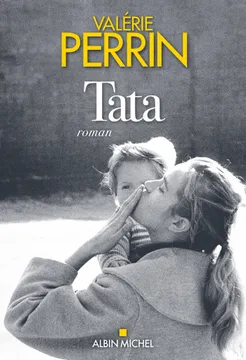
A year after promising each other they would create again, Agnès1 waits at her Burgundy home for Lyece14 to arrive. He has written a manuscript about football, addiction, and the damage Charpie left behind. She gives him her own completed book, transformed from a screenplay about Hannah’s5 family into a novel titled Tata.
The friends who once made amateur films together have found separate ways to work with memory. Agnès1 now has a daughter, a chosen home, and a life not organized around Pierre’s return. The ending does not erase the dead or settle every mystery; it lets the living carry their stories forward in forms they chose themselves.
The final exchange completes a pact made when both friends felt creatively and emotionally depleted. Their manuscripts are not cures for grief, but evidence that attention can become a practice rather than a wound. Agnès’s title gathers the novel’s many forms of kinship into one intimate word, while Lyece’s book gives public shape to a trauma the town once suppressed. The ending favors continuation over a sealed resolution: the dead remain present, but they no longer prevent the living from making something new.
Epilogue
On 31 October 2011, Agnès1 and Lyece14 meet at her Burgundy home, fulfilling their promise to make something within a year. Lyece14 hands her a finished manuscript about his life, football, and recovery.
Agnès1 gives him the novel she has shaped from the screenplay about her family. She has changed its title to Tata. They have not solved every silence, and the people they lost remain part of their days, but each has turned private memory into work that can be shared.
The epilogue makes authorship a form of chosen witness. Agnès and Lyece do not merely survive their discoveries; they give those discoveries structure, language, and an audience. Their exchange also repairs the friendship’s old pattern of unequal visibility: Agnès once directed their childhood films while Lyece hesitated to trust his own voice, and now each brings a complete work. The title Tata honors Colette without reducing her to a family label. It is an intimate name made large enough to hold an entire life.
Analysis
Tata treats memory as something people make together, not a private storehouse that reliably preserves the past. Colette2 collects football clippings, Jean4 records music, Blanche3 leaves a hidden cassette, and Agnès1 makes films before trying to write. Each medium saves something, but none tells the whole truth by itself. The archive becomes meaningful only when another person listens, reads, or recognizes what has been left behind.
The novel’s sharpest distinction is between blood and care. Agnès’s1 biological origins matter because secrecy has shaped her life, but discovering Blanche3 does not replace Hannah5 as her mother.5 Colette’s2 own life makes the point in another register: Mokhtar8 becomes family through daily generosity, while her blood relatives can be distant or cruel. These relationships resist the idea that ancestry automatically determines loyalty.
Secrecy is equally complex. Colette2 and Blanche3 hide to survive Soudoro;6 Louis10 and Pieri19 keep their confidence; Hannah5 and Jean4 protect a child by maintaining a public family story. Their concealment saves lives, yet it also leaves Agnès1 without knowledge of people who love her. The book therefore does not treat truth as an uncomplicated cure. Disclosure can restore connection, but only when it respects the agency and safety of those who endured the harm.
The football club gives these intimate histories a public setting. In the stands, Colette2 finds collective joy; in the club’s hierarchy, Charpie exploits authority and benefits from silence. The same institution can hold solidarity and abuse. Lyece’s14 recovery and Zeïa’s17 secret revenge show that justice cannot be reduced to one emotional response. The ending offers neither perfect repair nor total closure. It offers work, friendship, chosen family, and stories that can finally be carried into the open.
Review Summary
Reviews for Tata are largely positive, with many praising Valérie Perrin's layered storytelling, richly developed characters, and emotionally resonant themes including family, love, loss, the Holocaust, and abuse. The central mystery of Aunt Colette's "second death" and her cassette recordings captivated most readers. However, critics cite the novel's excessive length (600+ pages), overly complex subplots, too many characters, implausible twists, and an overwhelming accumulation of themes as significant weaknesses, leaving some readers exhausted rather than moved.
Characters
Agnès Septembre
Filmmaker turned seekerAgnès is a successful director whose confidence in her work has collapsed alongside her marriage to actor Pierre Dugain. She loves her daughter Ana13 intensely but has let heartbreak occupy too much of their shared life. As Colette’s2 niece, she begins with a shallow picture of a taciturn aunt and gradually learns to pay attention to what people preserve, omit, and entrust to others. Agnès’s instinct is to turn experience into images, yet she also struggles to distinguish observation from control. Her humor protects her from shame and fear; her growing willingness to listen makes that humor less defensive. Her central drive is to understand the people who made her, without allowing discovery to cancel the family she has lived.
Colette Septembre
The town's quiet cordonnièreColette repairs shoes and keys in Gueugnon, follows its football club with near-ritual devotion, and speaks sparingly. Her reserve can be mistaken for lack of feeling, but she observes people closely and remembers the details they overlook. Having grown up doing exhausting farm labor without much affection, she finds family through loyalty, work, and acts of practical care. Her love for her brother Jean4 shapes many of her decisions, as does her instinct to protect people who have been denied safety. Colette is uncomfortable claiming attention for herself, yet she has a rich private imagination, a gift for collecting stories, and a deep capacity for tenderness.
Blanche
Colette's elusive childhood friendBlanche is a circus-raised woman with an acrobat’s discipline and an instinct for noticing beauty wherever she can find it. Her life is shaped by isolation and by a father whose control leaves her wary of dependence. She remains curious, affectionate, and capable of delight, even when circumstances have taught her to make herself small. Her friendship with Colette2 offers companionship without demands, while her bond with animals and books gives her a private world beyond the people who govern her. Blanche’s resilience is not fearlessness; it is the repeated, difficult choice to hope for a life that belongs to her.
Jean Septembre
The gifted pianistJean is Colette’s2 younger brother, a boy whose unusual musical ear opens a path far beyond the farm where he was born. Gentle and inward, he experiences music as a language before he understands how much discipline a career will require. Colette2 and a circle of unlikely patrons protect his talent, while his life with strict teachers demands sacrifices he rarely voices. Jean can be emotionally absent when absorbed in music, but he is deeply attached to the people who made his education possible. His character joins artistic vocation to dependency: genius may distinguish him, yet it never makes him self-created.
Hannah Ruben
A violinist and devoted motherHannah is a gifted violinist raised by a loving couple after the Nazi persecution of her birth family. Music gives shape to grief she rarely discusses, and her elegance can conceal a reserve that others mistake for distance. She is devoted to Jean4 and to their daughter, though the demands of a musician’s life sometimes leave Agnès1 feeling secondary. Hannah’s capacity for care is measured less by ease than by the choices she makes when another person needs help. She understands that family can be built through commitment, and that love sometimes asks a person to protect a child by accepting a complicated truth.
Levgueni Soudkovski
A controlling circus patriarchKnown in the circus world as Soudoro, he is a shrewd, physically disciplined man who uses authority to control the people around him. He grew up amid hardship and loss, but his own suffering becomes a rationale for domination rather than a source of empathy. He treats affection as possession and regards independence as betrayal. His skill at changing names and disappearing makes him difficult to track, while his rigid self-image hides a volatile need to control the people he believes belong to him. He is frightening not because he is unknowable, but because he turns familiar bonds into instruments of coercion.
Marie Roman
A mother forced into hidingMarie is Blanche’s3 mother, a young woman who enters a circus life believing its charismatic promise and later discovers its cruelty. She is loving and determined, but fear and isolation narrow her options. Her story shows how a person can be made vulnerable by the very relatives and institutions expected to protect her. Marie’s persistence is quiet and practical: she seeks safety, work, and a chance to remain connected to her child. She represents the cost of surviving violence when the law cannot guarantee that escape will last.
Mokhtar Bayram
Colette's generous mentorMokhtar is the Tunisian cordonnier who gives Colette2 her first skilled work and a place to belong. He teaches through patience, humor, and exacting attention to craft, treating a young girl’s questions as worthy of answers. His own experience of migration and discrimination makes him alert to injustice, but he does not reduce people to their hardships. Mokhtar’s generosity is practical: meals, a room, training, and room for Jean’s4 music. He embodies chosen kinship without demanding that the people he loves surrender their histories.
Blaise de Sénéchal
Colette's bookish allyBlaise is the son of the local château’s owners and Colette’s2 closest childhood friend. He lends her books, shields her from class contempt, and recognizes Jean’s4 musical promise before others do. Sensitive and intellectually ambitious, he lives under the pressure of a family that expects conventional masculinity and social status. His friendship with Colette2 is unusually candid: she offers him a place where he need not disguise his nature, and he offers her a glimpse of choices beyond farm labor. He is a patron of possibility, but also a young person trying to survive his own constraints.
Louis Bertheol
Colette's steadfast confidantLouis is a retired baker and one of Colette’s2 closest friends. He helps with practical matters, keeps her confidence, and values friendship as a gift rather than a debt. His loyalty sometimes requires him to make choices Agnès1 experiences as betrayal, especially when he obeys Colette’s2 request to conceal the truth. Louis is not a man of grand speeches, but his attentiveness has a long memory. He links Colette’s2 private life to the town’s shared history and understands how much its football club means to her.
Aimee Chauvel
A footballer and hidden loveAimee is a talented Gueugnon footballer whose youth and looks make him seem to belong to a different world from Colette’s2. He recognizes her intelligence and steadiness, and their connection becomes one of the most important private relationships in her life. Aimee’s loyalty to the club and his family life coexist with feelings he cannot openly claim. He is neither a conventional hero nor a simple romantic ideal; the story presents him as a man who loves deeply but accepts the limits Colette2 places around their bond.
Isabelle Émorine
Aimee's wife and teacherIsabelle is a young client of Colette’s2 who hopes to teach French and needs a place to live. Colette2 helps her settle in a room near Aimee11, setting in motion a relationship that becomes marriage and family. Isabelle is kind and self-possessed, not a rival fashioned to make Colette’s2 story easier. Her presence reveals the consequences of Colette’s2 decision to redirect the future she desires.
Ana Dugain
Agnès's observant daughterAna is fifteen when the mystery begins, a pianist with her grandfather’s eyes and a sharp, unsentimental way of seeing her mother1. She loves Agnès1 but is alert to the emotional space Pierre’s departure has taken up in their home. Her bond with Colette2 is expressed through music, visits to the cordonnière’s shop, and small acts of attention. Ana’s questions help move Agnès1 from private grief toward honesty. She is independent without being indifferent, and her understanding of family is more flexible than the adults first expect.
Lyece Mansour
A childhood friend rebuildingLyece grew up in Gueugnon with Agnès1, Colette’s2 devoted football supporter, and a promising young player. He is warm and funny, but often hides pain behind self-deprecation and a refusal to ask for help. His adult life includes addiction and a difficult effort to become sober. Friendship with Nathalie15 and renewed contact with Agnès1 give him a place to speak honestly. Lyece’s recovery is not presented as a sudden cure; it is a series of choices that let him imagine love, work, and a future again.
Nathalie Grandjean
A journalist who investigatesNathalie is a local journalist and Agnès’s1 childhood acquaintance. She is observant, persistent, and willing to ask questions that make others uncomfortable. Her friendship with Lyece14 includes the hard work of helping him seek treatment, while her reporting gives public form to stories the town has left unspoken. Nathalie’s curiosity is both professional skill and moral habit: she does not assume that a quiet community is an innocent one. She balances loyalty to her friends with the need to preserve evidence and testimony.
Adèle
A nurse with buried angerAdèle is one of Agnès’s1 old friends, once the quietest member of their childhood group. She becomes an independent nurse and mother of twins, building a busy life through competence and care. Her reserve is not emptiness; she has learned to observe before speaking and to manage emotions privately. Adèle’s friendship with Nathalie15 and Lyece14 is old enough to hold both affection and difficult truths. She is especially alert to how people carry damage they cannot yet name.
Zeïa Mansour
Lyece's protective younger sisterZeïa is an attorney who believes that the vulnerable deserve a forceful advocate. She is academically accomplished and close to Lyece14, though his adult struggles are not always easy for her to interpret. Her instincts are both compassionate and fiercely protective. She does not accept social rank as proof of virtue, and she notices when a respected institution fails to protect a child. Zeïa’s professional commitment to justice is shaped by family loyalty, but the two impulses do not always point toward the same kind of action.
Hervé
Agnès's old comic friendHervé is one of the children who spent Gueugnon summers with Agnès1, Adèle16, and Lyece14. He grew up to work in insurance and raise children across several relationships. Still sociable and quick with a joke, he helps restore the warmth of the childhood group when Agnès1 returns. His practical gestures, including finding an old cassette player, show a friendship that survives long gaps.
Jacques Pieri
The doctor who kept quietPieri is a longtime country doctor who treated Agnès1 as a child and later cared for Colette2 in secret. He is humane, observant, and accustomed to entering other people’s private crises, but he does not always ask questions when a patient begs him not to. His decision to assist Colette2 reflects loyalty as well as professional unease. Pieri’s warmth and dry humor offer Agnès1 a reliable point of contact, even as he must face the consequences of having kept a dangerous secret.
Antoine Éte
A doctor turned mechanicAntoine grew up in the house won through Gueugnon’s raffle to fund Jean’s4 musical education. He becomes an emergency doctor, then leaves medicine after a diagnostic failure weighs heavily on him and restores vintage cars instead. His connection to Colette2 and Blanche3 makes him a useful witness, but his defining quality is a quiet willingness to help without claiming ownership of another person’s choices. He is patient with Agnès1 and shares her discomfort with lives built entirely around public success.
Cécile Aubert
The town's keeper of recordsCécile worked for decades in Gueugnon’s municipal offices and continues to teach French to adults. She remembers births, marriages, and small events that official records cannot explain. As a young woman, she was drawn to the circus and to its gentle giant performer, Nestor. Cécile’s long habit of noticing details makes her a custodian of local memory, but she does not turn knowledge into gossip. She waits until Agnès1 asks before sharing what she has kept.
Paul Seran
Agnès's police allyPaul is a Paris commissioner whom Agnès1 first consulted while preparing a crime film. Small, unshowy, and perceptive, he is unlike the glamorous detectives of cinema but has the patience to follow a case through its details. His friendship with Agnès1 mixes professional boundaries with personal warmth. He is protective without pretending that protection can make every danger disappear, and his practical presence helps Agnès1 navigate an investigation that has become deeply personal.
Cornélia
Agnès's steady household anchorCornélia has cared for Ana13 and Agnès1 for years, handling the ordinary work that keeps a household functioning. She is competent, affectionate, and discreet, with a life and private desires of her own. Agnès’s1 affection for her sometimes blurs the line between employer and family, but Cornélia responds with candor rather than submission. Her steadiness gives Agnès1 a practical refuge when grief makes daily life feel impossible.
Line Auzière
A helpful town clerkLine works in Flumet’s municipal offices and helps Agnès1 and Lyece14 find records that are difficult to access. Her willingness to bend rules comes from curiosity and compassion, not a taste for intrusion. She is attentive to people as well as paperwork, and her connection with Lyece14 develops with an immediacy that surprises him.
Eugénie de Sénéchal
Jean's early patronEugénie is the marquise who recognizes Jean’s4 musical talent and uses her position and private resources to support his education. Her kindness contrasts with the rigid authority of her husband, though her influence has limits within their household. She sees education as a responsibility owed to a gifted child, not a privilege reserved for her own class. Her choices help connect Gueugnon’s local community to a wider world of music.
Plot Devices
Colette's cassette archive
A posthumous voiceColette2 records more than a hundred tapes on Agnès’s1 childhood cassette recorder. They contain her account of her own life, Blanche’s3 memories, music, weather, and conversations with people Agnès1 never knew were part of the story. The recordings let the narrative move between 2010 and earlier decades without making the past feel like a detached history lesson. They also shape Agnès’s1 emotional work: she must listen to a woman she once mistook for silent. The final tapes reveal the circumstances of Agnès’s1 birth and give Blanche3 a chance to speak directly to the daughter she surrendered. This device contains major revelations.
The borrowed burial
A grave conceals a lifeA woman is buried under Colette’s2 name while Colette2 lives under another roof. The substitution turns identity into the book’s central mystery, but it also has a specific protective purpose: Colette2 hopes a false death will prevent Soudoro6 from finding Blanche3. The blue shoes on the grave, the missing mailbox, the false certificate, and the hidden house gradually reveal how the plan worked. The grave is not a puzzle for its own sake. It embodies the cost of safety when institutions and ordinary protections are not trusted.
The Gueugnon football archive
A town remembers togetherColette’s2 decades of clippings, team photographs, and match records preserve Gueugnon’s football history. The collection gives Agnès1 a way to recognize what Colette2 valued, and it helps reconnect her to friends and neighbors who shared the stadium with her. Football also drives important events: the club’s 2000 cup run gives Blanche3 a reason and a place to seek Colette2, while the stadium becomes the site where Agnès1 scatters Colette’s2 ashes. The archive turns a supposedly private obsession into a community memory.
The Steinway's hidden note
A piano carries evidenceA handwritten note concealed inside the Steinway connects the instrument to the Ruben family, whose home was plundered during the Occupation. The piano later becomes the instrument through which Jean’s4 talent is discovered and developed. Its physical history links Hannah’s5 Jewish family, the Levitan household, the Sénéchal château, and the public support that pays for Jean’s4 education. Music therefore serves as both evidence and inheritance: a stolen object survives its owners, changes the course of a child’s life, and eventually helps two musicians find one another.
Names and false papers
Identity becomes a hiding placeThe story repeatedly shows how a name can protect or endanger someone. Blanche3 disappears from official life, Marie7 lives under a protected identity, Soudoro6 assumes Viktor Socha’s papers, and Colette2 is declared dead while still alive. These changes are not interchangeable tricks. Some are forced by violence, some are chosen to protect another person, and one is used to evade justice. Identity cards, phone records, official certificates, and DNA testing each reveal a different limit of paperwork. The device supports the novel’s distinction between biological connection, legal identity, and the family created through care.
About the Author

Download PDF
Download EPUB
.epub digital book format is ideal for reading ebooks on phones, tablets, and e-readers.








