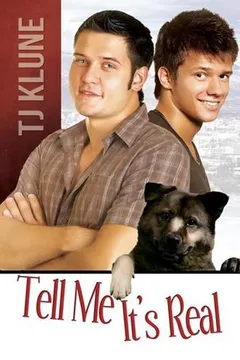


Plot Summary
Thirty Above the Dance Floor
Paul Auster has reached thirty with a cubicle job, a small Tucson house, and a conviction that attractive men belong to other people. He is devoted to Wheels, a disabled dog he adopted after choosing him over a bullying golden retriever, and to Sandy, his lifelong friend, who performs as the commanding drag queen Helena Handbasket.
On Paul's birthday, Sandy refuses to let him hide in the club's balcony during Helena's show. He announces Paul's age to the crowd and pulls him onto the stage, exposing him to a room full of strangers.
Among them, a handsome man named Vince Taylor keeps looking up at Paul. When Vince sends him a whiskey shot, Paul chokes it out over a flirtatious barback, then has no choice but to join the birthday celebration.
Paul's self-description is comic, but its organizing logic is serious: he turns anticipated rejection into a joke before anyone else can deliver it. The balcony is both a literal hiding place and a strategy for controlling exposure. Sandy's public birthday stunt removes that control, forcing Paul to be seen before he believes he is worth seeing. Vince's attention matters less as proof of instant romance than as a challenge to Paul's settled expectation that desire flows only toward conventionally beautiful people.
Spinach and Second Chances
The next workday, Paul discovers that the man from the club, Vince, is the new employee transferred from Phoenix. Their first conversation leaves Paul blushing and unable to remember much beyond Vince's grin and the brush of his knee.
At lunch, Vince arrives as Paul and Sandy are laughing over salad. Paul inhales spinach and begins choking; Sandy panics, but Vince performs the Heimlich maneuver and dislodges the leaf, which lands on Sandy. Vince then defends Paul when Sandy snaps at him, and Sandy leaves them alone.
Paul responds to Vince's invitation to dinner by retreating into jokes and insisting that someone like Vince could not want him sincerely. Vince keeps asking, however, and makes clear that he is interested in Paul, not in a prank arranged by his friends.
The rescue gives Paul a concrete reason to remain near Vince, but the emotional obstacle is not lack of opportunity. It is Paul's conviction that attention from a handsome man must conceal ridicule or pity. His humor keeps him socially active while protecting him from the risk of accepting what he wants. Vince's directness frustrates that defense: he does not interpret Paul's awkwardness as consent, but neither does he treat it as evidence that Paul is undesirable. The relationship begins as a contest between Paul's self-protective explanation and Vince's insistence on his own intentions.
The Supply Closet Kiss
Paul tells Vince that dating would be a mistake, then returns to work and lets Sandy take over the matter. Sandy gives him a deadline to accept Vince's invitation, promising to supply Paul's number if he does not.
The next morning, Vince arrives at work on a bicycle and stretches in fitted cycling clothes, leaving Paul flustered enough to flee into the supply closet. Sandy finds him there and warns him that he is running from the chance he claims not to want. Vince walks in, sees Sandy crowding Paul, and mistakes their closeness for a relationship.
When Paul confirms they are only friends, Vince kisses him. Paul is startled by how much he wants the kiss, but still has not agreed to dinner. Vince leaves him alone with the realization that his refusal has not extinguished his attraction.
The kiss shifts the story from imagined attraction to embodied choice, though Paul still tries to treat desire as a threat to his independence. The supply closet is an apt stage: he has hidden among office supplies, surrounded by the materials of a life he finds deadening, while Sandy and Vince make emotional risk harder to avoid. Sandy's pressure is loving but imperfect; he assumes that pushing Paul outward is always helpful. Vince's jealousy, meanwhile, reveals that he already reads Paul's bond with Sandy as consequential, not casual.
The Bicycle Collision
Trying to arrive at work composed, Paul opens his car door just as Vince rides past. Vince crashes over the door and is taken to the hospital with a concussion, bruising, and scrapes. Paul visits him, changes into caretaker when the doctor says Vince must be monitored, and drives him home. At Paul's house, Vince wins over Wheels, who usually distrusts everyone but Paul and Sandy, then falls asleep on Paul's lap.
As Paul watches over him, Vince reveals how deeply his father's judgment about his intelligence has cut him. Paul rejects that judgment and tells Vince he is worthwhile as he is. Vince insists on another chance at a date, and Paul finally agrees, while continuing to doubt that the interest can last.
The crash converts flirtation into responsibility. Paul cannot simply admire Vince from a safe distance once Vince is injured, and caring for him gives Paul a role he understands better than being desired. Vince's insecurity complicates the visual confidence Paul has projected onto him: attractiveness has not protected him from being reduced to his appearance by his own father. Their mutual vulnerability begins to replace the fantasy of unequal leagues. Paul is not merely rescued from loneliness; he becomes someone who can offer care without needing to earn it through perfection.
Orion Over Fourth Avenue
For their first proper date, Vince takes Paul to a small cafe. A flirtatious waiter targets Vince, but Vince keeps his attention on Paul and calls him his boyfriend, startling them both. When Paul's parents arrive unexpectedly, Vince stays instead of letting Paul flee.
Matty and Larry welcome him with their usual affectionate eccentricity, and Vince accepts the family chaos rather than treating it as embarrassing. He then takes Paul to a park, where they lie beneath the night sky. Paul traces Orion's Belt and tells him the myth of Orion and Scorpius.
Vince listens with quiet admiration, and Paul asks whether what is growing between them is real. Vince assures him that it is, then kisses him. Paul's first date becomes less about performing confidence than discovering that someone can see his nervousness and stay.
The date contrasts public scrutiny with private attention. The waiter treats Vince's body as an invitation, while Vince's choice to focus on Paul gives the relationship its first credible evidence of reciprocity. Meeting Paul's parents also lets Vince encounter a family whose teasing does not cancel its acceptance. Under the stars, Paul supplies knowledge rather than self-deprecation, and Vince responds with respect. The scene gently reverses their apparent imbalance: Paul is no longer the awkward admirer, but the person who gives the night its meaning.
A Bike and a Hidden Past
Wanting to replace the bicycle Vince wrecked, Paul visits the local bike shop with Sandy and discovers that Vince's preferred road bike costs nearly as much as a used car. The shop's owner, Jenny, recognizes Paul from Vince's stories and lets slip that Vince's father is Andrew Taylor, Tucson's Republican mayor.
She also explains that Vince returned from Phoenix because his mother, Lori, has advanced cancer and is receiving hospice care. Later, Vince brings flowers and a gift to Paul's birthday gathering at his grandmother Gigi's home.
He wins over the homophobic parrot, Johnny Depp, and becomes part of the family's noisy welcome. After Paul overhears Vince telling Matty that his mother is dying and that his parents rejected him after he came out, Paul understands the silence he has mistaken for distance.
The bike purchase begins as a practical gesture, but its cost exposes the disparity between Paul's ordinary assumptions and Vince's concealed family history. Jenny's disclosure gives Paul information Vince has chosen not to share, creating an ethical problem: knowledge can invite care, but it can also become a way of overriding another person's boundaries. Vince's easy acceptance by Paul's family sharpens the contrast with his own estrangement. The scene therefore turns belonging into something visible and material, from flowers and a replacement bike to the simple fact that Paul's family makes room for him.
The Star in Paul's Name
At Jack It, Vince introduces Paul to Darren Mayne, a confident regular who knows him well and watches him closely. Paul grows jealous when a former admirer approaches Vince, but Vince turns the man away and returns to Paul. The tension follows them home.
Vince waits for Paul to feel comfortable before undressing him, and Paul admits how exposed he feels beside Vince's athletic body. Vince reassures him through patience and touch, and they have sex. Afterward, Vince hesitates to give Paul his birthday present, afraid it will seem foolish.
The gift is a certificate naming a star for Paul. It recalls their conversation about constellations and gives Paul a private place in the sky. Paul realizes he may be falling in love, a possibility that excites and frightens him in equal measure.
Vince's gift makes attention durable. Unlike a compliment, a named star preserves a shared moment outside the immediate heat of courtship. That gesture arrives after Paul has confronted his body insecurity and allowed himself to be seen, so the gift does not function as a cure for self-doubt. Instead, it offers evidence that Vince has listened closely. Paul's recognition of love is frightening because it asks him to trust a feeling before he can justify it. The scene marks intimacy as a practice of attention, not simply physical compatibility.
Room 214
Paul and Sandy secretly visit Lori in hospice, hoping to meet her before her illness worsens. Lori recognizes Paul and asks what brought him there. Paul admits he is angry that she and her husband publicly rejected Vince after he came out, then insists that Vince needs to know his mother loves him.
Lori explains that she has always loved him, but her account of his childhood does not erase the harm: she and Andrew prioritized public respectability over accepting him.
She also tells Paul that Vince nearly drowned as a boy, and that the sight of him revived taught her how much she could lose. When Vince arrives and finds Paul in the room, he feels that Paul has crossed a boundary and shut him out. He orders Paul to leave, breaking their new trust at its most vulnerable point.
Paul enters the room intending to defend Vince, but his certainty risks reproducing the very loss of agency he is condemning. Lori's memories complicate a simple portrait of a cruel parent without absolving her choices: private love did not become public protection. Her account of Vince's near drowning makes the family's history more intimate, yet Paul remains right that love withheld or obscured cannot reliably comfort its recipient. Vince's anger is therefore not a rejection of care itself. It is a demand that care respect his right to choose when and how his family history is shared.
The Brother at the Door
Paul retreats home after Vince sends him away, and Sandy's intervention draws in Paul's parents and Gigi, who refuse to let him turn heartbreak into a permanent verdict on himself. Paul returns to Vince's apartment and sees Darren holding Vince against a wall.
Convinced that Vince has chosen Darren, Paul storms inside and punches him. Darren reveals that he and Vince share a father, Andrew Taylor, though he has remained a secret from Andrew's public life. Vince is furious that Paul has come back and still tells him to leave.
Outside, Darren explains that Vince is overwhelmed by his mother's decline, ashamed of his parents, and afraid Paul will judge him by them. Darren also admits Vince will need support, but cannot promise that Paul will be allowed to give it.
Paul's misreading is comic in its mistaken premise, but the emotional mechanism is serious: insecurity converts incomplete evidence into certainty. He attacks Darren before asking what he has seen, acting out the fear that Vince's desire cannot be exclusive or genuine. The revelation of Darren's parentage widens the family wound rather than solving it. Darren occupies both roles, confidant and hidden sibling, and his intervention shows that even people close to Vince cannot force him to accept comfort. Paul's growth depends on resisting the impulse to make every crisis a referendum on his worth.
Home After Midnight
Lori's condition deteriorates, and she dies while Vince is at the hospital with Darren and Andrew. After an argument with his father, Vince drives away disoriented and searches for Paul's house, the place he now thinks of as home. Near midnight, Darren calls Paul with the news, but Vince reaches Paul's door before the call ends.
Paul brings him inside without demanding an explanation. Vince admits that he kept thinking of Paul at the hospital and regrets shutting him out. Paul tells him that their relationship is real, even in grief. They climb into bed, and Vince holds on as he begins to mourn. Paul whispers that he loves him; shortly afterward, Vince says he loves Paul too.
The return to Paul's house completes a pattern established by the earlier accident: in moments of danger, Vince finds his way toward the person who has made care feel safe. This time, however, Paul does not treat the return as proof that every conflict has vanished. He offers presence before explanation, allowing grief to arrive without being solved. The mutual declaration matters because it is spoken after a rupture and a death, not during the easy brightness of courtship. Love here becomes a commitment to remain available when neither person can control the other's pain.
A Family Takes Its Place
In the days after Lori's death, Vince struggles to name what he feels: grief, relief, anger, and the hurt of a relationship left unfinished. Paul apologizes for the secret hospital visit, and Vince explains that he was ashamed of his parents, not of Paul.
At the funeral, Paul's parents, Gigi, Sandy, and Darren accompany Vince, who does not sit with Andrew. When mourners finish offering condolences, Vince chooses to stand with Paul and his family rather than remain alone with his father.
Paul confronts Andrew when the mayor appears ready to challenge his son, making clear that the funeral is not the place to punish him. At the graveside, Vince recalls a childhood moment when he comforted Lori after a fight, finding one loving memory to carry away.
The funeral makes chosen family visible through action rather than sentiment. Paul's relatives do not repair Vince's history with his parents, but their presence gives him an alternative to facing public grief alone. His decision not to sit beside Andrew is not presented as effortless revenge; it is a boundary shaped by years of rejection. Paul's confrontation protects that boundary without pretending he can settle the family conflict. At the graveside, Vince's memory permits a more complex mourning: he can acknowledge both the damage and a moment of genuine tenderness without declaring either one the whole truth.
Six Months, One Surprise
Six months later, Paul and Vince are still together. Paul briefly invents an elaborate, disastrous future in which he cheats, loses his family and friends, and ends up in Mexico, then admits that none of it happened. In reality, he has organized a surprise birthday party at Jack It with both families, Sandy, Darren, and the club's regulars.
Helena's performance and the crowd's celebration overwhelm Vince, while Paul's parents continue their mortifying speculation about his supposed pony role.
Later, Paul takes Vince to the park where their first date ended beneath the stars and gives him an itinerary for three weeks in Asia, paid for with months of savings. Vince is thrilled by the trip and immediately imagines visiting fortune-cookie factories. The story closes with Paul accepting that their shared future can be real without being predictable.
The invented breakup functions as a comic feint, exposing Paul's ability to imagine catastrophe faster than he can trust happiness. The actual ending answers that fear with accumulated acts: a party that gathers Vince's new family, a carefully saved trip, and a return to the place where their relationship first became speakable. Asia matters less as an exotic destination than as a plan made together. Paul has moved from resisting exposure to arranging an expansive future, while Vince's delight confirms that being known does not require either man to become someone else.
Analysis
Tell Me It's Real treats self-worth not as a private thought Paul can correct once and be done with, but as a social expectation repeatedly tested in ordinary encounters. Paul expects the gay bar to rank him, the attractive new coworker to be joking, and intimacy to expose the body he has learned to criticize. Vince's steady pursuit disrupts these assumptions, but the novel does not make romance a magical cure. Paul still doubts, misreads, and sometimes acts from fear. His growth is visible in what he does: accepting a date, revealing himself physically, entering Vince's family crisis, and returning after being told to leave.
The novel's comic excess serves a precise psychological purpose. Paul's elaborate riffs let him control the terms of humiliation, while his imagined catastrophes make rejection feel inevitable before it occurs. The humor also creates a generous social world. Sandy, Matty, Larry, Gigi, and even Wheels keep responding to Paul as someone lovable, despite his inability to believe them. Their care is not interchangeable: Sandy knows the history of Paul's avoidance, his parents give him a model of love that survives difficulty, and Vince offers a form of attention that does not depend on Paul becoming more conventionally attractive or confident.
Vince's story complicates that reassurance. He is admired for his body but privately wounded by his father's judgment and by the distance between public family image and private acceptance. The cancer and death of his mother make the romance answerable to grief, not sheltered from it. Paul's secret visit to Lori is motivated by care, yet it violates Vince's control over painful information. The resulting rupture matters because good intentions do not erase boundaries. Reconciliation requires both men to acknowledge what they did and to offer presence without claiming ownership of the other's grief.
Rescue, stars, and family stories bind the comic plot to its emotional stakes. Accidents bring Paul and Vince together, but chosen acts sustain them. The star is a modest, imperfect symbol of permanence, while the funeral shows that family can be assembled through concrete loyalty. The ending's trip is not proof that fear is gone. It is proof that Paul can make a future-facing choice while still being himself: anxious, funny, and finally willing to be seen.
Review Summary
Tell Me It's Real is a hilarious and heartwarming romantic comedy that has readers laughing out loud. The story follows Paul, an insecure and sarcastic man, as he falls for the handsome Vince. Readers praise the book's humor, lovable characters, and sweet romance. Many found it refreshing to have a less-than-perfect protagonist. While some critics found the humor over-the-top or problematic, most reviewers were thoroughly entertained. The book also touches on deeper themes of self-acceptance and family support, making it a well-rounded and enjoyable read.
Characters
Paul Auster
Joking, self-doubting romanticPaul is a thirty-year-old insurance claims adjuster in Tucson who sees himself as ordinary and uses extravagant humor to cover his fear of rejection. He is observant, affectionate, and more courageous than he gives himself credit for, especially when someone he loves is in pain. His bond with Sandy has taught him how to care for another person, but Paul is less practiced at accepting care or believing that attraction can be sincere. His loyalty shows in his adoption of Wheels and his instinct to protect people who have been dismissed. The story follows him as he learns that self-deprecation can be a shelter, but it can also keep him from entering the life he wants.
Vince Taylor
Persistent, openhearted cyclistVince is a handsome, athletic man who recently moved back to Tucson and works with Paul. He is direct, affectionate, and determined, but his confidence about his body hides uncertainty about his intelligence and whether people value him beyond his looks. Vince often says what he means without the social polish others expect, which makes him funny and sometimes difficult to read. He loves cycling, animals, and the uncomplicated warmth he finds in Paul's home. His attraction to Paul is immediate, but what draws him is Paul's kindness and refusal to judge him for being imperfect. Vince's persistence tests Paul's defenses while offering him a model of acceptance without conditions.
Sanford Sandy Stewart, Helena Handbasket
Protective friend and drag queenSandy is Paul's oldest friend, a quiet and careful listener when out of drag and a celebrated, forceful performer as Helena Handbasket. He and Paul briefly tried dating, then recognized that their bond worked best as a lifelong friendship. Sandy's protectiveness comes from deep attachment and an early experience of loss; he wants Paul to be seen as generously as he sees him. His advice is often perceptive, though his willingness to push Paul into situations can cross into meddling. The contrast between Sandy and Helena is not a split in loyalty but a way of expressing different kinds of confidence. Both are fiercely committed to making room for people they love.
Wheels
Two-legged household sentinelWheels is a small rescue dog whose hind legs and tail were amputated after a car accident. His wheeled cart lets him move through Paul's home, where his selective affection makes him a comic but meaningful judge of new arrivals. Paul adopted him because he recognized the lonely animal beneath the shelter's unwanted label. Wheels bonds quickly with Vince, unsettling Paul's sense that he alone knows what is best for his dog. His presence makes care practical and daily: ramps, cleaning, walks, and the choice to accommodate another creature without treating him as broken.
Matty Auster
Warm, meddling motherMatty is Paul's affectionate mother, openly supportive of her son's sexuality and incapable of keeping her curiosity to herself. She and Larry tease Paul, but their humor rests on a firm assurance that he is loved. Matty is perceptive beneath her eccentricity and offers Vince a gentle listener when he struggles to speak about his family. Her own experience of choosing love informs the advice she gives, though she never pretends that devotion makes relationships easy. She welcomes Vince into the Auster family's disorder with the same enthusiasm she gives Paul.
Larry Auster
Teasing, dependable fatherLarry is Paul's father, a steady presence whose dry humor and occasional formality balance Matty's exuberance. He supports Paul without making his sexuality a condition of acceptance, and he treats Vince as someone worth welcoming. Larry's own marriage began with a startlingly fast connection, but he also knows that lasting love requires adjustment and effort. His teasing can embarrass Paul, yet it never threatens their bond. He provides a practical example of commitment that is warmer and more complicated than Paul's romantic fantasies first allow.
Gigi
Sharp-eyed family matriarchGigi, Paul's grandmother, is a colorful, blunt woman whose apparent frailty conceals an alert mind and a formidable will. She adores Paul but refuses to indulge his habit of declaring himself unworthy. Gigi welcomes Vince quickly, judges people by how they treat her grandson, and delivers advice without softening its edges. Her humor and unusual household, including a notoriously insulting parrot, make her home a comic refuge. Beneath the chaos, she understands family as a practice of showing up and refusing to let a loved one disappear into self-pity.
Darren Mayne
Vince's guarded longtime allyDarren is a confident, muscular regular in Tucson's gay bar scene who knows Vince better than Paul does at first. He watches over Vince, wary of people who might use his appearance and leave once they encounter his unfiltered nature. Darren can be intimidating and blunt, but his concern comes from loyalty rather than possessiveness. He challenges Paul to take Vince's feelings seriously and helps him understand the family pressures Vince keeps compartmentalized. Darren also has a charged, combative rapport with Helena, which neither of them is eager to interpret.
Lori Taylor
Poised, complicated motherLori is a public-facing Tucson figure whose illness has brought her into hospice care. She is perceptive, composed, and more candid in private than her polished public manner suggests. Her relationship with Vince carries the weight of his coming out and the family's choices around public reputation. Lori's memories reveal affection and regret, but her capacity to love does not erase the ways she failed to make that love clear. She meets Paul with curiosity rather than hostility, giving him space to speak even when he arrives with anger.
Andrew Taylor
Power-conscious public figureAndrew is Tucson's Republican mayor and a man accustomed to managing public perception. His political discipline has shaped his family's private life, and his positions on gay rights create a painful divide with people close to him. He is controlled, intimidating, and more concerned with authority than emotional repair. The story presents him not as a faceless politician but as a person whose choices carry consequences at home. His presence forces Vince to decide what kind of contact he can tolerate and what boundaries he needs.
Johnny Depp
Gigi's homophobic parrotJohnny Depp is Gigi's parrot, famous in the family for shouting anti-gay insults at Paul. His hostility is a running joke, especially because Gigi insists she did not teach him his vocabulary. The bird's sudden fondness for Vince unsettles Paul and gives the household another absurd measure of Vince's ability to win people over.
Charlie
Drag-show elder and allyCharlie is the older club employee who manages the spotlight and records Helena's performances. He has the ease of someone who has spent decades among queens and knows when a joke hides a genuine fear. He is fond of Paul, teases him with affectionate authority, and encourages him to stop hiding in the balcony. His watchful position lets him see the attraction between Paul and Vince before Paul is willing to admit it.
Jenny
Vince's trusted bike-shop ownerJenny runs the Tucson bike shop Vince has known since he was a teenager. She understands the importance of a cyclist's preferred equipment and helps Paul find a replacement bike. Her familiarity with Vince gives Paul access to information he has not yet heard directly, making her well-meaning disclosure a turning point in his understanding of Vince's private life.
Dr. Hal
Practical hospital doctorDr. Hal treats Vince after the bicycle collision, diagnoses a concussion, and explains that he needs observation before sleeping. His dry humor lightens the awkward hospital visit, but his instructions place Paul in the role of caregiver and give the pair a reason to spend an unexpected day together.
Eric
Flirtatious barbackEric is a barback at Jack It who flirts with Vince while Paul watches from the balcony. His attention sharpens Paul's jealousy before Paul and Vince know each other well enough to discuss what they want.
Tad Cook
Attention-seeking coworkerTad is a coworker who openly tries to attract Vince's attention. Paul dislikes him almost immediately and imagines him as a rival, making Tad a small but effective trigger for Paul's insecurity.
Plot Devices
The Rescues
Turns chance into obligationPaul and Vince first connect through a comic accident of attention: Vince sends a drink, Paul chokes on whiskey, and the drink lands on someone else. Soon afterward Vince saves Paul from choking on spinach, and Paul later crashes into Vince's bicycle and believes he has injured him badly. These incidents force the men into contact before either has built a careful account of the other. The rescues initially give Paul an excuse to care for Vince, but they also make the idea of a debt between them part of their flirtation. The story ultimately shifts the relationship away from owing someone and toward choosing to stay.
The Named Star
Makes attention tangibleDuring their first date, Paul shares the story of Orion and Scorpius, revealing how much he loves the night sky and the myths attached to it. Vince remembers this and gives Paul a certificate for a star named in his honor. The gesture turns listening into an object Paul can hold, and gives the couple a private symbol that returns when they talk about the people they have lost. The star does not promise that pain will disappear; it offers a way to remember that absence and love can occupy the same sky. It also marks Paul's movement from dismissing romantic gestures to accepting that one can be meant for him.
The Auster Family Story
Reframes improbable lovePaul's parents met through a choking rescue and a later car accident, then married quickly, only to separate briefly while learning how to live together. Their story resembles the strange sequence of accidents bringing Paul and Vince together, but it does not make instant certainty a substitute for work. Matty and Larry's history gives Paul a model in which a powerful first feeling can be real and still require patience, honesty, and repair. The family tale also becomes a source of comic embarrassment, since Paul's relatives keep telling it whenever he doubts his relationship. Its deeper function is to loosen Paul's assumption that an unlikely beginning must be false.
The Balcony
Stages visibility and retreatPaul watches Helena's performances from the club balcony because the floor exposes him to comparison and possible rejection. The elevated hiding place lets him admire people without risking an encounter, until Sandy pulls him into public view for his birthday. The balcony also frames his first sight of Vince and becomes a place where Paul's desire is visible to others before he can name it himself. Across the story, Paul gradually moves from observing romance at a safe distance to entering it, meeting Vince's friends, and allowing their relationship to be seen. The physical setting turns his struggle with self-worth into a repeated action rather than an abstract idea.
Paul's Comic Narration
Hides fear in punchlinesPaul narrates with digressions, exaggerations, and imagined disasters, often turning embarrassment into a joke before anyone else can react. His comic voice makes the novel lively, but it also reveals the mental process by which he disqualifies himself from love: he imagines Vince's betrayal, invents explanations for every kindness, and treats his own awkwardness as evidence against him. The invented future in which he loses everyone is the clearest example of comedy acting as camouflage for panic. As Paul's confidence grows, humor remains part of him, but it no longer has to prevent sincerity. His jokes become a way to share himself rather than a way to disappear.
About the Author
Other books by T.J. Klune




Download PDF
Download EPUB
.epub digital book format is ideal for reading ebooks on phones, tablets, and e-readers.








